Free trading guide
The Best Trading Books: 24 Picks by Stage, With My Own Ratings
 By Spencer Li, CFTe · Last updated 17 October 2026
24 trading books I have read and rated, grouped by stage, so you know which to read first.

Free trading guide
By Spencer Li, CFTe · Last updated 17 October 2026
24 trading books I have read and rated, grouped by stage, so you know which to read first.
If you have searched for the best trading books, you have probably found lists of 50 or 100 titles. A long list tells you what someone owns. It tells you very little about what to open first, or what to skip.
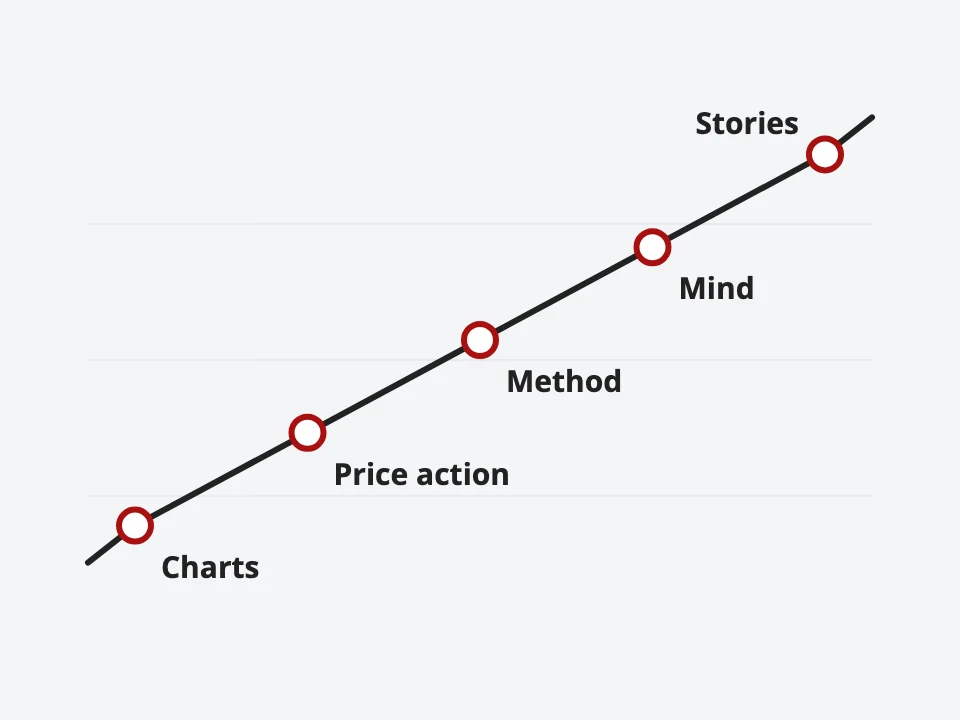
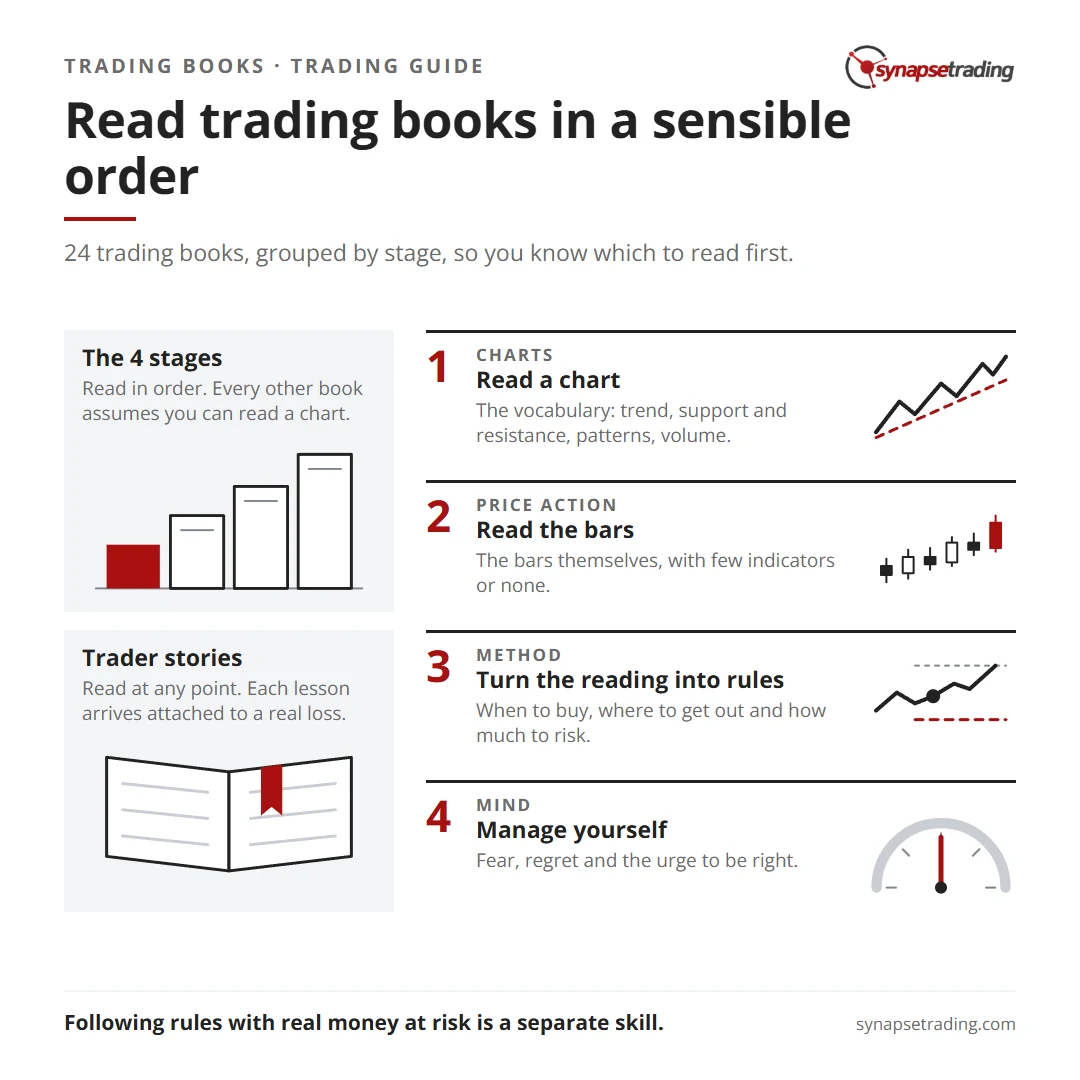
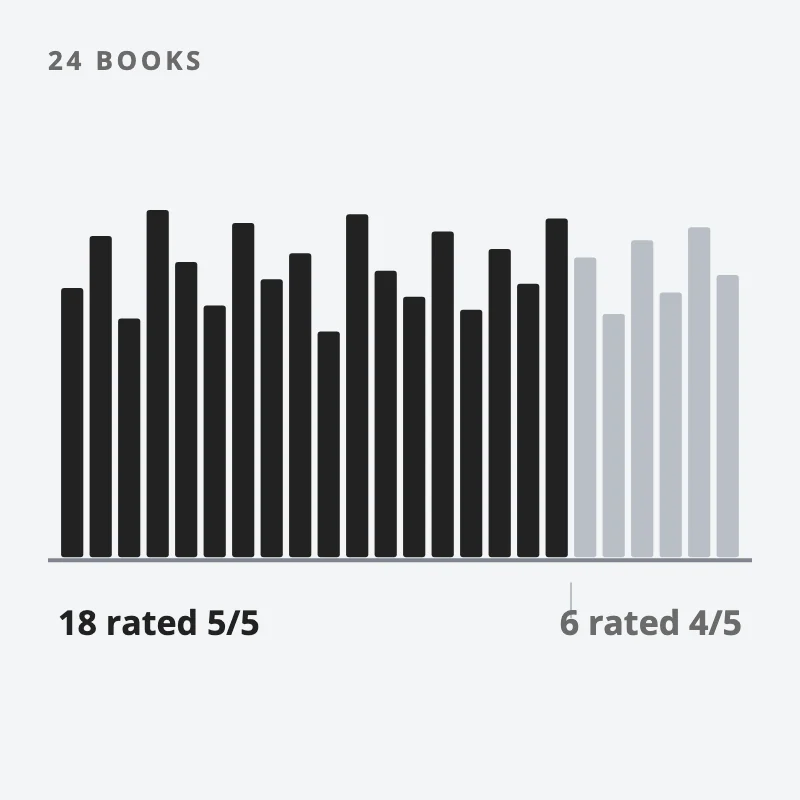
The best trading books, for most people learning on their own, cover 4 things in a sensible order. They teach you how to read a chart, how to read price action, and how to turn that reading into rules. Then they teach you how to manage yourself while you follow them. A fifth group, the trader stories, can be read at any point. Below are 24 books across those stages, each with the star rating I gave it on Goodreads. 18 of them got 5 stars and 6 got 4.
Do note that a rating is what a book gave me when I read it, rather than a promise it will do the same for you. So each entry also says what the book teaches, who it suits, and where it falls short.
Chapter 1 of 6
Every book here passed 2 tests. I have read it, and I rated it 4 or 5 stars on Goodreads. A book I read but never rated stays off the page, however famous it is, which is why Jack Schwager's first Market Wizards book is missing. Several well-known titles from the older version of this page scored 3 stars or fewer, so they are off it too.
Ratings alone would make a messy list, so the books are grouped by stage. Charts come first, because every other book assumes you can read one. Price action comes next, then the books that turn chart reading into rules for entries, stops and size. The books about the trader's own head come after that, once you have rules to be disciplined about.
Here is the whole shortlist at a glance.
| Stage | Book | Author | My rating |
|---|---|---|---|
| Charts | Technical Analysis of the Financial Markets | John J. Murphy | 5/5 |
| Charts | Technical Analysis of Stock Trends | Robert D. Edwards and John Magee | 5/5 |
| Charts | Technical Analysis Explained | Martin J. Pring | 5/5 |
| Charts | Japanese Candlestick Charting Techniques | Steve Nison | 5/5 |
| Price action | Martin Pring on Price Patterns | Martin J. Pring | 5/5 |
| Price action | Reading Price Charts Bar by Bar | Al Brooks | 5/5 |
| Price action | Understanding Price Action | Bob Volman | 5/5 |
| Price action | Forex Price Action Scalping | Bob Volman | 5/5 |
| Price action | Naked Forex | Alex Nekritin and Walter Peters | 5/5 |
| Method | The Master Swing Trader | Alan S. Farley | 5/5 |
| Method | How to Make Money in Stocks | William J. O'Neil | 5/5 |
| Method | Trading for a Living | Alexander Elder | 5/5 |
| Method | Trend Following | Michael W. Covel | 5/5 |
| Method | How I Made $2,000,000 in the Stock Market | Nicolas Darvas | 4/5 |
| Mind | Trading in the Zone | Mark Douglas | 4/5 |
| Mind | The Disciplined Trader | Mark Douglas | 4/5 |
| Mind | One Good Trade | Mike Bellafiore | 5/5 |
| Mind | Fooled by Randomness | Nassim Nicholas Taleb | 5/5 |
| Mind | The Black Swan | Nassim Nicholas Taleb | 5/5 |
| Stories | Reminiscences of a Stock Operator | Edwin Lefèvre | 5/5 |
| Stories | Trade Like Jesse Livermore | Richard Smitten | 4/5 |
| Stories | 45 Years in Wall Street | W. D. Gann | 4/5 |
| Stories | Hedge Fund Market Wizards | Jack D. Schwager | 4/5 |
| Stories | The Psychology of Money | Morgan Housel | 5/5 |
The longer list, about 100 titles grouped by subject, now lives on my reading list. For books on investing and personal finance, see our guide to finance and investment books.
Further reading
Chapter 2 of 6
A chart book teaches the vocabulary: trend, support and resistance, patterns, volume. These 4 are the references the rest of the list keeps quoting, so they come first.
Technical Analysis of the Financial Markets · John J. Murphy · My rating: 5/5
This is the reference book for technical analysis, and it reads like one. It is used as core reading for the CMT programme. Murphy builds everything on 3 premises: the market discounts everything, prices move in trends, and history repeats because crowds behave in much the same way each time. He then works through Dow Theory, chart patterns, moving averages, oscillators and the links between markets, one chapter at a time. His line that "the fundamentalist studies the cause of market movement, while the technician studies the effect" is the shortest explanation I know of why charting works at all. It is a book to read front to back once, then keep within reach.
Technical Analysis of Stock Trends · Robert D. Edwards and John Magee · My rating: 5/5
First published in 1948, this is the book that named and measured the classic chart patterns: head and shoulders, triangles, rectangles, flags and gaps. The second half was written by John Magee from about 15 years of trading on charts alone, and it is about where the stop goes, how large the position should be, and when to get out. The current edition keeps the original text and adds an editor's notes wherever the market has changed, so it reads younger than it is. Our bull flag and bear flag strategy leans on its stop rules.
Technical Analysis Explained · Martin J. Pring · My rating: 5/5
Where Murphy gives you the full tour, Pring gives you a way to weigh it. His organising idea is "the weight of the evidence". Price, momentum, volume and sentiment are separate witnesses, and you act when enough of them agree. He also ties market trends to the business cycle, which explains why bonds, stocks and commodities tend to turn in a sequence. He says it plainly: technical analysis "deals in probabilities, never certainties."
Japanese Candlestick Charting Techniques · Steve Nison · My rating: 5/5
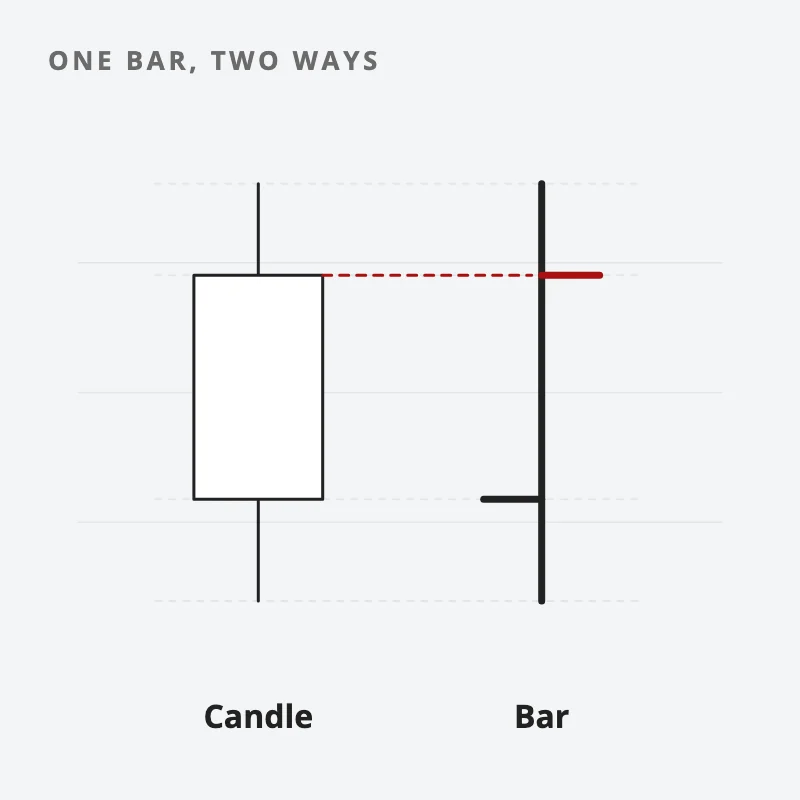
Nison brought Japanese candlesticks to Western traders with this 1991 book, and it is still the source the others copy. Part 1 is a dictionary of patterns. Part 2 is the more useful half, because it shows candles working alongside support and resistance, moving averages and volume. He also makes a point that many candle courses skip: a "reversal pattern" only says the trend is likely to change, the way brake lights say a car may stop. Our candlestick patterns guide covers the patterns themselves.
Further reading

Free checklist
The 15-Minute Swing Trader's Checklist is the daily and weekly routine I use to find, manage and review trades in about 15 minutes a day. Five pages, free, straight to your inbox.
Free 5-page PDF, then occasional trading emails. Education only, not financial advice. Unsubscribe anytime. Kit stores your email in the US: see our privacy policy.
Chapter 3 of 6
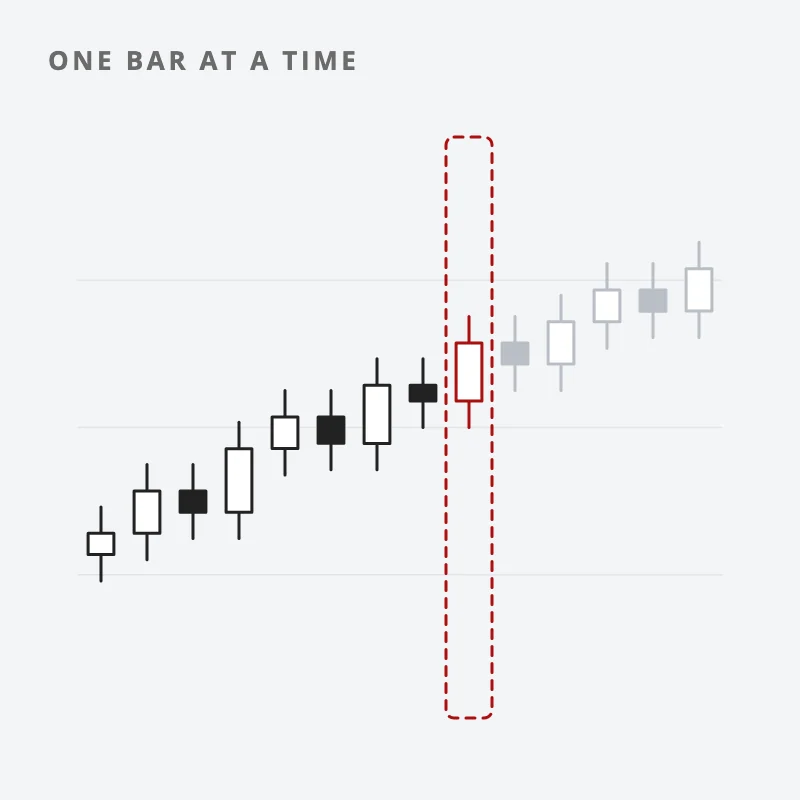
Price action means reading the bars themselves, with few indicators or none. These books are harder going than the chart references, and most are written around one market and one timeframe. So the way of thinking is what carries over, and the details need adapting to whatever you trade.
Martin Pring on Price Patterns · Martin J. Pring · My rating: 5/5
Pring treats every pattern as a short battle between buyers and sellers, a range that sits between one trend and the next. He adds the one-, two- and three-bar patterns that most pattern books leave out, then asks whether the patterns actually work. His most useful idea runs against instinct. The less believable a pattern looks, the better its odds, because a top that forms while the news is euphoric means the good news is already in the price.
Reading Price Charts Bar by Bar · Al Brooks · My rating: 5/5
Al Brooks, a former eye surgeon, trades a 5-minute chart of S&P 500 futures with nothing on it except a 20-bar moving average. This book argues that every bar carries information, including the ones most traders dismiss as noise. It is dense, and Brooks himself suggests that beginners start with the chapter on the best trades. His own summary of the book is plain: "focus on the absolute best trades, avoid the absolute worst setups, and work on increasing the number of shares that you are trading." He later grew it into a 3-volume series on trends, trading ranges and reversals, and I rated all 3 at 5 stars too.
Understanding Price Action · Bob Volman · My rating: 5/5
Volman's second book takes his method up to the 5-minute chart of EUR/USD. The method is narrow on purpose. You trade only clean breaks out of a visible build-up, in the direction the moving average slopes, with a fixed target and stop, and you skip everything else. Most of the book walks through chart after chart, which is where its value lies, because you watch the same few rules being applied and refused hundreds of times.
Forex Price Action Scalping · Bob Volman · My rating: 5/5
His first book works on a 70-tick chart with one moving average and 7 named break patterns. You may never scalp at that speed, and you do not need to. The way Volman explains why one setup is worth taking, and why the one beside it is not, carries over to slower charts. We have a full summary of Forex Price Action Scalping.
Naked Forex · Alex Nekritin and Walter Peters · My rating: 5/5
The book teaches 7 candlestick setups, each traded only where it prints at a support or resistance zone. The setups take up half the book. The other half argues that none of them will work until you back-test properly, size your risk and sort out what you believe about money, and that is the half most readers skip. Do note that the book contradicts itself on a few of its numbers, so anything in it is worth testing before you rely on it.
Further reading
Chapter 4 of 6
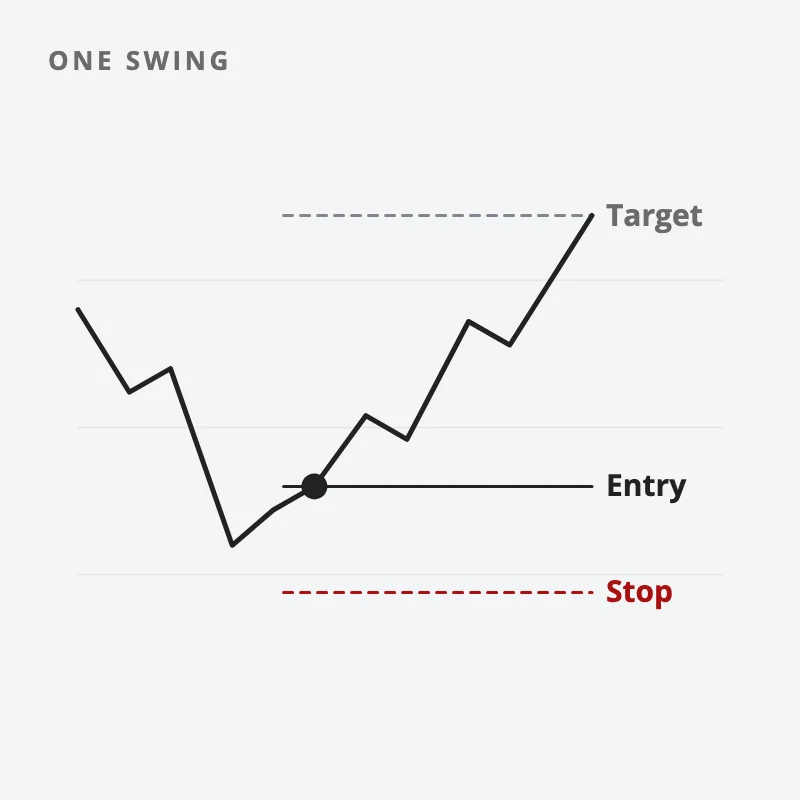
Knowing what a pattern looks like is a long way from knowing when to buy, where to get out and how much to risk. These 5 books are about those rules.
The Master Swing Trader · Alan S. Farley · My rating: 5/5
Farley's idea is that markets cycle through the same phases on every timeframe, and his setups, which he calls the 7 Bells, fire at the points where one phase hands over to the next. Each setup comes with its entry, its stop and its target. That is rarer in trading books than it should be.
How to Make Money in Stocks · William J. O'Neil · My rating: 5/5
O'Neil studied the biggest winning stocks of each year, wrote down what they had in common before they ran, and turned it into a buying system called CAN SLIM. It comes with equally firm rules on selling and on cutting losses. He wrote it, in his words, for readers who are not "the elite". One caution comes with the method. A study of winners picked after the fact shows what winners looked like, and says nothing about how many lookalikes failed. His sharpest lines are collected in William O'Neil's trading tips.
Trading for a Living · Alexander Elder · My rating: 5/5
Elder builds the book on 3 legs: mind, method and money. In his words, "remove one and the stool will fall." The 2014 rewrite, The New Trading for a Living, adds record-keeping as the thing that ties the other 3 together, which is the reason behind every trading journal worth keeping. It sits close to the 3 Ms of trading (method, money, mindset) that I teach. Our summary of Trading for a Living goes through it chapter by chapter.
Trend Following · Michael W. Covel · My rating: 5/5
Covel makes the case for one simple set of rules: buy strength, sell weakness, cut losses fast, let winners run, and size each position by how much it moves. The mechanism is well argued, and that is the reason to read it. Do note that the track records come from the traders the book profiles, so they are the traders' own story about themselves.
How I Made $2,000,000 in the Stock Market · Nicolas Darvas · My rating: 4/5
Darvas was a touring ballroom dancer who traded by cable from hotels around the world. He came close to ruin twice before he built his Box Theory: buy when a stock breaks above its trading box on rising volume, then trail a stop-loss up behind it. The title's number is his own result from one 18-month run, so it is best read as a memoir rather than a forecast. His best lines are in Nicolas Darvas's trading tips.
Further reading
Chapter 5 of 6
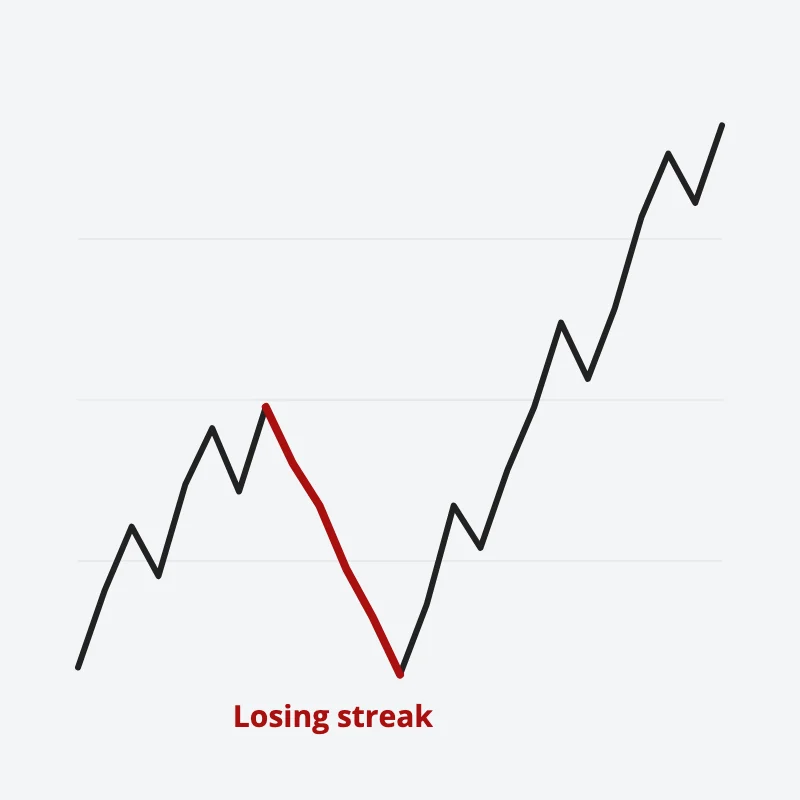
Mark Douglas spent 2 books arguing that better analysis is rarely what a struggling trader needs. These 5 books are about what happens between the signal and the order: fear, regret and the urge to be right.
Trading in the Zone · Mark Douglas · My rating: 4/5
Douglas set out, in his own words, "to prove to the trader that more or better market analysis is not the solution to his trading difficulties or lack of consistent results." His answer is a set of beliefs about probability, starting with the idea that anything can happen on any single trade. The book ends with an exercise. You take your setup exactly as you designed it for the next 20 times it appears, with the risk on each trade known in advance.
The Disciplined Trader · Mark Douglas · My rating: 4/5
This is Douglas's first book, from 1990. He started it expecting to take 6 to 9 months, and it took him 7.5 years. It treats self-discipline as a way of thinking you can learn, rather than a personality trait you either have or lack, and it is heavier going than Trading in the Zone. Its jacket line, "Emotion kills successful trading," names the problem it sets out to solve.
One Good Trade · Mike Bellafiore · My rating: 5/5
Bellafiore co-founded SMB Capital, a proprietary trading desk, and this book is about how the desk trains its traders. Its core rule is to judge each trade by whether you followed the process, rather than by whether it made money, so a losing trade can still be a good one. "Trading is about skill development and discipline," he writes.
Fooled by Randomness · Nassim Nicholas Taleb · My rating: 5/5
Taleb's argument is that a track record is one path out of the many that could have happened, and the paths you never see are where the risk lives. In a big enough crowd of traders, some of the best-looking records come from luck alone. It is a personal essay rather than a manual. It is worth reading before you judge your own results, or anyone else's, and our post on whether trading is skill or luck shows one way to test it.
The Black Swan · Nassim Nicholas Taleb · My rating: 5/5
The follow-up is about the rare, high-impact events that explain more of history and markets than the ordinary ones, and about how quickly we invent explanations for them afterwards. Its main target is the bell curve, which gives too little weight to exactly the moves that wipe out accounts. Our summary of The Black Swan covers the main ideas.
Further reading
Chapter 6 of 6
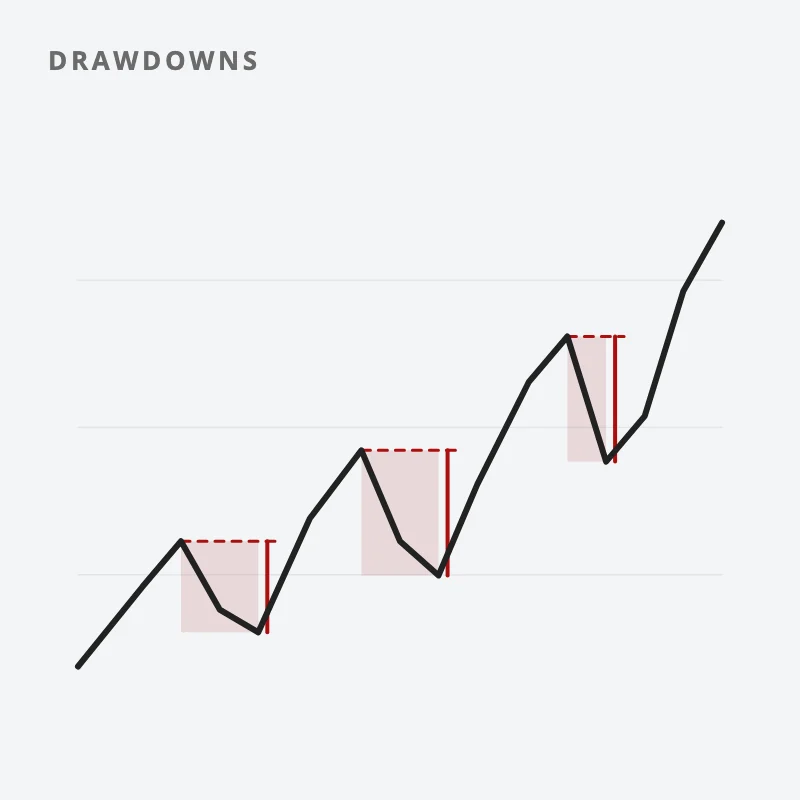
These are the easiest reading on the list. They teach well for the same reason, because each lesson arrives attached to a real loss.
Reminiscences of a Stock Operator · Edwin Lefèvre · My rating: 5/5
Lefèvre's 1923 book is a memoir of the speculator Jesse Livermore, told one trade after another. There are no frameworks and no numbered lists. Almost every rule in it comes with the loss that taught it, which is why it is still read a century later. "All my life I have made mistakes," Livermore says, "but in losing money I have gained experience and accumulated a lot of valuable don'ts." His other lines are collected in Jesse Livermore's trading tips.
Trade Like Jesse Livermore · Richard Smitten · My rating: 4/5
Smitten turns Livermore's methods into rules. Wait for the pivotal point, cut losses without hoping, and add to a position only once it is in profit. It is the practical companion to Reminiscences.
45 Years in Wall Street · W. D. Gann · My rating: 4/5
Gann wrote this at about 71, as a summary of his method. Half of it is percentage levels, time cycles and anniversary dates. The other half is a rulebook on stops, position size and why most traders lose: they trade too big, they skip the stop-loss, and they do not know enough.
Hedge Fund Market Wizards · Jack D. Schwager · My rating: 4/5
Schwager interviews 15 hedge fund and trading-desk managers whose methods are, in places, exact opposites. What they share is a habit rather than a signal. They judge themselves on return per unit of risk, keep the downside limited, and treat a losing trade as information about the idea behind it. Do note that every performance figure in the book is the manager's own claim.
The Psychology of Money · Morgan Housel · My rating: 5/5
Housel is not a trader, and this is a book about money in general rather than about markets. Its premise is the trading problem in plain words, which is why it earns a place here: "doing well with money has a little to do with how smart you are and a lot to do with how you behave." It has 20 short chapters, and each one stands alone, so it suits a few minutes at a time.
So that is the shortlist: 24 books across 5 stages, 18 of them rated 5 stars and 6 rated 4. How many have you read? Which stage are you at right now, and which of these books would you open next?
Further reading
These books have a full summary on this site, grouped by theme, with one line on why each is worth reading.
Quick answers
For reading charts, John Murphy's Technical Analysis of the Financial Markets, because it covers the whole field in one book. For the trader's side, Reminiscences of a Stock Operator is the easiest way in. I rated both 5 stars.
Books teach the vocabulary, the patterns and the rules. Following those rules with real money at risk is a separate skill, which is why 5 of the 24 books here are about the trader rather than the market.
The patterns and the psychology have aged well, because they come from crowd behaviour, which has changed little. The details have aged badly, so a 1948 book needs reading with care. That is why the current edition of Edwards and Magee keeps the original text and adds an editor's notes wherever the market has moved on.
Each rating is the star rating I gave the book on Goodreads after reading it, on a scale of 1 to 5. Books I read but never rated are left off, and so are books I rated 3 or below.
About the author
Spencer Li is The 15-Minute Trader and the founder of Synapse Trading. He is a Certified Financial Technician (CFTe) with 15+ years of trading, run from 70+ countries. He holds a B.Acc and B.BM from SMU. Every trade he takes is public, dated, losses left in. He teaches low-risk swing trading in 15 minutes a day, one system for any market.
Educational content only, not personalised financial advice. Trading carries risk, including loss of capital. Past performance is not indicative of future results. Synapse Trading is not licensed or regulated by MAS.
The free 15-Minute Swing Trader's Checklist turns this guide into a routine: find the setup, size the trade, log the result.
Free 5-page PDF, then occasional trading emails. Education only, not financial advice. Unsubscribe anytime. Kit stores your email in the US: see our privacy policy.