

Book Summary: Forex Price Action Scalping by Bob Volman
Want the daily routine? Get the free 15-Minute Swing Trader’s Checklist. Get it free →
Forex Price Action Scalping by Bob Volman: Book Summary and Review
Last updated: 19 October 2026 · By Spencer Li, CFTe
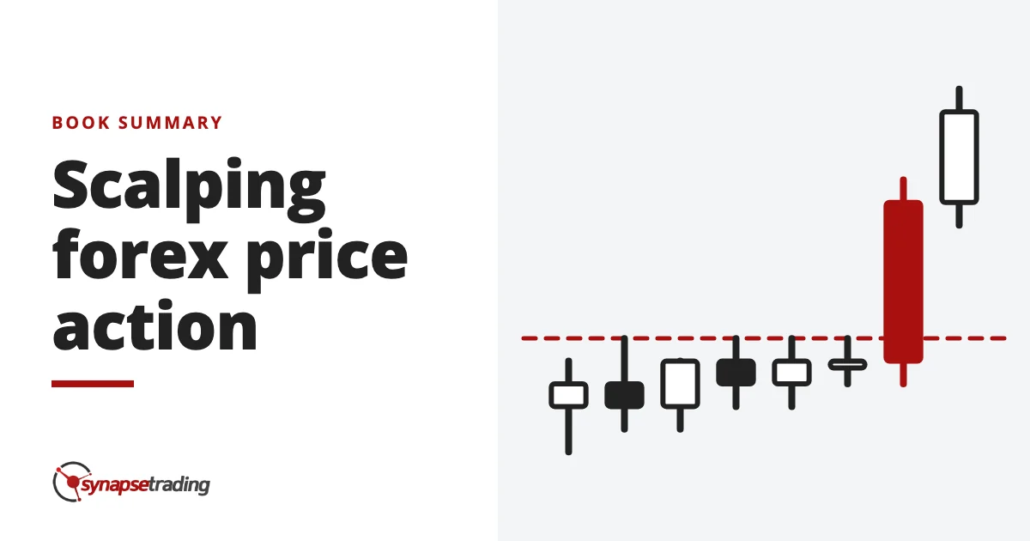
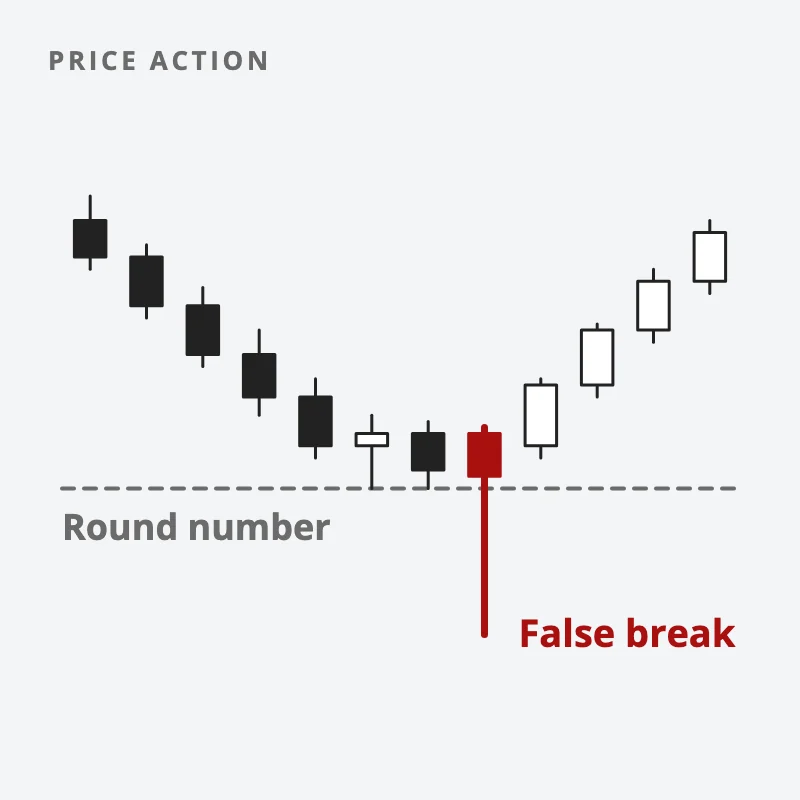
“Forex Price Action Scalping” by Bob Volman is a practical, no-fluff manual for trading forex on very short timeframes using raw price action, no lagging indicators, on a tight bid-ask spread. It is best for traders who already know the basics and want a disciplined, repeatable scalping method, not for beginners or anyone uneasy with fast, high-pressure decisions. The core message is honest: scalping (taking many small, quick profits on tiny price moves) is a real skill, not a shortcut, and it asks for sharp focus, strong risk control, and emotional discipline most people underestimate. Volman teaches you to read the chart itself (support, resistance, the round number, the false break) rather than chase signals. My short verdict: a genuinely good book if scalping is the game you want to play, and a useful read even if it is not, because the price-action thinking carries over. Just go in knowing scalping is one of the harder paths in trading.
Here is what the book covers, what is worth keeping, and who should actually read it.
Who is Bob Volman?
Bob Volman is an independent trader who trades for his own account, and he is widely respected for his work on price action (reading the chart’s own movement instead of relying on indicators). He trades and teaches a pure, discretionary style, and his books are treated as serious reference material by price-action traders. When a working scalper sits down to write out exactly how he reads a 70-tick chart, it is worth a careful read.
What is the book about?
The book is a complete walkthrough of one thing done well: scalping forex with price action.
It starts at the basics (what scalping is, how to read price action) and builds toward a full method, with specific setups, entry and exit rules, and a heavy focus on risk and mindset. Volman does not sell it as easy money. The main message is the opposite: scalping is potentially profitable but genuinely demanding, and it only works if you bring the right skills, knowledge, and discipline. That honesty is the best thing about the book.
10 key ideas from the book
These are the takeaways I would underline if I were reading it again.
- Reading market structure and price action is the foundation. Trends, support and resistance, and chart patterns come first, before anything else.
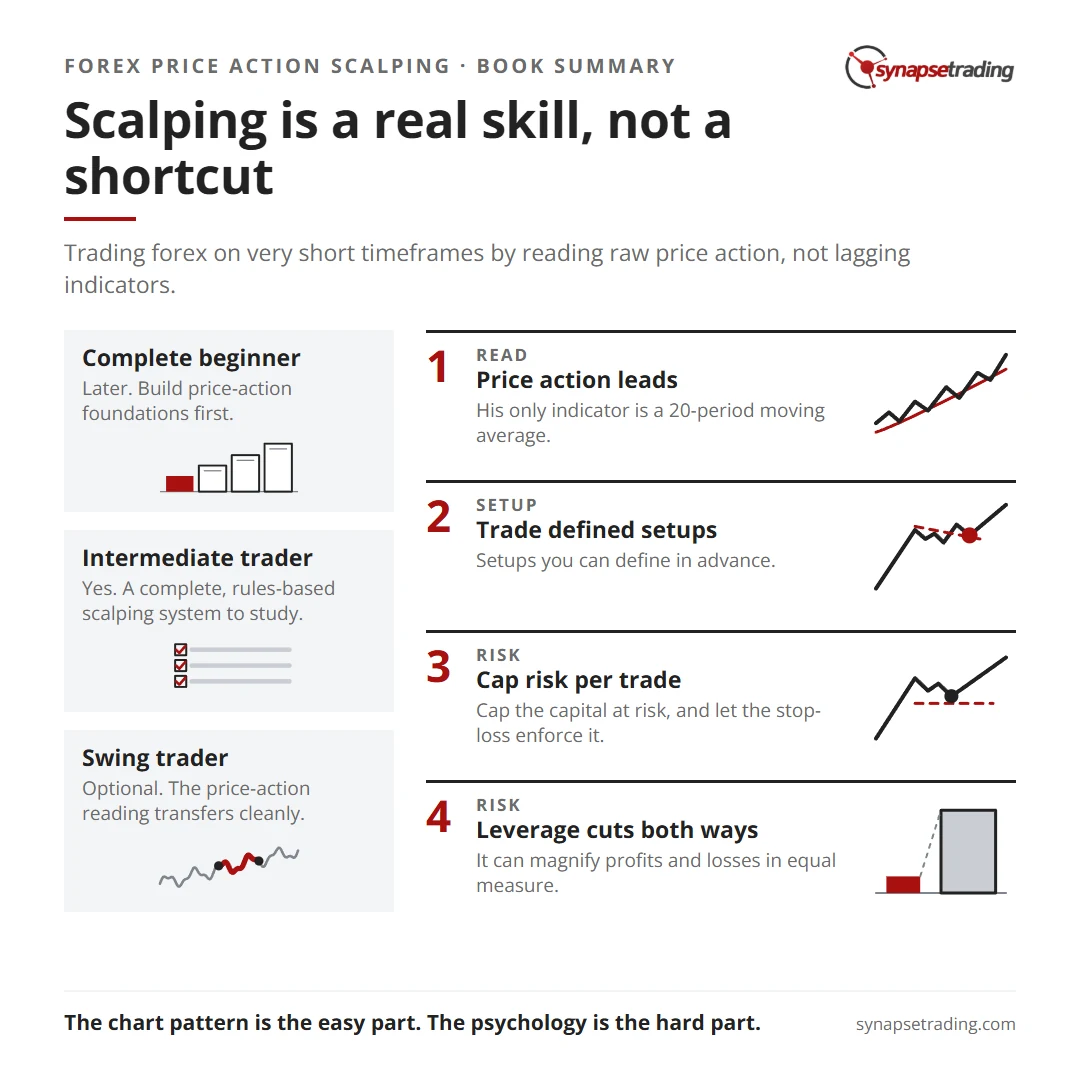
- Indicators are a supplement to price action. His only indicator is a 20-period EMA; the price action leads.
- Discipline and risk management are non-negotiable. Stop-loss orders and strict limits on capital at risk per trade are what keep you in the game.
- The psychology is the hard part. Controlling your emotions and holding discipline under pressure is harder than spotting the setup.
- Leverage cuts both ways. It can magnify profits and losses in equal measure, so use it with caution.
- Scalping demands total focus. You need to read charts fast and decide in real time, with no room to drift.
- You trade specific, defined setups. Success comes from identifying and trading defined chart patterns and price-action setups.
- A robust trading plan is built in advance. That plan must include risk rules and a clear plan for managing losses before they happen.
- Stick to the plan and avoid impulsive trades. Discipline means following your own rules even when the screen tempts you.
- Keep learning and adapting. Markets shift, and the scalper has to keep adjusting to current conditions.
How do you apply the teachings?
A book is only useful if it changes what you do at the screen. Here is how to put Volman’s ideas to work.
- Trade defined chart patterns and price-action setups you can define in advance.
- Build in risk management from the start: stop-loss orders and position sizing on every trade.
- Write a trading plan, then actually follow it.
- Practise discipline and emotional control as a skill, the same way you practise the setups.
- Keep learning and adapt to current market conditions.
- Use indicators alongside price action to refine entries and exits.
- Cap the capital at risk on each trade, and let the stop-loss enforce it.
- Train yourself to spot trends, support and resistance, and patterns quickly.
- Treat leverage with respect, and know its dangers before you size up.
- Build the speed to analyse a chart and decide in real time.
The honest catch: scalping is capital-hungry and high-pressure
There are a few things Volman is upfront about that I want to repeat, because they are the parts people skip.
Scalping aims at very small price moves, so the math only works at size. That means it tends to need a larger amount of capital, and the same leverage that lifts the profit lifts the loss. The potential for gains is matched, bar for bar, by the potential for losses.
And it is not for everyone. If you are not comfortable with fast, high-pressure, screen-glued decision-making, scalping will grind on you. There is no shame in that. Knowing it is not your style is itself a useful conclusion to reach from reading the book.
Should you read it? A quick decision table
| You are… | Read it? | Why |
|---|---|---|
| A complete beginner | Later | Strong price-action foundations help first; the scalping detail will overwhelm you |
| An intermediate trader wanting a defined method | Yes | This is the sweet spot: a complete, rules-based scalping system to study |
| A swing or position trader | Optional, but useful | You will not scalp, but the price-action reading (false breaks, round numbers, support/resistance) transfers cleanly |
| Someone who hates fast, high-pressure trading | Probably not | The method demands real-time focus you may not want to live in daily |
| Looking for easy, passive returns | No | Scalping is one of the more demanding paths |
Where the human edge comes in
Here is the part I keep coming back to. A platform can plot every level, flag every round number, and even auto-mark a clean false break for you. The reading is getting cheaper every year. What no tool hands you is the discipline to size the trade, the patience to skip the marginal setup, and the emotional control to take the stop without flinching. Volman spends as much ink on mindset as on setups for exactly this reason. The chart pattern is the easy part. Trading it like a professional is the judgment, and that is the first of the Five Edges no scanner can trade for you.
My take
Personally, I rate this book highly within its lane. It is honest, specific, and it teaches you to read the chart rather than worship an indicator, which is a habit that pays off whatever timeframe you end up trading. I do not personally scalp as my main game, I prefer rules-based swing trading where I can scan once a day and act calmly. But I still got value from how clearly Volman lays out price-action reading, and I would recommend it to any intermediate trader who is curious about short timeframes. Just keep your eyes open about the capital and the pressure it asks for.
FAQ
Is “Forex Price Action Scalping” by Bob Volman good for beginners?
Not as a first book. It is best for intermediate traders with some forex knowledge. A complete beginner should build price-action foundations first, then come back to the scalping detail.
What is forex price action scalping?
It is a style of trading forex on very short timeframes (Volman uses a 70-tick chart) by reading raw price action, support, resistance, round numbers, and false breaks, to take many small, quick profits, without relying on lagging indicators.
Do you need a lot of capital to scalp?
Generally yes. Scalping targets very small price moves, so the strategy tends to need more capital to be worthwhile, and the leverage that boosts profits boosts losses just as much.
Is the price-action method in the book useful if I do not want to scalp?
Yes. The way Volman reads charts (false breaks, round numbers, support and resistance) carries over to swing and position trading, even if you never trade a 70-tick setup.
Is scalping profitable?
It can be, but it is one of the more demanding styles. It requires sharp focus, strict risk management, and emotional discipline, and the potential for losses matches the potential for gains. It is a skill, and skills take practice.
Now that you have the summary, would you add this one to your reading list? And if you have already read it, what stuck with you most? Let me know in the comments.
If you want the wider shortlist, read the pillar: Best Investing and Trading Books of All Time.
Want a calmer way to trade than scalping? Grab the free 15-Minute Swing Trading Starter Kit, the exact routine I use to scan once a day and trade any market in 15 minutes.
About the author. Spencer Li is The 15-Minute Trader and the founder of Synapse Trading. He is a Certified Financial Technician (CFTe) with 15+ years of trading, run from 70+ countries. He holds a B.Acc and B.BM from SMU. Every trade he takes is public, dated, losses left in. He teaches rules-based swing trading in 15 minutes a day, one system for any market.
Education, not financial advice. Synapse Trading is not licensed by MAS to advise on investment products. Trading carries risk of loss; past performance is not indicative of future results.
Related
Best Investing and Trading Books of All Time · Trading in the Zone by Mark Douglas (review) · Reminiscences of a Stock Operator (review) · Definitive Guide to Price Chart Patterns
Want the daily routine? Enter your email for the free 15-Minute Swing Trader's Checklist.
Free 5-page PDF, then occasional trading emails. Education only, not financial advice. Unsubscribe anytime. Kit stores your email in the US: see our privacy policy.
Want to learn the full method? The Trading Mastery Program teaches the 4 strategies I have traded since 2011. It suits beginners and experienced traders.
Rather follow the trades as they happen? Daily Trading Signals is our Telegram channel: my trade ideas with entry, stop and exit, and every trade is public.
Questions about this post? Ask in the free Telegram channel →
Educational content only, not personalised financial advice. Trading carries risk, including loss of capital. Past performance is not indicative of future results. Synapse Trading is not licensed or regulated by MAS.

