How to Learn Trading and Investing in Singapore (Beginner’s Guide)
Last updated: June 2026 · By Spencer Li, CFTe
To learn trading and investing in Singapore as a beginner, start by deciding which one you are actually doing (investing is buying to hold for years; trading is buying and selling on a shorter horizon), then learn four core skills in order: portfolio strategy to build and protect your capital, basic chart reading, simple market timing, and risk management. Risk management is the one you cannot skip, because it is what keeps a few bad trades from wiping out a good year. You do not need a finance degree, expensive software, or hours a day. You need one repeatable process and the discipline to follow it. You can learn the foundations from free material, structured courses, or a mentor; the format matters less than picking one and finishing it instead of bouncing between ten YouTube channels.
Here is what to learn first, in what order, and how to avoid the beginner traps that quietly cost the most.
Should I learn investing or trading first?
Learn the difference before you spend a cent, because they are not the same skill.
Investing is buying assets (stocks, ETFs, bonds) to hold for years and letting them compound. It is slower, lower-maintenance, and forgiving of bad timing.
Trading is buying and selling on a shorter horizon (days to months) to profit from price moves. It demands more skill, more discipline, and tighter risk control.
Personally, I think most beginners should build an investing base first, then add trading on top once the fundamentals are solid. The reason is simple: investing teaches you to think in years and survive volatility, and that mindset is exactly what stops new traders from blowing up. The two are not rivals. A complete plan uses both, with investing as the foundation and trading as the active layer.
What does a beginner actually need to learn?
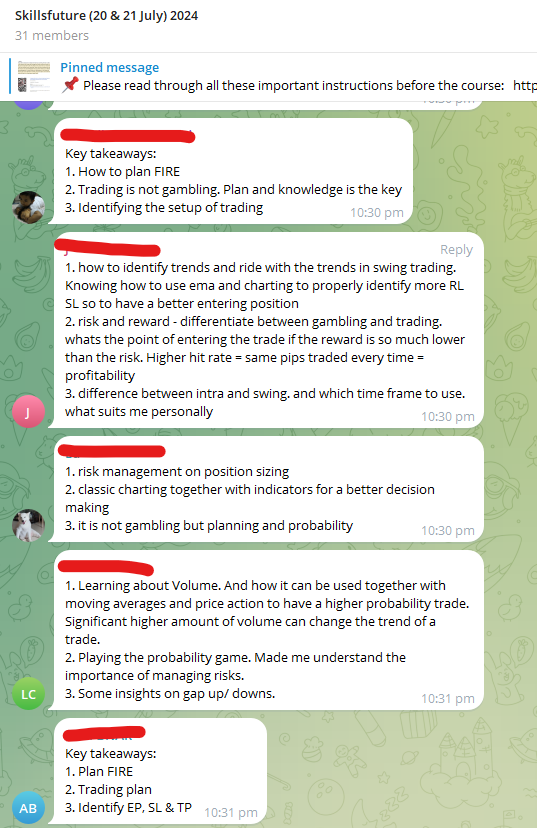
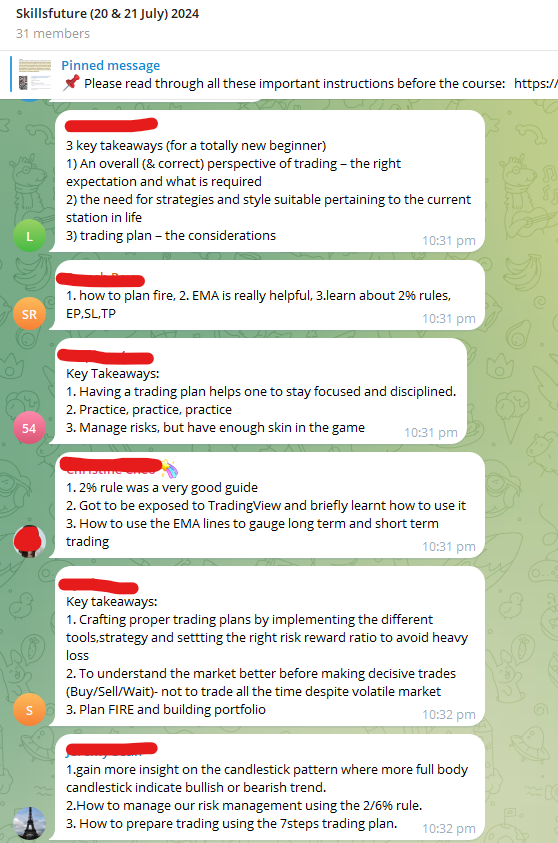
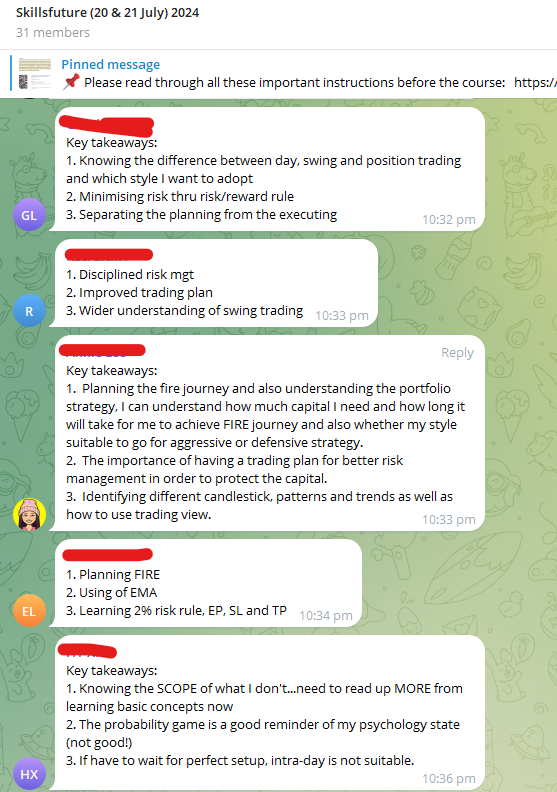
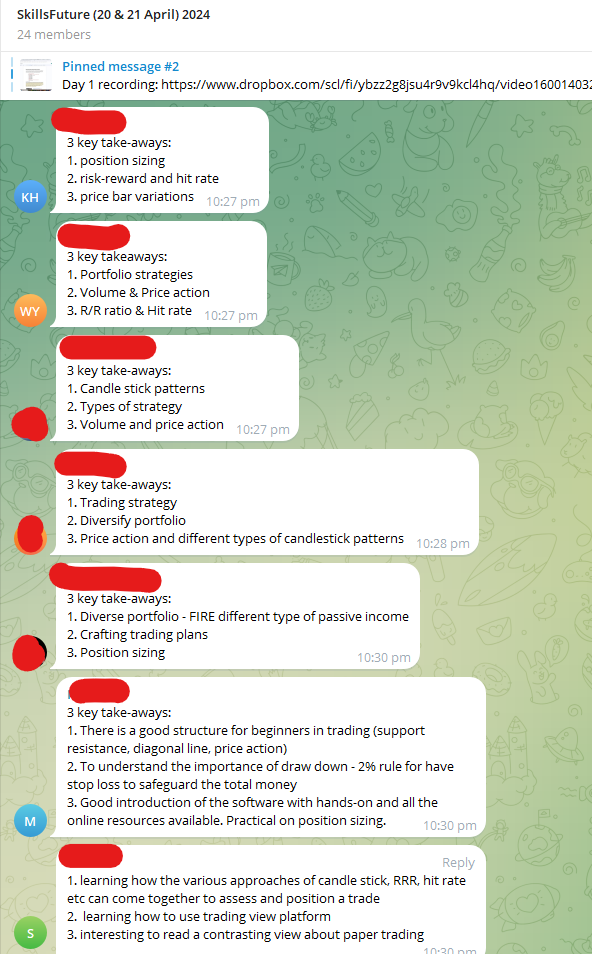
A weekend’s worth of foundations is enough to start, if you cover the right four areas. These are the same building blocks we taught in our beginner workshops, including the SkillsFuture-supported runs we held in the past.
| Skill | What it is | Why it matters | Beginner mistake |
|---|
| Portfolio strategy | How you split capital across assets to build and protect wealth | Decides most of your long-term result, more than any single pick | Going all-in on one “conviction” idea |
| Chart reading | Reading price action and basic patterns on a chart | Lets you time entries and exits instead of guessing | Drowning in 20 indicators that all say different things |
| Market timing | Judging whether conditions favour buying, selling, or standing aside | Keeps you from buying tops and panic-selling bottoms | Acting on noise; trading every single day |
| Risk management | Sizing positions and setting stops so no one trade can hurt you | The skill that keeps you in the game long enough to get good | No stop, no plan, and a position too big to think clearly |
If you only master one of these as a beginner, make it risk management. A great entry with bad risk control still ends badly. A mediocre entry with good risk control survives to trade another day.
How do I learn without losing money while I learn?
The cheapest tuition in this game is the trade you size small. Here is the sequence I’d give a beginner:
- Pick one market and one timeframe. Do not try to trade stocks, forex, and crypto on five timeframes at once. Narrow it down. Depth beats breadth early on.
- Trade small, real positions. Paper trading teaches mechanics but not emotion. A tiny real position teaches both, and the loss, if it comes, is a rounding error.
- Keep a trade journal. Write down why you entered, where your stop was, and what happened. Your journal is your real teacher. Most beginners skip this, and most beginners stay beginners.
- Review weekly, not trade-by-trade. One trade is noise. Twenty trades is a pattern you can actually learn from.
Do note that, the goal in your first months is not to make money. It is to build a process you can repeat and survive long enough to compound. The profit comes after the process does.
Where the human edge comes in
You can get a tool to scan the market, flag a setup, and even draft an order in seconds. That part is close to free now. What no tool will do for you is decide to stand aside when the odds are a coin flip, size the position so a bad day cannot end your year, or sit on your hands through a boring week instead of forcing a trade out of boredom. The information is the easy part. The judgment, the discipline, and the sizing are the part worth learning, and they are the first of the Five Edges no tool can trade for you.
Do I need an expensive course to learn trading?
No. You can learn the foundations from free articles, books, and our own guides. A structured course mainly buys you two things: a sequenced curriculum so you are not stitching together random videos, and feedback so you fix mistakes faster. Both are worth paying for if your time is worth more than the fee, and worthless if you do not do the work afterward. A course is a shortcut through the map, not a substitute for walking it. (When we ran our beginner courses, we capped class size on purpose, because hands-on feedback is the part that actually moves the needle, and that does not scale to a room of 300.)
FAQ
Can I learn trading and investing with no experience?
Yes. Everyone starts with no experience. Begin with investing fundamentals and risk management, trade small real positions, keep a journal, and review weekly. The barrier is discipline and patience, not a finance background.
Is trading or investing better for beginners in Singapore?
For most beginners, build an investing foundation first, then add trading once the fundamentals are solid. Investing teaches you to think in years and survive volatility, which is exactly the mindset that stops new traders from blowing up.
Can I use SkillsFuture credit for a trading course?
Synapse Trading offered SkillsFuture-supported beginner courses in the past, but that accreditation has since lapsed, so our current courses are not claimable with SkillsFuture credit. Check the official SkillsFuture course directory for any provider’s current eligibility before assuming a course qualifies.
How long does it take to learn to trade?
You can learn the foundations in a weekend and start trading small within weeks. Becoming consistently profitable takes months to years, because the hard part is not the knowledge, it is the discipline to apply it the same way every time.
How much money do I need to start?
Less than most people think. Start with an amount small enough that a loss is a learning cost, not a setback. The point early on is to build a repeatable process, not to make money, so position size should be tiny while you are still learning.
Now that you know the four foundations and the order to learn them in, which one are you weakest on right now? That is the one to start with.
If you want the full beginner roadmap in one place, read the pillar: How to Start Trading: A Beginner’s Guide.
Want a process you can actually follow? Grab the free 15-Minute Swing Trading Starter Kit. It’s the exact routine I use to scan once a day and trade any market in 15 minutes, built so a beginner can run it from day one.
About the author. Spencer Li is the founder of Synapse Trading and a Certified Financial Technician (CFTe) with 15 years of trading across stocks, forex, crypto, commodities, and bonds. His trade log is public, 404 trades, losses left in. He teaches low-risk swing trading in 15 minutes a day, one system for any market.
Education, not financial advice. Synapse Trading is not licensed by MAS to advise on investment products. Trading carries risk of loss; past performance is not indicative of future results.
Related
How to Start Trading: A Beginner’s Guide (pillar) · Trading vs investing: what’s the difference · Risk management for beginners · How to read stock charts