• Link to Facebook
  • Link to X
  • Link to Instagram
  • Link to Youtube
  • Link to LinkedIn
  • Link to Mail
Synapse Trading
  • Home
  • About
    • My Background
    • My Trading Journey
    • My Travel Log
    • Media & Interviews
  • Mentoring
    • Trading Mastery Program
    • Results & Testimonials
  • Signals
    • Telegram (Free to join!)
    • Daily Trading Signals
    • Daily Trading Signals (Results)
  • Resources
    • Free Trading Guides
    • Tools & Resources
    • Blog & Infographics
  • Contact
    • Contact Us
    • Partnership Opportunities
  • Click to open the search input field Click to open the search input field Search
  • Menu Menu
Spencer Li

Interactive Brokers: One of the Lowest Margin Fees

Promotions, Tools & Resources

Before reading this guide, the first thing you will need to do is to open an Interactive Brokers (IBKR) account, before you can start trading.

 
margin loan rates table

Investing in the stock market can be an excellent way to grow your wealth over time, but it can also be costly if you’re not careful. One of the biggest expenses when investing is trading costs, such as commissions and fees. Fortunately, there are ways to minimize these costs, and choosing the right online broker is an important part of the equation.

When comparing online brokers, you’ll want to look at a variety of factors, such as account minimums, investment options, and customer service. But one of the most important considerations should be trading costs.

Some online brokers charge flat fees for trades, while others charge a percentage of the trade’s value. Depending on the size and frequency of your trades, one option may be more cost-effective than the other.

Another cost to consider is margin fees. Margin trading can be a powerful tool for experienced investors, but it can also come with high fees. Interactive Brokers is one online broker that stands out in this regard.

According to a recent report from StockBrokers.com, Interactive Brokers has the lowest margin fees of any online broker. Margin fees can add up quickly, especially if you’re making frequent trades, so this can be a significant advantage for traders looking to keep their costs low.

But low margin fees aren’t the only thing to consider when choosing an online broker. You’ll also want to look at other factors like account minimums, investment options, and customer service.

For example, some online brokers require a minimum balance to open an account, while others have no minimums. If you’re just starting out as an investor, a low or no minimum balance requirement can be a big advantage.

Investment options are another important consideration. Some online brokers offer a wide range of investment options, including stocks, bonds, mutual funds, and more. Others may specialize in a particular type of investment, such as cryptocurrency.

Finally, customer service can make a big difference when it comes to choosing an online broker. You’ll want to look for a broker that offers responsive customer support, preferably 24/7. You should be able to get help when you need it, whether you have a question about your account or need technical assistance.

In conclusion, if you’re looking to invest in the stock market, it’s important to choose the right online broker to minimize your trading costs.

Interactive Brokers is one option to consider, as it offers some of the lowest margin fees in the industry.

If you found this guide useful, you might also want to check out our full list of guides for Interactive Brokers!

0 Comments/by Spencer Li
https://synapsetrading.com/wp-content/uploads/2019/10/logo.jpg 0 0 Spencer Li https://synapsetrading.com/wp-content/uploads/2019/10/logo.jpg Spencer Li2023-05-06 21:57:202023-05-06 22:01:38Interactive Brokers: One of the Lowest Margin Fees
Spencer Li

Interactive Brokers: Earn Up to 4.33% on Your Uninvested Cash Holdings

Promotions, Tools & Resources

Before reading this guide, the first thing you will need to do is to open an Interactive Brokers (IBKR) account, before you can start trading.

 
IBKR is offering clients the opportunity to earn interest on long-settled cash balances, with accounts of over USD 100,000 receiving full interest rates, and smaller accounts receiving rates proportional to their size.

Clients with both large long and short cash positions can subscribe to an auto-swap program that authorizes IBKR to execute forex transactions, improving overall interest rate benefits/costs.

This program is only available to qualifying investors with cash balances of at least USD 10 million or equivalent, or those who qualify as an Eligible Contract Participant (ECP) in the US. Interest accrues daily and IBKR posts interest payments on a monthly basis on the third business day of the following month.

Please note that balances held in JPY or RUB may receive a negative rate, while other currencies may receive 0% interest.


Global interest rate

If you found this guide useful, you might also want to check out our full list of guides for Interactive Brokers!

0 Comments/by Spencer Li
https://synapsetrading.com/wp-content/uploads/2019/10/logo.jpg 0 0 Spencer Li https://synapsetrading.com/wp-content/uploads/2019/10/logo.jpg Spencer Li2023-05-06 21:54:442023-05-06 22:01:19Interactive Brokers: Earn Up to 4.33% on Your Uninvested Cash Holdings
Spencer Li

A Day in the Life of a Trader

Promotions, Trading Tips
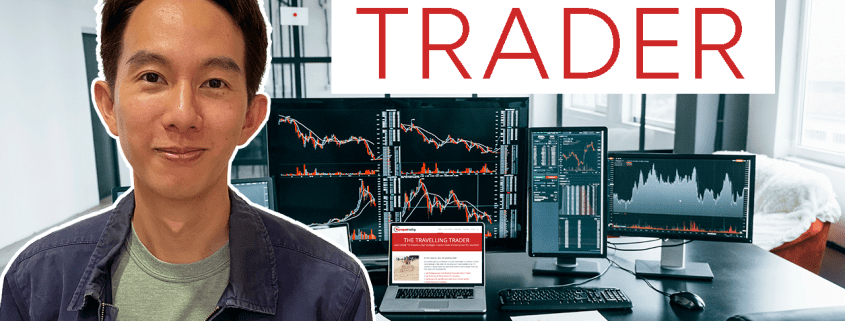
Thumbnail A day in the life of a trader

Are you curious about what it’s like to be a trader? I know I was when I first started out. The fast-paced, ever-changing markets were daunting, but also incredibly exciting. 

As a trader, I rely on a wide range of tools and technologies to stay informed and make informed trading decisions. From trading platforms to charting software and high-speed data feeds, each tool plays a critical role in helping me navigate the markets.

And when it comes to strategies and techniques, there are so many different approaches to choose from. Whether it’s technical analysis, fundamental analysis, or news trading, every trader has their own style and preference. It’s all about finding what works for you and sticking to it.

In this video collaboration with XM Global brokerage, I’ll take you through a day in the life of a trader, from pre-market preparation to end-of-day analysis, and share some useful tools to help in your trading journey.


What is the day-to-day schedule of a trader like?

The day-to-day schedule of a trader can vary depending on the type of trading they do and the market they specialize in. 

However, some general activities that traders typically engage in include:

  • Pre-market preparation: Traders usually start their day by reviewing news and market data that may impact their trades. They also analyze their trading strategies and review their portfolio positions.
  • Market open: The first few hours after the market opens are typically the busiest for traders. They execute trades based on their analysis and strategy.
  • Monitoring: Throughout the day, traders monitor the markets and track the progress of their trades. They may adjust their positions or exit trades as needed.
  • Research: Traders spend time researching and analyzing market trends and news, as well as studying the performance of different companies and sectors.
  • Networking: Traders often build relationships with other traders and brokers to gain insights and market information that can help inform their trades.
  • End of day analysis: At the end of the day, traders review their performance and analyze their trades to identify areas for improvement.

Overall, the schedule of a trader is fast-paced and can be demanding, requiring a high level of focus, discipline, and adaptability.

What tools and technologies do traders use?

Traders use a wide range of tools and technologies to help them analyze markets, identify trends, and execute trades. 

Some of the most common tools and technologies used by traders include:

  • Trading platforms: These are software applications that allow traders to access financial markets, view real-time prices and charts, and place trades.
  • Charting software: Traders use charting software to create visual representations of price movements and identify patterns in the market.
  • News feeds: Traders rely on news feeds to stay up-to-date with the latest developments in the markets, including economic data releases, corporate announcements, and geopolitical events.
  • Algorithmic trading systems: These are computer programs that execute trades automatically based on pre-set rules and parameters.
  • Risk management software: Traders use risk management software to monitor and control their exposure to market risks, including volatility, liquidity, and counterparty risk.
  • Electronic trading networks: These are online platforms that connect traders with each other and with liquidity providers, allowing them to trade directly with one another without the need for a broker.
  • Mobile trading apps: Traders use mobile trading apps to access the markets and manage their trades from their mobile devices.
  • High-speed data feeds: Traders require real-time market data to make informed trading decisions. High-speed data feeds provide up-to-the-millisecond pricing information that traders use to execute trades.

What are some strategies and techniques used by traders?

There are various strategies and techniques used by traders, and different traders may prefer different methods depending on their personal preferences and risk tolerance. 

Here are some common strategies and techniques:

  • Technical analysis: This involves studying price charts and using technical indicators to identify trends, patterns, and potential trading opportunities.
  • Fundamental analysis: This involves analyzing economic and financial data, such as company earnings reports, economic indicators, and news events, to make trading decisions.
  • Trend following: This involves identifying the direction of a trend and entering trades in the same direction, hoping to ride the trend for profit.
  • Scalping: This involves making numerous trades over a short time frame to take advantage of small price movements.
  • Swing trading: This involves holding positions for a few days or weeks, aiming to capture price movements within a longer-term trend.
  • Position trading: This involves holding positions for several months to a year or more, taking a long-term view on the markets.
  • News trading: This involves taking advantage of market volatility caused by news events, such as interest rate changes, economic data releases, and geopolitical events.
  • Arbitrage: This involves taking advantage of price differences between different markets or assets to make a profit.

Traders may also use various risk management techniques, such as setting stop-loss orders to limit losses, using leverage to amplify gains, and diversifying their portfolio to reduce risk.

My trading journey and challenges

My trading journey has been a rollercoaster ride, filled with ups and downs. When I first started trading, I was filled with excitement and optimism. I was eager to learn and I spent countless hours reading books, attending seminars, and watching educational videos. However, as I started trading with real money, I quickly realized that things were not as easy as they seemed.

One of the biggest challenges I faced was my emotions. I found it difficult to stay disciplined and stick to my trading plan. I would often get too caught up in the moment and make impulsive decisions, which led to losses. It took a lot of self-reflection and practice to develop the mental fortitude required to be a successful trader.

Another challenge I faced was finding a reliable trading strategy that worked for me. I tried out several different approaches, from day trading to swing trading, but I struggled to find a consistent method that produced the results I was looking for. It wasn’t until I discovered price action trading that I finally found a strategy that resonated with me.

Despite the challenges, I persisted in my trading journey, and over time I learned to manage my emotions and stick to my trading plan. I also became more confident in my trading abilities as I saw my profits grow. Looking back on my journey, I am proud of the progress I have made and the lessons I have learned. Trading is not easy, but with the right mindset and approach, it is possible to succeed.

Looking for a professional trading platform to give you an edge? 

XM Global is a leading brokerage company that is dedicated to providing traders with a seamless and efficient trading experience, providing access to more than 50 currency pairs. As a trusted platform for many traders, XM is committed to helping traders improve their skills and succeed in the trading world.

To further assist traders in their trading journey, XM provides ongoing EN Live Education sessions with experts and global instructors around the world. They have 2 rooms, one for beginners and one for advanced traders, and both rooms are live everyday from 3PM – 12 AM SGT to cover a wide variety of topics to help traders improve their trading. These live education sessions are also a great opportunity for traders to learn valuable insights and strategies that can help them achieve their trading goals.

For traders looking for a reliable and trusted trading platform, XM is the ideal choice. Sign up now using the link below to join their EN Live Education and learn from some of the well-known experts in the industry.

Schedule: Monday – Friday (3PM – 12AM SGT)

Refer here for more information: https://www.xm.com/english-education-schedule 

Concluding Thoughts

In summary, trading is not without its challenges. It can be difficult to stay disciplined and stick to your trading plan when the markets are constantly in flux. And finding a reliable trading strategy that works for you is easier said than done.

But despite the challenges, being a trader is incredibly rewarding. I’ve learned so much over the years and have seen my profits grow as I become more confident in my trading abilities. 

Now that I have shared all about the daily life of a  trader, is this something that you would consider doing full time?

Also, for those who are actively trading, what are some challenges you face in your trading?

Let me know in the comments below.

If you are keen on any partnerships or sponsored content, check out:
🤝 https://synapsetrading.com/?p=28772

0 Comments/by Spencer Li
https://synapsetrading.com/wp-content/uploads/2023/04/Thumbnail-A-day-in-the-life-of-a-trader.png 720 1280 Spencer Li https://synapsetrading.com/wp-content/uploads/2019/10/logo.jpg Spencer Li2023-04-05 03:36:592024-08-03 19:55:26A Day in the Life of a Trader
Spencer Li

How Place Trades (Buy & Sell) on Interactive Brokers (IBKR)

Promotions, Tools & Resources

Before reading this guide, the first thing you will need to do is to open an Interactive Brokers (IBKR) account, before you can start trading.


How Place Trades (Buy & Sell Orders)

1. Click on “Trade”.

2. Click on “Order Ticket”.

Step 1 and 2 How to place trades
3. Choose which products that you will like to trade.

Step 3 How to place trades

4. For example, I will like to purchase 2 stocks of Coca-Cola. I will key in the company name and press enter.

Step 4 How to place trades
5. Select the correct product you are looking for.

Step 5 How to place trades
6. The page will update accordingly. Click on “Buy”.

Step 6 How to place trades

7. Adjust the quantity to 2. (For more information on Order Type, Time-in-force and Attach Orders, check after step 8)


8. Click on “Submit Order” to purchase the 2 stocks! That’s it!

Step 7 and 8 How to place trades


Types of Trade Orders

Order Type How to place trades

Limit: A Limit order is an order to buy or sell at a specified price or better. The Limit order ensures that if the order fills, it will not fill at a price less favorable than your limit price, but it does not guarantee a fill.

MidPrice: The MidPrice order is designed to split the difference between the bid and ask prices, and fill at the current midpoint of the NBBO (National Best Bid and Offer) or better. Set an optional price cap to define the highest price (for a buy order) or the lowest price (for a sell order) you are willing to accept.

Market: A Market order is an order to buy or sell at the market bid or offer price. A market order may increase the likelihood of a fill and the speed of execution, but unlike the Limit order a Market order provides no price protection and may fill at a price far lower/higher than the current displayed bid/ask.

Stop: A Stop order is an instruction to submit a buy or sell market order if and when the user-specified stop trigger price is attained or penetrated. A Stop order is not guaranteed a specific execution price and may execute significantly away from its stop price. A Sell Stop order is always placed below the current market price and is typically used to limit a loss or protect a profit on a long stock position. A Buy Stop order is always placed above the current market price. It is typically used to limit a loss or help protect a profit on a short sale.

Stop Limit: A Stop-Limit order is an instruction to submit a buy or sell limit order when the user-specified stop trigger price is attained or penetrated. The order has two basic components: the stop price and the limit price. When a trade has occurred at or through the stop price, the order becomes executable and enters the market as a limit order, which is an order to buy or sell at a specified price or better.

A Stop-Limit eliminates the price risk associated with a stop order where the execution price cannot be guaranteed, but exposes the investor to the risk that the order may never fill even if the stop price is reached. The investor could “miss the market” altogether.

Market on Close: A Market-on-Close (MOC) order is a market order that is submitted to execute as close to the closing price as possible.

Limit on Close: A Limit-on-close (LOC) order will be submitted at the close and will execute if the closing price is at or better than the submitted limit price.


Time-in-Force for Orders

Time in Force How to place trades

The time in force for an order defines the length of time over which an order will continue working before it is cancelled.

Good Till Cancel: An order that uses the Good-Til-Canceled (GTC) time in force will continue to work until the order fills or is cancelled . The ability to enter a bid well below the prevailing trading price for most asset classes, or an offer higher than its current level, allows an investor to place a resting order for days, weeks or months in advance without having to repeat the process each day.

At the Opening: Use this to send a market-on-open (MOO) or limit-on-open (LOO) order.

Day: A Day order is canceled if it does not execute by the close of the trading day. Unless otherwise specified, every order is a Day order.


Attach Orders

Attach Orders How to place trades
Profit Taker: It is an opposite side limit order designed to close a position while it is profitable. (For example, you purchase a stock at $10 each. You can indicate your PT LIMIT PRICE at $11 to make a profit of $1 per stock)

Stop Loss: It is an opposite side stop order designed to close out a position with only a user-specified, limited loss. (For example, you purchase a stock at $10 each. You can indicate your SL STOP PRICE at $9 to cut your losses if the stock is plummeting)

If you found this guide useful, you might also want to check out our full list of guides for Interactive Brokers!

0 Comments/by Spencer Li
https://synapsetrading.com/wp-content/uploads/2019/10/logo.jpg 0 0 Spencer Li https://synapsetrading.com/wp-content/uploads/2019/10/logo.jpg Spencer Li2022-11-29 21:36:002023-05-03 23:36:25How Place Trades (Buy & Sell) on Interactive Brokers (IBKR)
Spencer Li

How to Deposit and Withdraw Funds in Interactive Brokers (IBKR)

Promotions, Tools & Resources

Before reading this guide, the first thing you will need to do is to open an Interactive Brokers (IBKR) account, before you can start trading.


How to Deposit Funds in Interactive Brokers (IBKR)

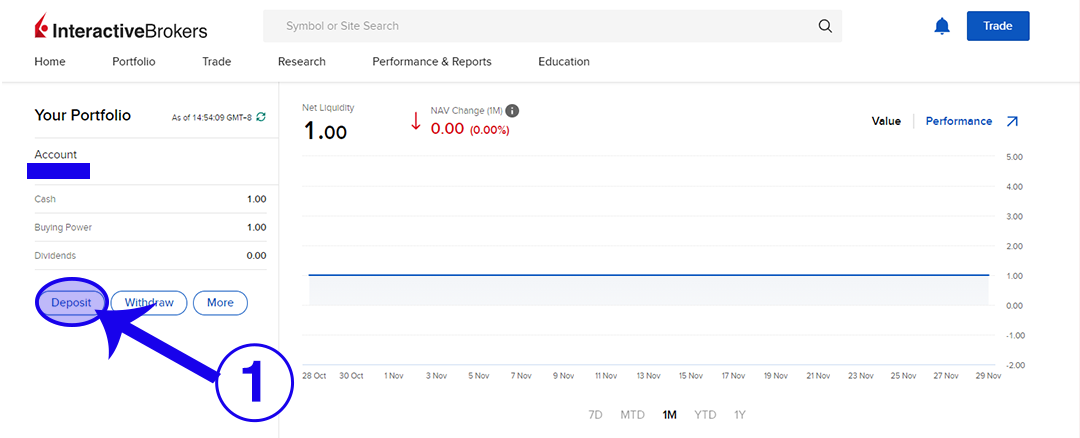
1. Login to your Interactive Brokers account in your browser. Click on “Deposit”

Step 1 How to Deposit into IBKR fund account

2. Click on “Use a new deposit method”.

Step 2 How to Deposit into IBKR fund account

3. Select the currency you want to deposit.

Step 3 How to Deposit into IBKR fund account

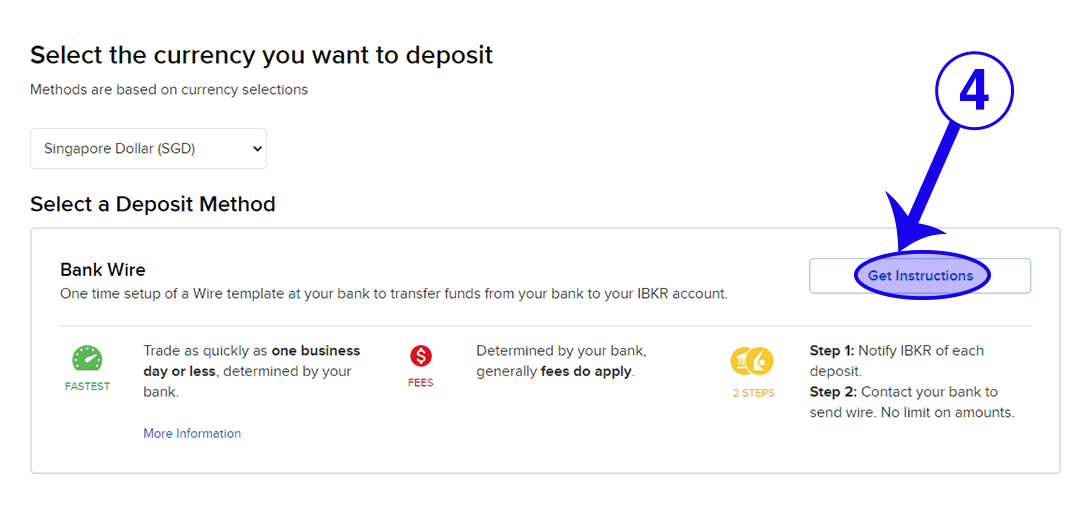
4. Click on “Get Instructions”.

Step 4 How to Deposit into IBKR fund account

5. Fill in the relevant details. Then click on “Get Wire Instructions”.

Step 5 How to Deposit into IBKR fund account

6. This is the page where you get the information to transfer the money to. Click on “Finish” when you are ready.

Step 6 How to Deposit into IBKR fund account

7. Go to your bank and transfer the money to the bank details that you got from Step 6.

8. Check if the money has successfully transferred after a few hours. I highly recommend transferring a very small amount of money on your first time. Then you can transfer again once you are sure that all the details are accurate.

9. Once you have saved your bank information from Step 5, it’s easier to access them again when you click on “Deposit”.


How to Withdraw Funds from Interactive Brokers (IBKR)

One free withdrawal is allowed per calendar month. Subsequent withdrawals using this method will incur a fee of SGD 15.00 at IBKR. Your bank may charge a fee for an incoming wire.

1 Login to your Interactive Brokers account in your browser. Click on “Withdraw”.

Step 1 How to Withdraw from IBKR fund account

2. Select the currency you want to withdraw.

Step 2 How to Withdraw from IBKR fund account

3. Select the method of your choice. For GIRO/ACH (refer to Step 4 to Step 8) and Bank Wire (refer to Step 9 to Step 12).

Step 3 How to Withdraw from IBKR fund account

(Note: If you are doing GIRO or Bank Wire to the same bank account, you NEED to create the method accordingly. This is due to the differences in charges and processing time for either method.)


GIRO/ACH

4. Fill in the relevant details and click “Save Bank Information”.

Step 4 How to Withdraw from IBKR fund account

5. Confirm your bank details again. Complete your Signature and click “Continue”.

Step 5 How to Withdraw from IBKR fund account

6. Your bank information has been saved.

Step 6 How to Withdraw from IBKR fund account

7. Repeat Step 1 to Step 3 again to initiate the GIRO/ACH transfer to the selected account.

Step 7 How to Withdraw from IBKR fund account

8. Key in the withdrawal amount and click on “Create Withdrawal”.

Step 8 How to Withdraw from IBKR fund account


Bank Wire

9. Fill in the relevant details and click “Save Bank Information”.

Step 9 How to Withdraw from IBKR fund account


10. Check your bank details again. Click “Continue”.

Step 10 How to Withdraw from IBKR fund account

11. Your bank details are saved.

Step 11 How to Withdraw from IBKR fund account

12. Repeat Step 1 to Step 3 again to initiate the Bank Wire transfer to the selected account. Key in the withdrawal amount and click on “Create Withdrawal”.

Step 12 How to Withdraw from IBKR fund account


If you found this guide useful, you might also want to check out our full list of guides for Interactive Brokers!

0 Comments/by Spencer Li
https://synapsetrading.com/wp-content/uploads/2019/10/logo.jpg 0 0 Spencer Li https://synapsetrading.com/wp-content/uploads/2019/10/logo.jpg Spencer Li2022-11-29 21:12:132023-05-03 23:35:21How to Deposit and Withdraw Funds in Interactive Brokers (IBKR)
Page 1 of 212

Free Trading Guides

Free Trading Guides

Blog Categories

  • Beginner's Guide
  • Blockchain & Crypto
  • Book Summaries
  • Candlestick Patterns
  • Economics & News Trading
  • Investing & Portfolio Management
  • Living Your Best Life
  • Market Analysis
  • News & Events
  • Price Chart Patterns
  • Promotions
  • Risk & Money Management
  • Stock Trading
  • Testimonials
  • Tools & Resources
  • Trading Psychology
  • Trading Strategies
  • Trading Tips
  • Travel & Lifestyle

Free Trading Guides

Free Trading Guides

Contact Us

Synapse Trading Pte Ltd
Registration No. 201316168H

Whatsapp: +65-8897-1204
Telegram: @iamrecneps
Email: info@synapsetrading.com

Links

Disclaimer
Privacy policy
Terms & Conditions
Contact us
Partnerships

© 2012-2024 Synapse Trading | All rights reserved | - powered by Enfold WordPress Theme
  • Link to Facebook
  • Link to X
  • Link to Instagram
  • Link to Youtube
  • Link to LinkedIn
  • Link to Mail
Scroll to top Scroll to top Scroll to top