Free trading guide
The Practical Guide to Money and Risk Management for Traders
 By Spencer Li, CFTe · Last updated 16 October 2026
How much to risk on each trade, where to put your stop and target, and how to tell whether it is working.

Free trading guide
By Spencer Li, CFTe · Last updated 16 October 2026
How much to risk on each trade, where to put your stop and target, and how to tell whether it is working.
Chapter 1 of 6
The first thing to understand is the difference between trading and gambling. One relies on luck; the other relies on skill and sound money management.
Serious trading takes a systematic, mathematical approach to money and risk, so that you protect and grow your capital over the long run.
Chapter 2 of 6
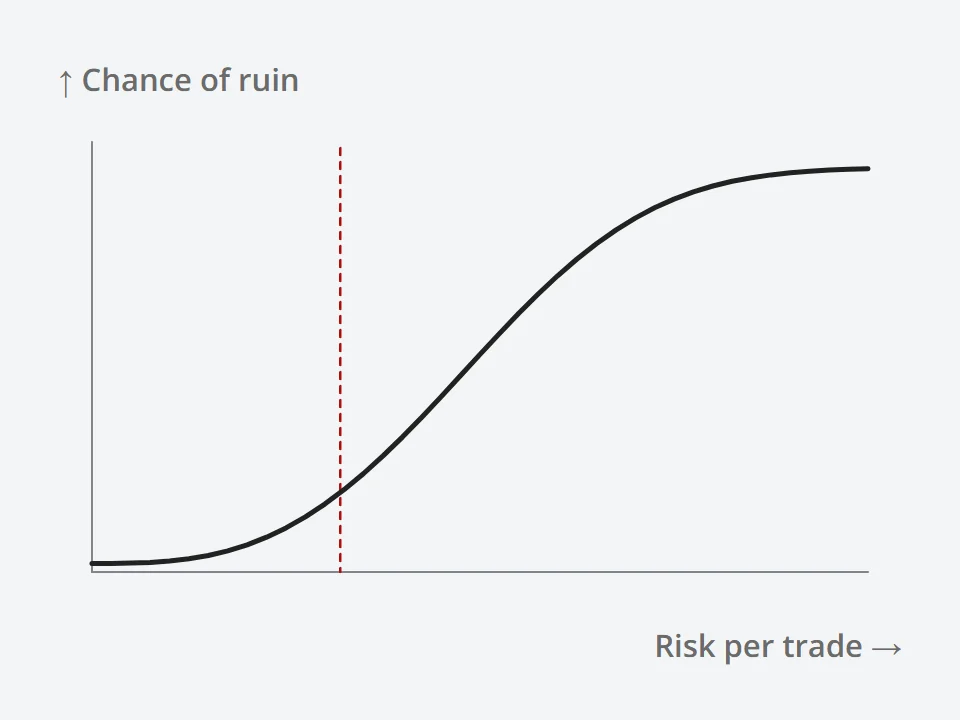
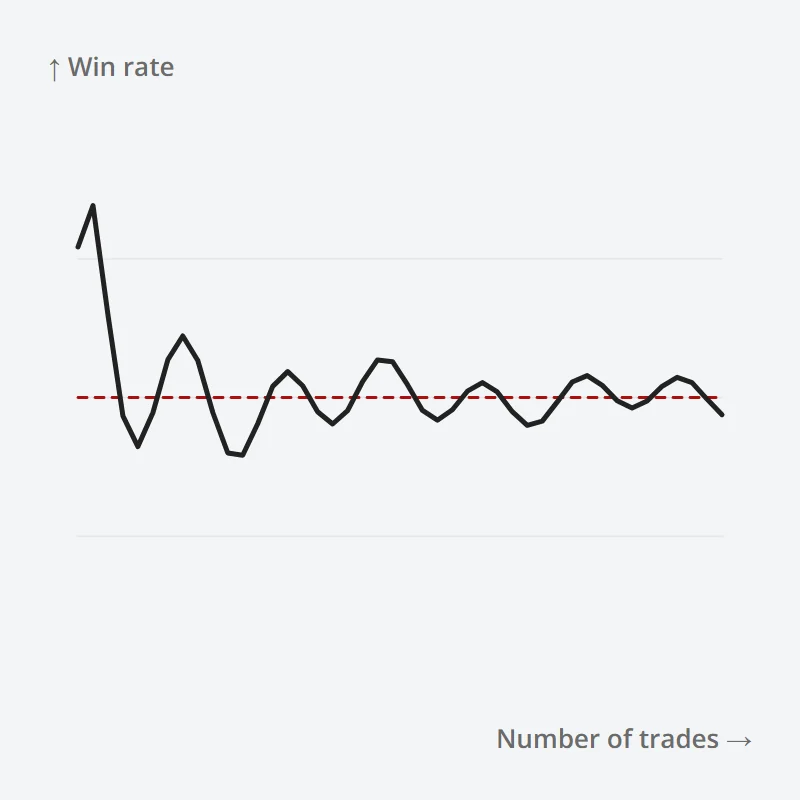
Before you manage risk, you need the maths and statistics behind it, so that you can plan how to allocate your capital and work out your risk before each trade.

Free checklist
The 15-Minute Swing Trader's Checklist is the daily and weekly routine I use to find, manage and review trades in about 15 minutes a day. Five pages, free, straight to your inbox.
Free 5-page PDF, then occasional trading emails. Education only, not financial advice. Unsubscribe anytime. Kit stores your email in the US: see our privacy policy.
Chapter 3 of 6
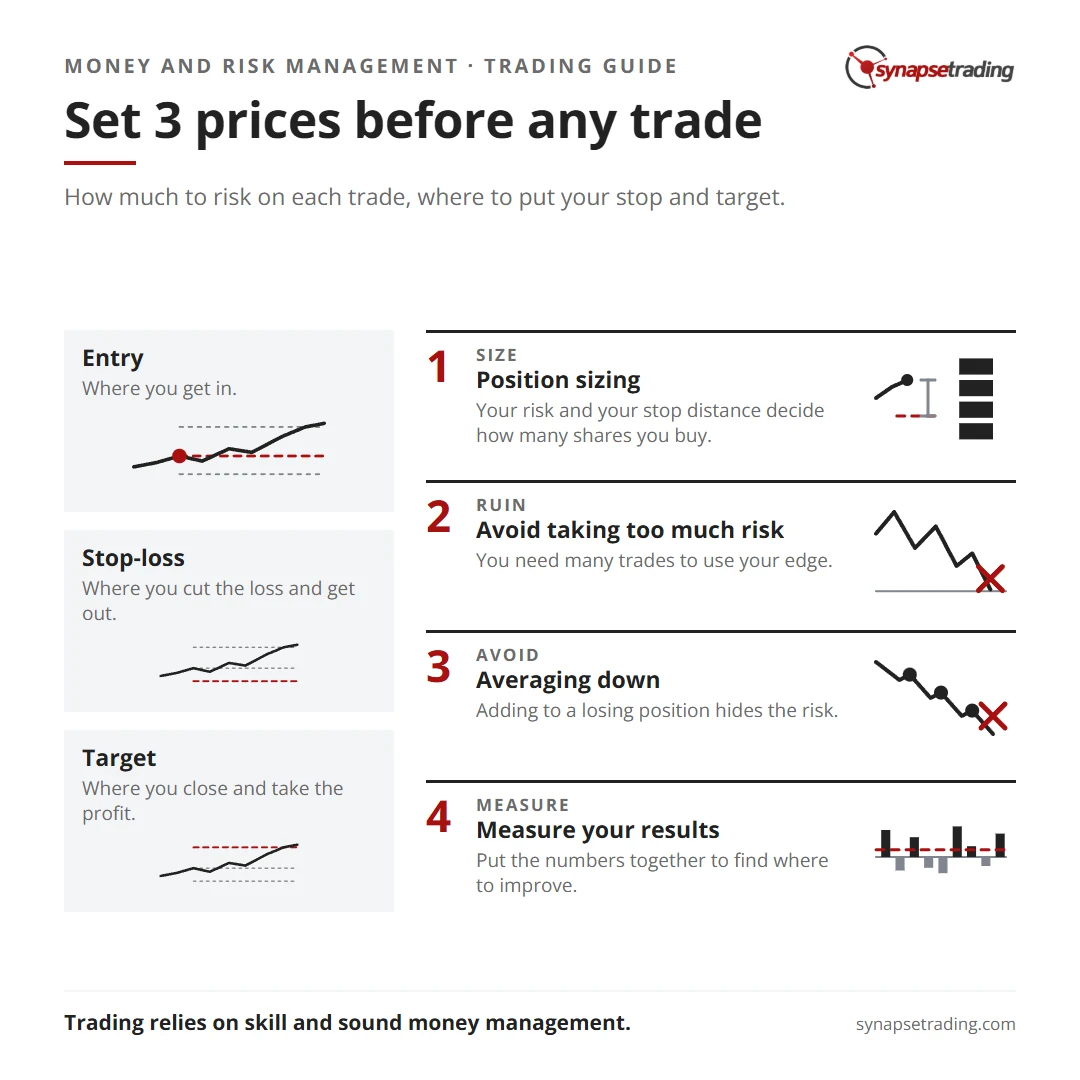
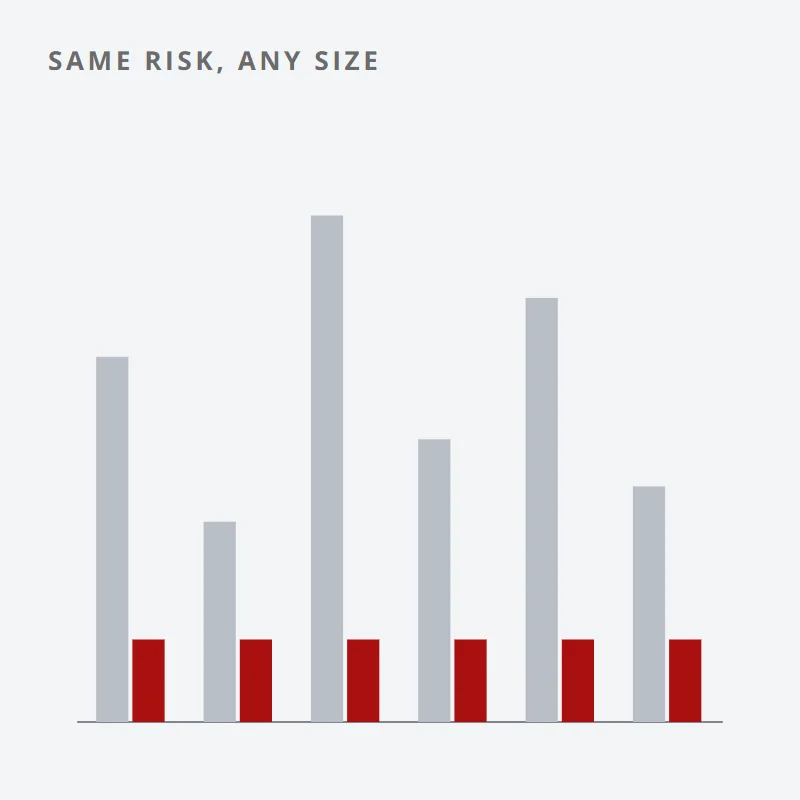
Position sizing is deciding how much you want to risk on each trade. That risk, and the distance to your stop, decide how many shares or lots you buy.
Chapter 4 of 6
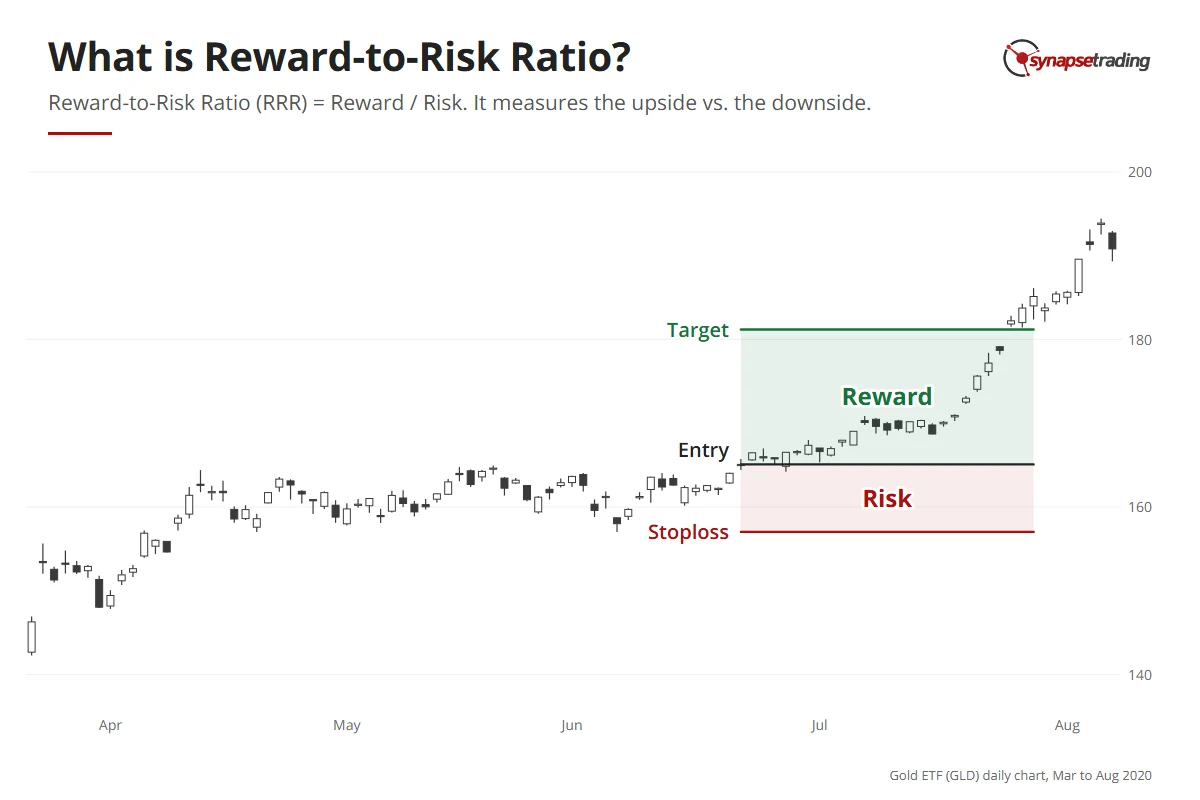
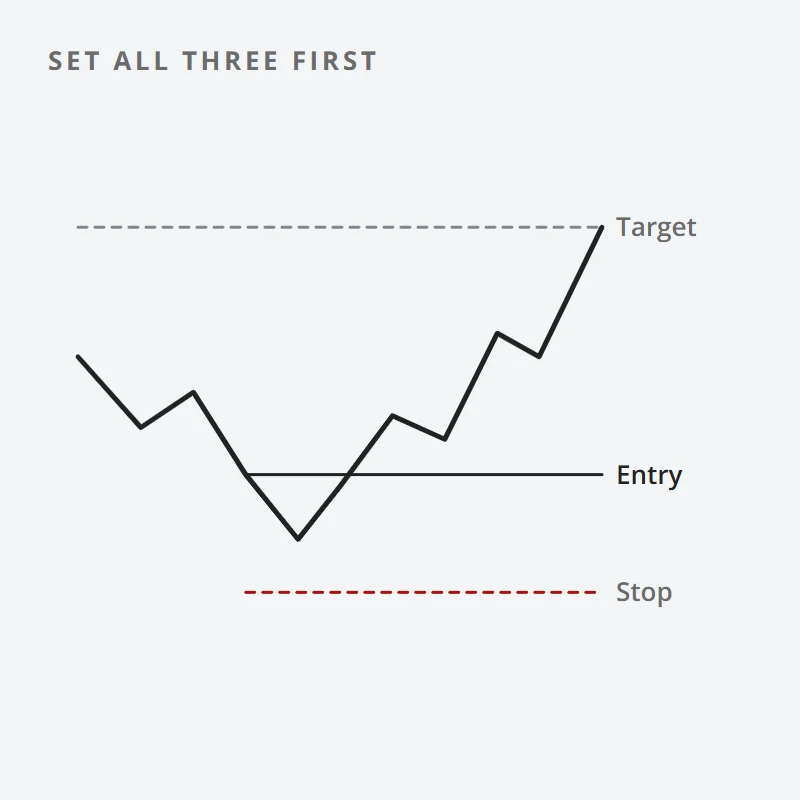
Before you enter any trade, set three prices: the entry price, the stop-loss and the target.
The entry is where you get in. The stop-loss is where you cut the loss and get out. The target is where you close the trade and take the profit.
Chapter 5 of 6
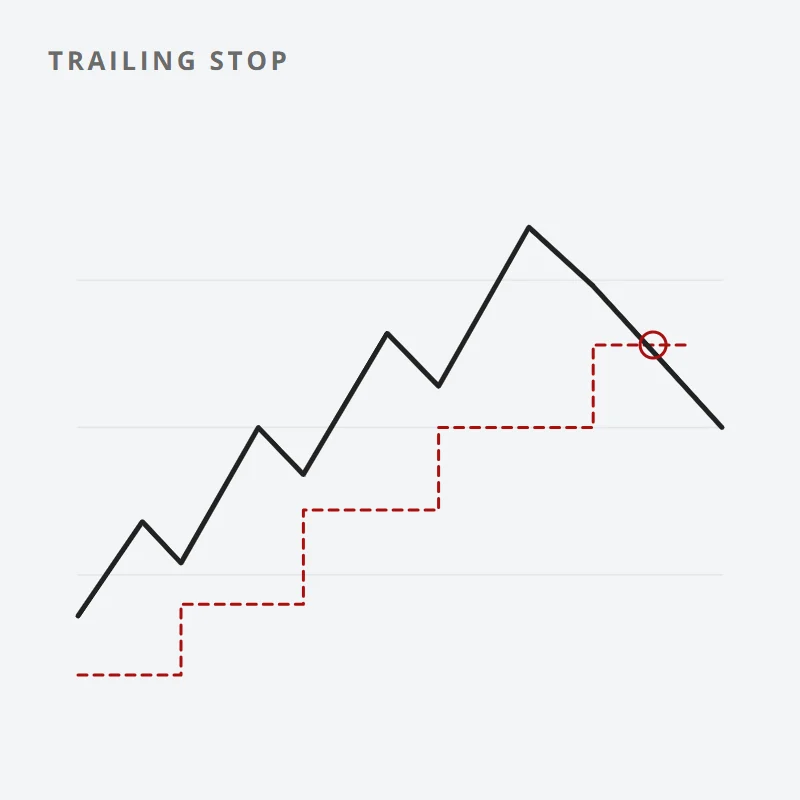
Next come the practical parts: how to place orders to enter and exit, the ways to exit a trade, and how to use leverage without letting it use you.
Chapter 6 of 6
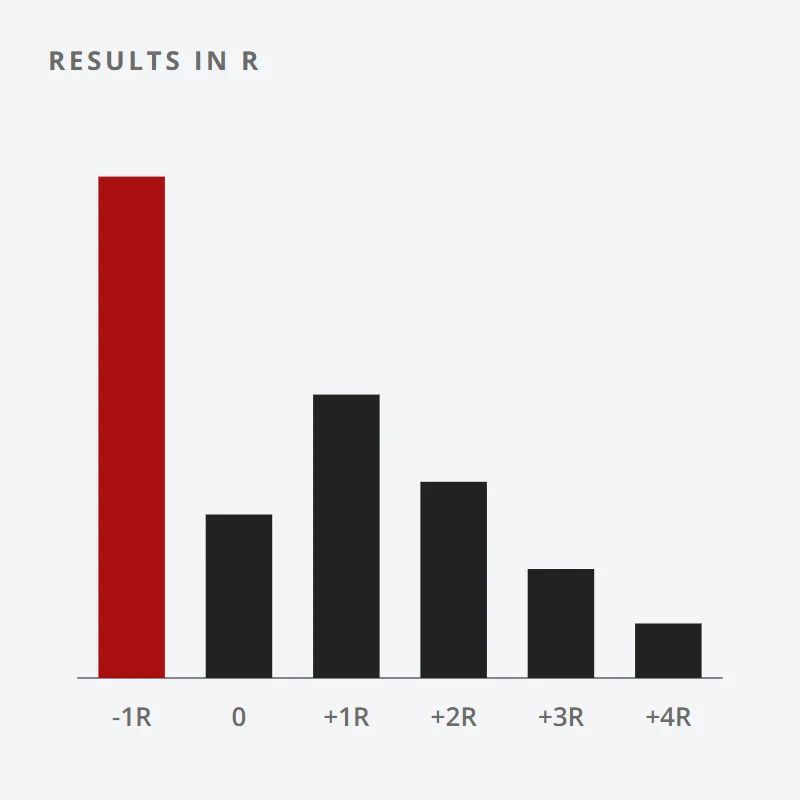
Once you have the raw numbers (entries, stops, win rate, reward-to-risk), put them together to measure your performance and find where to improve.
The free 15-Minute Swing Trader's Checklist turns the rules in this guide into a daily routine: size the trade, set the stop, log the result.
Free 5-page PDF, then occasional trading emails. Education only, not financial advice. Unsubscribe anytime. Kit stores your email in the US: see our privacy policy.