Free trading guide
The Beginner’s Guide to Trading and Technical Analysis
 By Spencer Li, CFTe · Last updated 16 October 2026
How markets move, how to read a chart, and how to pick a style, write a plan and avoid the usual beginner mistakes.

Free trading guide
By Spencer Li, CFTe · Last updated 16 October 2026
How markets move, how to read a chart, and how to pick a style, write a plan and avoid the usual beginner mistakes.
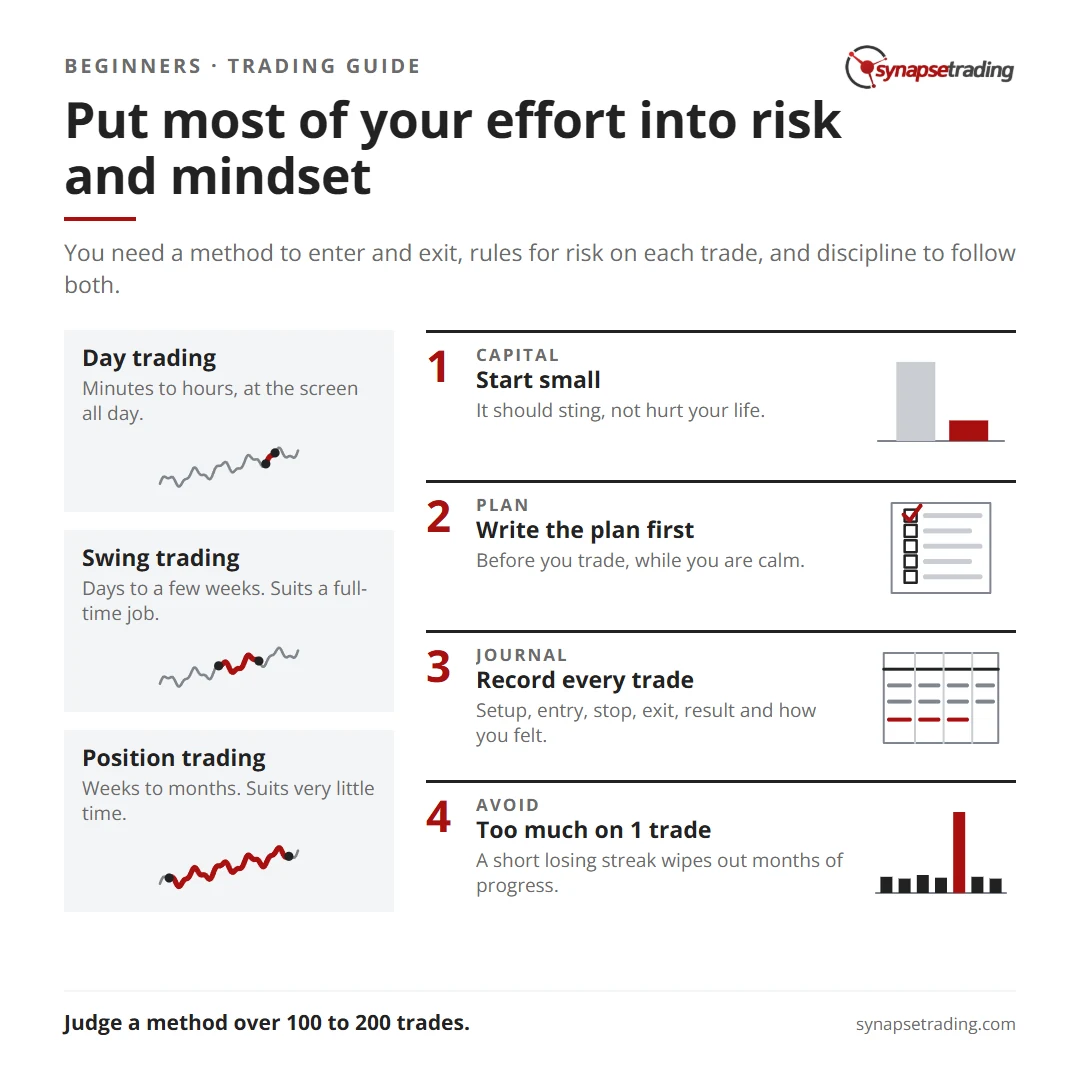
Trading means buying and selling a market, such as a stock, a currency or a commodity, to profit from a price move over days or weeks rather than years. To start, you need 3 things: a method for when to enter and exit, rules for how much you risk on each trade, and the discipline to follow both when the market moves against you.
This guide covers each of those on the page, in the order a beginner meets them. Expect the learning to take a count of trades rather than a number of months. Most traders need 100 to 200 trades before they can judge whether a method suits them.
Chapter 1 of 6
The first decision is how much money to start with. There is no single right figure, so use this test. Start with an amount small enough that losing it will not hurt your life, and big enough that losing it stings. Too small, and a loss means nothing, so you never take your decisions seriously. Too big, and fear makes every decision for you.
The second decision is trading or investing. Investing buys good assets and holds them for years. Trading takes shorter positions and needs more of your attention. Both are valid, many people do both, and the right mix depends on your capital, your time and your temperament.
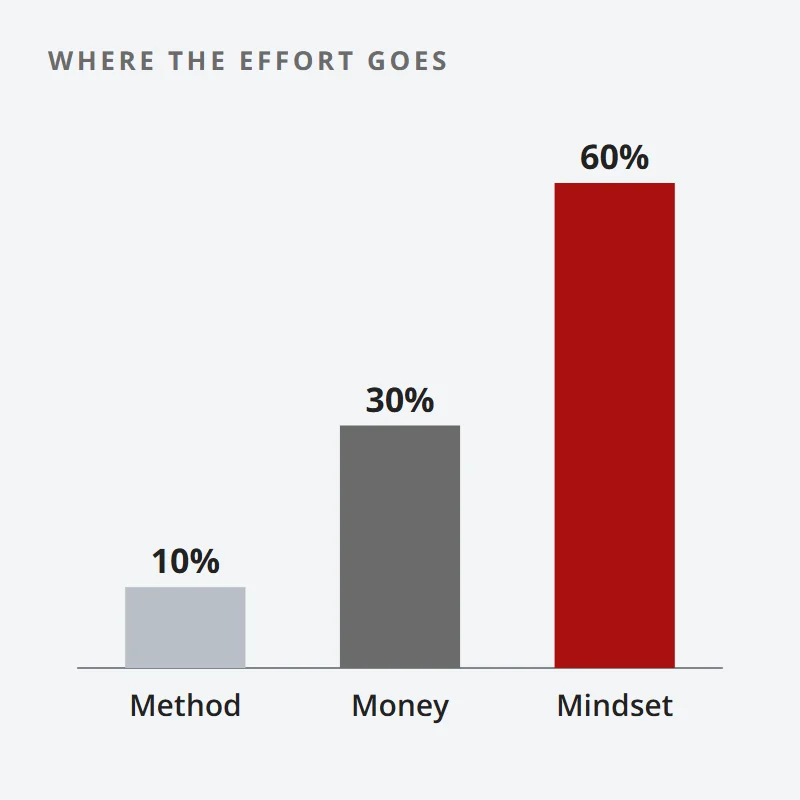
The third is where your attention goes. Traders talk about the 3 Ms: Method, which is your strategy for entering and exiting, Money, which is your risk and position size, and Mindset, which is how well you follow your rules under stress. Personally, I weight them at about 10% Method, 30% Money and 60% Mindset. Most beginners do the reverse, and spend almost all their effort hunting for the perfect setup.
Further reading

Free checklist
The 15-Minute Swing Trader's Checklist is the daily and weekly routine I use to find, manage and review trades in about 15 minutes a day. Five pages, free, straight to your inbox.
Free 5-page PDF, then occasional trading emails. Education only, not financial advice. Privacy policy
Chapter 2 of 6
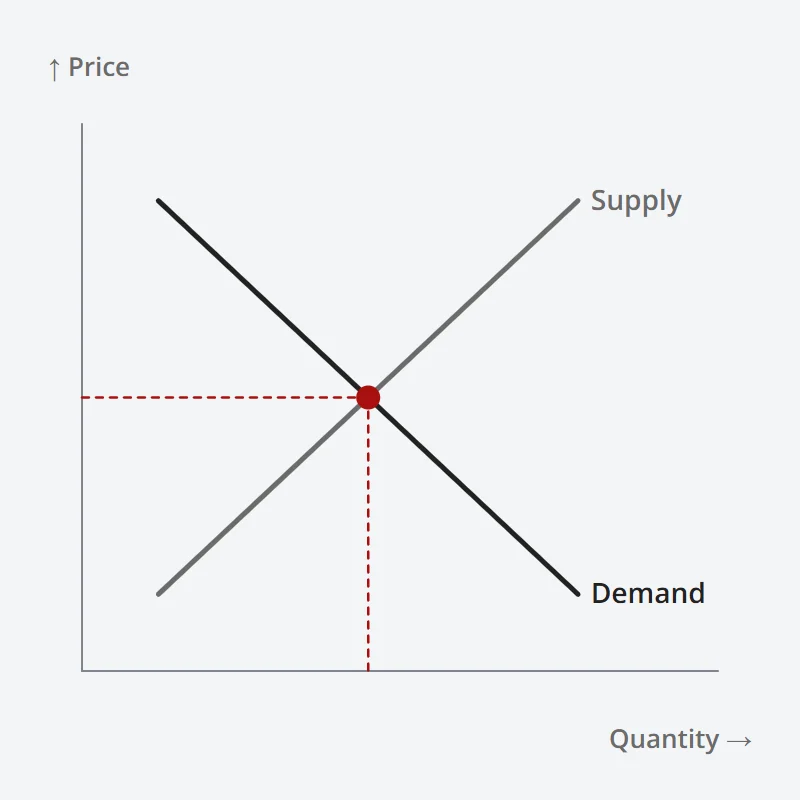
Prices move because buyers and sellers disagree about value. When buyers are keener than sellers, price rises until enough sellers appear. When sellers are keener, it falls. Every news story, earnings report and rate decision works through that same balance of supply and demand.
There are 2 main ways to study it. Fundamental analysis asks what something is worth, using earnings, the economy and valuation. Technical analysis asks what price is doing, using the chart itself, on the view that price already reflects what most people know. Fundamental analysis is better at telling you what to buy, and technical analysis is better at telling you when.
Personally, I find the best approach is to combine them. Use fundamentals, or simply a strong market, to choose where to look, and use the chart to time the entry and place the stop.
Further reading
Chapter 3 of 6
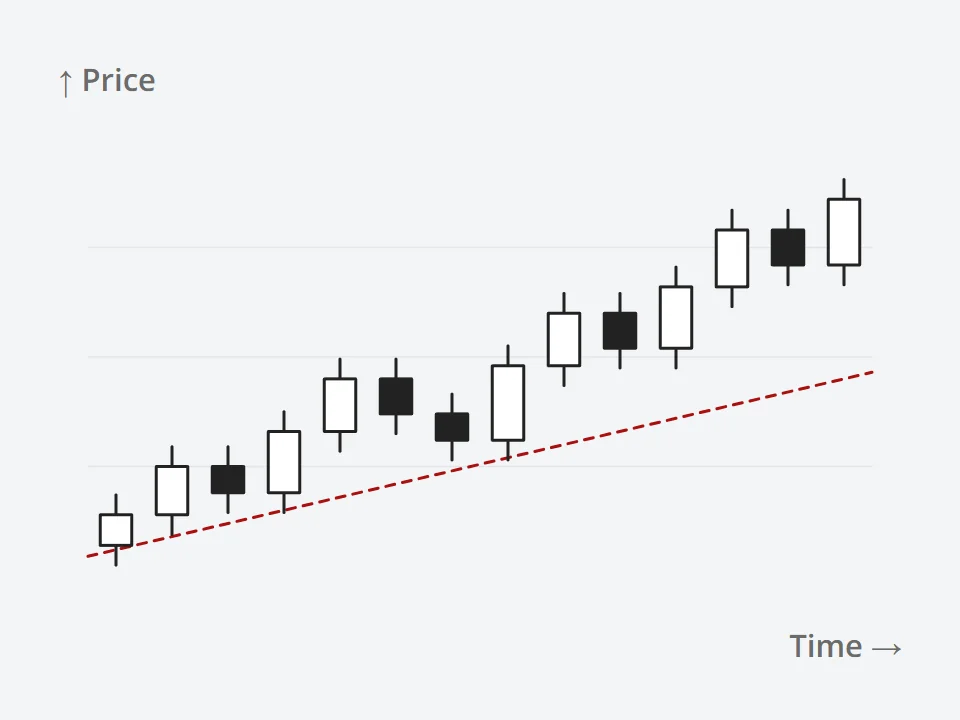
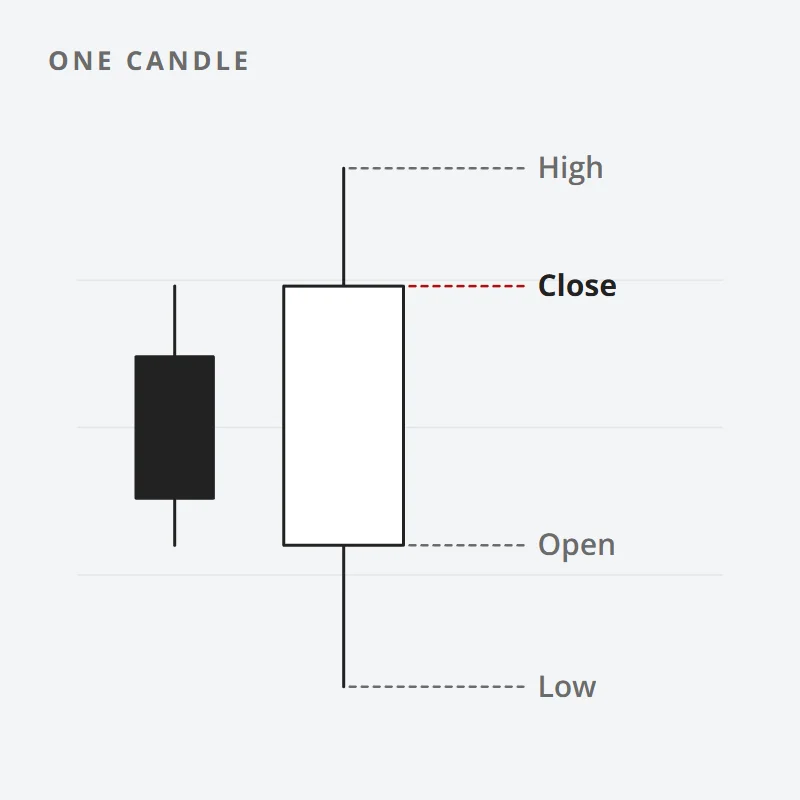
A price chart plots where a market traded over time. The most common kind, the candlestick chart, shows 4 prices for each period: the open, the high, the low and the close. The body of the candle runs from the open to the close, and the thin wicks show how far price reached beyond it before it was pushed back.
Before you read a single bar, check 3 things on the chart. The timeframe tells you what each bar stands for, a day, an hour or a week. The trend tells you which way the bigger picture is moving. The volume tells you how much conviction sits behind each move.
Technical analysis then splits into 3 main types. Classical charting draws support, resistance, trendlines and chart patterns. Indicators run formulas such as moving averages or RSI over price. Price action reads the bars themselves. Personally, for swing trading I stick to the daily chart and read price first, with indicators kept for context.
Further reading
Chapter 4 of 6
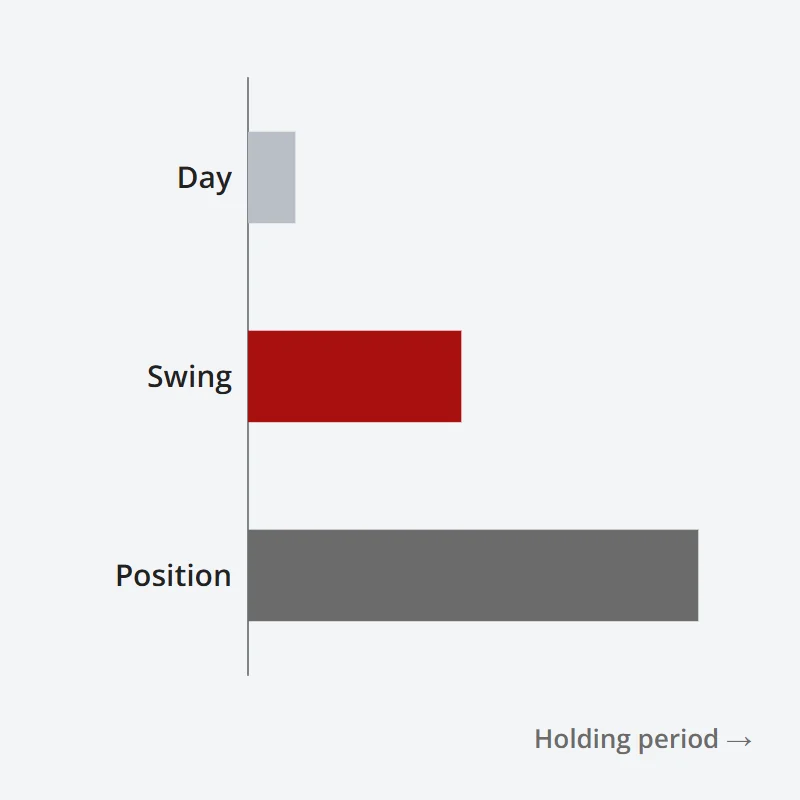
Choose your style before your strategy, because the style decides how much screen time you need. There are 3 styles, sorted by how long you hold a trade:
| Style | Typical hold | Chart you read | Suits |
|---|---|---|---|
| Day trading | Minutes to hours | 5 to 15 minutes | People who can watch the screen all day |
| Swing trading | Days to a few weeks | 4-hour or daily | People with a full-time job |
| Position trading | Weeks to months | Daily or weekly | People with very little time |
Then the strategy. Every strategy you will ever be shown falls into 1 of 4 types. Break trades a range as it snaps. Swing rides an established trend. Bounce fades a stretched move back toward its average. Turn tries to catch a reversal. Each needs its own market condition, and even a sound strategy struggles in the wrong one, so the first job is to name the condition in front of you.
Further reading
Chapter 5 of 6
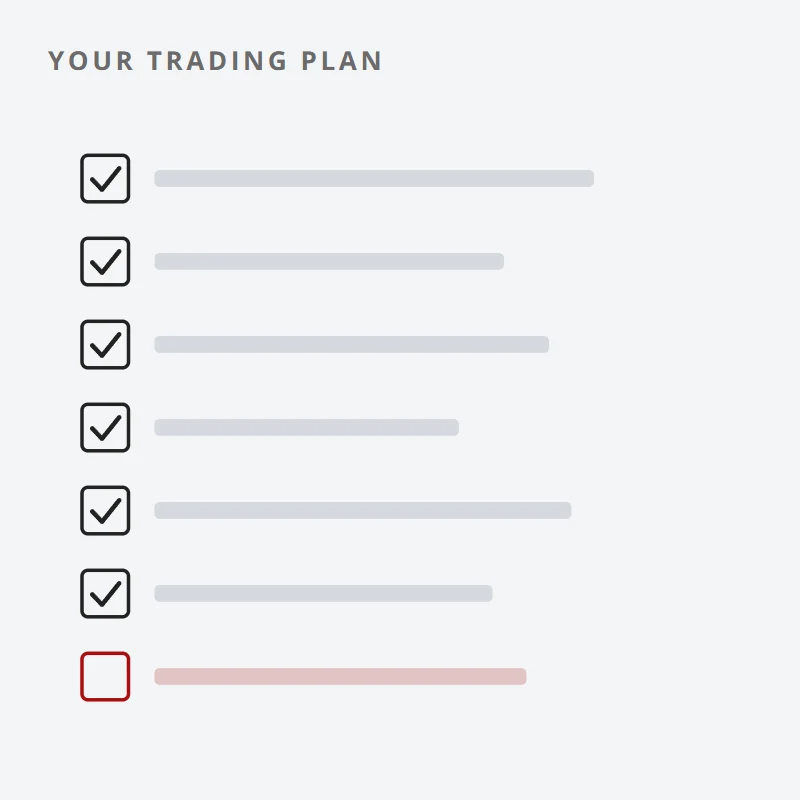
Write your trading plan before you place a trade, so the decisions are made when you are calm. A complete plan has 7 ingredients: your style, your timeframe, the products you trade, your risk rules, your type of analysis, your type of strategy, and your execution rules for entry, stop and target. Once the market opens, your only job is to follow it.
Then keep a journal. Record every trade with the setup, the entry, the stop, the exit, the result and how you felt when you took it. Over time, the journal starts to show you where your results actually come from, and which mistakes keep repeating.
Paper trading, which means trading a demo account with fake money, is useful for your first 10 to 20 trades, while you learn how orders work. After that it stops teaching, because nothing is at stake and your mindset never switches on. Moving to a small real account is usually the better next step.
Further reading
Chapter 6 of 6
Most beginners who quit do so because of a handful of avoidable mistakes, and almost none of them are about finding the wrong setup.
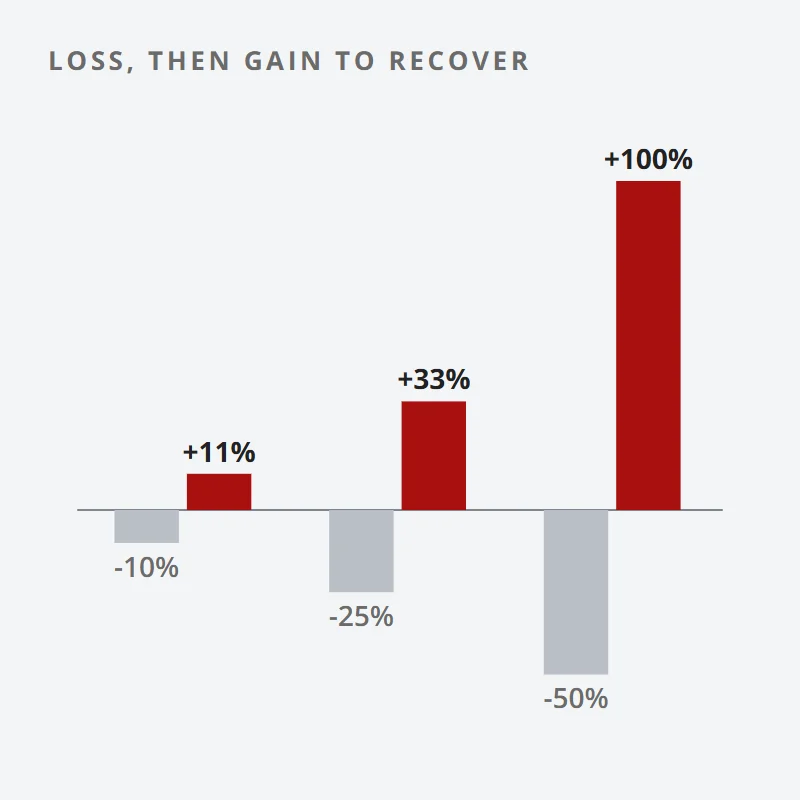
The biggest is risking too much on 1 trade, so a short losing streak wipes out months of progress. The next is the hunt for a holy grail, the strategy or software that never loses, which keeps a trader switching methods before any of them has had a fair test. A third is the indicator trap, where the chart fills with lines until no 2 of them agree. Day trading as a first style is a fourth, because it asks for the most screen time and the fastest decisions from the person with the least experience.
The fix for nearly all of them is the same, and it is not exciting. Keep each loss small, pick 1 method, and judge it only after enough trades to mean something.
Further reading
Quick answers
Enough that a loss stings, and not so much that it hurts your life. Most brokers now let you open an account with very little, so the right figure depends on your savings and your stage of life.
It becomes gambling when there is no plan and no risk limit. A written plan, a fixed risk per trade and a journal turn it into a process you can measure and improve.
Count trades, not months. Most traders need 100 to 200 trades with 1 method before they know whether it suits them.
Usually not. Swing trading on the daily chart gives you time to think and fits around a job.
Next in the series: the Price Chart Patterns guide, where you learn to read the shapes price makes.
About the author
Spencer Li is The 15-Minute Trader and the founder of Synapse Trading. He is a Certified Financial Technician (CFTe) with 15+ years of trading, run from 70+ countries. He holds a B.Acc and B.BM from SMU. Every trade he takes is public, dated, losses left in. He teaches low-risk swing trading in 15 minutes a day, one system for any market.
Education, not financial advice. Synapse Trading is not licensed by MAS to advise on investment products. Trading carries risk of loss; past performance is not indicative of future results.
The free 15-Minute Swing Trader's Checklist turns this guide into a routine: find the setup, size the trade, log the result.
Free 5-page PDF, then occasional trading emails. Education only, not financial advice. Privacy policy