

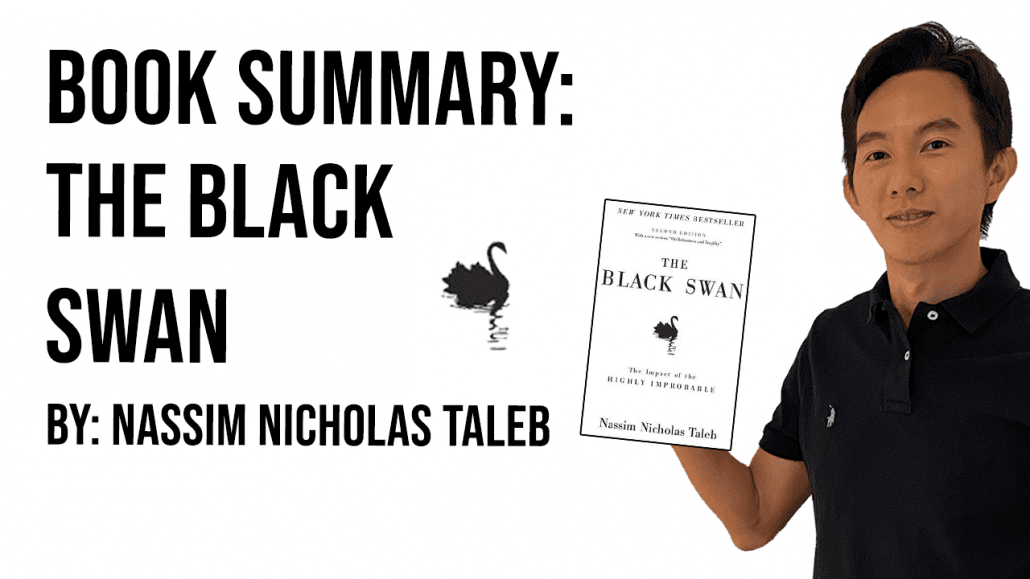
Book Summary: The Black Swan by Nassim Nicholas Taleb
Join our Telegram channel for more market analysis & trading tips: t.me/synapsetrading
Table of Contents
The Black Swan by Nassim Taleb: Summary, 10 Key Ideas, and What It Means for Traders
Last updated: 3 July 2026 · By Spencer Li, CFTe
The Black Swan, by Nassim Nicholas Taleb, is a book about rare, high-impact events that nobody saw coming, and why we are so bad at preparing for them. A “black swan” is Taleb’s term for an event that is (1) a huge outlier, (2) carries an extreme impact, and (3) gets explained away as predictable only after the fact. The 2008 crash, 9/11, and the rise of the internet are all black swans. Taleb’s core argument is simple: we spend our energy forecasting the ordinary and the known, so the rare events that actually move our lives and our portfolios catch us undefended. His advice is not to predict the next black swan (you can’t) but to build your life and your trading so a bad one cannot wipe you out, and a good one can pay you off. For a trader, that is the whole lesson: survive the tail, and stay positioned to catch it.
Here is the short version of the author, the book, the 10 key ideas, how to apply them, and what I actually use from it at the trading desk.
Who is Nassim Taleb?
Nassim Nicholas Taleb is a former options trader, risk manager, philosopher, and statistician. He spent years on trading desks before he wrote about them, so the ideas come from someone who put money on the line, not just theory.
The Black Swan is the second book in his “Incerto” series on uncertainty. The others are Fooled by Randomness, Antifragile, and Skin in the Game, and the ideas run across all four. If a concept below sounds bigger than one book, that is why.
What is the book about?
The book is about the impact of highly improbable events, and how badly we prepare for them.
Taleb’s claim is that we focus too much on the predictable and the known. We build neat models of a tidy world, and then a rare event we never modelled does most of the damage (or delivers most of the upside). His examples run from 9/11 to the internet, both of which reshaped the world and neither of which was in anyone’s forecast.
The takeaway is not “predict the unpredictable.” It is the opposite. Accept that you cannot forecast black swans, then arrange your affairs so you are robust to the bad ones and exposed to the good ones.
The 10 key ideas, at a glance
Taleb covers a lot of ground. Here are the ten ideas that matter most, in one table, with the plain version of each and where it bites a trader.
| Idea | What it means | Why it matters to a trader |
|---|---|---|
| Black swans | Rare, high-impact, hard-to-predict events, good or bad | The few days that make or break your year are the ones nobody forecast |
| Narrative fallacy | We invent tidy stories to explain messy events | The clean “reason” the market moved is usually built after the fact |
| Precautionary principle | Be more cautious when the downside is severe and the odds are unclear | Size for the trade that can ruin you, not the one that probably won’t |
| The black swan problem | We overgeneralise from the past and assume tomorrow looks like yesterday | “It has never dropped that far” is not a stop-loss |
| Fooled by randomness | We credit skill for luck and blame luck for failure | A winning streak in a bull market is not the same as edge |
| Antifragility | Some systems get stronger under stress, not just survive it | Build a book that benefits from volatility instead of fearing it |
| The Lindy effect | The longer something has lasted, the longer it is likely to last | Old, proven methods tend to outlive the latest fad |
| Survivorship bias | We study the winners and never count the dead | Every “this strategy made millions” hides the ones it bankrupted |
| Black swan blindness | We underrate rare events even after living through them | Memory of the last crash fades fast; the risk does not |
| Erring on the side of caution | When failure is catastrophic and odds are uncertain, stay conservative | Protect the downside first, chase the upside second |
The thread running through all ten: the rare event dominates the average one, and our instincts are tuned for the average. That gap is where people blow up.
How to apply it: 10 practical moves
The ideas are only useful if they change what you do. Here is Taleb’s advice in action.
- Build resilience in. Diversify, and keep a safety net, so one bad event does not end the game.
- Embrace randomness. Stop trying to control the uncontrollable. Plan to be wrong, and survive being wrong.
- Avoid over-simplification. Respect that systems are complex. The clean model is usually hiding the risk, not removing it.
- Foster diversity. Diverse inputs, people, and experiences. Monocultures break in one blow.
- Seek out antifragile opportunities. Look for positions and habits that gain from disorder rather than just tolerate it.
- Avoid groupthink. Go looking for the view that disagrees with you. The herd is most confident right before it is wrong.
- Get skin in the game. Have a real personal stake in the outcome. Advice from people with nothing on the line is cheap.
- Use storytelling carefully. Stories help you rehearse for the unexpected, as long as you know they are rehearsals, not predictions.
- Seek multiple sources. Every single source carries a bias. Triangulate.
- Stay open to new ideas. Be willing to challenge what you already believe. The black swan rarely fits your current model.
What I actually use from The Black Swan as a trader
I will be honest. Not everything in a book like this survives contact with a real trading account. Two ideas did, and I use them every week.
The first is antifragility. Markets change fast, and a method built to perform only in calm conditions is fragile by definition. So I would rather hold a position structured to do better when volatility expands, and trade a system that is robust across regimes, than one finely tuned to last month’s market. Embracing the challenge, instead of bracing against it, is what keeps me growing as a trader rather than just defending.
The second is avoiding groupthink. The trading world runs on herd mentality. It is easy to follow the crowd, and most of the time the crowd is fine, right up until it is not. The book pushed me to be more critical of my own assumptions and to actively seek out the opposite view before I commit. That one habit has saved me more than any indicator.
Personally, I treat the rest of the book as context rather than instructions. It changes how I see risk. It does not tell me where to put a stop.
Where the human edge comes in
Here is the part a model cannot do for you. An algorithm can size a position, run a backtest, and tell you the historical odds in a second. What it cannot do is decide how much of your capital should be exposed to an event that has never happened in the data it was trained on. That is a judgment about the unknown, and the unknown is exactly what The Black Swan is about. The math is the easy part. Sizing for the tail you cannot see, and refusing to bet the account on a model that has never met a crisis, is the discipline, and it is one of the Five Edges no machine trades for you.
FAQ
What is a black swan event in simple terms?
A black swan is a rare, high-impact event that is almost impossible to predict beforehand and looks obvious only in hindsight. Taleb’s three tests are: it is a large outlier, it carries an extreme impact, and people rationalise it as predictable after it happens.
Is The Black Swan worth reading for traders?
Yes, but read it for how it reshapes your view of risk, not for trading tactics. It will not give you entries or stops. It will make you size more carefully and treat your forecasts with more suspicion, which for most traders is the more valuable lesson.
What is the main message of The Black Swan?
That we cannot predict rare, high-impact events, so we should stop trying and instead build our lives and portfolios to survive the bad ones and benefit from the good ones. Robustness beats prediction.
What is the difference between The Black Swan and Antifragile?
The Black Swan diagnoses the problem: rare events dominate, and we cannot forecast them. Antifragile prescribes the solution: build systems that gain from disorder. They are best read as a pair.
What is antifragility?
Antifragility is Taleb’s term for systems that get stronger under stress and volatility, rather than merely resisting it (robust) or breaking under it (fragile). A trading approach that performs better when markets get wild is antifragile.
Would you add The Black Swan to your reading list? And if you have already read it, what stuck with you? Let me know in the comments.
For more of the books that shaped how I trade, read the roundup: Best Investing and Trading Books of All Time.
Want the system behind the discipline? Grab the free 15-Minute Swing Trading Starter Kit. It is the exact routine I use to scan once a day and trade any market in 15 minutes.
About the author. Spencer Li is the founder of Synapse Trading and a Certified Financial Technician (CFTe) with 15+ years of trading across stocks, forex, crypto, commodities, and bonds. His trade log is public: every trade since April 2024, dated, losses left in. He has taught a 15-minute daily trading routine since 2014, one system for any market.
Education, not financial advice. Synapse Trading is not licensed by MAS to advise on investment products. Trading carries risk of loss; past performance is not indicative of future results.
Related
Best Investing and Trading Books of All Time (pillar) · Fooled by Randomness summary · Antifragile summary · Trading psychology and risk management
Want the daily routine? Enter your email for the free 15-Minute Swing Trader's Checklist.
Free, 5 pages, PDF. You get the checklist, then my occasional trading emails. Education only, not financial advice. Unsubscribe anytime.
Where your details go: Kit, our email provider, stores your email address in the United States. Our contract with Kit lets it use your address only to send our emails, and requires Kit to keep it secure. The United States has no national privacy law like Singapore's, so that contract is the main protection. More in our privacy policy.
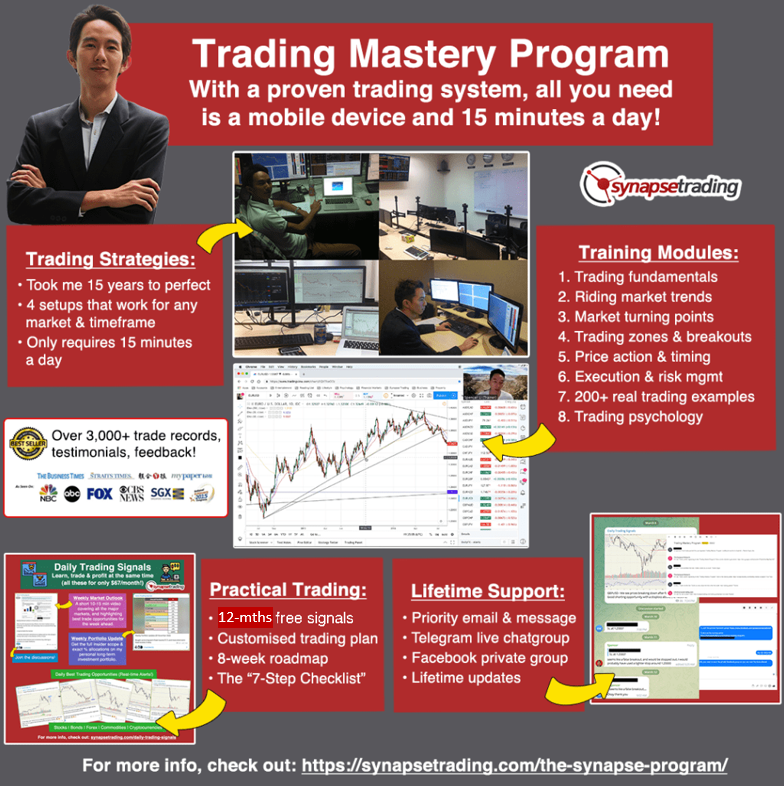 Our flagship mentoring program is suitable for both beginners and advanced traders, covering the 4 strategies which I used over the past 15 years to build up my 7-figure personal trading portfolio.
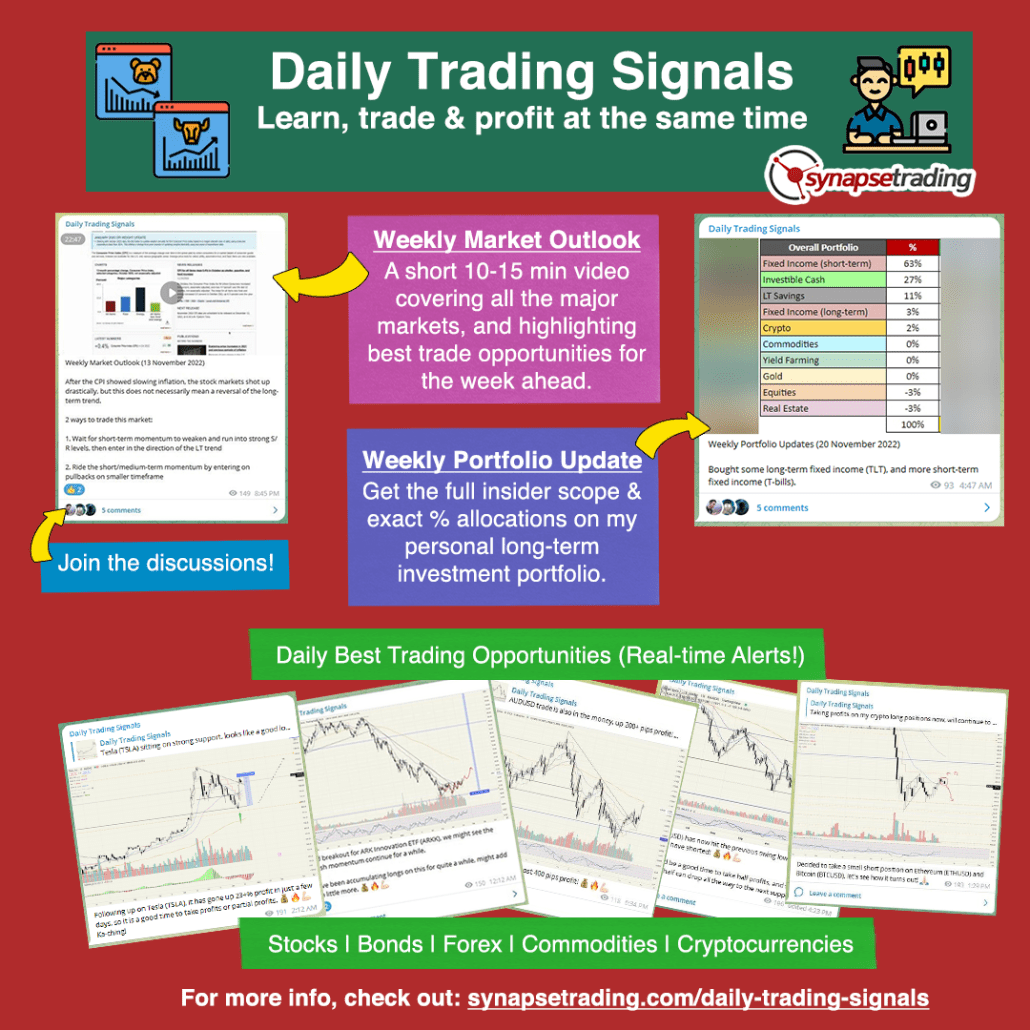 If you're looking for the best trading opportunities every day across various markets, and don't want to spend hours doing the research yourself, check out our private Telegram channel!


Leave a Reply
Want to join the discussion?Feel free to contribute!