

Book Summary: The Millionaire Mind by Thomas J. Stanley
Join our Telegram channel for more market analysis & trading tips: t.me/synapsetrading
Table of Contents
“The Millionaire Mind” by Thomas J. Stanley: Summary, Key Ideas, and Lessons for Traders
Last updated: 3 July 2026 · By Spencer Li, CFTe
“The Millionaire Mind” by Thomas J. Stanley is a research-based book that studies the habits and mindset of self-made millionaires, and its core finding is simple: most wealth is built, not inherited or won. Drawing on over 20 years of research and interviews with more than 1,000 millionaires, Stanley shows that financial success comes from a small set of repeatable behaviours: living below your means, avoiding consumer debt, staying disciplined toward clear goals, educating yourself about money, and taking calculated (not reckless) risks over a long time horizon. The headline lesson for a trader is the part nobody likes to hear. The edge is not a stock tip or a clever entry. It is self-discipline applied consistently over years. That is exactly the muscle trading demands, and exactly the one most people skip.
Here is what the book actually says, the ideas worth keeping, and how they map onto trading and investing.
What is “The Millionaire Mind” about?
Stanley spent over two decades studying how affluent people actually got there, and “The Millionaire Mind” is the result. His central claim is that financial success is not luck or family money. It is the product of specific habits and attitudes that anyone can learn and practise.
The book debunks the picture most people carry of the wealthy. The typical millionaire in his research is not a flashy spender. They live below their means, avoid debt, educate themselves, and stay patient. Stanley keeps returning to two pillars: financial education and self-discipline. You can have one without the other and stay broke. You need both.
Personally, I read it less as a money book and more as a behaviour book. The numbers are downstream of the habits.
The 10 key ideas from “The Millionaire Mind”
Stanley’s research surfaces ten recurring traits among self-made millionaires:
- They live below their means and avoid consumer debt. They prioritise saving and investing over spending, so wealth accumulates over time.
- They are disciplined and persistent. Clear goals, a plan to reach them, and a willingness to work hard and make sacrifices.
- They are educated about money. They take time to understand financial concepts and make informed decisions.
- They are strategic and thoughtful investors. They diversify and look for long-term growth, not quick wins.
- They take calculated risks. They accept risk to reach their goals, but carefully and on purpose, not on a whim.
- They prioritise their financial well-being. They treat financial health as a real input to overall happiness, and plan accordingly.
- They are independent and self-sufficient. They can stand on their own financially and do not rely on others to do it for them.
- They are responsible with their money. They see their wealth as serving future generations and their community, not just themselves.
- They are generous with time, money, and resources. They value giving back.
- They have a strong work ethic and a drive to achieve. They put in the effort and want to succeed.
Notice how few of these are about picking anything. Most are about temperament: patience, discipline, restraint. That is the quiet thesis of the whole book.
The four traits that actually predict wealth (and how they map to trading)
Strip the ten ideas down and the same handful of behaviours keep doing the heavy lifting. Here is how Stanley’s millionaire traits translate to the trading desk.
| Millionaire trait (Stanley) | What it looks like in trading | The trap most people fall into |
|---|---|---|
| Live below your means | Risk a small, fixed fraction per trade; let the account compound | Over-leveraging to “get rich faster”, then blowing up on one bad run |
| Discipline and persistence | Follow your system through losing streaks; show up daily | Bending the rules after two losses; quitting right before it works |
| Financial education | Understand your edge, your stats, and why the system works | Copying signals you cannot explain or evaluate |
| Calculated risk, not gambling | Defined stop, defined size, positive expectancy | Confusing “bold” with “reckless”; no stop, no plan |
The pattern is the same on both sides of the table. Wealth and trading reward the boring, repeatable behaviours and punish the dramatic ones.
How to apply “The Millionaire Mind” to your trading and investing
Stanley closes with ten practical actions. Here they are, framed for someone who trades:
- Set clear financial goals and build a plan to reach them.
- Live below your means and avoid consumer debt.
- Save and invest consistently over the long term.
- Educate yourself about money, and keep learning.
- Diversify and look for long-term growth potential.
- Take calculated risks in pursuit of your goals.
- Make your financial well-being a real priority.
- Be financially independent and self-sufficient.
- Be responsible with money, and think about its impact beyond yourself.
- Build a strong work ethic and a genuine drive to achieve.
If you trade, the most load-bearing items on that list are the unglamorous ones: consistent saving and investing, calculated risk, and the discipline to keep doing both. A swing trading system gives you the calculated-risk part on a plate (defined entry, defined stop, defined size). The rest is on you.
Other important points from the book
Beyond the lists, Stanley keeps coming back to five themes worth holding onto:
- Personal responsibility. You own your financial outcomes. That means taking ownership of your decisions and not blaming external factors for your failures. (This one lands hard for traders. The market did not lose your money, your sizing did.)
- Education and lifelong learning. Keep acquiring skills and knowledge that move you toward your goals.
- Self-discipline. Successful people make hard financial decisions and stick to their plans. It comes from clear priorities and consistent effort, not willpower in the moment.
- Relationships. Family, friends, and business associates shape your financial path. Seek supportive relationships, and be mindful of how your own behaviour affects them.
- A long-term perspective. Think in years, not days. Weigh the long-term consequences of decisions and stay patient.
Where the human edge comes in
Here is the honest part. None of this is secret. You already know you should save, avoid debt, stay disciplined, and think long term. So does everyone who read the book and changed nothing.
A robo-advisor can diversify a portfolio. A screener can flag a setup. Neither can supply the self-discipline to sit on your hands through a losing streak, or the restraint to size small when you badly want to size big. Stanley’s millionaires were not smarter than everyone else. They were more consistent. Consistency under pressure is the trader’s version of the same trait, and it is the first of the Five Edges no tool can run for you.
FAQ
What is the main message of “The Millionaire Mind”?
That most wealth is built through learnable habits, not inherited or won. Stanley’s research points to living below your means, avoiding debt, self-discipline, financial education, and patient long-term investing as the behaviours that actually predict wealth.
Is “The Millionaire Mind” worth reading for traders?
Yes, if you treat it as a behaviour book rather than a money book. Its core themes (discipline, calculated risk, long-term thinking) are the same psychological edges that separate consistent traders from gamblers.
What is the difference between “The Millionaire Mind” and “The Millionaire Next Door”?
Both are Thomas J. Stanley books built on research into self-made millionaires. “The Millionaire Next Door” focuses on the everyday, frugal profile of the typical millionaire. “The Millionaire Mind” goes deeper into the mindset, attitudes, and decision-making habits behind that wealth.
How many millionaires did Thomas Stanley study?
According to the book, Stanley’s research drew on over 20 years of study and interviews with more than 1,000 millionaires.
What is the single most important habit from the book?
Self-discipline. Stanley keeps returning to it because it is the trait that lets people make hard financial decisions and stick to a plan over years, which is exactly what both wealth-building and trading require.
Now that you have the key lessons from “The Millionaire Mind,” which habit are you weakest on right now? Be honest, then pick one to work on this month. Let me know in the comments.
And if you want the full shelf of wealth and trading books mapped to what each one actually teaches, read the roundup: Best Investing and Trading Books of All Time.
Want the habit, not just the idea? Grab the free 15-Minute Swing Trading Starter Kit. It is the exact routine I use to scan once a day and trade any market in 15 minutes, built so the discipline part is baked into the process.
About the author. Spencer Li is the founder of Synapse Trading and a Certified Financial Technician (CFTe) with 15+ years of trading across stocks, forex, crypto, commodities, and bonds. His trade log is public: every trade since April 2024, dated, losses left in. He has taught a 15-minute daily trading routine since 2014, one system for any market.
Education, not financial advice. Synapse Trading is not licensed by MAS to advise on investment products. Trading carries risk of loss; past performance is not indicative of future results.
Related
Best Investing and Trading Books of All Time (pillar) · The Millionaire Next Door (book summary) · Trading psychology and discipline
Want our free trading resources by email? Leave your address below.
 Our flagship mentoring program is suitable for both beginners and advanced traders, covering the 4 strategies which I used over the past 15 years to build up my 7-figure personal trading portfolio.
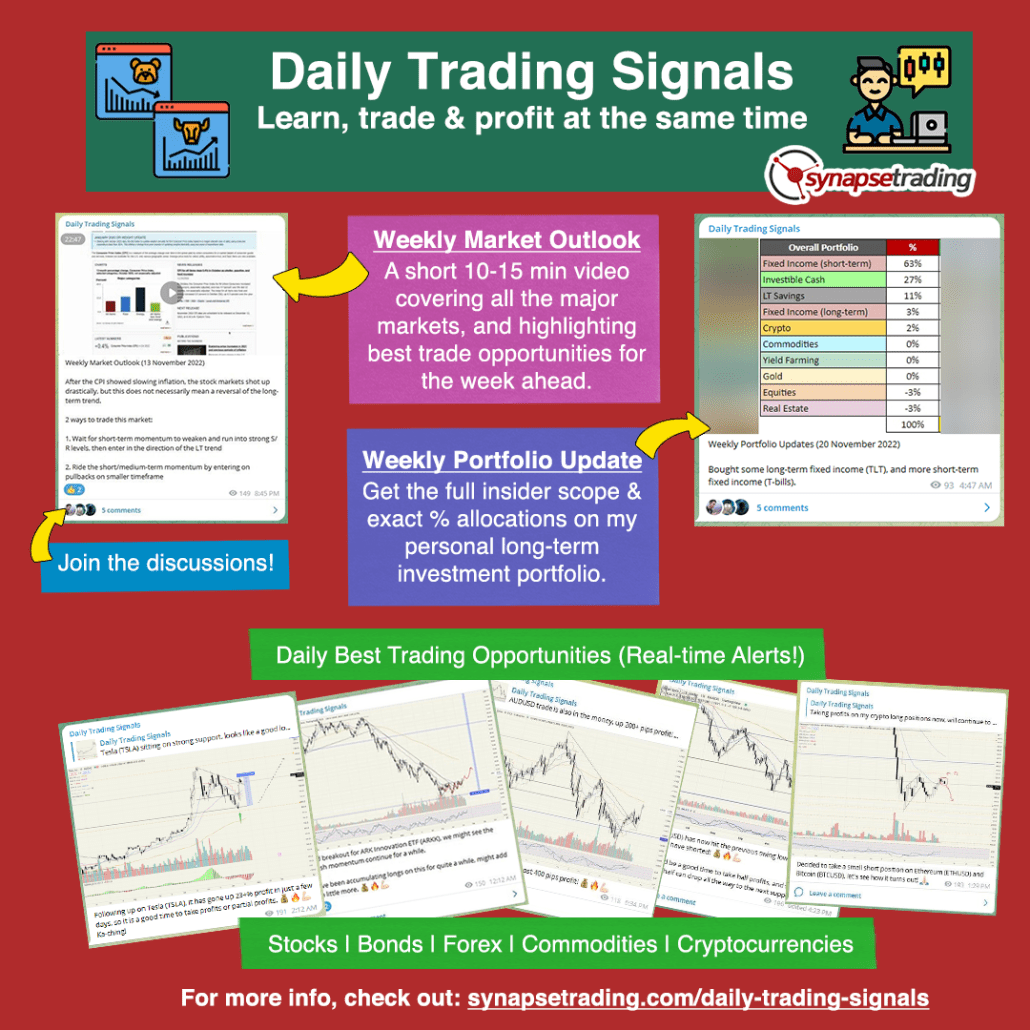 If you're looking for the best trading opportunities every day across various markets, and don't want to spend hours doing the research yourself, check out our private Telegram channel!


Leave a Reply
Want to join the discussion?Feel free to contribute!