• Link to Facebook
  • Link to X
  • Link to Instagram
  • Link to Youtube
  • Link to LinkedIn
  • Link to Mail
Synapse Trading
  • Home
  • About
    • My Background
    • My Trading Journey
    • My Travel Log
    • Media & Interviews
  • Mentoring
    • Trading Mastery Program
    • Results & Testimonials
  • Signals
    • Telegram (Free to join!)
    • Daily Trading Signals
    • Daily Trading Signals (Results)
  • Resources
    • Free Trading Guides
    • Tools & Resources
    • Blog & Infographics
  • Contact
    • Contact Us
    • Partnership Opportunities
  • Click to open the search input field Click to open the search input field Search
  • Menu Menu

Learn more about trading strategies, products, analysis, tools to help you supercharge your trading results!

Spencer Li

Swing Trading vs. Intraday Trading: Which is Better?

Trading Tips
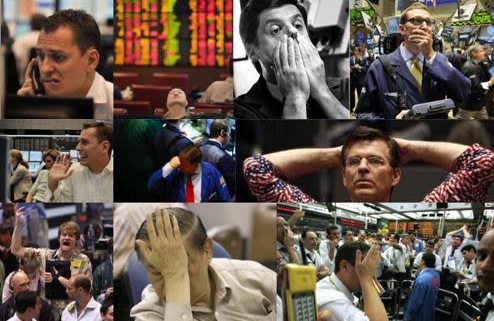
stressed traders

When it comes to trading, most people think that trading is stressful and boring because it involves staring at a screen the whole day and watching prices move, and then having to execute trades at lightning speeds to make any profits.

That is quite often what is shown in the movies, and very much dramatized.

In reality, there are many different kinds of trading, and here is a simple infographic depicting the main categories.

Swing Trading vs. Intraday TradingSource: Forex Useful


Generally, what you see in the movies tend to depict scalpers and day traders, which is the most stressful kind of trading. I myself tried it for a couple of years, but it started to take a toll on my health, which I decided was not worth the money, even though it was pretty good.

Position trading is more useful in timing the market to build your long-term portfolio, as I mentioned in my previous blog post: https://synapsetrading.com/how-to-build-a-1m-dollar-portfolio-by-30-the-practical-stuff/

Hence, I find that the most useful kind of trading for anyone who is doing it part-time, or does not want to get too stressed out, is to use a swing trading approach. This means taking tactical positions to capture the medium to long-term trends.

With just 15 minutes a day, it is more than enough for me to place and manage my swing trades, which leaves me more free time to focus on the things that matter in life.

Of course, there are some drawbacks to swing trading as well, for example your income will be more lumpy as compared to intraday trading, and you will need a ton of patience in waiting to enter the perfect trades, and also waiting for trades to play out.

In summary, the type of trading style really depends on each individual personality and amount of free time, but personally I prefer to use the swing trading approach because it gives me the best returns for my time and effort.

Do you know what is your preferred style, and does it play to your strengths? 😀


0 Comments/by Spencer Li
https://synapsetrading.com/wp-content/uploads/2018/05/stressed-traders.jpg 345 494 Spencer Li https://synapsetrading.com/wp-content/uploads/2019/10/logo.jpg Spencer Li2018-06-13 23:21:092022-03-09 13:13:45Swing Trading vs. Intraday Trading: Which is Better?
Spencer Li

How to Build a $1M Dollar Portfolio by 30 (The Practical Stuff)

Trading Tips
monthly portfolio updates October 2016 1

How to Build a $1M Portfolio by 30: The Practical Stuff

Last updated: 3 July 2026 · By Spencer Li, CFTe


You build a million-dollar portfolio by 30 with three boring steps repeated for years, not by finding one perfect stock. First, build multiple sources of cashflow so you have capital to invest. Second, buy long-term assets only when market cycles say they are cheap, never all at once. Third, reinvest the passive income those assets throw off, so compounding does the heavy lifting. That is the whole machine. Cashflow fills the tank, patient buying gets you a good entry price, and reinvested dividends and yield turn a steady saver into a snowball. None of it is fast, and none of it is clever. The edge is that most people quit at step one or skip step two and overpay for everything at the top of the cycle.

When I was in my 20s, this was my dream too. So I read over 2,000 books across investing, trading, psychology, philosophy, business, and finance, and I kept arriving at the same three principles below. Here is how each one works, in the order you actually do them.

The 3 principles, side by side

What you doWhy it mattersEasy to skip?
1. Multiple sources of cashflowSave hard from your job, then add side income (a side job, an online business, trading)No capital means nothing to compound. This is your ammunitionMost people stall here
2. Time your portfolio purchasesBuy long-term assets only when cycles say they are cheap, not all at onceA good entry price does years of the work for youMost people overpay at the top
3. Reinvest the passive incomePlough dividends and yield back in, on top of your monthly contributionsThis is where compounding turns steady saving into a snowballThe patient win, so it gets skipped

How do you get the capital to start investing?

The first thing you need is a solid base of capital. At the start, if you do not have much, almost all of your time and resources should go into generating as much cashflow (the money coming in each month) as possible, to build up your ammunition.

If you have a well-paying job, you can start by saving aggressively. To speed things up, most people add multiple sources of income on top: a side job, an online business, and so on.

For me, I chose forex trading (trading currencies). It did not need much capital to start, and I did not have much spare time, so I could only afford 15 to 30 minutes a day. It now gives me a steady monthly cashflow, which is what let me move on to step 2.

Personally, I would not overthink which side income to pick. Pick the one that fits the time and capital you actually have, and start. The point of step one is simply to have something to invest with.

When should you buy your long-term investments?

Once you have enough capital and consistent cashflow, you start building your long-term portfolio.

Start with a rough picture of your ideal portfolio and the risk and return you are after. Look for assets with a good chance of capital appreciation (the price going up over time) plus passive returns in the form of dividends or rental yield. Over the years I have leaned more and more toward the passive-income type of holdings.

Do not be in a hurry to buy everything at once. Watch and study the market cycles, and aim to buy only when something is cheap or undervalued. You can get a feel for this just by looking at the chart of any product over the past 50 to 100 years of history. There is no need to spend hours on financial reports or analyst notes. Remember, the goal is to get the most out of limited time.

A scanner will tell you the price. It will not tell you to wait two more years for a better one. That patience, the discipline to sit on cash through an expensive market and only buy when the cycle hands you a good price, is judgment, and it is the part no tool buys for you.

How does compounding actually grow the portfolio?

As your portfolio grows, and you keep adding to it from your monthly cashflow, the real kicker is when compounding kicks in.

The best move is to also reinvest the passive income the portfolio itself pays you. That creates a snowball effect, where your gains start earning their own gains, and the portfolio grows exponentially rather than in a straight line.

Once you have assembled your ideal portfolio, the maintenance is light. Check on it once every three months or so and do some rebalancing (selling a bit of what has grown too large, topping up what has shrunk, to keep your target mix). The rest of the time you can enjoy the fruits of your labour and focus on living your life instead of worrying about money.

For me, that has meant travelling to 50+ countries to date, and sharing what I have learned to help others do the same.

Tips from the desk

  • Front-load the boring years. Steps one and two feel slow because they are. The compounding in step three only shows up after you have done the unglamorous work for a while.
  • A good entry price is worth more than a good forecast. Buying cheap in a down-cycle does more for your long-term return than picking the “right” asset at the wrong price.
  • Reinvest by default. Set dividends and yield to reinvest so the snowball runs without you having to decide each time.
  • Keep maintenance light. A quarterly check and a rebalance is enough. Over-tinkering is how people talk themselves out of compounding.

FAQ

Is it realistic to build a $1M portfolio by 30?
It is realistic for some, but it depends entirely on your cashflow and how early you start. The framework is the same regardless of the deadline: build income, buy patiently into market cycles, and reinvest the passive returns. If 30 is not achievable on your numbers, the same three steps still get you there later.

What is the first step to building a portfolio with little money?
Cashflow. With little capital, your time is better spent generating more income (saving hard from a job, plus a side income like a side job, an online business, or trading) than on picking investments. You cannot compound money you do not have yet.

Do I need to read financial reports to invest well?
For long-term timing, not really. Studying the long-run price chart of an asset over 50 to 100 years tells you a lot about where you are in the cycle and whether it is cheap. The goal is to make good decisions with limited time, not to do equity-analyst work.

How often should I check my portfolio?
About once every three months. Check in, rebalance back toward your target mix, and otherwise leave it alone. Frequent tinkering tends to interrupt the compounding you are trying to capture.

Why reinvest the passive income instead of spending it?
Reinvesting dividends and yield is what turns steady saving into a snowball. The income you reinvest starts earning its own income, which is what makes the portfolio grow exponentially rather than in a straight line.


So, are you ready to start building your own portfolio? Tell me which of the three steps you are stuck on in the comments.

And if you want the bigger picture on building wealth from trading and investing, read the pillar: The Complete Guide to Trading and Investing for Beginners.

Want the system behind step one? Grab the free 15-Minute Swing Trading Starter Kit. It is the exact routine I use to scan once a day and trade any market in 15 minutes, the same cashflow engine I leaned on to fund my own portfolio.


About the author. Spencer Li is the founder of Synapse Trading and a Certified Financial Technician (CFTe) with 15 years of trading across stocks, forex, crypto, commodities, and bonds. His trade log is public, 404 trades, losses left in. He teaches low-risk swing trading in 15 minutes a day, one system for any market.

Education, not financial advice. Synapse Trading is not licensed by MAS to advise on investment products. Trading carries risk of loss; past performance is not indicative of future results.


Related

Complete Guide to Trading and Investing for Beginners (pillar) · How to trade forex with 15 minutes a day · How to build passive income from dividends · Understanding market cycles

0 Comments/by Spencer Li
https://synapsetrading.com/wp-content/uploads/2016/11/monthly-portfolio-updates-October-2016-1.jpg 373 927 Spencer Li https://synapsetrading.com/wp-content/uploads/2019/10/logo.jpg Spencer Li2018-05-30 18:50:372026-07-06 01:59:36How to Build a $1M Dollar Portfolio by 30 (The Practical Stuff)
Spencer Li

How to Combine Price Action with Multiple Timeframes

Trading Tips
timeframes 2

One of the simple yet powerful techniques I use to allow me to quickly identify trading opportunities with minimal time and effort (typically 15 minutes a day), is to use this Excel table which combines price action with multiple timeframes. Multiple Timeframes 3

To create this table, I observe the daily and weekly charts of various products (forex, stocks, cryptocurrencies, commodities, etc), and list down whether I think it is bullish or bearish on each timeframe. For the weekly chart, I only need to update it once a week, and for the daily chart, this takes me a few minutes a day.

Here are some chart examples:

 Multiple Timeframes 2

This is the daily chart of the EUR/USD, and you can see that it just completed a pullback and is looking bullish. So under EUR, I mark it as bullish. For most products, I always benchmark them against the USD for easy comparison.


 Multiple Timeframes 3

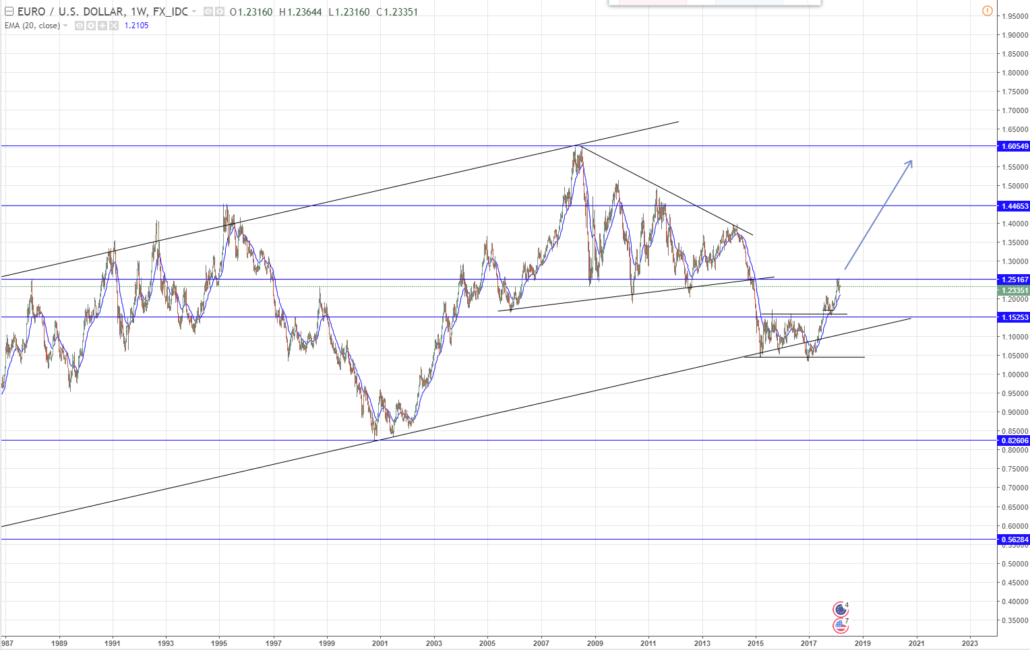
This is the weekly chart of the EUR/USD, and you can see that it is also very bullish, and rebounding off a large trendline. With the alignment of both the daily and weekly trends, this make the EUR/USD a very good long trade to be in. And since the GBP is also weak, going long on the EUR/GBP is also a good idea.


 Multiple Timeframes 4

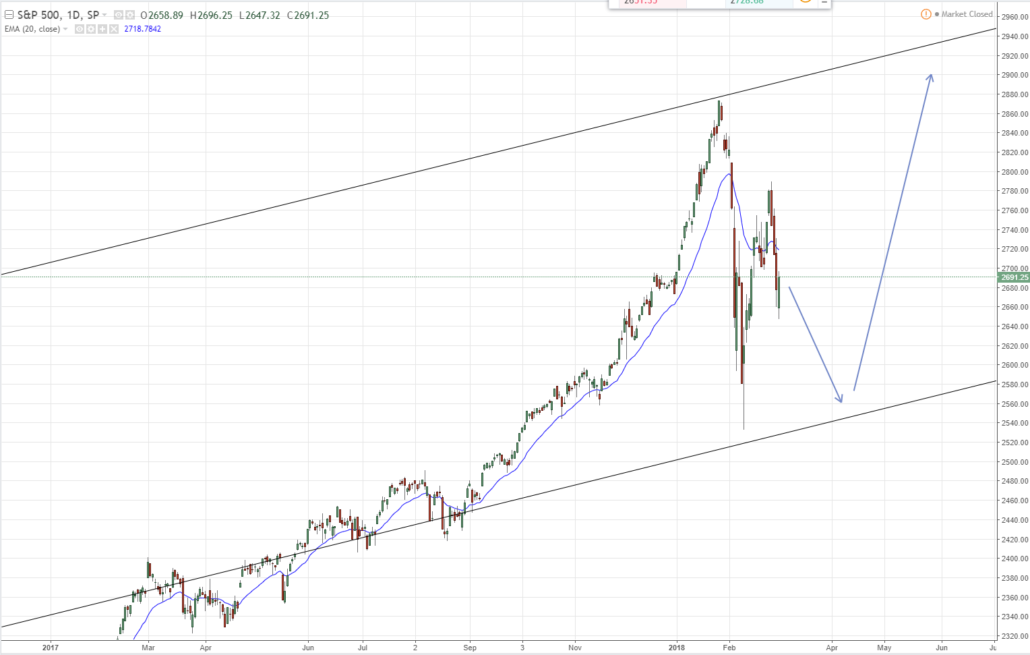
For the S&P 500, the long-term trend is bullish, but the short-term trend is bearish. In such a scenario, we will pass and wait for more price action. The goal is to take the best trades, not take as many trades as possible. Quality over quantity.

0 Comments/by Spencer Li
https://synapsetrading.com/wp-content/uploads/2018/03/timeframes-2.png 582 866 Spencer Li https://synapsetrading.com/wp-content/uploads/2019/10/logo.jpg Spencer Li2018-03-05 07:34:452022-03-09 13:15:23How to Combine Price Action with Multiple Timeframes
Spencer Li

3 Crucial Lessons From Jesse Livermore – The Greatest Stock Trader of All Time

Trading Tips
jesse livermore

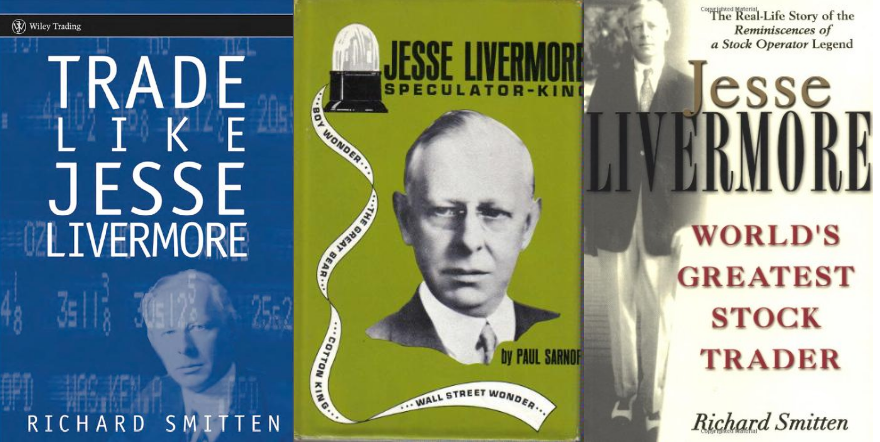
Jesse Livermore is known to be the most prolific stock trader. Several books have been written about him and his trading track record is legendary. His profits were so great that he was reported to have owned mansions in various places around the world, each fully staffed, complete with limousines and steel-hulled yacht for his holidays.

Some of you might have read that Livermore was worth $100 million after shorting the 1929 great market crash.

Jesse Livermore

Above: Some of the books about Jesse Livermore, available in major bookstores.

What Guidelines Did Jesse Livermore Follow As A Trader?

Among the many quips he had about trading and investing, I’ve picked out some of the key ones that could make or break your trading account.

While many complain about the difficulties in trading forex, stocks, or commodities, there is a good minority that makes consistent profits in the markets.

What sets Jesse Livermore apart from his peers?


  1. Buy rising stocks and sell falling stocks.

The above seems obvious, but many people fail to adhere to this rule. Many people like to ‘pick tops’ and ‘pick bottoms’. Now, professional traders do occasionally try to pick tops and bottoms, but they do so with very strict risk management, and always have a contingency plan for when the trade doesn’t work out.

Beginners often makes the mistake of trying to trade against the trend. While this can be profitable for some, talk to anyone in the trading industry and they will tell you that trend-following is the major money-making strategy that every trader uses. It’s simple, easy to add positions on, and it’s stress free. The problems come when beginners make a buck from trading with the trend, and start to explore ‘new ways’ to trade and invest.


2. Keep trades that show a profit, end trades that show a loss.

Jesse Livermore is famous for his humongous profits, but behind every profitable trader is the admirable ability to deal with a string of losses. It’s one thing to know that you need to cut losses, but it’s another to actually cut your losses when you are wrong. George Soros famously quips that it is not how many times you win or lose, it’s how much you make when you win, and how much you lose when you are wrong.

Cutting losses is a psychologically hard thing to do in modern society. We’re ingrained to be always correct, and never admit that you messed up, because it reflects badly on you as a person. However, with investing, no one is marking you for the number of losses; the profit that you make is the final report card that matters, and that’s where we want to be focusing on.


3. Never average losses by buying more when your stock has fallen.

Too many people refuse to be wrong on their investments or trades.

I have heard of people say this statement: “Even if the stock drops a lot, I’ll just keep it because I’m buying for ownership and dividend cashflow, not just for capital gains.” Sure, but what happens if the stock you hold drops by 70%? 80%? You’ll buy more?

Buying more when the stock has fallen is a sure-way to get your trading account to zero. It’s taking more risk when the odds are against you.


Think About This: Which of These 3 Guidelines Have Brought You Losses in the Past?

Many traders soon realize early in their career, that their trading accounts could have been profitable if not for silly mistakes. Avoiding these silly mistakes requires experience, maturity, the correct knowledge, and of course, proper mentoring.

I was lucky to be mentored by veteran traders early on in my trading career. Their advice, based upon thousands of hours of market experience, contributed greatly to who I am today, and I never fail to mention, during trading seminars or public events, that by tapping on their experience, I was able to quickly attain a level of success that kept me profitable.

If you’re currently struggling as a trader, ask yourself this question: “Which mistakes have I been making?”

Acknowledging trading mistakes is a continuous process of learning and growing.

0 Comments/by Spencer Li
https://synapsetrading.com/wp-content/uploads/2017/04/jesse-livermore.jpg 820 1024 Spencer Li https://synapsetrading.com/wp-content/uploads/2019/10/logo.jpg Spencer Li2017-04-20 07:18:472022-03-07 11:44:113 Crucial Lessons From Jesse Livermore – The Greatest Stock Trader of All Time
Spencer Li

The World’s 7 Greatest Currency Trades Ever Made – Key Lessons

Trading Tips
best currency trades

Have you ever wondered, what are some of the most epic forex trades that went down in history? And more importantly, what crucial insights and lessons can we learn from these legendary traders?

1) ANDY KRIEGER – $300 MILLION PROFIT

Andy Krieger is a somewhat unknown trader who made his name at Bankers Trust. He was watching currencies in 1987 after the Black Monday crash, and he saw an opportunity for arbitrage in some overvalued currencies. He became famous because he shorted a few hundred million dollars worth of Kiwi (New Zealand’s currency), and he shorted so much that his position was said to exceed the money supply of New Zealand as a nation.

Andy shorted so much currency that there was not enough currency in circulation to support the short.

The kiwi fell tremendously while he was shorting it and made $300 million for Bankers Trust. Legend has it that a worried New Zealand government official called up Krieger’s bosses and made threats to him. Krieger later left the firm to work for George Soros in his quantum fund.


2) STANLEY DRUCKENMILLER – $2 BILLION TRADE

Stanley Druckenmiller made this historic trade as a trader working for George Soros’ Quantum Fund. He went long on the German mark because of the fall of the Berlin Wall, and the undervaluation that was going on during the reunification between East and West Germany. Legend has it that Stanley initially bet a few hundred million dollars, until Soros told him to raise the bet to $2 billion. That year, the Quantum fund brought in 60% returns.

Stanley is a rather unknown person, but the fact that George Soros hired him is worth noting.

Another trade that Stanley made was in the 1990s. He was buying German bonds, because he expected investors to move from British bonds to German bonds. It was also during the period where Soros broke the Bank of England.


3) GEORGE SOROS – $1 BILLION PROFIT IN THE POUND

George Soros became famous because he shorted the pound aggressively, in fact, so aggressively that he borrowed heavily and make $1 billion in the process.

At that time, Britain wanted to keep the value of the pound above 2.7 German marks, a key feature of the fixed exchange rate mechanism. Many speculators began to take up short positions in the expectation that this fixed exchange rate would not hold.

This was the famous ‘broke the British bank’ trade that shot George Soros to stardom.

Britain even raised its interest rates to double digits to try to attract investors and prop up the buying in its currency, however, the British government soon realized that it would lose lots and lots of money trying to keep the value of the pound. Soros made $1 billion for his fund on this trade.


4) PAUL TUDOR JONES – $100 MILLION PROFIT SHORTING BLACK MONDAY

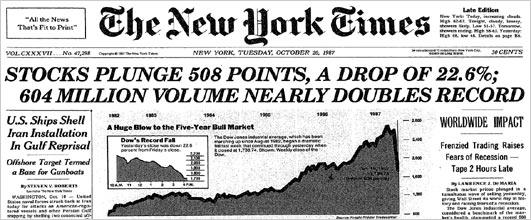
The U.S stock market experienced its largest 1-day percentage decline ever on Black Monday of 1987. This was the most shocking fall the world had seen at that point, and even up to today, no 1-day decline has ever matched Black Monday.

Betting on a black swan event netted Paul Tudor Jones $100 million in profits.

PAUL TUDOR JONESThe 22.6% drop in the Dow in 1987 has not been rivaled even up to 2017.
Source: stock-market-crash.net

Paul Tudor Jones shorted the stock market, tripling his money, and making US$100 million on that trade while the Dow Jones plummeted 22%.


5) ANDREW HALL – $100 MILLION PROFIT BETTING ON OIL

While working for Citigroup, Andrew Hall predicted a 5-year bull-run in oil from 2003-2008, and made the appropriate trades. Oil went from $30 to $100, and Hall brought with him $100 million as part of his compensation plan.

Andrew Hall made it big on oil in his career at Citigroup.

Aside from this brilliance, he reportedly bought 1 million barrels of physical oil in 2009, and stored it, hoping that oil would rise greatly. It did, and from 2009-2011, oil went from $50 to $100. However, his oil fund hasn’t been doing well in the past 5-6 years, and he has had to repeatedly explain the lack of profits to investors.


6) DAVID TEPPER – $4 BILLION PROFITS BUYING BANK STOCKS

David Tepper’s strategy was simple; buy low, sell high. In early 2009, he scooped up big banks like Citigroup and Bank of America, and saw them quadruple and triple in value from their bottoms in 2009.

Nothing spectacular; buy low, sell high.

These trades earned $7 billion for Tepper’s hedge fund. His personal compensation was $4 billion.


7) LOUIS BACON – 86% RETURNS BETTING SADDAM HUSSEIN WOULD INVADE KUWAIT

Louis Bacon went long on oil, short on stocks in the 1990s because of this geopolitical situation. Later, he also correctly bet that the U.S. would quickly defeat Iraq and the oil market would recover.

Bacon’s event-based bets rewarded him handsomely.

LOUIS BACONLouis Bacon explaining what he knows best; geopolitical event trading.
Source: Quotesgram

His hedge fund returned 86% that year because of these trades. Although his strategy is somewhat unconventional, he has excelled in it and carved a niche for himself.


KEY TAKEAWAYS

Many of these traders had decades of trading experience under their belts. Although they all seem like they had a great stroke of luck or a brief moment of brilliance, the preparation and practice that they went through was thorough and gruelling.

I hope that these stories of real traders would motivate you to continue at your game, brush up your skills, engage the financial markets, and stay up-to-date with what’s going on.

2 Comments/by Spencer Li
https://synapsetrading.com/wp-content/uploads/2017/04/best-currency-trades.jpg 496 992 Spencer Li https://synapsetrading.com/wp-content/uploads/2019/10/logo.jpg Spencer Li2017-04-05 06:01:382022-03-09 13:20:12The World’s 7 Greatest Currency Trades Ever Made – Key Lessons
Page 6 of 12«‹45678›»

Free Trading Guides

Free Trading Guides

Blog Categories

  • Beginner's Guide
  • Blockchain & Crypto
  • Book Summaries
  • Candlestick Patterns
  • Economics & News Trading
  • Investing & Portfolio Management
  • Living Your Best Life
  • Market Analysis
  • News & Events
  • Price Chart Patterns
  • Promotions
  • Risk & Money Management
  • Stock Trading
  • Testimonials
  • Tools & Resources
  • Trading Psychology
  • Trading Strategies
  • Trading Tips
  • Travel & Lifestyle

Free Trading Guides

Free Trading Guides

Contact Us

Synapse Trading Pte Ltd
Registration No. 201316168H

Whatsapp: +65-8897-1204
Telegram: @iamrecneps
Email: info@synapsetrading.com

Links

Disclaimer
Privacy policy
Terms & Conditions
Contact us
Partnerships

© 2012-2024 Synapse Trading | All rights reserved | - powered by Enfold WordPress Theme
  • Link to Facebook
  • Link to X
  • Link to Instagram
  • Link to Youtube
  • Link to LinkedIn
  • Link to Mail
Scroll to top Scroll to top Scroll to top