• Link to Facebook
  • Link to X
  • Link to Instagram
  • Link to Youtube
  • Link to LinkedIn
  • Link to Mail
Synapse Trading
  • Home
  • About
    • My Background
    • My Trading Journey
    • My Travel Log
    • Media & Interviews
  • Mentoring
    • Trading Mastery Program
    • Results & Testimonials
  • Signals
    • Telegram (Free to join!)
    • Daily Trading Signals
    • Daily Trading Signals (Results)
  • Resources
    • Free Trading Guides
    • Tools & Resources
    • Blog & Infographics
  • Contact
    • Contact Us
    • Partnership Opportunities
  • Click to open the search input field Click to open the search input field Search
  • Menu Menu

Learn more about trading strategies, products, analysis, tools to help you supercharge your trading results!

Spencer Li

Why Are More & More Singaporeans Switching from Stocks to Forex?

Trading Tips
asd 3

Forex vs Stocks in Singapore: Why Some Traders Switch (and When You Shouldn’t)

Last updated: 3 July 2026 · By Spencer Li, CFTe


Some Singapore traders switch from stocks to forex because forex lets you start with a few hundred dollars, charges no commission, trades 24 hours a day, and gives you enough cheap repetitions to actually learn. Those four things matter most when you are a beginner who needs many small trades to build skill. Forex is not better than stocks in some absolute sense. What changes the outcome is your circle of competence (the set of markets and methods you genuinely understand), not the market itself. So the honest answer is: forex suits the new trader who wants low-cost, high-frequency practice and a schedule that fits around a day job. Stocks suit the trader who wants ownership, dividends, and slower, less leveraged exposure. Below I lay out the real cost differences in a table, the case for forex as a training ground, and the three risk rules I would not start without.

Here is the full breakdown, with the trade-offs left in.

Why are Singapore traders moving from stocks to forex?

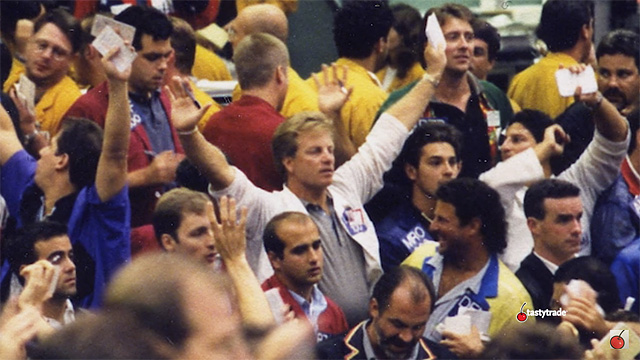
The shift started with a real problem on the local exchange. For a stretch in the mid-2010s, the Singapore Exchange (SGX) saw turnover fall and well-known names like Tiger Airways, OSIM, and Eu Yan Sang leave the board. One stockbroker told The Straits Times back then that “stockbroking is looking like a sunset profession now.” New listings dried up too. Across early 2016 the monthly IPO count ran like this:

Month (2016)New IPOs on SGX
April1
May1
June1
July6
August2
November1

(Source: ChannelNewsAsia, 2016. These figures are historical context, not current SGX data.)

With thin volume and a Straits Times Index that drifted sideways, intraday trading on local stocks became hard for the small trader. You needed a large amount of capital to move size in and out, and the liquidity was not always there to do it cleanly.

Forex offered the opposite profile. Deep liquidity, tiny minimum trade sizes, and no commission. For a beginner with a small account, that combination is the draw. The local-stock backdrop has shifted since 2016, but the structural reasons a new trader reaches for forex have not.

Is forex cheaper to trade than stocks?

For a beginner, usually yes, and the gap is mostly about commission and minimum size. Here is the side-by-side I would have wanted when I started.

ForexStocks (typical retail)
Minimum to startFrom around $500Higher; meaningful share lots cost more
Smallest trade size0.01 lots (about $0.10 per pip)One lot or board lot; larger dollar commitment
CommissionOften zero (cost is in the spread)Brokerage commission per trade
Charts and dataUsually freeOften free, sometimes paid for depth
Hours24 hours, 5 days a weekExchange hours only
Economic-event timingPublished in advance on a forex calendarEarnings and news can surprise mid-session

Two lines in that table do the heavy lifting for a new trader. First, zero commission means each trade costs you less in “tuition fees” paid to the market while you are still learning. Second, the 0.01 lot size means you can risk a few dollars per trade and still get real skin in the game. That is the whole point. You want to make many decisions cheaply.

Do note that, “no commission” does not mean “no cost.” In forex the cost lives in the spread (the gap between the buy and sell price). It is smaller for a small trader, but it is still there. Anyone who tells you forex is free is skipping a line.

Is forex harder to trade than stocks?

Not inherently. Some people insist the forex market is tougher than the stock market. I beg to differ. It is your circle of competence that determines your success, not the raw characteristics of the market. If you understand a market and have an edge in it, that is the market you should trade. The difficulty is in you, not in the ticker.

That reframing matters, because it stops you blaming the instrument. A trader who loses in forex and switches to stocks expecting the market to save him usually loses in stocks too. The market was never the problem.

Forex as a training ground: trade small, trade often

The strongest case for forex as a starting point is that it lets you accumulate experience cheaply. Trading is a numbers game. With a properly developed edge, your account carries a positive expectation, and profit becomes the norm over a long enough run of trades. You cannot reach that long run without taking the trades, and forex lets you take them in small size.

A few things I believe here, hard-won:

Start live, not demo. There is an endless debate about live accounts versus demo accounts. My solution is simple. Start with a live account from the beginning, in tiny size. A demo trade and a live trade feel like different sports. Risking real money, even a few dollars, puts you into the reality of the game, and you learn to sit with the risk that is built into trading. Sooner or later you get used to it. You never get used to it on a demo.

Expect to make silly mistakes early, and budget for them. Every trader with real skin in the game has done at least one of these:
– Traded the wrong lot size (1.00 instead of 0.10, so the position is ten times too big).
– Gone short when you meant to go long.
– Placed a trade only to realise the market was closed.

These sound dumb written down. They are completely normal, and small size is exactly why you want to make them with ten cents on the line, not your rent.

Trade around your life, not against it. The 24-hour market means you choose when to trade. If your day job is punishing, you can trade at night, or over lunch, on a schedule that fits your life instead of fighting it. I like what Tom Sosnoff said about learning to trade: “Trade small, trade often.” Forex is built for exactly that.

The 3 steps to manage forex trading risk

Cheap practice without risk control just lets you lose faster. Three rules I would not start without:

  1. Think in percentages, not dollars. Risk a fixed small percentage per trade. Percentages take the emotion out of the dollar amount and keep one bad trade from doing real damage.
  2. Find an edge. Only a genuine edge gives you a profit over the long run. Repetition without an edge is just paying tuition forever.
  3. Stick to one style. Do not try to be everything at the start. Too many new forex traders try to scalp, swing, and trend-follow all at once. Become profitable in one style first. Diversifying across styles can come later, once you have something that works.

That last one is where most beginners go wrong. The market rewards depth in one approach long before it rewards breadth across five.

Where the human edge comes in

A broker can hand you a $500 account and a 24-hour market. A platform can flag the setup and place the order in a second. What neither will do is stop you from sizing the trade too big after three wins, or talk you out of trading the one market you do not actually understand. Cheap repetitions only compound if the judgment behind them is sound. That judgment, knowing your circle of competence and staying inside it, is the first of the Five Edges no tool can trade for you.

FAQ

Is forex better than stocks for a beginner in Singapore?
For a beginner who wants cheap, frequent practice, forex has real advantages: you can start from around $500, trade 0.01 lots, pay no commission, and trade 24 hours a day around a job. Stocks suit traders who want ownership, dividends, and slower exposure. Neither is universally better; it depends on your goals and which market you actually understand.

How much money do I need to start trading forex in Singapore?
You can start with as little as around $500. Most brokers allow 0.01 lot sizes, which works out to roughly $0.10 per pip, so you can risk a few dollars per trade while you learn.

Does forex trading have commissions?
Many forex brokers charge no commission. The cost is built into the spread (the gap between the buy and sell price) instead. So it is cheaper than commission-based stock trading for a small account, but it is not free.

Should I start with a demo or a live account?
Start live, in very small size, from the beginning. A live trade and a demo trade feel completely different. Risking real money, even a few dollars, teaches you to handle the risk that is built into trading, which a demo account cannot.

How do I manage the risk in forex trading?
Three steps: think in percentages rather than dollars, trade only when you have a genuine edge, and stick to one trading style until you are profitable before adding others.


So, forex or stocks? If you are starting out and want cheap repetitions to build skill, forex makes a strong training ground. If you want ownership and a slower pace, stocks have their place. Either way, the deciding factor is your circle of competence, not the market. Which one are you leaning toward, and why? Let me know in the comments.

And if you want the wider picture of how to choose and trade any market with one routine, read the pillar: The Beginner’s Guide to Trading.

Want a routine that fits a day job? Grab the free 15-Minute Swing Trading Starter Kit. It is the exact process I use to scan once a day and trade any market in 15 minutes.


About the author. Spencer Li is the founder of Synapse Trading and a Certified Financial Technician (CFTe) with 15 years of trading across stocks, forex, crypto, commodities, and bonds. His trade log is public, 404 trades, losses left in. He teaches low-risk swing trading in 15 minutes a day, one system for any market.

Education, not financial advice. Synapse Trading is not licensed by MAS to advise on investment products. Trading carries risk of loss; past performance is not indicative of future results.


Related

The Beginner’s Guide to Trading (pillar) · How to start forex trading in Singapore · What is your circle of competence? · Demo vs live trading account
0 Comments/by Spencer Li
https://synapsetrading.com/wp-content/uploads/2016/12/asd-3.png 1080 1080 Spencer Li https://synapsetrading.com/wp-content/uploads/2019/10/logo.jpg Spencer Li2017-01-26 01:04:162026-07-06 03:23:43Why Are More & More Singaporeans Switching from Stocks to Forex?
Spencer Li

3 Insanely Profitable Traders You Probably Never Heard Of – What Makes Them Different?

Trading Tips
1

When people think trader, they think rogue trader Nick Leeson. 20 years ago, a single derivatives trader caused Barings bank to collapse, leading to many quickly labelling forex trading as an evil profession.

Here’s a photograph of that historic event when it happened:

What Makes Them DifferentSource: The Guardian

As most people know, proper risk management would prevent failure on such a catastrophic scale. At the same time, it is unfortunate that some of the most famous traders in the world shot to fame as a result of one big trade that normally rocks the headlines. This results in some traders having the mentality that they just need that one big winner to retire comfortably.

Let’s take a look at two famous examples:

GEORGE SOROS – BREAKING THE BANK OF ENGLAND

Soros famously made $1 billion from shorting the British Pound. This was what made his name famous and he was named the man who “broke the Bank of England”,  apparently due to him shifting (or shorting) $10 billion dollars worth of currency.

ANDREW KRIEGER – TRADED BIGGER THAN THE NZD MONEY SUPPLY

Andrew became famous when he shorted the New Zealand Dollar of almost $1 billion in value,  which was more than the money supply in circulation in New Zealand during that year! Andrew ended up garnering $300 million in profits from this single transaction alone for his trading firm.

We know that these two traders had trading accounts that were unbelievably large. This is not the case for almost all of us. Therefore, we need to gain the skills and knowledge that can bring consistent, decent returns on an average trading account size. The key is to look for sustainability, and this is definitely learnable.

“Trading is not about getting a one-hit wonder. It’s a career decision, and requires as much commitment and passion as building a business.”

Below, I’ve picked out three excellent traders whom I believe will change the way you think about trading.

How many of you can recognize these faces? 😀ANDREW KRIEGERSource: philanthrophyroundtable.org, tastytrade.com


EXPERT TRADER #1: TOM SOSNOFF

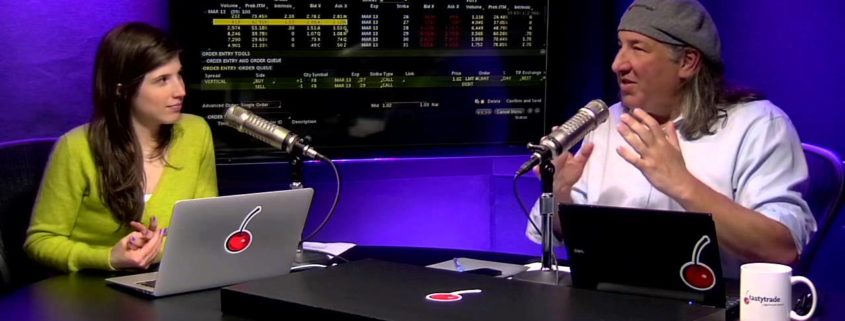
TOM SOSNOFFTom Sosnoff sharing option strategies on his daily financial show with his daughter
Source: Tastytrade

Tom Sosnoff started off as a political science graduate working in the Chicago Options Exchange as a market maker. An industry veteran, he quickly spotted the market opportunity in online option trading, and co-founded and created the famous Thinkorswim trading platform. He later sold it to TDAmeritrade for a handsome sum of more than US$600 million.

A maverick of sorts, he is currently most famous for his financial network TastyTrade, where he shares professional trading strategies relating to derivatives and covers topics that are extremely difficult, such as advanced option greeks, and also the very basic. He exhibits some traits that are very rare and valuable to a trader:

  • Substantial and deep trading expertise.

Sosnoff’s knowledge of his area of specialization is admirable indeed. If you are familiar with options, or consider yourself a veteran in the options arena, you might want to think twice after knowing how much expertise he has garnered.

If one wants to make it in the trading arena, one has to be absolutely familiar with the tools of his trade, and the lingo used by industry practitioners. Forex traders, for example, know the ebb and flow of orders throughout the day, such as the Asian/European/American session, and can detect upcoming volatility even before it strikes. For price action traders, the trader can become so proficient that he knows when to stay out of the market within a few seconds.

  • Sharp business acumen.

A trader is ultimately a shrewd businessman. His trades are merely expressions of his ability to spot opportunities for profit, and he quickly knows if he has made a wrong decision. When he is right, he presses his bets and makes the most out of it. Just as a professional poker player knows the odds of every single set of cards dealt to him, a trader knows the odds of every market situation presented to him.

“If you can play poker well, you can probably trade well. Every trader is a shrewd businessman at heart, placing bets where it matters, with reasonable, sound analysis.”

The trader is also absolutely clear of his strategy. Trading without a strategy is as good as flipping a coin, but with a clear plan for attack and defence, the trader is able to defend his account and successfully build his net worth in the long term.

  • Continuous growth.

In his daily financial shows, Sosnoff quips that he has learnt far more in his years explaining option trading concepts, than he learnt while being a professional trader and market-maker in the days of the exchange floor. His team continuously churns out data and statistics on the probability of different option strategies, ranging from basic ones like naked put selling, to exotic strategies like jade lizards and the like.

“Perhaps the reason why most traders fail is they fail to see themselves as entrepreneurs.”

The ability to continually analyse his strategies and develop his domain knowledge is the key to his continual success. Where many of his peers in the trading floor days have left the industry, unable to keep up with the fast-paced world of online trading, Sosnoff has soared way above and carved a niche for himself.


EXPERT TRADER #2: BRUCE KOVNER

BRUCE KOVNERBruce Kovner with his wife
Source: The Kovner Foundation

Kovner made his first trade on credit, borrowing money to execute a soybeans futures trade, where he made $23,000 on a borrowed sum of $3,000. He was interviewed in the famous book ‘Market Wizards’, and in 2003 he reportedly ran an $11 billion dollar hedge fund named Caxton Associates. He is a rather low-profile guy and shuns media attention.

“I have no bias toward any of the markets… I am just as happy a trader in a bear market as in a bull market, rates up or down, commodities up or down.”
– Billionaire hedge fund manager, Mr. Bruce Kovner

  • Develop a strategy that you are comfortable with.

Kovner’s hedge fund trades based on global macroeconomic conditions. In the hedge fund world, this is called macro-trading, and is a common way to manage a large portfolio. His unique approach to the markets has earned him 28% per annum over more than 20 years (every single year!). Just as he says in the quote above, he is comfortable trading any kind of market, in any kind of condition.

  • Really understand what causes markets to move.

Fundamentally, institutions and banks move money because of their view on global macroeconomic conditions, and they express this in the form of price action, demonstrating commitment through their buying and selling.

Although most small traders don’t have the luxury to express their view of the economy with hundreds of millions of dollars, it helps for us to understand where the world is heading toward, so that we can ride on the moves of the institutions.

For example, you may have heard of the famous saying “The trend is your friend.” Sure enough, as long as the trend is clear, it shows that institutions are piling into the particular financial product that you are trading. You don’t argue against a trend; you flow with what the majority of market players are doing. The context of the market is far more important than the trading signal; just because you see a bearish candlestick pattern does not mean it’s a wise trade to short the market – you have to see whether the surrounding price action supports your trade idea.


EXPERT TRADER #3: LEWIS J. BORSELLINO

LEWIS J. BORSELLINOBorsellino trading in the pits as a young man.
Source: Tastytrade

Lewis Borsellino came out of a troubled past. As a young man, he had to live with the shocking murder of his father and having to deal with emotional blow while working at the Chicago Mercantile Exchange. He started off as a runner before becoming a formidable opponent in the S&P futures pit. At one point, he claims that he traded so large that market participants looked to him as a sign that the market was going to turn. Apparently, his trading volume accounted for as much as 10% of total trading occurring in the futures pit!

  • Get very, very good at what you do.

His confidence on the pit was astounding. He knew what he was doing, and traders around him could feel it. In those days, the expression and emotional state of the trader contributed to the mood around the arena. With electronic trading, this plays a less important role, but the market still expresses itself with price, and the despair and ecstasy of traders can be understood if you examine price very carefully.

He almost exclusively traded the Standard & Poor’s 500 pit during his 19-year career on the trading floor.

“I was very good at what I did.”
– Lewis Borsellino

Many people use multiple indicators, hoping to quickly find a system to get good as a trader. However, what works is to be very good at at most 1 or 2 indicators, or simply trade with no indicators, so that you can gain the most expertise and be familiar with what really matters.

In the proprietary trading world, some traders only use Level 2 quotes, trade ladders, without any charts! There are other traders that make portfolio allocations, while there are some that engage in high-frequency intra-day trading. It does not matter how you get there; once you have selected something, you need to get very good at what you do.

Now that we’ve covered the lives of these three traders, let’s take a closer look at trading as a possible career path.

TRADING AS A CAREER – WHAT DOES IT REALLY TAKE?

Many traders are frustrated with their trading results because they don’t change their behaviour. They make many, many trades, but fail to ask the right people and seek the right guidance, causing them to make the same mistakes over and over again. If you do what you always do, you will get what you always have been getting.

Lewis Borsellino left the trading floor and entered online trading. Initially, he backed a lot of floor traders financially and groomed them to become profitable, but as time went by, he saw the opportunity in backing both floor traders and online traders, and forced himself to re-learn trading with charts.

If you are still unprofitable in the trading arena, what are you willing to do to make things work out for you? Change your actions, and you will see change in your results!

Anthony Robbins says this really well:

TRADING AS A CAREERSource: Goalcast

Perhaps you are someone considering trading as a possible side income, or even as a career. It takes dedication (time!), expertise, patience, as well as some street smarts in order to become a professional trader.

“If you are considering making a career switch to trading, what are you willing to do to make it happen?”


RESEARCH SOURCES & REFERENCES

https://www.theguardian.com/business/from-the-archive-blog/2015/feb/24/nick-leeson-barings-bank-1995-20-archive
http://www.forbes.com/lists/2006/10/6OQE.html
http://archive.fortune.com/magazines/fortune/fortune_archive/2003/09/29/349918/index.htm
http://www.derivativesstrategy.com/magazine/archive/2000/0300qa.asp
http://www.investopedia.com/articles/forex/100515/these-are-most-famous-forex-traders-ever.asp

0 Comments/by Spencer Li
https://synapsetrading.com/wp-content/uploads/2016/11/1.jpg 720 1280 Spencer Li https://synapsetrading.com/wp-content/uploads/2019/10/logo.jpg Spencer Li2016-11-23 06:35:502022-03-09 13:26:433 Insanely Profitable Traders You Probably Never Heard Of – What Makes Them Different?
Spencer Li

5 Practical Tips on How to Trade on the Go (With 15 Minutes a Day)

Trading Tips
2016 07 10 10.20.49

How to Trade on the Go: 5 Practical Tips to Trade in 15 Minutes a Day

Last updated: 3 July 2026 · By Spencer Li, CFTe


You can trade on the go in 15 minutes a day by trading larger timeframes (1-hour and above), preparing a fixed watchlist before you travel, and only taking the few setups that jump off the chart. The reason it works is mechanical, not magical: on a daily or 4-hour chart you only need to check your positions a handful of times a day, your stops are wider, your size is smaller, and the small intraday wiggles stop mattering. So you stop staring at charts. You scan your watchlist in the spare pockets of time you already have (waiting for a bus, waiting for your food), and you are done. The whole thing rests on one habit: every trade gets a stoploss the moment it goes on, so a dropped connection or a flight can never hurt you.

I have traded across 48 countries doing exactly this. Here are the five tips that make it work, why each one matters, and where people get it wrong.

Can you really trade while travelling?

Yes, and it is easier than it sounds. In most countries you can get wifi or buy a local data plan, so as long as you have your phone, you can place trades as you move. The hard part is not access. The hard part is discipline: not over-trading, not chasing small timeframes, and not letting a patchy connection leave you holding an unprotected position.

The five tips below are the system I actually use on the road. They are deliberately boring, because boring is what survives a weak airport connection and a 14-hour time difference.

The 5 tips at a glance

TipWhat you doWhy it matters
1. Lock in a connectionUse hotel/cafe wifi or buy a local SIM; always have a stop in placeA dropped connection mid-trade is the one failure that can actually hurt you
2. Few setups, few productsPre-build a watchlist (mine is 20+ forex/commodity pairs)You scan in minutes and only ever take the best of the best
3. Trade larger timeframesNothing below the 1-hour; prefer 4-hour and dailyYou only need to check in every few hours, not every few minutes
4. Cap it at 15 minutes a dayUpdate positions in spare pockets of timeTrading fits around your life instead of swallowing it
5. Use a network of tradersLearn from other good traders’ actual tradesYou compress years of reps by watching how others read the same charts

Tip 1: Make sure you have a good internet connection

This is a no-brainer, but it is the one that bites people. The worst position to be in is sitting on open trades with no internet, unable to input your stoploss or your targets. Take full advantage of wifi hotspots at hotels and cafes. Better still, buy a local SIM card and data plan the moment you land.

And if your access is going to be intermittent, on a flight, for example, then the rule is simple: every trade already has a stoploss in place before you lose signal. Do that and a dead connection becomes a non-event. You are protected whether you are online or at 35,000 feet.

Tip 2: Focus on a handful of setups and products

You do not want to spend an hour browsing the markets, so prepare a simple watchlist beforehand. Personally, I focus on about 20+ forex and commodity pairs. That is small enough to scroll through all of them in a few minutes on my phone, and broad enough that something good usually turns up.

Because you are only taking a few trades, you get to be picky. You can take the best of the best. Here is my filter: when you see a genuinely good setup, it should jump off the chart and right into your face. You should feel the pull to take it. If you have to squint at the chart and think three times about whether it is a good trade, let it go. The trade you have to talk yourself into is usually the one that costs you.

A watchlist is also where a scanner earns its keep. A scanner (a tool that flags chart patterns automatically) will surface candidates for you in seconds. What it will not do is tell you which one is worth the risk and which to skip. That judgment is the first of the Five Edges a machine cannot trade for you, and it is exactly the muscle a tight watchlist trains.

Tip 3: Use a larger timeframe to place your trades

If you are on the move, you obviously cannot stare at charts all day. So you should not be using small-timeframe charts like the 5-minute or 15-minute. Personally, I would not recommend anything below the 1-hour.

Larger timeframes (1-hour, 4-hour, daily) mean you only check the charts at infrequent intervals: every hour, every four hours, or once a day. You stop worrying about your positions between checks, because your stops are naturally wider and your positions are correspondingly smaller. The small market fluctuations that would shake you out on a 5-minute chart simply do not reach you. This is the single change that makes “15 minutes a day” possible.

Tip 4: Do not spend more than 15 minutes a day

Once you are off the small timeframes, you no longer have to monitor the market constantly. You only have to periodically check and update your positions, and you can do that inside the “wasted” pockets of time you already have throughout the day.

Think about where those pockets are. Waiting for a bus, taxi, MRT, plane, or train. Waiting for your food to arrive. Instead of opening a mindless mobile game or scrolling random articles, open your trading app and update your positions. That is the whole routine. It is not that you find more time to trade. It is that trading stops asking for time you do not have.

Tip 5: Leverage on a good network of traders

Lastly, learn from other good traders. Watching how someone else reads the same chart, where they enter, where they cut, what they skip, is one of the fastest ways to hone your own skills. You compress a lot of reps by seeing real trades narrated, not just outcomes.

This is the one tip that does not depend on you being on the road. A network shortens the learning curve whether you are at home or in an airport lounge.

How is this different from day trading?

Day trading and “trade on the go” sit at opposite ends of the same spectrum. Day trading lives on small timeframes, demands constant screen time, and turns a handful of price ticks into your edge. Trading on the go does the reverse: it pushes you up to higher timeframes so that time at the screen stops being the input that matters. One asks you to be present all day. The other is built to survive you being absent most of it.

That is why the 15-minute routine is well suited to swing trading (holding positions for days to weeks), and poorly suited to scalping. If your method needs you watching every bar, you cannot do it from a moving train. If your method is patient, you can do it from almost anywhere.

FAQ

Can you really trade with just 15 minutes a day?
Yes, if you trade larger timeframes. On a 1-hour, 4-hour, or daily chart you only need to check your positions a few times a day, so the work compresses into short pockets of time. It does not work on 5-minute charts, where you have to watch constantly.

What timeframe is best for trading on the go?
Nothing below the 1-hour. The 4-hour and daily are better still. Larger timeframes mean wider stops, smaller positions, and infrequent check-ins, which is what lets you trade without staring at the screen.

How many instruments should I watch when trading on the go?
Keep it to a fixed, pre-built watchlist you can scan in a few minutes. I personally track 20+ forex and commodity pairs. A tight list forces you to take only the best setups instead of hunting the whole market.

What is the biggest risk of trading while travelling?
Losing your internet connection while holding an unprotected position. The fix is non-negotiable: every trade gets a stoploss the moment it goes on, so a dropped connection or a flight can never turn into an uncapped loss.

Is trading on the go suitable for beginners?
The mechanics (wider stops, fewer trades, higher timeframes) are actually beginner-friendly, but the setup-reading is not automatic. Start by learning to spot a small number of clean setups well before you try to do it from the road.


So which of the five do you already do, and which one are you missing? In my experience the missing one is almost always Tip 3, people keep drifting back down to the small timeframes and then wonder why trading eats their whole day.

If you want the bigger picture on how this fits a complete approach, read the pillar: The Definitive Guide to Swing Trading.

Want the exact routine? Grab the free 15-Minute Swing Trading Starter Kit. It is the same scan-once-a-day system I use to trade any market in 15 minutes, the one behind all five tips above.


About the author. Spencer Li is the founder of Synapse Trading and a Certified Financial Technician (CFTe) with 15 years of trading across stocks, forex, crypto, commodities, and bonds. His trade log is public, 404 trades, losses left in. He teaches low-risk swing trading in 15 minutes a day, one system for any market.

Education, not financial advice. Synapse Trading is not licensed by MAS to advise on investment products. Trading carries risk of loss; past performance is not indicative of future results.


Related

Definitive Guide to Swing Trading (pillar) · How to build a trading watchlist · Best timeframe for swing trading · How to set a stoploss

0 Comments/by Spencer Li
https://synapsetrading.com/wp-content/uploads/2016/07/2016-07-10-10.20.49.jpg 3024 4032 Spencer Li https://synapsetrading.com/wp-content/uploads/2019/10/logo.jpg Spencer Li2016-10-18 08:00:542026-07-06 00:31:555 Practical Tips on How to Trade on the Go (With 15 Minutes a Day)
Spencer Li

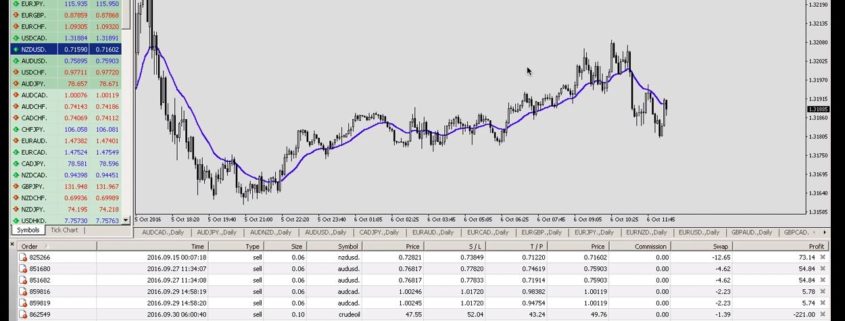
Simple Video Tutorial: How to Set Up & Use the MT4 Trading Platform

Trading Tips
mt4 platform demo

This is a simple demonstration on how you can use the MT4 platform to:

  • Add and view charts
  • Add trendlines, support/resistance, indicators
  • Customise charts layout and colours
  • Toggle between different timeframes and charts
  • Place trades using various methods, including the EP, TP, SL

In this video, I did a sample trade on my live account to show how easy it is to place trades, and this can actually be done very easily via my mobile phone as well.

See you there! 😀

0 Comments/by Spencer Li
https://synapsetrading.com/wp-content/uploads/2016/10/mt4-platform-demo.jpg 719 1250 Spencer Li https://synapsetrading.com/wp-content/uploads/2019/10/logo.jpg Spencer Li2016-10-11 08:00:582021-03-20 22:10:24Simple Video Tutorial: How to Set Up & Use the MT4 Trading Platform
Spencer Li

5 Striking Similarities between Trading & Playing Pokemon Go (And Why You Can be Good at Both)

Trading Tips
pokemon go logo

The Pokemon Go craze descended onto Singapore last Saturday, and I, too, was swept up in the frenzy. 😀

After playing for the past few days, I noticed many striking similarities between trading & playing Pokemon Go, and it struck me that if everyone from all walks of life can be so proficient at this mobile game, it actually means that they have the means and ability to trade on the go as well, and catch profits from the market as well as Pokemons.

pokemon-go-logo

Here are some of the striking similarities:

1. YOU NEED TO AT LEAST KNOW THE BASICS OF THE GAME

Before embarking on the game, you need to at least know the game mechanics, the rules, and some simple strategies to play decently well, and make your time worth while. This means that you should at least read some starter guides, to avoid making the newbie mistakes (such as not starting with a rare Charmander or Pikachu), or not maximising your lucky eggs (by mass evolving your pidgeys and caterpies).

Shoot, I wanted a Bulbasaur lol ? #noobstart

A photo posted by Spencer Li (@iamrecneps) on Aug 5, 2016 at 9:49pm PDT

2. EVERYONE HAS TO PLAY THEIR OWN GAME (AND PUT IN THE HARD WORK)

Since sharing of accounts is not allowed, this means that every player has to play their own account, which means that if you want to level up or catch good Pokemon, you have to put in the effort and the hours, and if you want to hatch those eggs, you need to clock the miles by walking (or cycling). Hence, there is no shortcut to success here.

Caterpie, I choose you! ? #caterpie #pokemongo #pips
A photo posted by Spencer Li (@iamrecneps) on Aug 8, 2016 at 1:56am PDT

3. TEAMWORK WORKS WONDERS AS WELL

Although it is an individual game, teamwork can still help, such as teaming up with friends to take down gyms, or alerting one another of rare Pokemon sightings, so that everyone can capture the same rare Pokemon. This reminds me of trading in a fund, where we took turns watching the market to alert one another when good market opportunities come by, so that everyone can profit from the same moves.

4. JUST LIKE THE MONEY, THE POKEMONS NEVER SLEEP

While observing the PokeGym near my house, I noticed battles raging on all night, even at 4am. I salue the dedication of the players, and it kind of reminds me of traders camping up all night to trade the FOMC news annoucements. But just because the game goes on 24/7, it does not mean you have to be playing all the time. The opportunities to catch Pokemon and fight gyms will always be there, and you have to time and freedom to catch any time and anywhere, as long as you have a mobile phone and internet connection. This is exactly the same as trading for me haha.

This Pokemon gym next to my house is damn epic lol ? #pokemongo #pokegym #temple

A photo posted by Spencer Li (@iamrecneps) on Aug 9, 2016 at 1:59am PDT

5. BOTH ARE FUN AND ADDICTIVE AT THE SAME TIME

The reason why both are addictive is because they are fun, and both include elements of luck and skill. The thrill of catching a rare Pokemon is the same thrill as catching a rare strong price movement which nets you a few thousand bucks while having your meal, or waiting for the bus. This is something which I have been trying to explain to people, and if you have caught a rare Pokemon, I think you will understand what thrill I am talking about. 90% of the time it is waiting and grinding, but it is totally worth it when you catch a good one. WOOHOO! 😀

Yessss!!!! Finally managed to hold a gym lol. ? #achievementunlocked #lifegoals #pokemongo

A photo posted by Spencer Li (@iamrecneps) on Aug 9, 2016 at 7:32am PDT

To end off, I think that if you are able to learn how to play a complex game such as Pokemon Go, then I’ve got good news for you, beause using your mobile phone to catch moves in the financial markets is way easier. And instead of PokeCoins, you can actually make some real money while playing.

For those who are keen to know where I caught my Articuno, I will be sharing more at my next workshop. 🙂
Check availability: https://synapsetrading.com/trading-foundation-workshop/

0 Comments/by Spencer Li
https://synapsetrading.com/wp-content/uploads/2016/08/pokemon-go-logo.jpg 900 1600 Spencer Li https://synapsetrading.com/wp-content/uploads/2019/10/logo.jpg Spencer Li2016-08-10 20:22:232019-12-26 03:14:055 Striking Similarities between Trading & Playing Pokemon Go (And Why You Can be Good at Both)
Page 7 of 12«‹56789›»

Free Trading Guides

Free Trading Guides

Blog Categories

  • Beginner's Guide
  • Blockchain & Crypto
  • Book Summaries
  • Candlestick Patterns
  • Economics & News Trading
  • Investing & Portfolio Management
  • Living Your Best Life
  • Market Analysis
  • News & Events
  • Price Chart Patterns
  • Promotions
  • Risk & Money Management
  • Stock Trading
  • Testimonials
  • Tools & Resources
  • Trading Psychology
  • Trading Strategies
  • Trading Tips
  • Travel & Lifestyle

Free Trading Guides

Free Trading Guides

Contact Us

Synapse Trading Pte Ltd
Registration No. 201316168H

Whatsapp: +65-8897-1204
Telegram: @iamrecneps
Email: info@synapsetrading.com

Links

Disclaimer
Privacy policy
Terms & Conditions
Contact us
Partnerships

© 2012-2024 Synapse Trading | All rights reserved | - powered by Enfold WordPress Theme
  • Link to Facebook
  • Link to X
  • Link to Instagram
  • Link to Youtube
  • Link to LinkedIn
  • Link to Mail
Scroll to top Scroll to top Scroll to top