• Link to Facebook
  • Link to X
  • Link to Instagram
  • Link to Youtube
  • Link to LinkedIn
  • Link to Mail
Synapse Trading
  • Home
  • About
    • My Background
    • My Trading Journey
    • My Travel Log
    • Media & Interviews
  • Mentoring
    • Trading Mastery Program
    • Results & Testimonials
  • Signals
    • Telegram (Free to join!)
    • Daily Trading Signals
    • Daily Trading Signals (Results)
  • Resources
    • Free Trading Guides
    • Tools & Resources
    • Blog & Infographics
  • Contact
    • Contact Us
    • Partnership Opportunities
  • Click to open the search input field Click to open the search input field Search
  • Menu Menu
Spencer Li

Interview with InsideINVEST: Advantages of Daily Leverage Certificates (DLCs) for Retail Traders

News & Events
soc gen dlc

Interview with InsideINVEST

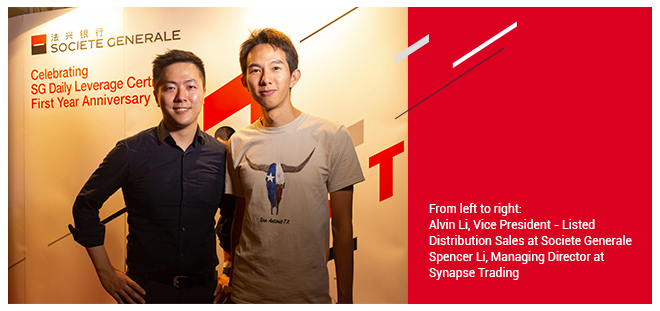
Daily Leverage Certificates (DLCs), since its launch in 17th July 2017, has been gaining attention in the local scene. InsideINVEST talks to Alvin Li from Societe Generale and Spencer Li, a well known trader in the local community on what to expect of DLC.


Retail Investors will tend to think of DLCs as a complex product. How will you simplify it for retail investors?

Alvin: DLC has been introduced to the market for one year. From our discussions with investors over the past year, I think many of them actually find this product easy to understand. A 7x Long DLC moves 7% for every 1% increase in the underlying asset (before costs and fees). I think it is intuitive enough.

Spencer: At first, investors may take a bit of time to understand the features of the product and how its prices are linked to the underlying index. But once they get the hang of it, they will find it a simple and useful product to capture moves in the general stock market. Also, since it is not traded on margin, investors will not risk losing more than what they put in.


What are the significant new developments of DLCs since its launch about 1 year ago?

Alvin: We first started by launching 10 DLCs on SGX July last year. The first batch of DLCs includes 3 times and 5 times leverage, long and short on three equity indices, namely Hang Seng Index, Hang Seng China Enterprises Index and MSCI Singapore Free Index. Then earlier in Jan this year we expanded the leverage to 7 times. Nowadays most of the trading activities are on the 7 times.


In your view, what kind of investors are best for trading of DLC?

Spencer: Because of the daily compounding effect, DLCs are better for short-term trading, and for strong trending markets, hence it would be a perfect fit for intraday trend traders. This means that a trader does not need to know the specifics of every stock; all he needs to know is the general direction of the local stock market (via indices) to profit from it. In addition, this also protects the trader from the volatility of individual stocks.

DLCs can also be used to hedge any short-term downside risk for an investment portfolio. If you anticipate a market correction coming but do not want to sell your stocks, you can use the Short DLC to hedge and protect your portfolio from any losses.


What is the one key feature of DLC that appeals to retail investors?

Alvin: I think DLC is simple as mentioned before. Also, the fact that it is listed on the SGX makes it a transparent product. Compared to CFD that is over-the-counter, different CFD provides may show different price, but if you trade DLC there is only one price at a time, because it is listed on the exchange. We also publish our costs and fees on our website on a daily basis which makes the product more transparent.


What is your trade plan for DLC and what are the risk involved?

Spencer: As mentioned previously, DLCs are good for short-term trend trading, and it allows traders to go both long and short, by buying a Long DLC to express a bullish view and buying a Short DLC to express a bearish view.

One popular strategy is to apply a multiple timeframe approach, for example if the daily chart of the Singapore market (MSCI Singapore Free Index) is bearish, one can then zoom in to the 5-min or 15-minue intraday chart to find good short entries, and take a short trade by buying a Short DLC.

And because of the leverage involved, not much capital is required, so it allows traders who are very confident of the trend to make larger bets with a small amount of capital to maxismise returns. Of course, this will increase the risk as well, which is why a trader needs to be good in analyzing the trends, and applying proper risk management.


How is the market response to DLC so far and are we expecting further enhancement to the product in the next 1 year?

Alvin: I think DLC has received very good tractions over the past year. It has traded over S$ 3 billion since its launch. And the outstanding value (position held by investors) has also been on a steady uptrend. We are now working on expanding it to single stock counters, on both Hong Kong and Singapore stocks, subject to regulatory approval.


To sum up, what is the one piece of advice that you will give to retail investors, encouraging them to add DLCs into their portfolio?

Alvin: I think understanding your product is the most important to successful trading and investing. I would suggest investors, especially those who have not traded the product before, go to our website dlc.socgen.com to learn and make sure you understand the product. I would also suggest they proactively give us feedback so that we know what they want and how we can do better.

Spencer: There are many different products available to traders in the market, but the most important thing is to find a product that fits your trading style and personality. DLCs contain many unique features that allow short-term traders to profit from strong moves in the stock market, and I think it is a good idea to read up and learn more about this product to see if it is a good fit for you.

To help you get started, I have compiled a comprehensive database of practical trading knowledge and strategies, including many good articles about DCLs: https://synapsetrading.com/synapse-online-academy

0 Comments/by Spencer Li
https://synapsetrading.com/wp-content/uploads/2018/08/soc-gen-dlc.png 311 660 Spencer Li https://synapsetrading.com/wp-content/uploads/2019/10/logo.jpg Spencer Li2018-08-24 05:35:242022-03-09 11:04:50Interview with InsideINVEST: Advantages of Daily Leverage Certificates (DLCs) for Retail Traders
Spencer Li

NDR 2018: High Cost of Living in Singapore A Major Concern?

Market Analysis
ndr 2018
ndr-2018

Image source: Mediacorp

During this year’s National Day Rally, Prime Minister Lee Hsien Loong talked about how Singaporeans will have to make some lifestyle changes and adapt to ease the pressures of the high cost of living in Singapore, as well as some of the government initiatives to help citizens cope.

Here are some of the major issues:

1. Cost of Housing

  • Currently, 80% of Singaporeans live in HDB flats, of which the downpayment can be made using CPF, making it affordable for most people to own a house.
  • The Home Improvement Programme aims to improve flats when they are about 60-70 years old, and will be extended to 230,000 flats in various estates. The new scheme is designed to make it easy for authorities to redevelop old estates over a long period, by subsidizing maintenance and repair costs for aging flats.
  • Owners of older HDB Flats will also get an opportunity to go en bloc before their leases run out as part of a new scheme dubbed Voluntary Early Redevelopment Scheme (VERS). Eligible residents will have a chance to decide whether the government can take back their flats once the leases clock the 70-year mark. This will allow the government to buy back their flats earlier, which can then be redeveloped, and the owners can use the cash from the sale to purchase a new house.
  • A 99-year HDB lease is long enough for flats to retain substantial value, and act as a good retirement nest egg for most Singaporeans.
  • For HDB owners whose lease has ended, the government will help them get a new one. Some of the oldest flats are more than 50 years old, which means that there is still 40+ more years before the lease expires.
  • Cooling measures have been taken to prevent excessive speculation of property prices in the private property market.

2. Cost of Healthcare

  • There will be a new health care package that will cater to the needs of people born in the 1950’s. Dubbed ‘The Merdeka Generation’ Package, the new scheme will cover areas such as outpatient subsidies as well MediSave top-Ups, payouts on long-term care and subsidies for MediShield Life.
  • The Community Health Assist Scheme (CHAS) which provides health care services for middle and lower income people will now also cover chronic medical conditions.
  • There will be new polyclinics in Sembawang, Eunos, Kallang and Bukit Panjang by 2020; and in Nee Soon Central, Tampines North by 2023

3. Cost of Utilities

  • With regard to the recent price hikes in electricity, the current prices are actually still lower as compared to 10 years ago.
  • As Singapore is not an oil producing country, fixing electricity tariffs may incur more cost in the long-run, hence is not a viable solution.
  • Instead, government initiatives such as U-Save will help lower-income Singaporeans with their utility bills.
  • Water prices are not expected to increase as ties with Malaysia are good and the ‘1962 Water Agreement’ remains in place

4. Cost of Food

  • The government is planning to increase the number of hawker centres, which is currently the main source of affordable meal options
  • In recent years, there have been 7 new hawker centres built, and we can look forward to 13 more in the coming years.
  • Will there be a new generation of hawkers to take over from the old retiring hawkers?

According to the EIU annual ranking, Singapore has been dubbed the world’s most expensive city to live in (for expats) for the fifth year running.

This could mean a stable economy and high standards of living, but it could also represent income inequality and a struggling lower income demographic.

It is a good sign that the government does not shy away from discussing such issues, and actively comes up with schemes to help citizens cope.

But the bigger question is whether such initiatives solve the root problem, or are merely stop-gap measures.

0 Comments/by Spencer Li
https://synapsetrading.com/wp-content/uploads/2018/08/ndr-2018.png 529 991 Spencer Li https://synapsetrading.com/wp-content/uploads/2019/10/logo.jpg Spencer Li2018-08-21 07:39:512022-03-15 17:27:04NDR 2018: High Cost of Living in Singapore A Major Concern?
Spencer Li

Video Interview with Spencer: The 20 Most Burning Questions

Trading Tips
burning questions

20 Most Common Trading Questions for Beginners, Answered

Last updated: 3 July 2026 · By Spencer Li, CFTe


The most common questions beginners ask come down to three things: what to trade, how to manage risk, and how to be consistent. The short answers: trading and investing are different jobs, so pick one on purpose. Start with one product and one timeframe, not five. You do not need a big account, you need a small risk per trade. You cannot predict price, so stop trying; you react to it with a rule. And a “good” return is the one you can repeat without blowing up, not the biggest number you saw online. Below I answer all 20 of the questions new traders ask me most, plainly, with no hype and no promises of returns.

The full video series walks through each one. This page is the written version you can search and skim.

Trading vs investing, and the big-picture questions

What is the difference between trading and investing?
Investing is buying an asset to hold for years, betting on the business or the economy growing. Trading is taking shorter positions to profit from price movement, up or down, over days to weeks. Same markets, different jobs. You can do both, but do not blur them; the worst trade is the losing trade you “turn into an investment” to avoid booking the loss.

Do you believe in the buy-and-hold value investing approach?
Yes, as one tool. Buy-and-hold works for money you do not need to touch and do not want to babysit. It is slow, it is boring, and that is the point. My issue is not with the method, it is with using it as an excuse to never sell, even when the reason you bought has clearly broken.

What is your long-term investment strategy?
Personally, I keep the long-term money mechanical and diversified, rebalanced on a schedule, not on a feeling. The goal of that bucket is to not lose badly in a bad decade, not to win the most in a good one. I keep it completely separate from my trading account so one cannot tempt the other.

Trading is risky, shouldn’t I just buy stocks with good fundamentals?
Good fundamentals tell you what to own, not when, and a great company can still hand you a 50% drawdown on the way to being right. Risk is not the strategy you pick, it is the size you take and the loss you are willing to accept. A “safe” stock with no exit plan is riskier than a small, well-sized trade with a stop.

Strategy, products, and the technical questions

What is your trading strategy?
Low-risk swing trading. I scan once a day, look for a small number of high-probability price patterns, enter where the risk is small and clearly defined, and let the winners run. One system, applied the same way to any market. The edge is not a magic setup, it is taking only the good ones and sizing them sanely.

What products should I trade, and how many?
Start with one. One product, learned properly, beats five products half-understood. Stocks or an index are a fine place to begin because the data is clean and the behaviour is well documented. Add a second product only once the first one is genuinely on autopilot.

What is the difference between technical analysis and fundamental analysis?
Fundamental analysis (FA) studies the business: earnings, debt, growth, valuation. Technical analysis (TA) studies the price chart: trend, support and resistance, patterns. FA tries to answer “is this worth owning?” TA tries to answer “when do I get in and out?” Neither is complete on its own.

Do you use fundamentals in your trading?
Lightly. My entries and exits are technical, but I will glance at the backdrop, what sector is strong, whether earnings are due, the broad regime. I use fundamentals as context, not as a trigger. The chart decides the trade.

What technical indicators do you use to trade?
Fewer than people expect. Price action, structure (higher highs and lower lows), and support and resistance do most of the work. I will use a moving average for trend context and the occasional momentum gauge, but indicators are lagging summaries of price, so I read price first and let an indicator confirm, never lead.

What charts and timeframe do you use, and what is your holding period?
Candlestick charts, daily timeframe as the home base, with a weekly chart for context. As a swing trader my holding period is typically days to a few weeks. Do note that a longer timeframe means fewer trades and fewer decisions, which for most beginners is a feature, not a limitation.

Capital, consistency, and expectations

How much capital do I need to start trading?
Less than you think to learn, more than you think to live on. You can learn the process with a small account because the skill is risk control, not account size. What matters is the percentage you risk per trade, not the dollar amount. Start small enough that the losses (and there will be losses) do not hurt you while you are still learning.

How can I become more consistent in my trading results?
Consistency comes from doing the same thing every time, not from finding a better setup. Same scan, same setups, same risk per trade, same routine. Most inconsistency is behavioural: skipping the rules on the trade that “felt” different, or sizing up after a win. Write the process down and follow it on the boring days.

How can I predict the price of a stock? How do I know when it will turn?
You cannot predict it, and chasing certainty is the trap. Nobody knows the next tick. What you can do is identify spots where the odds favour one side and the risk of being wrong is small and defined, then react. I do not try to call the turn; I wait for price to show it is turning and take a position with a tight stop.

What is a good annual return to aim for, and how much can I expect?
I will not give you a number, and you should distrust anyone who promises one. Returns are not fixed, they swing with the market, your skill, and your risk. A better target than a percentage is a process you can repeat without blowing up. Aim to survive and stay consistent first; the returns are a by-product of not losing badly, not a goal you can dial in.

Here is the beginner cheat sheet

The fastest way to skip the common mistakes is to flip each one into a rule.

Beginner instinctThe mistakeThe rule instead
Trade many products to spread betsHalf-understands all of themMaster one product first
Load up on indicatorsConflicting, lagging signalsRead price first, confirm with one indicator
Predict the turnCatches falling knivesReact after price confirms the turn
Risk a fixed dollar amountAccount size drives the lossRisk a fixed small percentage per trade
Chase a big annual returnOversizes, blows upTarget a repeatable process, let returns follow
Trade all day on newsReacts to noiseScan once a day, trade the setup

Timing, news, and risk

When should I trade? When is the best time to trade?
Whenever you can be calm and follow your process, which for a swing trader is usually a quiet 15 minutes after the daily close, not all day staring at a screen. The “best time” myth assumes more screen time means more profit. It usually means more overtrading. Pick a fixed slot and scan then.

How do you trade the news, and what news should I watch?
Carefully, and less than you would think. News moves price, but by the time you have read it, the move has often happened, and the reaction is unpredictable. I do not trade headlines. I watch the calendar so a known event (earnings, a central-bank decision) does not blindside an open position, and I let the chart, not the story, tell me what to do.

Is trading safe? Can I lose all my capital? How do you manage risk?
Trading is not “safe”, and anyone who tells you it is, is selling something. You can lose money, and with leverage you can lose more than you put in, which is exactly why I avoid reckless leverage. I manage risk by keeping each trade’s loss small and pre-defined with a stop, sizing every position to that loss, and never betting so big that one trade matters. The whole game is staying in the game.

If everyone uses your strategies, will they stop working?
No, and here is why. The edge is not the setup, which anyone can see. The edge is the discipline to take only the good ones, skip the tempting-but-bad ones, size correctly, and sit through drawdowns. Most people who know the rules still cannot follow them. The information is free; the behaviour is rare.

The professional and the getting-started questions

What is the difference between trading for a fund and trading your own money?
A fund gives you size, infrastructure, and someone else’s rules and pressure. Trading your own money gives you full freedom and full responsibility, no one to blame, no one to answer to but yourself. The mechanics overlap, but the psychology is different: with your own money, the hardest opponent is you.

How can I get started, and what are good resources?
Start by learning one method properly rather than collecting twenty. Read widely, but trade narrowly. The honest path is unglamorous: learn a defined process, practise it on a small account, keep a record of every trade, and review your own mistakes. That last part, reviewing your own trades, teaches you more than any course. It is also why I keep my own trade log public, losses left in.

Where the human edge comes in

A scanner will list these twenty questions and even draft tidy textbook answers in seconds. What it will not do is stop you from oversizing after a winning streak, or talk you out of the trade that “feels” certain, or make you sit on your hands through a drawdown you planned for. The knowledge is the easy part now. The judgment, discipline, and sizing are the part that decides whether you keep your account, and they are the first of the Five Edges that no tool can trade for you.

FAQ

What is the difference between trading and investing?
Investing means holding an asset for years to profit from long-term growth. Trading means taking shorter positions, days to weeks, to profit from price movement in either direction. Same markets, different jobs, and you should pick one on purpose for each pot of money.

How much money do I need to start trading?
Enough to learn the process safely, which is smaller than most people assume, because the skill is risk control, not account size. What matters is the small percentage you risk per trade, not the total in the account.

What is a realistic return for a beginner trader?
There is no fixed number, and you should be wary of anyone who promises one. Returns swing with the market and your skill. A better goal than a percentage is a repeatable process that does not blow up your account.

Which technical indicators should a beginner use?
Fewer than you would expect. Price action, market structure, and support and resistance do most of the work. Add at most one moving average or momentum gauge for confirmation, and read price first.

Can you predict where a stock price will go?
No, and trying to is the classic beginner trap. You cannot know the next move. You can find spots where the odds favour one side with small, defined risk, then react to what price actually does.


That is the written version of the 20 questions I get asked most. If one of your own questions is not here, ask it in the comments and I will answer it.

For the full framework behind these answers, read the pillar: The Beginner’s Guide to Trading and Investing.

Want the routine, not just the answers? Grab the free 15-Minute Swing Trading Starter Kit. It is the exact once-a-day process I use to trade any market in 15 minutes.


About the author. Spencer Li is the founder of Synapse Trading and a Certified Financial Technician (CFTe) with 15 years of trading across stocks, forex, crypto, commodities, and bonds. His trade log is public, 404 trades, losses left in. He teaches low-risk swing trading in 15 minutes a day, one system for any market.

Education, not financial advice. Synapse Trading is not licensed by MAS to advise on investment products. Trading carries risk of loss; past performance is not indicative of future results.


Related

Beginner’s Guide to Trading and Investing (pillar) · Trading vs investing: which should you do? · How much money do you need to start trading? · How to be a consistent trader

0 Comments/by Spencer Li
https://synapsetrading.com/wp-content/uploads/2016/07/burning-questions.jpg 390 610 Spencer Li https://synapsetrading.com/wp-content/uploads/2019/10/logo.jpg Spencer Li2018-08-15 05:01:302026-07-06 03:23:44Video Interview with Spencer: The 20 Most Burning Questions
Spencer Li

15 FREE Animated Videos on the Basics of Trading & Investing

Trading Tips
1b Stock Market Basics

Trading & Investing

In collaboration with TradeHero (now Ayondo) & SGX (Singapore Exchange), we have developed a series of 15 animated video tutorials that will make learning fun & easy for all beginners!

I have been tasked as the mastermind behind the content, drawing from my knowledge of the 200+ books I have read and 10,000+ hours of professional market experience as mentioned in the video.

The videos are divided into 5 parts:

  • Part 1 – Basics of Trading & Investing

    • Video Tutorial 1(a) General Market Basics
    • Video Tutorial 1(b) Stock Market Basics
    • Video Tutorial 1(c) An Easy Way to Diversify your Portfolio
  • Part 2 – Riding the Big Market Cycles

    • Video Tutorial 2(a) Business & Market cycles
    • Video Tutorial 2(b) What Moves the Markets?
    • Video Tutorial 2(c) The Top 3 Economic Indicators
  • Parts 3 – The ABCs of Stock Valuation

    • Video Tutorial 3(a) Finding Value In Stocks
    • Video Tutorial 3(b) Reading Financial Statements
    • Video Tutorial 3(c) Financial Ratio Shortcuts
  • Part 4 – Behavioral Analysis & Market Timing

    • Video Tutorial 4(a) Basics of Market Timing
    • Video Tutorial 4(b) Identifying Market Trends
    • Video Tutorial 4(c) Support & Resistance
  • Part 5 – Making Your First Trade

    • Video Tutorial 5(a) The Math Behind Trading
    • Video Tutorial 5(b) The 2% Money Management Rule
    • Video Tutorial 5(c) How to Place Orders
0 Comments/by Spencer Li
https://synapsetrading.com/wp-content/uploads/2014/09/1b-Stock-Market-Basics.png 750 1278 Spencer Li https://synapsetrading.com/wp-content/uploads/2019/10/logo.jpg Spencer Li2018-08-15 04:51:482022-03-07 12:27:0515 FREE Animated Videos on the Basics of Trading & Investing
Spencer Li

What Are Some of the Biggest Problems with Crypto Trading Platforms?

Promotions
0 qX0  0oK qJc  SR

After trading cryptocurrencies for almost half a year and coaching many others to do the same, I had realised that many new traders seem to face the same gripes about the limited trading platforms. This issue is extremely prominent if traders are used to other platforms such as forex or stock brokerages.

Here are some of the biggest complications about the existing platforms:

  1. Long waiting period for account opening, verification, or funding
  2. Misleading and unfriendly user-interface
  3. Expensive trading fees and wide spreads
  4. High charges by banks for fund transfers

When cryptocurrency was first introduced in 2010, only a handful of specialised exchanges offered trading services. Throughout the years, cryptocurrency trading grew larger in number and size. Comparing the existing functions and complexities of Forex to any other cryptocurrencies brokerages, there is still a huge room for improvement for cryptocurrencies. As of today, many emerging companies are out in the market, competing to resolve the problems consumers are facing.

Crypto Trading Platforms

While browsing the net, I came across many new promising brokerages, and I had a chat with some of them to find out more about where the industry is headed.

One of them is Cryptaw, a new brokerage that aims to provide simplicity and reliability for Bitcoin trading. When I spoke with the management, they told me that  “Singaporeans should not pay a premium for cryptocurrency.”

On Cryptaw’s website, which they have just launched this month, they have made some really bold promises which could potentially disrupt cryptocurrency brokerage industry:
– Direct SGD Deposit
– Low trading fee of 0.6%*
– Simple user interface
– Fast account verification within 3 working days

If Cryptaw is able to address the 4 big issues, it will make it a lot easier not only for new traders (of which many are still waiting weeks/months for their accounts to get verified), but also for existing traders who can benefit from a simpler execution platform.

*Original trading fee of 1.2%. User will be able to enjoy discounted trading fee with promo codes and referral codes. Users will be able to enjoy 50% off trading fee until 3 Aug 2018


Note: This post is sponsored by Cryptaw.

Our policy & disclaimer on 3rd party products & services: https://synapsetrading.com/disclaimer/

For sponsored posts or other marketing opportunities, please contact us at https://synapsetrading.com/partnership-opportunities/

0 Comments/by Spencer Li
https://synapsetrading.com/wp-content/uploads/2018/07/0_qX0_-0oK-qJc__SR_.png 631 1200 Spencer Li https://synapsetrading.com/wp-content/uploads/2019/10/logo.jpg Spencer Li2018-07-07 14:57:472023-03-14 02:51:30What Are Some of the Biggest Problems with Crypto Trading Platforms?
Page 95 of 184«‹9394959697›»

Free Trading Guides

Free Trading Guides

Blog Categories

  • Beginner's Guide
  • Blockchain & Crypto
  • Book Summaries
  • Candlestick Patterns
  • Economics & News Trading
  • Investing & Portfolio Management
  • Living Your Best Life
  • Market Analysis
  • News & Events
  • Price Chart Patterns
  • Promotions
  • Risk & Money Management
  • Stock Trading
  • Testimonials
  • Tools & Resources
  • Trading Psychology
  • Trading Strategies
  • Trading Tips
  • Travel & Lifestyle

Free Trading Guides

Free Trading Guides

Contact Us

Synapse Trading Pte Ltd
Registration No. 201316168H

Whatsapp: +65-8897-1204
Telegram: @iamrecneps
Email: info@synapsetrading.com

Links

Disclaimer
Privacy policy
Terms & Conditions
Contact us
Partnerships

© 2012-2024 Synapse Trading | All rights reserved | - powered by Enfold WordPress Theme
  • Link to Facebook
  • Link to X
  • Link to Instagram
  • Link to Youtube
  • Link to LinkedIn
  • Link to Mail
Scroll to top Scroll to top Scroll to top