• Link to Facebook
  • Link to X
  • Link to Instagram
  • Link to Youtube
  • Link to LinkedIn
  • Link to Mail
Synapse Trading
  • Home
  • About
    • My Background
    • My Trading Journey
    • My Travel Log
    • Media & Interviews
  • Mentoring
    • Trading Mastery Program
    • Results & Testimonials
  • Signals
    • Telegram (Free to join!)
    • Daily Trading Signals
    • Daily Trading Signals (Results)
  • Resources
    • Free Trading Guides
    • Tools & Resources
    • Blog & Infographics
  • Contact
    • Contact Us
    • Partnership Opportunities
  • Click to open the search input field Click to open the search input field Search
  • Menu Menu
Spencer Li

What is Decentralised Finance (DeFi) and is it the Future of Finance?

Blockchain & Crypto
draft 2 Defi thumbnail

What Is DeFi (Decentralised Finance), and Will It Replace Banks?

Last updated: 3 July 2026 · By Spencer Li, CFTe


Decentralised finance, or DeFi, is a financial system that lets people lend, borrow, trade, and earn without a bank or any central middleman in between. Instead of a bank holding your money and approving your transactions, the rules run automatically as code on a blockchain (a public, shared digital ledger that records every transaction across many computers). The honest answer to “will it replace banks?” is: not yet, and maybe not fully. DeFi fixes two real problems with traditional banking, a lack of transparency and the risk of data breaches. But it brings its own problems, mainly crypto volatility, hacking risk, and almost no regulation. So today it works best as a parallel system for people who want full control of their money, not as a wholesale replacement for the banking system most of us still rely on.

Here is how it actually works, what it does well, where it breaks, and why I would not bet the house on it yet.

Why do we even need an alternative to banks?

We currently run on a centralised financial system, often shortened to CeFi (centralised finance), where power sits with a few central authorities. Banks, credit unions, and insurance companies control the services, and we are largely at their mercy for investing, lending, borrowing, and everyday money matters.

To be fair, this system is trusted for a reason. When you deposit money, the bank takes responsibility for it. Regulators set the standards and make everyone follow them. For most people, most of the time, that reliability is exactly what you want.

That being said, the centralised system is not without flaws. There are two big ones.

1. Lack of transparency. When you deposit money in a bank, it does not sit locked in a box only you can open. The bank lends it out to someone else, because that is how banks make money. They are responsible for getting it back, and they will return your money even if the borrower defaults. But you never really know what is happening with your money or who it was lent to.

2. Data breaches. A centralised system is a single big target. There have been many cases where people’s confidential information and money were stolen. The same centralisation also makes the system vulnerable to wider financial crises, the kind of economic downturns that rattle everything at once.

DeFi is often pitched as the cure for these two specific maladies. Let’s see how.

What is DeFi (decentralised finance), and how does it work?

A decentralised financial system is an alternative to the centralised one. It lets financial transactions happen without a third-party financial institution in the middle. Think of it as a digital ecosystem offering services much like a bank does, except the services are handled by code rather than by a person.

The key difference is what it is built on. DeFi runs on top of a blockchain network. A blockchain is a decentralised, distributed, and usually public digital ledger that records transactions across all the computers on its network.

The reason this matters is that the records are very hard to tamper with. Transactions are stored in “blocks,” and a block cannot be quietly edited after the fact without breaking every block that came after it. In plain terms, it is extremely hard to game the system.

So DeFi takes direct aim at the two CeFi flaws above. Because each transaction is recorded on a public ledger, you can see exactly where your money is and what it is doing. And because the record is so hard to fake, your money is harder to quietly mishandle.

CeFi vs DeFi: a side-by-side comparison

Here is the cleanest way to hold the two systems next to each other.

CeFi (banks)DeFi (blockchain)
Who is in controlA central authority (bank, regulator)Code (smart contracts), no single owner
TransparencyLow, you can’t see where your money goesHigh, every transaction is on a public ledger
ReliabilityHigh, established and regulatedImproving, but still young
Geographic limitsYes, restrictions on cross-border lendingNo, anyone, anywhere, peer-to-peer
Main risksData breaches, financial crisesVolatility, hacking, no regulation
What you transact inReal-world money and assetsMostly crypto assets (e.g. Bitcoin)
OversightStrong regulationLittle to none

The table makes the trade-off obvious. DeFi buys you transparency and freedom; it costs you the safety net of regulation. Which side of that trade you want depends entirely on how much control you are willing to manage yourself.

What are the advantages of DeFi?

Beyond fixing transparency, DeFi brings a few things a bank simply cannot.

1. No censorship. Unlike CeFi, DeFi does not gatekeep. Anyone can use any financial service they need. That is a big deal, especially for the underbanked, people who can’t easily get a normal bank account.

2. No geographical restrictions. You can transact with people all over the world. A centralised system usually won’t let you freely lend to or receive money from someone in another country. DeFi users can do worldwide peer-to-peer (P2P) lending and borrowing directly. Do note that, for now, this mostly works with crypto assets, the most famous being Bitcoin (BTC), rather than real-world assets like gold or property.

What are the disadvantages of DeFi?

I want to be balanced here, because the hype usually skips this part. DeFi has four real weaknesses.

1. It is reliant on technology. Because the whole thing is digital, it lives or dies by its tech. That means serious technical risk. One bad glitch and the system can come crashing down.

2. Cryptocurrencies are volatile. Major cryptocurrencies swing hard, which makes the system unpredictable. Even if you borrow a stablecoin, you usually post crypto as collateral, and that collateral’s value is not fixed. It can drop sharply at any time and trigger problems.

3. There is hacking risk. The same transparency that makes DeFi trustworthy cuts both ways. Smart contracts can be read and audited by anyone, which means hackers can study them too. The possibility of manipulation has not gone to zero.

4. There is little oversight or regulation. This is the biggest one. So much of the public depends on the centralised system that a full switch to DeFi feels unrealistic right now. No regulator also means no one to call when something goes wrong.

What is Ethereum, and what are smart contracts?

You cannot talk about DeFi without Ethereum. Ethereum is one of the most popular blockchain platforms, a decentralised public ledger that lets people run decentralised applications (dApps, apps with no central server or owner). It has its own cryptocurrency, Ether (ETH), and its own programming languages, Solidity and Vyper. After Bitcoin, Ether is the most popular cryptocurrency in the world and ranks second by market value.

Since no bank sits in the middle of a DeFi transaction, something has to enforce the rules. That something is a smart contract. A smart contract is a piece of code, not controlled by any central authority, that runs automatically when preset conditions are met. Once it is deployed on the network, it cannot be changed.

Like a traditional contract, a smart contract lays down the rules of a deal, but it enforces them by itself. For example, if a borrower fails to repay a loan from another Ethereum user, the borrower’s collateral is automatically liquidated and the loan is settled. No phone calls, no debt collector. In the world of DeFi, smart contracts stand in for all the financial institutions.

What are the most popular DeFi applications?

Three categories cover most of what people actually use.

1. Decentralised exchanges (DEXs). A DEX works like a marketplace where buyers and sellers connect and trade cryptocurrencies (and fiat, meaning government-issued money like USD) without a central authority. The whole process is non-custodial and runs through smart contracts, so no third party ever owns your assets.

2. Peer-to-peer (P2P) lending platforms. Need a loan? You can approach another user directly and skip the middleman. Because both sides rely on smart contracts, the room for fraud is very small.

3. Stablecoins. Stablecoins were created to answer crypto’s volatility problem. A stablecoin is a cryptocurrency, like Bitcoin or Ether, with one difference: it is pegged to the value of something stable, usually a fiat currency, sometimes a commodity like a precious metal. DAI is one of the most popular, with 1 DAI trading at roughly $1.

Will DeFi take over the traditional financial system?

It is fair to say DeFi has genuinely changed the financial landscape, and rightly so. It hands people control of their own money, it adds efficiency and transparency, and it has cut the room for corruption and fraud. On those terms, it looks like one of the better-designed financial systems we have.

Having said that, the system is still in its relative infancy, and the disadvantages above are real, not theoretical. Volatility, hacking, and the near-total lack of regulation are not small footnotes.

Personally, here is where I land. DeFi will keep developing fast, and if it closes the current gaps, especially around stability and oversight, there is a real chance it grows into a much larger part of the global financial system. But “replace banks entirely, soon” is a much stronger claim than the evidence supports today. I treat it as a powerful parallel system worth understanding, not as a reason to abandon the boring, regulated rails most of my own money still sits on.

And this is the part the technology cannot do for you. Blockchain can guarantee that a transaction is recorded honestly; it cannot tell you whether a given token is a real opportunity or a rug-pull dressed up in a nice whitepaper. The code removes the middleman. It does not remove the judgment. That judgment, deciding what is actually worth your capital, is the human edge no smart contract trades for you.

FAQ

What is DeFi in simple terms?
DeFi (decentralised finance) is a way to use financial services like lending, borrowing, and trading without a bank or central middleman. The rules run automatically as code (smart contracts) on a blockchain, a public ledger that records every transaction.

Is DeFi safe?
It is transparent but not risk-free. DeFi removes the bank as a single point of failure, but it adds its own risks: crypto price volatility, smart-contract hacking, and almost no regulation, which means little recourse if something goes wrong.

What is the difference between CeFi and DeFi?
CeFi (centralised finance) runs through banks and regulators who control your money and the rules. DeFi runs on a blockchain with no central owner, so transactions are transparent and borderless, but unregulated.

What is a smart contract?
A smart contract is code on a blockchain that runs automatically when preset conditions are met. It enforces the terms of a deal by itself, with no central authority. Once deployed, it cannot be changed. In DeFi, smart contracts do the job banks normally do.

Will DeFi replace banks?
Not in the near term. DeFi solves transparency and access, but volatility, hacking risk, and the lack of regulation make a full replacement unlikely soon. It is better viewed as a parallel system than a wholesale replacement.


Now that you have the full picture of DeFi, its strengths and its real weaknesses, what do you think? Will it take over the traditional financial system, or stay a parallel option? Let me know in the comments.

And if you want the bigger picture on how all of this fits together, read the pillar: The Ultimate Guide to Blockchain and Cryptocurrencies.

Want a simple system instead of the hype? Grab the free 15-Minute Swing Trading Starter Kit. It’s the exact routine I use to scan once a day and trade any market in 15 minutes.


About the author. Spencer Li is the founder of Synapse Trading and a Certified Financial Technician (CFTe) with 15 years of trading across stocks, forex, crypto, commodities, and bonds. His trade log is public, 404 trades, losses left in. He teaches low-risk swing trading in 15 minutes a day, one system for any market.

Education, not financial advice. Synapse Trading is not licensed by MAS to advise on investment products. Trading carries risk of loss; past performance is not indicative of future results.


Related

Ultimate Guide to Blockchain and Cryptocurrencies (pillar) · What is Bitcoin and how does it work · How to invest in cryptocurrency

0 Comments/by Spencer Li
https://synapsetrading.com/wp-content/uploads/2021/08/draft-2-Defi-thumbnail.png 720 1280 Spencer Li https://synapsetrading.com/wp-content/uploads/2019/10/logo.jpg Spencer Li2021-08-04 20:49:322026-07-06 01:52:10What is Decentralised Finance (DeFi) and is it the Future of Finance?
Spencer Li

SkillsFuture Credit-Eligible Workshop on Trading & Investing Skills!

News & Events
trading skillsfuture course feedback 260721 1

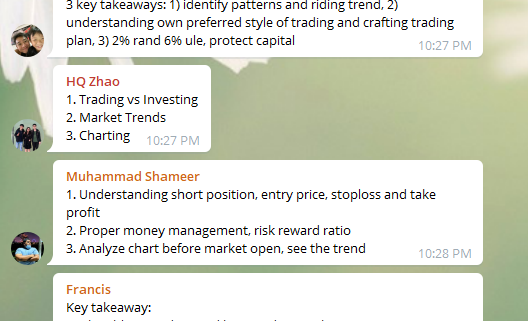
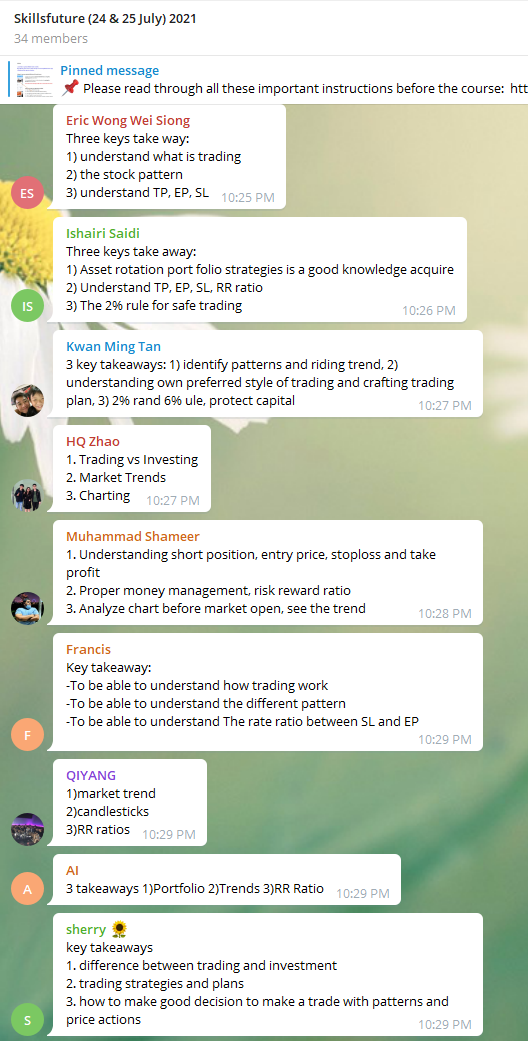
Last weekend, we conducted another online workshop on the basics of trading and investing, and since it is a SkillsFuture Credit-Eligible Course, participants could use their SkillsFuture credits to pay for the course instead of cash.

Thanks for the support! ?

During the 9 hours of training, participants learnt portfolio strategies to build and protect their wealth, as well as trading skills like market-timing, chart-reading and risk management to improve their trading results.

Here is some of the feedback and learning points from participants, after our hands-on market analysis session to find trading opportunities in the market.

If you are keen to learn more using your SkillsFuture credits, you can check out our courses:

  • Beginner’s Course on Trading & Investing
  • Beginner’s Course on Tech Stocks & Crypto

P.S. To ensure optimal learning, we have capped the maximum class size.

Register early to avoid disappointment!

SkillsFuture Credit

SkillsFuture Credit 2

0 Comments/by Spencer Li
https://synapsetrading.com/wp-content/uploads/2021/07/trading-skillsfuture-course-feedback-260721-1.png 1041 528 Spencer Li https://synapsetrading.com/wp-content/uploads/2019/10/logo.jpg Spencer Li2021-07-26 18:52:372022-03-08 14:57:41SkillsFuture Credit-Eligible Workshop on Trading & Investing Skills!
Spencer Li

How to Build Confidence in Trading

Trading Psychology
How to Build Confidence in Trading 1

How to Build Confidence in Trading (Without Faking It)

Last updated: 3 July 2026 · By Spencer Li, CFTe


You build confidence in trading the same way you build it anywhere else: by stacking small wins until the evidence outweighs the fear. It does not come from a motivational speech, a bigger account, or convincing yourself you are good. It comes from a track record. You take small, low-risk trades, you follow your system exactly, and you let the results pile up. Real confidence in trading has two separate parts: confidence in your ability (you can read the chart and pull the trigger) and confidence in your system (the rules make money over many trades). You need both, and they are built differently. Ability is built by repetition. System confidence is built by sample size. The fastest way to get unstuck after a loss is not analysis, it is one good trade taken cleanly by the rules, win or lose.

Here is how that works, bullet by bullet, and how to break the two habits that quietly kill most traders’ confidence.

Why does success breed confidence (and how do you start)?

Confidence follows results, not the other way round. You cannot think your way into feeling confident before you have done the thing. So the order matters: take the small win first, and the feeling shows up after.

This is why “baby steps to giant strides” is not a cliche here, it is the actual mechanism. If you size up before you have a track record, one normal losing streak wipes out a fragile confidence you had not earned yet. Start small enough that a loss does not hurt and a win does not go to your head. Then let the wins compound, and let your size grow only as the evidence grows.

Personally, I would rather a trader take fifty tiny trades and build a real base than take five big ones and build a story.

The two kinds of confidence: ability vs system

Most traders lump confidence into one feeling. It is actually two, and mixing them up is where the trouble starts.

Confidence in your abilityConfidence in your system
What it meansYou can read the chart, spot the setup, and pull the triggerThe rules produce a positive result over many trades
Built byRepetition, screen time, reps on the same setupsSample size, a track record of following the rules
What breaks itA run of hesitation or sloppy executionA losing streak that feels like the system is broken
The fixTake more small reps until the action is automaticZoom out to the full sample, not the last three trades

The reason this split matters: when you lose a trade, you need to know which confidence took the hit. If your execution was clean and the rules just did not work this time, that is normal variance, your system confidence is fine, do nothing. If you froze, second-guessed, or broke your own rule, that is an ability problem, and the answer is more reps, not a new system.

Do note that, a string of losses taken correctly is not evidence your system is broken. Losing trades are a cost of doing business, not a verdict on you.

“Hesitation to pull the trigger” and one more bar syndrome

Here is the most common confidence leak I see. The setup is there, the rules say enter, and you wait. You tell yourself you want “just one more bar” of confirmation. The bar prints, the trade is gone, and you watch it run without you.

That is one more bar syndrome, and it is almost never about the chart. It is about fear of being wrong. The cruel part is that waiting for more confirmation does not make you more right, it just makes your entry worse and your stop wider, which makes the trade scarier, which makes you hesitate more next time. The hesitation feeds itself.

The cure is mechanical, not emotional. Define the exact trigger in advance (this candle closes here, I enter). When it triggers, you enter, no debate. You are not trying to feel ready. You are executing a pre-made decision. Confidence in the moment is unreliable. A written rule is not.

“Burnt finger anxiety”: trading scared after a loss

The other big leak is the opposite problem. You took a loss, it stung, and now you are gun-shy. You skip the next valid setup because the last one burned you, and of course the one you skip is the one that would have paid for the loss. That is burnt finger anxiety.

This one is dangerous because you will call it discipline and stop checking it. Sitting out feels prudent. But you are not sitting out the bad trades, you are sitting out the next trade purely because of the last one, and those two trades have nothing to do with each other. The market does not remember your last loss, and your edge only shows up if you take the whole sample.

The fix is the same idea from the other direction: trust the rules over the feeling. If the setup is valid by your system, the recent loss is irrelevant to whether you take it.

The mental reset: one good trade

So how do you get unstuck, whether you are frozen by hesitation or shaken by a loss? Not with more screen time, more journaling, or a weekend of soul-searching. The fastest reset is one good trade.

By a good trade, I do not mean a winner. I mean a trade you took cleanly, exactly by your rules, sized correctly, exit and all. The outcome does not matter for the reset. What matters is that you proved to yourself you can still execute. One clean trade breaks the spell. It replaces the story in your head (“I keep messing up”) with a fresh piece of evidence (“I just did it right”). That single rep is worth more than hours of analysis, because confidence is built from doing, and you just did.

Hence, when you feel the confidence draining, do not size up to win it back and do not step away to “clear your head.” Take the smallest valid trade you can find and execute it perfectly. Let that be the first brick in the next stack.

Where the human edge comes in

A backtest can hand you a profitable system on a plate. It cannot make you pull the trigger when the setup is live, sit out the trade that the last loss made scary, or stop you from sizing up to chase your money back. The rules are the easy part to write down. Following them under fear is the hard part, and that is discipline, the part of trading no tool can do for you. Confidence is just the byproduct of doing it correctly enough times.

FAQ

How long does it take to become a confident trader?
There is no fixed timeline, because confidence tracks your track record, not the calendar. It is built by stacking small wins taken correctly, so the more reps you take (and the smaller you keep them early), the faster the evidence accumulates. Trading scared or oversizing both slow it down.

Why do I hesitate to enter trades even when the setup is good?
Usually the real reason is fear of being wrong. The stated reason is wanting “one more bar” of confirmation. Waiting does not make you more right, it just worsens your entry. The fix is to define the exact entry trigger in advance and execute it mechanically, with no in-the-moment debate.

How do I get my confidence back after a big loss?
Take one good trade, meaning one you execute cleanly and correctly by your rules, regardless of whether it wins. The clean rep proves you can still follow your process and breaks the “I keep messing up” story. Avoid sizing up to win the money back, which is how a loss becomes a losing streak.

Is confidence in my ability the same as confidence in my system?
No, and treating them as one thing causes problems. Ability confidence (you can execute) is built by repetition. System confidence (the rules make money over many trades) is built by sample size. When a trade loses, figure out which one took the hit before you react.

Should I trade bigger to feel more confident?
No. Real confidence comes before the size increase, not from it. Size up only as your track record grows, so a normal losing streak cannot wipe out confidence you have not earned yet.


Confidence is not a feeling you summon before you trade. It is the residue of trades taken correctly. Start small, follow the rules, and let the evidence do the convincing.

For the full picture on the mental side of the game, read the pillar: The Complete Guide to Trading Psychology.

Want the routine that makes confidence easier to build? Grab the free 15-Minute Swing Trading Starter Kit. It is the exact once-a-day process I use to scan, decide, and execute any market in 15 minutes, with the rules written down so you are not relying on how you feel in the moment.


About the author. Spencer Li is the founder of Synapse Trading and a Certified Financial Technician (CFTe) with 15 years of trading across stocks, forex, crypto, commodities, and bonds. His trade log is public, 404 trades, losses left in. He teaches low-risk swing trading in 15 minutes a day, one system for any market.

Education, not financial advice. Synapse Trading is not licensed by MAS to advise on investment products. Trading carries risk of loss; past performance is not indicative of future results.


Related

The Complete Guide to Trading Psychology (pillar) · Patience and discipline in trading · How to manage losing trades · New insights on trading psychology

0 Comments/by Spencer Li
https://synapsetrading.com/wp-content/uploads/2021/07/How-to-Build-Confidence-in-Trading-1.png 720 1280 Spencer Li https://synapsetrading.com/wp-content/uploads/2019/10/logo.jpg Spencer Li2021-07-25 12:30:542026-09-10 00:55:56How to Build Confidence in Trading
Spencer Li

What is Your Circle of Control in Trading?

Trading Psychology
What is Your Circle of Control in Trading 1

The Circle of Control in Trading: Focus on Your Actions, Not the Outcome

Last updated: 2026-06-14 · By Spencer Li, CFTe


The circle of control in trading means spending your energy only on the things you can actually control, your process and your behaviour, and letting go of the one thing you cannot, the outcome of any single trade. You do not control whether a position wins or loses. You do not control where the market goes tomorrow. What you control is your entry rules, your position size, your stop, and how you react when the screen turns red. So that is where your attention belongs. Judge yourself on whether you followed your plan, not on whether the trade made money, because a good decision can lose and a bad decision can win. Do that consistently, and the P&L (profit and loss) takes care of itself over a large enough sample. Chase the P&L directly, and you start breaking your own rules to force it.

Here is what falls inside the circle, what falls outside, and how to keep your focus on the right side of the line.

What is the circle of control?

Picture two circles. The inner one holds everything you control. The outer one holds everything you do not. Most traders spend their day staring at the outer circle, the price, the P&L, the news, and almost no time on the inner one, where all their actual power sits.

The idea is old. The Stoics called it the dichotomy of control. In trading it lands hard, because the market gives you constant, vivid feedback on the one thing you cannot steer, and almost none on the things you can.

Inside your control (your job)Outside your control (let it go)
Your entry and exit rulesWhether any single trade wins or loses
Your position size and risk per tradeWhere the market goes next
Where you place your stopToday’s news, gaps, and surprises
Whether you follow your planYour short-term P&L swings
How you react to a lossWhat other traders are doing

Read the table left to right. Everything on the left is a decision you make before and during the trade. Everything on the right happens to you. The whole skill is keeping your attention, and your self-judgement, on the left column.

Why you should let go of the outcome

A single trade tells you almost nothing. You can follow your plan perfectly and still lose, because the market handed that trade to the other side. You can break every rule, get lucky, and win. If you judge yourself by the result, you will learn the wrong lesson both times. You punish the good trade that lost and reward the reckless one that won.

So separate the decision from the outcome. Ask one question after every trade: did I follow my process? If yes, it was a good trade, win or lose. If no, it was a bad trade, even if it made money. Grade the decision, not the dice roll.

This is why I tell traders to stop watching the dollar figure tick up and down. The P&L fluctuation on an open position is the loudest, least useful number on your screen. It pulls you toward cutting winners early out of fear and holding losers too long out of hope, the exact opposite of what your plan told you to do. Watch your rules instead. Let the number be the byproduct.

The sports analogy: do not watch the scoreboard

Here is the homely version. A tennis player who stares at the scoreboard between every point plays worse, not better. The score is the outcome. It is already decided by the points that are done. The only thing the player controls is the next shot, the footwork, the toss, the follow-through. Watch the scoreboard and you tighten up. Watch the ball and you play.

Trading is the same. The P&L is your scoreboard. It is the result of trades that are already on or already closed. Glancing at it every few minutes does not change a single thing on the right side of that table above. It only feeds the anxiety that makes you abandon your plan. Keep your eyes on the next decision, on the ball, and the score moves on its own.

Why individual trades do not matter

Zoom out. Your edge does not live in any one trade. It lives in a large sample of trades, taken the same disciplined way, where a positive expectancy plays out over dozens or hundreds of repetitions. (Expectancy is your average profit per trade across many trades, factoring in both your win rate and your reward-to-risk.)

In a casino, the house does not care about any single spin of the wheel. It can lose the next spin badly. It cares about the edge holding across ten thousand spins. You want to think the same way. (I wrote a whole piece on this, Is trading really risky like gambling?, on how to flip from being the gambler to being the house.)

Once you genuinely believe the next trade does not matter, two things change. You stop oversizing, because no single bet is worth blowing up the account. And you stop revenge trading, because a loss is just one data point in a long series, not a verdict on you.

How to keep your focus inside the circle

A few habits that move your attention to the left column:

  • Pre-decide everything you can. Set your entry, stop, size, and target before you click buy. Once the trade is on, your job is only to execute the plan, not to renegotiate it while the P&L swings.
  • Grade the process, not the result. Keep a journal that asks “did I follow my rules?” before it asks “did I make money?” Over time you want a clean record of good decisions, regardless of how each one paid out.
  • Hide the open P&L if it is hijacking you. If the live dollar figure makes you exit early or freeze, take it off the screen. Trade the chart and your rules, check the number at the end of the day.
  • Size so no single trade can hurt you. When the worst case on any trade is small and survivable, it is far easier to let go of the outcome. Risk control is what makes detachment possible.

Where the human edge comes in

A scanner or an AI can find the setup and even place the order. What it cannot do for you is sit calmly through an open loss without breaking the plan, or refuse to revenge trade after a bad day. The circle of control is, in the end, a psychology problem, the discipline to act on your process while the outcome is still uncertain. That self-management is one of the Five Edges no tool can trade for you, and it is the one that separates the traders who survive from the ones who do not.

FAQ

What does the circle of control mean in trading?
It means focusing only on what you can control, your entry rules, position size, stop placement, and your own behaviour, and letting go of what you cannot control, the outcome of any single trade and where the market goes next.

Should I stop looking at my P&L while trading?
Watch your rules, not the live P&L. The open profit-and-loss figure on a position is the loudest and least useful number on your screen, and staring at it tends to push you into cutting winners early and holding losers too long.

How do I judge a trade if I ignore the outcome?
Ask whether you followed your process. A trade that follows your plan is a good trade even if it loses, and a trade that breaks your plan is a bad trade even if it wins. Grade the decision, not the result.

Why do individual trades not matter?
Your edge plays out over a large sample, not any single trade. Like a casino, you want your positive expectancy to hold across hundreds of repetitions, so no one result, good or bad, should change how you behave.

Is the circle of control the same as the Stoic dichotomy of control?
Yes, it is the same idea applied to markets. The Stoics taught focusing on what is within your power and accepting what is not, which maps directly onto controlling your process while letting go of outcomes.


So here is the honest question to sit with: when you look at your screen, are your eyes on the ball or on the scoreboard? Be specific with yourself about it, that answer tells you a lot.

If you want to go deeper on the mindset side, read the pillar: The Complete Guide to Investing and Trading Psychology.

Want the system that makes detachment easy? Grab the free 15-Minute Swing Trading Starter Kit. It is the exact routine I use to scan once a day and trade any market in 15 minutes, with the rules pre-decided so you are not fighting the P&L in the moment.


About the author. Spencer Li is the founder of Synapse Trading and a Certified Financial Technician (CFTe) with 15 years of trading across stocks, forex, crypto, commodities, and bonds. His trade log is public, 404 trades, losses left in. He teaches low-risk swing trading in 15 minutes a day, one system for any market.

Education, not financial advice. Synapse Trading is not licensed by MAS to advise on investment products. Trading carries risk of loss; past performance is not indicative of future results.


Related

The Complete Guide to Investing and Trading Psychology (pillar) · Is trading really risky like gambling? (Trade like a casino) · Trading discipline and process

0 Comments/by Spencer Li
https://synapsetrading.com/wp-content/uploads/2021/07/What-is-Your-Circle-of-Control-in-Trading-1.png 720 1280 Spencer Li https://synapsetrading.com/wp-content/uploads/2019/10/logo.jpg Spencer Li2021-07-25 12:30:442026-07-06 01:03:15What is Your Circle of Control in Trading?
Spencer Li

How to Manage Winning Trades with the Correct Trading Psychology

Trading Psychology
How to Manage Winning Trades with the Correct Trading Psychology

Do not take profits until there is a good reason to do so
The Chicken parable
Do not count your profits until they are realised
Accept that you will have to give some profits back to the market
Do not become complacent or greedy after a huge windfall or winning streak


complete guide to investing and trading psychology cover

If you would like to learn more about trading psychology, also check out: “The Complete Guide to Investing & Trading Psychology”

0 Comments/by Spencer Li
https://synapsetrading.com/wp-content/uploads/2021/07/How-to-Manage-Winning-Trades-with-the-Correct-Trading-Psychology.png 720 1280 Spencer Li https://synapsetrading.com/wp-content/uploads/2019/10/logo.jpg Spencer Li2021-07-25 12:30:402021-10-04 19:09:15How to Manage Winning Trades with the Correct Trading Psychology
Page 78 of 184«‹7677787980›»

Free Trading Guides

Free Trading Guides

Blog Categories

  • Beginner's Guide
  • Blockchain & Crypto
  • Book Summaries
  • Economics & News Trading
  • Investing & Portfolio Management
  • Living Your Best Life
  • Market Analysis
  • Markets & Products
  • News & Events
  • Promotions
  • Risk & Money Management
  • Stock Trading
  • Technical Analysis & Price Action
  • Testimonials
  • Tools & Resources
  • Trading Psychology
  • Trading Strategies
  • Trading Tips
  • Travel & Lifestyle

Free Trading Guides

Free Trading Guides

Contact Us

Synapse Trading Pte Ltd
Registration No. 201316168H

Whatsapp: +65-8897-1204
Telegram: @iamrecneps
Email: info@synapsetrading.com

Links

Disclaimer
Privacy policy
Terms & Conditions
Contact us
Partnerships

© 2012-2024 Synapse Trading | All rights reserved | - powered by Enfold WordPress Theme
  • Link to Facebook
  • Link to X
  • Link to Instagram
  • Link to Youtube
  • Link to LinkedIn
  • Link to Mail
Scroll to top Scroll to top Scroll to top