
• Link to Facebook
  • Link to X
  • Link to Instagram
  • Link to Youtube
  • Link to LinkedIn
  • Link to Mail
Synapse Trading
  • Home
  • About
    • My Background
    • My Trading Journey
    • My Travel Log
    • Media & Interviews
  • Mentoring
    • Trading Mastery Program
    • Results & Testimonials
  • Signals
    • Telegram (Free to join!)
    • Daily Trading Signals
    • Daily Trading Signals (Results)
  • Resources
    • Free Trading Guides
    • Tools & Resources
    • Blog & Infographics
  • Contact
    • Contact Us
    • Partnership Opportunities
  • Click to open the search input field Click to open the search input field Search
  • Menu Menu

Tag Archive for: getting started

Spencer Li

Video Interview with Spencer: The 20 Most Burning Questions

Trading Tips
burning questions

20 Most Common Trading Questions for Beginners, Answered

Last updated: 3 July 2026 · By Spencer Li, CFTe


The most common questions beginners ask come down to three things: what to trade, how to manage risk, and how to be consistent. The short answers: trading and investing are different jobs, so pick one on purpose. Start with one product and one timeframe, not five. You do not need a big account, you need a small risk per trade. You cannot predict price, so stop trying; you react to it with a rule. And a “good” return is the one you can repeat without blowing up, not the biggest number you saw online. Below I answer all 20 of the questions new traders ask me most, plainly, with no hype and no promises of returns.

The full video series walks through each one. This page is the written version you can search and skim.

Trading vs investing, and the big-picture questions

What is the difference between trading and investing?
Investing is buying an asset to hold for years, betting on the business or the economy growing. Trading is taking shorter positions to profit from price movement, up or down, over days to weeks. Same markets, different jobs. You can do both, but do not blur them; the worst trade is the losing trade you “turn into an investment” to avoid booking the loss.

Do you believe in the buy-and-hold value investing approach?
Yes, as one tool. Buy-and-hold works for money you do not need to touch and do not want to babysit. It is slow, it is boring, and that is the point. My issue is not with the method, it is with using it as an excuse to never sell, even when the reason you bought has clearly broken.

What is your long-term investment strategy?
Personally, I keep the long-term money mechanical and diversified, rebalanced on a schedule, not on a feeling. The goal of that bucket is to not lose badly in a bad decade, not to win the most in a good one. I keep it completely separate from my trading account so one cannot tempt the other.

Trading is risky, shouldn’t I just buy stocks with good fundamentals?
Good fundamentals tell you what to own, not when, and a great company can still hand you a 50% drawdown on the way to being right. Risk is not the strategy you pick, it is the size you take and the loss you are willing to accept. A “safe” stock with no exit plan is riskier than a small, well-sized trade with a stop.

Strategy, products, and the technical questions

What is your trading strategy?
Low-risk swing trading. I scan once a day, look for a small number of high-probability price patterns, enter where the risk is small and clearly defined, and let the winners run. One system, applied the same way to any market. The edge is not a magic setup, it is taking only the good ones and sizing them sanely.

What products should I trade, and how many?
Start with one. One product, learned properly, beats five products half-understood. Stocks or an index are a fine place to begin because the data is clean and the behaviour is well documented. Add a second product only once the first one is genuinely on autopilot.

What is the difference between technical analysis and fundamental analysis?
Fundamental analysis (FA) studies the business: earnings, debt, growth, valuation. Technical analysis (TA) studies the price chart: trend, support and resistance, patterns. FA tries to answer “is this worth owning?” TA tries to answer “when do I get in and out?” Neither is complete on its own.

Do you use fundamentals in your trading?
Lightly. My entries and exits are technical, but I will glance at the backdrop, what sector is strong, whether earnings are due, the broad regime. I use fundamentals as context, not as a trigger. The chart decides the trade.

What technical indicators do you use to trade?
Fewer than people expect. Price action, structure (higher highs and lower lows), and support and resistance do most of the work. I will use a moving average for trend context and the occasional momentum gauge, but indicators are lagging summaries of price, so I read price first and let an indicator confirm, never lead.

What charts and timeframe do you use, and what is your holding period?
Candlestick charts, daily timeframe as the home base, with a weekly chart for context. As a swing trader my holding period is typically days to a few weeks. Do note that a longer timeframe means fewer trades and fewer decisions, which for most beginners is a feature, not a limitation.

Capital, consistency, and expectations

How much capital do I need to start trading?
Less than you think to learn, more than you think to live on. You can learn the process with a small account because the skill is risk control, not account size. What matters is the percentage you risk per trade, not the dollar amount. Start small enough that the losses (and there will be losses) do not hurt you while you are still learning.

How can I become more consistent in my trading results?
Consistency comes from doing the same thing every time, not from finding a better setup. Same scan, same setups, same risk per trade, same routine. Most inconsistency is behavioural: skipping the rules on the trade that “felt” different, or sizing up after a win. Write the process down and follow it on the boring days.

How can I predict the price of a stock? How do I know when it will turn?
You cannot predict it, and chasing certainty is the trap. Nobody knows the next tick. What you can do is identify spots where the odds favour one side and the risk of being wrong is small and defined, then react. I do not try to call the turn; I wait for price to show it is turning and take a position with a tight stop.

What is a good annual return to aim for, and how much can I expect?
I will not give you a number, and you should distrust anyone who promises one. Returns are not fixed, they swing with the market, your skill, and your risk. A better target than a percentage is a process you can repeat without blowing up. Aim to survive and stay consistent first; the returns are a by-product of not losing badly, not a goal you can dial in.

Here is the beginner cheat sheet

The fastest way to skip the common mistakes is to flip each one into a rule.

Beginner instinctThe mistakeThe rule instead
Trade many products to spread betsHalf-understands all of themMaster one product first
Load up on indicatorsConflicting, lagging signalsRead price first, confirm with one indicator
Predict the turnCatches falling knivesReact after price confirms the turn
Risk a fixed dollar amountAccount size drives the lossRisk a fixed small percentage per trade
Chase a big annual returnOversizes, blows upTarget a repeatable process, let returns follow
Trade all day on newsReacts to noiseScan once a day, trade the setup

Timing, news, and risk

When should I trade? When is the best time to trade?
Whenever you can be calm and follow your process, which for a swing trader is usually a quiet 15 minutes after the daily close, not all day staring at a screen. The “best time” myth assumes more screen time means more profit. It usually means more overtrading. Pick a fixed slot and scan then.

How do you trade the news, and what news should I watch?
Carefully, and less than you would think. News moves price, but by the time you have read it, the move has often happened, and the reaction is unpredictable. I do not trade headlines. I watch the calendar so a known event (earnings, a central-bank decision) does not blindside an open position, and I let the chart, not the story, tell me what to do.

Is trading safe? Can I lose all my capital? How do you manage risk?
Trading is not “safe”, and anyone who tells you it is, is selling something. You can lose money, and with leverage you can lose more than you put in, which is exactly why I avoid reckless leverage. I manage risk by keeping each trade’s loss small and pre-defined with a stop, sizing every position to that loss, and never betting so big that one trade matters. The whole game is staying in the game.

If everyone uses your strategies, will they stop working?
No, and here is why. The edge is not the setup, which anyone can see. The edge is the discipline to take only the good ones, skip the tempting-but-bad ones, size correctly, and sit through drawdowns. Most people who know the rules still cannot follow them. The information is free; the behaviour is rare.

The professional and the getting-started questions

What is the difference between trading for a fund and trading your own money?
A fund gives you size, infrastructure, and someone else’s rules and pressure. Trading your own money gives you full freedom and full responsibility, no one to blame, no one to answer to but yourself. The mechanics overlap, but the psychology is different: with your own money, the hardest opponent is you.

How can I get started, and what are good resources?
Start by learning one method properly rather than collecting twenty. Read widely, but trade narrowly. The honest path is unglamorous: learn a defined process, practise it on a small account, keep a record of every trade, and review your own mistakes. That last part, reviewing your own trades, teaches you more than any course. It is also why I keep my own trade log public, losses left in.

Where the human edge comes in

A scanner will list these twenty questions and even draft tidy textbook answers in seconds. What it will not do is stop you from oversizing after a winning streak, or talk you out of the trade that “feels” certain, or make you sit on your hands through a drawdown you planned for. The knowledge is the easy part now. The judgment, discipline, and sizing are the part that decides whether you keep your account, and they are the first of the Five Edges that no tool can trade for you.

FAQ

What is the difference between trading and investing?
Investing means holding an asset for years to profit from long-term growth. Trading means taking shorter positions, days to weeks, to profit from price movement in either direction. Same markets, different jobs, and you should pick one on purpose for each pot of money.

How much money do I need to start trading?
Enough to learn the process safely, which is smaller than most people assume, because the skill is risk control, not account size. What matters is the small percentage you risk per trade, not the total in the account.

What is a realistic return for a beginner trader?
There is no fixed number, and you should be wary of anyone who promises one. Returns swing with the market and your skill. A better goal than a percentage is a repeatable process that does not blow up your account.

Which technical indicators should a beginner use?
Fewer than you would expect. Price action, market structure, and support and resistance do most of the work. Add at most one moving average or momentum gauge for confirmation, and read price first.

Can you predict where a stock price will go?
No, and trying to is the classic beginner trap. You cannot know the next move. You can find spots where the odds favour one side with small, defined risk, then react to what price actually does.


That is the written version of the 20 questions I get asked most. If one of your own questions is not here, ask it in the comments and I will answer it.

For the full framework behind these answers, read the pillar: The Beginner’s Guide to Trading and Investing.

Want the routine, not just the answers? Grab the free 15-Minute Swing Trading Starter Kit. It is the exact once-a-day process I use to trade any market in 15 minutes.


About the author. Spencer Li is the founder of Synapse Trading and a Certified Financial Technician (CFTe) with 15 years of trading across stocks, forex, crypto, commodities, and bonds. His trade log is public, 404 trades, losses left in. He teaches low-risk swing trading in 15 minutes a day, one system for any market.

Education, not financial advice. Synapse Trading is not licensed by MAS to advise on investment products. Trading carries risk of loss; past performance is not indicative of future results.


Related

Beginner’s Guide to Trading and Investing (pillar) · Trading vs investing: which should you do? · How much money do you need to start trading? · How to be a consistent trader

0 Comments/by Spencer Li
https://synapsetrading.com/wp-content/uploads/2016/07/burning-questions.jpg 390 610 Spencer Li https://synapsetrading.com/wp-content/uploads/2019/10/logo.jpg Spencer Li2018-08-15 05:01:302026-07-06 03:23:44Video Interview with Spencer: The 20 Most Burning Questions
Spencer Li

15 FREE Animated Videos on the Basics of Trading & Investing

Trading Tips
1b Stock Market Basics

Trading & Investing

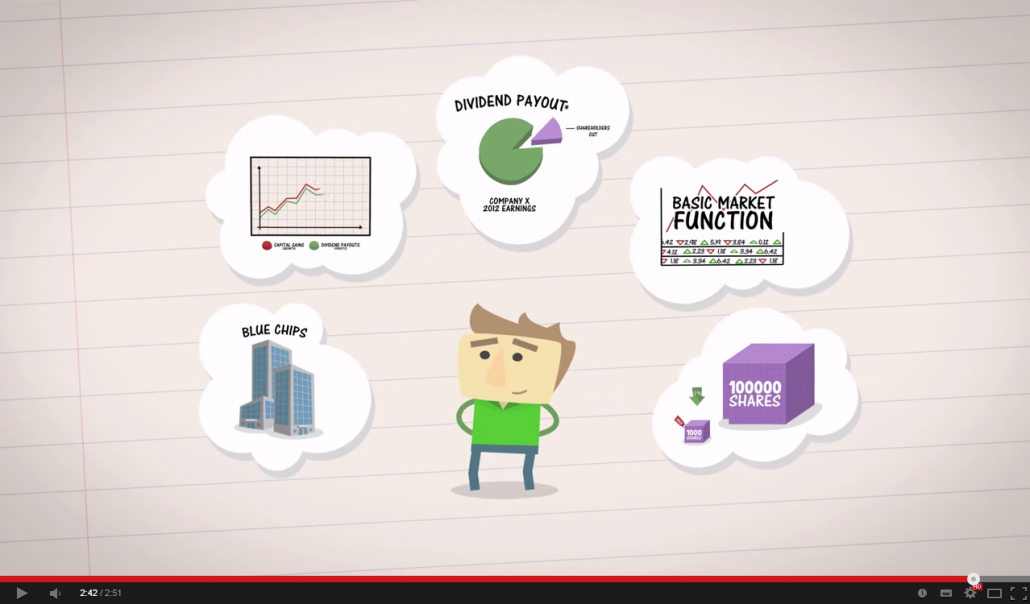
In collaboration with TradeHero (now Ayondo) & SGX (Singapore Exchange), we have developed a series of 15 animated video tutorials that will make learning fun & easy for all beginners!

I have been tasked as the mastermind behind the content, drawing from my knowledge of the 200+ books I have read and 10,000+ hours of professional market experience as mentioned in the video.

The videos are divided into 5 parts:

  • Part 1 – Basics of Trading & Investing

    • Video Tutorial 1(a) General Market Basics
    • Video Tutorial 1(b) Stock Market Basics
    • Video Tutorial 1(c) An Easy Way to Diversify your Portfolio
  • Part 2 – Riding the Big Market Cycles

    • Video Tutorial 2(a) Business & Market cycles
    • Video Tutorial 2(b) What Moves the Markets?
    • Video Tutorial 2(c) The Top 3 Economic Indicators
  • Parts 3 – The ABCs of Stock Valuation

    • Video Tutorial 3(a) Finding Value In Stocks
    • Video Tutorial 3(b) Reading Financial Statements
    • Video Tutorial 3(c) Financial Ratio Shortcuts
  • Part 4 – Behavioral Analysis & Market Timing

    • Video Tutorial 4(a) Basics of Market Timing
    • Video Tutorial 4(b) Identifying Market Trends
    • Video Tutorial 4(c) Support & Resistance
  • Part 5 – Making Your First Trade

    • Video Tutorial 5(a) The Math Behind Trading
    • Video Tutorial 5(b) The 2% Money Management Rule
    • Video Tutorial 5(c) How to Place Orders
0 Comments/by Spencer Li
https://synapsetrading.com/wp-content/uploads/2014/09/1b-Stock-Market-Basics.png 750 1278 Spencer Li https://synapsetrading.com/wp-content/uploads/2019/10/logo.jpg Spencer Li2018-08-15 04:51:482022-03-07 12:27:0515 FREE Animated Videos on the Basics of Trading & Investing
Spencer Li

3 Little-Known But Powerful Life Principles That the Top 10% of Rich People Apply Daily

Living Your Best Life
zen garden

Wealth has little to do with your age. Instead, maturity is the key factor in living successfully and accumulating wealth. I’ve seen 40-somethings and 50-somethings behave like school children, and 20-somethings with nothing in their pockets but with an attitude that would put accomplished men to shame.

The latter are the superstars of tomorrow. But what is the defining difference between these 2 groups of people?

The answer lies in their life principles, and here are 3 essential life principles that are adopted by all the world’s richest and most successful people.

FIRSTLY, IT’S NOT WHAT YOU HAVE IN YOUR POCKET, BUT WHAT ATTITUDE YOU HAVE IN YOUR HEAD.

Attitude makes the difference. I have met employers, bosses, CEOs over the years and one thing I’ve noticed is that many of them do not mind hiring fresh graduates, as long as they want to learn. Many people come straight out of school expecting a $4,000 salary and posh benefits, but the truth is, these jobs no longer exist. Instead, the business world is a harsh hustle and the reality may shock comfort-seekers and fun-loving teenagers.

Money is not the solution to your financial difficulties. It’s your mentality towards wealth and life in general.

aSource: Quotefancy.com

Of course, in capitalism, money speaks. But when you have nothing to your name, it’s your willingness to change and your enthusiasm that attracts the money eventually.

Entrepreneurs are people who create money out of thin air. They see a problem, and find a way to

If someone is hiring a trader, I want to see at least 5 years of dedicated self-study to the subject, outside of the classroom. I want him to be proficient in all asset classes, conversant with financial jargon, and at least know who Yellen and Largade is.

When an aspiring trader tells me that the FOMC rate caused a bull spike and reversal on the yen yesterday despite the announcement being ambiguous, I’m sold.

Rich people have raw passion, and I believe every successful entrepreneur would say the same.

What kind of attitude do you have?

SECONDLY, LEARN TO SERVE INSTEAD OF BEING SERVED.

Many people, young or old, squirm at the idea of having to serve someone more experienced than them. After all, they would say to themselves “I could jolly-well do what my boss is doing. Why is he paid 3 x of my salary?”

“That’s because he’s the boss, silly you.”

This is the truth: your boss did something, and had something that got him there. He paid his dues and did what it takes to get to where he deserves.


1Would you ‘wash someone else’s feet’ in order to learn and get where you want eventually?
Source: enemyofdebt.com

And learning to serve is a great way to buy into the shoes of high-rolling elites. Many wealthy people are humble, hardworking, honest, eager to learn, and much much more. When they see the same qualities they once had, you’re in.

Serve your boss. Look out for what the company you are in wants. Help others around meet performance goals. Learn to work for a vision greater than yourself, and don’t beat yourself up for having low pay initially.

When you serve, you grow as a person, you grow in maturity, you expose yourself to different experiences, and you’ll instantly stand out from the crowd.


LASTLY, BE FAITHFUL WITH LITTLE, AND YOU’LL BE GIVEN MORE.

I’m surprised by how many people I meet, fresh out of university, who have studied Economics, Finance, Corporate Accounting, Complex Derivatives, and many other subjects, but fail to manage their own income and expenses.

A person who manages his expenses at the age of 18 is impressive. People don’t look only for great results; the person’s habits will show.

I’ve seen youngsters who can pull out spreadsheets detailing their monthly income and expenses for the past 5 years, filed into category, along with savings plans, % completion on their financial goals, and many other cool details. These are the ones that will get ahead.

If you can’t manage $1,000 a month, don’t think that things will get better when you have $4,000 a month. If you are faithful with little, you will be faithful with much.

Have you ever heard of lottery winners striking it rich, and then lose it all because they were bad financial managers?


izI ain’t no saint, but Mother Teresa has some great wisdom on this issue.
Source: izquotes.com


Budget faithfully, keep to your current level of income, and stick to it. But always seek to grow your level of earning power.

TRUTH BE TOLD, MANY PEOPLE DON’T LIKE TO DO THE ABOVE 3 POINTS.

Sadly, I’ve also met adults in their 40s-50s who have lost hope. When the family comes, the kids come, and the crushing mortgage comes, the cracks will show in their financial discipline. These habits are formed over many years, and the lack of discipline and a humble attitude is to blame.

Keep at your inner-game and you’ll be much closer to your financial goals than you imagine.

Cheers! 🙂


thumbnail an unofficial guide to living our best life beyond financial freedom

If you are excited to get more life hacks, also check out: “Beyond Financial Freedom: An Unofficial Guide to Living Your Best Life”

0 Comments/by Spencer Li
https://synapsetrading.com/wp-content/uploads/2016/12/zen-garden.jpg 619 900 Spencer Li https://synapsetrading.com/wp-content/uploads/2019/10/logo.jpg Spencer Li2017-03-15 05:59:262021-10-04 22:39:423 Little-Known But Powerful Life Principles That the Top 10% of Rich People Apply Daily
Spencer Li

The 10 Financial Milestones that Everyone Needs to Aim For

Investing & Portfolio Management
beginners guide to trading and technical analysis

The 10 Financial Milestones Every Singaporean Should Aim For

Last updated: 3 July 2026 · By Spencer Li, CFTe


The 10 financial milestones every Singaporean should aim for are: a clean credit history, the skill of budgeting, becoming a “time-investor” who builds skills before chasing returns, full financial independence from your parents, adequate insurance coverage, an active plan to stay physically fit, owning the roof over your head, tracking your active and passive income, holding six months of expenses in cash, and meeting real investors regularly. Notice that only a few of these are about making money. The rest are about preserving it and protecting it, because amassing wealth and keeping wealth are two different skills. Most people obsess over the first and skip the second.

Here is the honest part. You do not need all ten before you start. But the more of them you have in place, the stronger your financial house stands when a storm comes. So treat the list below as an audit. Read each one, and quietly tick off how many you have already done.

What is a “financial milestone”, and why ten?

A financial milestone is a checkpoint that tells you your money is actually getting healthier, not just busier. The road to financial freedom is marked by progress, and these are the markers along it.

Some milestones are about building wealth. Others, the ones most people forget, are about preserving it. A missed preservation milestone (no insurance, no cash buffer) can wipe out years of building in a single bad event. That is why the list mixes both, and why getting your house in order comes before marching anywhere.

Before any of this, do one thing: a clean, honest audit of where you stand today. You cannot fix a number you have not looked at.

The 10 milestones at a glance

#MilestoneWhat it really meansBuild or preserve?
1Clean credit historyPay every bill on time, no penalties, no finesPreserve
2The skill of budgetingA budget you actually keep, not one you redraw monthlyBuild
3Be a time-investorInvest your time into skills before you invest your moneyBuild
4Financial independenceYour livelihood no longer depends on who hands you moneyBuild
5Adequate insuranceProtection for you and the people who depend on youPreserve
6A plan to stay fitHealth, so you can actually enjoy the wealth you buildPreserve
7Own your homeThe roof over your head, so an emergency cannot put you on the streetPreserve
8Track active and passive incomeA quarterly reality check on where your money comes fromBuild
9Six months of expenses in cashA war chest, so you are never worried about bread on the tablePreserve
10Meet investors regularlySurround yourself with real investors, not a comfort zoneBuild

Now here is how each one works, and where people get it wrong.

1. Have a clean credit history

Paying personal bills on time is a chore for many. The financially healthy person masters it anyway.

It is simple, really. Do not buy what is beyond you right now. I have heard of startup founders who slept in basements to save on rent, bunking with four other like-minded nerds who did not mind the early shame for the later glory. Most of us are far more financially secure than that. Even with some debt, most middle-class families get by and put a little aside each month.

So the rule is plain. Do not spend what you do not have. Business loans do not count here, because they are a different animal from personal debt.

Have you done a thorough audit of your personal debts? A good credit rating is one big green tick on your financial health. Pay your bills on time, avoid penalty fees and fines, and your record at the Credit Bureau Singapore (the bureau that holds your local credit report) stays clean.

2. Learn the skill of budgeting

Before wealth is amassed, you have to learn to manage small amounts of money. If you can be trusted with little, you can be trusted with much.

Budgeting is a simple skill. The catch is that people do not keep to their budgets. They adjust them the way they adjust their exercise schedule, their weight-loss plan, their study plan, and everything else.

A budget you do not keep makes budgeting useless. The resolve to stick to it is part of the skill. If you cannot abide by your own budget, there is only one person to blame.

Parents have a role here too. Teach budgeting to children when they are young, and the attitude stays. Even when the amounts get bigger later, the discipline keeps the person financially healthy over the long run.

3. Be a professional time-investor

Here is the wrong question to ask: “I have $10,000, what should I invest in?” Anyone leading with that is starting at the wrong end. The right question is: “What skills should I acquire to become a proficient investor?”

Time is all you need to acquire skills. Many people complain about the lack of real financial education in schools, then stay stuck at the complaining stage. To be a professional investor of money, you first have to be a professional investor of your own time.

If you spend most of your time watching YouTube and it makes you happy, great. But if that is not the life you want, do something about it. Even after trading for many years, I still make it a point to read good books and stimulate my thinking. Self-help, trading books, even fiction. You would be surprised how much a good, beefy fiction book teaches you.

This is also where the human edge lives. A screener will tell you what is moving in a second, and that part is now basically free. What it will not do is build the judgment to know which opportunity is worth your time and which one to walk past. The skill you invest your time into is the part no tool can buy for you. It is the first of the Five Edges.

4. Be financially independent

If you are still living off your parents, that is okay. There is nothing to be ashamed of, because all of us start there. But you need a plan to get to the point where your livelihood no longer depends on who gives you money.

Many young people are quietly leaning on the safety net that their parents will rescue them if they mess up. That may even be true, since no parent wants their child to face a financial catastrophe. Still, every one of us needs to reach the place where we take responsibility for our own finances and keep honest track of where we stand.

5. Get adequate insurance coverage

As a responsible adult, your job is not only to protect yourself financially, but also the people you love. You cannot compromise on insurance, because your life does not revolve around you alone.

Having solid financial backing when something tragic happens is what financial responsibility looks like in practice. It shows you have a clear plan for emergencies.

Personally, I do not think investment-linked policies are really investments. As I said in milestone #3, invest your time, not your money into a policy hoping it grows. Take up the necessary protection, get the peace of mind, and that is all you need. You would be surprised how uninformed most people are about insurance, and getting this right is one milestone that will set you apart.

6. Have an active plan to keep yourself fit

Many people never even consider physical fitness a financial milestone. But what use is all the wealth in the world if you are too unwell to enjoy it?

Keeping fit is simple, yet hard to do. Just like budgeting, most people know what to do and do not do it. Get yourself in shape if you want your financial health in shape. The two are more connected than they look.

7. Own the roof over your head

Yes, there are stories of young people who made it big and bought a mansion with the $150 million they got from selling a company. Most of us do not have that luxury.

The majority work their way to owning a first home before getting anywhere major in life. When it comes to financial freedom, owning the roof over your head is the least you can do, because when an emergency strikes, you will not be forced onto the street.

8. Monitor your active and passive income

Financial freedom involves both active income (what you earn from working) and passive income (what your assets earn for you). Reviewing them every three months or so keeps you up to date on your progress. It is also a reality check, so you do not quietly drift into skiving.

A simple Excel sheet does the job. It is as easy as tracking your expenses, and most basic apps on the App Store or Play Store work fine. The hard part is not the tool. It is drilling in the discipline to keep the routine.

9. Keep six months of expenses in cash

This is another defensive safety net. If you do not even have a six-month war chest, do not yet think about financial freedom. Reaching the goals you set takes real effort and real risk, and the last thing you want to be worrying about mid-journey is whether there is bread on the table or milk in the fridge.

10. Meet investors regularly

If you are a Pokemon card fan, you probably spend most of your time around fellow Pokemon fans. That is fine if you want to be Ash Ketchum. But if you want to be an investor, hang around real investors.

Go to events. Meet like-minded people. Network hard, and find out what the scene is actually like. Know what is trending, what is outdated, what people are interested in. Spending time with these people keeps you in sync with the world of investing and expands your thinking.

For example, when I first heard of options, it blew my mind. You can actually make money when prices do not move. You do not have to bet on a rise or a fall, you simply collect premium. I will not go deep here, but learning that opened my mind when I was much younger and kept me hungry to explore.

Many people fall into a comfort zone once they hit their 30s and 40s. That is normal, because the trials of life take a toll. But if you really want a fulfilling life, you have to step out and behave like someone who is going to live one.

Two quotes I keep coming back to. If you are 25, behave like you are 35: be mature, patient, and kind in your dealings with people. And if you are 55, behave like you are 35: stay excited, passionate, willing to change, and open to young people for who they are.

I used to get criticised for spending too much time on my phone. Guess what? I now spend most of my time on the phone trading and analysing charts, not confined to a desk in an office. The things society did not quite accept can become mainstream very quickly.

How many of these do you actually have?

Be honest with yourself on each line. You can forgo a few early on. But to be genuinely stable, you have to build the foundation strong. When the storm comes, would your financial house stand?

If you are going to make any headway toward financial freedom, it had better start today. Make a plan. Go to your drawing board. Stop relitigating the past, and live a life of possibilities. Do not know where to start? Ask, learn, and seek help.

FAQ

What are the financial milestones to hit in Singapore?
The ten worth aiming for are: a clean credit history, the skill of budgeting, becoming a time-investor, financial independence, adequate insurance, a plan to stay fit, owning your home, tracking active and passive income, holding six months of expenses in cash, and meeting real investors regularly. Roughly half build wealth and half preserve it.

How much should I keep in an emergency fund?
A common rule of thumb is six months of your living expenses, held in cash. The point is to never be forced to worry about basics while you take the risks that financial freedom requires.

Should I learn to invest before I have a lot of money?
Yes. The better first question is not “what should I invest in” but “what skills should I acquire to become a good investor”. Time spent building judgment compounds before any capital does.

Are investment-linked insurance policies a good investment?
Personally I do not treat them as investments. The cleaner approach is to take up the protection you genuinely need for peace of mind, and to build your investing skill separately. This is education, not advice, so weigh it against your own situation.

Why is physical fitness on a financial checklist?
Because wealth you are too unwell to enjoy is not much of a goal. Health is the asset that lets you actually use everything else you build.


So, how many of the ten did you tick off? Tell me in the comments, and flag the one you are tackling next.

If you want to start with milestone #3, building the skill before chasing the return, that is exactly what we teach. Read the pillar: The Skills That Make a Profitable Trader.

Want a simple system to start with? Grab the free 15-Minute Swing Trading Starter Kit. It’s the exact routine I use to scan once a day and trade any market in 15 minutes, the practical side of becoming a time-investor.


About the author. Spencer Li is the founder of Synapse Trading and a Certified Financial Technician (CFTe) with 15 years of trading across stocks, forex, crypto, commodities, and bonds. His trade log is public, 404 trades, losses left in. He teaches low-risk swing trading in 15 minutes a day, one system for any market.

Education, not financial advice. Synapse Trading is not licensed by MAS to advise on investment products. Trading carries risk of loss; past performance is not indicative of future results.


Related

The Skills That Make a Profitable Trader (pillar) · How to build an emergency fund and start investing in Singapore · Active vs passive income explained

1 Comment/by Spencer Li
https://synapsetrading.com/wp-content/uploads/2019/06/beginners-guide-to-trading-and-technical-analysis.jpg 746 1200 Spencer Li https://synapsetrading.com/wp-content/uploads/2019/10/logo.jpg Spencer Li2017-02-07 17:00:082026-07-06 03:04:33The 10 Financial Milestones that Everyone Needs to Aim For
Spencer Li

Why Are More & More Singaporeans Switching from Stocks to Forex?

Trading Tips
asd 3

Forex vs Stocks in Singapore: Why Some Traders Switch (and When You Shouldn’t)

Last updated: 3 July 2026 · By Spencer Li, CFTe


Some Singapore traders switch from stocks to forex because forex lets you start with a few hundred dollars, charges no commission, trades 24 hours a day, and gives you enough cheap repetitions to actually learn. Those four things matter most when you are a beginner who needs many small trades to build skill. Forex is not better than stocks in some absolute sense. What changes the outcome is your circle of competence (the set of markets and methods you genuinely understand), not the market itself. So the honest answer is: forex suits the new trader who wants low-cost, high-frequency practice and a schedule that fits around a day job. Stocks suit the trader who wants ownership, dividends, and slower, less leveraged exposure. Below I lay out the real cost differences in a table, the case for forex as a training ground, and the three risk rules I would not start without.

Here is the full breakdown, with the trade-offs left in.

Why are Singapore traders moving from stocks to forex?

The shift started with a real problem on the local exchange. For a stretch in the mid-2010s, the Singapore Exchange (SGX) saw turnover fall and well-known names like Tiger Airways, OSIM, and Eu Yan Sang leave the board. One stockbroker told The Straits Times back then that “stockbroking is looking like a sunset profession now.” New listings dried up too. Across early 2016 the monthly IPO count ran like this:

Month (2016)New IPOs on SGX
April1
May1
June1
July6
August2
November1

(Source: ChannelNewsAsia, 2016. These figures are historical context, not current SGX data.)

With thin volume and a Straits Times Index that drifted sideways, intraday trading on local stocks became hard for the small trader. You needed a large amount of capital to move size in and out, and the liquidity was not always there to do it cleanly.

Forex offered the opposite profile. Deep liquidity, tiny minimum trade sizes, and no commission. For a beginner with a small account, that combination is the draw. The local-stock backdrop has shifted since 2016, but the structural reasons a new trader reaches for forex have not.

Is forex cheaper to trade than stocks?

For a beginner, usually yes, and the gap is mostly about commission and minimum size. Here is the side-by-side I would have wanted when I started.

ForexStocks (typical retail)
Minimum to startFrom around $500Higher; meaningful share lots cost more
Smallest trade size0.01 lots (about $0.10 per pip)One lot or board lot; larger dollar commitment
CommissionOften zero (cost is in the spread)Brokerage commission per trade
Charts and dataUsually freeOften free, sometimes paid for depth
Hours24 hours, 5 days a weekExchange hours only
Economic-event timingPublished in advance on a forex calendarEarnings and news can surprise mid-session

Two lines in that table do the heavy lifting for a new trader. First, zero commission means each trade costs you less in “tuition fees” paid to the market while you are still learning. Second, the 0.01 lot size means you can risk a few dollars per trade and still get real skin in the game. That is the whole point. You want to make many decisions cheaply.

Do note that, “no commission” does not mean “no cost.” In forex the cost lives in the spread (the gap between the buy and sell price). It is smaller for a small trader, but it is still there. Anyone who tells you forex is free is skipping a line.

Is forex harder to trade than stocks?

Not inherently. Some people insist the forex market is tougher than the stock market. I beg to differ. It is your circle of competence that determines your success, not the raw characteristics of the market. If you understand a market and have an edge in it, that is the market you should trade. The difficulty is in you, not in the ticker.

That reframing matters, because it stops you blaming the instrument. A trader who loses in forex and switches to stocks expecting the market to save him usually loses in stocks too. The market was never the problem.

Forex as a training ground: trade small, trade often

The strongest case for forex as a starting point is that it lets you accumulate experience cheaply. Trading is a numbers game. With a properly developed edge, your account carries a positive expectation, and profit becomes the norm over a long enough run of trades. You cannot reach that long run without taking the trades, and forex lets you take them in small size.

A few things I believe here, hard-won:

Start live, not demo. There is an endless debate about live accounts versus demo accounts. My solution is simple. Start with a live account from the beginning, in tiny size. A demo trade and a live trade feel like different sports. Risking real money, even a few dollars, puts you into the reality of the game, and you learn to sit with the risk that is built into trading. Sooner or later you get used to it. You never get used to it on a demo.

Expect to make silly mistakes early, and budget for them. Every trader with real skin in the game has done at least one of these:
– Traded the wrong lot size (1.00 instead of 0.10, so the position is ten times too big).
– Gone short when you meant to go long.
– Placed a trade only to realise the market was closed.

These sound dumb written down. They are completely normal, and small size is exactly why you want to make them with ten cents on the line, not your rent.

Trade around your life, not against it. The 24-hour market means you choose when to trade. If your day job is punishing, you can trade at night, or over lunch, on a schedule that fits your life instead of fighting it. I like what Tom Sosnoff said about learning to trade: “Trade small, trade often.” Forex is built for exactly that.

The 3 steps to manage forex trading risk

Cheap practice without risk control just lets you lose faster. Three rules I would not start without:

  1. Think in percentages, not dollars. Risk a fixed small percentage per trade. Percentages take the emotion out of the dollar amount and keep one bad trade from doing real damage.
  2. Find an edge. Only a genuine edge gives you a profit over the long run. Repetition without an edge is just paying tuition forever.
  3. Stick to one style. Do not try to be everything at the start. Too many new forex traders try to scalp, swing, and trend-follow all at once. Become profitable in one style first. Diversifying across styles can come later, once you have something that works.

That last one is where most beginners go wrong. The market rewards depth in one approach long before it rewards breadth across five.

Where the human edge comes in

A broker can hand you a $500 account and a 24-hour market. A platform can flag the setup and place the order in a second. What neither will do is stop you from sizing the trade too big after three wins, or talk you out of trading the one market you do not actually understand. Cheap repetitions only compound if the judgment behind them is sound. That judgment, knowing your circle of competence and staying inside it, is the first of the Five Edges no tool can trade for you.

FAQ

Is forex better than stocks for a beginner in Singapore?
For a beginner who wants cheap, frequent practice, forex has real advantages: you can start from around $500, trade 0.01 lots, pay no commission, and trade 24 hours a day around a job. Stocks suit traders who want ownership, dividends, and slower exposure. Neither is universally better; it depends on your goals and which market you actually understand.

How much money do I need to start trading forex in Singapore?
You can start with as little as around $500. Most brokers allow 0.01 lot sizes, which works out to roughly $0.10 per pip, so you can risk a few dollars per trade while you learn.

Does forex trading have commissions?
Many forex brokers charge no commission. The cost is built into the spread (the gap between the buy and sell price) instead. So it is cheaper than commission-based stock trading for a small account, but it is not free.

Should I start with a demo or a live account?
Start live, in very small size, from the beginning. A live trade and a demo trade feel completely different. Risking real money, even a few dollars, teaches you to handle the risk that is built into trading, which a demo account cannot.

How do I manage the risk in forex trading?
Three steps: think in percentages rather than dollars, trade only when you have a genuine edge, and stick to one trading style until you are profitable before adding others.


So, forex or stocks? If you are starting out and want cheap repetitions to build skill, forex makes a strong training ground. If you want ownership and a slower pace, stocks have their place. Either way, the deciding factor is your circle of competence, not the market. Which one are you leaning toward, and why? Let me know in the comments.

And if you want the wider picture of how to choose and trade any market with one routine, read the pillar: The Beginner’s Guide to Trading.

Want a routine that fits a day job? Grab the free 15-Minute Swing Trading Starter Kit. It is the exact process I use to scan once a day and trade any market in 15 minutes.


About the author. Spencer Li is the founder of Synapse Trading and a Certified Financial Technician (CFTe) with 15 years of trading across stocks, forex, crypto, commodities, and bonds. His trade log is public, 404 trades, losses left in. He teaches low-risk swing trading in 15 minutes a day, one system for any market.

Education, not financial advice. Synapse Trading is not licensed by MAS to advise on investment products. Trading carries risk of loss; past performance is not indicative of future results.


Related

The Beginner’s Guide to Trading (pillar) · How to start forex trading in Singapore · What is your circle of competence? · Demo vs live trading account

0 Comments/by Spencer Li
https://synapsetrading.com/wp-content/uploads/2016/12/asd-3.png 1080 1080 Spencer Li https://synapsetrading.com/wp-content/uploads/2019/10/logo.jpg Spencer Li2017-01-26 01:04:162026-07-06 03:23:43Why Are More & More Singaporeans Switching from Stocks to Forex?

Free Trading Guides

Free Trading Guides

Blog Categories

  • Beginner's Guide
  • Blockchain & Crypto
  • Book Summaries
  • Economics & News Trading
  • Investing & Portfolio Management
  • Living Your Best Life
  • Market Analysis
  • Markets & Products
  • News & Events
  • Promotions
  • Risk & Money Management
  • Stock Trading
  • Technical Analysis & Price Action
  • Testimonials
  • Tools & Resources
  • Trading Psychology
  • Trading Strategies
  • Trading Tips
  • Travel & Lifestyle

Free Trading Guides

Free Trading Guides

Contact Us

Synapse Trading Pte Ltd
Registration No. 201316168H

Whatsapp: +65-8897-1204
Telegram: @iamrecneps
Email: info@synapsetrading.com

Links

Disclaimer
Privacy policy
Terms & Conditions
Contact us
Partnerships

© 2012-2024 Synapse Trading | All rights reserved | - powered by Enfold WordPress Theme
  • Link to Facebook
  • Link to X
  • Link to Instagram
  • Link to Youtube
  • Link to LinkedIn
  • Link to Mail
Scroll to top Scroll to top Scroll to top