• Link to Facebook
  • Link to X
  • Link to Instagram
  • Link to Youtube
  • Link to LinkedIn
  • Link to Mail
Synapse Trading
  • Home
  • About
    • My Background
    • My Trading Journey
    • My Travel Log
    • Media & Interviews
  • Mentoring
    • Trading Mastery Program
    • Results & Testimonials
  • Signals
    • Telegram (Free to join!)
    • Daily Trading Signals
    • Daily Trading Signals (Results)
  • Resources
    • Free Trading Guides
    • Tools & Resources
    • Blog & Infographics
  • Contact
    • Contact Us
    • Partnership Opportunities
  • Click to open the search input field Click to open the search input field Search
  • Menu Menu
Spencer Li

What are Price Chart Patterns & How do they Form?

Price Chart Patterns
What are Price Chart Patterns How do they Form

What are Price Patterns & Chart Patterns?

Price patterns, or chart patterns as some people call them, are shapes and formations formed by price movements on the price chart.

By understanding the underlying psychology of how and why they form, it gives traders a deeper understanding of the intentions of various market players (buyers and sellers), and how their battle plays out on the chart.

From a more practical standpoint, it allows you to predict which side will likely win the battle (completion of the pattern), and prepare to take action (learning how to anticipate as the pattern is forming) when the odds are stacked in your favour.

How Do Price Patterns Form & Why are they Important?

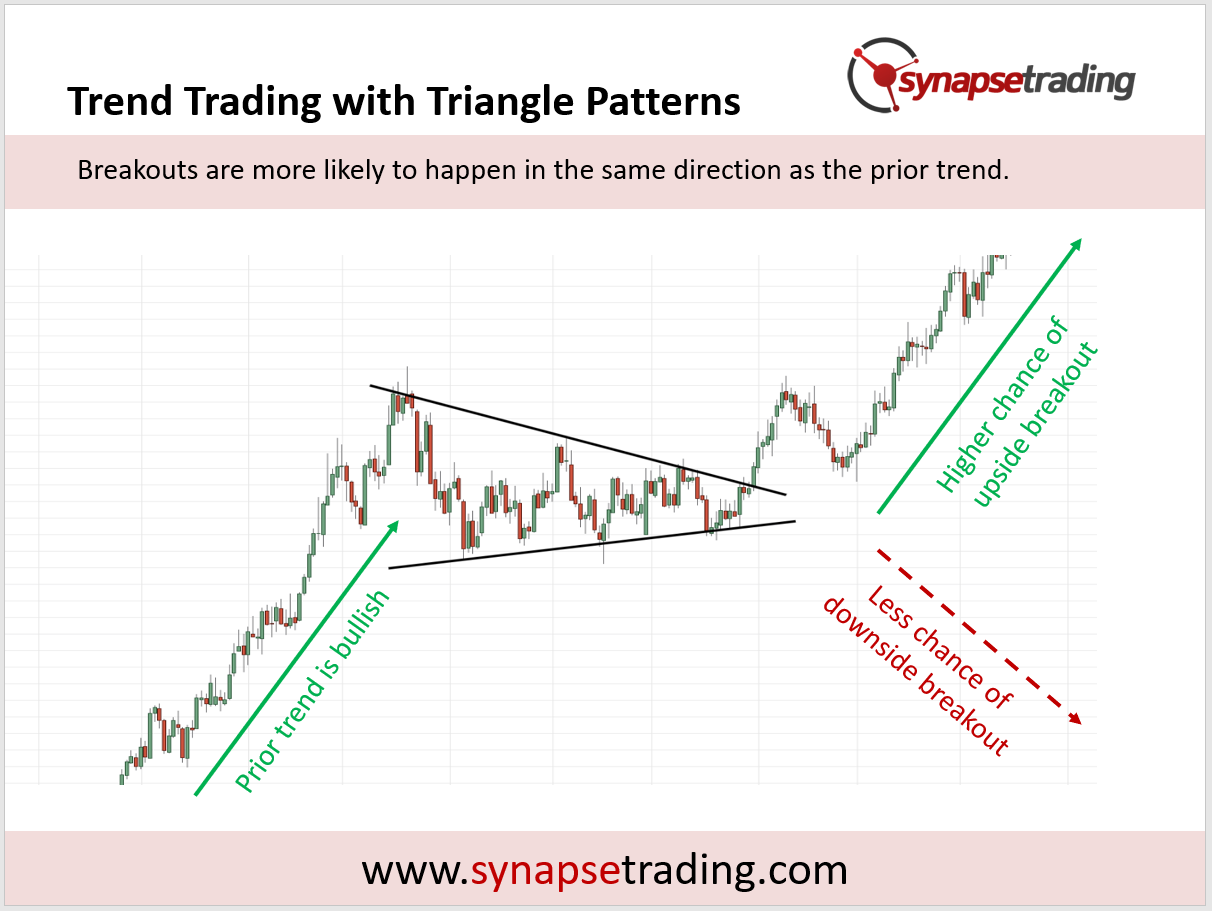
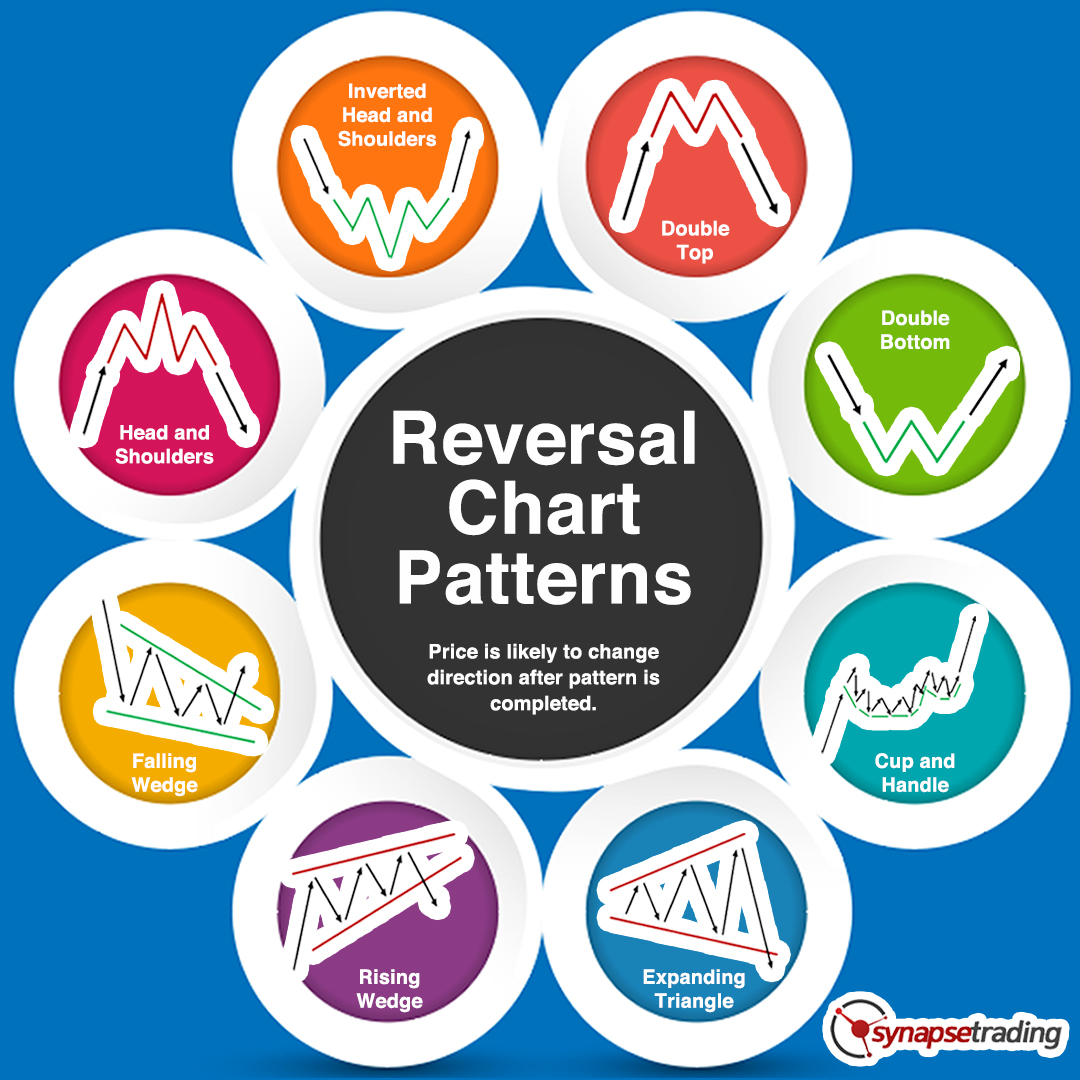
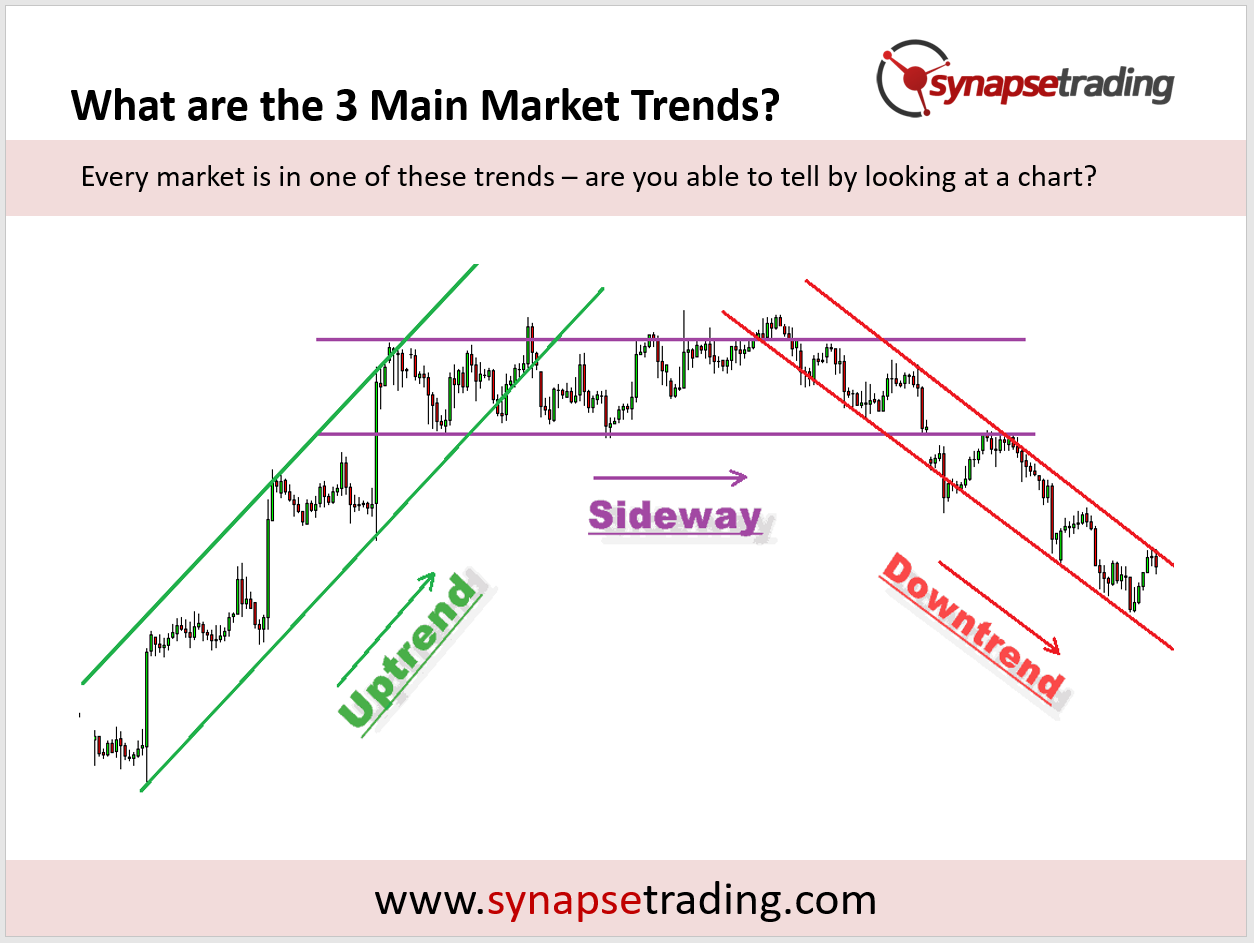
As the market moves between the 3 main trends – uptrend, downtrend and sideways, prices have to transit from one trend to another, and these transitions are what leads to the price and chart patterns being formed.

3 main market trends

So by studying the patterns, and also understanding the context in which they are formed, it will enable us to make useful predictions as to the most likely outcome of prices once the pattern is completed.

In other words, it gives us high probability predictions of future outcomes, which we can use to tilt the trading odds in our favour.


swing counts to identify trend

It is also useful to understand swing counts, and how you can use them to identify the current trend of the market.

These will work hand-in-hand when breaking down and understanding chart patterns as well.


thumbnail the definitive guide to trading price chart patterns

If you would like to learn all the different price chart patterns, also check out: “The Definitive Guide to Trading Price Chart Patterns”

0 Comments/by Spencer Li
https://synapsetrading.com/wp-content/uploads/2021/07/What-are-Price-Chart-Patterns-How-do-they-Form.png 720 1280 Spencer Li https://synapsetrading.com/wp-content/uploads/2019/10/logo.jpg Spencer Li2021-07-17 20:41:542022-12-21 02:34:36What are Price Chart Patterns & How do they Form?
Spencer Li

Turning 35: Thank You For All the Birthday Wishes!

Living Your Best Life
2021 07 03 18.16.19 scaled

As I slowly edge towards my mid-life crisis (just joking!), I want to thank all my friends and family who have always been there for me as my pillar of support.

BIRTHDAY WISHES!

With no opportunities to travel this year, i have had more time to reflect on life, and here are some of my musings:

  • Finding a life partner has been the top of my priority, and though it hasn’t been easy or successful, I have learnt quite a lot in a short period of time. In this area, it is useful to talk to people who have successful relationships and to learn from them.
  • Many people tend to neglect sleep, but optimising it can improve all areas of your life, by boosting your energy, mood, etc. Aim for a consistent sleep cycle of 6-10 hours, depending on each individual. Invest in stuff to make your sleep better, such as mattresses, pillows, diffuser, blackout curtains, white noise, etc.
  • Meditate daily to improve concentration, clear your mind, enhance your focus, and enjoy many more health benefits. Start with 5 minutes a day, and slowly increase to 1 hour a day. If it feels like a waste of time, think of it as sharpening your axe instead of using a blunt axe to chop a tree.
  • Do not neglect your health as well. The main areas of focus are physical exercise, stamina (cardio), flexibility, and most importantly, nutrition/diet. Aim to eat healthy, and take note of caloric surplus/deficit if you want to increase/decrease your weight.
  • Learn useful skills, and take up fun/creative hobbies, for example driving, cooking, dancing, learning a new language, coding, etc.
  • Read widely. The more I read, the more I realise I do not know. Stay humble, stay hungry. This year, I have focused my readings on relationships, philosophy, and psychology. for less serious reads, I also enjoy science fiction.
    • Philosophy helps one ponder the meaning of existence, and sheds some light on the fabric of reality. Most people blindly accept what has been spoon-fed to them, and do not stop to think for themselves and question whether it is indeed true.
    • Psychology helps one understand other people, and more importantly oneself.
  • When people near the end of their life, the thing they cherish most are relationships. These should be cultivated throughout your life. Learn to listen and help others, and be present. There are many levels to relationships – learn to connect with people on a deeper level.
  • The only way to be content is to embrace gratitude. Instead of wanting more, learn to give and contribute. Life is not a competition, there is no prize for struggling to reach the top in everything. The journey matters more.

Once again, thanks for all the birthday treats and gifts, and I will compile them below:


View this post on Instagram


A post shared by Spencer Li (@iamrecneps)


View this post on Instagram


A post shared by Spencer Li (@iamrecneps)


View this post on Instagram


A post shared by Spencer Li (@iamrecneps)


View this post on Instagram


A post shared by Spencer Li (@iamrecneps)


View this post on Instagram


A post shared by Spencer Li (@iamrecneps)


View this post on Instagram


A post shared by Spencer Li (@iamrecneps)


thumbnail an unofficial guide to living our best life beyond financial freedom

If you are excited to get more life hacks, also check out: “Beyond Financial Freedom: An Unofficial Guide to Living Your Best Life”

0 Comments/by Spencer Li
https://synapsetrading.com/wp-content/uploads/2021/07/2021-07-03-18.16.19-scaled.jpg 1920 2560 Spencer Li https://synapsetrading.com/wp-content/uploads/2019/10/logo.jpg Spencer Li2021-07-17 04:53:102022-12-16 16:32:51Turning 35: Thank You For All the Birthday Wishes!
Spencer Li

Using Your SkillsFuture Credits to Learn Trading & Investing Skills

News & Events
skillsfuture feedback 2270621

Last weekend, we conducted another online workshop on the basics of trading and investing, and since it is a SkillsFuture Credit-Eligible Course, participants could use their SkillsFuture credits to pay for the course instead of cash.

Thanks for the support! ?

During the 9 hours of training, participants learnt portfolio strategies to build and protect their wealth, as well as trading skills like market-timing, chart-reading and risk management to improve their trading results.

Here is some of the feedback and learning points from participants, after our hands-on market analysis session to find trading opportunities in the market.

If you are keen to learn more using your SkillsFuture credits, you can check out our courses:

  • Beginner’s Course on Trading & Investing
  • Beginner’s Course on Tech Stocks & Crypto

P.S. To ensure optimal learning, we have capped the maximum class size.

Register early to avoid disappointment!

Trading & Investing Skills

0 Comments/by Spencer Li
https://synapsetrading.com/wp-content/uploads/2021/06/skillsfuture-feedback-2270621.png 1090 518 Spencer Li https://synapsetrading.com/wp-content/uploads/2019/10/logo.jpg Spencer Li2021-06-30 10:31:032022-03-08 14:58:13Using Your SkillsFuture Credits to Learn Trading & Investing Skills
Spencer Li

What is a SPAC (Special Purpose Acquisition Company) and is it a Good Investment?

Stock Trading
What is a SPAC and is it a Good Investment

What Is a SPAC? How It Differs From an IPO, and the Risks for Investors

Last updated: 3 July 2026 · By Spencer Li, CFTe


A SPAC (special purpose acquisition company) is a shell company with no products and no operations that raises money from public investors through its own IPO, holds that cash in trust, and then uses it to acquire a private company and take it public. It is also called a “blank check company,” because when you buy in, you do not yet know which business it will buy. A SPAC has 24 months to find and complete a deal. If it does, the target company becomes publicly listed without running a traditional IPO. If it fails, the cash is returned and the SPAC is wound up. The trade-off is speed for certainty: a SPAC merger is faster and cheaper than a normal IPO (months instead of well over a year), but you are trusting the sponsors to pick a good company on your behalf, sight unseen. Personally, I am not a fan, for exactly that reason.

Here is what a SPAC actually is, how it differs from a regular IPO, and where the real risks sit for an investor.

What does “going public” or “IPO” mean?

Before you can understand a SPAC, you need the traditional route it is competing with.

Every company, big or small, needs one thing to survive: capital. Funds to run operations, pay staff, repay loans. When profits fall short or a company needs to grow faster than its cash allows, it raises money. For many private companies, going public is the most attractive way to do that.

When a private company goes public, it opens the door for new investors by selling them shares. Each investor pays a set sum and owns a tiny slice of the business. It is a win-win in theory: the company raises capital, and the investors get a claim on future profits (often paid out as dividends).

“Going public” has a formal name: an Initial Public Offering, or IPO (the first time a private company sells its shares to the public). That is the traditional path.

What is the downside of a traditional IPO?

Going public the old-fashioned way works, but the IPO process is slow and expensive.

If you need capital urgently (say, to pay off debt), filing for an IPO is an awkward fit. There is a long list of disclosures: your prospects, your finances, the whole shebang. Before you ever pitch a future investor, you have to work through investment banks, risk assessors, and underwriters. Multiple checkpoints, all of which you must clear before you can list.

And because there are so many checkpoints, the odds of rejection are higher, on top of the significant cost of becoming a fully compliant public company. If you are already cash-strapped, how do you bear that cost?

So there is real demand for a faster, cheaper way to go public. That is where the SPAC comes in.

What is a SPAC, exactly?

A SPAC (special purpose acquisition company) is a quicker alternative for a private company to go public.

It is formed by a group of investors, business owners, industry experts, and high-net-worth individuals (the “sponsors”). These people raise money so that a private company can become public without the full traditional IPO grind.

A SPAC is also called a “blank check company” or “shell company,” because it sells no product, provides no service, and has no commercial operations of its own. So how does it make money? It raises capital through its own IPO, then uses that money to acquire a private company.

The cash raised sits in a trust account (an interest-bearing account, so the money earns interest while it waits) until the SPAC finds a suitable company to acquire. That waiting period is capped: every SPAC must find a target and complete a deal within 24 months.

What if it cannot find a good company in time? Then the cash in trust is returned to investors, and the SPAC ceases to exist.

If the SPAC does complete an acquisition within the 24 months, its backers have two choices: redeem their SPAC shares and book a profit, or convert their SPAC shares into shares of the newly merged company.

Either way, a SPAC merger benefits both sides. The private firm goes public, gets listed, and gains access to liquidity. The SPAC’s investors become shareholders in the newly public business.

SPAC vs IPO: what is the actual difference?

Both routes end with a private company trading on a public exchange. They get there very differently. Here is the side-by-side.

Traditional IPOSPAC merger
How it worksCompany sells its own shares directly to the public for the first timeShell company raises cash via IPO, then acquires a private firm to take it public
Typical timeline12 to 18 months3 to 6 months
Cost / barrierHigh; smaller companies often cannot afford itLower; shares typically priced at a fixed $10
Disclosure / scrutinyHeavy: banks, underwriters, risk assessors, full disclosuresLighter; fewer checkpoints
Pricing powerCompany must set a price that is neither too high nor too lowTarget company can negotiate its own valuation with the sponsors
What you know going inYou see the business and its financials before you buyYou buy first; the target may not be chosen yet (a “blank check”)

The key line for an investor: in a normal IPO you are buying a known business; in a SPAC you are often buying the sponsors’ promise to find one.

What are the benefits of SPACs?

Several real advantages explain why companies use them.

Quick and streamlined. A traditional IPO usually takes 12 to 18 months. A SPAC merger takes only 3 to 6. If a company needs money urgently, that speed matters. And any company can go this route regardless of size or track record. Growing firms that struggle to access liquidity because they lack a proven history do not hit that wall with a SPAC.

Cheaper to go public. A traditional IPO is expensive, and small companies often cannot afford it, so going public stays a pipe dream for many. The SPAC route is cheaper. SPACs typically price their shares at a fixed $10, set in stone, which lets a large pool of public investors buy in and the company raise what it needs.

More pricing flexibility. SPACs are more liberal on price. The target company gets to negotiate and set its own valuation with the sponsors, which is not how a traditional IPO works. In a normal IPO the company must price neither too high nor too low, and runs the risk of leaving money on the table. SPAC valuation risk on that front is lower.

Access to operational expertise. SPAC sponsors are usually experienced operators who pick a target from an industry they know. So a small, growing firm that gets acquired inherits that expertise, and the sponsors’ track record lends the deal credibility and investor confidence.

What are the risks of investing in a SPAC?

SPACs are often pitched to companies as a low-risk way to list. For the investor on the other side, the risks are real.

A long waiting period. Sponsors have up to 24 months to find a target. Invest early and you may wait the full two years before you see any return at all. Worse, the SPAC might never find a suitable company in that window, which means two years you could have spent on other opportunities, gone.

No idea what you are actually buying. When the SPAC is formed, the sponsors do not yet know which company they will acquire. So as an investor, you cannot know your likely return either. And the 24-month clock cuts against you: sponsors under deadline pressure sometimes accept a poor deal rather than no deal, and a bad acquisition flows straight through to your returns.

Higher chance of a low-quality target. One reason companies choose SPACs is the lighter screening. Fewer checkpoints means a target can slip through that would not have cleared a full IPO’s scrutiny. If the acquired business is weak, the returns will be too.

Heavy reliance on the sponsors’ reputation. With no operating business and often no named target, you are largely betting on the sponsors’ image. High-profile names draw enthusiastic money, but beyond that reputation there is little hard documentation to lean on, which is a thin basis for a real investment.

Where the human edge comes in

A SPAC strips most of the normal homework off the table. There is no operating history to read, often no target to analyse, and a fixed $10 price that tells you nothing about value. What is left is judgment: can you assess the sponsors, the incentive to close a bad deal before the clock runs out, and whether “trust me, I will find something good” is worth your capital for two years?

That assessment is the part no screener or hype cycle can do for you. The pattern (a clean, cheap, fast way to go public) is the easy story to sell. Deciding when the structure quietly favours the sponsors over you is the Human Edge, and it is the one piece of this you should never outsource.

Personally, I am not a big fan of SPACs. I prefer to keep control over my own investments rather than hand someone a blank check and hope they pick well on my behalf. That is a personal preference, not a rule. Plenty of good companies have listed through SPACs. But “I cannot yet see what I am buying” is a hard starting point for me, and I would rather analyse a business I can actually see.

FAQ

What is a SPAC in simple terms?
A SPAC is a shell company with no products or operations that raises money from public investors, holds it in trust, and then uses it to buy a private company and take it public. Because you invest before the target is chosen, it is nicknamed a “blank check company.”

What is the difference between a SPAC and an IPO?
In a traditional IPO, a company sells its own shares to the public and you can see the business before you buy. In a SPAC, a shell company raises the cash first and acquires a private firm later, so you often invest before knowing the target. SPAC mergers are faster (3 to 6 months vs 12 to 18) and cheaper, but with lighter scrutiny.

How long does a SPAC have to find a company?
A SPAC has 24 months to find a target and complete an acquisition. If it fails, the cash held in trust is returned to investors and the SPAC is dissolved.

Why are SPACs risky for investors?
The main risks are: you may wait up to two years for any return, you do not know which company will be acquired when you invest, lighter screening can let a weak target through, and you are leaning heavily on the sponsors’ reputation rather than hard documentation.

Are SPACs a good investment?
That depends on the sponsors and the deal, and it is your call, not advice. Some strong companies have gone public through SPACs. Personally I prefer investments where I can analyse the business before I buy, rather than committing capital to a blank check.


Now that you can answer “what is a SPAC” and explain how it differs from an IPO, the more useful question is how you size and screen any speculative position like this. For the foundations, read the pillar: The Beginner’s Guide to Investing and Trading.

Want a system instead of a hype cycle? Grab the free 15-Minute Swing Trading Starter Kit. It is the exact routine I use to scan once a day and trade any market in 15 minutes, without betting on blank checks.


About the author. Spencer Li is the founder of Synapse Trading and a Certified Financial Technician (CFTe) with 15 years of trading across stocks, forex, crypto, commodities, and bonds. His trade log is public, 404 trades, losses left in. He teaches low-risk swing trading in 15 minutes a day, one system for any market.

Education, not financial advice. Synapse Trading is not licensed by MAS to advise on investment products. Trading carries risk of loss; past performance is not indicative of future results.


Related

The Beginner’s Guide to Investing and Trading (pillar) · What is an IPO and how does it work · How to value a stock · Fundamental vs technical analysis

0 Comments/by Spencer Li
https://synapsetrading.com/wp-content/uploads/2021/06/What-is-a-SPAC-and-is-it-a-Good-Investment.png 720 1280 Spencer Li https://synapsetrading.com/wp-content/uploads/2019/10/logo.jpg Spencer Li2021-06-25 02:26:422026-07-06 03:04:33What is a SPAC (Special Purpose Acquisition Company) and is it a Good Investment?
Spencer Li

The 4 Main Types of Trading Strategies

Beginner's Guide
the 4 main types of trading strategies

In trading, despite the countless different strategies and setups that are used by traders all over the world, all these strategies can actually be traced back to these 4 core types:

  • Break (trading breakouts)
  • Swing (trend-following)
  • Bounce (counter-trend, mean reversion)
  • Turn (market reversals)

Each strategy type has its pros and cons, so in the future, when someone shares a trading strategy with you, you will instantly be able to see which category that trading strategy falls under, and hence deduce the pros and cons of the strategy.


types of trading strategies

1. Break (Trading Breakouts)

Breakouts happen when the market is in the ranging phase, and there is no clear trend in the market. As both the bulls and bears fight to gain control of the market, at some point either side wins, and prices break out of the sideways range and starts moving explosively in one direction.

2. Swing (Trend-following)

When the market is trending or starting to trend, it makes sense to ride the trend. Trend-following strategies are designed to detect the start of such trends, and get you in on them, as well as getting you out once the trend is over.

3. Bounce (Counter-trend, Mean Reversion)

Occasionally, there might be exceptionally strong short-term movements in the markets, such as a price spike on a news announcement, or a climatic buying or panic selling. When that happens, prices usually become overbought/oversold, and prices will have a rebound back to “normal” levels.

4. Turn (Market Reversals)

All markets and products follow certain large economic or trend cycles, which means that no matter how strong the trend, at some point it will exhaust the move and lead to a change in direction. This usually results in major turning points in the markets.


thumbnail beginner guide to trading and TA

If you would like to learn how to get started in trading, also check out: “The Beginner’s Guide to Trading & Technical Analysis”


0 Comments/by Spencer Li
https://synapsetrading.com/wp-content/uploads/2021/06/the-4-main-types-of-trading-strategies.png 720 1280 Spencer Li https://synapsetrading.com/wp-content/uploads/2019/10/logo.jpg Spencer Li2021-06-18 16:41:372022-12-21 02:38:30The 4 Main Types of Trading Strategies
Page 81 of 184«‹7980818283›»

Free Trading Guides

Free Trading Guides

Blog Categories

  • Beginner's Guide
  • Blockchain & Crypto
  • Book Summaries
  • Candlestick Patterns
  • Economics & News Trading
  • Investing & Portfolio Management
  • Living Your Best Life
  • Market Analysis
  • News & Events
  • Price Chart Patterns
  • Promotions
  • Risk & Money Management
  • Stock Trading
  • Testimonials
  • Tools & Resources
  • Trading Psychology
  • Trading Strategies
  • Trading Tips
  • Travel & Lifestyle

Free Trading Guides

Free Trading Guides

Contact Us

Synapse Trading Pte Ltd
Registration No. 201316168H

Whatsapp: +65-8897-1204
Telegram: @iamrecneps
Email: info@synapsetrading.com

Links

Disclaimer
Privacy policy
Terms & Conditions
Contact us
Partnerships

© 2012-2024 Synapse Trading | All rights reserved | - powered by Enfold WordPress Theme
  • Link to Facebook
  • Link to X
  • Link to Instagram
  • Link to Youtube
  • Link to LinkedIn
  • Link to Mail
Scroll to top Scroll to top Scroll to top