• Link to Facebook
  • Link to X
  • Link to Instagram
  • Link to Youtube
  • Link to LinkedIn
  • Link to Mail
Synapse Trading
  • Home
  • About
    • My Background
    • My Trading Journey
    • My Travel Log
    • Media & Interviews
  • Mentoring
    • Trading Mastery Program
    • Results & Testimonials
  • Signals
    • Telegram (Free to join!)
    • Daily Trading Signals
    • Daily Trading Signals (Results)
  • Resources
    • Free Trading Guides
    • Tools & Resources
    • Blog & Infographics
  • Contact
    • Contact Us
    • Partnership Opportunities
  • Click to open the search input field Click to open the search input field Search
  • Menu Menu
The Synapse Network

Rising Window & Falling Window Pattern

Market Analysis

Rising and Falling Window Candlestick Pattern

The support and resistance zones of Window candlestick patterns are highly rigid.

In the case of a Falling Window candlestick pattern, a stiff resistance region is generated, which provides a higher probability of trade opportunities during consecutive re-tests of the resistance area.

Similarly, a stiff support region is generated in the case of a Rising Window candlestick pattern, also offering better trade opportunities during consecutive re-tests of the support area.

In today’s blog, we will discuss how to use the Rising and Falling Window Candlestick Pattern in detail.

What is Rising Window Candlestick Pattern?

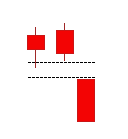
To form a Window (whether rising or falling), there must be space between the real bodies of two candles, and even their shadows should not overlap.

During an uptrend, a Rising Window is a price gap that forms.

The space between the candles represents the distance between the high of the previous candle and the low of the current candle.

This trend indicates that the bulls are in control, and the price is likely to continue rising.

Examine the size of the gap to better understand the pattern’s message.

For example, a large gap denotes a significant price increase, while a small gap indicates a modest and possibly insignificant price change.

Formation

The Rising Window, also known as a “gap up,” appears when the price continuously rises.

It is always regarded as a bullish signal.

This pattern is common, though less frequent on charts with longer time scales.

Trading with Rising Window Candlestick Pattern

The chart typically begins with an upward trend.

At the start of this movement, the bulls create a gap up (i.e., a Rising Window) to demonstrate their strength.

The uptrend continues with predominantly white candles increasing steeply.

Eventually, when the trend reverses, the bears become strong enough to form a downward gap, known as a Falling Window.

This pattern indicates a significant shift in investor sentiment, with both a gap up and a gap down.

What is Falling Window Candlestick Pattern?

A Falling Window candlestick pattern refers to a price gap during a downward trend.

It must occur while the price trend is down, and it is always a bearish signal.

This continuation pattern is more common on charts with shorter time scales, though it is less frequent on longer time scales.

Due to its prevalence, it’s crucial to pay attention to the specific characteristics of each Falling Window, as these details can help determine the importance of the signal and whether it warrants attention.

Formation

When observing the two candles that follow the Falling Window, examine them closely.

If these candles do not close the window or fill the gap (including their shadows), a Downside Tasuki Gap pattern may have formed.

For this pattern to qualify, the first and second candles must be bearish, while the third must be bullish.

After a significant downturn, as indicated by the gap down, the bulls may attempt to push the price back up.

However, if they fail, the decline is likely to continue.

What is the Falling Window Candlestick Pattern?

A Falling Window candlestick pattern is a bearish continuation pattern that results from a gap down between two consecutive candlesticks.

There is a “window” or space between the first and second candlesticks because the opening price of the second is lower than its closing price.

What is the Rising Window Candlestick Pattern?

The Rising Window is a bullish continuation pattern in Japanese candlestick charting.

It typically manifests as a rejection from lower prices and appears as a pause following an upward price trend.

This pattern is considered bullish, as it suggests a continuation of the upward movement after the Rising Window appears at the right time.

Concluding Thoughts

The Rising and Falling Window candlestick patterns are important tools for traders to identify potential trade opportunities.

By recognizing the stiff support and resistance regions these patterns create, traders can better assess the likelihood of successful trades during re-tests of these areas.

While these patterns provide valuable insights into market trends, it is essential to consider additional technical indicators and broader market conditions to make informed trading decisions.

Always be mindful of the context in which these patterns appear, and use them as part of a comprehensive trading strategy.

0 Comments/by The Synapse Network
https://synapsetrading.com/wp-content/uploads/2019/10/logo.jpg 0 0 The Synapse Network https://synapsetrading.com/wp-content/uploads/2019/10/logo.jpg The Synapse Network2023-08-13 22:18:562024-08-18 16:46:07Rising Window & Falling Window Pattern
Spencer Li

Weekly Market Wrap: Moody’s Downgraded Ten Regional Banks

Market Analysis
Thumbnail banner weekly market wrap x3

Thumbnail banner weekly market wrap x3

For subscribers of our “Daily Trading Signals”, we now also include a “Weekly Market Report”, where we provide a weekly deep-dive on the market, including fundamentals, technicals, economics, and portfolio management:

Click here for last week’s market report (7 August 2023)
Click here to subscribe for the latest market report (14 August 2023)
Click here to see the archives of all our past market reports

Market Recap & Upcoming Week

Last week witnessed significant tremors in the banking sector as Moody’s made the call to downgrade ten regional banks, eliciting concerns about the banking industry’s robustness in light of escalating interest rates and previous bank defaults. This decision, causing a roughly 3% drop in major bank indices, stemmed from factors such as deteriorating assets and the Federal Reserve’s moves to combat inflation.

While these banks maintain their investment-grade status, whispers from Moody’s hint at re-evaluating ratings for other colossal institutions. This sparked apprehensions about depreciating bonds, heightened withdrawal rates, and wary investors. Conversely, some analysts argue that the sector remains on solid ground, considering the recent stock downturn as a transient repercussion.

For last week’s CPI data, July’s cooling inflation hinted at the Federal Reserve rethinking rate hikes.

For this coming week, major retailers like Walmart, Home Depot, and Target are set to release their reports, providing insights into the retail sector’s performance. Moreover, the Census Bureau will unveil July’s nationwide retail sales data on Tuesday, shedding light on the robustness of consumer spending. Meanwhile, all eyes will be on the Federal Reserve come Wednesday when they disclose the minutes from the recent FOMC meeting, potentially hinting at the future course of monetary policy.

The housing market is also in the spotlight with updates on building permits, July housing starts, and the NAHB’s Housing Market Index for August, which will offer a comprehensive picture of the real estate scenario. To top it off, brace yourself for significant global economic insights as we receive inflation and GDP data from powerhouses like the U.K., eurozone, and Japan. It’s a week packed with key indicators that could shape market sentiments, so stay informed and vigilant!


Daily Trading Signals (Highlights)

We cover 3 main markets with a total of 200+ counters, so we will never run out of trading opportunities:

  • Forex, CFDs, commodities, bonds
  • US stocks, ETFs, global stock indices
  • Cryptocurrencies, crypto indices

By covering a broad range of markets, we can focus our attention (and capital) on whichever market currently gives the best returns.

Subscribe for real-time alerts and weekly reports:
👉🏻 https://synapsetrading.com/daily-trading-signals


Trading Signals AAPL 090823

Apple (AAPL) – After breaking the major support zone, it is likely to have a medium-term correction.


Trading Signals AUDUSD 090823

AUDUSD – After breaking the major support, price momentum is currently bearish.

We can ride the momentum downwards for now (short-term trade), but if prices make a sudden U-turn back into the range, be prepared to do range trading.


Trading Signals US100 090823

NASDAQ 100 (US100) – Prices are having a pullback to support, might be a good opportunity for a short-term buy trade, if there is a bullish trigger.


Trading Signals USDCNY 090823

USDCNY – Prices have rebounded off support, and may soon break new highs.


Trading Signals USDSGD 090823

USDSGD – Following up from the videos, after prices had a false break at the bottom of the range, the buyers stepped back in to push prices back to the top of the range.


0 Comments/by Spencer Li
https://synapsetrading.com/wp-content/uploads/2023/05/Thumbnail-banner-weekly-market-wrap-x3.png 630 1200 Spencer Li https://synapsetrading.com/wp-content/uploads/2019/10/logo.jpg Spencer Li2023-08-13 20:25:162023-08-14 23:01:46Weekly Market Wrap: Moody’s Downgraded Ten Regional Banks
The Synapse Network

Falling Three Methods

Market Analysis

The “Falling Three Methods” is a bearish, five-candle continuation pattern that signals an interruption of a current downtrend but not a reversal.

This pattern is characterized by two long candlesticks in the direction of the trend—down—at the beginning and end, with three shorter counter-trend candlesticks appearing in the middle.

This pattern contrasts with the Rising Three Methods, which signals a continuation of an uptrend.

Understanding the Falling Three Methods Pattern

The Falling Three Methods pattern occurs when a downtrend stalls as bears lack the impetus or conviction to keep pushing a security’s price lower.

This leads to a counter-move often resulting from profit-taking or an attempt by eager bulls anticipating a reversal.

The subsequent failure to make new highs or close above the opening price of the initial long-down candle emboldens bears to re-engage, leading to a resumption of the downtrend.

The Falling Three Methods pattern forms when the five candlesticks meet the following criteria:

The first candlestick in the pattern is a long bearish candlestick within a defined downtrend.

It is followed by three ascending small-bodied candlesticks that trade below the open or high price and above the close or low price of the first candlestick.

The fifth and final candlestick is a long bearish one that pierces the lows established by the first candlestick, indicating that the bears have regained control.

The series of small-bodied candlesticks in the middle of the Falling Three Methods pattern represents a period of consolidation before the downtrend resumes.

These small-bodied candlesticks are ideally bullish, especially the second one, although this is not a strict requirement.

This pattern is important because it shows traders that the bulls still don’t have enough conviction to reverse the trend.

Active traders often use it as a signal to initiate new short positions or add to their existing short positions.

The pattern’s bullish equivalent is the Rising Three Methods.

Trading the Falling Three Methods

The Falling Three Methods pattern provides traders with a pause in the downtrend to initiate a new short position or add to an existing one.

A trade can be taken on the close of the final candlestick in the pattern.

Conservative traders may want to wait for other indicators to confirm the pattern and enter on a close below the final candle.

Traders should ensure that the pattern isn’t sitting above a key support level, such as being located just above a major trend line, a round number, or horizontal price support.

It’s prudent for traders to check other time frames to confirm that the downtrend has ample room to continue.

Related Concepts

What Are the Rising Three Methods?

The Rising Three Methods is another candlestick pattern that indicates a trend is likely to continue rather than reverse or hesitate.

Like the Falling Three Methods, it is composed of a series of candles but has opposite implications.

What Is a Moving Average?

A moving average helps to identify the direction of a trend by monitoring information over a period of time and dividing the resulting number to pinpoint an average.

It is recalculated on an ongoing basis.

What Do Bearish and Bullish Mean?

A bear market results from falling stock prices, while a bull market occurs when prices are steadily and incrementally increasing.

Bull markets tend to occur in a healthy economy, while bear markets often result from a sustained period of economic decline.

Concluding Thoughts

The Falling Three Methods pattern offers traders several options for placing suitable stop-loss orders.

Aggressive traders may want to set a stop above the fifth candle in the pattern.

Traders who want to give their position more flexibility can place a stop above the third small countertrend candle or the high of the first long bearish candle in the pattern.

Before taking a trade, traders should check that there are no major support levels on the daily and weekly charts, especially if the pattern forms on the 60-minute chart.

While this pattern can provide valuable insights into market behavior, it should be used in conjunction with other technical indicators and risk management strategies to optimize trading outcomes.

0 Comments/by The Synapse Network
https://synapsetrading.com/wp-content/uploads/2019/10/logo.jpg 0 0 The Synapse Network https://synapsetrading.com/wp-content/uploads/2019/10/logo.jpg The Synapse Network2023-08-13 04:51:252024-08-13 04:52:03Falling Three Methods
The Synapse Network

Rising Three Methods

Market Analysis

The “Rising Three Methods” is a bullish continuation candlestick pattern that occurs within an uptrend and signals the resumption of that trend.

This pattern is characterized by a series of candlesticks that indicate a temporary consolidation before the uptrend continues.

It can be contrasted with the “Falling Three Methods” pattern, which signals a continuation of a downtrend.

Understanding the Rising Three Methods Pattern

The Rising Three Methods pattern forms when a security’s price action meets the following characteristics:

The first bar of the pattern is a bullish candlestick with a large real body within a well-defined uptrend.

Subsequent candlesticks are typically three consecutive bearish small-bodied candlesticks that trade above the low and below the high of the first candlestick.

The last bar is another bullish candlestick with a large real body that breaches the high and closes above the high and close established by the first candlestick, suggesting that the bulls are back in control of the security’s direction.

The bulls are initially in firm control, but they pause to see if there is enough conviction in the trend.

The series of small-bodied candlesticks contained between the first and fifth candles in the Rising Three Methods pattern is regarded as a period of consolidation before the uptrend resumes.

The decisive fifth bullish candle proves that sellers did not have enough conviction to reverse the prior uptrend and that buyers have regained control of the market.

Active traders may use the pattern as a signal to add to their long positions.

Similar chart formations that do not meet the exact characteristics of the pattern can still help traders identify good entry points in a trending market.

For example, there may be four or five small-bodied candles instead of three within the pattern.

The Rising Three Methods pattern is the opposite of the Falling Three Methods pattern.

As with other forms of technical analysis, chart reading is based on the assumption that markets will continue to follow the patterns established by earlier trading cycles.

However, past performance is no guarantee of future results, and chart patterns may produce false positives.

How to Trade the Rising Three Methods Pattern

Entry

Traders can enter the market when the final bar in the pattern closes.

Alternatively, a trade could be taken when the price moves above the high of the final candle.

Aggressive traders may look for an entry before the final bar closes but must be prepared to exit if the fifth bar fails to complete the pattern.

Traders should ensure that the Rising Three Methods pattern is not located beneath key resistance levels to confirm that the uptrend has sufficient room to continue.

For instance, a trendline or widely used moving average slightly above the pattern could limit further gains.

Resistance levels should be checked on longer-term charts to increase the probability of a successful trade.

The Rising Three Methods pattern may be more effective if the initial bullish candlestick’s wicks, denoting the high and low traded prices for that period, are shallow and if it forms above a whole number.

Risk Management

Aggressive traders could place a stop-loss order below the low of the final bar in the pattern or under the second small-bodied candle, depending on their risk tolerance.

Traders who want to give their trade some room to move might place a stop order below the first bullish candle or under a recent swing low.

How Do You Spot a Rising Three Methods Pattern?

A Rising Three Methods pattern consists of a large green candle, followed by three smaller red candles, and a final green candle that closes above the high set by the first candle.

This indicates that after a period of consolidation, the market is largely dominated by buyers who will likely continue to drive prices higher.

The Rising Three Methods pattern must occur after a general uptrend, as indicated by simple moving averages or other metrics.

How Do You Identify a Falling Three Methods Pattern?

A Falling Three Methods pattern is a bearish pattern that resembles a mirror image of the Rising Three Methods.

It consists of five candles following a general downtrend: a large red candle, followed by three small green candles, and a final red candle that closes below the bottom set by the first candle.

This indicates that after a short period of uncertainty, the market is dominated by sellers who will continue to drive prices lower.

What Does the Three Methods Pattern Tell You?

Both types of Three Methods patterns indicate a resumed trend after a brief period of interruption.

Following a sharp price move, there is a period of retracement where buyers and sellers consolidate their positions.

A following price move indicates that the trend has resumed.

Concluding Thoughts

The Rising Three Methods pattern is a valuable tool for technical traders seeking to identify bullish trends within an uptrend.

However, like all chart patterns, it should not be relied upon in isolation.

Traders are encouraged to use additional technical indicators and risk management strategies to confirm the pattern’s validity and to optimize their trading outcomes.

While this pattern can provide insights into market behavior, it is essential to remember that no pattern guarantees future performance, and careful analysis is always required.

0 Comments/by The Synapse Network
https://synapsetrading.com/wp-content/uploads/2019/10/logo.jpg 0 0 The Synapse Network https://synapsetrading.com/wp-content/uploads/2019/10/logo.jpg The Synapse Network2023-08-13 04:46:512024-08-13 04:49:55Rising Three Methods
The Synapse Network

Three Black Crows

Market Analysis

Three black crows is a phrase used to describe a bearish candlestick pattern that may predict the reversal of an uptrend.

Candlestick charts show the day’s opening, high, low, and closing prices for a particular security.

For stocks moving higher, the candlestick is white or green.

When moving lower, they are black or red.

The black crow pattern consists of three consecutive long-bodied candlesticks that have opened within the real body of the previous candle and closed lower than the previous candle.

Often, traders use this indicator in conjunction with other technical indicators or chart patterns as confirmation of a reversal.

Three Black Crows Explained

Three black crows are a visual pattern, meaning that there are no particular calculations to worry about when identifying this indicator.

The three black crows pattern occurs when bears overtake the bulls during three consecutive trading sessions.

The pattern shows on the pricing charts as three bearish long-bodied candlesticks with short or no shadows or wicks.

In a typical appearance of three black crows, the bulls will start the session with the price opening modestly higher than the previous close, but the price is pushed lower throughout the session.

In the end, the price will close near the session low under pressure from the bears.

This trading action will result in a very short or nonexistent shadow.

Traders often interpret this downward pressure sustained over three sessions to be the start of a bearish downtrend.

Example of How to Use Three Black Crows

As a visual pattern, it’s best to use three black crows as a sign to seek confirmation from other technical indicators.

The three black crows pattern and the confidence a trader can put into it depends a lot on how well-formed the pattern appears.

The three black crows should ideally be relatively long-bodied bearish candlesticks that close at or near the low price for the period.

In other words, the candlesticks should have long, real bodies and short, or nonexistent, shadows.

If the shadows are stretching out, then it may simply indicate a minor shift in momentum between the bulls and bears before the uptrend reasserts itself.

Volume can make the three black crows pattern more accurate.

Volume during the uptrend leading up to the pattern is relatively low, while the three-day black crow pattern comes with relatively high volume during the sessions.

In this scenario, the uptrend was established by a small group of bulls and then reversed by a larger group of bears.

Of course, with markets being what they are that could also mean a large number of small bullish traders running into a smaller group of large-volume bearish trades.

The actual number of market participants matters less than the volume each is bringing to the table.

Three Black Crows vs. Three White Soldiers

The opposite of the three black crows pattern is the three white soldiers pattern, which occurs at the end of a bearish downtrend and predicts a potential reversal higher.

This pattern appears as three long-bodied white candlesticks with short, or ideally nonexistent, shadows.

The open occurs within the previous candlestick’s real body, and the close occurs above the previous candlestick’s close.

Three white soldiers are simply a visual pattern indicating the reversal of a downtrend whereas three black crows indicate the reversal of an uptrend.

The same caveats apply to both patterns regarding volume and confirmation from other indicators.

Limitations of Using Three Black Crows

If the three black crows pattern involves a significant move lower, traders should be wary of oversold conditions that could lead to consolidation before a further move lower.

The best way to assess the oversold nature of a stock or other asset is by looking at technical indicators, such as the relative strength index (RSI), where a reading below 30.0 indicates oversold conditions, or the stochastic oscillator indicator that shows the momentum of movement.

Many traders typically look at other chart patterns or technical indicators to confirm a breakdown, rather than using the three black crows pattern exclusively.

As a visual pattern, it is open to some interpretation such as what is an appropriately short shadow.

Also, other indicators will mirror a true three black crows pattern.

For example, a three black crows pattern may involve a breakdown from key support levels, which could independently predict the beginning of an intermediate-term downtrend.

The use of additional patterns and indicators increases the likelihood of a successful trade or exit strategy.

Real-World Example of Three Black Crows

In the third week of May 2018, a three black crows pattern appeared on the GBP/USD weekly price chart, representing an ominous sign for the currency pairing.

Analysts speculated that the three black crows pattern indicated that the pairing would continue to trend low.

Three factors were analyzed to determine that the three black crows pattern signaled a continuing downturn:

The relatively steep upward trend of the bullish market.

The low wicks of each candle, indicating a small difference between the close and the week’s low.

The fact that, while the candles did not gradually elongate, the longest candle was the third day.

Concluding Thoughts

The three black crows pattern is a potent bearish indicator that often signals a reversal of an uptrend.

However, like all visual patterns, it should be used in conjunction with other technical indicators and volume data to ensure accuracy.

While it can provide valuable insights, traders should be cautious of false signals and consider the broader market context before making trading decisions.

This pattern is best employed as part of a comprehensive trading strategy, incorporating multiple forms of technical analysis to maximize its effectiveness.

0 Comments/by The Synapse Network
https://synapsetrading.com/wp-content/uploads/2019/10/logo.jpg 0 0 The Synapse Network https://synapsetrading.com/wp-content/uploads/2019/10/logo.jpg The Synapse Network2023-08-12 05:24:392024-08-12 05:28:27Three Black Crows
Page 31 of 184«‹2930313233›»

Free Trading Guides

Free Trading Guides

Blog Categories

  • Beginner's Guide
  • Blockchain & Crypto
  • Book Summaries
  • Candlestick Patterns
  • Economics & News Trading
  • Investing & Portfolio Management
  • Living Your Best Life
  • Market Analysis
  • News & Events
  • Price Chart Patterns
  • Promotions
  • Risk & Money Management
  • Stock Trading
  • Testimonials
  • Tools & Resources
  • Trading Psychology
  • Trading Strategies
  • Trading Tips
  • Travel & Lifestyle

Free Trading Guides

Free Trading Guides

Contact Us

Synapse Trading Pte Ltd
Registration No. 201316168H

Whatsapp: +65-8897-1204
Telegram: @iamrecneps
Email: info@synapsetrading.com

Links

Disclaimer
Privacy policy
Terms & Conditions
Contact us
Partnerships

© 2012-2024 Synapse Trading | All rights reserved | - powered by Enfold WordPress Theme
  • Link to Facebook
  • Link to X
  • Link to Instagram
  • Link to Youtube
  • Link to LinkedIn
  • Link to Mail
Scroll to top Scroll to top Scroll to top