• Link to Facebook
  • Link to X
  • Link to Instagram
  • Link to Youtube
  • Link to LinkedIn
  • Link to Mail
Synapse Trading
  • Home
  • About
    • My Background
    • My Trading Journey
    • My Travel Log
    • Media & Interviews
  • Mentoring
    • Trading Mastery Program
    • Results & Testimonials
  • Signals
    • Telegram (Free to join!)
    • Daily Trading Signals
    • Daily Trading Signals (Results)
  • Resources
    • Free Trading Guides
    • Tools & Resources
    • Blog & Infographics
  • Contact
    • Contact Us
    • Partnership Opportunities
  • Click to open the search input field Click to open the search input field Search
  • Menu Menu
Spencer Li

Maslow’s Hierarchy: Trading Self-Actualization

Trading Psychology
maslow hierachy of needs min

Some of you might have heard the term before, but are not really sure what it means. So what exactly does self-actualisation mean?

Maslow's Hierarchy: Trading Self-Actualization

Maslow’s Hierarchy: Trading Self-Actualization

The term originally came from Maslow’s hierarchy of needs, which represents the things people strive for as they grow and evolve. As we progress from basic needs like food and shelter to more complex ones like esteem and knowledge, what awaits at the top is self-actualization.

Simply put, it is reaching your full potential, and in the context of trading, it means being able to become the “ideal” trader which you envision.

If you’re been trading for many years, you should have acquired many different skills and experience. But are you putting these to good use? How is it possible for you to reach your full potential?

The key lies not in using everything you have learnt, but rather in knowing what is not essential. Once you learn to think in essentials, you will realise that you will have to discard most of what you have learnt, and focus on the 10-20% that works. Clinging on to old baggage will slow your progress.


Now, I want you to visualise a circle. Label this circle “Current Reality”. This circle represents what you are currently like – your habits, your style, your results, your skill level, and your attributes. Take some time to do some self-reflection, and figure out what is wrong.

Next, visualise another circle which partially overlaps the first circle. Label this circle “New Reality”. This circle represents what you want to become, and is a blueprint of the “ideal” trader which you have envisioned, and embodies all the essential attributes of such a trader.

The overlapping region is the zone of self-actualization. 


Let me give you an analogy. If you want to lose weight or get fit, the “Current Reality” could be someone who does not exercise and eats unhealthily, while the “New Reality” is picture of the gorgeous body you saw in some health magazine. The zone of self-actualization is then simply the series of steps you take to bridge the gap between dreams and reality.

Insanity is doing the same thing over and over again, and expecting different results. This means taking the time to learn from your mistakes. The bottom line is, if you want different results, something has to change.


complete guide to investing and trading psychology cover

If you would like to learn more about trading psychology, also check out: “The Complete Guide to Investing & Trading Psychology”
0 Comments/by Spencer Li
https://synapsetrading.com/wp-content/uploads/2012/08/maslow-hierachy-of-needs-min.jpg 429 776 Spencer Li https://synapsetrading.com/wp-content/uploads/2019/10/logo.jpg Spencer Li2012-08-03 02:00:142021-10-04 22:26:19Maslow’s Hierarchy: Trading Self-Actualization
Spencer Li

Trading Self-Reflection: The Art of Losing

Trading Psychology

The Art of Losing: How to Have a Good Trading Day Even When You Lose Money

Last updated: 3 July 2026 · By Spencer Li, CFTe


You can have a good trading day and still finish the day red, and learning to see it that way is one of the most important skills a trader builds. A good day is not defined by the profit and loss on the screen. It is defined by whether you traded your plan, stayed emotionally grounded, and kept your losing day small when the market did not match your style. Because trading is probabilistic (your edge only plays out over many trades, not on any single one), losing trades and even losing days are unavoidable. The skill is not just swinging for home runs on good days. It is staying calm on bad days, cutting losses early, and refusing to gamble to win the money back. I once watched a near US$1,500 drawdown turn into a loss of under US$500, simply because I stopped, took a break, and switched to a defensive style. By the numbers it was a losing day. By the only measure that compounds, it was a win.

Here is how to tell a good loss from a bad one, and why keeping your losing days small is half the game.

Why is losing part of trading?

Trading is probabilistic. You do not get to be right every time, and you should not expect to be. Depending on your style, you will have losing trades, and you will also have losing days. That is not a flaw in your method. It is the nature of the game.

A losing day usually means one thing: the market did not match your trading style that day. The setups you wait for did not show up, or they showed up and failed. That happens. It is not a signal to try harder or trade bigger. It is a signal to trade smaller, or to step back.

Personally, this reframe changed how I judge my own days. The scoreboard (the profit and loss) is the output. The process is the input. On any single day the output is partly luck. The input is the part I actually control.

What makes a good trading day if you still lost money?

A good day is a day you traded well, regardless of the result. Here is what that looked like for me on the day I wrote this from.

My setups, timing, and entries were clean. My one real mistake was conviction: a few times I lacked the conviction to hold my positions, took a small profit, and then watched the price run another three to five times the small profit I had banked. That is a process error worth noting, and I noted it.

Then the day went against me. My drawdown got very close to US$1,500, which was my hard stop for the day. I would have stopped completely once that amount was hit. Instead I managed to recalibrate before I got there: I cut the losing positions, got out, and took a break.

When I came back, I switched to a defensive trading style to adapt to the conditions, and I reduced the day’s loss to under US$500. Small loss, plan intact, mind intact. That is a good day.

Good loss vs bad loss: how to tell them apart

The same red number on the screen can come from a good day or a bad one. The difference is entirely in how you got there.

A good lossA bad loss
Why it happenedThe market did not fit your style; your edge did not show upYou abandoned your plan and forced trades
SizeKept small, well under your daily stopBlew through your stop chasing the loss back
EmotionGrounded; you stepped away and recalibratedTilted; you traded angrier and bigger
What you didCut losses, took a break, switched to defenseTook huge gambles to “make back” the loss
The edgeStill intact for tomorrowGone; you were gambling, not trading
VerdictA win in disguiseThe real loss, no matter the dollar figure

The dollar amount is not what separates these two columns. The behaviour is.

How do you stop revenge trading after a big loss?

The most dangerous moment in a trading day is right after a large loss. I have seen many traders self-destruct here. They take huge gambles to “make back” what they lost, and the moment they do, it stops being trading.

This is the line between trading and gambling. When you trade your edge, the odds are on your side over time. When you size up out of anger to recover a loss, you no longer have an edge. You are just gambling, and the house (the market) wins. If you want the full breakdown of where that line sits, read trading vs gambling: what actually separates them.

The fix is mechanical, not emotional, because emotion is the problem. Set a daily maximum drawdown before the session starts. Mine that day was US$1,500. When you approach it, do what I did: cut, get out, take a break. Stepping away is not weakness. It is the move that keeps your losing day small and your account alive for the next one.

Why does keeping losing days small matter so much?

To a trader, consistency is everything. By consistency I mean two things: consistency in your analysis ability, and consistency in your mental stability. The second one is the one most people ignore, and it is the one that breaks accounts.

A good intraday trader typically wins on four out of five trading days. That is the benchmark to aim for. But the win rate alone is not enough. Your winning days need to be a lot larger than your losing days for the math to work in your favour over a month or a year.

That is why keeping your losing days small is an essential skill, not a consolation prize. Hence the reframe at the top of this piece. A day where you lose a little while protecting your capital and your composure is a day you traded like a professional. The home runs take care of themselves once you stop letting the bad days run.

Where the human edge comes in

A system can tell you when your setup fired and where your stop goes. It will not feel the sting of a near US$1,500 drawdown, and it will not be tempted to gamble it back. The hardest part of the art of losing is not analysis. It is the psychology: staying grounded enough to cut, walk away, and come back defensive instead of vengeful. That self-command is one of the Five Edges no tool can trade for you. It is also the most learnable, because it is a habit, not a talent.

FAQ

Can you have a good trading day if you lose money?
Yes. A good trading day is defined by whether you followed your plan, stayed emotionally grounded, and kept your loss small, not by the profit and loss on the screen. Turning a near US$1,500 drawdown into a loss under US$500 by cutting early and switching to defense is a good day, even though it ends red.

Why do good traders still have losing days?
Trading is probabilistic, so even a strong edge produces losing trades and losing days. A losing day usually just means the market did not match your trading style that day. The goal is not to avoid losing days but to keep them small.

What is the difference between trading and gambling after a loss?
When you trade your edge, the odds favour you over time. When you size up out of anger to “make back” a loss, you abandon your edge and are simply gambling. The behaviour, not the instrument, is what separates the two.

How many days a week should a good day trader win?
A good intraday trader typically wins on about four out of five trading days. Win rate is not enough on its own; your winning days also need to be meaningfully larger than your losing days.

How do you stop revenge trading?
Set a daily maximum drawdown before the session. As you approach it, cut your positions, get out, and take a break. Treat it as a hard mechanical rule, because the emotion that drives revenge trading cannot be reasoned with in the moment.


So here is the question to sit with after your next red day: did you lose well, or did you lose badly? The dollar figure will not tell you. Your behaviour will.

If you want the deeper dive on the mental side, read the pillar: The Complete Guide to Investing and Trading Psychology.

Want a routine that keeps your losing days small by design? Grab the free 15-Minute Swing Trading Starter Kit. It is the exact once-a-day process I use to trade any market in 15 minutes, daily stop included.


About the author. Spencer Li is the founder of Synapse Trading and a Certified Financial Technician (CFTe) with 15 years of trading across stocks, forex, crypto, commodities, and bonds. His trade log is public, 404 trades, losses left in. He teaches low-risk swing trading in 15 minutes a day, one system for any market.

Education, not financial advice. Synapse Trading is not licensed by MAS to advise on investment products. Trading carries risk of loss; past performance is not indicative of future results.


Related

The Complete Guide to Investing and Trading Psychology (pillar) · Trading vs gambling · How to handle a losing streak · Risk management and position sizing

0 Comments/by Spencer Li
https://synapsetrading.com/wp-content/uploads/2019/10/logo.jpg 0 0 Spencer Li https://synapsetrading.com/wp-content/uploads/2019/10/logo.jpg Spencer Li2012-07-31 04:38:372026-07-06 03:04:31Trading Self-Reflection: The Art of Losing
Spencer Li

Open Seminar at City Index: The Most Important Candlestick Pattern

News & Events

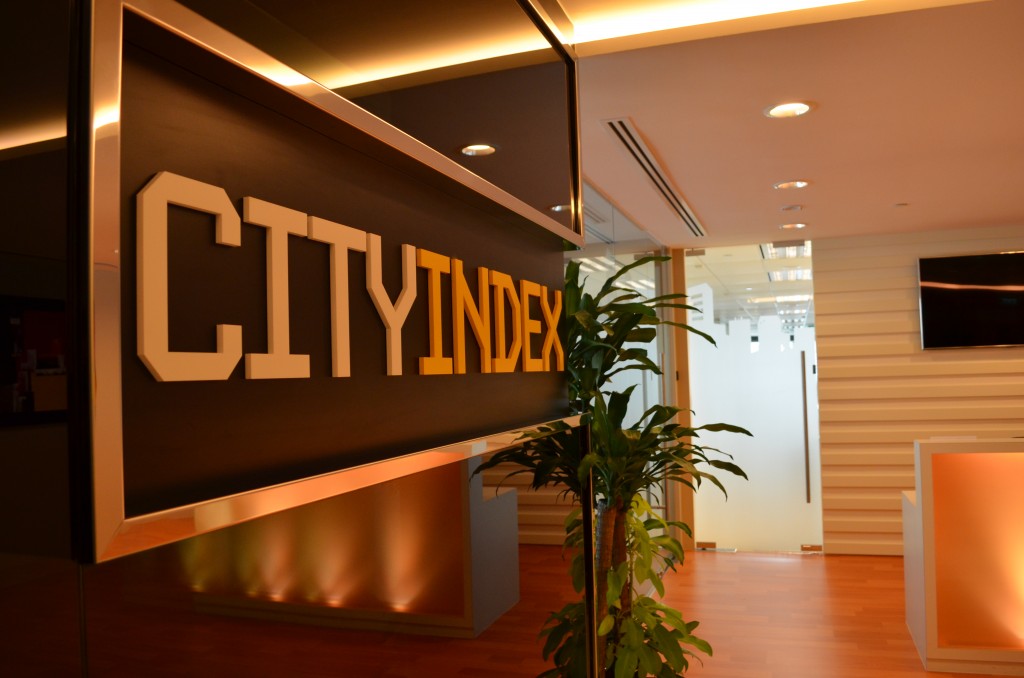
On Saturday, we had another full-house seminar on candlestick patterns. It was conducted at City Index, as part of our collaboration with them. Besides covering the basic patterns, we delved deeper into blended candles, and talked about the most important candlestick pattern – the universal candle pattern.

The Most Important Candlestick Pattern

The Most Important Candlestick Pattern 2

The Most Important Candlestick Pattern 3

Do stay tuned for more of our educational series of free seminars, where we will be covering various trading topics. Thanks for all your feedback and support!

Sign up for our mailing list to keep updated of the latest workshops and seminars!
For program enquiries, please email info@synapsetrading.com

0 Comments/by Spencer Li
https://synapsetrading.com/wp-content/uploads/2019/10/logo.jpg 0 0 Spencer Li https://synapsetrading.com/wp-content/uploads/2019/10/logo.jpg Spencer Li2012-07-02 01:06:162022-03-09 18:23:42Open Seminar at City Index: The Most Important Candlestick Pattern
Spencer Li

The Synapse Program – Full House!

News & Events

Last weekend, we concluded another successful run of our 2-day program, adding another batch of new traders to our community. We had a mixture of new and old traders, as well as some previous batches of graduates sitting-in and helping out by providing useful feedback and asking relevant questions that I may have overlooked.
The Synapse Program - Full House


To the new traders, remember that application and practice is what it takes to make you a great trader! Do not waste the skills you have acquired – treasure them, use them, and perfect them.

It was a great weekend for me, and I would like to take this opportunity to wish you all the best, and thanks for your kind feedback and tesimonials. We will use these to further improve the program.

Feedback

“Useful for beginners and has helped me understand/know some of the terms/concepts in trading. Overall, flow is good and the essence of trading is covered well. Finally can understand your posting on the forum.”
– Mr. Koh

“Spencer is a young but very experienced trader. His program is value for money. Great for beginners and experienced traders.”
– Kelvin Ang

“A very structured, objective syllabus and system. Good for both beginners and advanced traders.”
– Joshua Leong (Entrepreneur)

“Good description of how to enter and exit the various setups.”
– Chris

“A very casual course with a good learning curve. Easy to understand explanations and a good follow-up program with the discussion forum.”
– Randall Ong

“Content was easy to follow and relevant, executable in the immediate future.”
– Andrew Lim (Royal Bank of Scotland)

To see more testimonials, click here.
https://synapsetrading.com/testimonials/

0 Comments/by Spencer Li
https://synapsetrading.com/wp-content/uploads/2019/10/logo.jpg 0 0 Spencer Li https://synapsetrading.com/wp-content/uploads/2019/10/logo.jpg Spencer Li2012-06-17 22:43:172022-03-09 10:42:29The Synapse Program – Full House!
Spencer Li

Open Seminar at CIMB Securities: The X-Factor in Trading

News & Events

Last week, we have an open seminar at CIMB Securities to share about what it takes to be a professional trader. We started off with the different attributes required of a trader, then delved into our trading style, before ending off with a market outlook and stock picks.

As it was a full house event, we apologise if some of you could not make it this time. Since the response was rather good, we might consider having more of such seminars for the public in the future. Do sign up for our mailing list to stay informed!

Open Seminar at CIMB Securities

Open Seminar at CIMB Securities 2

Open Seminar at CIMB Securities 3

As we mentioned during the seminar, they keyword of the day is “SHORT”. I hope that all participants have a better idea of how we use price action to understand the past, anticipate the future, and trade in the present. Remember: only take a position just as a significant move is about to take place!

Sign up for our mailing list to keep updated of the latest workshops and seminars!
For program enquiries, please email info@synapsetrading.com

0 Comments/by Spencer Li
https://synapsetrading.com/wp-content/uploads/2019/10/logo.jpg 0 0 Spencer Li https://synapsetrading.com/wp-content/uploads/2019/10/logo.jpg Spencer Li2012-06-04 02:22:232022-03-09 10:43:19Open Seminar at CIMB Securities: The X-Factor in Trading
Page 176 of 184«‹174175176177178›»

Free Trading Guides

Free Trading Guides

Blog Categories

  • Beginner's Guide
  • Blockchain & Crypto
  • Book Summaries
  • Candlestick Patterns
  • Economics & News Trading
  • Investing & Portfolio Management
  • Living Your Best Life
  • Market Analysis
  • News & Events
  • Price Chart Patterns
  • Promotions
  • Risk & Money Management
  • Stock Trading
  • Testimonials
  • Tools & Resources
  • Trading Psychology
  • Trading Strategies
  • Trading Tips
  • Travel & Lifestyle

Free Trading Guides

Free Trading Guides

Contact Us

Synapse Trading Pte Ltd
Registration No. 201316168H

Whatsapp: +65-8897-1204
Telegram: @iamrecneps
Email: info@synapsetrading.com

Links

Disclaimer
Privacy policy
Terms & Conditions
Contact us
Partnerships

© 2012-2024 Synapse Trading | All rights reserved | - powered by Enfold WordPress Theme
  • Link to Facebook
  • Link to X
  • Link to Instagram
  • Link to Youtube
  • Link to LinkedIn
  • Link to Mail
Scroll to top Scroll to top Scroll to top