The Complete Guide to
Investing & Trading Psychology

In this guide on trading psychology, you will learn:

  • Why psychology accounts for a major part in long-term trading success
  • How to manage your emotions and though processes in various market situations
  • Why cognitive biases negatively affect our thinking process and decision-making
  • How to avoid falling into these “thinking traps” and solutions to get out of it
Complete Guide To Investing And Trading Psychology Cover
Beginners Guide To Trading Technical Analysis 1

Introduction to Trading Psychology

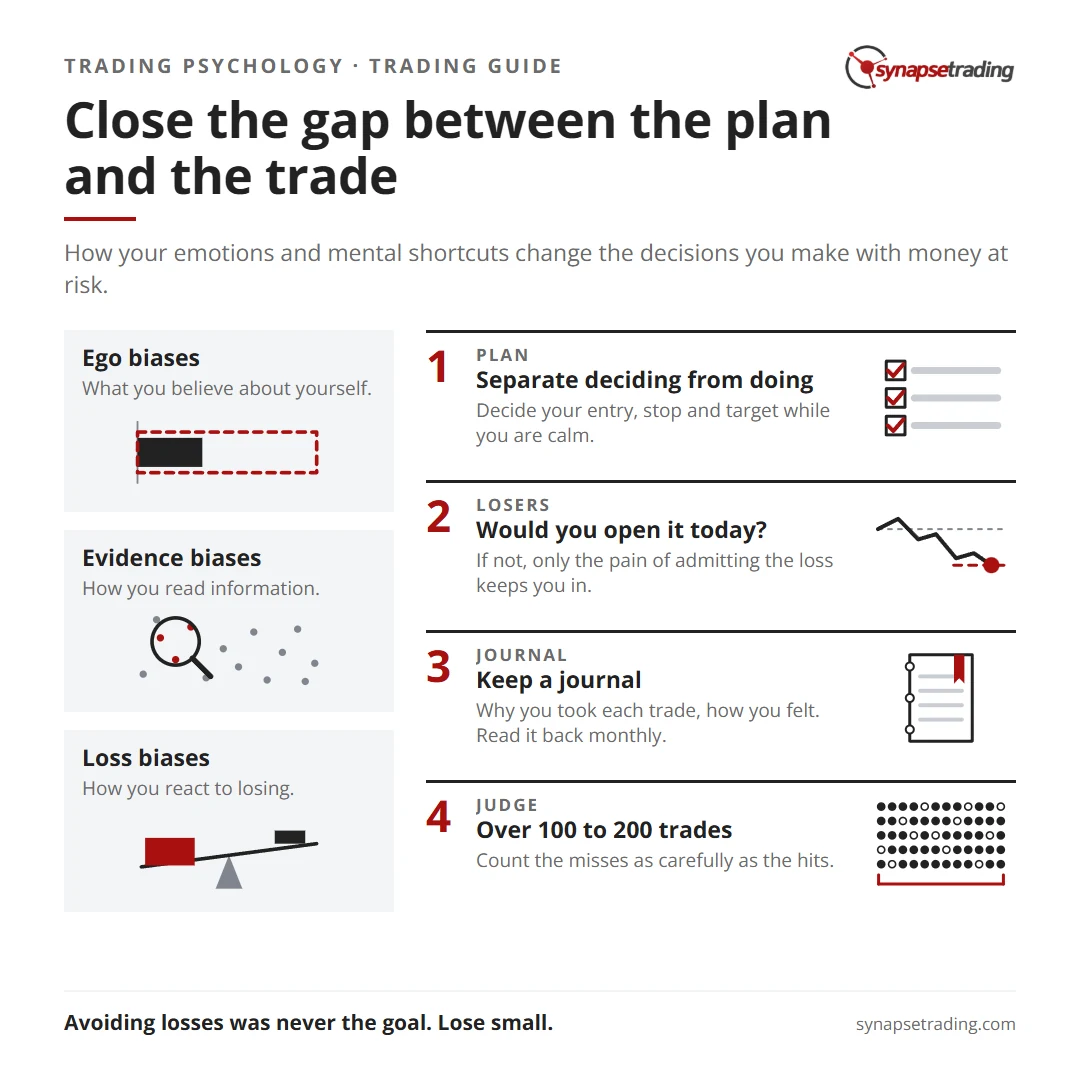
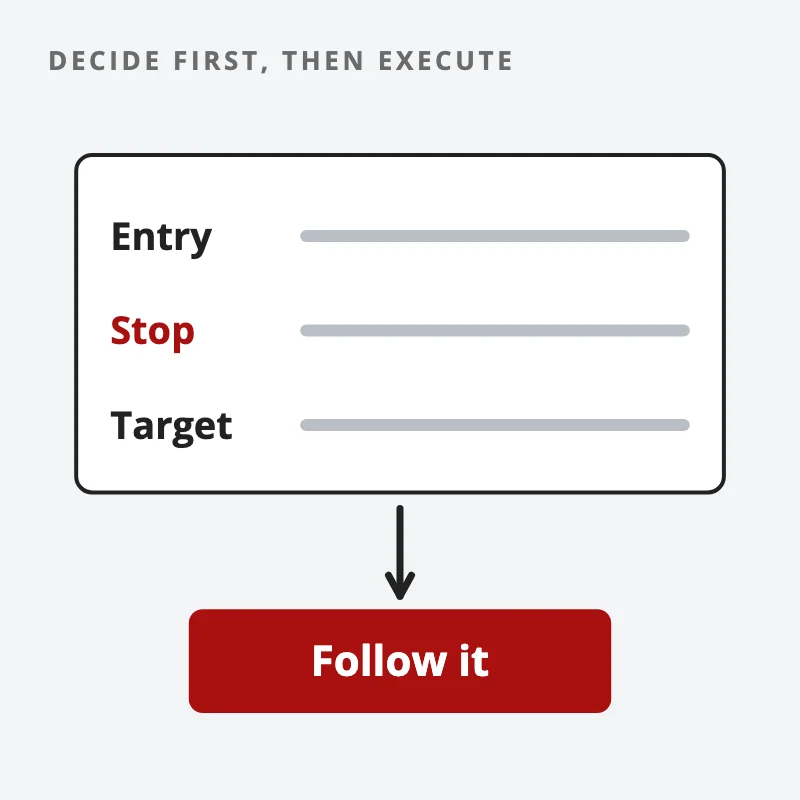
The goal of any trader or investor is to achieve long-term consistency of results. In theory, that can be achieved with a systematic approach and trading plan, but in practice, this only works if one can execute the plan consistently.

Quite often, emotions and psychological biases cause us to deviate from the plan, resulting in inconsistent results. So, in order to become a good trader, we need to identify these potential pitfalls in advance, and find solutions to overcome them.

Square Shape TFW

Join our Beginner Workshop!

New to Trading? Make your first live trade today in this workshop!

Meet Spencer live for 2.5 hours of hands-on training! No prior experience required!

Learn all the basics of trading, and step-by-step guidance to make your first trade!

Conservatism Bias

Key Psychological Factors to Successful Trading

To become a successful trader, one needs to master the different aspects of trading psychology, which includes the following:

Trading Quotes

Join our Telegram Channel for Weekly Trading Tips!

Besides learning the theories of trading & investing psychology, the more important part is learning how to apply it to your trading.

Join our free Telegram channel for practical tips on how you can improve your trading & investing psychology, and how to apply it in various trading situations.

Loss Aversion Bias

Avoiding Psychological Pitfalls

There are some common dangers in trading psychology that trick traders into making bad trading decisions. Understanding how this happens will help you avoid making these mistakes.

Top 5 Beginner Mistakes That Traders Make

How to Improve Trading Psychology

The best way to improve your trading psychology is to trade more and practice to get more experience, but make sure you do so with a plan in mind, and keep good records so that you know what to improve on.

Conclusion

I hope you have enjoyed this guide on how to tackle trading & investing psychology.

Now I’ll like to hear from you: what is your key take-away from this trading guide?

What of these biases are you struggling with the most?

Which do you think will have the greatest impact on your trading results if you manage to overcome it?

Are there any other psychological issues that we have missed out?

Let me know by leaving a quick comment below right now.

2018 09 17 15.11.29
101 replies
  1. 19fde2468e8b4d6ad3eaeceb65ca82cd
    Jason Lin says:

    Very insightful guide on how one thinks when making decisions for trading. I didn’t know there are names for such ways of thinking.

    Reply
    • 6fdf17b380c039a613a829203fc5d1f9
      Spencer Li says:

      You’re welcome! These ways of thinking are useful not just for making trading decisions, but also can be used for making any decision in life!

      Reply
  2. 35f9abff97938dc07aac8f259594716a
    Avriel K says:

    Hi! Maybe you can teach how do we go about using the sufficient data for evaluation and testing? Maybe you can do a guide on that?

    Reply
    • 6fdf17b380c039a613a829203fc5d1f9
      Spencer Li says:

      I’m not quite sure what you mean by “using sufficient data for evaluation and testing”, could you please elaborate on that? Thanks!

      Reply
    • B2f8cff1853f3bd0d5620e60d7d05623
      Gordan says:

      For backtesting, you usually need many years of data and its usually done on MT4 platform. I can suggest you to backtest 75% of that data to test your strategy and then use the remaining 25% data to check if it works for that range. Finally, you have to test that strategy forward by using them in live market.

      You have to find a balance. A strategy that works for a market might not work for others. And make sure that strategy cannot be too fit.

      Reply
  3. 08f0815c7e17427bbbb50bad45738b04
    Donnovan says:

    I agree that your mind needs to be as objective and neutral during trading. It is as important as your trading skills. I am a scalper btw. So this applies even more to me.

    Reply
    • 6fdf17b380c039a613a829203fc5d1f9
      Spencer Li says:

      You’re welcome! I would say staying objective is important whatever the trading style is (swing trading, scalping, trend-following, etc), but for shorter timeframes like scalping, decisions need to be made faster so it can be more challenging. Keep up the good work!

      Reply
  4. 7ee415370c43a534d6a1acf40feefce5
    Idrees Bevan says:

    Stumbled upon this trade while reading at the review of Die with Zero.

    Just want to share my thought on Trading Psychology here.

    I had a really good month of trading, and I felt ecstatic, not only because of the profits, but due to the fact that my strategies were working and all my long hours of practice was starting to pay off.

    Then the day came.

    It was a devastating disaster. I was so ill disciplined after a few losses, and by the end of the day, I knew I was just gambling in my trades.

    It was really awful and disappointed with myself.

    The truth is, I know it better than anyone else. I have studied so much on trading psychology, and understand it is arguably the most important aspect of trading, yet I still succumbed to my own weaknesses.

    Did anyone of you faced what I went through?

    Reply
    • 6fdf17b380c039a613a829203fc5d1f9
      Spencer Li says:

      I pretty much think so. It stems from a lack of understanding of how probability works. The probability of one independent event does not affect the probability of another independent event.

      Reply
  5. Fea09c6b6dafa36419ccc195c298b556
    Alucard says:

    What is the estimated percentage that psychology plays a part in being a great trader? I read some guides that a good trader is emotionless.

    Reply
    • 6fdf17b380c039a613a829203fc5d1f9
      Spencer Li says:

      It’s really hard to give a number for this, but if I had to estimate I would say about 60-70% of trading is executing your plan with the correct psychology.

      Reply
  6. 70ea14ebdababdb0078e07838c69d46f
    Daniel Lin says:

    I agree too! It applies to daily decisions that you make everyday. Took me by surprise how many thoughts we go through daily. And I also heard defensive mechanisms. But I guess that doesn’t apply to trading.

    Reply
    • 6fdf17b380c039a613a829203fc5d1f9
      Spencer Li says:

      That’s not true actually. Experience is how we learn from mistakes, whereas hindsight bias gives us the illusion that we would have acted differently before given the information we know have after the event has occurred. But before the event occurred, there is no way of knowing the outcome of the event.

      Reply
  7. 7b49da801b78bdd2bba743cdcb11d3ce
    Nicholas says:

    WOULD YOU RATHER BE RIGHT, OR AVOID BEING WRONG?

    So philosophical. Do you want the glass to be half empty or half full?

    Reply
  8. B5a616043cf353d4c1e1738db480cf72
    Damien Grid says:

    How about self-fulfilling prophecy? Does it constitute as part of the trader’s mindset? If you don’t believe you can do it, you might end up sabotaging your own trades?

    Reply
    • 6fdf17b380c039a613a829203fc5d1f9
      Spencer Li says:

      Self-belief needs to be backed up with skill, to be able to perform consistently. After you have learnt the key technical knowledge, then it boils down to practice and confidence.

      Reply
  9. 2e8625cea78742d14da067c16655b85d
    Vernon says:

    Honestly, I really feel that I need a lot of help with psychology and discipline. I am always in the green after a few trades and then I will keep on trading until it turns red 🙁 This has happened consistently for the past 2 weeks of trading days. The largest swing is from positive $19000 to negative $10000. I am unable to get myself out of this shit. I am always in fear of leaving money on the table. How do you know when to walk away?

    Reply
    • 5175083ae4baf6b77d4e06107fd9acc6
      James Lim says:

      I think the key problem is that you might view trading as gambling.

      Full time traders take profit even if you are not capturing the entire gains!

      Making $10 is better than losing $10.

      I went through a similar process like you until consecutive back to back losses of $6000 changed the way of how I traded.

      Your mindset needs to avoid losses.

      Then, the gains will come.

      Reply
    • D30c19969f1d384be80984004a9f1150
      Vernon says:

      There are a few ways in the trading platform to do this.

      1) set either a trade limit number
      2) time of day limit
      3) profit limit

      If you don’t, the trading mistakes will just keep coming back to haunt you!

      Do track your trades, and why do you go red after being green?

      Reply
    • E2feacd050191eb06519836627dd885e
      Yassin Sandoval says:

      Try reading Trading in the Zone: Master the Market with Confidence, Discipline, and a Winning Attitude

      An excellent book on trading psychology!

      Reply
    • 9add16b86a3b6d07f9b39e24a9b70c5f
      Mathilde Yew says:

      The simplest exit strategy is by having a profit percentage target in place.

      Once the trade is positive, and it hits your chosen percentage, be discipline and you exit!

      There are no decisions to be made, as you have already made the decision. Exit you go.

      Reply
  10. 0ae07c35ef6d2d4c4edc4ae97631eeba
    Darci Madden says:

    Hey guys, have you tried listening to classical musical while you are trading?

    Research has shown that background music or music that plays while the listener is primarily focusing on another activity can improve cognitive tasks.

    Another research also presents further positive impacts of music in relation to stress reduction.

    What do you think?

    Reply
  11. 04bdc4b49c4e46bdedb4340fb7bf7266
    Tommy Kia says:

    Trading Psychology, in my opinion, is talked about far too much and emphasize in the world of trading.

    Is it an important part? Yes, but maybe about 15% of it.

    HOWEVER, if you are not executing your trading plan properly, you are destined to fail. Furthermore, if you don’t have a statistical edge, you will lose money! It doesn’t matter how many times you improve or consciously work on your trading psychology.

    The trading edges are the hardest to achieve!

    Reply
  12. 5c232917737769b2e0c901ed660450b4
    MrProDayTrader says:

    Thanks for the information shared here! I have read and know that the psychology factor is a huge part of trading. But, I am still unsure how to improve on it. I am currently still paper trading for now, and I am stubborn on gaining experience and try looking at the charts as objectively as possible. In addition, I always look out for my risk management and as well as journaling my trades.

    Are there any other resources or tactics to practice on what I have just mentioned?

    Reply
    • 2e8625cea78742d14da067c16655b85d
      Jennifer RR says:

      As much as I do not hate paper trading, it is a good start and solid way to learn how to trade. However, you are never going to learn the psychology of trading until you put money on the table.

      There is definitely a huge gap in your mindset for both scenarios, including the trades you take and how long you stay in those trades.

      So dive into the battlefield and use your own money (even if it is little) rather than using a paper-trading account.

      Reply
  13. 0c1929212831241afcacf50d1815d48c
    Haruki Miyamoto says:

    One more psychological issue worth discussing is “Analysis Paralysis.” This is closely related to “Paralysis by Analysis,” but it specifically refers to the inability to make a decision due to excessive analysis or an overabundance of information. Traders experiencing analysis paralysis may find themselves constantly seeking more data or indicators, hoping to gain more certainty about a trade. This excessive quest for certainty can lead to missed opportunities and a lack of decisive action. To overcome analysis paralysis, traders should focus on developing a solid trading plan with clear entry and exit criteria, and trust their analysis and instincts to make timely decisions. Recognizing that no trade is ever a sure thing and that some level of uncertainty is inevitable can help traders break free from analysis paralysis and take action when opportunities arise.

    Reply
  14. D30c19969f1d384be80984004a9f1150
    Mohd Faizal says:

    I been struggling and also understanding with trading psychology. Most of the time, I am always guilty of revenge trading and being greedy in my trades. How do you professional traders do it?

    Reply
  15. F3c352beb1695915c092b2d0edd0a345
    Adeline Wilkins says:

    Out of curiosity, I was wondering if anyone can share their advice on how to prevent those inner battles, where you start to second guess yourself and hesitate on trade executions! Even though when you know it is definitely the right thing to do so.

    I have pissed at myself for missing out on making some money because of this 🙁

    Reply
    • 04bdc4b49c4e46bdedb4340fb7bf7266
      Mr Tan says:

      Weirdly, I find it odd for people to regret trades they did not make or make it in time to maximize their profits.

      I only have regret trades that I MADE.

      Surely, you will probably get another chance to make or lose money in the very near future.

      Reply
    • 09bf9536fde6862364384d436953c1f9
      Tanuki says:

      Saw this information a few weeks ago. An excellent way to deal with anxiety is to replace “what if” to “when”

      This forces you to shift your attitude to something more logical. If you fear that you might lose all your money in your account, then try asking “when”, and you should naturally find or look for things that will stop that outcome from happening.

      Reply
  16. E2feacd050191eb06519836627dd885e
    Thomas Goh says:

    Does any of you take a short term break from trading everyday?

    This should be a healthy way to take a break and helps in your trading psychology.

    Reply
  17. A5e499a801eb708027e3ba8594e4c4bf
    Hector Higgins says:

    I think the confirmation bias is the biggest hurdle for traders to overcome. It’s easy to fall into the trap of only seeking out information that confirms our beliefs, rather than challenging them.

    Reply
    • F90b51b3b9beed623f35b4d045dacc6b
      Gavin says:

      I agree, confirmation bias is a big problem. But I think the overconfidence bias is even more significant. It can lead traders to take on too much risk, which can ultimately result in large losses.

      Reply
    • 3605a79aac7c9526150e3b5e99afe1cc
      Martin Wheeler says:

      I see where you’re coming from, but I think loss aversion bias is the biggest obstacle to overcome. It can lead traders to hold onto losing positions for too long, which can result in even bigger losses.

      Reply
    • Ce1706c88734696891337485c02037bc
      Calvert says:

      Cognitive dissonance bias is a big one too. It’s hard to admit when we’re wrong, but it’s crucial to be able to change our minds and our trading strategies when necessary.

      Reply
    • 5e81a27a167d69e2a2c0a2e6e5d3a4f7
      Olivia Moore says:

      I believe the status quo bias is the most challenging to overcome because it prevents traders from embracing new ideas and taking calculated risks. It keeps them stuck in their old ways and may prevent them from making progress.

      Reply
    • 9a24365f970592498d584a7be8852fe6
      William says:

      I see your point, but I think the herd instinct bias is even more significant. Traders can easily get swept up in market trends and make decisions based on what everyone else is doing, rather than their own analysis.

      Reply
    • Fad82e39e21d689feb4804ca3d78bfeb
      Herbert says:

      While I agree that herd instinct bias can be a problem, I believe that the endowment bias is the biggest obstacle for traders to overcome. It’s hard to let go of a losing position because we feel like we ‘own’ it and want to get our money back.

      Reply
    • 4d60adba175099a1febb9fa73943cd8d
      Justine Robinson says:

      Maybe the narrative fallacy is the biggest hurdle for traders. It’s tempting to create cause-and-effect relationships between past events to explain current market conditions, but this can lead to inaccurate predictions and costly mistakes.

      Reply
    • 6a28f953f567c764878ef7f49b9f9953
      Ambrose says:

      Optimism bias is a significant challenge for traders. It’s easy to overestimate our abilities and underestimate market risks, leading us to make overconfident decisions that can result in losses.

      Reply
  18. 6cb76f49216260268a49ea093f166031
    Min Ji Park says:

    when traders tend to focus more on negative information or potential losses than positive information or potential gains. This can lead to overly conservative trading decisions or an avoidance of taking risks, which can hinder potential profits. To overcome pessimism bias, traders should strive to maintain a balanced perspective, considering both the potential risks and rewards of each trade.

    Reply
  19. 2247c5fa2334b138aa0d986ff56f7302
    Keelin Jai says:

    I believe we’ve covered most of the common ones, but there’s always the possibility of more specific personal psychological challenges that could affect an individual trader. Being self-aware and actively seeking improvement is key.

    Reply
  20. 4da1d0d68bed1d7c1ff62f3c2838f559
    Sylvester says:

    The key takeaway that I got from the list of behavioral biases is that as a trader, it is important to be aware of our own biases and how they can impact our trading decisions. I plan on applying this knowledge by being more mindful of my own thought process and decision-making when it comes to trading.

    Reply
  21. 8257e7849661bcfe82d0f031c5262a8b
    Samara Hamady says:

    Another big one is hindsight bias. Traders often look back at their trades and think they should have made a different decision based on the outcome, but it’s important to remember that they made the best decision based on the information they had at the time.

    Reply
    • 5a8a5e32984cd1162a39975b771ddaa7
      Geoffrey Wilcher says:

      I completely agree with you, being aware of our own biases is crucial to making informed and rational trading decisions. My key takeaway from this list is that confirmation bias can be particularly dangerous for traders. It’s so easy to look for information that confirms our existing beliefs and ignore anything that contradicts it. I plan on making a conscious effort to consider all information, even if it goes against my initial assumptions.

      Reply
  22. B3cf0c6dee2cec11f79856978238b3ad
    Jin Hao says:

    I think the importance of managing losing trades and understanding our cognitive biases is crucial. We can avoid making the same mistakes by being more self-aware.

    Reply
    • 6674dea164b3ae3532417edb6373092c
      XiaoWen says:

      The need for mental agility is crucial. Being able to adapt to changing market conditions and staying flexible is essential for long-term success.

      Reply
    • 9dc88d7024beb4457509ac44a86d7835
      Kenta Kurosawa says:

      The Circle of Control concept stood out to me. Focusing on what we can control and not getting caught up in what we can’t is important in trading and life in general.

      Reply
    • 17a19a1fc0ce0d8e9f2a3122d46481a4
      Haruki Tanaka says:

      Understanding the principles of behavioral finance helps me to be more mindful of my own cognitive biases and how they can impact my trading decisions.

      Reply
    • 8e54f07077c13a0cc40656a379d17de0
      Nari Park says:

      For me, it’s about managing winning trades. Knowing when to take profits or let a winning trade run can be a difficult balance to strike, but it’s essential for long-term success.

      Reply
    • 130286e921014c37196a22881befc1c1
      Seo Yeon Jin says:

      The importance of identifying and overcoming psychological pitfalls in trading is my key takeaway. By being aware of our biases and emotions, we can make more rational trading decisions.

      Reply
  23. 05aefb6c2e6d7cca3c02904b5a35110a
    Akira Saito says:

    In my opinion, the greatest impact on my trading results would come from overcoming my impatience and lack of discipline. I often find myself making impulsive decisions or not sticking to my trading plan, which leads to inconsistent results. By developing more patience and discipline, I believe I can achieve better long-term consistency and avoid unnecessary losses. This would involve setting clear rules for entry and exit points, using stop-loss orders, and not letting emotions drive my trading decisions. Additionally, I think patience can help me wait for the best trading opportunities, rather than forcing trades when the market conditions are not favorable.

    Reply
    • Feb595b705da58e2995f3745e76f5b5a
      Min Ji Kim says:

      I believe that managing losing trades will have the greatest impact on my trading results. We all know that losing trades are part of trading, but it’s often challenging to accept those losses and move on. Overcoming the fear of losing and learning to manage losses effectively can significantly improve my trading results. For instance, cutting losses quickly when the trade goes against my plan will prevent me from holding onto losing trades and hoping they’ll turn around. Moreover, understanding that losing trades are part of the game and not letting them affect my confidence or decision-making process will help me maintain a consistent approach to trading.

      Reply
    • 8fd0fe505b190cc1fef1d891fe4dc596
      Takashi Yamamoto says:

      I believe that managing losing trades will have the greatest impact on my trading results. We all know that losing trades are part of trading, but it’s often challenging to accept those losses and move on. Overcoming the fear of losing and learning to manage losses effectively can significantly improve my trading results. For instance, cutting losses quickly when the trade goes against my plan will prevent me from holding onto losing trades and hoping they’ll turn around. Moreover, understanding that losing trades are part of the game and not letting them affect my confidence or decision-making process will help me maintain a consistent approach to trading.

      Reply
    • 824e6df1b7619d6175c578ed5c252a3d
      Constance Wu says:

      For me, overcoming mental rigidity will have the most significant impact on my trading results. I tend to hold on to my preconceived notions about the market or specific trades, which sometimes causes me to miss out on profitable opportunities or to keep losing trades for too long. By developing mental agility, I can adapt to changing market conditions more effectively and make better trading decisions. This would involve being open to new information, reconsidering my views when presented with compelling evidence, and staying flexible in my approach to trading. Ultimately, embracing mental agility can help me become a more successful trader in the long run.

      Reply
    • 5db202d920464e459e3311518f721f2a
      Hiroshi says:

      I think that managing winning trades is the area where I can see the most significant improvement in my trading results if I manage to overcome it. It’s easy to get overconfident or greedy when a trade is going well, leading to poor decisions such as not taking profits when I should or letting a winning trade turn into a losing one. By developing a clear plan for managing winning trades, I can ensure that I make the most of my profitable trades while avoiding unnecessary risks. This might involve setting trailing stop orders to protect profits or using profit targets to determine when to exit a trade. By focusing on managing winning trades effectively, I believe I can significantly improve my overall trading results.

      Reply
    • 846dd27469e6c6ab51a1f905893d1d8c
      Crhis Soo says:

      Overcoming the influence of cognitive biases and behavioral biases would have the most significant impact on my trading results. These biases can cloud my judgment and lead to poor trading decisions that ultimately hurt my performance. By identifying and understanding these biases, I can work to mitigate their influence and make more rational, informed trading decisions. For example, I can avoid falling victim to the confirmation bias by seeking out diverse sources of information and not just those that support my existing beliefs. Additionally, understanding the anchoring bias can help me make better decisions about entry and exit points by not relying too heavily on initial price levels. By tackling these biases head-on, I believe I can improve my decision-making process and, ultimately, my trading results.

      Reply
    • 0bc36bc93025722b32e066c15119c095
      Keiko Matsui says:

      I believe that building confidence in my trading abilities would have the most significant impact on my trading results. Many times, I have second-guessed myself and not executed my trading plan due to a lack of confidence, leading to missed opportunities or poor decisions. By building confidence in my trading abilities, I can stick to my plan and trust my analysis, even in the face of market uncertainty or temporary setbacks. To build confidence, I need to focus on learning from my mistakes, practicing my trading skills, and consistently executing my trading plan. By doing so, I can make more effective decisions and improve my overall trading performance.

      Reply
    • Cc192d0040c88af6e7ae038e7a45b66f
      Mr Lim says:

      I think that mastering the concept of the Circle of Control would have the most significant impact on my trading results. I often find myself worrying about factors that are beyond my control, such as market fluctuations or global events, which can cause anxiety and negatively impact my trading decisions. By focusing on what I can control, like my risk management, trading plan, and emotional state, I can become a more resilient trader and better adapt to the ever-changing market conditions. Concentrating on the factors within my control can help me stay calm and focused, leading to better decision-making and ultimately improved trading results.

      Reply
    • 74a51d2d68c6be51cee7fe4cc8cec59e
      Lan Chi Nguyen says:

      For me, the greatest impact on my trading results would come from overcoming the fear of missing out (FOMO). I often find myself entering trades too late or chasing the market because I don’t want to miss out on potential gains. This usually results in poor entry points and increased risk. If I can overcome FOMO, I believe I will be more patient and disciplined in waiting for the right opportunities, which can lead to better risk management and more consistent results. To do this, I need to develop a solid trading plan and stick to it, avoiding impulsive decisions based on market hype or the actions of other traders.

      Reply
    • D8af2afa5515ab1d914dfff52a732480
      Dae Hyun Bae says:

      The most significant impact on my trading results would come from overcoming the tendency to overtrade. I often find myself taking too many trades, driven by emotions like greed or the desire to make up for previous losses. This can lead to poor risk management and a lack of focus on quality trades. By learning to be more selective and patient in my trading, I can reduce the number of trades I take and focus on those with the highest probability of success. This may involve setting specific criteria for trade setups or using a more systematic approach to trading. By overcoming overtrading, I can improve my risk management, focus on quality trades, and ultimately achieve better trading results.

      Reply
  24. 82d9c7abf6b4c7cf18a88e64401d702d
    Anh Thu Le says:

    One psychological issue that I believe should be mentioned is the “Gambler’s Fallacy.” It’s the belief that past events can influence future outcomes, which is not necessarily true. For example, some traders may believe that after a series of losing trades, they are “due” for a win. This type of thinking can lead to poor risk management and irrational trading decisions. It’s essential to recognize that each trade is an independent event and should be approached with a clear plan and sound analysis, regardless of previous outcomes.

    Reply
    • 2bf2f4fb9e83cce141d11aaf7d2dd175
      Sora Kim says:

      Another psychological issue worth discussing is “Paralysis by Analysis.” This occurs when a trader becomes overwhelmed by the vast amount of information and analysis available, leading them to become indecisive and unable to take action. In such cases, traders may end up missing opportunities or making poor decisions because they are too focused on trying to find the “perfect” trade. It’s crucial to develop a balance between using the available information and trusting one’s instincts and analysis to make informed decisions without getting bogged down in every detail.

      Reply
    • E68cc554a2f29979c13fa81223e792ee
      Chen Jia Li says:

      One more psychological issue that can affect traders is “Revenge Trading.” This happens when a trader experiences a significant loss or a series of losses and feels the need to “get even” by making high-risk trades to recoup the losses. This emotional response can lead to poor decision-making and even more substantial losses if not controlled. Traders should recognize that losses are part of the trading process and should stick to their trading plan and risk management strategy, even during challenging periods.

      Reply
    • 79d7d92aaf96f2f924b9b643828760f0
      Aiko Tanaka says:

      Another psychological issue we should consider is “Frustration Tolerance.” This refers to a trader’s ability to cope with and manage feelings of frustration that can arise from adverse market conditions or unsuccessful trades. Some traders may become overly emotional or impulsive when experiencing frustration, leading to poor decision-making and potential losses. Developing strong frustration tolerance skills can help traders remain calm and focused, allowing them to make better-informed decisions and maintain a consistent approach to trading.

      Reply
    • 47522179f104285f0a01baed5a934acb
      Mai Phan says:

      I think it’s worth mentioning “Fear of Success.” It might sound counterintuitive, but some traders may have an underlying fear of success, which can hold them back from achieving their full potential. This fear may stem from various factors, such as a lack of confidence in one’s abilities or concerns about increased responsibility or expectations. Overcoming this fear involves recognizing the limiting beliefs and working to build confidence and trust in one’s trading abilities, ultimately allowing for more significant success in the markets.

      Reply
    • 0959c5ef8d52d82dd7b10fa20710536a
      Yuto Nakamura says:

      I believe we should also discuss the “Sunk Cost Fallacy.” This psychological issue occurs when traders continue to invest time, effort, or money into a losing trade because they have already invested so much in it. They may hold onto a losing position, hoping it will turn around, instead of cutting their losses and moving on. Recognizing the sunk cost fallacy and focusing on the present situation rather than past investments can help traders make more rational decisions and improve their overall trading performance.

      Reply
    • 8a912397d8f77962610167f8f500b442
      Linh Vu says:

      Another psychological issue worth considering is “Decision Fatigue.” This occurs when traders become mentally exhausted from making numerous decisions throughout the trading day, leading to reduced decision-making quality and potential mistakes. To combat decision fatigue, traders should prioritize self-care, including getting adequate sleep, taking breaks, and setting limits on the number of trades they make in a day. By managing decision fatigue, traders can maintain a clear and focused mindset, resulting in better trading decisions and improved performance.

      Reply
    • Fd9ec4b28f2d58781d16bfa6f0ad3442
      Chen Yang says:

      I’d like to mention the “Recency Bias” as another psychological issue. This bias occurs when traders place more weight on recent events or experiences than those that happened in the more distant past. As a result, traders might overreact to short-term market fluctuations or become overly influenced by their most recent trades. To overcome recency bias, it’s essential to maintain a long-term perspective and not let short-term events or outcomes dictate trading decisions. Staying focused on a comprehensive trading plan and adhering to risk management strategies can help mitigate the impact of recency bias on decision-making.

      Reply
    • F1a9eab516050668912e9643e371c66a
      Kai says:

      The psychological issue that is impactful and to consider is the “Illusion of Control.” This refers to a trader’s belief that they can exert control over market outcomes or that their trading decisions can somehow influence market movements. This overconfidence can lead to poor risk management and a lack of preparedness for unexpected market events. To overcome the illusion of control, traders should focus on managing the aspects of trading that they can control, such as their risk management, trading plan, and emotional state, while accepting that many factors in the market are simply beyond their control. By maintaining a realistic perspective, traders can make more informed decisions and improve their overall trading performance.

      Reply

Leave a Reply

Want to join the discussion?
Feel free to contribute!

Leave a Reply

Your email address will not be published. Required fields are marked *