• Link to Facebook
  • Link to X
  • Link to Instagram
  • Link to Youtube
  • Link to LinkedIn
  • Link to Mail
Synapse Trading
  • Home
  • About
    • My Background
    • My Trading Journey
    • My Travel Log
    • Media & Interviews
  • Mentoring
    • Trading Mastery Program
    • Results & Testimonials
  • Signals
    • Telegram (Free to join!)
    • Daily Trading Signals
    • Daily Trading Signals (Results)
  • Resources
    • Free Trading Guides
    • Tools & Resources
    • Blog & Infographics
  • Contact
    • Contact Us
    • Partnership Opportunities
  • Click to open the search input field Click to open the search input field Search
  • Menu Menu

Tag Archive for: investing

Spencer Li

Key Business Lessons from Marshall Thurber (Live Training!)

Living Your Best Life
2017 07 20 17.52.48

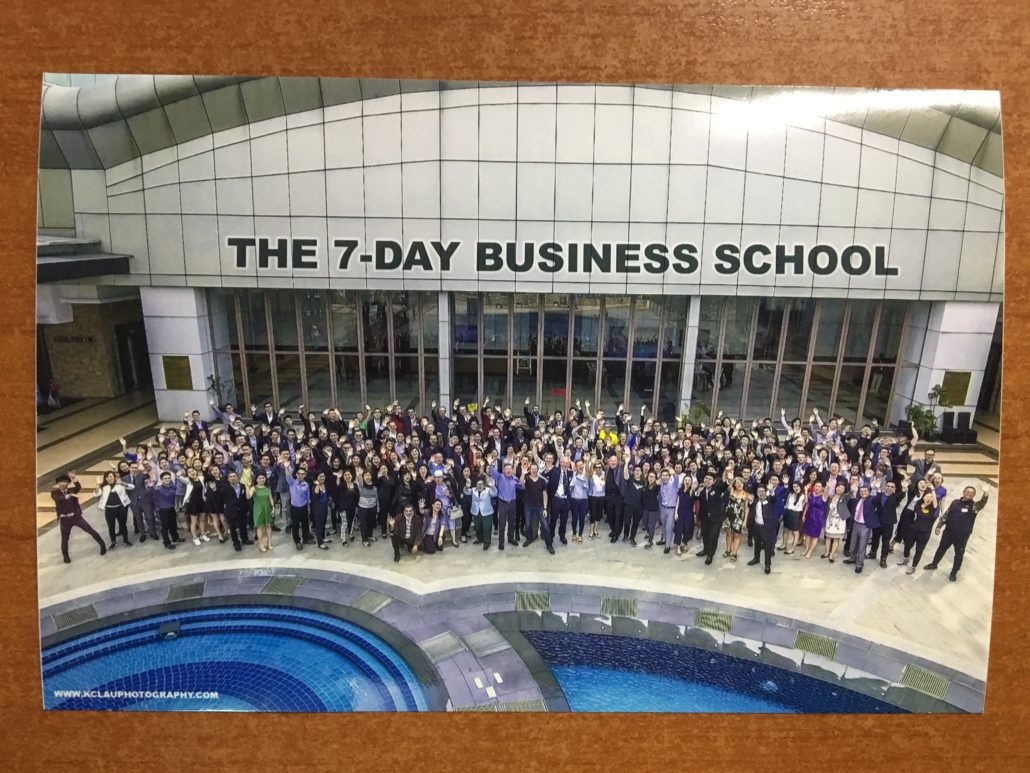
Last week, I had the privilege to attend a 7-day training program in Johor to learn from Bill Allen, David Neenan, and the legendary Marshall Thurber.

It was a great time making new friends, learning (so many amazing individuals here!), and reflecting on turning 31 (on the first day of the course) this year.

Last year was an eventful year for me, in which I continued to grow my training business, bought a new house, and invested in 10+ new businesses.

Key Business Lessons from Marshall Thurber

During the 7 days, I also read these 3 books during my free time (in between the eating/drinking/massage sessions), which further gave me insights and clarity on how to build network by following sound business principles and sticking to my integrity. I am looking forward to many new exciting projects coming up soon.

  • Dotcom Secrets – By Russell Brunson
  • Expert Secrets – By Russell Brunson
  • No Excuses – By David Neenan & Eric Lucas

Key Business Lessons from Marshall Thurber 2

Here is a summary of some of the key learning points from the course and the books:

  • How to position yourself as an expert in your field
  • How to develop sales funnels and build a strong “CULT-ure”
  • The story of the sea quirt – don’t stop learning!
  • Claiming responsibility gives us power over our lives.
  • Moments of hardship and difficulty are the times when we strengthen the muscle of responsibility. Only through challenge do we grow.
  • 4 options when you hit the wall: change yourself, change the system, get out, suffer.
  • When you are perturbed and aware, it means that an opportunity for a breakthrough may be at hand.
  • “Most of the best things that ever came my way seemed, at first, as if they might be the worst.”
  • Simply acquiring information is not learning – knowing vs. doing
  • Luck is what happens when preparation meets action.
  • Mistakes = great learning moments
  • A lateral thought is an innovation that takes an entirely new tack to solving a problem.
  • Lateral thought > Niche (Lag) > Leverage > Value
  • Commodity > Product > Service > Experience > Transformational offer
  • “Emergence by Emergency” – Bucky
  • Do you allow others to love and support you? support vs. propping up.
  • Values are the ideas that guide all your actions. Abundance is an attitude that shapes your reality.
  • What legacy do you want to create for this world?
  • Speed learning – learning is not time dependent, and once you get it, you get it.
  • Leadership – being able to make good predictions.
  • Hero vs. Victim mentality
  • The power of priming
  • The importance of a good network – strong connections & weak ties
  • Communication is the response I get
  • Interesting vs. Interested
  • The importance of “Essence” and “Emotions” – Go Hydra! 😀
  • Cyclical vs. Structural change
  • 2 most important things: time & attention
  • Clarity is power!
  • The law of Abundance – Sharing is having more!!! Cooperation vs. Competition.
  • “Financial freedom is having enough” – when is enough for you?
  • How to use leverage to amplify your resources
  • Ephemeralization – doing more with less
  • What business are you really in? (Hint: same for all biz)
  • Sometimes you need to slow down to get there faster
  • All decision are driven by emotions – get to the heart of the matter
  • DyVal = Quality/Investment
  • Request > Suggest > Surprise & Delight
  • The concept of Precession – always keep moving!
  • Theory > Method > Tools > Metrics
  • Network Science – how to build strong networks
  • What do you want to do in life once you have enough money?
  • Dissipative structures and Perturbation
  • How to deliver powerful presentations – the “Essence”
  • The concept of Entrainment
  • Mastery is to simplify the complex
  • Values vs. Policy – United Airlines case study
  • Client vs. Customers – how to attract more missionaries
  • Lemonade stand game – Revision of GAAP vs. IFRS accounting standards


Here are more photos of the event:

Photo with Bill and David, all business superstars. ? #7daysbizschool #futureofbusiness

A post shared by Spencer Li ?? Synapse Trading (@iamrecneps) on Jul 11, 2017 at 11:07pm PDT

Taking to the stage again.. this time as a trainee. ? #7daybizsch #billallen #davidneenan #marshallthurber #futureofbusiness #futureofbusinessasia

A post shared by Spencer Li ?? Synapse Trading (@iamrecneps) on Jul 14, 2017 at 8:19am PDT

Photo with the legend himself! #marshallthurber #futureofbusiness #futureofbusinessasia

A post shared by Spencer Li ?? Synapse Trading (@iamrecneps) on Jul 18, 2017 at 6:03am PDT

Made a lot of new friends the past 8 days, and glad to see that all the businesses I have invested in are in good hands! ? #marshallthurber #billallen #7daybizsch #futureofbusiness

A post shared by Spencer Li ?? Synapse Trading (@iamrecneps) on Jul 19, 2017 at 8:27am PDT

Once again, a big thank you to all participants and organisers, and for those who are keen to join next year, please drop me whatsapp/email and I will link you up with the organisers for next year’s event.

Cheers! 😀


thumbnail an unofficial guide to living our best life beyond financial freedom

If you are excited to get more life hacks, also check out: “Beyond Financial Freedom: An Unofficial Guide to Living Your Best Life”

0 Comments/by Spencer Li
https://synapsetrading.com/wp-content/uploads/2017/07/2017-07-20-17.52.48.jpg 3024 4032 Spencer Li https://synapsetrading.com/wp-content/uploads/2019/10/logo.jpg Spencer Li2017-07-21 06:41:452022-03-07 14:39:44Key Business Lessons from Marshall Thurber (Live Training!)
Spencer Li

The Top 5 Hobbies of Millionaires & Billionaires Around the World

Living Your Best Life
22 Miami holy ship beach party. Photo by stellaperformanceusa.com

Recently, I came across an interesting report by Wealth-X, which conducts research about the ultra-wealthy. In this report, they revealed the hobbies, interest and passions of the world’s richest people, and some are actually very different from what we think them to be.

The top 5 hobbies are as follows:

1. Philanthropy

It’s surprising that philanthropy features top in the list of hobbies of billionaires. While giving by the rich is often ridiculed by others (“Probably giving because they feel bad”), giving is a financial discipline that keeps the rich rich, and the not-so-rich to be on the right path to success.

Some ways to give your money:

Give regularly to a cause you believe in.

There are some people who frown upon giving to the poor just because they are poor, or perhaps you don’t have a very good perception toward charity. If that’s the case, find a cause that you believe in, and give regularly to it. Some causes that are worth giving to include humanitarian aid, sponsoring budding artists, supporting the elderly in society, giving to children’s education (or even a partial scholarship).


Give regularly to a cause you believe in

Giving is good for the heart.

The act of giving brings a healthy sense of awareness of where your finances come from; the more you serve and give, the more likely it is that people treat you with respect and have a positive attitude towards you, and your business grows.

Give physical gifts instead of financial gifts.

Some charities allow people to give physical goods instead of money. Doing your research, getting the right contacts, and finding a cause you believe in (and a sustainable one too!) requires patience and some hard work on your part, but it’s a worthy exercise. Although I personally give regularly to several charities, I do not like to publicise it.


2. Travel

Rich people travel because… simply because they can afford it. If you do have the spare cash, it makes sense to start travelling while you are on your way to financial success. This keeps you motivated, and you can always upgrade your holidays when your financial stability improves.

But the real challenge for most people is not just the money, but also the time. Given the nature of my job (trading), I have become the go-to person whenever any of my friends want to travel, and over the past few years I have travelled to 50+ countries while still making passive income along the way.


Christmas tree + Cape Town Flyer + National Geographic photo frame ???? #Christmas #southafrica #capetown

A post shared by Spencer Li ?? Synapse Trading (@iamrecneps) on Dec 23, 2016 at 11:44pm PST


3. Art

Art is something that really enriches the soul, and adds flavour to life. And there is a wide range of selection to choose from, ranging from a few thousand to rare pieces that go into millions.

Art


Personally, I have taken an interest in this after hunting for some pieces for my new house.

4. Fashion

I’m not much into the fashion scene, but the ultra-rich truly enjoy obtaining unique pieces of clothing.

Bespoke, boutique, and customized clothing are the rage for the ultra-rich.

While I don’t really splurge on costly apparel, I do recommend spending good money on key essentials, like a pair of decent dress shoes for men, or any other piece of clothing that you find to be something you want to pull out once in a while.

I also find that it’s a waste of money to spend on cheap clothing; it’s far more cost-effective to buy quality, reasonably priced products that can last you 5-10 years, than to buy-and-throw most of your wardrobe.

That said, I do enjoy the occasional indulgence, from quality brands like Mont Blanc, Paul Smith, AP, etc 😀


5. Politics

When people mention the word “rich” and “politics” together, Donald Trump is the first thing that comes to mind. Other people like Henry Ross Perot, Mitt Romney and Ronald Lauder are also rich people who forayed into the political scene, but with limited success.


What are your hobbies?

At end of the day, your hobbies and passion are activities that bring additional job and add colour to your life, so pick something that is fun, meaningful, and something within your means. (Not all hobbies have to be ridiculously expensive.)

On a personal note, my hobbies include hitting a gym (with my trainer), tennis (with my coach), yoga (private noob level class), reading (2-3 books a week), and not forgetting trading (15 mins a day). Oh, and travelling as well. I aim for 2-3 new countries each year. 😀


thumbnail an unofficial guide to living our best life beyond financial freedom

If you are excited to get more life hacks, also check out: “Beyond Financial Freedom: An Unofficial Guide to Living Your Best Life”

0 Comments/by Spencer Li
https://synapsetrading.com/wp-content/uploads/2017/04/22-Miami-holy-ship-beach-party.-Photo-by-stellaperformanceusa.com_.jpg 853 1280 Spencer Li https://synapsetrading.com/wp-content/uploads/2019/10/logo.jpg Spencer Li2017-04-26 05:25:162022-03-07 14:41:24The Top 5 Hobbies of Millionaires & Billionaires Around the World
Spencer Li

3 Biggest Financial Regrets of Retirees – And How to Avoid Them!

Investing & Portfolio Management
Elderly Poor Singapore

The 3 Biggest Financial Regrets of Retirees in Singapore (and How to Avoid Them)

Last updated: 3 July 2026 · By Spencer Li, CFTe


The three biggest financial regrets Singapore retirees report are: not saving money when they were young, not investing the time to learn how to invest, and overspending on their children. All three are fixable while you still have time. Start saving early so compounding works for you, because $10,000 saved in your twenties grows far more than the same $10,000 saved in your forties or fifties. Spend a few weeks learning to invest across more than just stocks, because a stocks-only portfolio can fall 60 to 80 percent in a crash like 2008. And spend less on expensive things for your kids and more time with them, because that is the part they actually remember.

The good news: none of these require more money. They require earlier, simpler decisions. Here is each regret, why it happens, and the fix.

Regret #1: Not saving money when young

This is the most common regret, and it is universal. Seniors all over the world say the same thing: I should have started saving earlier.

The reason is compounding. Saving $10,000 in your twenties adds up to a lot more than saving $10,000 in your forties or fifties, because the early money has decades longer to grow. The earlier you start, the more time does the work for you.

It also gets harder with age, not easier. Expenses pile up as you get older. Property, health spending, and raising a family take up most of your money. Saving gets a lot harder when the children are begging you for the latest mobile device for their birthdays.

Gambling and entertainment quietly eat away at your nest egg, so stay clear of them. And if you are reading this past your twenties, do not despair. It is never too late to start getting your money habits sorted out.

Regret #2: Not investing the time to learn

Back in the 1980s, investing was genuinely hard to learn without the internet. Today that excuse is gone. Kids these days build a website from scratch without supervision, so you can certainly find a way to learn something that pays you dividends in the long run.

Most people complain about not knowing what to invest in. That is a reasonable complaint. But here is the deeper problem underneath it.

The reason most people cannot invest money is that they do not even invest time to learn how to invest. Time is sacred. Use it wisely, and use it on what matters.

If your entire financial vocabulary is:

  • buying blue-chip stocks for the long term
  • mutual fund investments
  • investment-linked insurance policies (insurance bundled with an investment fund)

then you are missing a large chunk of the pie. A good diversified portfolio holds much more than just stocks. Holding only stocks can be very risky. In the 2008 financial crisis, most blue-chip stocks plunged 60 to 80 percent. Multi-asset, multi-instrument investing (spreading money across stocks, bonds, forex, commodities, and more) is the norm now. If you are not involved, it is time to start.

One more myth worth killing: people assume learning to trade or invest is hugely time-consuming. It is not. Like any skill, it takes a while to learn at first, but after a few weeks you get the hang of it, and managing your finances then takes only a few minutes a day.

Here is the part the brochures skip. The tools are now nearly free. A screener will find a setup, a robo-advisor will rebalance a portfolio, an app will track everything. What none of them supply is the judgment to know which risk is worth taking and the discipline to sit out the rest. That judgment is the one piece you actually have to build yourself, and it is the first of the Five Edges that no tool can hold for you.

Regret #3: Spending too much on the children

Many parents look back on their years as young parents and say the same thing: we should have spent less. The bad outcomes are familiar. Spoilt children. Children who expect a lot but contribute little.

This is not about being stingy. It is about spending on the things that last instead of the things that get thrown away. Among the many unnecessary expenses, parents could do well to trim any of these:

  • Extra-curricular lessons like ballet, music, or swimming, especially if the child is not enjoying them
  • Tuition lessons, since the school system in Singapore is honestly quite robust
  • Expensive pre-school education, because they will not remember it anyway
  • Expensive holidays, which we do not remember a year later
  • Toys that get thrown away three months later
  • Expensive meals at fancy restaurants, because food is still food
  • Overseas university education, when a local degree can be just as profitable for your child
  • Expensive childcare services, when reasonably priced ones do the same job
  • A domestic helper, when teaching the kids to take care of the house makes more sense

We sometimes put too high a premium on a university degree. Pay what is fair and reasonable. Do not spend half a million dollars on one.

And here is the real point. Many parents have money but very little time for their children. Ask any child and you will find they would much rather spend time with their parents than have an expensive holiday in Paris, Dubai, or Tokyo.

In hindsight you always know better. So take the advice of our seniors: spend on what really matters, which is your time. What use is all the cool stuff, the premium lessons, and the holidays, if we miss the one thing that truly counts?

The three regrets at a glance

RegretWhy it happensThe fixStart when
#1 Not saving youngCompounding is invisible early; expenses pile up with ageSave early and automatically; cut gambling and entertainment leaksToday, at any age
#2 Not learning to invest“I don’t know what to buy” plus the myth that it takes too much timeSpend a few weeks learning; diversify beyond stocks; then a few minutes a dayAfter a few weeks of study
#3 Overspending on kidsConfusing money spent with love shownTrim the throwaway expenses; give time insteadBefore the habits set in

How to avoid all three at once

Notice the thread running through every regret. Each one is a trade of a small, early, slightly boring decision for a large, late, painful one. Saving early is boring. Spending two weeks learning to invest is boring. Choosing an evening at home over a flashy holiday is boring. The regret is what arrives when you skip the boring version.

So pick the version your future self will thank you for. Start the savings habit now. Put in the few weeks to learn investing properly, across more than one asset class. And spend on time with the people who matter, not on things they will forget. None of this needs more money. It needs an earlier decision.

FAQ

What is the most common financial regret of retirees in Singapore?
Not saving money when young. It is the single most common regret reported by seniors worldwide, because compounding rewards early savers and expenses only grow heavier with age.

Why does saving early matter so much?
Because of compounding. Saving $10,000 in your twenties grows into far more than the same $10,000 saved in your forties or fifties, since the early money has decades longer to compound.

Is investing only in stocks risky?
Yes. Holding only stocks can be very risky. In the 2008 financial crisis, most blue-chip stocks plunged 60 to 80 percent. A diversified, multi-asset portfolio spreads that risk.

Does learning to invest take a lot of time?
Not for long. Like any skill it takes a few weeks to get the hang of, after which managing your investments takes only a few minutes a day.

How can I avoid these regrets if I am already past my twenties?
It is never too late. Start the savings habit now, spend a few weeks learning to invest beyond stocks, and redirect spending toward time with the people who matter.


The seniors who shared these regrets are not telling you to earn more. They are telling you to decide earlier. Which of the three regrets is the one you would most want to avoid? Let me know in the comments.

And if regret #2 is the one that stings, that is the most fixable of all. Start with the pillar: How to Start Investing and Trading in Singapore: A Beginner’s Guide.

Want the few-minutes-a-day version? Grab the free 15-Minute Swing Trading Starter Kit. It is the exact routine I use to scan once a day and trade any market in 15 minutes, which is the practical answer to regret #2.


About the author. Spencer Li is the founder of Synapse Trading and a Certified Financial Technician (CFTe) with 15 years of trading across stocks, forex, crypto, commodities, and bonds. His trade log is public, 404 trades, losses left in. He teaches low-risk swing trading in 15 minutes a day, one system for any market.

Education, not financial advice. Synapse Trading is not licensed by MAS to advise on investment products. Trading carries risk of loss; past performance is not indicative of future results.


Related

How to Start Investing and Trading in Singapore (pillar) · Why diversify beyond stocks: multi-asset investing · How to learn trading in 15 minutes a day

0 Comments/by Spencer Li
https://synapsetrading.com/wp-content/uploads/2017/01/Elderly-Poor-Singapore.jpg 427 640 Spencer Li https://synapsetrading.com/wp-content/uploads/2019/10/logo.jpg Spencer Li2017-04-12 05:54:292026-07-06 00:31:563 Biggest Financial Regrets of Retirees – And How to Avoid Them!
Spencer Li

How Much Must You Save to Have $1M at Retirement? (The Answer is Surprisingly Low!)

Investing & Portfolio Management
one million at retirement


These days, $1M seems to be the golden figure that everyone aims to attain before retiring. I know there is this great debate about whether $1M is enough, but hey, $1M can get you by for many, many months.

Here’s a table summarizing exactly how much you need to save (or rather, invest) every month, in order to retire with $1M. Using some formulas from my finance 101 class in university,

tableThere you go. I tabulated the figures for easy reference.

It’s one thing to know how much to save monthly, but the real challenge is to get down to doing it.

Here’s 3 tips I have to help you guys attain your own financial goals. They are simple, but you might be surprised how hard they are to actually follow-through with!


TIP 1: SAVE MONEY, REALLY.

Yes, save money. This is so easy to say, but difficult to do.

I remember that in my younger days, after receiving my first paycheck, I went out and quickly spent half of my salary on a ‘gift’ to myself, as a reward for seeing the first stack of cash come into my bank account. I quickly learnt that I did not actually need that gift, and that saving money was very, very difficult, especially since you know that your income is certain!

If there was one piece of advice on how to actually save money, it is this: PAY YOURSELF FIRST! It is surprisingly difficult to get yourself to do this, but you must learn to pay yourself first. Paying yourself first doesn’t mean buying something for yourself; it means moving money out from your paycheck into a savings account or investment account on a regular basis.

Perhaps its tough for the first few months, but new habits take time to form and when you actually get down to it, you see that it is a very useful habit to have. In fact, if you have children, it would be good to start teaching them this from a young age. “Pay yourself first, and then spend what you have left” is a good way to instill financial discipline in the younger generation.

Before you ask “How much do I need to save?”, why don’t we just get down to the first step, which is to actually start saving money?

Once you get in the habit of saving, it because second-nature. After doing so for some time, we can move on to the next tip:

TIP 2: BUILD A TRULY DIVERSIFIED PORTFOLIO

Generally speaking, there are two kinds of investing strategies:

FAST money: trading income, bringing in quick gains.

Trading is the way to quickly build up a portfolio and invest in dividend-yielding counters or REITs. Once you’ve stuck to a simple trading strategy, repeating it over time is bound to yield significant profits, much faster than you would in a fixed deposit or by holding the stock index for 5-10 years.

SLOW money: passive income, bringing in smaller but consistent gains.

For those with lots of money, they can allocate much of their portfolio to more stable assets, like dividend stocks, the stock index (it brings a dividend as well!), or other longer-term bonds.

Most people want to use fast money  all through their life, but it is unrealistic. As we age, we have less and less energy and time to continually engage the markets, so the goal is always to have a large war chest that brings in true passive income.

You might be surprised how few people understand the true meaning of a portfolio. Sometimes, the word ‘portfolio’ brings in the idea that you can only buy 5-10 stocks and hold them over 20-30 years. I beg to differ; in a portfolio, one must be truly diversified across…

  • All asset classes (forex, bonds, stocks, REITs, ETFs, commodities)
  • Time horizons (fixed deposits / buy-and-hold dividend stocks VS trading income)

Learning to do so requires some dedication and bumping your head in the wrong places at first. That’s why I always recommend that beginners take up forex trading; they’ll be exposed to market volatility, intra-day and longer-term trading, and also different asset classes by trading oil, gold, wheat, the stock indices, and bonds. Furthermore, you need as little as $500 to start with, and the cost of failure is very low.


TIP 3: STAY CONSISTENT

It is remarkably difficult to do something simple over and over again.

Want to lose weight? Exercise and eat healthy. But how many people actually keep to this?

Want to become better at socialising? Spend more time with people rather than with your phone or computer. But how many people actually keep to this?

Want to learn to trade? Stick to 1-2 trade setups, and repeat these trades week after week. But how many people actually keep to this?

It is very, very difficult to do what is simple and boring. In fact, it is the boredom that kills most traders!

One thing that experienced traders fail to do that knocks them out of the game is this: they fail to keep reading, reflecting, and honing their craft.

Continuous learning has to be part of your investing plan. After all, most people only want to invest money, but don’t want to invest the time to learn how to be profitable.

How much returns is good returns?

Well, that depends on your goals. There is a trading strategy for every level of returns. A conservative 10-20% returns as a trader is possible and you generally take a lot less risk than someone who wants 100-200% returns a year.

Depending on when you want to retire, you need to find out how much % returns you need a year, and look for a strategy that gets you there.


IT’S BORING, BUT YOU NEED TO TRACK YOUR PROGRESS!

how-muchWith a Google search, I found a useful table to track your progress, credits to businessinsider.sg! Source: BusinessInsider.sg

Suppose you want to save $1M, it’s extremely important to track if you are on target, and see if you need to allocate more funds to fast money or slow money.

If you are proficient with MS Excel, you should be able to come up with a table for your income, expenses, savings, investment returns, and projected net worth by whatever year that you are aiming to retire by.

I hope this article brings you to your feet and gets you started on your quest for financial freedom. Maybe for you, the first step is to actually start saving money! Starting where you are is all you need to do. With every step you take, you’ll be one step closer to your goals.

Cheers! 😀

RESEARCH SOURCES & REFERENCES

businessinsider.sg/compound-interest-monthly-investment-2014-3/
businessinsider.com/retirement-savings-guide-2014-3?_ga=1.199140719.1988080035.1478087095


0 Comments/by Spencer Li
https://synapsetrading.com/wp-content/uploads/2017/01/one-million-at-retirement.jpg 950 1400 Spencer Li https://synapsetrading.com/wp-content/uploads/2019/10/logo.jpg Spencer Li2017-01-11 10:46:472021-03-09 18:35:32How Much Must You Save to Have $1M at Retirement? (The Answer is Surprisingly Low!)
Spencer Li

Bloomberg Report: Around 14% of Singaporean Young Adults Don’t Expect to Be Able to Ever Retire – Are you One of Them?

Investing & Portfolio Management
bloomberg survey millenials retire

While at the gym yesterday, I was browsing the news (when my gym trainer was taking a break), and I came across this interesting report by Bloomberg.

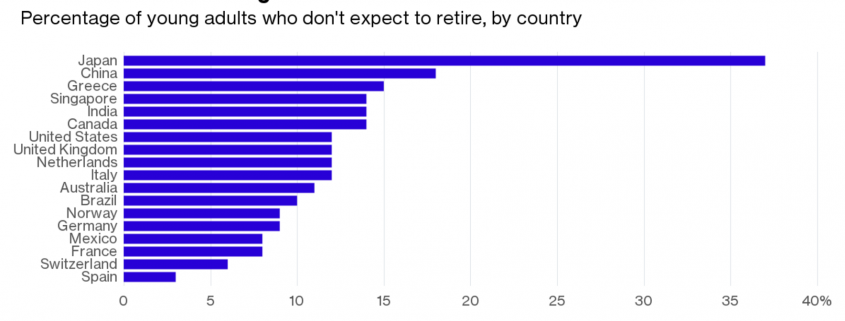
“A study, released on Tuesday by workforce solutions company Manpower Group and conducted by surveyor Reputation Leaders, found that 12 percent of millennials around the world expect never to retire. In Japan, a whopping 37 percent said they think they’ll work until they reach the grave, compared to 18 percent in China, 12 percent in the United States and the United Kingdom, and just 3 percent in Spain. The study polled 19,000 working millennials across 25 countries.”

bloomberg survey millenials retire

According to this survey, Singapore ranks 4th in world! 🙁 Definitely not a good sign.

My guess is that this is due to a combination of inflation, spending habits, and cost of living.

Another reason why saving, investing, and financial literacy is so important in this time and age.

Source: http://www.bloomberg.com/news/articles/2016-05-25/these-are-the-countries-where-millennials-will-work-themselves-to-death

0 Comments/by Spencer Li
https://synapsetrading.com/wp-content/uploads/2016/05/bloomberg-survey-millenials-retire.png 862 1769 Spencer Li https://synapsetrading.com/wp-content/uploads/2019/10/logo.jpg Spencer Li2016-05-27 02:11:582021-03-09 18:38:01Bloomberg Report: Around 14% of Singaporean Young Adults Don’t Expect to Be Able to Ever Retire – Are you One of Them?
Page 2 of 3123

Free Trading Guides

Free Trading Guides

Blog Categories

  • Beginner's Guide
  • Blockchain & Crypto
  • Book Summaries
  • Candlestick Patterns
  • Economics & News Trading
  • Investing & Portfolio Management
  • Living Your Best Life
  • Market Analysis
  • News & Events
  • Price Chart Patterns
  • Promotions
  • Risk & Money Management
  • Stock Trading
  • Testimonials
  • Tools & Resources
  • Trading Psychology
  • Trading Strategies
  • Trading Tips
  • Travel & Lifestyle

Free Trading Guides

Free Trading Guides

Contact Us

Synapse Trading Pte Ltd
Registration No. 201316168H

Whatsapp: +65-8897-1204
Telegram: @iamrecneps
Email: info@synapsetrading.com

Links

Disclaimer
Privacy policy
Terms & Conditions
Contact us
Partnerships

© 2012-2024 Synapse Trading | All rights reserved | - powered by Enfold WordPress Theme
  • Link to Facebook
  • Link to X
  • Link to Instagram
  • Link to Youtube
  • Link to LinkedIn
  • Link to Mail
Scroll to top Scroll to top Scroll to top