• Link to Facebook
  • Link to X
  • Link to Instagram
  • Link to Youtube
  • Link to LinkedIn
  • Link to Mail
Synapse Trading
  • Home
  • About
    • My Background
    • My Trading Journey
    • My Travel Log
    • Media & Interviews
  • Mentoring
    • Trading Mastery Program
    • Results & Testimonials
  • Signals
    • Telegram (Free to join!)
    • Daily Trading Signals
    • Daily Trading Signals (Results)
  • Resources
    • Free Trading Guides
    • Tools & Resources
    • Blog & Infographics
  • Contact
    • Contact Us
    • Partnership Opportunities
  • Click to open the search input field Click to open the search input field Search
  • Menu Menu
Spencer Li

Why I am Planning to Liquidate my Full Portfolio of Singapore Stocks

Market Analysis
straits times index sti 140517


It has been a while since my last update on the Singapore markets (as well as my SG portfolio holdings), largely because the market doesn’t move much, so I only check on them once in a while.

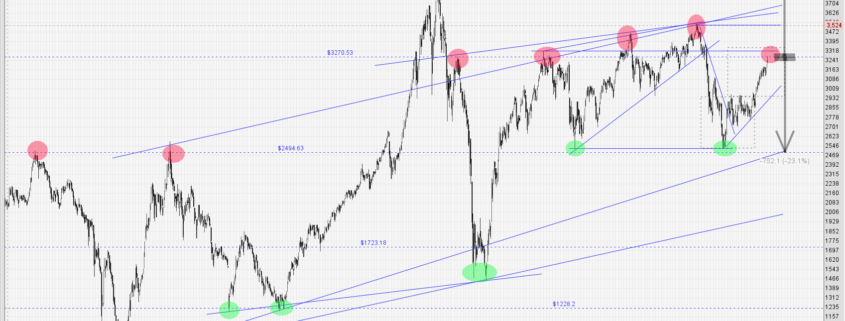
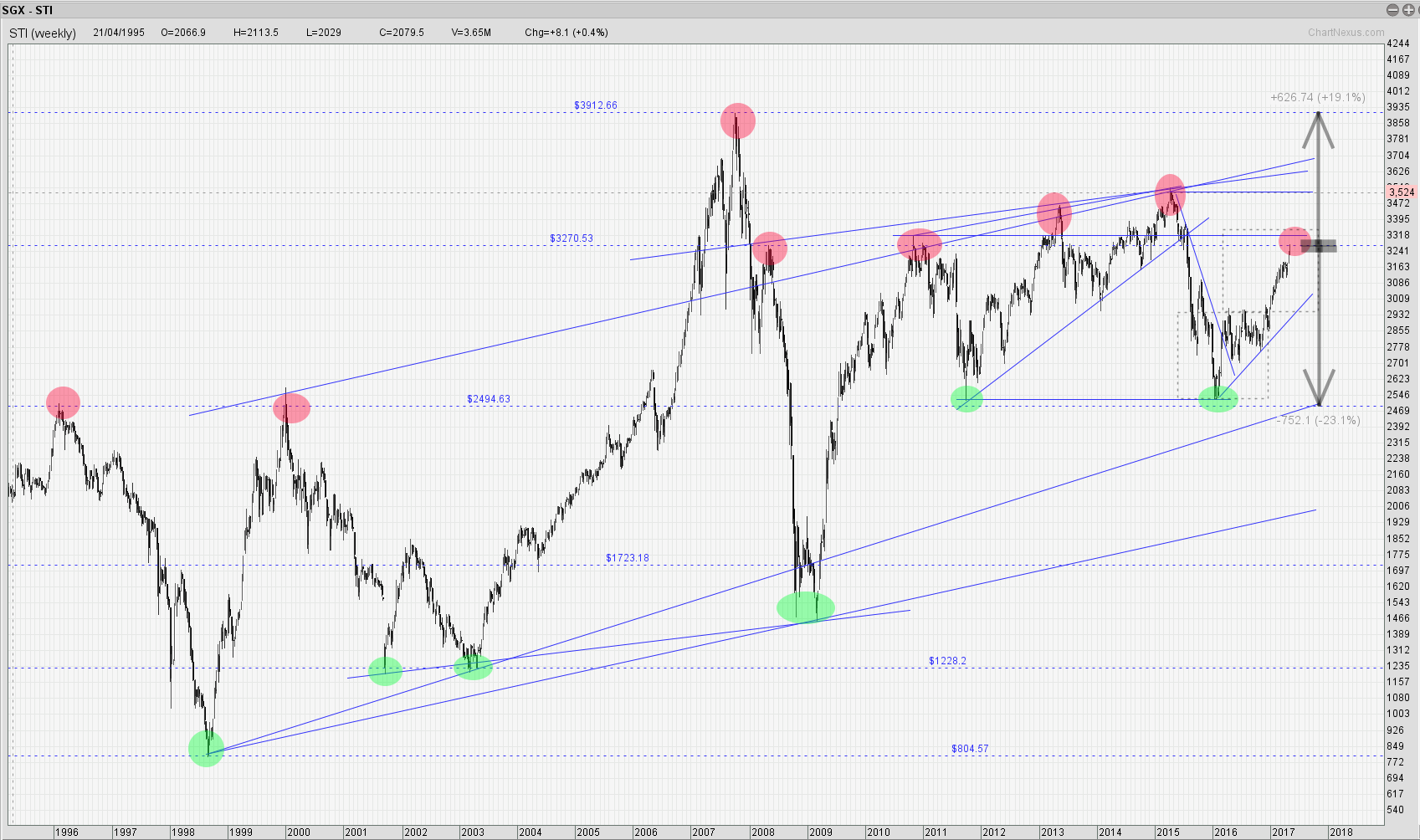
Interestingly, I noticed that the STI has had an impressive run, coming off a low of 25xx to break past the 3000 level in the past few months. However, is this move sustainable?

Full Portfolio of Singapore Stocks

Taking a closer look at this weekly chart which shows the historical prices over the last 20 years or so, one thing which stands out is that the market has been in a 7 YEAR sideways stagnation.

If we look back at the whole history of the index, this is somewhat unprecedented.

Which could explain why popularity in this market (as well as trading volumes) has been waning. In short, it does seem like a dying market.

Not to mention that during this same time period, the US stock markets have been steadily creeping up.

If we look at the most recent red shaded circle, that is where the current price is, and it seems to be running into massive headwinds. This means that the potential upside could be quite limited.

If we observe the large sideways range that prices have been moving in, the price is now at the top of the range. And we know that the best strategy in a range is to “buy low, sell high”, which means that the odds do not favour much more upside, unless there is some new strong positive price catalyst.

However, a cursory glance at recent news headlines seems to be painting a rather gloomy picture, with muted growth forecasts and ominous employment statistics. This tell me that downside catalysts are more likely that upside ones. In other words, there is more chance of a negative shock rather than a positive shock for prices.

In light of all these factors, I am planning to cash out most or all of my profits, and wait for more favourable odds to redeploy my capital. As a trader and investor, timing is always key.

Good luck, and trade wisely! 😀

0 Comments/by Spencer Li
https://synapsetrading.com/wp-content/uploads/2017/05/straits-times-index-sti-140517.png 1004 1697 Spencer Li https://synapsetrading.com/wp-content/uploads/2019/10/logo.jpg Spencer Li2017-05-14 06:57:272022-03-07 16:51:55Why I am Planning to Liquidate my Full Portfolio of Singapore Stocks
Spencer Li

The Top 5 Hobbies of Millionaires & Billionaires Around the World

Living Your Best Life
22 Miami holy ship beach party. Photo by stellaperformanceusa.com

Recently, I came across an interesting report by Wealth-X, which conducts research about the ultra-wealthy. In this report, they revealed the hobbies, interest and passions of the world’s richest people, and some are actually very different from what we think them to be.

The top 5 hobbies are as follows:

1. Philanthropy

It’s surprising that philanthropy features top in the list of hobbies of billionaires. While giving by the rich is often ridiculed by others (“Probably giving because they feel bad”), giving is a financial discipline that keeps the rich rich, and the not-so-rich to be on the right path to success.

Some ways to give your money:

Give regularly to a cause you believe in.

There are some people who frown upon giving to the poor just because they are poor, or perhaps you don’t have a very good perception toward charity. If that’s the case, find a cause that you believe in, and give regularly to it. Some causes that are worth giving to include humanitarian aid, sponsoring budding artists, supporting the elderly in society, giving to children’s education (or even a partial scholarship).


Give regularly to a cause you believe in

Giving is good for the heart.

The act of giving brings a healthy sense of awareness of where your finances come from; the more you serve and give, the more likely it is that people treat you with respect and have a positive attitude towards you, and your business grows.

Give physical gifts instead of financial gifts.

Some charities allow people to give physical goods instead of money. Doing your research, getting the right contacts, and finding a cause you believe in (and a sustainable one too!) requires patience and some hard work on your part, but it’s a worthy exercise. Although I personally give regularly to several charities, I do not like to publicise it.


2. Travel

Rich people travel because… simply because they can afford it. If you do have the spare cash, it makes sense to start travelling while you are on your way to financial success. This keeps you motivated, and you can always upgrade your holidays when your financial stability improves.

But the real challenge for most people is not just the money, but also the time. Given the nature of my job (trading), I have become the go-to person whenever any of my friends want to travel, and over the past few years I have travelled to 50+ countries while still making passive income along the way.


Christmas tree + Cape Town Flyer + National Geographic photo frame ???? #Christmas #southafrica #capetown

A post shared by Spencer Li ?? Synapse Trading (@iamrecneps) on Dec 23, 2016 at 11:44pm PST


3. Art

Art is something that really enriches the soul, and adds flavour to life. And there is a wide range of selection to choose from, ranging from a few thousand to rare pieces that go into millions.

Art


Personally, I have taken an interest in this after hunting for some pieces for my new house.

4. Fashion

I’m not much into the fashion scene, but the ultra-rich truly enjoy obtaining unique pieces of clothing.

Bespoke, boutique, and customized clothing are the rage for the ultra-rich.

While I don’t really splurge on costly apparel, I do recommend spending good money on key essentials, like a pair of decent dress shoes for men, or any other piece of clothing that you find to be something you want to pull out once in a while.

I also find that it’s a waste of money to spend on cheap clothing; it’s far more cost-effective to buy quality, reasonably priced products that can last you 5-10 years, than to buy-and-throw most of your wardrobe.

That said, I do enjoy the occasional indulgence, from quality brands like Mont Blanc, Paul Smith, AP, etc 😀


5. Politics

When people mention the word “rich” and “politics” together, Donald Trump is the first thing that comes to mind. Other people like Henry Ross Perot, Mitt Romney and Ronald Lauder are also rich people who forayed into the political scene, but with limited success.


What are your hobbies?

At end of the day, your hobbies and passion are activities that bring additional job and add colour to your life, so pick something that is fun, meaningful, and something within your means. (Not all hobbies have to be ridiculously expensive.)

On a personal note, my hobbies include hitting a gym (with my trainer), tennis (with my coach), yoga (private noob level class), reading (2-3 books a week), and not forgetting trading (15 mins a day). Oh, and travelling as well. I aim for 2-3 new countries each year. 😀


thumbnail an unofficial guide to living our best life beyond financial freedom

If you are excited to get more life hacks, also check out: “Beyond Financial Freedom: An Unofficial Guide to Living Your Best Life”

0 Comments/by Spencer Li
https://synapsetrading.com/wp-content/uploads/2017/04/22-Miami-holy-ship-beach-party.-Photo-by-stellaperformanceusa.com_.jpg 853 1280 Spencer Li https://synapsetrading.com/wp-content/uploads/2019/10/logo.jpg Spencer Li2017-04-26 05:25:162022-03-07 14:41:24The Top 5 Hobbies of Millionaires & Billionaires Around the World
Spencer Li

Video Samples for Weekly Market Outlook

News & Events

The “Weekly Market Outlook” is a 10-15 minute video covering all the major markets, and highlighting the best trade opportunities for the week ahead.

This is provided to all subscribers of the “Daily Trading Signals” to let them know what kind of signals we will be expecting throughout the week.

Here are 3 samples taken from our video archives:


0 Comments/by Spencer Li
https://synapsetrading.com/wp-content/uploads/2019/10/logo.jpg 0 0 Spencer Li https://synapsetrading.com/wp-content/uploads/2019/10/logo.jpg Spencer Li2017-04-20 19:28:202023-04-20 19:37:21Video Samples for Weekly Market Outlook
Spencer Li

3 Crucial Lessons From Jesse Livermore – The Greatest Stock Trader of All Time

Trading Tips
jesse livermore

Jesse Livermore is known to be the most prolific stock trader. Several books have been written about him and his trading track record is legendary. His profits were so great that he was reported to have owned mansions in various places around the world, each fully staffed, complete with limousines and steel-hulled yacht for his holidays.

Some of you might have read that Livermore was worth $100 million after shorting the 1929 great market crash.

Jesse Livermore

Above: Some of the books about Jesse Livermore, available in major bookstores.

What Guidelines Did Jesse Livermore Follow As A Trader?

Among the many quips he had about trading and investing, I’ve picked out some of the key ones that could make or break your trading account.

While many complain about the difficulties in trading forex, stocks, or commodities, there is a good minority that makes consistent profits in the markets.

What sets Jesse Livermore apart from his peers?


  1. Buy rising stocks and sell falling stocks.

The above seems obvious, but many people fail to adhere to this rule. Many people like to ‘pick tops’ and ‘pick bottoms’. Now, professional traders do occasionally try to pick tops and bottoms, but they do so with very strict risk management, and always have a contingency plan for when the trade doesn’t work out.

Beginners often makes the mistake of trying to trade against the trend. While this can be profitable for some, talk to anyone in the trading industry and they will tell you that trend-following is the major money-making strategy that every trader uses. It’s simple, easy to add positions on, and it’s stress free. The problems come when beginners make a buck from trading with the trend, and start to explore ‘new ways’ to trade and invest.


2. Keep trades that show a profit, end trades that show a loss.

Jesse Livermore is famous for his humongous profits, but behind every profitable trader is the admirable ability to deal with a string of losses. It’s one thing to know that you need to cut losses, but it’s another to actually cut your losses when you are wrong. George Soros famously quips that it is not how many times you win or lose, it’s how much you make when you win, and how much you lose when you are wrong.

Cutting losses is a psychologically hard thing to do in modern society. We’re ingrained to be always correct, and never admit that you messed up, because it reflects badly on you as a person. However, with investing, no one is marking you for the number of losses; the profit that you make is the final report card that matters, and that’s where we want to be focusing on.


3. Never average losses by buying more when your stock has fallen.

Too many people refuse to be wrong on their investments or trades.

I have heard of people say this statement: “Even if the stock drops a lot, I’ll just keep it because I’m buying for ownership and dividend cashflow, not just for capital gains.” Sure, but what happens if the stock you hold drops by 70%? 80%? You’ll buy more?

Buying more when the stock has fallen is a sure-way to get your trading account to zero. It’s taking more risk when the odds are against you.


Think About This: Which of These 3 Guidelines Have Brought You Losses in the Past?

Many traders soon realize early in their career, that their trading accounts could have been profitable if not for silly mistakes. Avoiding these silly mistakes requires experience, maturity, the correct knowledge, and of course, proper mentoring.

I was lucky to be mentored by veteran traders early on in my trading career. Their advice, based upon thousands of hours of market experience, contributed greatly to who I am today, and I never fail to mention, during trading seminars or public events, that by tapping on their experience, I was able to quickly attain a level of success that kept me profitable.

If you’re currently struggling as a trader, ask yourself this question: “Which mistakes have I been making?”

Acknowledging trading mistakes is a continuous process of learning and growing.

0 Comments/by Spencer Li
https://synapsetrading.com/wp-content/uploads/2017/04/jesse-livermore.jpg 820 1024 Spencer Li https://synapsetrading.com/wp-content/uploads/2019/10/logo.jpg Spencer Li2017-04-20 07:18:472022-03-07 11:44:113 Crucial Lessons From Jesse Livermore – The Greatest Stock Trader of All Time
Spencer Li

3 Biggest Financial Regrets of Retirees – And How to Avoid Them!

Investing & Portfolio Management
Elderly Poor Singapore

Every person has regrets, and as one gets older, it is inevitable that one would start regretting certain things. And when it comes to finances, what exactly do our seniors quip about? What decisions did they make that they regret the most? And most importantly, what crucial advice would they give to those looking to retire comfortably in the future?


REGRET #1: NOT SAVING MONEY WHEN YOUNG

This is one of the most common regrets that is universal to all seniors across the world, with older folk lamenting that they should have saved when they were younger. In fact, saving $10,000 in your twenties adds up a lot more than saving in your 40’s or 50’s. Compounding works to your favour the earlier you start. Expenses also start to rack up as you age, therefore it is much harder to save when you are older.

1

Property, health spending, and raising a family take up most of your money, and saving money gets a lot harder when the children are begging for you to get the latest mobile device  for their birthdays.

Gambling and entertainment eats away at your nest egg, so stay clear of them! It’s never too late to start getting your money habits sorted out.


REGRET #2: NOT INVESTING TIME WELL

Back in the 1980’s, investing was a lot harder to learn without the internet. Now, it is an excuse to say that it is difficult to be financially educated. With kids these days being able to build a website from scratch (without supervision), I’m sure you will be able to find something to do that will bring you dividends in the long-run.

Most people complain about not knowing what to invest in. That is a reasonable complaint, but…

The reason why most people can’t invest money, is that they don’t even invest time to learn how to invest.

timeTime is sacred; use it wisely, and use it on what matters.

If your financial vocabulary includes any of the following:

  • buying blue-chip stocks for the long-term
  • mutual fund investments
  • investment-linked insurance policies

…you are missing out on a large chunk of the pie. A good diversified portfolio includes much more than just stocks. In fact, holding just stocks can be very risky, as seen during the 2008 financial crisis where most blue-chip stocks plunged by 60-80%.

Multi-asset class, multi-instrument investing is the norm now. If you’re not involved, it’s time to get started.

Another common misconception is that learning how to trade or invest is very time-consuming, but that is actually not true. Like any skill, it might take a while to learn it at first, but after a few weeks, you will soon get the hang of it and it will only require a few minutes a day to manage your finances and investments.


REGRET #3: SPENDING TOO MUCH ON THE CHILDREN

Many parents will look back on their days as young parents and quip that they should have spent less. Some of the bad outcomes include spoilt children, children who expect a lot but don’t contribute, and many more.

Among the many unnecessary expenses, parents could do well to reduce spending in any of these areas:

  • Extra-curricular lessons, like ballet, music, swimming (especially if the child is not enjoying them!)
  • Tuition lessons (the school system in Singapore is honestly quite robust)
  • Expensive pre-school education (they won’t remember what happened anyway)
  • Expensive holidays (we don’t remember them 1 year from now)
  • Toys that are thrown away 3 months later (we prefer iPads, honestly)
  • Expensive food at fancy restaurants (food, is still food)
  • Overseas university education (a local degree can be equally profitable for your child)
  • Expensive child-care services (reasonably priced ones will do the same)
  • A domestic helper / maid (teaching the kids to take care of the house makes more sense)

1We sometimes put too much of a premium on university education. Pay what is fair and reasonable; don’t go about spending half a million on a university degree.

Many parents have money but very little time for the children. Ask any child and you would know that he/she would much prefer spending time with their parents than having expensive holidays in Paris, Dubai, or Tokyo.

On hindsight, you would always know better. But hey, take the advice of our seniors, and spend what really matters; our time.

For what use is all these cool stuff, cool experiences, premium lessons and holidays, if we don’t get what truly matters?

0 Comments/by Spencer Li
https://synapsetrading.com/wp-content/uploads/2017/01/Elderly-Poor-Singapore.jpg 427 640 Spencer Li https://synapsetrading.com/wp-content/uploads/2019/10/logo.jpg Spencer Li2017-04-12 05:54:292021-03-09 18:25:583 Biggest Financial Regrets of Retirees – And How to Avoid Them!
Page 104 of 184«‹102103104105106›»

Free Trading Guides

Free Trading Guides

Blog Categories

  • Beginner's Guide
  • Blockchain & Crypto
  • Book Summaries
  • Candlestick Patterns
  • Economics & News Trading
  • Investing & Portfolio Management
  • Living Your Best Life
  • Market Analysis
  • News & Events
  • Price Chart Patterns
  • Promotions
  • Risk & Money Management
  • Stock Trading
  • Testimonials
  • Tools & Resources
  • Trading Psychology
  • Trading Strategies
  • Trading Tips
  • Travel & Lifestyle

Free Trading Guides

Free Trading Guides

Contact Us

Synapse Trading Pte Ltd
Registration No. 201316168H

Whatsapp: +65-8897-1204
Telegram: @iamrecneps
Email: info@synapsetrading.com

Links

Disclaimer
Privacy policy
Terms & Conditions
Contact us
Partnerships

© 2012-2024 Synapse Trading | All rights reserved | - powered by Enfold WordPress Theme
  • Link to Facebook
  • Link to X
  • Link to Instagram
  • Link to Youtube
  • Link to LinkedIn
  • Link to Mail
Scroll to top Scroll to top Scroll to top