• Link to Facebook
  • Link to X
  • Link to Instagram
  • Link to Youtube
  • Link to LinkedIn
  • Link to Mail
Synapse Trading
  • Home
  • About
    • My Background
    • My Trading Journey
    • My Travel Log
    • Media & Interviews
  • Mentoring
    • Trading Mastery Program
    • Results & Testimonials
  • Signals
    • Telegram (Free to join!)
    • Daily Trading Signals
    • Daily Trading Signals (Results)
  • Resources
    • Free Trading Guides
    • Tools & Resources
    • Blog & Infographics
  • Contact
    • Contact Us
    • Partnership Opportunities
  • Click to open the search input field Click to open the search input field Search
  • Menu Menu

Tag Archive for: stocks

Spencer Li

Weekly Market Wrap: Moderna, Zillow, Crypto Alt Coins

Market Analysis
US NP colorado national monument scaled

US NP colorado national monument

Welcome back, it’s been an exciting week! ?

In this week’s market wrap, there have been some epic moves in stocks due to earnings season, hence there were a lot of signals for stocks.

Crypto was mostly quiet last week, while building up steam to break out this week, so we had to be more precise in taking very short-term trades.

This is the reason why we cover a broad range of markets, so that we can focus our attention (and capital) on whichever market currently gives the best returns.

Click here to receive all these signals in real-time for only $67 a month! You will get several signals a day, and even taking just 1 trade the whole month can easily cover the fee, so what are you waiting for? emoji

Forex Market Highlights

The forex market was pretty uneventful, but we still got a few trading signals:

trading signals forex audjpy 091121

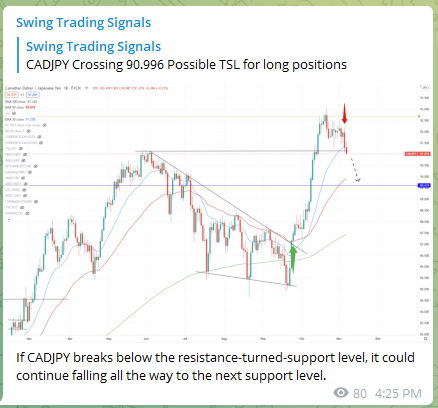
trading signals forex cadjpy 091121

Stock Market Highlights

Overall, earnings were good, hence the major stock indices were bullish, and many stocks were making new ATHs (all-time highs).

Some of the most exciting trades were Zillow (Z), which we bought on a false breakout, and got stopped out the next day. The next day, it plunged 25%, thus you can see why the stoploss is important in trading.

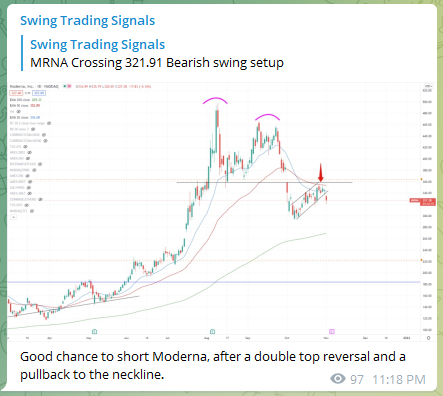
We also shorted Moderna (MRNA), which gave a windfall profit when it plunged 30% in a few days.

trading signals SP 500 091121

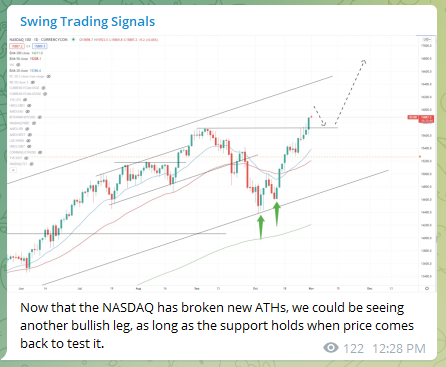
trading signals nasdaq 091121

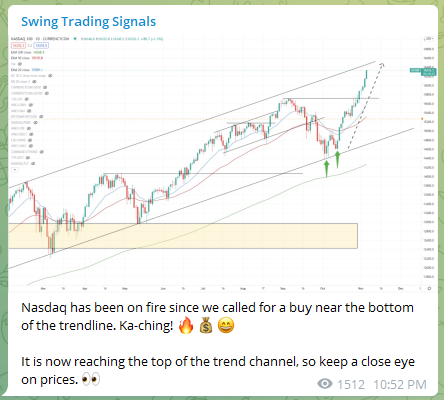
trading signals nasdaq 091121 2

trading signals nasdaq 091121 3

trading signals sony 091121

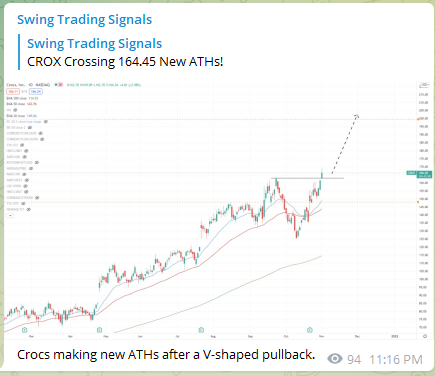
trading signals crocs CROX 091121

trading signals moderna MRNA 091121

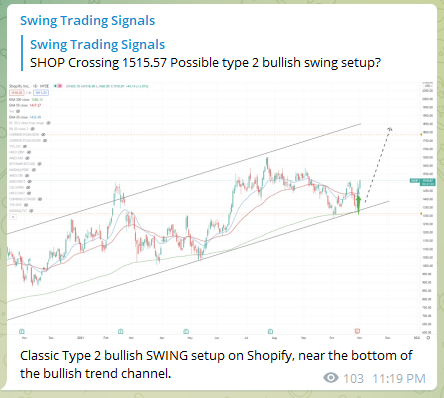
trading signals shopify SHOP 091121

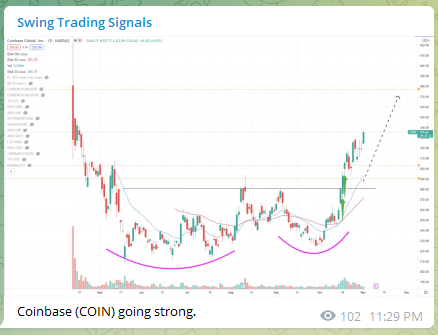
trading signals coinbase COIN 091121

trading signals zillow Z 091121

trading signals airbnb ABNB 091121

trading signals datadog DDOG 091121

Crypto Market Highlights

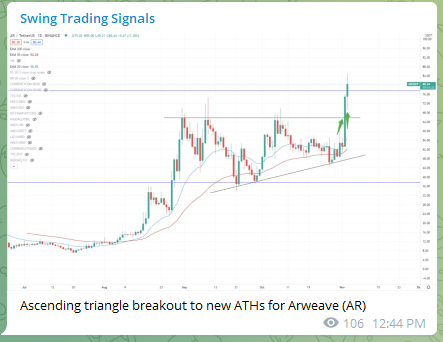
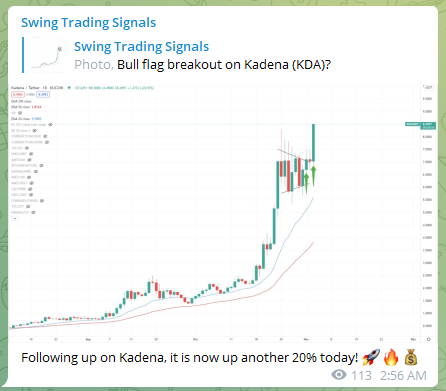
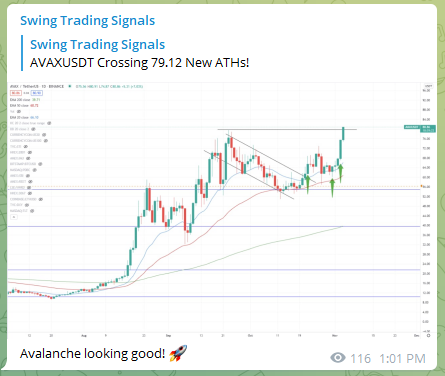
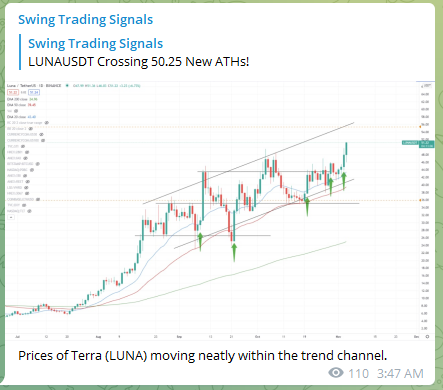
The crypto markets were quite a mixed bag, with BTC and ETH staying quite, while many Alt coins started breaking new highs.

Since the coins could break out at any time, we set up alerts for all of them, so we would not miss the action.

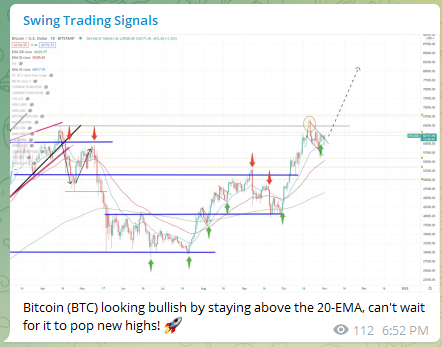
trading signals bitcoin BTC 091121

trading signals bitcoin BTC 091121 2

trading signals arweave AR 091121

trading signals solana SOL 091121

trading signals kadena KDA 091121

trading signals kadena KDA 091121 2

trading signals avalanche AVAX 091121

trading signals shib inu SHIB 091121

trading signals terra LUNA 091121

trading signals fantom FTM 091121

trading signals crypto.com CRO 091121

Click here to receive all these signals in real-time for only $67 a month! You will get several signals a day, and even taking just 1 trade the whole month can easily cover the fee, so what are you waiting for? emoji

Good luck, and may next week bring more excellent profits! ?

0 Comments/by Spencer Li
https://synapsetrading.com/wp-content/uploads/2021/11/US-NP-colorado-national-monument-scaled.jpg 1920 2560 Spencer Li https://synapsetrading.com/wp-content/uploads/2019/10/logo.jpg Spencer Li2021-11-09 20:36:112022-03-15 16:18:42Weekly Market Wrap: Moderna, Zillow, Crypto Alt Coins
Spencer Li

Market Wrap: Facebook, Metaverse, Shiba Inu Coin

Market Analysis
halloween trick or treat

halloween trick or treat

Happy Halloween everyone! ??

In this week’s market wrap, we will go through the forex market, stock market, and cryptocurrencies, to review major events and trading signals, and look for upcoming trading opportunities.

Click here to receive all these signals in real-time for only $67 a month! You will get several signals a day, and even taking just 1 trade the whole month can easily cover the fee, so what are you waiting for? emoji

Forex Market Highlights

The forex market was pretty uneventful, but we still got a few trading signals:

  • AUD/CHF: breakout from inverse head-and-shoulders pattern
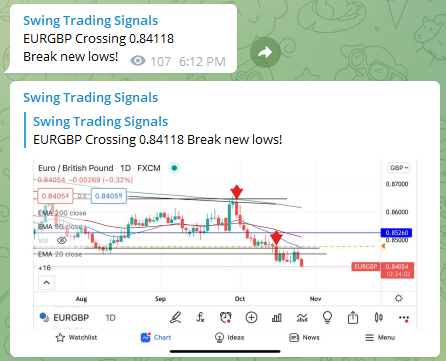
  • EUR/GBP: breaking new lows
  • XAG/USD (Silver): Potential short near top of range
  • AUDJPY: Uptrend resume after BO + PB
  • CADJPY: Breakout + PB
  • EURNZD: Break new lows
  • AUDUSD: Uptrend resumes after BO + PB
  • CHFJPY: Break new highs!
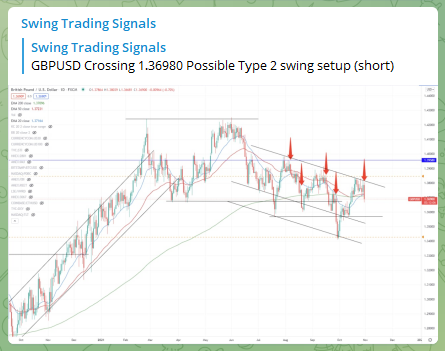
  • GBPUSD: Possible Type 2 swing setup (short)

trading signals eurgbp 311021

trading signals gbpusd 311021

Stock Market Highlights

There was a bit of a disjoint in the stock market, with a few huge stocks pushing the market up, while the bulk of the market is down.

This divergence in market breadth is not a good sign, but as long as the overall main indices are still bullish, I will continue to hold my positions in them, while taking strategic short/medium-term swing trades in individual stocks.

nasdaq divergence 311021

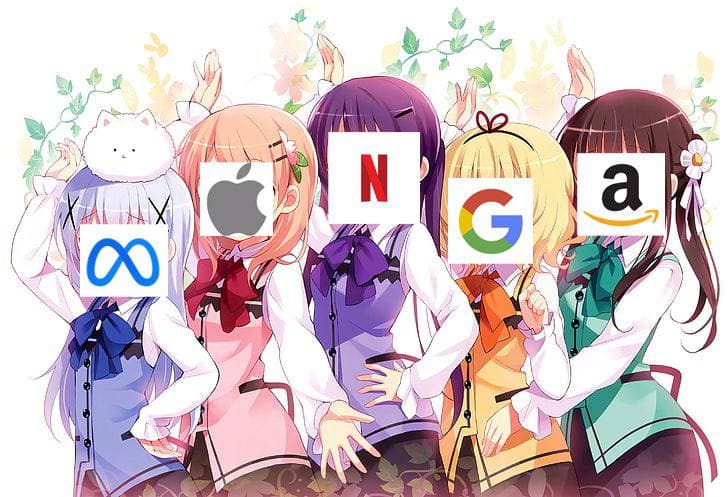
Facebook has decide to change their name to Meta to reflect their new direction of building towards the Metaverse, so FAANG is now MANGA. ?

This gave a good boost to Metaverse-related tokens in the crypto market, unfortunately Facebook stock still seems pretty languid.

faang manga


Here were the trade signals for last week:

  • S&P 500, Dow Jones, NASDAQ: break new highs!
  • Facebook: New swing low
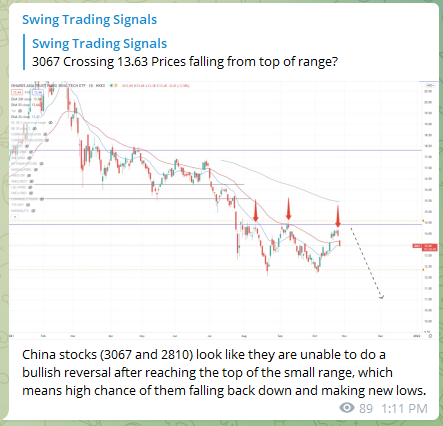
  • China stocks ETFs: Prices falling from top of range?
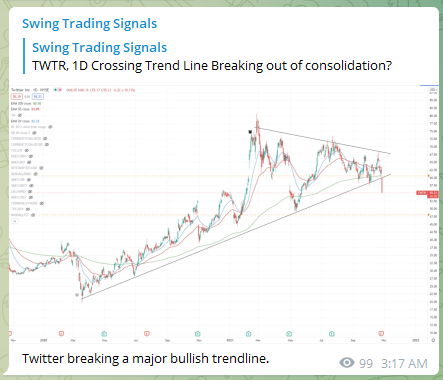
  • TWTR: Breaking out of consolidation?
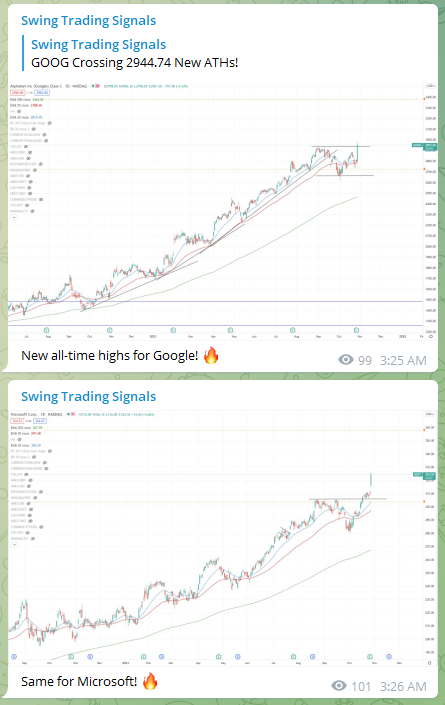
  • GOOG: New ATHs!
  • MRNA: Potential double top breakout
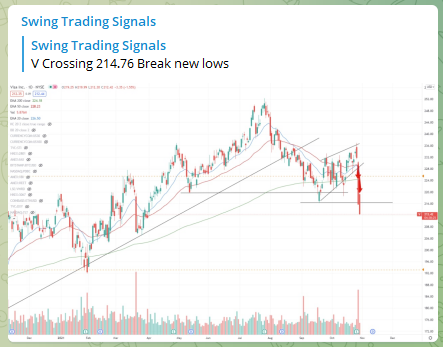
  • V: Break new lows
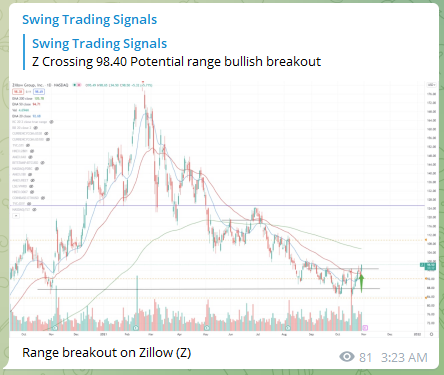
  • Z: Potential range bullish breakout (+5% profit the very next day!)
  • SBUX: Break H&S neckline (bearish)
  • F: PB buying opportunity?
  • TSLA: New ATHs!
  • UBER: Break prior swing low
  • NET: New ATHs! (up almost 50% since first buy call)

trading signals facebook FB 311021

trading signals china stocks 3067 311021

trading signals twitter TWTR 311021

trading signals google GOOG 311021

trading signals visa V 311021

trading signals zillow Z 311021

trading signals uber UBER 311021

Crypto Market Highlights

Earlier in the week, we saw multiple breakouts and sharp runs of Alt coins and DeFi tokens, which corrected after running into resistance, then later in the week we saw the same pattern for Metaverse and NFT-related gaming tokens.

If you ride the wave well and rotate accordingly, this actually provides insane returns of easily 50-200% in just one week. Not sure how long it can last, but enjoy it while it lasts.

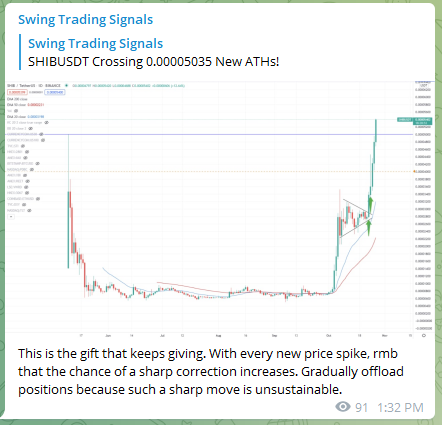
One of the highlights earlier in the week was Shiba Inu Coin (SHIB), which lay dormant for a long time before breaking out and shooting vertically upwards. ?

2021 10 27 23.01.33

Here were the trade signals for last week:

  • FTM: Multiple long positions, TP hit
  • ATOM: Falling wedge breakout
  • AVAX: Small bull flag breakout
  • EGLD: Triangle pattern breakout
  • AXS: Bullish pennant breakout
  • ALGO: Symmetrical triangle breakout
  • NEAR: Break previous swing high
  • SOL: New ATHs!
  • ETH: Testing resistance again
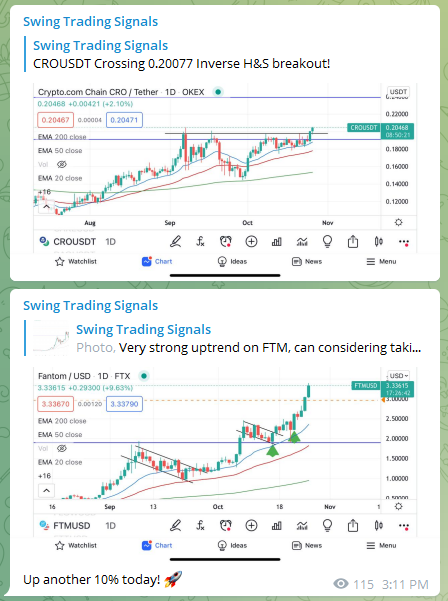
  • CRO: Inverse H&S breakout!
  • MATIC: Breakout!
  • SHIB: Pennant breakout, hit profit target!
  • LUNA: Breakout, almost ATHs
  • BTC: Pullback to EMA
  • FLOW: Break new ATLs!

trading signals fantom FTM 311021

trading signals algorand ALGO 311021

trading signals crypto.com CRO 311021

trading signals matic network MATIC 311021

trading signals shiba inu SHIB 311021

trading signals shiba inu SHIB 311021 2

trading signals 1INCH 311021 2

trading signals metaverse index MVI

Click here to receive all these signals in real-time for only $67 a month! You will get several signals a day, and even taking just 1 trade the whole month can easily cover the fee, so what are you waiting for? emoji

Good luck, and may next week bring more excellent profits! ?

0 Comments/by Spencer Li
https://synapsetrading.com/wp-content/uploads/2021/10/halloween-trick-or-treat.png 698 1144 Spencer Li https://synapsetrading.com/wp-content/uploads/2019/10/logo.jpg Spencer Li2021-11-01 04:54:282022-03-15 16:19:26Market Wrap: Facebook, Metaverse, Shiba Inu Coin
Spencer Li

What is a SPAC (Special Purpose Acquisition Company) and is it a Good Investment?

Stock Trading
What is a SPAC and is it a Good Investment

What Is a SPAC? How It Differs From an IPO, and the Risks for Investors

Last updated: 3 July 2026 · By Spencer Li, CFTe


A SPAC (special purpose acquisition company) is a shell company with no products and no operations that raises money from public investors through its own IPO, holds that cash in trust, and then uses it to acquire a private company and take it public. It is also called a “blank check company,” because when you buy in, you do not yet know which business it will buy. A SPAC has 24 months to find and complete a deal. If it does, the target company becomes publicly listed without running a traditional IPO. If it fails, the cash is returned and the SPAC is wound up. The trade-off is speed for certainty: a SPAC merger is faster and cheaper than a normal IPO (months instead of well over a year), but you are trusting the sponsors to pick a good company on your behalf, sight unseen. Personally, I am not a fan, for exactly that reason.

Here is what a SPAC actually is, how it differs from a regular IPO, and where the real risks sit for an investor.

What does “going public” or “IPO” mean?

Before you can understand a SPAC, you need the traditional route it is competing with.

Every company, big or small, needs one thing to survive: capital. Funds to run operations, pay staff, repay loans. When profits fall short or a company needs to grow faster than its cash allows, it raises money. For many private companies, going public is the most attractive way to do that.

When a private company goes public, it opens the door for new investors by selling them shares. Each investor pays a set sum and owns a tiny slice of the business. It is a win-win in theory: the company raises capital, and the investors get a claim on future profits (often paid out as dividends).

“Going public” has a formal name: an Initial Public Offering, or IPO (the first time a private company sells its shares to the public). That is the traditional path.

What is the downside of a traditional IPO?

Going public the old-fashioned way works, but the IPO process is slow and expensive.

If you need capital urgently (say, to pay off debt), filing for an IPO is an awkward fit. There is a long list of disclosures: your prospects, your finances, the whole shebang. Before you ever pitch a future investor, you have to work through investment banks, risk assessors, and underwriters. Multiple checkpoints, all of which you must clear before you can list.

And because there are so many checkpoints, the odds of rejection are higher, on top of the significant cost of becoming a fully compliant public company. If you are already cash-strapped, how do you bear that cost?

So there is real demand for a faster, cheaper way to go public. That is where the SPAC comes in.

What is a SPAC, exactly?

A SPAC (special purpose acquisition company) is a quicker alternative for a private company to go public.

It is formed by a group of investors, business owners, industry experts, and high-net-worth individuals (the “sponsors”). These people raise money so that a private company can become public without the full traditional IPO grind.

A SPAC is also called a “blank check company” or “shell company,” because it sells no product, provides no service, and has no commercial operations of its own. So how does it make money? It raises capital through its own IPO, then uses that money to acquire a private company.

The cash raised sits in a trust account (an interest-bearing account, so the money earns interest while it waits) until the SPAC finds a suitable company to acquire. That waiting period is capped: every SPAC must find a target and complete a deal within 24 months.

What if it cannot find a good company in time? Then the cash in trust is returned to investors, and the SPAC ceases to exist.

If the SPAC does complete an acquisition within the 24 months, its backers have two choices: redeem their SPAC shares and book a profit, or convert their SPAC shares into shares of the newly merged company.

Either way, a SPAC merger benefits both sides. The private firm goes public, gets listed, and gains access to liquidity. The SPAC’s investors become shareholders in the newly public business.

SPAC vs IPO: what is the actual difference?

Both routes end with a private company trading on a public exchange. They get there very differently. Here is the side-by-side.

Traditional IPOSPAC merger
How it worksCompany sells its own shares directly to the public for the first timeShell company raises cash via IPO, then acquires a private firm to take it public
Typical timeline12 to 18 months3 to 6 months
Cost / barrierHigh; smaller companies often cannot afford itLower; shares typically priced at a fixed $10
Disclosure / scrutinyHeavy: banks, underwriters, risk assessors, full disclosuresLighter; fewer checkpoints
Pricing powerCompany must set a price that is neither too high nor too lowTarget company can negotiate its own valuation with the sponsors
What you know going inYou see the business and its financials before you buyYou buy first; the target may not be chosen yet (a “blank check”)

The key line for an investor: in a normal IPO you are buying a known business; in a SPAC you are often buying the sponsors’ promise to find one.

What are the benefits of SPACs?

Several real advantages explain why companies use them.

Quick and streamlined. A traditional IPO usually takes 12 to 18 months. A SPAC merger takes only 3 to 6. If a company needs money urgently, that speed matters. And any company can go this route regardless of size or track record. Growing firms that struggle to access liquidity because they lack a proven history do not hit that wall with a SPAC.

Cheaper to go public. A traditional IPO is expensive, and small companies often cannot afford it, so going public stays a pipe dream for many. The SPAC route is cheaper. SPACs typically price their shares at a fixed $10, set in stone, which lets a large pool of public investors buy in and the company raise what it needs.

More pricing flexibility. SPACs are more liberal on price. The target company gets to negotiate and set its own valuation with the sponsors, which is not how a traditional IPO works. In a normal IPO the company must price neither too high nor too low, and runs the risk of leaving money on the table. SPAC valuation risk on that front is lower.

Access to operational expertise. SPAC sponsors are usually experienced operators who pick a target from an industry they know. So a small, growing firm that gets acquired inherits that expertise, and the sponsors’ track record lends the deal credibility and investor confidence.

What are the risks of investing in a SPAC?

SPACs are often pitched to companies as a low-risk way to list. For the investor on the other side, the risks are real.

A long waiting period. Sponsors have up to 24 months to find a target. Invest early and you may wait the full two years before you see any return at all. Worse, the SPAC might never find a suitable company in that window, which means two years you could have spent on other opportunities, gone.

No idea what you are actually buying. When the SPAC is formed, the sponsors do not yet know which company they will acquire. So as an investor, you cannot know your likely return either. And the 24-month clock cuts against you: sponsors under deadline pressure sometimes accept a poor deal rather than no deal, and a bad acquisition flows straight through to your returns.

Higher chance of a low-quality target. One reason companies choose SPACs is the lighter screening. Fewer checkpoints means a target can slip through that would not have cleared a full IPO’s scrutiny. If the acquired business is weak, the returns will be too.

Heavy reliance on the sponsors’ reputation. With no operating business and often no named target, you are largely betting on the sponsors’ image. High-profile names draw enthusiastic money, but beyond that reputation there is little hard documentation to lean on, which is a thin basis for a real investment.

Where the human edge comes in

A SPAC strips most of the normal homework off the table. There is no operating history to read, often no target to analyse, and a fixed $10 price that tells you nothing about value. What is left is judgment: can you assess the sponsors, the incentive to close a bad deal before the clock runs out, and whether “trust me, I will find something good” is worth your capital for two years?

That assessment is the part no screener or hype cycle can do for you. The pattern (a clean, cheap, fast way to go public) is the easy story to sell. Deciding when the structure quietly favours the sponsors over you is the Human Edge, and it is the one piece of this you should never outsource.

Personally, I am not a big fan of SPACs. I prefer to keep control over my own investments rather than hand someone a blank check and hope they pick well on my behalf. That is a personal preference, not a rule. Plenty of good companies have listed through SPACs. But “I cannot yet see what I am buying” is a hard starting point for me, and I would rather analyse a business I can actually see.

FAQ

What is a SPAC in simple terms?
A SPAC is a shell company with no products or operations that raises money from public investors, holds it in trust, and then uses it to buy a private company and take it public. Because you invest before the target is chosen, it is nicknamed a “blank check company.”

What is the difference between a SPAC and an IPO?
In a traditional IPO, a company sells its own shares to the public and you can see the business before you buy. In a SPAC, a shell company raises the cash first and acquires a private firm later, so you often invest before knowing the target. SPAC mergers are faster (3 to 6 months vs 12 to 18) and cheaper, but with lighter scrutiny.

How long does a SPAC have to find a company?
A SPAC has 24 months to find a target and complete an acquisition. If it fails, the cash held in trust is returned to investors and the SPAC is dissolved.

Why are SPACs risky for investors?
The main risks are: you may wait up to two years for any return, you do not know which company will be acquired when you invest, lighter screening can let a weak target through, and you are leaning heavily on the sponsors’ reputation rather than hard documentation.

Are SPACs a good investment?
That depends on the sponsors and the deal, and it is your call, not advice. Some strong companies have gone public through SPACs. Personally I prefer investments where I can analyse the business before I buy, rather than committing capital to a blank check.


Now that you can answer “what is a SPAC” and explain how it differs from an IPO, the more useful question is how you size and screen any speculative position like this. For the foundations, read the pillar: The Beginner’s Guide to Investing and Trading.

Want a system instead of a hype cycle? Grab the free 15-Minute Swing Trading Starter Kit. It is the exact routine I use to scan once a day and trade any market in 15 minutes, without betting on blank checks.


About the author. Spencer Li is the founder of Synapse Trading and a Certified Financial Technician (CFTe) with 15 years of trading across stocks, forex, crypto, commodities, and bonds. His trade log is public, 404 trades, losses left in. He teaches low-risk swing trading in 15 minutes a day, one system for any market.

Education, not financial advice. Synapse Trading is not licensed by MAS to advise on investment products. Trading carries risk of loss; past performance is not indicative of future results.


Related

The Beginner’s Guide to Investing and Trading (pillar) · What is an IPO and how does it work · How to value a stock · Fundamental vs technical analysis

0 Comments/by Spencer Li
https://synapsetrading.com/wp-content/uploads/2021/06/What-is-a-SPAC-and-is-it-a-Good-Investment.png 720 1280 Spencer Li https://synapsetrading.com/wp-content/uploads/2019/10/logo.jpg Spencer Li2021-06-25 02:26:422026-07-06 03:04:33What is a SPAC (Special Purpose Acquisition Company) and is it a Good Investment?
Spencer Li

Tesla Shares Spike 21% on Earnings Surprise

Market Analysis
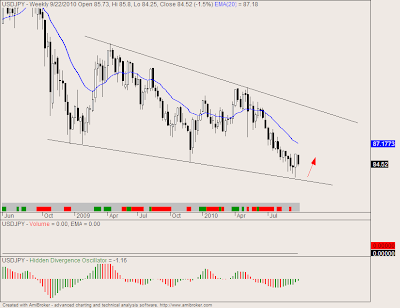
usdjpy 092210

Tesla recently posted a cash balance increase to $5.3 billion and reported a profit of $1.86 per share, shattering analyst expectations for a loss of 42 cents per share.

Elon Musk promised a 2020 rollout of a cheaper SUV and more self-driving technology to stay ahead of larger rivals rushing into the premium electric vehicle market he created.


Tesla Shares Spike 21% on Earnings Surprise


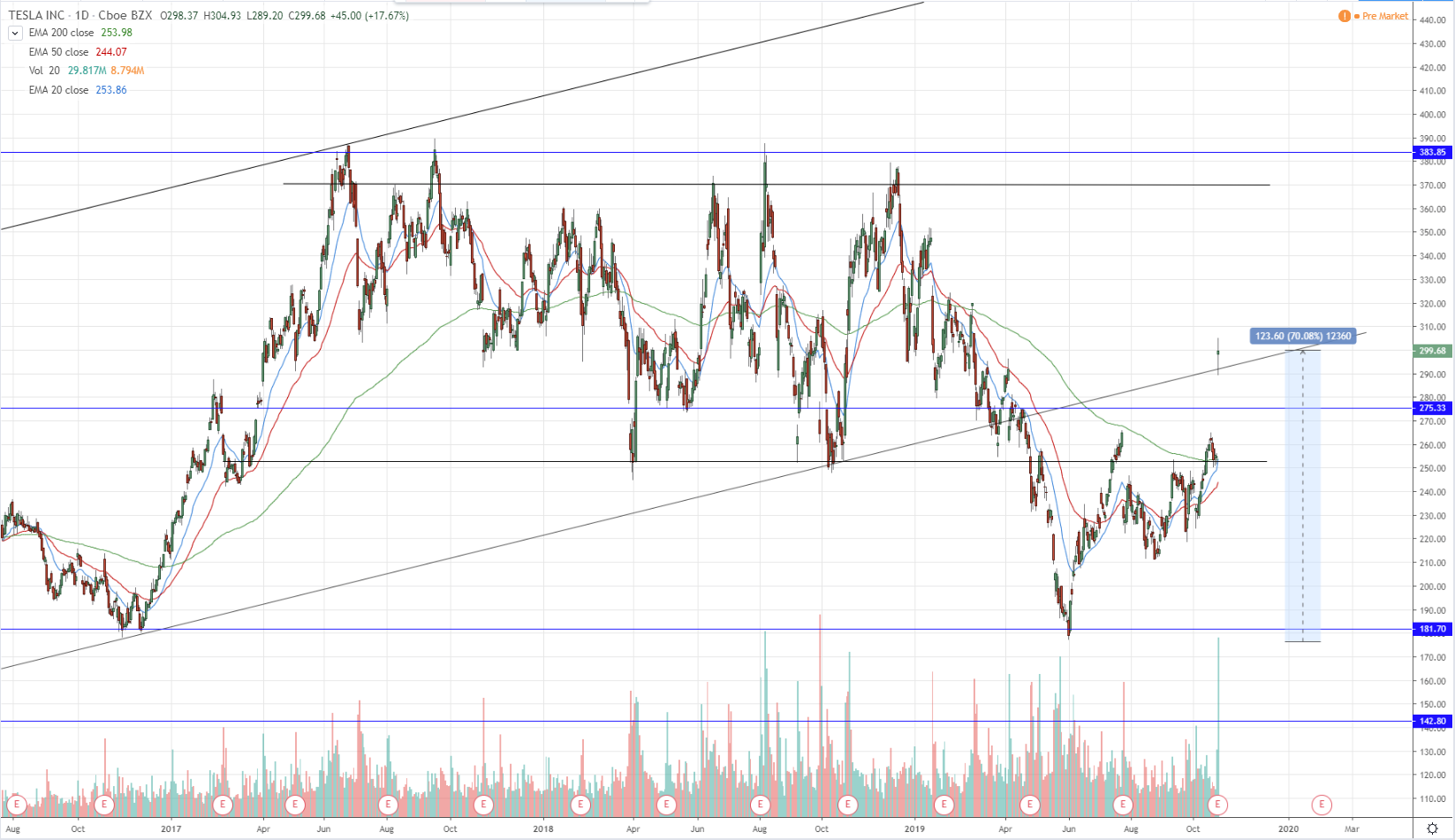
Looking at the chart of Tesla, we can see that it traded between the range of $250-$390 for almost 2 years (mid 2017 to mid 2019), before breaking to test a major support level at $180.

From there, it has made a strong recovery, with a whooping 70% gain from its June 2019 bottom.

Now, prices are close to $300, and it looks poised to test the highs of $390 again.

I will continue to hold and look for opportunities to accumulate more again.

0 Comments/by Spencer Li
https://synapsetrading.com/wp-content/uploads/2010/09/usdjpy-092210.png 308 400 Spencer Li https://synapsetrading.com/wp-content/uploads/2019/10/logo.jpg Spencer Li2019-10-25 18:59:352022-03-07 16:11:18Tesla Shares Spike 21% on Earnings Surprise
Spencer Li

3 Crucial Lessons From Jesse Livermore – The Greatest Stock Trader of All Time

Trading Tips
jesse livermore

Jesse Livermore is known to be the most prolific stock trader. Several books have been written about him and his trading track record is legendary. His profits were so great that he was reported to have owned mansions in various places around the world, each fully staffed, complete with limousines and steel-hulled yacht for his holidays.

Some of you might have read that Livermore was worth $100 million after shorting the 1929 great market crash.

Jesse Livermore

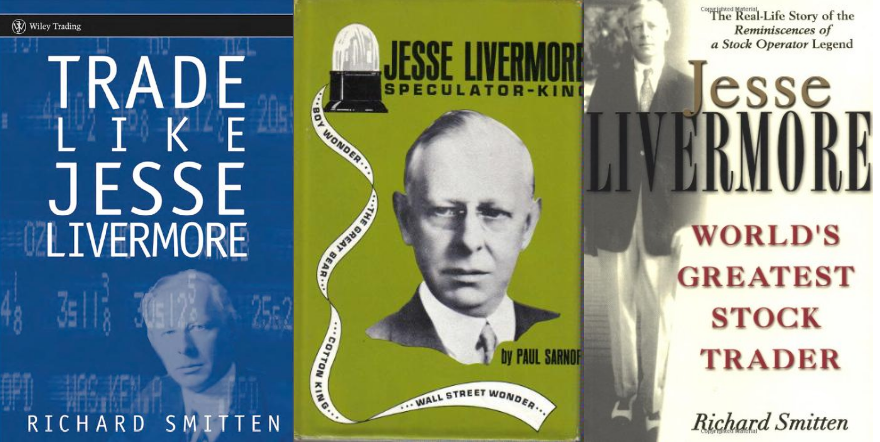
Above: Some of the books about Jesse Livermore, available in major bookstores.

What Guidelines Did Jesse Livermore Follow As A Trader?

Among the many quips he had about trading and investing, I’ve picked out some of the key ones that could make or break your trading account.

While many complain about the difficulties in trading forex, stocks, or commodities, there is a good minority that makes consistent profits in the markets.

What sets Jesse Livermore apart from his peers?


  1. Buy rising stocks and sell falling stocks.

The above seems obvious, but many people fail to adhere to this rule. Many people like to ‘pick tops’ and ‘pick bottoms’. Now, professional traders do occasionally try to pick tops and bottoms, but they do so with very strict risk management, and always have a contingency plan for when the trade doesn’t work out.

Beginners often makes the mistake of trying to trade against the trend. While this can be profitable for some, talk to anyone in the trading industry and they will tell you that trend-following is the major money-making strategy that every trader uses. It’s simple, easy to add positions on, and it’s stress free. The problems come when beginners make a buck from trading with the trend, and start to explore ‘new ways’ to trade and invest.


2. Keep trades that show a profit, end trades that show a loss.

Jesse Livermore is famous for his humongous profits, but behind every profitable trader is the admirable ability to deal with a string of losses. It’s one thing to know that you need to cut losses, but it’s another to actually cut your losses when you are wrong. George Soros famously quips that it is not how many times you win or lose, it’s how much you make when you win, and how much you lose when you are wrong.

Cutting losses is a psychologically hard thing to do in modern society. We’re ingrained to be always correct, and never admit that you messed up, because it reflects badly on you as a person. However, with investing, no one is marking you for the number of losses; the profit that you make is the final report card that matters, and that’s where we want to be focusing on.


3. Never average losses by buying more when your stock has fallen.

Too many people refuse to be wrong on their investments or trades.

I have heard of people say this statement: “Even if the stock drops a lot, I’ll just keep it because I’m buying for ownership and dividend cashflow, not just for capital gains.” Sure, but what happens if the stock you hold drops by 70%? 80%? You’ll buy more?

Buying more when the stock has fallen is a sure-way to get your trading account to zero. It’s taking more risk when the odds are against you.


Think About This: Which of These 3 Guidelines Have Brought You Losses in the Past?

Many traders soon realize early in their career, that their trading accounts could have been profitable if not for silly mistakes. Avoiding these silly mistakes requires experience, maturity, the correct knowledge, and of course, proper mentoring.

I was lucky to be mentored by veteran traders early on in my trading career. Their advice, based upon thousands of hours of market experience, contributed greatly to who I am today, and I never fail to mention, during trading seminars or public events, that by tapping on their experience, I was able to quickly attain a level of success that kept me profitable.

If you’re currently struggling as a trader, ask yourself this question: “Which mistakes have I been making?”

Acknowledging trading mistakes is a continuous process of learning and growing.

0 Comments/by Spencer Li
https://synapsetrading.com/wp-content/uploads/2017/04/jesse-livermore.jpg 820 1024 Spencer Li https://synapsetrading.com/wp-content/uploads/2019/10/logo.jpg Spencer Li2017-04-20 07:18:472022-03-07 11:44:113 Crucial Lessons From Jesse Livermore – The Greatest Stock Trader of All Time

Free Trading Guides

Free Trading Guides

Blog Categories

  • Beginner's Guide
  • Blockchain & Crypto
  • Book Summaries
  • Economics & News Trading
  • Investing & Portfolio Management
  • Living Your Best Life
  • Market Analysis
  • Markets & Products
  • News & Events
  • Promotions
  • Risk & Money Management
  • Stock Trading
  • Technical Analysis & Price Action
  • Testimonials
  • Tools & Resources
  • Trading Psychology
  • Trading Strategies
  • Trading Tips
  • Travel & Lifestyle

Free Trading Guides

Free Trading Guides

Contact Us

Synapse Trading Pte Ltd
Registration No. 201316168H

Whatsapp: +65-8897-1204
Telegram: @iamrecneps
Email: info@synapsetrading.com

Links

Disclaimer
Privacy policy
Terms & Conditions
Contact us
Partnerships

© 2012-2024 Synapse Trading | All rights reserved | - powered by Enfold WordPress Theme
  • Link to Facebook
  • Link to X
  • Link to Instagram
  • Link to Youtube
  • Link to LinkedIn
  • Link to Mail
Scroll to top Scroll to top Scroll to top