• Link to Facebook
  • Link to X
  • Link to Instagram
  • Link to Youtube
  • Link to LinkedIn
  • Link to Mail
Synapse Trading
  • Home
  • About
    • My Background
    • My Trading Journey
    • My Travel Log
    • Media & Interviews
  • Mentoring
    • Trading Mastery Program
    • Results & Testimonials
  • Signals
    • Telegram (Free to join!)
    • Daily Trading Signals
    • Daily Trading Signals (Results)
  • Resources
    • Free Trading Guides
    • Tools & Resources
    • Blog & Infographics
  • Contact
    • Contact Us
    • Partnership Opportunities
  • Click to open the search input field Click to open the search input field Search
  • Menu Menu

Tag Archive for: stock trading

Spencer Li

How to Trade the News (Especially When There is Too Much Market News)

Trading Tips
how to deal with too much market news

Quite often, when we dive into the financial market, we find that there is simply too much market news. When we try to trade the news, we have no idea what is important or trivial, because we are so overloaded with information. This makes news trading quite an impossible task.

To make matters worse, we often get conflicting views from experts, with some being bullish all the time, while others are bearish all the time. And because some of them have pretty convincing arguments, we easily get swayed and our own opinions tend to fluctuate from extremely bullish to extremely bearish.

So what is the way around this?

The first thing you need to know as a trade relying on market news is to be able to differentiate between FACTS and OPINIONS.

Facts are like raw data, statistics, research from credible sources, economic data, etc. These are usually unbiased and come without opinions, and provide the basis for you to form your opinion.

Opinions, on the other hand, are views formed based on the analysis of facts/data, so there is inherent bias, and the conclusions drawn from the data may or may not be correct. Hence as a trader or investor, we need to zoom in on a handful of credible sources of good analysis.

The second thing you need to know when doing news trading is to “trade what you SEE, not what you THINK”.

Opinions often give you preconceived notions or views on the market, for example you might think that the market is bullish, and hence it should go up. However, in reality, the market may not move according to your opinion.

The only reality in the market is what we see on the charts, which is the price action of the market.

No matter how bullish you think the market is, the truth is that you will not be able to make money unless the price actually moves up. So when it comes to trading, your strategies, setups and analysis of the chart should take precedence over your opinions.

And that will help you filter out all the unnecessary noise in the market to zoom in on the best trading opportunities.

Enjoy the video, and remember to “like” and “subscribe”!

0 Comments/by Spencer Li
https://synapsetrading.com/wp-content/uploads/2020/04/how-to-deal-with-too-much-market-news.png 522 1014 Spencer Li https://synapsetrading.com/wp-content/uploads/2019/10/logo.jpg Spencer Li2020-04-30 14:54:072022-12-21 03:03:51How to Trade the News (Especially When There is Too Much Market News)
Spencer Li

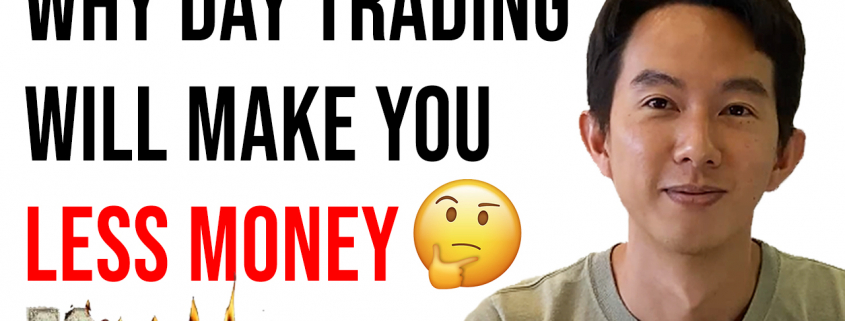
Why Day Trading Will Make You Less Money (And Bring You More Stress)

Trading Psychology
why day trading will make you less money

Most people think that in trading, the more trades you make, the money more you will end up making.

But is this really true?

Traders who adopt this philosophy will constantly be chasing the next big shiny object, reading every piece of news online, and hunting for new opportunities every day.

The danger with this approach is that you stretch yourself too thin, which leads to decision fatigue. Even when the low-hanging fruit and easy opportunities are right in front of you, you might be too busy out hunting to see and seize those trading opportunities.

The allure of excessive trading attracts new traders, who want to make as many trades as possible, and get rich quickly in a short period of time.

Thus they are attracted to day-trading, even though intraday trading is only suitable for the most experienced and advanced traders. Most new traders would be much better of doing swing trading or position trading, where they can hone their skills in a less fast-paced and risky environment.

The advantages of trading less are numerous:
– allows you to focus on the best trades and best strategies
– helps you avoid bad trades and excessive trading
– makes trading less stressful
– do not need to constantly monitor the market
– less transactions means less transaction costs

Hence, for those traders who are making too many trades, it would be good to check your past trading records, and see if trading less might actually improve your trading results.

Enjoy the video, and remember to “like” and “subscribe”!


complete guide to investing and trading psychology cover

If you would like to learn more about trading psychology, also check out: “The Complete Guide to Investing & Trading Psychology”

0 Comments/by Spencer Li
https://synapsetrading.com/wp-content/uploads/2020/03/why-day-trading-will-make-you-less-money.jpg 720 1280 Spencer Li https://synapsetrading.com/wp-content/uploads/2019/10/logo.jpg Spencer Li2020-03-04 19:36:222022-12-21 03:10:26Why Day Trading Will Make You Less Money (And Bring You More Stress)
Spencer Li

3 Crucial Lessons From Jesse Livermore – The Greatest Stock Trader of All Time

Trading Tips
jesse livermore

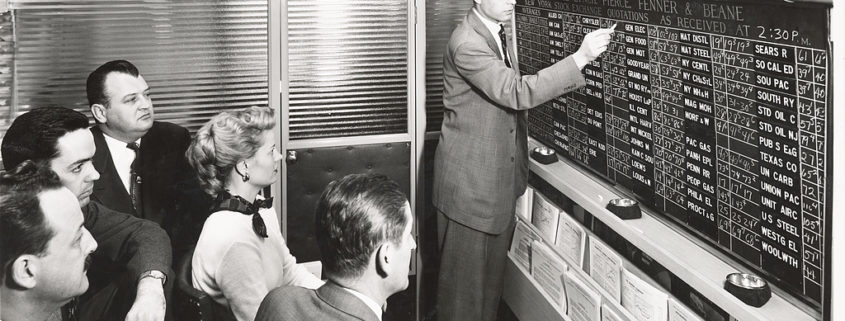
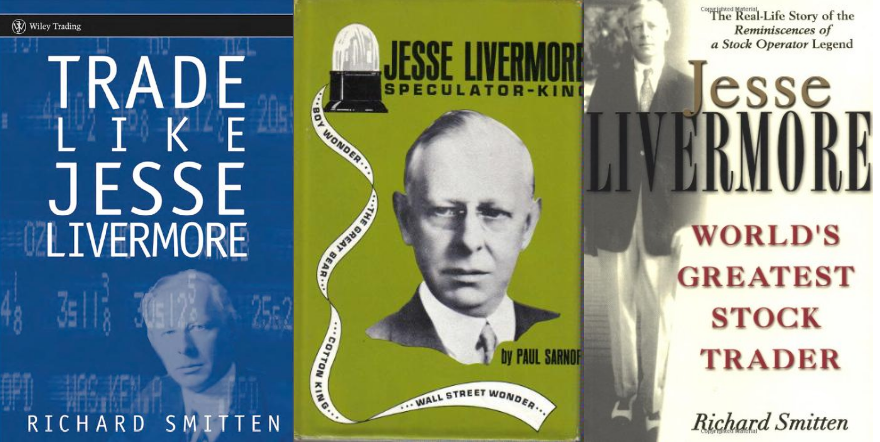
Jesse Livermore is known to be the most prolific stock trader. Several books have been written about him and his trading track record is legendary. His profits were so great that he was reported to have owned mansions in various places around the world, each fully staffed, complete with limousines and steel-hulled yacht for his holidays.

Some of you might have read that Livermore was worth $100 million after shorting the 1929 great market crash.

Jesse Livermore

Above: Some of the books about Jesse Livermore, available in major bookstores.

What Guidelines Did Jesse Livermore Follow As A Trader?

Among the many quips he had about trading and investing, I’ve picked out some of the key ones that could make or break your trading account.

While many complain about the difficulties in trading forex, stocks, or commodities, there is a good minority that makes consistent profits in the markets.

What sets Jesse Livermore apart from his peers?


  1. Buy rising stocks and sell falling stocks.

The above seems obvious, but many people fail to adhere to this rule. Many people like to ‘pick tops’ and ‘pick bottoms’. Now, professional traders do occasionally try to pick tops and bottoms, but they do so with very strict risk management, and always have a contingency plan for when the trade doesn’t work out.

Beginners often makes the mistake of trying to trade against the trend. While this can be profitable for some, talk to anyone in the trading industry and they will tell you that trend-following is the major money-making strategy that every trader uses. It’s simple, easy to add positions on, and it’s stress free. The problems come when beginners make a buck from trading with the trend, and start to explore ‘new ways’ to trade and invest.


2. Keep trades that show a profit, end trades that show a loss.

Jesse Livermore is famous for his humongous profits, but behind every profitable trader is the admirable ability to deal with a string of losses. It’s one thing to know that you need to cut losses, but it’s another to actually cut your losses when you are wrong. George Soros famously quips that it is not how many times you win or lose, it’s how much you make when you win, and how much you lose when you are wrong.

Cutting losses is a psychologically hard thing to do in modern society. We’re ingrained to be always correct, and never admit that you messed up, because it reflects badly on you as a person. However, with investing, no one is marking you for the number of losses; the profit that you make is the final report card that matters, and that’s where we want to be focusing on.


3. Never average losses by buying more when your stock has fallen.

Too many people refuse to be wrong on their investments or trades.

I have heard of people say this statement: “Even if the stock drops a lot, I’ll just keep it because I’m buying for ownership and dividend cashflow, not just for capital gains.” Sure, but what happens if the stock you hold drops by 70%? 80%? You’ll buy more?

Buying more when the stock has fallen is a sure-way to get your trading account to zero. It’s taking more risk when the odds are against you.


Think About This: Which of These 3 Guidelines Have Brought You Losses in the Past?

Many traders soon realize early in their career, that their trading accounts could have been profitable if not for silly mistakes. Avoiding these silly mistakes requires experience, maturity, the correct knowledge, and of course, proper mentoring.

I was lucky to be mentored by veteran traders early on in my trading career. Their advice, based upon thousands of hours of market experience, contributed greatly to who I am today, and I never fail to mention, during trading seminars or public events, that by tapping on their experience, I was able to quickly attain a level of success that kept me profitable.

If you’re currently struggling as a trader, ask yourself this question: “Which mistakes have I been making?”

Acknowledging trading mistakes is a continuous process of learning and growing.

0 Comments/by Spencer Li
https://synapsetrading.com/wp-content/uploads/2017/04/jesse-livermore.jpg 820 1024 Spencer Li https://synapsetrading.com/wp-content/uploads/2019/10/logo.jpg Spencer Li2017-04-20 07:18:472022-03-07 11:44:113 Crucial Lessons From Jesse Livermore – The Greatest Stock Trader of All Time
Spencer Li

Why Are More & More Singaporeans Switching from Stocks to Forex?

Trading Tips
asd 3

Forex vs Stocks in Singapore: Why Some Traders Switch (and When You Shouldn’t)

Last updated: 3 July 2026 · By Spencer Li, CFTe


Some Singapore traders switch from stocks to forex because forex lets you start with a few hundred dollars, charges no commission, trades 24 hours a day, and gives you enough cheap repetitions to actually learn. Those four things matter most when you are a beginner who needs many small trades to build skill. Forex is not better than stocks in some absolute sense. What changes the outcome is your circle of competence (the set of markets and methods you genuinely understand), not the market itself. So the honest answer is: forex suits the new trader who wants low-cost, high-frequency practice and a schedule that fits around a day job. Stocks suit the trader who wants ownership, dividends, and slower, less leveraged exposure. Below I lay out the real cost differences in a table, the case for forex as a training ground, and the three risk rules I would not start without.

Here is the full breakdown, with the trade-offs left in.

Why are Singapore traders moving from stocks to forex?

The shift started with a real problem on the local exchange. For a stretch in the mid-2010s, the Singapore Exchange (SGX) saw turnover fall and well-known names like Tiger Airways, OSIM, and Eu Yan Sang leave the board. One stockbroker told The Straits Times back then that “stockbroking is looking like a sunset profession now.” New listings dried up too. Across early 2016 the monthly IPO count ran like this:

Month (2016)New IPOs on SGX
April1
May1
June1
July6
August2
November1

(Source: ChannelNewsAsia, 2016. These figures are historical context, not current SGX data.)

With thin volume and a Straits Times Index that drifted sideways, intraday trading on local stocks became hard for the small trader. You needed a large amount of capital to move size in and out, and the liquidity was not always there to do it cleanly.

Forex offered the opposite profile. Deep liquidity, tiny minimum trade sizes, and no commission. For a beginner with a small account, that combination is the draw. The local-stock backdrop has shifted since 2016, but the structural reasons a new trader reaches for forex have not.

Is forex cheaper to trade than stocks?

For a beginner, usually yes, and the gap is mostly about commission and minimum size. Here is the side-by-side I would have wanted when I started.

ForexStocks (typical retail)
Minimum to startFrom around $500Higher; meaningful share lots cost more
Smallest trade size0.01 lots (about $0.10 per pip)One lot or board lot; larger dollar commitment
CommissionOften zero (cost is in the spread)Brokerage commission per trade
Charts and dataUsually freeOften free, sometimes paid for depth
Hours24 hours, 5 days a weekExchange hours only
Economic-event timingPublished in advance on a forex calendarEarnings and news can surprise mid-session

Two lines in that table do the heavy lifting for a new trader. First, zero commission means each trade costs you less in “tuition fees” paid to the market while you are still learning. Second, the 0.01 lot size means you can risk a few dollars per trade and still get real skin in the game. That is the whole point. You want to make many decisions cheaply.

Do note that, “no commission” does not mean “no cost.” In forex the cost lives in the spread (the gap between the buy and sell price). It is smaller for a small trader, but it is still there. Anyone who tells you forex is free is skipping a line.

Is forex harder to trade than stocks?

Not inherently. Some people insist the forex market is tougher than the stock market. I beg to differ. It is your circle of competence that determines your success, not the raw characteristics of the market. If you understand a market and have an edge in it, that is the market you should trade. The difficulty is in you, not in the ticker.

That reframing matters, because it stops you blaming the instrument. A trader who loses in forex and switches to stocks expecting the market to save him usually loses in stocks too. The market was never the problem.

Forex as a training ground: trade small, trade often

The strongest case for forex as a starting point is that it lets you accumulate experience cheaply. Trading is a numbers game. With a properly developed edge, your account carries a positive expectation, and profit becomes the norm over a long enough run of trades. You cannot reach that long run without taking the trades, and forex lets you take them in small size.

A few things I believe here, hard-won:

Start live, not demo. There is an endless debate about live accounts versus demo accounts. My solution is simple. Start with a live account from the beginning, in tiny size. A demo trade and a live trade feel like different sports. Risking real money, even a few dollars, puts you into the reality of the game, and you learn to sit with the risk that is built into trading. Sooner or later you get used to it. You never get used to it on a demo.

Expect to make silly mistakes early, and budget for them. Every trader with real skin in the game has done at least one of these:
– Traded the wrong lot size (1.00 instead of 0.10, so the position is ten times too big).
– Gone short when you meant to go long.
– Placed a trade only to realise the market was closed.

These sound dumb written down. They are completely normal, and small size is exactly why you want to make them with ten cents on the line, not your rent.

Trade around your life, not against it. The 24-hour market means you choose when to trade. If your day job is punishing, you can trade at night, or over lunch, on a schedule that fits your life instead of fighting it. I like what Tom Sosnoff said about learning to trade: “Trade small, trade often.” Forex is built for exactly that.

The 3 steps to manage forex trading risk

Cheap practice without risk control just lets you lose faster. Three rules I would not start without:

  1. Think in percentages, not dollars. Risk a fixed small percentage per trade. Percentages take the emotion out of the dollar amount and keep one bad trade from doing real damage.
  2. Find an edge. Only a genuine edge gives you a profit over the long run. Repetition without an edge is just paying tuition forever.
  3. Stick to one style. Do not try to be everything at the start. Too many new forex traders try to scalp, swing, and trend-follow all at once. Become profitable in one style first. Diversifying across styles can come later, once you have something that works.

That last one is where most beginners go wrong. The market rewards depth in one approach long before it rewards breadth across five.

Where the human edge comes in

A broker can hand you a $500 account and a 24-hour market. A platform can flag the setup and place the order in a second. What neither will do is stop you from sizing the trade too big after three wins, or talk you out of trading the one market you do not actually understand. Cheap repetitions only compound if the judgment behind them is sound. That judgment, knowing your circle of competence and staying inside it, is the first of the Five Edges no tool can trade for you.

FAQ

Is forex better than stocks for a beginner in Singapore?
For a beginner who wants cheap, frequent practice, forex has real advantages: you can start from around $500, trade 0.01 lots, pay no commission, and trade 24 hours a day around a job. Stocks suit traders who want ownership, dividends, and slower exposure. Neither is universally better; it depends on your goals and which market you actually understand.

How much money do I need to start trading forex in Singapore?
You can start with as little as around $500. Most brokers allow 0.01 lot sizes, which works out to roughly $0.10 per pip, so you can risk a few dollars per trade while you learn.

Does forex trading have commissions?
Many forex brokers charge no commission. The cost is built into the spread (the gap between the buy and sell price) instead. So it is cheaper than commission-based stock trading for a small account, but it is not free.

Should I start with a demo or a live account?
Start live, in very small size, from the beginning. A live trade and a demo trade feel completely different. Risking real money, even a few dollars, teaches you to handle the risk that is built into trading, which a demo account cannot.

How do I manage the risk in forex trading?
Three steps: think in percentages rather than dollars, trade only when you have a genuine edge, and stick to one trading style until you are profitable before adding others.


So, forex or stocks? If you are starting out and want cheap repetitions to build skill, forex makes a strong training ground. If you want ownership and a slower pace, stocks have their place. Either way, the deciding factor is your circle of competence, not the market. Which one are you leaning toward, and why? Let me know in the comments.

And if you want the wider picture of how to choose and trade any market with one routine, read the pillar: The Beginner’s Guide to Trading.

Want a routine that fits a day job? Grab the free 15-Minute Swing Trading Starter Kit. It is the exact process I use to scan once a day and trade any market in 15 minutes.


About the author. Spencer Li is the founder of Synapse Trading and a Certified Financial Technician (CFTe) with 15 years of trading across stocks, forex, crypto, commodities, and bonds. His trade log is public, 404 trades, losses left in. He teaches low-risk swing trading in 15 minutes a day, one system for any market.

Education, not financial advice. Synapse Trading is not licensed by MAS to advise on investment products. Trading carries risk of loss; past performance is not indicative of future results.


Related

The Beginner’s Guide to Trading (pillar) · How to start forex trading in Singapore · What is your circle of competence? · Demo vs live trading account

0 Comments/by Spencer Li
https://synapsetrading.com/wp-content/uploads/2016/12/asd-3.png 1080 1080 Spencer Li https://synapsetrading.com/wp-content/uploads/2019/10/logo.jpg Spencer Li2017-01-26 01:04:162026-07-06 03:23:43Why Are More & More Singaporeans Switching from Stocks to Forex?

Free Trading Guides

Free Trading Guides

Blog Categories

  • Beginner's Guide
  • Blockchain & Crypto
  • Book Summaries
  • Economics & News Trading
  • Investing & Portfolio Management
  • Living Your Best Life
  • Market Analysis
  • Markets & Products
  • News & Events
  • Promotions
  • Risk & Money Management
  • Stock Trading
  • Technical Analysis & Price Action
  • Testimonials
  • Tools & Resources
  • Trading Psychology
  • Trading Strategies
  • Trading Tips
  • Travel & Lifestyle

Free Trading Guides

Free Trading Guides

Contact Us

Synapse Trading Pte Ltd
Registration No. 201316168H

Whatsapp: +65-8897-1204
Telegram: @iamrecneps
Email: info@synapsetrading.com

Links

Disclaimer
Privacy policy
Terms & Conditions
Contact us
Partnerships

© 2012-2024 Synapse Trading | All rights reserved | - powered by Enfold WordPress Theme
  • Link to Facebook
  • Link to X
  • Link to Instagram
  • Link to Youtube
  • Link to LinkedIn
  • Link to Mail
Scroll to top Scroll to top Scroll to top