• Link to Facebook
  • Link to X
  • Link to Instagram
  • Link to Youtube
  • Link to LinkedIn
  • Link to Mail
Synapse Trading
  • Home
  • About
    • My Background
    • My Trading Journey
    • My Travel Log
    • Media & Interviews
  • Mentoring
    • Trading Mastery Program
    • Results & Testimonials
  • Signals
    • Telegram (Free to join!)
    • Daily Trading Signals
    • Daily Trading Signals (Results)
  • Resources
    • Free Trading Guides
    • Tools & Resources
    • Blog & Infographics
  • Contact
    • Contact Us
    • Partnership Opportunities
  • Click to open the search input field Click to open the search input field Search
  • Menu Menu
Spencer Li

Weekly Market Wrap: Rates Remain High But Stocks Remain Bullish?

Market Analysis
blog post thumbnail 200224

blog post thumbnail 200224

Subscribe for real-time alerts and weekly videos:
👉🏻 https://synapsetrading.com/daily-trading-signals


Market Recap & Upcoming Week

Last week’s economic updates presented a mixed picture, with January’s CPI and PPI data coming in higher than expected, causing concern among investors.

Despite this, the overall trend still points towards a favorable direction for inflation, with headline CPI at 3.1% year-over-year, slightly above forecasts but lower than the previous month.

Core inflation remained sticky at 3.9%. On the other hand, PPI inflation showed a year-over-year increase, suggesting that while producer prices are above expectations, they’ve decreased from the highs of 2022.

The data suggests inflation is moderating, albeit with complexities such as the significant role of shelter and rent in CPI figures.

Amid these inflation trends, the market’s expectations for Federal Reserve rate cuts have been adjusted, now anticipating fewer cuts starting possibly in June.

This adjustment aligns more closely with the Fed’s cautious approach, waiting for clearer signs of sustained inflation reduction.

Despite initial market reactions to the inflation reports, there’s a sense of stability as the focus shifts to the upcoming PCE inflation data, the Fed’s preferred inflation metric.

This data, along with the ongoing strength in the labor market and consumer spending, albeit with some signs of slowing, will be crucial in shaping the Fed’s policy direction in the coming months.

This week promises significant developments for investors and policy watchers, starting with a pause on Monday due to the Presidents Day holiday.

Post-holiday, the financial landscape buzzes with anticipation for a series of earnings reports from major companies such as Nvidia, Walmart, Home Depot, and Palo Alto Networks, alongside Intel’s inaugural conference highlighting its foundry business expansions.

These events are poised to offer fresh insights into corporate health and industry trends, potentially influencing market directions.

Adding to the week’s importance, the Federal Reserve is set to release the minutes from its January policy meeting, a move eagerly awaited for clues on future interest rate decisions.

This disclosure, along with speeches from Fed officials, will shed light on the central bank’s current economic assessments and monetary policy outlook.

Furthermore, the government’s discussions on new student loan repayment schemes are on the agenda, potentially impacting broader economic perspectives and consumer sentiment.


Daily Trading Signals (Highlights)

Trading Signals COIN 100224

Coinbase (COIN) – After correcting almost 40% in the last few weeks, prices have reach a major support level.

Seems like a good low risk entry opportunity with a stoploss around $110, and first target around the previous high.


Trading Signals COIN 170224

Coinbase (COIN) – Wow this is one of our best trades this year, in just 7 trading days, we made 50% returns!

Congrats to everyone who took this trade with us! 👏🔥💰


Trading Signals ETHUSD 140224

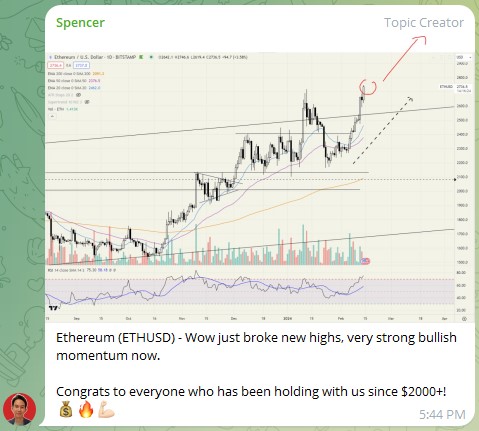
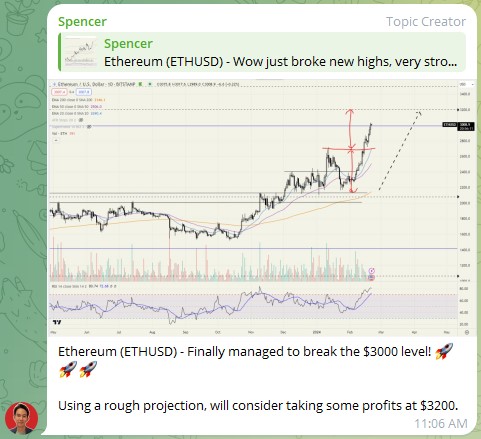
Ethereum (ETHUSD) – Wow just broke new highs, very strong bullish momentum now.

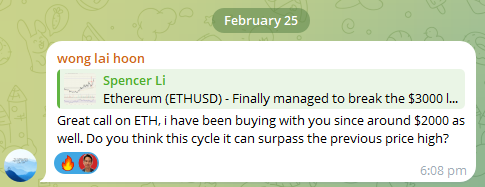
Congrats to everyone who has been holding with us since $2000+! 💰🔥👍


Trading Signals ETHUSD2 5 140224

Trading Signals ETHUSD3 140224


Join our community for real-time alerts and weekly videos:
👉🏻 https://synapsetrading.com/daily-trading-signals

 

0 Comments/by Spencer Li
https://synapsetrading.com/wp-content/uploads/2024/02/blog-post-thumbnail-200224.jpg 709 937 Spencer Li https://synapsetrading.com/wp-content/uploads/2019/10/logo.jpg Spencer Li2024-02-20 18:48:572024-02-21 05:44:11Weekly Market Wrap: Rates Remain High But Stocks Remain Bullish?
Spencer Li

Weekly Market Wrap: Markets are Optimistic, but Inflation Still a Concern

Market Analysis
blog post thumbnail 120224

blog post thumbnail 120224

Subscribe for real-time alerts and weekly videos:
👉🏻 https://synapsetrading.com/daily-trading-signals


Market Recap & Upcoming Week

Last week marked a significant milestone with the S&P 500 crossing the 5,000 threshold, signaling a robust market despite recent economic uncertainties.

This achievement reflects a market that has shown remarkable resilience and strength, moving beyond the recession fears that dominated headlines a year ago.

The surge in interest for “Taylor Swift” over “recession” in financial search trends illustrates a shift in public focus, underscoring a more optimistic growth and inflation outlook.

Despite the Fed’s aggressive rate hikes, the consumer sector has remained vibrant, supported by strong discretionary spending, although there are emerging signs of consumer fatigue.

The overall economic environment suggests a slowdown but not a downturn, with sectors like housing and manufacturing showing signs of recovery as the Fed prepares to pivot towards rate cuts.

The job market’s robust performance, highlighted by unexpected payroll growth, further supports the narrative of a resilient economy.

This labor market strength, coupled with a decline in consumer credit growth and a normalization in mortgage-delinquency rates, paints a picture of a healthy but cautious consumer backdrop.

This week promises to offer crucial insights into the state of inflation and consumer spending in the U.S. economy.

The spotlight will be on the Consumer Price Index (CPI) release on Tuesday, which could influence Federal Reserve decisions if inflation shows signs of persisting or declining.

Additionally, Thursday’s retail sales data will provide a glimpse into consumer behavior at the start of the year, reflecting on the broader economic health.

The homebuilder confidence index will also be released, offering further indications of the housing market’s momentum amidst ongoing economic shifts.

On the corporate front, a series of earnings reports are anticipated, with market participants keenly awaiting figures from major players such as Coca-Cola Co., Cisco Systems Inc., and Stellantis NV.

These reports could not only shed light on individual company performances but also provide broader insights into various economic sectors.

As these developments unfold, investors and analysts will be closely analyzing the data to gauge the potential impact on market trends and monetary policy decisions.

Daily Trading Signals (Highlights)

Trading Signals CON 100224

Coinbase (COIN) – Following up on this trade, we are currently up +20% profit!

Congrats to those who took this trade with us! 💰🔥💪


Trading Signals NET 100224

Cloudflare (NET) – Following up on this trade call, we are now up over +40% profit!

Congrats to those who took this trade with us! 💰🔥💪


Join our community for real-time alerts and weekly videos:
👉🏻 https://synapsetrading.com/daily-trading-signals


0 Comments/by Spencer Li
https://synapsetrading.com/wp-content/uploads/2024/02/blog-post-thumbnail-120224.jpg 665 903 Spencer Li https://synapsetrading.com/wp-content/uploads/2019/10/logo.jpg Spencer Li2024-02-14 12:55:002024-02-14 12:55:00Weekly Market Wrap: Markets are Optimistic, but Inflation Still a Concern
Spencer Li

Uranium ETF (URA) and Stocks Making New 10-Year Highs!

Investing & Portfolio Management
uranium nuclear power

uranium nuclear power

In recent times, the quest for sustainable and clean energy sources has taken center stage in global conversations, as nations grapple with the urgent need to reduce carbon emissions and combat climate change. Amidst this backdrop, uranium, the powerhouse behind nuclear energy, has surged into the spotlight, not just for its role in energy production but also for its significant impact on financial markets.

The recent rally in uranium stocks, sparked by a notable production cut from Kazatomprom, the world’s leading uranium producer, underscores a pivotal moment for both the energy sector and investors worldwide. This development has propelled uranium miners to the top of the performance charts, igniting interest among investors and raising critical questions about the future of energy, the intricacies of supply and demand, and the environmental implications of nuclear power.

In this blog post, as we delve into the world of uranium and its stocks, we explore not only the economic dynamics at play but also the broader significance of this moment for our planet’s energy future.


Production Cut Drives Market Rally

The announcement by Kazatomprom, the leading name in uranium production globally, regarding its decision to cut production forecasts for the year by 12% to 14%, has indeed sent ripples through the uranium market and beyond.

This strategic move, reported from its headquarters under Kazakhstan’s government’s oversight, marks a significant pivot from the company’s previously set goals.

The decision is rooted in a sobering acknowledgment made earlier in January, where the firm candidly projected potential deficits in its production output over the next few years.


The Impact on the Market

Kazatomprom’s announcement has not only spotlighted the firm’s production strategies but also underscored the fragile equilibrium within the global uranium supply chain.

This reduction in output is particularly poignant, considering the company’s stature as a dominant player in the uranium sector, responsible for a substantial portion of the world’s uranium supply.

The decision to curtail production is not taken lightly, given the critical role uranium plays in nuclear energy generation worldwide.


Implications for Uranium Miners

The ripple effects of this production cut were immediately felt across global markets, with uranium mining stocks riding a wave of bullish sentiment. Companies such as Paladin Energy Ltd. and Boss Energy Ltd., among others, witnessed notable increases in their stock prices.

This positive market response underscores the interconnectedness of global uranium supply dynamics and the investment community’s sensitivity to shifts in production forecasts by major producers like Kazatomprom.


Behind the Production Cut
Several factors contribute to Kazatomprom’s decision to reduce its production outlook. These include operational challenges, geopolitical considerations, and a strategic approach to managing supply in a market that has seen fluctuating demand and prices over recent years.

The production cut could be seen as a measure to stabilize or potentially increase uranium prices by tightening supply, a tactic that can benefit producers in the long term by creating a more favorable market environment.


Market Response and Future Outlook
The market’s bullish reaction to the production cut reflects a broader trend of increasing interest in nuclear energy as a clean, reliable source of power amidst global decarbonization efforts.

As countries seek to diversify their energy mix away from fossil fuels, the demand for uranium is expected to grow, further influenced by geopolitical factors and the push for energy security.

This scenario places Kazatomprom and other uranium producers in a critical position to influence market dynamics.

The decision to cut production, while addressing short-term operational and market challenges, also raises questions about the long-term supply of uranium and the industry’s capacity to meet rising global demand.


Global Uranium Market Dynamics

The global uranium market is currently experiencing a significant transformation, influenced by a series of supply disruptions and a renewed interest in nuclear energy as a cornerstone for achieving decarbonization goals.

This complex interplay of factors is reshaping the uranium industry, affecting prices, production strategies, and long-term planning for both producers and consumers of this critical energy resource.


Supply Disruptions and Their Impact

A notable event that has significantly impacted the uranium supply chain was the coup in Niger, a key uranium-producing country. This political instability led to disruptions in uranium shipments, contributing to a tightening of the global uranium supply.

Niger has been one of the world’s top uranium producers, and any interruption in its output can have far-reaching effects on the global market. Such geopolitical events underscore the vulnerabilities of the uranium supply chain and highlight the strategic importance of diversifying uranium sources.

These disruptions have contributed to pushing spot uranium prices to their highest levels in 15 years. The increase in prices reflects not only the immediate impact of supply shortages but also the market’s anticipation of future supply challenges.

As the availability of uranium becomes more constrained, utilities and other end-users are likely to face higher costs for nuclear fuel, prompting a reevaluation of energy sourcing strategies and investment in nuclear infrastructure.


Resurgence of Global Interest in Nuclear Energy

Parallel to these supply-side challenges is a growing global interest in nuclear energy. This resurgence is largely driven by the urgent need for decarbonization and the pursuit of net-zero emissions targets by countries around the world.

Nuclear power, with its ability to provide reliable, low-carbon energy, is increasingly seen as a vital component of the energy mix needed to achieve these ambitious climate goals.

The shift towards nuclear energy is supported by advancements in reactor technology, including the development of small modular reactors (SMRs) and other innovative nuclear power systems.

These technologies promise to offer more flexible, cost-effective, and safer nuclear power solutions, making nuclear energy more accessible and appealing to a broader range of countries and markets.


Implications for the Uranium Market

The confluence of supply disruptions and heightened demand for nuclear power has significant implications for the uranium market. On one hand, the current supply constraints and rising uranium prices may incentivize increased production and exploration activities, as uranium miners seek to capitalize on favorable market conditions. On the other hand, the long lead times associated with bringing new uranium mines online and the complexities of navigating geopolitical and environmental considerations mean that addressing supply shortfalls will not be immediate.

Furthermore, the evolving dynamics of the uranium market present strategic considerations for energy policy and planning. Countries investing in nuclear energy must weigh the security of uranium supply against the backdrop of geopolitical uncertainties and market volatility. This may lead to greater emphasis on strategic uranium reserves, long-term contracting, and investments in domestic or geopolitically stable uranium sources.

Uranium Stocks & ETFs Highlights

The reaction of the stock market to Kazatomprom’s announcement of a production cut provides a clear illustration of how significant news from a leading player in the uranium industry can influence investor sentiment and stock valuations across the sector.

The details surrounding the performance of specific uranium mining companies post-announcement are particularly telling of the market’s bullish outlook on uranium as a vital component of the future energy mix.

The response from investors underscores the growing recognition of uranium’s critical role in the future energy landscape, especially as the world seeks sustainable and reliable energy sources to meet increasing demand and environmental goals.


Global X Uranium ETF (URA)
The Global X Uranium ETF, which tracks the performance of the uranium mining industry, reached its highest level since 2014 following the announcement.

This ETF is a composite reflection of the sector’s overall performance, and its ascent to a multi-year high is a clear testament to the sector’s strong momentum and investor optimism.

The ETF’s performance is particularly noteworthy as it encapsulates the investment community’s bullish outlook on the uranium market, driven by expectations of increased demand for nuclear energy and the potential for higher uranium prices in the face of supply constraints.


CGN Mining Co. (Hong Kong)

This company, listed on the Hong Kong Stock Exchange, experienced significant gains following the announcement.

CGN Mining Co. is a major player in the uranium sector, and its positive performance reflects investor confidence in its strategic positioning and future growth prospects amid tightening global uranium supplies.

The company’s stock performance is indicative of the broader market sentiment that views uranium mining companies as pivotal to ensuring the stability and growth of nuclear energy production.


Cameco Corp. (New York)

Cameco Corp., one of the largest global providers of uranium, also saw its shares rise substantially in the aftermath of Kazatomprom’s announcement.

Listed on the New York Stock Exchange, Cameco’s positive market performance can be attributed to its strategic importance in the uranium supply chain and the anticipation of higher uranium prices benefiting its operations and profitability.

The company’s significant role in supplying uranium to nuclear power plants worldwide makes its stock highly responsive to changes in market dynamics related to uranium production and prices.


Paladin Energy Ltd (Australia)
Paladin Energy Ltd., a well-established name in the uranium mining industry with significant operations, experienced a notable jump in its share price, climbing by up to 7.4% in Sydney.

This movement reflects investor confidence in Paladin’s operational stability and potential growth prospects amidst tightening global uranium supply.

The company’s strategic positioning and operational efficiency likely contributed to its positive reception among investors, anticipating that a reduced supply from Kazatomprom could enhance Paladin’s market standing and profitability.


Boss Energy Ltd (Australia)
Similarly, Boss Energy Ltd. saw its stock value increase by 8.1%, a substantial gain that underscores the company’s strong market perception and the anticipated benefits of a constrained uranium supply on its operations.

As a player in the uranium sector, Boss Energy’s projects and development plans are likely viewed as well-positioned to capitalize on the evolving market dynamics, including increased prices and demand for uranium.


Deep Yellow Ltd (Australia)
Deep Yellow Ltd., with its diversified portfolio of projects in Australia and Namibia, stood out with an impressive stock price surge of over 18%.

This significant increase highlights the investor enthusiasm for companies with a solid developmental pipeline and exposure to uranium resources outside of Kazakhstan, suggesting a strategic advantage in a market facing supply cuts from the world’s largest producer.

Deep Yellow’s expansive reach and project potential offer a compelling growth narrative in the context of tightening global uranium supplies.


Bannerman Energy Ltd (Australia)
Bannerman Energy Ltd. also enjoyed a positive market reaction, with its shares increasing by as much as 8.3%.

The company, known for its focus on uranium exploration and development, particularly in Namibia, benefits from geopolitical diversification and a resource base outside the immediate influence of production adjustments by Kazatomprom.

This uptick in Bannerman’s stock price can be attributed to investor optimism regarding the company’s leverage in a market primed for higher uranium prices and demand.


The ripple effect of Kazatomprom’s announcement across global markets underscores the interconnectedness of the uranium sector with broader energy and financial markets.

As the world continues to embrace nuclear energy as a key component of a sustainable energy future, the uranium market’s dynamics and the performance of related stocks will remain critical areas of focus for investors, policymakers, and industry stakeholders.

Implications and Future Outlook

The market response signals strong investor confidence in the uranium sector’s growth prospects, driven by a combination of supply-side constraints and increasing demand for nuclear energy as part of the global energy transition.

The stock performance of these uranium mining companies and ETFs in the aftermath of Kazatomprom’s announcement reflects a broader market sentiment that views uranium as a critical and increasingly valuable resource in the global transition to cleaner energy.

It also highlights the sensitivity of the uranium market to supply disruptions and the potential for strategic moves by major players to influence market prices and perceptions.

For investors, the current market dynamics present opportunities to capitalize on the expected growth in the uranium sector. However, they also necessitate careful consideration of the geopolitical and environmental factors that could impact supply and demand.

Uranium mining companies are likely to reassess their production strategies, exploration investments, and market positioning in light of the shifting landscape, aiming to optimize their operations and financial performance in a potentially tightening market.

As the industry continues to evolve, the fortunes of these and other uranium mining companies will likely remain closely tied to global energy policies, market demand for nuclear power, and the strategic decisions of major uranium producers.

Concluding Thoughts

As we’ve explored the dynamics of the uranium market and its recent upsurge in investor interest, it’s clear that the sector stands at a critical juncture. The production cut announced by Kazatomprom, coupled with geopolitical tensions and supply chain disruptions, has highlighted the fragile balance between supply and demand in the uranium market.

This scenario has not only led to a significant increase in uranium prices but has also spotlighted the role of uranium in the global energy mix as countries seek to transition to cleaner energy sources.

These developments prompt us to consider the long-term sustainability of uranium mining and the nuclear industry’s capacity to meet increasing global energy demands without exacerbating environmental impacts.

Moreover, the resurgence of interest in nuclear power raises important questions about the integration of renewable energy sources and the role of nuclear energy in achieving net-zero emissions targets. As we witness a shift in investment trends towards more sustainable energy options, it’s crucial to evaluate how uranium and nuclear power fit into this evolving landscape.

Two thought-provoking questions come to mind:

1. How can the nuclear industry address the dual challenges of ensuring environmental sustainability and meeting the growing demand for clean energy?

2. What role will uranium play in the global energy transition, considering the complex interplay between economic, environmental, and geopolitical factors?

As we reflect on these questions, the uranium sector’s path forward appears both promising and fraught with challenges. The recent trends in uranium stocks not only highlight the sector’s potential but also underscore the need for careful consideration of the broader implications for energy policy and environmental stewardship.

Let me know your thoughts in the comments below!

0 Comments/by Spencer Li
https://synapsetrading.com/wp-content/uploads/2024/02/uranium-nuclear-power.webp 1024 1792 Spencer Li https://synapsetrading.com/wp-content/uploads/2019/10/logo.jpg Spencer Li2024-02-06 20:51:262024-02-06 22:30:04Uranium ETF (URA) and Stocks Making New 10-Year Highs!
Spencer Li

Weekly Market Wrap: Tech Stocks Continue to Break New Highs!

Market Analysis
thumbnail for 3 FEb

thumbnail for 3 FEb

Subscribe for real-time alerts and weekly videos:
👉🏻 https://synapsetrading.com/daily-trading-signals


Market Recap & Upcoming Week

The past week mirrored a scene from “Braveheart,” with the Federal Reserve’s (Fed) decision to hold rates steady, echoing a strategy of careful timing.

Chair Jerome Powell signaled patience in rate adjustments to ensure inflation is thoroughly subdued before potentially easing rates to prevent a recession.

Markets responded positively, achieving an all-time high, appreciating the stable economy and the prospect of a cautious Fed.

The labor market’s robust performance, with substantial job additions, has given the Fed room to maneuver without immediate rate cuts.

The S&P 500 remained relatively unchanged despite swings, indicating that while the Fed’s policy shift is anticipated to be favorable, the transition may see moments of market turbulence.

Upcoming employment reports and tech earnings will be closely monitored for further economic insights.

Investors will be tuned in to speeches from over half a dozen Federal Reserve officials this week, seeking clarity on the central bank’s future monetary policy following the Fed’s recent rate decision.

Treasury Secretary Janet Yellen is also slated to discuss U.S. financial stability before Congress, adding to the week’s financial discourse.

The earnings season rolls on, with an array of companies across various sectors like consumer goods, healthcare, and energy sharing their quarterly results.

Key reports from Unilever, McDonald’s, PepsiCo, Ford, and Honda will offer a glimpse into consumer spending and the automotive sector’s health.

Pharmaceutical giants Eli Lilly, Amgen, and AstraZeneca, alongside oil firms ConocoPhillips and BP, will also disclose their financials.

Economic data will be lighter but still informative, with the Senior Loan Officer Opinion Survey shedding light on banking conditions, while the end of the week brings potential revisions to CPI data following an annual update.

Daily Trading Signals (Highlights)

daily trading signals nasdaq 060224 3

Jan 26 2024: NASDAQ 100 E-min Futures (NQ1!) – We might see some pullback in the next few days which will give us a good chance to buy the dip and get in at better prices.


Trading signals NEQ1! 010224

01 Feb 2024: NASDAQ 100 E-min Futures (NQ1!) – Price correction happening exactly as predicted. 💰🔥💪🏻


daily trading signals nasdaq 060224 2

03 Feb 2024: NASDAQ 100 E-min Futures (NQ1!) – Price correction and uptrend resumption happened exactly as predicted! 💰🔥💪🏻


Join our community for real-time alerts and weekly videos:
👉🏻 https://synapsetrading.com/daily-trading-signals


0 Comments/by Spencer Li
https://synapsetrading.com/wp-content/uploads/2024/02/thumbnail-for-3-FEb.webp 1024 1792 Spencer Li https://synapsetrading.com/wp-content/uploads/2019/10/logo.jpg Spencer Li2024-02-06 17:55:362024-02-06 17:55:36Weekly Market Wrap: Tech Stocks Continue to Break New Highs!
Spencer Li

Will we see an Ethereum (ETH) ETF Soon?

Blockchain & Crypto
eth etf

eth etf

In the ever-evolving world of finance, a new horizon is emerging that could reshape how we view investment in digital assets.

The possibility of an Ethereum (ETH) Exchange-Traded Fund (ETF) has stirred a buzz in both the cryptocurrency and traditional financial sectors. Imagine a world where investing in Ethereum, the second-largest cryptocurrency by market capitalization, is as simple as buying shares in your favorite company.

This development is not just about expanding investment portfolios; it’s a milestone that bridges the often-mystifying gap between the burgeoning world of cryptocurrencies and the traditional, regulated financial markets.

In this blog post, I’ll going to cover the complex journey towards the potential approval of an Ethereum ETF, unpacking the SEC’s cautious stance, industry forecasts, and the significant implications this could have for the future of cryptocurrency investments.

The SEC’s Stance and the Delay in Approval

The United States Securities and Exchange Commission (SEC) plays a pivotal role in the approval of any Exchange-Traded Fund (ETF) in the United States, including those based on cryptocurrencies like Ethereum. The SEC’s primary concern has always been investor protection and market integrity. In the case of Ethereum ETFs, the SEC’s cautious approach is evident.

The SEC has historically shown a pattern of delaying decisions on cryptocurrency ETFs. For instance, the decision on BlackRock’s spot Ethereum ETF was postponed, a move that aligns with the SEC’s typical strategy of taking additional time to assess these novel investment products. This delay, announced just a day before the initial deadline of January 25, initiated a 240-day review period, a window the SEC often utilizes for comprehensive evaluation.

For BlackRock’s proposal, the final decision date is set for August 7, 2024. However, this is not an isolated case. The SEC has several deadlines stretching from May 23 to August 3, 2024, for various Ethereum ETF applications.

The SEC’s decision-making process is complex and influenced by a multitude of factors. While no specific numbers can predict the outcome, the trend of delays followed by eventual approvals, as seen in the case of Bitcoin ETFs, offers insights. The SEC approved 11 Bitcoin spot ETFs, albeit after significant delays and scrutiny, indicating a gradual opening to cryptocurrency-based investment products.

The market dynamics surrounding Ethereum also play a crucial role. Ethereum’s transition to a proof-of-stake model (Ethereum 2.0) and its position as the second-largest cryptocurrency by market capitalization are critical considerations for the SEC. This transition might influence the liquidity and volatility of Ethereum, factors the SEC is likely to scrutinize closely.

Forecasting the SEC’s decision is challenging, given its history of unpredictability in dealing with cryptocurrency products. However, experts like Bloomberg ETF analyst Eric Balchunas and his colleague James Seyffart have expressed optimism, estimating a 60-70% likelihood of approval for Ethereum ETFs in 2024. This optimism is partly based on the precedent set by the approval of Bitcoin ETFs and the growing institutional interest in Ethereum.

The journey of Bitcoin ETFs provides a valuable case study. The SEC’s eventual approval of Bitcoin ETFs, after initial reluctance, suggests a warming up to the idea of cryptocurrency as a legitimate asset class. This could bode well for Ethereum ETFs.

Industry Experts Weigh In

The discussion surrounding the approval of an Ethereum ETF is not just confined to regulatory circles; it’s a topic of keen interest among industry experts who offer varied perspectives based on market analysis, regulatory trends, and the evolving landscape of cryptocurrency investments.

Optimistic Outlooks

Crypto Market Analysts’ Predictions: Many experts are in the camp that foresees a positive outcome for Ethereum ETFs. Matt Kunke expresses a robust 75% likelihood of approval come May 2024, basing his optimism on the success of both Ethereum futures and the broader acceptance of cryptocurrency in the regulated financial markets. Philippe Bekhazi echoes this sentiment, underlining the parallels between Bitcoin and Ethereum, particularly their status on regulated futures markets like the CME.

Comparison with Bitcoin ETFs: The precedent set by the approval of Bitcoin ETFs is often cited as a reason for optimism. These experts draw parallels between the trajectory of Bitcoin ETFs and the potential path for Ethereum ETFs. The successful launch and operation of Bitcoin ETFs have seemingly paved the way for a similar acceptance of Ethereum-based products.

Cautious Stances

Traditional Financial Analysts’ Views: On the other end of the spectrum, voices from traditional finance, like Anthony Scaramucci of SkyBridge Capital and analysts at JPMorgan, exhibit more caution. They point out the SEC’s historically stringent approach towards crypto-related products and the unresolved question of Ethereum’s classification as a commodity or a security. This uncertainty, they argue, casts doubt on the likelihood of an Ethereum ETF approval in the near term.

SEC’s Past Decisions and Statements: The fact that the SEC’s approval of a Bitcoin ETF was a close call, with only a one-vote margin, including SEC Chair Gary Gensler’s vote, is often referenced. Gensler’s stance that the approval shouldn’t be seen as an endorsement of crypto assets adds to the cautious outlook.

Market Dynamics and External Factors

Ethereum’s Market Position: Ethereum’s status as the second-largest cryptocurrency and its transition to a proof-of-stake consensus mechanism are crucial factors that experts believe could influence the SEC’s decision. This transition and Ethereum’s role in the burgeoning decentralized finance (DeFi) sector may present both opportunities and challenges in the eyes of regulators.

Global Regulatory Environment: The global regulatory stance towards cryptocurrencies, especially in major markets like the EU and Asia, is also a factor that experts believe could indirectly impact the SEC’s decision-making process.


The Path to Approval

The journey towards the approval of an Ethereum ETF is complex, involving regulatory scrutiny, market dynamics, and evolving investor sentiment.

Understanding this path requires a look at various factors that influence the decision-making process of regulatory bodies like the SEC, and the market’s readiness for such a financial product.

Regulatory Hurdles and Process

SEC’s Review Process: The Securities and Exchange Commission (SEC) follows a stringent review process for ETF applications, which involves a thorough examination of market impact, investor protection measures, and the overall integrity of the underlying asset. In the case of Ethereum, this process is accentuated due to the cryptocurrency’s novel nature and the evolving regulatory landscape surrounding digital assets.

Impact of Precedents: The approval of Bitcoin ETFs has set a significant precedent. However, it’s important to note that each asset is reviewed on its own merits. Ethereum’s different use cases, underlying technology, and market dynamics pose unique considerations for the SEC.

Market Factors and Analysis

Ethereum’s Market Maturity: Ethereum’s status as a widely recognized and second-largest cryptocurrency plays in its favor. Its transition to Ethereum 2.0 and the adoption of a proof-of-stake mechanism have implications for its market stability and maturity – factors likely to be considered by the SEC.

Liquidity Concerns: Liquidity is a key concern for ETFs. Ethereum’s market depth, trading volumes, and the maturity of its futures market are critical indicators of its readiness for an ETF structure. The SEC will closely evaluate whether the Ethereum market can support large-scale investment without significant price manipulation or volatility.

Industry and Investor Sentiment

Institutional Interest: The growing interest from institutional investors in Ethereum, as evidenced by products like Ethereum futures, is a positive signal. This institutional shift indicates a broader market acceptance and understanding of Ethereum’s potential as an investable asset class.

Public Sentiment and Demand: Public interest in an Ethereum ETF is another influential factor. The surge in demand for cryptocurrency investment options among retail and institutional investors alike cannot be overlooked by regulators.

The Influence of Global Trends

The global regulatory and market trends in cryptocurrency also play a role. As other countries explore and sometimes embrace cryptocurrency ETFs, the SEC may feel more pressure to align with these global market trends, provided investor protection and market integrity are ensured.


The Final Verdict

As we approach the series of deadlines set by the SEC, the market sentiment seems to be tilting towards a positive outcome.

While the decision is far from certain, the groundwork laid by Bitcoin ETFs and the evolving regulatory environment make a strong case for the approval of an Ethereum ETF.

In summary, while there are hurdles to overcome, particularly regarding the SEC’s final stance on Ethereum’s classification and market readiness, the signs are increasingly pointing towards the eventual launch of an Ethereum ETF.

This would not only be a significant milestone for Ethereum but also a major leap forward for the cryptocurrency market as a whole.

Concluding Thoughts

As we conclude our exploration of the potential emergence of an Ethereum ETF, it’s clear that this development represents more than just another investment product; it’s a significant indicator of the evolving relationship between the traditional financial world and the burgeoning realm of cryptocurrencies.

The insights from industry experts paint a picture of cautious optimism mixed with pragmatic realism.

While some exprets view the approval of an Ethereum ETF in the near term as highly likely, traditional financial analysts urge caution, pointing to the SEC’s historical reticence and the ongoing debate over Ethereum’s classification as a commodity or a security.

The transition to Ethereum 2.0 and the burgeoning interest from institutional investors underscore the cryptocurrency’s growing stature. However, concerns about market liquidity and the SEC’s rigorous standards serve as reminders of the challenges that lie ahead.

As we stand at this potential inflection point in the world of cryptocurrencies, it’s worth pondering some critical questions:

  1. How will the approval (or rejection) of an Ethereum ETF shape the future trajectory of cryptocurrency adoption by mainstream investors?
  2. What impact could this have on the broader landscape of digital assets and decentralized finance?

These considerations are not just relevant to investors and regulators but to anyone interested in the future of finance and technology.

Let me know your answers in the comments below.


thumbnail the ultimate guide to blockchain and crypto assets

If you would like to learn more about crypto & DeFi, also check out: “The Ultimate Guide to Blockchain & Cryptocurrencies”

0 Comments/by Spencer Li
https://synapsetrading.com/wp-content/uploads/2024/01/eth-etf.jpg 828 1447 Spencer Li https://synapsetrading.com/wp-content/uploads/2019/10/logo.jpg Spencer Li2024-02-02 08:00:012024-02-03 00:01:21Will we see an Ethereum (ETH) ETF Soon?
Page 7 of 184«‹56789›»

Free Trading Guides

Free Trading Guides

Blog Categories

  • Beginner's Guide
  • Blockchain & Crypto
  • Book Summaries
  • Candlestick Patterns
  • Economics & News Trading
  • Investing & Portfolio Management
  • Living Your Best Life
  • Market Analysis
  • News & Events
  • Price Chart Patterns
  • Promotions
  • Risk & Money Management
  • Stock Trading
  • Testimonials
  • Tools & Resources
  • Trading Psychology
  • Trading Strategies
  • Trading Tips
  • Travel & Lifestyle

Free Trading Guides

Free Trading Guides

Contact Us

Synapse Trading Pte Ltd
Registration No. 201316168H

Whatsapp: +65-8897-1204
Telegram: @iamrecneps
Email: info@synapsetrading.com

Links

Disclaimer
Privacy policy
Terms & Conditions
Contact us
Partnerships

© 2012-2024 Synapse Trading | All rights reserved | - powered by Enfold WordPress Theme
  • Link to Facebook
  • Link to X
  • Link to Instagram
  • Link to Youtube
  • Link to LinkedIn
  • Link to Mail
Scroll to top Scroll to top Scroll to top