Market analysis, insights and trading ideas on various markets and products!

how to profit from interest rate cuts

In times of economic uncertainty, central banks often turn to interest rate cuts as a key monetary policy tool to stimulate growth.

These cuts lower the cost of borrowing, encouraging individuals and businesses to take out loans, invest, and spend, which in turn supports economic expansion.

However, the implications of rate cuts extend far beyond basic borrowing; they ripple through financial markets, affecting asset prices, consumer confidence, and even international trade.

Understanding the dynamics of interest rate cuts is crucial for investors seeking to make informed decisions in an evolving economic landscape.

This blog post explores the concept of interest rate cuts, providing an in-depth analysis of their historical timeline and impact across various asset classes.

By examining past trends, we can better understand how rate cuts have influenced markets such as real estate, bonds, equities, and currencies.

Additionally, this report identifies potential investment opportunities that may arise from future rate adjustments, allowing investors to position themselves strategically in anticipation of further changes in the global financial environment.

As central banks around the world, including the Federal Reserve, continue to adjust interest rates to navigate economic challenges, investors must remain vigilant in evaluating how these changes influence the broader market.

From identifying sectors that benefit from lower borrowing costs to understanding how rate cuts can affect currency values and inflation, this report offers valuable insights into the role of interest rate policy in shaping investment opportunities over the coming years.


1. What are Interest Rate Cuts?

Interest rate cuts are a core component of a central bank’s monetary policy toolkit, primarily used to stimulate economic activity by reducing the cost of borrowing.

In the U.S., the Federal Reserve (Fed) manages the federal funds rate, the key rate at which banks lend to each other overnight to meet reserve requirements.

This rate serves as a benchmark for many other interest rates across the economy, such as those on mortgages, auto loans, and business financing.

By lowering the federal funds rate, the Fed aims to reduce borrowing costs across the economy, encouraging consumer spending and business investments, which in turn boosts economic growth.

The Mechanics of Interest Rate Cuts

When the Fed cuts interest rates, it increases the availability of money in the economy.

By reducing the cost of borrowing, businesses find it more affordable to finance expansion, purchase new equipment, or hire additional workers.

Consumers, too, benefit from lower interest rates on loans, mortgages, and credit cards, encouraging them to spend on homes, cars, and other goods.

This injection of capital into the economy typically spurs demand, leading to higher levels of economic activity.

The central bank cuts interest rates in response to a variety of economic challenges.

For example, during periods of recession, deflationary pressures, or weakening employment markets, rate cuts are used to ease financial conditions and prevent further economic contraction.

The ultimate objective is to stimulate growth, keep inflation within a target range (often around 2% for the Fed), and stabilize employment.

In 2024, for instance, the Federal Reserve implemented a 50-basis point cut, bringing the federal funds rate to a range of 4.75% to 5%.

This action followed more than a year of elevated interest rates, which had been raised aggressively from near-zero levels in response to inflation surging after the COVID-19 pandemic recovery.

The September 2024 rate cut was preemptive, aimed at bolstering a labor market showing early signs of cooling, and to prevent a potential recession.

Historical Context and Precedents

Historically, interest rate cuts have been employed during major economic crises.

In 2008, for example, the Fed slashed rates from 5.25% to near zero in response to the global financial crisis. Similarly, in early 2020, the onset of the COVID-19 pandemic led the Fed to cut rates to the 0%-0.25% range to provide immediate support to a collapsing global economy.

By comparison, the September 2024 cut followed a period where the federal funds rate had risen as high as 5.25%-5.50%, the highest level since the early 2000s.

This dramatic swing in interest rate policy underscores how rate cuts are often reactive measures, used after periods of tight monetary policy aimed at controlling inflation.

The aggressive rate hikes from 2022 to 2023 were designed to combat inflation, which peaked at 9.1% in mid-2022, the highest in over 40 years.

By cutting rates in 2024, the Fed aimed to ensure that inflation stayed under control while supporting economic growth as the labor market softened.

Risks and Potential Drawbacks of Interest Rate Cuts

While interest rate cuts stimulate growth, they can also introduce risks. One primary concern is the potential for inflation. If rates are cut too much, borrowing becomes too cheap, leading to an excessive influx of money into the economy.

This can result in demand outpacing supply, driving up prices and leading to inflationary pressures. For example, after the Fed slashed rates in 2020 to near zero, inflation skyrocketed in 2021 and 2022 as pent-up demand, supply chain issues, and labor shortages drove prices higher.

Another risk is the creation of asset bubbles.

Low-interest rates make borrowing cheap, which can lead to speculation and inflated prices in assets such as real estate, stocks, or commodities.

For instance, in the early 2000s, low-interest rates contributed to the housing bubble that eventually led to the 2008 financial crisis.

In the current environment, concerns about inflated equity and real estate markets are prominent, especially with borrowing costs having been historically low for extended periods.

Furthermore, prolonged periods of low rates can distort financial markets.

Savers, for example, may find it difficult to earn meaningful returns on low-risk investments such as savings accounts or government bonds, pushing them into riskier assets in search of yield.

This risk-seeking behavior can lead to financial market instability, as was observed during the era of near-zero interest rates following the 2008 crisis.

Interest Rate Cuts as Economic Signals

Interest rate cuts also serve as powerful signals to financial markets and the public about the central bank’s view of the economy.

A rate cut often signals that the central bank is concerned about the trajectory of economic growth or inflation.

When the Fed cuts rates, it is generally seen as a sign that the economy is slowing or that the central bank is preemptively acting to stave off a downturn.

For instance, in 2024, while the U.S. economy was not yet in a recession, the Fed cut rates to mitigate risks arising from a cooling labor market and other economic vulnerabilities.

This preemptive action was meant to signal that the Fed would take steps to prevent a deeper slowdown.

On the flip side, unexpected or aggressive rate cuts can sometimes lead to market uncertainty, as investors may interpret them as a sign of looming economic trouble.


2. Timeline & Historical Analysis of Interest Rate Cuts

Interest rate cuts by the Federal Reserve are closely watched by economists, investors, and policymakers due to their profound impact on financial markets, borrowing costs, and overall economic activity.

To understand the significance of the Federal Reserve’s decisions, it is essential to explore the timeline and context of major rate cuts, especially in recent decades.


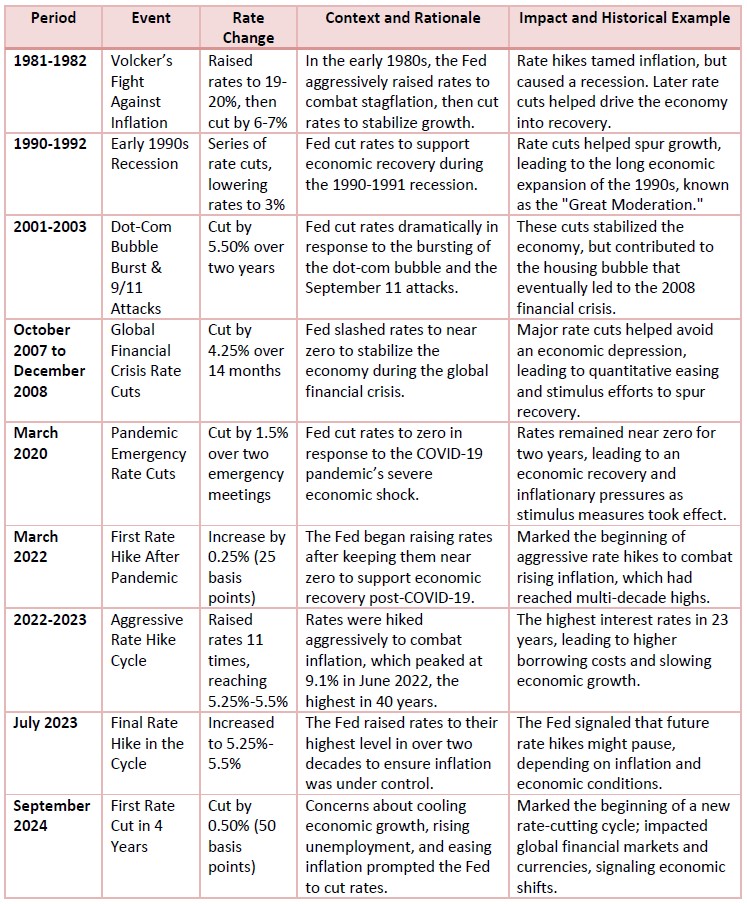
timeline of interest rate cuts

The 2020 Rate Cuts: Response to the COVID-19 Pandemic

The Federal Reserve’s most significant recent rate-cutting event occurred in March 2020, during the early days of the COVID-19 pandemic.

As the virus spread globally, triggering widespread economic shutdowns and financial market turmoil, the Fed moved swiftly to cut interest rates.

In a series of emergency actions, the federal funds rate was slashed from a range of 1.50%-1.75% down to 0%-0.25%.

This drastic reduction was an attempt to stave off a deep economic recession by providing cheap credit to businesses and households.

It was the first time since the 2008 financial crisis that rates had been brought down to near-zero levels.

The results of these rate cuts were immediate. Liquidity surged into financial markets, and borrowing costs for consumers and businesses fell sharply.

For instance, the average 30-year fixed mortgage rate dropped below 3%, spurring a housing boom as buyers sought to lock in historically low rates.

Stock markets, which had plunged in early 2020, rebounded strongly. The S&P 500 recovered from its March lows to reach new record highs by the end of the year.

The 2022-2023 Rate Hikes and the Return of Inflation

However, the recovery from the pandemic brought about new challenges.

The rapid injection of liquidity into the economy, coupled with supply chain disruptions, labor shortages, and rising consumer demand, led to a significant spike in inflation.

By mid-2021, inflation had reached levels not seen in decades, with the Consumer Price Index (CPI) climbing over 9% year-over-year in June 2022.

In response, the Federal Reserve shifted from an accommodative policy stance to a hawkish one, raising interest rates aggressively.

From March 2022 through July 2023, the Fed hiked interest rates 11 times, pushing the federal funds rate from near-zero to a range of 5.25%-5.5%, the highest level in more than two decades.

The purpose of these rate hikes was to cool the overheated economy and bring inflation back under control. While inflation did begin to decline toward the Fed’s 2% target—falling to around 3% by mid-2024—the hikes also began to weigh on economic growth, particularly in sectors sensitive to interest rates, such as housing and technology.

The September 2024 Rate Cut: A Pivotal Moment

After more than a year of holding rates at elevated levels, the Federal Reserve made a pivotal decision in September 2024 to cut interest rates by 50 basis points, bringing the federal funds rate to 4.75%-5%.

This marked the first rate cut in over four years and was widely anticipated by financial markets, which had been pricing in a potential easing of monetary policy due to signs of slowing economic growth and a softening labor market.

The September 2024 cut was described by the Fed as a preemptive move to support the labor market, which had been showing signs of cooling. Unemployment had ticked up slightly from its post-pandemic lows, and job growth had begun to slow.

Although inflation was no longer the immediate threat it had been in 2022, the Fed was concerned about the risk of a broader economic slowdown. By cutting rates, the Fed aimed to stimulate demand without stoking a new round of inflation.

This cut also signaled the beginning of a potential new rate-cutting cycle. With the economy entering a period of slower growth, many analysts predicted that the Fed could lower rates further in 2025, depending on the trajectory of inflation and employment.

Financial markets reacted positively to the cut, with major stock indices rising as investors anticipated that lower rates would boost corporate earnings and consumer spending.

Historical Context: Comparing Recent Cuts to Past Cycles

To fully understand the impact of the 2024 rate cut, it’s important to place it within the context of past rate-cutting cycles.

Since 1990, the Federal Reserve has undergone six major rate-cut and rate-hike cycles, each corresponding to different economic crises or recessions.

For example:
1990-1992: In response to a recession caused by rising oil prices and tighter monetary policy in the late 1980s, the Fed cut rates from 8% to 3% over a period of 18 months.
2001-2003: Following the burst of the dot-com bubble and the 9/11 terrorist attacks, the Fed slashed rates from 6.5% to 1% to stimulate a struggling economy.
2007-2009: During the global financial crisis, the Fed cut rates from 5.25% to near-zero, a period marked by massive economic contraction and financial instability.

Each of these rate-cutting cycles was followed by a period of recovery, though the speed and magnitude of the recovery varied based on the underlying causes of the economic downturn.

The 2024 rate cut is likely to be compared most closely to the rate cuts made in the aftermath of the 2001 recession and the 2008 financial crisis, as these events also followed aggressive periods of rate hikes.

Projections for Future Rate Cuts

Looking forward, many analysts expect that the Fed’s September 2024 cut could be the first in a series of reductions, depending on economic data in the coming months. Current forecasts suggest that the Fed could lower rates by an additional 100 to 150 basis points by the end of 2025 if inflation remains under control and growth continues to slow. However, the pace of these cuts will be highly dependent on the labor market and inflation data.

A key factor to watch will be whether the economy can avoid slipping into a recession. If the labor market weakens significantly or if inflation falls below the Fed’s 2% target, the central bank may opt for a more aggressive rate-cutting cycle. Conversely, if inflation begins to reaccelerate, the Fed could pause or slow the pace of cuts to avoid stoking new price pressures.

3. Impact on Various Asset Classes & Investment Opportunities

Interest rate cuts by the Federal Reserve have wide-reaching effects across all asset classes, from fixed income to equities, real estate, and commodities.

When the Fed lowers interest rates, the cost of borrowing declines, which directly and indirectly influences the returns on different investments.

Investors tend to shift their strategies in response to rate cuts, reallocating their portfolios to take advantage of lower borrowing costs and the potential for economic growth.

In this section, we will explore how interest rate cuts affect major asset classes, including bonds, equities, real estate, and currencies, supported by historical examples and current forecasts.

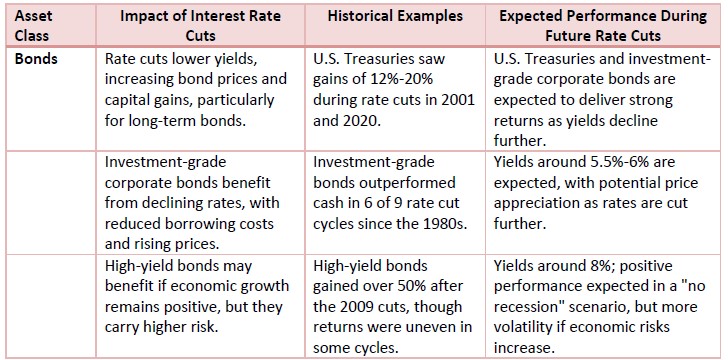
asset class1
asset class2

Bonds: The Primary Beneficiary

Fixed income assets, particularly government bonds, are usually the biggest beneficiaries of interest rate cuts.

Bond prices have an inverse relationship with interest rates—when rates fall, bond prices rise.

This is because new bonds issued after a rate cut offer lower yields, making existing bonds with higher coupon rates more attractive.

As demand for these higher-yielding bonds increases, their prices rise, providing capital gains to bondholders.

High-Yield Bonds

High-yield bonds, also known as “junk bonds,” can have a more mixed performance during rate-cut cycles.

These bonds, which are rated below investment grade (BB or lower), offer higher yields to compensate for their higher default risk.

In a “no recession” scenario, high-yield bonds often perform well as lower borrowing costs allow companies to refinance their debt more easily.

However, in the lead-up to or during a recession, high-yield bonds may underperform due to heightened credit risk.

For example, during the 2020 rate cuts, high-yield bonds experienced significant volatility.

While they rebounded strongly after the initial market panic subsided, many investors remained cautious due to concerns about rising default rates among riskier borrowers.

In 2024, high-yield bonds could see similar volatility, particularly if the U.S. economy enters a slowdown or mild recession.

However, if the Fed’s rate cuts successfully prevent a downturn, high-yield bonds could deliver strong returns, especially in sectors like energy and industrials.

Equities: Mixed Performance Depending on Economic Context

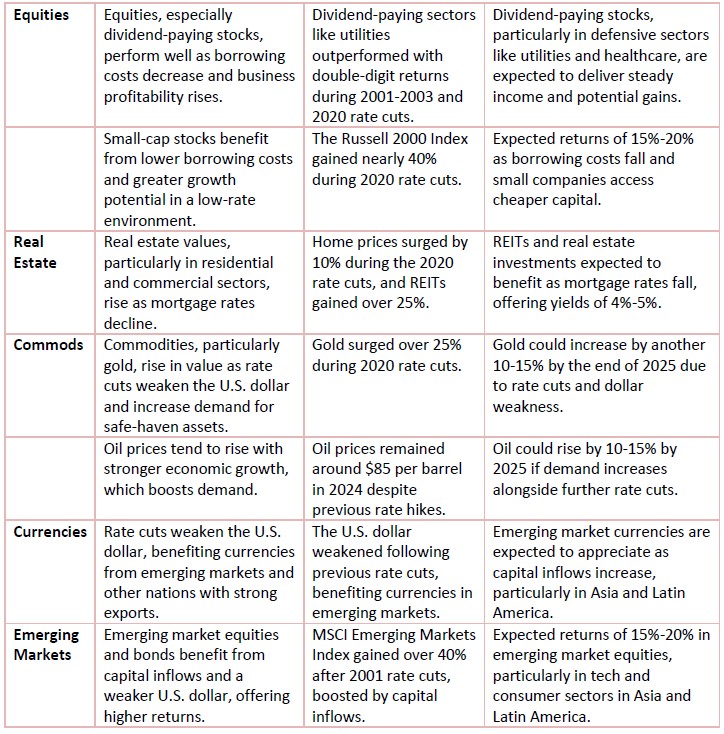
Stocks, or equities, typically benefit from lower interest rates, as cheaper borrowing costs support corporate profitability and boost economic activity.

However, the degree of impact varies depending on the broader economic context and the specific sector in question.

Growth Stocks vs. Value Stocks

Growth stocks, which are companies expected to grow at above-average rates, often benefit significantly from rate cuts.

These companies tend to rely more on external financing for expansion, and lower rates reduce the cost of this capital.

In past rate-cutting cycles, technology stocks have been major beneficiaries.

For instance, during the rate cuts following the 2008 financial crisis, the NASDAQ-100, heavily weighted toward tech companies, outperformed broader market indices, growing by over 50% in the first year of rate cuts.

In contrast, value stocks—companies trading below their intrinsic value, often with stable cash flows—may not benefit as much from rate cuts, although they still provide solid returns in certain environments. Value stocks in sectors like utilities and consumer staples tend to perform better in recessionary periods, as they are less sensitive to economic downturns and provide reliable dividends.

In 2024, with the Federal Reserve initiating a new cycle of rate cuts, growth stocks, particularly in sectors like technology and healthcare, are expected to outperform.

Companies such as Apple, Amazon, and Microsoft, which have large cash reserves and significant growth potential, stand to benefit from lower rates as their future cash flows are discounted at a lower rate, increasing their present value.

Value stocks, particularly in sectors like energy and financials, may lag behind but could still provide attractive dividend yields.

Small-Cap vs. Large-Cap Stocks

Small-cap stocks, which are companies with smaller market capitalizations, often benefit more from rate cuts than their larger counterparts.

These companies typically rely more heavily on short-term borrowing, so lower interest rates reduce their financing costs, boosting their bottom lines.

During the Fed’s last rate-cutting cycle in 2020, the Russell 2000, a small-cap index, outperformed the S&P 500, gaining nearly 40% by the end of the year.

In 2024, small-to-mid cap stocks are once again poised to outperform, particularly if the U.S. economy avoids a recession.

Analysts have noted that many small-cap companies are already seeing earnings acceleration, while large-cap companies are facing slowing profit growth.

As rate cuts reduce borrowing costs, small-cap companies in sectors like industrials and consumer discretionary could deliver significant returns, with some forecasts projecting gains of 15%-20% in 2025.

Real Estate: A Significant Beneficiary of Rate Cuts

Real estate, particularly through vehicles like real estate investment trusts (REITs), tends to benefit strongly from rate cuts.

Lower interest rates reduce mortgage costs for both commercial and residential real estate, making property more affordable and increasing demand.

This leads to rising property values and higher rental incomes for REITs.

In the 2020 rate-cutting cycle, real estate experienced a boom, with home prices soaring as mortgage rates dropped to historic lows.

The average 30-year fixed mortgage rate fell below 3%, spurring a wave of home buying and refinancing.

Similarly, commercial real estate saw a recovery as businesses took advantage of lower borrowing costs to expand or refinance existing debt.

In 2024, as rates begin to decline again, real estate markets are expected to benefit. REITs, which offer higher-than-average dividend yields, are particularly attractive to income-seeking investors.

The Vanguard Real Estate ETF (VNQ), a broad-based REIT index, could see significant inflows, with some analysts predicting returns of 10%-12% over the next 12 months as property values and rental incomes rise.

Currencies

When the Fed cuts interest rates, the U.S. dollar tends to weaken relative to other major currencies, as lower rates reduce the yield on dollar-denominated assets, making them less attractive to foreign investors. In 2024, following the September rate cut, the U.S. dollar index (DXY) fell by around 1%, and further cuts are expected to push the dollar down by an additional 3%-5% in 2025.

A weaker dollar benefits U.S. exporters by making American goods cheaper abroad, which could boost sectors like manufacturing and agriculture.

Commodities

Commodities such as gold and oil often react differently to rate cuts.

Gold, traditionally seen as a hedge against inflation and currency depreciation, tends to rise when interest rates fall, as the opportunity cost of holding non-yielding assets decreases.

In 2020, gold prices surged by over 25% as rates dropped to near zero.

In 2024, with further rate cuts on the horizon, gold is expected to perform well, with some analysts forecasting prices to reach $2,200 per ounce by mid-2025.

Oil prices, on the other hand, are more sensitive to global economic growth.

While lower rates can boost demand by stimulating economic activity, oil markets are also affected by supply dynamics and geopolitical events.

In 2024, oil prices remained relatively stable following the Fed’s rate cut, hovering around $85 per barrel.

However, if rate cuts successfully stimulate growth in emerging markets, demand for oil could increase, pushing prices higher in 2025.


4. Conclusion

Interest rate cuts represent one of the most powerful tools that central banks, such as the Federal Reserve, have at their disposal to influence economic conditions.

These cuts lower the federal funds rate, making borrowing cheaper for businesses and consumers.

The main objective is to stimulate economic activity by encouraging spending and investment, particularly during times of economic slowdown or financial distress.

The Fed’s recent 50-basis point cut in September 2024, the first in over four years, marks a pivotal shift in its monetary policy after an extended period of aggressive rate hikes to combat inflation.

Historically, rate cuts aim to stabilize inflation, support the labor market, and mitigate the risks of a recession, but the effectiveness of these cuts depends heavily on the broader economic context and timing.

The timeline of rate cuts and hikes reveals that these shifts often come in response to economic crises.

Since 1990, six major rate-cut cycles have occurred, often following periods of financial stress, such as the dot-com bubble, the 2008 global financial crisis, and the COVID-19 pandemic.

The 2024 cuts, coming after an aggressive hiking cycle that pushed rates to a 23-year high, signal the Fed’s concerns over cooling economic growth and rising unemployment.

These cuts are expected to continue into 2025, potentially providing significant relief to global economies, particularly those with dollar-denominated debt.

The impact of interest rate cuts spans multiple asset classes, with bonds typically being the primary beneficiaries. U.S. Treasuries, investment-grade corporate bonds, and high-yield bonds all perform well when rates fall, as the cost of borrowing decreases, leading to capital gains.

Equities, particularly dividend-paying stocks and small-cap companies, also tend to benefit from rate cuts, as lower interest rates support higher corporate earnings and growth potential.

Real estate, both residential and commercial, sees increased demand due to lower mortgage rates, making real estate investment trusts (REITs) a key area of opportunity for income-seeking investors.

Commodities like gold often rise as rate cuts weaken the U.S. dollar, while oil prices can increase with stronger economic demand.

Looking ahead, the current rate-cut cycle presents a range of potential investment opportunities.

Bonds, especially U.S. Treasuries and investment-grade corporate bonds, are poised for capital gains as yields decline.

Dividend-paying stocks and small-cap equities may outperform, driven by lower financing costs and improved earnings. Real estate remains a significant beneficiary, with REITs offering attractive yields in a low-rate environment.

Commodities, particularly gold and oil, could experience price appreciation, while emerging markets stand to gain from increased capital inflows and a weaker dollar.

Investors should consider these opportunities and adjust their portfolios accordingly as the Fed continues its rate-cutting policy into 2025.

As we come to the end of the report, here are some questions to ponder about:

1. With interest rates expected to decline further, how can investors balance the risks of inflation with the potential for growth in fixed-income assets like bonds?

2. As emerging markets stand to benefit from a weaker U.S. dollar and lower rates, what are the potential geopolitical risks that could influence their long-term growth prospects?

3. Given that rate cuts can stimulate both positive economic growth and excessive risk-taking, how can central banks effectively manage the delicate balance between fostering growth and preventing asset bubbles in financial markets?

Let me know your answers in the comments below!

thumbnail 7 April

thumbnail 7 April

Subscribe for real-time alerts and weekly videos:
👉🏻 https://synapsetrading.com/daily-trading-signals


Market Recap & Upcoming Week

Last week’s labor market update offered mixed interpretations, showcasing the ongoing robustness of employment growth with 303,000 jobs added in March, suggesting a strong but moderating labor market.

Despite expectations of a softening employment environment, the market remains resilient, with unemployment at a historically low 3.8%.

This backdrop maintains consumer spending strength, although job openings have started to decline, hinting at a gradual market cooling.

Meanwhile, wage growth has slowed to 4.1%, signaling easing inflationary pressures but complicating Fed’s rate cut expectations.

Market reactions were notably measured, with stocks dipping in response to signs of a strengthening economy, potentially delaying anticipated Fed rate cuts.

The upcoming CPI report will be critical for adjusting expectations around the Fed’s policy moves, especially if core CPI trends cooler, bolstering the case for a summer rate cut.

Amidst this, the labor market’s enduring vitality, coupled with moderating wage increases, presents a nuanced picture for investors, balancing between continued economic growth and the potential for easing monetary policy.

This week’s financial landscape is brimming with pivotal updates that could sway market sentiments.

The release of the Consumer Price Index (CPI) inflation data for March on Wednesday is particularly significant, with Federal Reserve officials scrutinizing the figures to inform potential adjustments to interest rate policies.

Additionally, remarks from several Fed officials throughout the week, along with insights from the latest Federal Open Market Committee (FOMC) meeting minutes and the Michigan consumer sentiment survey results, are anticipated to offer valuable perspectives on the economic outlook and monetary policy direction.

Simultaneously, the onset of the 2024 first-quarter earnings season promises to shed light on the financial health of the nation’s banking sector, with JPMorgan Chase, Wells Fargo, and Citigroup set to disclose their financial performances.

These reports could provide critical insights into the banking industry’s resilience and profitability, further influencing market trends and investor strategies in the context of ongoing economic uncertainties and the Fed’s monetary policy trajectory.

Daily Trading Signals (Highlights)

Trading Signals XLE 030424

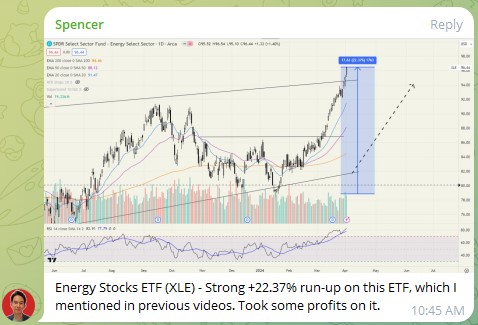
Energy Stocks ETF (XLE) – Strong +22.37% run-up on this ETF, which I mentioned in previous videos. Took some profits on it.


Trading Signals GOOG 020424

Trading Signals GOOG part 1 020424

Trading Signals GOOG part 2 020424

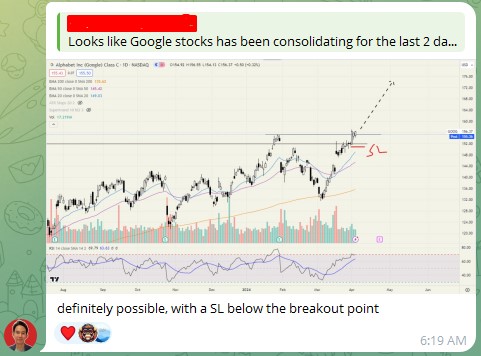
Definitely possible, with a SL below the breakout point


commodities 1 daily trading signals 090424

commodities 2 daily trading signals 090424

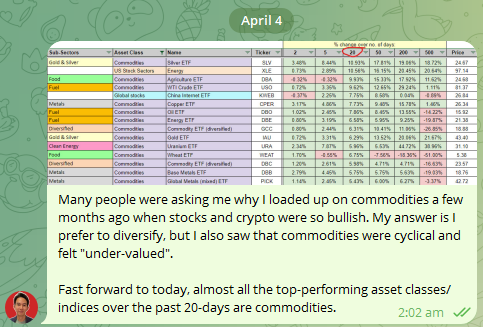
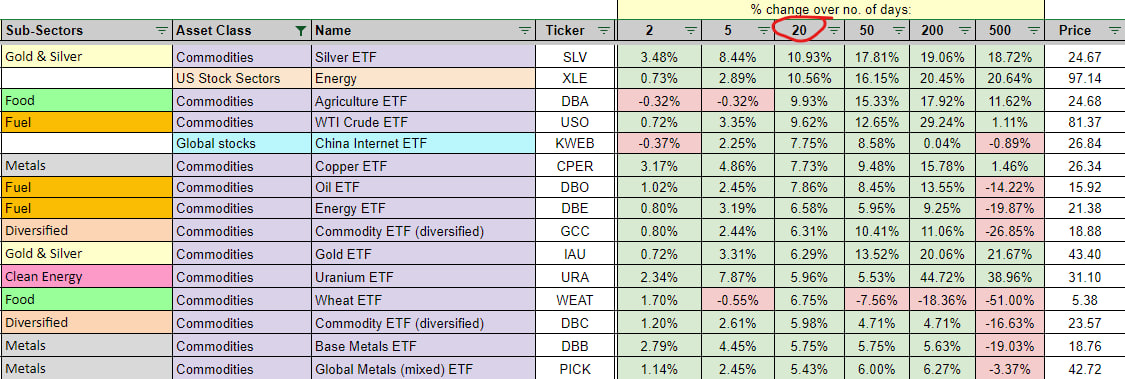
Many people were asking me why I loaded up on commodities a few months ago when stocks and crypto were so bullish. My answer is I prefer to diversify, but I also saw that commodities were cyclical and felt “under-valued”.

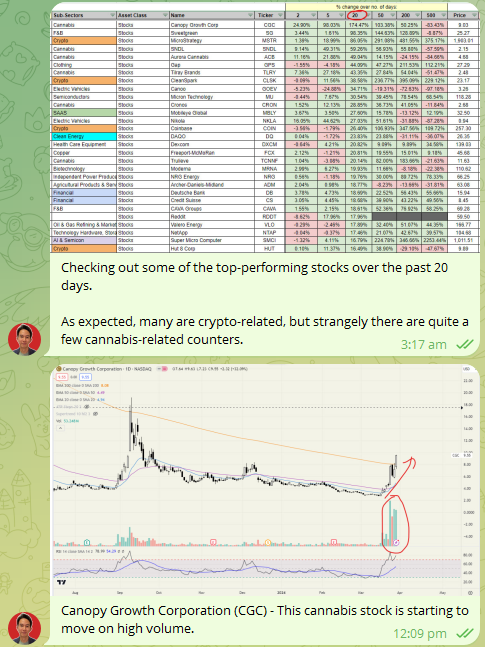
Fast forward to today, almost all the top-performing asset classes/indices over the past 20-days are commodities.


Join our community for real-time alerts and weekly videos:
👉🏻 https://synapsetrading.com/daily-trading-signals


Thumbnail US labor

Thumbnail US labor

Subscribe for real-time alerts and weekly videos:
👉🏻 https://synapsetrading.com/daily-trading-signals


Market Recap & Upcoming Week

Last week reflected on the Silicon Valley Bank collapse’s one-year anniversary, comparing its aftermath with the financial stability seen today.

In 1995, similar economic conditions led to a historic rally after a strategic Fed pivot to rate cuts, reminiscent of the current financial landscape.

With major central banks planning rate reductions, the comparison to the mid-’90s suggests a hopeful outcome for a similar soft landing, despite distinct macroeconomic backgrounds.

The Fed’s recent meeting underscored this optimism, leaving rates unchanged while signaling a forthcoming rate-cutting cycle, aiming for a softer policy rate by 2026.

This move was well-received, pushing markets to new highs amid easier financial conditions than when rate hikes began.

The focus on productivity as a driving force for growth and inflation control parallels the ’90s, yet with modern dynamics around AI’s potential impact.

While concerns of speculative bubbles loom, broader market participation and strong earnings suggest a healthier rally, with an eye on inflation as a possible disruptor to the anticipated soft landing.

This week, the financial markets are poised for a comprehensive assessment of the labor market, with a spotlight on the U.S. payroll report due Friday.

The report’s findings will offer crucial insights into employment trends, potentially influencing Federal Reserve policy decisions.

Additionally, the week is packed with Federal Reserve speakers, including notable appearances from San Francisco Fed President Mary Daly and Chicago Fed President Austan Goolsbee, whose comments will be closely analyzed for any shifts in monetary policy outlook.

Investors are also gearing up for earnings reports from a diverse group of companies, including Paychex, Dave & Buster’s Entertainment, Levi Strauss, and BlackBerry Limited, which could provide a deeper look into various sectors of the economy.

Furthermore, the release of purchasing managers index (PMI) reports on manufacturing and service sectors will offer valuable data on the state of economic activity, helping to shape market expectations for the coming months.

Daily Trading Signals (Highlights)

Trading Signals RDDT part 1 020424
Trading Signals RDDT 020424

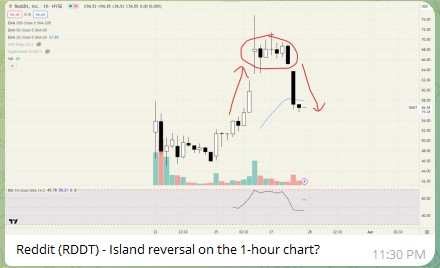
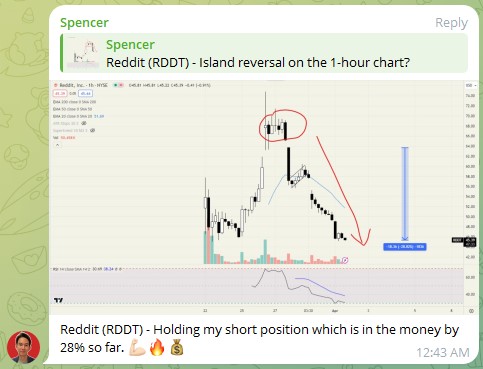
Reddit (RDDT) – Holding my short position which is in the money by 28% so far. 💪🏻🔥💰


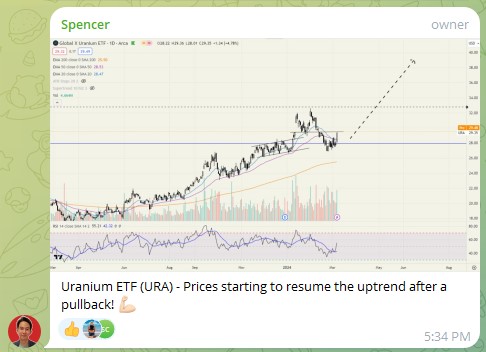
Trading Signals URA pt 1 080324
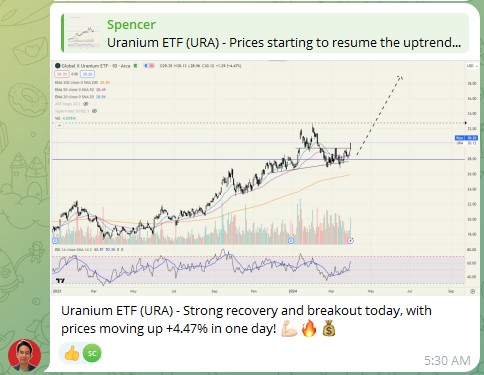
Trading Signals URA pt 2 030424

Uranium ETF (URA) – Strong recovery and breakout today, with prices moving up +4.47% in one day! 💪🏻🔥💰


cgc daily trading signals 030424

Checking out some of the top-performing stocks over the past 20 days.

As expected, many are crypto-related, but strangely there are quite a few cannabis-related counters.

Canopy Growth Corporation (CGC) – This cannabis stock is starting to move on high volume.


Stock picks from our members:

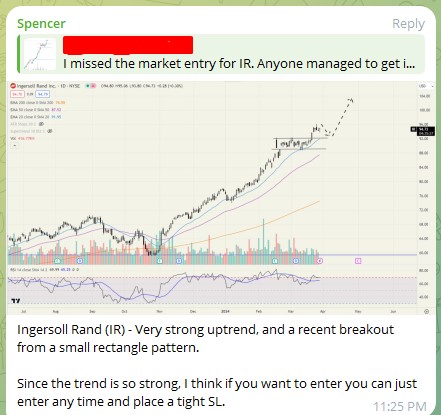
Trading Signals IR part 1 260324
Trading Signals IR part 2 260324

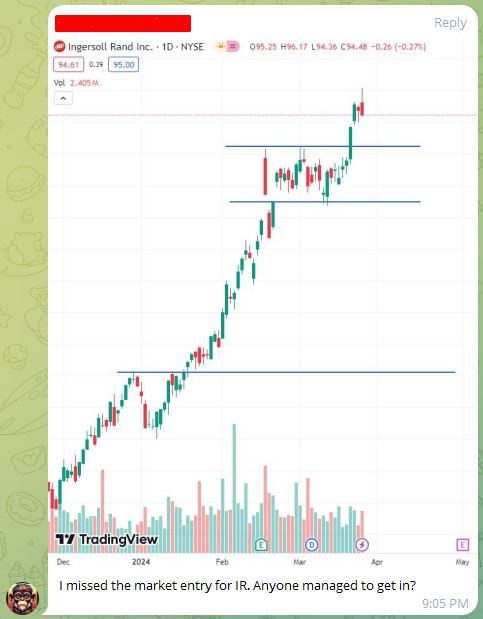
Ingersoll Rand (IR) – Very strong uptrend, and a recent breakout from a small rectangle pattern.

Since the trend is so strong, I think if you want to enter you can just enter any time and place a tight SL.


Join our community for real-time alerts and weekly videos:
👉🏻 https://synapsetrading.com/daily-trading-signals


Thumbnail for Market outlook 2024

As we look back on 2023 and look forward to the rest of 2024, what are some of the best investment and trading opportunities across various asset classes that we can invest in at the moment?

In this video collaboration with XM brokerage,  I will cover various asset classes such as stocks, stock sectors, bonds, commodities, cryptocurrencies, and analyse which ones give the best upside potential.

For this blog post, the first part will be a review of 2023, looking at what the investment themes were, and how various asset classes performed.

The second part will be looking at the investment themes for 2024, macro-economic outlook, and lasted the projected market performance of each asset class, and whether it will be a good investment.


Overview of 2023

2023 marked a significant year in the world of finance, characterized by recovery and realignment in the wake of the COVID-19 pandemic. Technology and consumer discretionary sectors notably rebounded, outperforming defensive sectors as they adapted to post-pandemic economic conditions and shifts in consumer behavior. 

Central banks, particularly the Federal Reserve, played a pivotal role in this landscape through strategic interest rate adjustments in response to previous high inflation rates. These policy shifts greatly influenced bond markets, especially those sensitive to interest rates, while commodities like oil, gas, and gold saw notable price movements reflecting global economic trends and investor sentiment towards safe-haven assets.

The year also witnessed challenges in the banking sector, highlighted by a regional banking crisis in spring 2023, which tested financial system resilience and prompted intervention by central banks and authorities. 

Geopolitical tensions further shaped the financial narrative, affecting currency values and investment strategies globally. Cryptocurrencies experienced a resurgence, highlighting renewed investor interest and confidence in digital assets. 

Overall, 2023 was a testament to the adaptability and resilience of global financial markets, navigating through a complex mix of economic challenges, policy shifts, and geopolitical events. This review encapsulates these developments, providing insights into market performances and implications for the future.


Top Investment Themes of 2023

Revival of Technology Stocks: The year 2023 witnessed a remarkable resurgence in technology stocks, with the leading “Magnificent 7” mega-cap tech stocks, including Apple, Amazon, and Microsoft, propelling the sector forward. This renaissance in tech stocks, after a period of relative underperformance, underscored the sector’s resilience and innovation capacity.

Generative AI Revolution: Another significant investment theme was the surge in interest in generative AI technologies. Companies involved in AI development and application attracted substantial investment, indicating the market’s recognition of AI’s potential as a transformative force in the economy.

Cryptocurrency Recovery: The cryptocurrency market rebounded in 2023, marking an end to the previous year’s downturn. This recovery was partly fueled by expectations around the introduction of a Bitcoin ETF, which boosted investor confidence and prices.


Market Performance of Various Asset Classes in 2023

Equities
Technology and Consumer Discretionary Sectors: In 2023, the equity market was led by a remarkable comeback in technology and consumer discretionary stocks. The rebound was fueled by investor optimism about future growth prospects, technological innovations, and a shift in consumer spending patterns. Tech giants, often referred to as the “Magnificent 7,” including Apple, Amazon, and Microsoft, demonstrated strong performance, significantly outperforming the broader market. This resurgence indicated investor confidence in the tech sector’s ability to navigate through economic uncertainties.

Defensive Sectors: In contrast, defensive sectors such as utilities, healthcare, and consumer staples underperformed. This trend was largely attributed to their sensitivity to rising interest rates and a general shift in investor preference towards more growth-oriented stocks. Investors typically turn to defensive stocks for stability and consistent dividends, but in 2023, the focus was clearly on growth and recovery potential.

Bonds
Interest Rate Sensitivity: The bond market in 2023 was significantly impacted by the economic landscape, particularly the rising interest rates. Government bonds and other interest rate-sensitive bonds saw a decline in value. As central banks, especially the Federal Reserve, continued to adjust interest rates to combat inflation, bond prices moved inversely. The yield on these bonds rose, reflecting increased risk and reduced demand.

Commodities
Oil and Gas Stocks: The commodities market, especially oil and gas stocks, experienced a strong year. High energy prices were a key driver of this performance, influenced by ongoing geopolitical tensions and supply constraints. Energy companies benefited from increased demand as global economies recovered from the pandemic-induced slowdown, leading to higher revenues and stock prices.

Gold
Safe-Haven Appeal: Gold witnessed a significant rally in 2023, with prices reaching levels not seen since 2020. This surge was primarily driven by investors seeking safe-haven assets amid economic uncertainties and inflation concerns. Gold’s traditional role as a hedge against inflation and currency devaluation came into play, as investors diversified their portfolios away from more volatile assets.

Oil
Robust Prices: Oil prices remained strong throughout 2023. This robustness can be attributed to a combination of factors, including sustained global demand, geopolitical tensions, and supply-side constraints. The ongoing conflict in Ukraine, tensions in the Middle East, and OPEC’s supply management contributed to the price stability and strength in the oil market.

USD and Crypto
USD Fluctuations: The U.S. dollar experienced fluctuations as a result of the geopolitical tensions and varying economic policies across different nations. While traditionally a safe-haven currency, the dollar’s value was influenced by domestic inflation concerns and the Federal Reserve’s monetary policy decisions.

Cryptocurrency Recovery: Cryptocurrencies rebounded from their previous downturn, witnessing significant gains in 2023. This recovery was spurred by growing mainstream adoption, the potential launch of Bitcoin ETFs, and an increasing perception of cryptocurrencies as alternative investment vehicles. Bitcoin and other major cryptocurrencies regained investor interest, suggesting a more stable footing for the crypto market going forward.

This detailed analysis of various asset classes in 2023 highlights a complex financial landscape shaped by macroeconomic factors, geopolitical tensions, and shifting investor sentiments. Each asset class responded uniquely to these dynamics, reflecting the diverse and interconnected nature of global financial markets.


Top Investment Themes of 2024

Emergence of AI as a Key Driver: The year 2024 is set to see artificial intelligence (AI) solidify its position as a dominant investment theme. Following a surge in AI-related investments in 2023, companies in the tech sector, particularly those involved in semiconductors, computer hardware, and software, are expected to lead the charge. The focus is likely to shift towards companies that adopt AI for enhancing productivity across various industries.

Renewed Interest in Specific Stock Sectors: The real estate and financial sectors, having experienced turbulent times in the recent past, are anticipated to make a strong comeback. These sectors are poised to benefit from the easing monetary policies and are expected to outperform the broader market.

Growing Significance of Cryptocurrency: After a period of recovery and regulatory shifts in 2023, digital currencies are expected to gain further traction. This resurgence is likely driven by increasing mainstream adoption, innovations in blockchain technology, and a growing recognition of cryptocurrencies as alternative investment vehicles. With regulatory frameworks becoming clearer and more investor-friendly, the crypto market could see enhanced stability and growth, attracting both retail and institutional investors.


Macroeconomic Outlook & Important Factors

Modest Global Economic Growth: The global economic landscape in 2024 is expected to be characterized by gradual yet steady growth. Analysts predict this trend to persist until at least mid-2025, marking a phase of elongated expansion, albeit at a subdued pace compared to previous years. The U.S. economy, in particular, is expected to play a crucial role in this scenario. Its ability to effectively manage and navigate through ongoing inflationary pressures will be critical. If the U.S. succeeds in balancing growth with inflation control, it could set a positive tone for the global economy. However, the risk remains that aggressive measures to combat inflation could inadvertently lead to a slowdown or even a recession.

European Economy: Europe’s economic outlook for 2024 appears more complex. High energy prices, partly driven by ongoing geopolitical tensions and supply chain disruptions, are likely to pose significant challenges. These factors could constrain consumer spending and business investment, leading to subdued economic growth. The UK, however, might stand out as an exception. Its economy shows potential for optimism, supported by robust sector compositions that could attract investment and offer valuation support. This optimism in the UK could be driven by a combination of fiscal policies, a responsive monetary framework, and a potentially more stable political environment post-Brexit.

Global Supply Chain Dynamics: Supply chain disruptions have been a key factor affecting global economies since the pandemic. In 2024, the extent to which these supply chains recover or face further disruptions due to geopolitical tensions or other factors will impact production costs, inflation rates, and overall economic growth.

Geopolitical Tensions and Trade Policies: Ongoing conflicts, such as the situation in Ukraine and the Middle East, can affect global trade and economic stability. Additionally, trade policies and relations, particularly involving major economies like the U.S., China, and the EU, will influence global economic dynamics.

Technological Advancements and Digital Transformation: Rapid advancements in technology, especially in fields like AI, 5G, and green energy, could lead to increased productivity and open new markets. However, they also pose challenges related to workforce adaptation and potential job displacements.

Labor Market Trends: The nature of the labor market recovery post-COVID-19, including workforce participation rates, wage growth, and remote working trends, will be crucial. These factors affect consumer spending, business investment decisions, and overall economic health.

Environmental Concerns and Sustainability Initiatives: Climate change and sustainability are increasingly influencing economic policies. Initiatives for green energy and sustainable practices could drive investment in new sectors but also imply transitions for traditional industries.

Fiscal Policies of Governments: Government spending and debt levels, particularly in response to the COVID-19 pandemic, will continue to have significant implications. How governments manage fiscal policies to stimulate growth or combat inflation without exacerbating debt levels will be crucial.

Consumer Behavior and Confidence: Consumer spending is a major driver of economic growth. Changes in consumer behavior, influenced by factors like digitalization, health concerns, and economic confidence, will play a key role in shaping economic outcomes.

Healthcare Developments: While the acute phase of the COVID-19 pandemic might be over, the global health landscape continues to evolve. Any new health crises or significant developments in healthcare could have economic implications.

Central Bank Independence and Credibility: The ability of central banks to act independently and credibly manage monetary policy is essential for economic stability. Any perceived or actual loss of independence could impact financial markets and economic confidence.

Cybersecurity and Data Privacy: With the increasing digitalization of economies, cybersecurity threats and data privacy concerns could impact consumer confidence, corporate investment, and the integrity of financial systems.

US Presidential Election: Historically, U.S. stock markets have performed well in presidential election years. The outcome of the 2024 election could have significant implications for market sentiment and economic policy.


Inflation and Interest Rates

In 2024, a key focus will be on the monetary policy stance of major central banks, especially the Federal Reserve. With inflation expected to continue its downward trajectory, partly due to easing energy pressures and a stabilizing labor market, the anticipation is for a series of interest rate cuts. However, the path to these reductions is fraught with uncertainties.

The Federal Reserve and other central banks will likely tread cautiously, balancing the need to support economic growth with the imperative to ensure inflation is under control. The timing and extent of these rate cuts will depend on a range of factors, including inflation trends, labor market conditions, and overall economic health. 

There’s a potential scenario where rate cuts could be implemented more swiftly if there’s clear evidence of recessionary pressures or a significant easing of inflation, however if inflation remains a concern, then rate cuts could be delayed.


Potential Recession: Hard or Soft Landing?

The Federal Reserve’s Balancing Act
The Federal Reserve faces a critical challenge in 2024: achieving a “soft landing” for the U.S. economy. This involves slowing down economic growth sufficiently to control inflation without pushing the economy into a recession. The task is daunting, especially considering the rapid pace of interest rate hikes witnessed recently. These hikes were a response to inflation rates that soared to multi-decade highs, with the Consumer Price Index (CPI) peaking at 9.1% in June 2022 before gradually declining.

Economic Growth vs. Inflation
The U.S. economy’s growth rate in 2023 was robust, with a 5.2% annualized increase in GDP in Q3, as reported by the Bureau of Economic Analysis. This growth, however, was accompanied by inflationary pressures. The Fed’s aggressive interest rate hikes aimed to cool down these inflationary trends. The central question for 2024 is whether these policies will result in a controlled slowdown or tip the economy into a recession.

Historical Context and Predictive Indicators
Historically, rapid rate hikes have often preceded economic downturns. For example, before the 2008 financial crisis, the Fed raised rates 17 times from 2004 to 2006. The current situation, however, differs due to unique post-pandemic economic conditions, including supply chain disruptions and a sudden surge in consumer demand.

One predictive indicator of a recession is the yield curve inversion, which has preceded every U.S. recession since 1955 with only one false signal. As of late 2023, parts of the U.S. Treasury yield curve have inverted, which traditionally signals market expectations of a future economic slowdown.

Labor Market Considerations
The labor market remains a critical factor. As of late 2023, unemployment rates were low, but there were signs of cooling. The job market’s resilience will be a key determinant of whether the economy can achieve a soft landing. A significant rise in unemployment could signal a move towards recession, whereas stable employment could support a soft landing.

Sector-Specific Impacts
Different economic sectors may react differently to the Fed’s policies. For instance, the housing market, often sensitive to interest rate changes, has already shown signs of slowing down in 2023. Conversely, sectors like technology might continue to thrive or recover quickly, partly due to continued innovation and demand for digital services.

Global Economic Influences
The U.S. economy does not operate in isolation. Global economic conditions, including European economic stability, China’s economic policies, and international trade relations, will also influence the U.S.’s ability to achieve a soft landing.

The Path Forward
For 2024, much depends on the interplay between continued inflation control and maintaining economic growth. Analyst forecasts vary, with some expecting slow yet positive growth and others cautioning about the risk of a mild recession. The Federal Reserve’s actions in the first half of 2024 will be particularly pivotal.

If inflation rates continue to decline and economic indicators like consumer spending and manufacturing output remain healthy, the likelihood of a soft landing increases. Conversely, if inflation remains stubbornly high or if economic indicators weaken significantly, the Fed may face tough choices, potentially leading to a hard landing scenario.

While the Federal Reserve aims for a soft landing of the U.S. economy in 2024, the outcome is far from certain. It will depend on a range of factors, including inflation trends, labor market conditions, sectoral health, and global economic influences. As such, economists, policymakers, and investors will be closely monitoring these developments throughout the year.


Projected Market Performance of Various Asset Classes

Stocks and Specific Sectors
S&P 500 Projections: The S&P 500, after a strong showing in 2023, is expected to see more moderate gains in 2024. Analysts forecast an 8-9% increase, slightly below the historical average of about 10%. The key drivers are projected to be AI and technology stocks.

AI and Technology Stocks: Companies like Nvidia, which surged 234% in 2023, are poised to continue their growth trajectory, driven by the demand for AI applications in various sectors. Other notable AI-related stocks include C3.ai and Palantir Technologies. Big tech firms like Alphabet, Amazon, Apple, and Microsoft are also expected to remain pivotal.

Large-Cap Resilience vs. Small/Mid-Cap Challenges: Large-cap stocks, particularly in the technology sector, are expected to be more resilient. In contrast, small and mid-cap stocks may struggle due to higher financing costs and economic slowdown. The performance of the Invesco S&P 500 Equal Weight ETF and the Direxion Nasdaq 100 Equal Weighted ETF could be indicative of this trend.

Emerging Markets
Volatility and Attractiveness: Emerging markets are predicted to experience initial volatility but could become increasingly attractive, especially if the U.S. dollar weakens. This attractiveness could be enhanced if growth in emerging markets outpaces that in developed markets.

Regional Prospects: Asian emerging markets, in particular, may see growth acceleration, potentially outweighing steady growth in EMEA (Europe, the Middle East, and Africa) and a slowdown in Latin America. China’s economy, after a period of lag in 2023, is expected to perform better if growth momentum picks up and geopolitical risks remain contained.

Bonds
Lower Interest Rate Environment: With expectations of rate cuts in 2024, bonds, particularly government bonds, could regain their appeal. The performance of bonds will be closely tied to the trajectory of inflation and economic growth.

Yield Predictions: Analysts predict that 10-year yields could decrease to around 3.75% by the end of 2024, from the mid-year forecast of 4.25%.

Commodities
Oil and Gold in Focus: Oil prices are anticipated to stabilize, with Brent forecasted to average around $83 per barrel in 2024. Gold prices, on the other hand, are expected to see significant gains, potentially reaching an average of $2,175/oz by Q4 2024.

Supply-Demand Dynamics: The balance in the oil market will likely hinge on OPEC+ production decisions. Gold’s appeal as a hedge against economic uncertainty and inflation will underpin its price movements.

USD and Forex
Strength of the U.S. Dollar: The dollar’s performance will be influenced by the Fed’s rate decisions and the 2024 U.S. presidential election. It is expected to remain strong, potentially yielding more than many global currencies.

Currency Pair Forecasts: Key currency pairs like EUR/USD, GBP/USD, and USD/JPY will reflect the broader economic sentiment and geopolitical developments. The euro is expected to underperform against the dollar, with the euro/dollar pair hovering between parity and 1.05 in the first half of 2024.

Cryptocurrencies
Continued Recovery: Cryptocurrencies are likely to continue their recovery trajectory, influenced by regulatory developments and increasing mainstream adoption. However, their performance will be contingent on broader market sentiments and technological advancements in the blockchain sector.

Regulatory Impact: The regulatory landscape will be a critical factor, with potential new policies either bolstering or hindering the growth of cryptocurrencies.

Overall, the 2024 financial landscape presents a nuanced picture. While AI and technology stocks are expected to lead gains in equities, emerging markets may offer attractive opportunities later in the year. Bonds could benefit from a lower interest rate environment, and commodities like oil and gold will remain crucial in portfolios. The strength of the U.S. dollar will influence forex markets, and the trajectory of cryptocurrencies will depend on regulatory and market developments. 


Concluding Thoughts

In 2023, global financial markets witnessed a robust recovery post-COVID-19, with the S&P 500 surging by 24%, a remarkable turnaround from the 19.4% drop in 2022. This upswing was largely fueled by the tech sector, particularly AI-driven companies like Nvidia, though gains beyond the top tech giants were more moderate. The Nasdaq Composite also saw a significant rebound. 

Looking ahead to 2024, moderate global economic growth is expected, with the U.S. at the forefront of managing inflation and fostering growth. The European economy presents a varied picture, grappling with high energy costs and geopolitical challenges, though the UK shows promising signs.

Central banks, especially the Federal Reserve, are likely to commence rate cuts, adapting to the easing inflation and stable labor markets. The timing and scale of these cuts are, however, uncertain, given the recent rapid rate hikes. 

AI is projected to remain a key growth driver in the tech sector, with real estate and financial sectors also anticipated to benefit from relaxed monetary policies. Cryptocurrencies could see increased adoption amid evolving regulations and growing acceptance. 

A critical focus for 2024 is the U.S. economy’s ability to achieve a soft landing, balancing inflation control without triggering a recession. 

Geopolitical tensions, notably in Ukraine and Gaza, along with the U.S. presidential election, are expected to significantly influence economic and market trends, while global supply chain shifts, technological advances, and changing consumer behaviors will also be key factors.

Here are some interesting questions to ponder for 2024:

1. How will the interplay between technological advancements and geopolitical tensions shape global investment strategies in 2024?

2. With the Federal Reserve poised to cut interest rates, what sectors or asset classes could potentially offer the best investment opportunities in a changing economic environment?

3. Considering the potential for both a soft and hard economic landing, how should investors adjust their portfolios to mitigate risks and capitalize on emerging opportunities in 2024?

Let me know your answers in the comments below.

Thumbnail Federal Rates

Thumbnail Federal Rates

Subscribe for real-time alerts and weekly videos:
👉🏻 https://synapsetrading.com/daily-trading-signals


Market Recap & Upcoming Week

Last week’s Federal Reserve meeting and subsequent press conference, alongside the release of updated economic projections, reinforced a dovish tilt in monetary policy.

Keeping the fed funds rate steady, the Fed signaled a multiyear rate-cutting cycle starting this year, with expectations to lower the rate to around 3.1% by 2026.

This announcement was met positively by the markets, driving stocks to new highs and softening Treasury yields.

The Fed’s upgraded economic outlook for 2024-2026 and continued assertion that inflation will gradually decrease bolstered confidence in a stable financial environment.

Additionally, global central banks, including the Bank of Japan’s historic rate increase, highlighted a global shift towards adjusting monetary policies.

This broadening market leadership, spurred by the anticipation of rate cuts and improved economic growth, suggests a healthy dynamic for continued investment opportunities.

This week, amidst a shorter trading period due to the Good Friday holiday, the financial markets are poised for a series of important updates.

Key among these are new inflation figures, insights into consumer sentiment, developments in the housing market, and a selection of significant corporate earnings reports.

Despite the holiday closure, the late-week release of the Personal Consumption Expenditures (PCE) index will be closely watched.

This data, crucial for the Federal Reserve’s interest rate decisions, will indicate if inflation is continuing its expected decline.

Additionally, the spotlight will be on earnings announcements from notable companies, including GameStop, Walgreens Boots Alliance, Cintas, Carnival, and Jefferies Financial Group, providing a pulse on various sectors of the economy as investors gauge market health and future trends.


Daily Trading Signals (Highlights)

Trading Signals Gold part 1 210324

Trading Signals Gold part 2 210324

Gold (XAUUSD) – Just 2 days after i posted this, we saw an impressive 3% breakout!

Congrats to those who bought! 💪🏻🔥💰


Trading Signals DBA part 1 200324
Trading Signals DBA part 2 200324

Agriculture ETF (DBA) – Following up on this weekly chart, prices have gone up 10% since the breakout. Can continue to hold and accumulate on pullbacks. 💪🏻🔥💰


Trading Signals PHO part 1 210324

Trading Signals PHO part 2 210324

Water Resources ETF (PHO) – Following up on this, prices just broke new highs as predicted, and we are up about 12% from our first buy-in! 💪🏻🔥💰

Looking to add more now since there was a good small price consolidation followed by a controlled breakout, meaning there is still room for more upside.


Stock picks from our members:

Trading Signals DOV 170324

Dover (DOV) – A very strong stock as seen on the weekly chart, and currently testing new ATHs.

A good idea to wait for a pullback before or after the breakout for a lower risk entry.


Join our community for real-time alerts and weekly videos:
👉🏻 https://synapsetrading.com/daily-trading-signals