• Link to Facebook
  • Link to X
  • Link to Instagram
  • Link to Youtube
  • Link to LinkedIn
  • Link to Mail
Synapse Trading
  • Home
  • About
    • My Background
    • My Trading Journey
    • My Travel Log
    • Media & Interviews
  • Mentoring
    • Trading Mastery Program
    • Results & Testimonials
  • Signals
    • Telegram (Free to join!)
    • Daily Trading Signals
    • Daily Trading Signals (Results)
  • Resources
    • Free Trading Guides
    • Tools & Resources
    • Blog & Infographics
  • Contact
    • Contact Us
    • Partnership Opportunities
  • Click to open the search input field Click to open the search input field Search
  • Menu Menu
Spencer Li

Proof of Work vs. Proof of Stake: Which One is Better?

Blockchain & Crypto
proof of work vs proof of stake thumbnail

Proof of Work vs Proof of Stake: What’s the Difference?

Last updated: 3 July 2026 · By Spencer Li, CFTe


Proof of work (PoW) and proof of stake (PoS) are the two main ways a blockchain verifies transactions and adds new blocks without a middleman. The core difference is what you have to spend to earn the right to validate. In proof of work, computers compete to solve a hard math puzzle, and the winner spends real energy and hardware to add the next block. In proof of stake, there is no race. The network picks one validator at random, weighted by how many coins that validator has locked up (staked), and they confirm the block instead. PoW is older, more battle-tested, and harder to attack, but it burns a lot of electricity. PoS is newer, far more energy efficient, and cheaper to join, but it is less proven at scale. Bitcoin (BTC) still runs on PoW. Ethereum (ETH) moved from PoW to PoS in 2022, and newer coins like Cardano (ADA) and Solana (SOL) launched on PoS from the start.

Here is how each system works, what it costs, and where each one is strong or weak.

What is proof of work (PoW)?

In a proof of work system, a group of computers compete to solve complex mathematical problems to validate transactions and add new blocks to the blockchain. The first one to solve the problem receives a reward in the form of cryptocurrency.

Because the energy and computing resources needed to solve the puzzle are often compared to the real-world effort of digging precious metals out of the ground, this process is called mining (using computing power to solve the puzzle and earn the right to add a block).

The book Digital Gold by Nathaniel Popper uses a simple analogy for the puzzle at the heart of Bitcoin:

It is easy to get 2,903 times 3,571 by writing the numbers down and multiplying. It is much harder to work backwards and figure out which two numbers multiply together to make 10,366,613.

The miner who cracks the problem first gets to add the next block of transactions and broadcast it to the network of nodes (the computers that hold a copy of the ledger and check new blocks). Those nodes audit the existing ledger and the new block. If everything checks out, the new block is linked to the one before it, forming the chain. The miner is then paid in coins for the energy and hardware they spent.

PoW, mining, and security

Mining consumes a lot of power, and that cost is the point. It secures the network by making sure only those who can prove they spent real resources are allowed to add transactions. By design, attacking a PoW system like Bitcoin is exceedingly difficult, time-consuming, and expensive.

To pull off an attack, you would have to buy and rig up expensive mining equipment, pay for the electricity to run it, win the race to solve the puzzle, and add a block stuffed with counterfeit coins. The moment the network’s nodes audit that block against the previous ledger, the fake coins are caught and the block is rejected.

The only way around this is to control the network outright. Counterfeiting bitcoin is virtually impossible unless an attacker owns over 50% of the network, meaning at least 51% of both the combined computing power of all miners (the hashrate) and the network’s nodes. Given the size of the Bitcoin network and the sheer energy miners pour into it, a 51% attack on Bitcoin today is almost impossible.

So if PoW checks all the boxes, why is part of the crypto world moving to proof of stake?

What is proof of stake (PoS)?

A member of the Bitcointalk forum who went by QuantumMechanic proposed proof of stake in 2011. His core point was simple: opening mining up to everyone and letting them all burn energy competing against each other is wasteful.

So PoS replaces the race with a lottery. One node is chosen at random to validate the next block. There are no miners. There are validators (nodes that lock up coins for the right to confirm blocks). They do not mine blocks either. They “forge” or “mint” them. The reward is the transaction fees attached to that block.

The selection is not pure chance, though. Before a node can be considered, it has to stake a certain amount of coins into the network, and the size of that stake raises its odds of being picked.

Here is the intuition. Say Walt stakes $100 into the network and Skyler stakes $1,000. Skyler’s chance of being chosen to forge the next block is ten times higher. The bigger your stake, the more often you win the right to validate.

One more detail worth noting: the stake is always larger than what a validator earns in fees. That keeps validators financially motivated to play fair, because cheating risks a stake worth more than the reward.

PoW vs PoS, side by side

The two systems solve the same problem (how to agree on the truth without a middleman) using opposite incentives. PoW asks you to spend energy. PoS asks you to lock up money.

Proof of Work (PoW)Proof of Stake (PoS)
Who validatesMinersValidators
How blocks are madeMining (solve a math puzzle)Forging / minting (chosen by stake)
What you spendHardware + ongoing electricityCoins locked up as a stake
SelectionFirst to solve the puzzle winsRandom, weighted by stake size
Energy useVery highLow
Barrier to entryHigh (rigs + power)Low (buy a fraction of a coin)
Maturity at scaleMost proven (Bitcoin since 2009)Newer, less battle-tested
Main riskEnergy cost, scaling limitsSybil and 51% attacks, centralization of stake
Example coinsBitcoin (BTC)Ethereum (ETH), Cardano (ADA), Solana (SOL)

Advantages of proof of work

Mining is a fiercely competitive industry, and that competition does useful work. Miners are always hunting for cheaper energy and faster, more efficient chips to lower their costs. Whoever finds the cheapest power and builds the better hardware wins, which keeps pushing the whole system forward.

PoW has also been the most proven way to maintain consensus while keeping users secure inside a distributed ledger. The reason is the cost itself. PoW demands an upfront hardware cost and a continuous spend on resources to keep participating, where PoS only asks for a single upfront stake. That ongoing cost is exactly what makes PoW so hard to fake.

Disadvantages of proof of work

The energy that powers Bitcoin’s PoW algorithm draws constant criticism for its carbon footprint. By one estimate, the Bitcoin network alone consumes as much energy as the entire countries of Ukraine and Norway combined. That comes straight from the design: miners have to solve hard math problems around the clock to validate transactions, and that takes enormous computational power, which takes a lot of electricity.

The traceability of a blockchain is a double-edged sword too. On one hand, it adds transparency and builds trust between users. On the other, every single transaction is permanently visible to everyone, which is a problem for people who value their privacy. The US Internal Revenue Service (IRS), for example, has successfully tracked down suspected tax evaders by matching records from bitcoin exchanges against data from banks and brokerages. Traceability will likely stay a sticking point for as long as crypto is used as a payment system rather than just an investment vehicle.

Advantages of proof of stake

The headline advantage of PoS is energy efficiency. With PoW, miners burn a lot of power running computers to solve puzzles, which is expensive and hard on the environment. With PoS, validators are not solving puzzles at all. They stake their coins and earn rewards based on how much they have staked, so the energy bill is tiny by comparison.

PoS also tends to be more censorship resistant. In a PoW system, a small group of large miners can, in principle, choose to censor certain transactions. In a PoS system, everyone who holds coins has a stake and therefore a say, which makes it much harder for any one party to block or refuse transactions.

And PoS has a far lower barrier to entry. To start validating a PoS coin, you really only need an internet connection and enough money to buy a fraction of a coin. That is it. You can even do it from a smartphone. With no expensive hardware required, PoS is much more accessible to the average person.

Disadvantages of proof of stake

PoS is younger, and it shows. No PoS system has yet scaled to the level of the largest networks while staying as decentralized and safe as the most advanced PoW systems. These are solvable problems, and newer consensus designs like Casper aim to fix them, but they are not solved yet.

A few specific weak spots:

  • Absent validators. If a chosen validator does not show up to do its job, the block stalls. This is usually handled by lining up a large pool of backup validators in case the primary one fails.
  • Sybil attacks. Because validating power is spread across many small holders rather than concentrated in a few miners, a PoS network can be more exposed to a Sybil attack (where one attacker spins up many fake identities to gain outsized control).
  • 51% attacks. PoS can also be more vulnerable to a 51% attack, where a single entity quietly accumulates more than half of the staked currency and uses it to push through bad blocks.

So which one is better?

Honestly, there is no clean winner, and anyone selling you one is overselling. Both systems have real strengths and real weaknesses, and the right answer depends on what a given network is optimizing for. If the priority is maximum security and a long track record, PoW still leads. If the priority is energy efficiency, low fees, and easy access, PoS makes the better case.

The direction of travel is clear, though. Ethereum completed its move from PoW to PoS in 2022 (the event the community called “the merge”), and most new coins now launch on PoS by default. PoW remains the home of the oldest and most valuable network, Bitcoin, and shows no sign of switching.

Personally, I do not treat this as a question I need to “win.” As a trader, I do not pick a coin because I admire its consensus mechanism. The mechanism tells you something about a network’s security, cost, and energy story, and that is useful context. It does not tell you whether the chart is a buy. A scanner can label a coin PoW or PoS in a second. It cannot supply the judgment to size the position, manage the risk, and decide whether the trade is even worth taking. That judgment is the human edge, and it is the part no algorithm trades for you.

FAQ

What is the main difference between proof of work and proof of stake?
In proof of work, computers compete by spending energy to solve a math puzzle, and the winner adds the next block. In proof of stake, there is no race. A validator is chosen at random, weighted by how many coins they have staked, and they confirm the block instead. PoW spends electricity; PoS locks up money.

Is proof of stake more secure than proof of work?
Not yet, by most measures. PoW is the more battle-tested system and is extremely expensive to attack at scale, which is why Bitcoin still uses it. PoS is far more energy efficient but newer, and it can be more exposed to Sybil attacks and to a 51% attack if one party accumulates enough of the staked supply.

Which cryptocurrencies use proof of work, and which use proof of stake?
Bitcoin (BTC) is the flagship proof of work coin. Ethereum (ETH) moved from PoW to PoS in 2022, and coins like Cardano (ADA) and Solana (SOL) were built on proof of stake from the start.

Why is proof of work criticized for energy use?
PoW miners must solve complex math problems around the clock to validate transactions, which takes huge amounts of computing power and therefore electricity. By one estimate the Bitcoin network alone uses as much energy as the countries of Ukraine and Norway combined.

Is proof of stake replacing proof of work?
For new networks, largely yes. Most new coins launch on PoS, and Ethereum’s 2022 switch was a major milestone. But PoW still secures Bitcoin, the oldest and largest network, so the two systems are likely to coexist rather than one fully replacing the other.


Now that you know how proof of work and proof of stake differ, which one do you think wins out in the long run? Let me know in the comments.

And if you want the bigger picture on how blockchains and coins actually fit together, read the pillar: The Ultimate Guide to Blockchain and Cryptocurrencies.

Want a simple way to trade any market, including crypto? Grab the free 15-Minute Swing Trading Starter Kit. It is the exact routine I use to scan once a day and trade in 15 minutes, the same approach whether the chart is a stock, a forex pair, or a coin.


About the author. Spencer Li is the founder of Synapse Trading and a Certified Financial Technician (CFTe) with 15 years of trading across stocks, forex, crypto, commodities, and bonds. His trade log is public, 404 trades, losses left in. He teaches low-risk swing trading in 15 minutes a day, one system for any market.

Education, not financial advice. Synapse Trading is not licensed by MAS to advise on investment products. Trading carries risk of loss; past performance is not indicative of future results.


Related

The Ultimate Guide to Blockchain and Cryptocurrencies (pillar) · What is Bitcoin and how does it work · What is Ethereum · How to start trading cryptocurrency


0 Comments/by Spencer Li
https://synapsetrading.com/wp-content/uploads/2022/08/proof-of-work-vs-proof-of-stake-thumbnail.png 720 1280 Spencer Li https://synapsetrading.com/wp-content/uploads/2019/10/logo.jpg Spencer Li2022-08-27 02:28:102026-07-06 02:47:52Proof of Work vs. Proof of Stake: Which One is Better?
Spencer Li

What is Cryptocurrency, and is it a Good Investment?

Blockchain & Crypto
What is a Cryptocurrency and is it a Good Investment thumbnail

Is Cryptocurrency a Good Investment? An Honest Answer for Beginners

Last updated: 3 July 2026 · By Spencer Li, CFTe


Cryptocurrency can be a good investment, but only as a small, high-risk, high-reward slice of a portfolio, never the bulk of it. Crypto is a peer-to-peer digital currency that runs on a blockchain instead of a bank, and the same things that make it exciting (no middleman, fast cross-border transfers, the potential for large gains) also make it dangerous (extreme volatility, exchange hacks, outright fraud). Personally, I hold some, and I treat it as a speculative position I am fully prepared to lose. The honest answer to “is it a good investment for you?” is: yes, if you have an emergency fund, you start small, and you accept that the same coin that can multiply your money can also take all of it. The investors who blow up are the ones who skip those three conditions. The rest of this post explains what crypto actually is, why it swings so hard, and the exact steps I would use to start.

So, is crypto the biggest innovation of our generation, or a scam? Here is how I think about it.

What is cryptocurrency?

A cryptocurrency (or “crypto”) is any peer-to-peer digital currency that uses cryptography (math-based encryption) to create and manage its money supply and confirm transactions.

Bitcoin (BTC) was the first and is still the most well-known, but there are thousands of others. A few you will see often:

  • Ethereum (ETH)
  • Ripple (XRP)
  • Cardano (ADA)
  • Solana (SOL)
  • Tether (USDT), a stablecoin (a token designed to hold a fixed value, usually pegged to the US dollar)

Most cryptocurrencies are decentralized systems built on blockchain technology. The network itself verifies transactions, so there is no central authority like a bank or a government sitting in the middle. In plain terms, no single institution controls it.

It is more mainstream than people assume. Over 30% of all US adults now own crypto, yet despite the headlines and the gains, many still cannot explain what they actually bought.

What is the difference between real money and cryptocurrency?

Real money, like the US dollar, is fiat currency (money that has value because a government says it does). It is not backed by a physical commodity like gold or silver. It is backed by the full faith and credit of the issuing government.

Cryptocurrencies are different. They are decentralized digital assets, not subject to government control or regulation. Bitcoin was created in 2009 as a peer-to-peer electronic cash system designed to work without any central authority.

Because crypto settles on public blockchains rather than through banks, transaction fees can be lower, which lets you send funds across borders cheaply and quickly.

Blockchain explained: proof of work vs proof of stake

Most cryptocurrencies, including Bitcoin, run on a method called proof-of-work.

Proof-of-work asks “miners” (computers competing to validate transactions) to solve complex math problems to find blocks (a group of transactions), and the winner gets a reward, usually the coin itself. The difficulty varies by coin. Common proof-of-work algorithms include SHA-256, Scrypt, X11, Ethash, Equihash, and Lyra2REv2.

The catch is cost. Proof-of-work eats a huge amount of computing power and electricity. After paying for power and hardware, miners can barely break even on what they earn.

To cut that energy use, many coins moved to proof-of-stake instead. With proof-of-stake, how much you can verify is limited by how much crypto you are willing to “stake” (lock up as a deposit) for the chance to participate. It is far more efficient because it removes the energy-intensive math-solving and allows faster verification.

This is why Ethereum completed “the Merge” in September 2022, switching from proof-of-work to proof-of-stake.

Is cryptocurrency a good investment?

Since crypto arrived, people have argued about whether it belongs in a portfolio. Some experts call it a global phenomenon in the making. Others call it a bubble waiting to pop.

Here is the honest pros-and-cons view before I give you my own take.

Potential benefitsReal risks
ControlYour wallet gives you direct control of your assets, no third party can intervene, no intermediary clips a fee on every transferLose your keys and you lose the coins, with no bank to call
TransparencyEvery transaction sits on a public ledger anyone can inspect (parties stay pseudonymous, but the flows are visible)Pseudonymity also attracts scams and bad actors
UpsidePotential for very large growth, fast processing, fraud protection, international acceptanceThe same volatility that gives the upside can wipe you out
SecurityThe consensus mechanism (e.g. proof-of-work) makes it an open system no single party controlsExchanges and projects still get hacked, see below

The risks are not theoretical

Investing in any cryptocurrency carries real risk, from outright fraud to exchange hacks. You can lose all of your investment, and in some setups even more.

Two cases worth remembering:

  • Mt. Gox was once the most popular exchange for trading Bitcoin into dollars and euros, until hackers stole roughly $450 million worth of Bitcoin from users’ wallets. It shut down soon after and filed for bankruptcy protection.
  • CoinDash lost about $7 million in investor money when its site was hacked shortly before its token sale went live.

Then there is volatility. Crypto can swing hard in both directions, sometimes more than once in a single day. That makes it unreliable for long-term savings and unsuitable as everyday spending money. It is far better understood as speculative trading, much like stocks and commodities.

So even with the wild swings and the overnight-millionaire (and overnight-zero) stories, would a prudent investor still put money in?

My answer: crypto might be a good investment for you, provided you treat it as a risky, high-reward gamble that can pay well but can also go to zero. Plenty of people have lost thousands, even millions. Make sure you can manage your risk before committing any meaningful amount of your wealth.

How do I start investing in crypto?

Many would-be investors respond to crypto ads or DMs pushing “get rich quick” schemes. Do not. Instead of an impulsive buy, vet the coin first.

1. Research the currency. Confirm it is legitimate and secure before you hand over any personal or financial information. Read the project’s white paper (the founding document that explains what the coin does). Check security ratings with the Crypto Rating Council and CertiK, and use a price tracker like CoinMarketCap to see how it has performed.

2. Choose a platform. The right exchange depends on how you will use the coin. Will you buy and hold, or trade and cash out regularly? Each platform charges different fees and some limit which transactions you can do. Review the fees, the limits, and the exchange’s security ranking before you commit. I would stick to the top few established players (the ones I list under the tools and resources tab) rather than an obscure exchange.

What should I consider before investing in crypto?

Three rules, in order. Get the first two right before you even think about the third.

1. Build a six-month emergency fund first. Decide what your emergency fund covers, six months of expenses (food, transport, the essentials), or six months of income. Sorry if this sounds boring, but with risk comes caution. You have heard about the one person who turned $1,000 into a fortune overnight. You never hear about the many who watched $1,000 become $0.10. Do not put money into something you do not fully understand.

2. Start small, in blue chips, and dollar-cost average. Passive investing in “blue chip” coins like BTC and ETH is the safer entry. Because crypto is so volatile, the sensible way in is DCA (dollar-cost averaging, buying a fixed amount on a regular schedule so you average your price up and down instead of betting on one entry). A monthly budget of $50 to $100 is a fine place to start. You can also balance crypto against steadier holdings like ETFs (exchange-traded funds) and bonds. As your earning power grows, you can allocate more.

3. Only then, consider active investing. Once your emergency fund and passive portfolio are in place, you can look at active strategies. Again, start small. Allocate no more than 10% of your risk capital to active trading. Earning a yield through staking or yield farming, or using leverage (borrowed money to size up a position), are all mid-to-high-risk plays. Only do them with money you can fully afford to lose.

Notice that none of those three rules are about picking the right coin. The hard part of crypto was never finding the asset, an app will surface the trending token in a second. The hard part is the discipline to size it small, sit through the volatility, and not let a green week talk you out of your own rules. That judgment is the one edge no exchange app supplies, and it is the first of the Five Edges that survive any market.

My take: a small slice, not the bulk

Some people see crypto as an investment opportunity. Others see a volatile gamble. It depends on what you want from the market, and the industry is still so young that no project is guaranteed to survive.

Personally, I think crypto is an exciting opportunity, but it should be treated as a high-risk, high-reward asset. That means it can have a place in your portfolio to boost returns, but it should not form the bulk of it.

If you are already invested, the question I would ask yourself is the one that actually matters: what percentage of your portfolio is in crypto, and could you sleep at night if that slice went to zero tomorrow? If the answer is no, your position is too big.

FAQ

Is cryptocurrency a good investment for beginners?
It can be, as a small, high-risk slice of a diversified portfolio. For most beginners the safer entry is dollar-cost averaging a small monthly amount into blue-chip coins like Bitcoin and Ethereum, only after building a six-month emergency fund.

How much of my portfolio should be in crypto?
There is no single right number, but the principle is that crypto should boost returns at the margin, not form the bulk of your portfolio. Size it so that a total loss of your crypto position would be uncomfortable but not life-changing.

Is cryptocurrency safe?
The blockchain itself is hard to tamper with, but the surrounding ecosystem is not “safe” in the everyday sense. Exchanges get hacked (Mt. Gox lost roughly $450 million in Bitcoin) and projects get defrauded (CoinDash lost about $7 million). The asset is also highly volatile, so you can lose a large part of your money quickly.

What is the difference between proof of work and proof of stake?
Proof-of-work has miners solve energy-intensive math problems to validate transactions and earn coins. Proof-of-stake instead lets holders lock up (“stake”) their coins for the right to validate, which is far more energy-efficient. Ethereum switched from proof-of-work to proof-of-stake in its 2022 Merge.

How do I start investing in crypto step by step?
Research the coin (read its white paper, check ratings on the Crypto Rating Council and CertiK), choose a reputable exchange after comparing fees, limits, and security, build a six-month emergency fund, then start small with dollar-cost averaging into blue chips before ever considering active trading.


Now that you have the honest version, is crypto something you would add to your portfolio, and at what percentage? Let me know in the comments.

And if you want the deeper dive on how the technology actually works, read the companion guide: The Ultimate Guide to Blockchain and Cryptocurrencies.

Want a system for the speculative side? Grab the free 15-Minute Swing Trading Starter Kit. It is the exact routine I use to scan once a day and trade any market, stocks, forex, or crypto, in 15 minutes.


About the author. Spencer Li is the founder of Synapse Trading and a Certified Financial Technician (CFTe) with 15 years of trading across stocks, forex, crypto, commodities, and bonds. His trade log is public, 404 trades, losses left in. He teaches low-risk swing trading in 15 minutes a day, one system for any market.

Education, not financial advice. Synapse Trading is not licensed by MAS to advise on investment products. Trading carries risk of loss; past performance is not indicative of future results.


Related

The Ultimate Guide to Blockchain and Cryptocurrencies (pillar) · What is dollar-cost averaging? · How to build a diversified portfolio · Risk management for traders

0 Comments/by Spencer Li
https://synapsetrading.com/wp-content/uploads/2022/08/What-is-a-Cryptocurrency-and-is-it-a-Good-Investment-thumbnail.png 720 1280 Spencer Li https://synapsetrading.com/wp-content/uploads/2019/10/logo.jpg Spencer Li2022-08-22 19:54:582026-07-06 01:52:09What is Cryptocurrency, and is it a Good Investment?
Spencer Li

What are Blockchains & Cryptocurrencies?

Blockchain & Crypto
what are blockchains and cryptocurrencies thumbnail

Why are blockchains touted as the next big thing in the financial industry and potentially a major game-changer?

If you have heard of blockchain technology, chances are you know it has something to do with bitcoin, decentralised finance or cryptocurrency.

And while those two things have become inextricably linked, they are not the same.

That’s why it is crucial to understand how they work now so that you can take advantage of that potential — both as an entrepreneur and a consumer.

In this blog post, I will tell you everything you should know about how blockchain technology works and what its impact could be going forward.


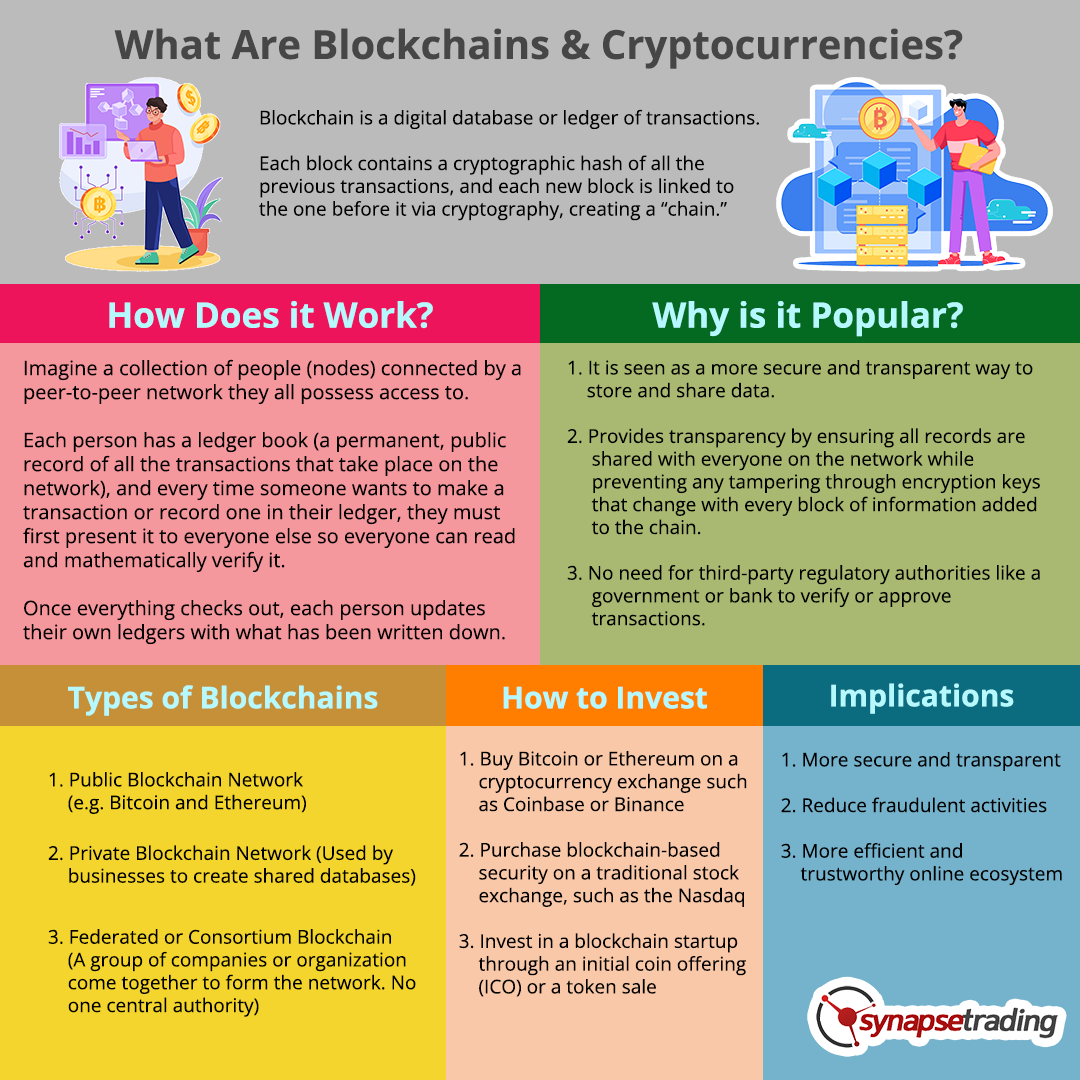
what are blockchains and cryptocurrencies infographic


History of Blockchains

Blockchain technology has a long and complicated history.

It was first conceptualized in 1991 by a group of researchers trying to create a system for timestamping digital documents so they could not be tampered with.

But it was not until 2008 that blockchain really came into its own when Satoshi Nakamoto first introduced the concept of blockchains in a white paper entitled Bitcoin: A Peer-to-Peer Electronic Cash System.

In this paper, Nakamoto described how a decentralized ledger could be used to record and verify transactions instead of the unstable traditional banking system.

Since then, blockchain has been hailed as a revolutionary new way of handling data.

What is a Blockchain?

At its simplest, blockchain is a digital database or ledger of transactions.

When someone uses cryptocurrency to buy something, they broadcast their transaction to the entire network of computers running the software.

These computers then race to verify the transaction, and the first one to do so adds it to the chain of past transactions or “block.”

The new block is then broadcast to the network and verified by more computers, and so on.

Each block contains a cryptographic hash of all the previous transactions, and each new block is linked to the one before it via cryptography, creating a “chain.”

How Does Blockchain Technology Work?

It can be difficult to understand how blockchain works by looking at its front-end alone.

The best way to describe blockchain technology is via an analogy…

Imagine a collection of people (nodes) connected by a peer-to-peer network they all possess access to.

Each person has a ledger book (a permanent, public record of all the transactions that take place on the network), and every time someone wants to make a transaction or record one in their ledger, they must first present it to everyone else so everyone can read and mathematically verify it.

Once everything checks out, each person updates their own ledgers with what has been written down.

As soon as this happens, each node checks to see if anyone has rejected the entry — if no one did, it is complete!

If someone did, this entire process starts over again until there is consensus across all nodes.

How is a Blockchain Different from a Typical Database?

A typical database is more vulnerable to data breaches and hacking because it is centralized, meaning all the data is stored in one place.

On the other hand, a blockchain is decentralized, meaning the data is spread across multiple computers across the decentralized network.

This makes it much more difficult for hackers to access and tamper with the data.

Why is Blockchain Technology Popular?

Blockchain technology is popular because it is seen as a more secure and transparent way to store and share data.

In theory, blockchain technology is highly secure as it is impossible to hack into multiple nodes at once without significant resources.

It also provides transparency by ensuring all records are shared with everyone on the network while preventing any tampering through encryption keys that change with every block of information added to the chain.

This makes it ideal for storing sensitive information like financial transactions.

Plus, since blockchain is decentralized, there is no need for third-party regulatory authorities like a government or bank to verify or approve transactions.

This makes the process faster and more efficient.

As we make our way to ‘Web 3.0’, one of the most popular applications of blockchain technology today is in the form of non-fungible tokens (NFTs).

NFTs are digital assets that are unique and cannot be replicated. They can be used to represent anything from art and collectibles to digital experiences and gaming items.

Because of their unique nature, NFTs have become extremely popular in recent years. In 2021 alone, the market for NFTs surpassed USD 40 Billion.

How to Process Transactions on a Blockchain?

Blockchain-based systems use what is called a hash function to encrypt transaction data. A hash function is a mathematical algorithm that takes input data of any size and converts it into output data of a fixed size.

The output of a hash function is commonly referred to as a hash or hash value.

In a blockchain, every transaction is stored in a block.

Each block has its own cryptographic hash and timestamp, as well as other data that may be specific to that block.

The blocks are stacked on top of each other, creating a digital ledger or chain of blocks.

This process is done through cryptography, which provides security and tamper-proofing for every block in the chain.

The hash from each block is used to create another cryptographic hash for each subsequent block, forming an unbroken chain and linking it all together.

For a new block to be added to the chain, miners must solve a complex mathematical problem.

This problem is known as the proof of work. Once a miner solves the proof of work, they can add the new block to the chain and they are rewarded in cryptocurrency for doing so.

The pieces of data stored in one block cannot be changed without changing all subsequent blocks; doing so would invalidate all following hashes and require massive amounts of computing power just to make a single change.

Types of Blockchains

Blockchain networks can be either public or private.

A public blockchain network is a decentralized network that anyone can join.

Bitcoin and Ethereum are examples of public blockchain networks.

A private blockchain network is a permissioned network where only approved participants can join.

Private blockchain networks are often used by businesses to create shared databases.

There is also a federated or consortium blockchain. In this type of blockchain, there is no one central authority.

Instead, a group of companies or organizations (known as a consortium) come together to form the network.

Each member of the consortium operates a node and has a vote in decision-making.

This type of blockchain is often used in industries where multiple parties must securely share data or conduct transactions, such as banking or supply chain management.

How to Invest in Blockchains?

There are several ways to make your first blockchain investment.

The most common way is to buy Bitcoin or Ethereum on a cryptocurrency exchange such as Coinbase or Binance.

Alternatively, you can purchase blockchain-based security on a traditional stock exchange, such as the Nasdaq.

Finally, you can invest in a blockchain startup through an initial coin offering (ICO) or a token sale.

When it comes to investing in blockchain technology, there are a few things you should keep in mind:

  • The cryptocurrency market is highly volatile. This means that prices can fluctuate wildly from day to day, and you could lose a significant amount of money if you are not careful.
  • You should only invest as much money as you are comfortable losing. Remember, there is always a risk of losing your entire investment when dealing with cryptocurrencies.
  • Finally, make sure you do your research before investing in any blockchain-based project. There are a lot of scams out there, and it is important to know what you are getting yourself into before putting any money down.


What are the Implications of Blockchain Technology?

As the technology behind Bitcoin and other cryptocurrencies, blockchain has the potential to revolutionize the way we interact with the digital world.

With its distributed ledger system, blockchain offers a new way of storing and verifying data that is more secure and transparent than traditional methods.

In addition, blockchain could help reduce fraudulent activities, such as identity theft and money laundering.

Ultimately, this could lead to a more efficient and trustworthy online ecosystem.

Concluding Thoughts on Blockchain

Overall, blockchain technology is a way to store and transmit information in a secure, decentralized manner.

Blockchain technology can provide greater transparency and security for online transactions by using a distributed database.

Additionally, blockchain technology has the potential to streamline many business processes and reduce costs.

However, the full potential of blockchain technology has yet to be realized.

As the technology continues to evolve, we can expect to see even more innovative applications of blockchain technology in the future.

Now that you know a little more about how blockchain technology works, what do you think of it?

Do you think it has the potential to revolutionize our financial ecosystem?

And besides the finance world, what other real-world applications do you foresee it being used for?

Let me know in the comments below!


thumbnail the ultimate guide to blockchain and crypto assets

If you would like to learn more about crypto & DeFi, also check out: “The Ultimate Guide to Blockchain & Cryptocurrencies”

0 Comments/by Spencer Li
https://synapsetrading.com/wp-content/uploads/2022/08/what-are-blockchains-and-cryptocurrencies-thumbnail.png 720 1280 Spencer Li https://synapsetrading.com/wp-content/uploads/2019/10/logo.jpg Spencer Li2022-08-17 06:11:302022-12-19 01:42:33What are Blockchains & Cryptocurrencies?
Spencer Li

Short Interview with Business Insider: My Insights on the TerraUSD & Luna Crash

Blockchain & Crypto, News & Events
terrausd luna crash

Last week, I had a short interview with Business Insider to share some of my insights on the TerraUSD and Luna crash.

For those who are not in the loop, it was one of the biggest crashes in the crypto market, causing many investors to lose all their life savings.

So, how did it all happen, and what are the lessons we can learn from it?


business insider article 130622

business insider article 130622 2


The article is mainly about the experiences of retail investors coping with the big crash, so I thought I’ll share some of the other points not included in the article, for education purposes.

Here goes:

What does a stablecoin mean? How do they differ from other cryptocurrencies?

One way is to think of it in terms of real world currencies. The price of a currency fluctuates according to demand and supply, unless it is a pegged currency, for example the HKD is pegged to the USD, so its price movements follow the USD. If we think of cryptocurrencies as a currency, then a stablecoin is a cryptocurrency which is pegged to another asset or currency (usually the USD).

Reference: https://synapsetrading.com/best-stablecoin-crypto/

What about TerraUSD and luna? How do they differ from other stablecoins?

There are several types of stablecoins, depending on what they are pegged to and the pegging mechanism. For example, there are metal-backed stablecoins, currency-backed stabelcoins, or algorithmic stablecoins.

For stablecoins like Tether (USDT) and USD Coin (USDC), they are purportedly backed by fully reserved assets, similar to how a nation holds reserves to back its currency.

TerraUSD (UST) is an example of an algorithmic stablecoin, where instead of being backed by collateral, the price is managed by an algorithm which maintains its peg to the US dollar through an arbitrage mechanism with LUNA.

Are stablecoins a good form of savings/preserving value, why or why not?

If you are talking about stablecoins purely as a store of value, then holding fiat USD would be a better option because you can avoid unnecessary risks such as depegging risk, or the risk of getting your hot wallets/accounts compromised. 

Of course, this is assuming you can get access to fiat USD, if not stablecoins would be the next best option to preserve your wealth if you live in a country which has a fast depreciating currency.

Are stablecoins a good form of investment, why or why not?

I assume that by investment, you are not referring to the appreciation of the USD (and hence the pegged stablecoin), but rather the 20% APY by staking on Anchor Protocol.

I would say it is a good investment if you know what you are doing, for example understanding the product and the associated risks, and taking steps to minimise the risk.

For example, in DeFi (decentralised finance), there are common risks such as software risk, counterparty risk, token risk, regulatory risk, impermanent loss, gas fees, etc.

Just a few weeks prior to the crash, I highlighted that the funding rate to short UST was about -10%, meaning people were willing to pay 10% APR just to have a short position on TerraUSD. This was an early warning signal of sorts.

I suggested to hedge any open UST positions, because you can still get a net 10% APY (20% from Anchor minus 10% for short position funding rates), and you would be fully protected if UST depegs and crashes (your gains from the short positions would offset any losses).

In your view, what were the different factors that resulted in the crash?

I think firstly the market was already on edge, because prices have been on the decline for most cryptocurrencies, so people became more risk averse. This also lowered the value of their reserves, which were held in mostly cryptocurrencies.

The actual catalyst was several large accounts withdrawing large quantities of UST (either for risk management or some yield farming strategies), causing a slight depegging.

Normally, the algorithm would be able to restore the peg via its arbitrage mechanism, but more UST holders got spooked and started withdrawing their UST as well.

Thus, as more people withdrew their UST, the lower the demand for UST, which caused the price of UST to drop, which in turn caused more people to withdraw… 

This caused a positive feedback loop, straining the system, and resulted in something akin to a traditional bank run, thus leading to a depegging of the stablecoin and its price crashing.

The investors I spoke to seemed to come from places where USD was not easily convertible. They also seemed to be in tighter economic conditions and were attracted by Anchor’s 20% APY. Do you think what TerraUSD and luna were marketed as appealed to them? Do you think the marketing was a big part of why they were attracted to TerraUSD/Luna?

I’m not sure what kind of marketing they were exposed to that convinced them to invest, but based on the retail investors that I came across, a lot of them found out about it via word of mouth, or from bloggers or influencers who parroted it without really understanding the product or associated risks. Thus they might get the idea that this is a “risk-free” 20% investment, and when greed takes over they decide to go all-in on it.

There are some who actually know about the Terra network yet still lost money. What about financial savviness/education as a factor in finding out why these investors lost money?

Knowing about how the system works might not mean they are fully aware of all the potential risks, or even if they are aware of it, they might not be aware of the magnitude or probability of the risk, or even worse, decide not to take steps to mitigate it due to faith in the system.

Hence when we approach this from a financial perspective, I feel that technical knowledge alone is not enough, because one has to consider other factors like financial savviness, behavioral psychology, portfolio risk management, etc.

Do you think there should be more oversight or regulation on education and marketing?

Normally, for financial products, there are pretty strict guidelines on marketing, including checks like KYC to assess the risk appetite and savviness of the investor, as well as full disclosure on the risks and returns.

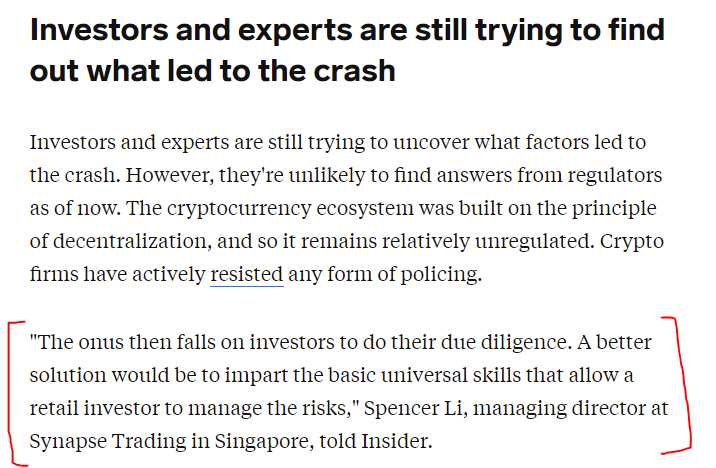
However, in the crypto space, it ist somewhat less regulated, so the onus falls on investors to do their own due diligence.

However, every new product is going to be pretty technical and hard for the average retail investor to understand and assess the risk, so there is a limitation on product education as the solution.

A better solution would be to impart the basic universal skills that allow a retail investor to manage the risk of any investment product in general, such as those mentioned above (financial savviness, behavioral psychology, portfolio risk management).

What is the biggest takeaway for the crypto community from this incident? What about for investors?

For professional and seasoned investors, this will likely not be their first rodeo, as 80-90% of crypto projects historically have crashed and burned. They most likely did not put all their eggs into one basket, as they are aware of the risks of any individual crypto investment. So I would say some seasoned investors might have suffered some losses, but not to the point where they go totally bust. 

For retail investors, especially for those getting burnt the first time, this will be a good lesson not to be too greedy, and to diversify your portfolio. Another important lesson is that there is no truly risk-free investment, so before investing in a product, you need to know all the risks associated with it, and decide how much risk you want to take on (and mitigate the risks you don’t want).


Read the full article here:
https://www.businessinsider.com/terrausd-luna-60-billion-crash-sparks-fears-suicide-self-harm-2022-6

0 Comments/by Spencer Li
https://synapsetrading.com/wp-content/uploads/2022/06/terrausd-luna-crash.jpg 423 752 Spencer Li https://synapsetrading.com/wp-content/uploads/2019/10/logo.jpg Spencer Li2022-06-13 19:55:052022-12-19 02:03:50Short Interview with Business Insider: My Insights on the TerraUSD & Luna Crash
Spencer Li

Easiest Way to Invest in the Metaverse (Stocks & Crypto)

Blockchain & Crypto, Stock Trading
Easiest Way to Invest in the Metaverse Stocks Crypto

metaverse ready player one

Seems like nowadays, everyone is talking about the Metaverse, and every company is following Facebook’s (now called Meta) lead in pivoting to a Metaverse company.

Have you positioned your portfolio for the Metaverse? https://t.co/BcjivQzjKv

— Spencer Li (@SynapseTrading) November 10, 2021

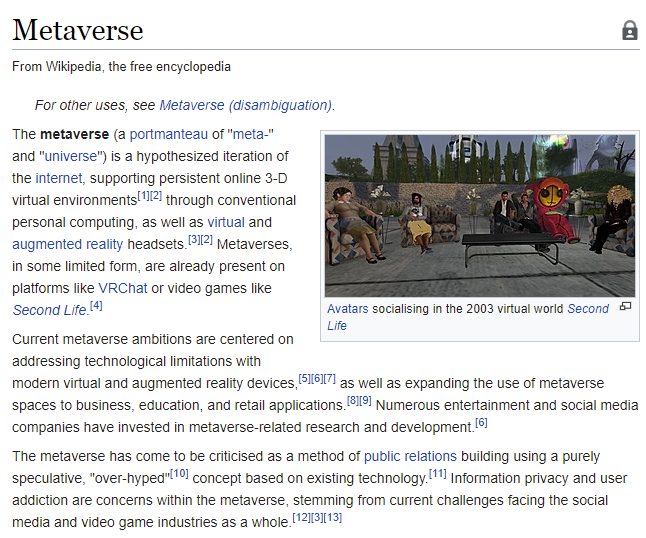
So what exactly is the Metaverse?


What is the Metaverse?

If you have watched movies/shows like “Ready Player One” or “Sword Art Online”, you will have a pretty good idea.

The origin of the term comes from science-fiction writer, Neal Stephenson, who coined the term “metaverse” in his 1992 novel “Snow Crash,” which envisions a virtual reality-based successor to the internet. In the novel, people use digital avatars of themselves to explore the online world, often as a way of escaping a dystopian reality.

In short, it is like creating a virtual world which mimics the actual world, so activities like socialising, learning, gaming, working which you normally do in the real world, can also be done in the virtual world.

metaverse wikipedia

By now, you probably get the idea that this is something big, judging by how every major company is looking to get a slice of the pie.

But the big question is, what is the best way to invest in the Metaverse?

If you are not an expert in the industry, it will be hard to pick the correct stocks that give the best exposure, and have the most potential.

So here are some easy ways to do it:

Metaverse Index for Stocks (META)

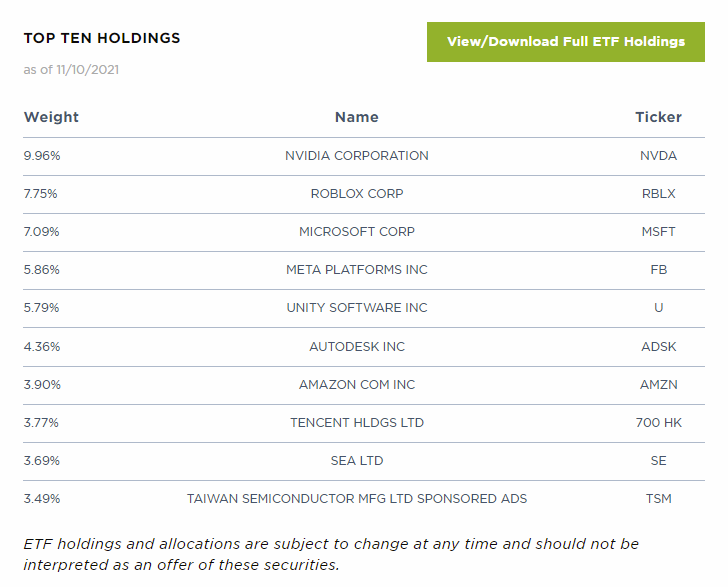
The first way to get exposure is to invest in stocks that are related to developing the Metaverse, and an easy way to do it is via an ETF (exchange-traded fund) which allows you get diversified exposure without needing to do much research.

Here is the current most popular ETF:

The Ball Metaverse Index is the first index globally designed to track the performance of the Metaverse. The Index consists of a tiered weight portfolio of globally-listed companies who are actively involved in the Metaverse.

roundhill metaverse index META

roundhill metaverse index META holdings

Source: https://www.roundhillinvestments.com/etf/meta/

Metaverse Index for Crypto (MVI)

Besides stocks, there is another possibility that the Metaverse might develop independently in the crypto space, via DAOs or decentralised projects.

The metaverse is a broad term to define the ever-expanding virtual reality worlds where players can create an avatar, buy land, build experiences, import NFTs, and trade with other users. Here are some projects and tokens:

CUBE is the ERC-20 token native to Somnium Space, a virtual world that offers both community-led events and an in-game economy. CUBE can be used to purchase virtual assets and pay for goods and services in the metaverse. Participants can join via virtual reality (VR) headsets or mobile and web browsers.

MANA is the ERC-20 token used to pay for goods and services in Decentraland. In Decentraland, users connect and interact with each other, create content, and play games. It even has a virtual economy where users can monetize the content and applications they build.

SAND is the ERC-20 token used in The Sandbox virtual world. The Sandbox virtual world is made up of LAND – digital pieces of real estate – that players can buy, and on which they can build games and other virtual experiences.

So it makes sense to get some exposure to this as well.

The easiest way to do it is also via an “ETF”, which is not really an ETF but it is a token which mimics the performance of a variety of Metaverse-related projects.

Here is one such index:

The Metaverse Index (MVI) is designed to capture the trend of entertainment, sports and business shifting to take place in virtual environments.

metaverse index MVI overview

metaverse index MVI components

Source: https://www.indexcoop.com/mvi


In conclusion, these are the 2 easiest ways to get exposure to both stocks and crypto in the Metaverse space, for people who do not want to spend too much time or effort doing rsearch.

If you interested to take it to the next level, then you can do more precise targeting by buying specific stocks and projects, but that will involve more research.


thumbnail the ultimate guide to blockchain and crypto assets

If you would like to learn more about crypto & DeFi, also check out: “The Ultimate Guide to Blockchain & Cryptocurrencies”

0 Comments/by Spencer Li
https://synapsetrading.com/wp-content/uploads/2021/11/Easiest-Way-to-Invest-in-the-Metaverse-Stocks-Crypto.png 720 1280 Spencer Li https://synapsetrading.com/wp-content/uploads/2019/10/logo.jpg Spencer Li2021-11-12 11:48:432022-03-09 11:55:29Easiest Way to Invest in the Metaverse (Stocks & Crypto)
Page 3 of 41234

Free Trading Guides

Free Trading Guides

Blog Categories

  • Beginner's Guide
  • Blockchain & Crypto
  • Book Summaries
  • Candlestick Patterns
  • Economics & News Trading
  • Investing & Portfolio Management
  • Living Your Best Life
  • Market Analysis
  • News & Events
  • Price Chart Patterns
  • Promotions
  • Risk & Money Management
  • Stock Trading
  • Testimonials
  • Tools & Resources
  • Trading Psychology
  • Trading Strategies
  • Trading Tips
  • Travel & Lifestyle

Free Trading Guides

Free Trading Guides

Contact Us

Synapse Trading Pte Ltd
Registration No. 201316168H

Whatsapp: +65-8897-1204
Telegram: @iamrecneps
Email: info@synapsetrading.com

Links

Disclaimer
Privacy policy
Terms & Conditions
Contact us
Partnerships

© 2012-2024 Synapse Trading | All rights reserved | - powered by Enfold WordPress Theme
  • Link to Facebook
  • Link to X
  • Link to Instagram
  • Link to Youtube
  • Link to LinkedIn
  • Link to Mail
Scroll to top Scroll to top Scroll to top