

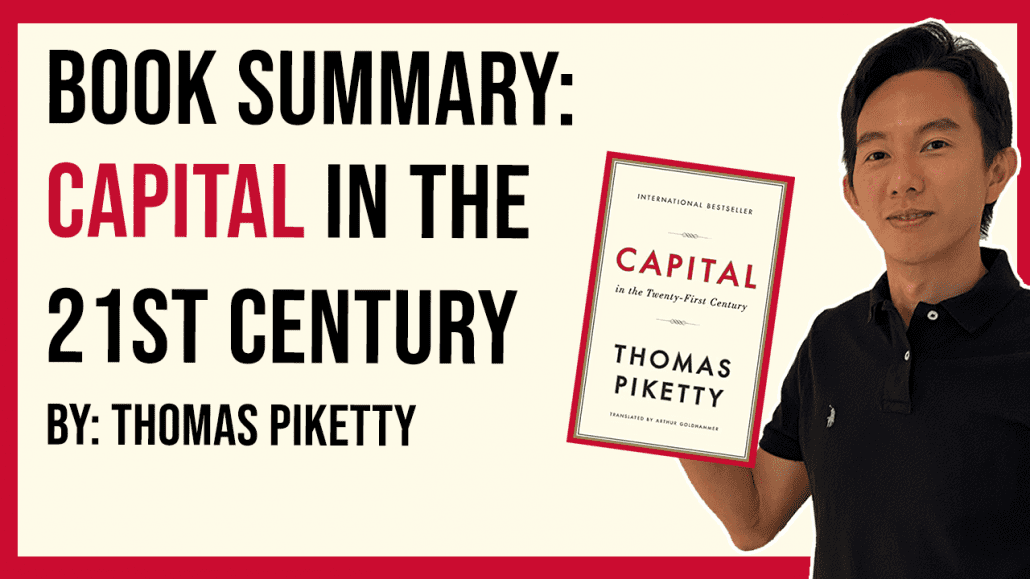
Book Summary: Capital in the Twenty-First Century by Thomas Piketty
Join our Telegram channel for more market analysis & trading tips: t.me/synapsetrading
Table of Contents
Capital in the Twenty-First Century (Piketty): Summary, Key Ideas, and What It Means for Investors
Last updated: 3 July 2026 · By Spencer Li, CFTe
“Capital in the Twenty-First Century” by Thomas Piketty argues that wealth grows faster than wages, so without deliberate intervention, capital piles up in fewer and fewer hands over time. His central finding, drawn from over two centuries of tax and income data across many countries, is captured in one short inequality: r is greater than g. Here r is the return on capital (what money makes when it is invested, roughly 4 to 5 percent historically) and g is the growth rate of the economy (how fast wages and output rise, often closer to 1 to 2 percent). When the return on owning things outpaces the growth of earning a living, the people who already own capital pull steadily ahead of the people who work for a paycheck. Piketty’s policy fix is a global tax on wealth. His warning is that left alone, this gap widens until it threatens social and political stability. For an investor, the uncomfortable practical reading is simpler still: if capital compounds faster than labour, you want to be an owner of capital, not only a seller of your time.
I read this as a trader, not as an economist, and the book is worth your attention even if you disagree with every policy in it. Here is what is actually in it, the one equation that carries the whole argument, the criticisms worth knowing, and the way I think an investor should take it.
Who is Thomas Piketty?
Thomas Piketty is a French economist and a professor at the École des Hautes Études en Sciences Sociales in Paris. He built his reputation on the patient, unglamorous work of assembling long-run data on income and wealth, going back through tax records spanning more than two hundred years and many countries. “Capital in the Twenty-First Century,” published in 2013, is his best-known work, and it turned a dense academic project into a global bestseller and a genuine public argument about inequality.
What makes him worth reading is the data, not the slogans. Whatever you think of his conclusions, the historical record he assembled is the real contribution. Hence even his critics tend to argue with his interpretation rather than dismiss the evidence outright.
What is the book actually about?
The book makes one big claim and defends it with history: wealth inequality is not a passing accident of capitalism but a built-in tendency, and it has waxed and waned for specific historical and political reasons, not natural ones.
Piketty’s reasoning runs like this. Over the long sweep of history, the return on capital has usually been higher than the growth rate of the overall economy. Money already invested grows faster than the economy that working people earn their living from. So the share of total wealth held by those who already own capital tends to rise, decade after decade, unless something interrupts it. The twentieth century did interrupt it, through two world wars, the Great Depression, and high post-war taxes, which destroyed or redistributed a lot of capital. Piketty’s worry is that the second half of the twentieth century was the exception, and that without deliberate action, the old pattern of high concentration returns.
He argues this matters for two reasons. It is a moral problem, because extreme concentration is hard to square with a fair society. And it is an economic and political one, because too much concentration can breed instability and, he argues, even drag on growth. His proposed remedy is a coordinated global tax on wealth, which he concedes is politically difficult. His view is that ordinary tools, like progressive income tax alone, are not enough to offset the r-minus-g engine.
The one equation: r is greater than g
If you remember one thing from this book, make it this. The whole argument compresses into a single comparison between two rates.
- r is the rate of return on capital: what wealth earns when it is invested, across stocks, bonds, real estate, and business ownership. Piketty puts the long-run figure at roughly 4 to 5 percent.
- g is the growth rate of the economy: how fast total output and, broadly, wages grow. Historically this is often lower, closer to 1 to 2 percent over long stretches.
When r is greater than g, capital grows faster than the economy that wages come from. The gap between the two, r minus g, is what Piketty says sets the speed of wealth concentration. The bigger that gap, the faster wealth pools at the top. This is also why inherited wealth matters so much in his account: when old money compounds faster than the economy grows, fortunes built generations ago can outpace fortunes earned through work today.
Do note that r is greater than g is a description of a historical tendency, not an iron law of physics. It can be, and has been, overridden, by war, by depression, by tax policy, and by faster economic growth. That nuance gets lost in the slogan, and it matters for the criticisms below.
The key ideas, without the repetition
The original summary lists ten points that mostly restate one another. Stripped down, Piketty is really making five arguments:
- Wealth inequality is persistent, not random. Concentration of wealth has recurred across countries and centuries. It is a feature of the system, not a glitch.
- It is political and historical, not natural. The level of inequality is shaped by wars, crises, and policy choices, so it can be changed by different choices.
- r greater than g is the engine. When the return on capital outpaces economic growth, wealth concentrates, and the size of that gap sets the pace.
- Inherited wealth compounds the effect. Old capital growing faster than new earnings entrenches advantage across generations.
- Ordinary fixes are not enough, in his view. Progressive income tax alone does not offset the engine; Piketty’s headline proposal is a coordinated global wealth tax.
Capital income vs labour income
Here is the tension at the heart of the book, laid out plainly. It is the difference between making money by owning things and making money by working.
| Capital income (owning) | Labour income (working) | |
|---|---|---|
| Source | Returns on stocks, bonds, property, businesses | Wages and salary for your time |
| Long-run growth rate | r, historically about 4 to 5 percent | Tied to g, often about 1 to 2 percent |
| Scales with | Capital already owned (and it compounds) | Hours in the day (it does not compound) |
| Who benefits most | Those who already hold wealth, including heirs | Those still building from a paycheck |
| Piketty’s worry | Pulls steadily ahead over time | Falls behind unless growth is fast |
The table is not investment advice, and it is not a promise that capital always beats labour every year (in any single decade it may not). It is the long-horizon picture Piketty draws from the data, and it is the reason an investor cannot ignore the book even while disagreeing with its politics.
The criticisms worth knowing
Piketty’s work has drawn both heavy praise and serious pushback, and a fair summary has to include both.
Some economists have questioned the accuracy and comprehensiveness of his data, or how he stitched different historical sources together. Others accept the data but reject the conclusions, arguing that the proposed remedies, a global wealth tax above all, are politically unrealistic or could do more harm than good by discouraging investment. There are also technical debates about whether r reliably stays above g in the future, or whether faster growth and changing returns could close the gap on their own.
Personally, I take the historical record more seriously than the policy prescription. You can think the diagnosis is largely right and the prescribed cure is unworkable, and many reasonable people land exactly there. The honest move is to read the data with a critical eye, hold both the evidence and the objections in mind, and not treat the book as either gospel or propaganda. It offers a framework for thinking about the problem, not a one-size-fits-all solution.
How should an investor read this book?
This is where most trading-blog summaries go wrong. They turn Piketty into a political to-do list, vote this way, donate here, advocate for that. That is the author’s call to action, and you are free to take it or leave it. It is not the part that changes how you handle your own money.
The part that should change your behaviour is the engine itself. If, over a lifetime, capital tends to compound faster than wages grow, then the single most important financial decision most people make is whether they ever cross from being only a seller of their time to also being an owner of capital. You do not need to agree with the global wealth tax to take that lesson. Hence the practical, unglamorous reading of a 700-page book about inequality is this: get on the ownership side of the line, start early, and let compounding do the slow work that r is greater than g describes.
That is also where it connects to everything else on this site. Buying assets is owning capital. Trading is one active way to grow it, and long-term investing is another. The book is a reminder of why building and holding capital matters in the first place, underneath any particular strategy. Read it alongside the case for low-cost long-term ownership in The Little Book of Common Sense Investing and the local picture of how wealth actually stacks up in the report on the net worth of the average Singaporean.
Where the human edge comes in
A model can tell you r is greater than g. It can even tell you, on average, that owning capital beats selling your time. What it cannot do is decide your split, how much of your life energy you convert into owned assets versus how much you spend, when to start, and whether you have the discipline to keep compounding through the decade when the gap closes and ownership feels like a bad idea. Piketty supplies the macro fact. The judgment about what you personally do with it is yours, and that is the first of the Five Edges no equation can supply for you.
FAQ
What is the main message of Capital in the Twenty-First Century?
The main message is that wealth tends to grow faster than the economy, summed up as r is greater than g, so capital concentrates in fewer hands over time unless deliberate policy intervenes. Piketty argues this is a recurring historical pattern, not a natural inevitability, and proposes a global wealth tax to counter it.
What does r is greater than g mean?
It means the return on capital (r), historically about 4 to 5 percent, has usually been higher than the growth rate of the economy (g), often about 1 to 2 percent. When money already invested grows faster than wages and output, those who own capital pull ahead of those who earn a salary, and the gap, r minus g, sets how fast wealth concentrates.
Is Capital in the Twenty-First Century worth reading?
Yes, especially for the long-run historical data on income and wealth, which is the book’s real contribution. It is long and dense, and many readers disagree with its policy proposals, but the underlying picture of how capital compounds relative to wages is valuable for anyone thinking about building wealth.
What are the main criticisms of Piketty’s book?
Critics have questioned the accuracy and stitching of his historical data, argued that his proposed global wealth tax is politically unrealistic or economically harmful, and debated whether r will reliably stay above g in the future. A common position is to accept much of the diagnosis while rejecting the prescribed cure.
What is the practical takeaway for an investor?
If capital compounds faster than wages over the long run, the key decision is whether you ever become an owner of capital rather than only a seller of your time. The investor-side reading of the book is to get on the ownership side early and let compounding work, regardless of where you land on its politics.
Now that you have Piketty’s core argument and the one equation behind it, the real question is what you do with it: are you building capital, or only earning wages? Have you read this one? Let me know your key takeaway in the comments.
For more, browse the full shelf: Best Investing and Trading Books of All Time.
Want a system for the active side of building capital? Grab the free 15-Minute Swing Trading Starter Kit, the exact routine I use to scan once a day and trade any market in 15 minutes.
About the author. Spencer Li is the founder of Synapse Trading and a Certified Financial Technician (CFTe) with 15+ years of trading across stocks, forex, crypto, commodities, and bonds. His trade log is public: every trade since April 2024, dated, losses left in. He has taught a 15-minute daily trading routine since 2014, one system for any market.
Education, not financial advice. Synapse Trading is not licensed by MAS to advise on investment products. Trading carries risk of loss; past performance is not indicative of future results.
Related
Best Investing and Trading Books of All Time (pillar) · The Little Book of Common Sense Investing (Bogle) · Net worth of the average Singaporean · The Intelligent Investor summary
Want our free trading resources by email? Leave your address below.
 Our flagship mentoring program is suitable for both beginners and advanced traders, covering the 4 strategies which I used over the past 15 years to build up my 7-figure personal trading portfolio.
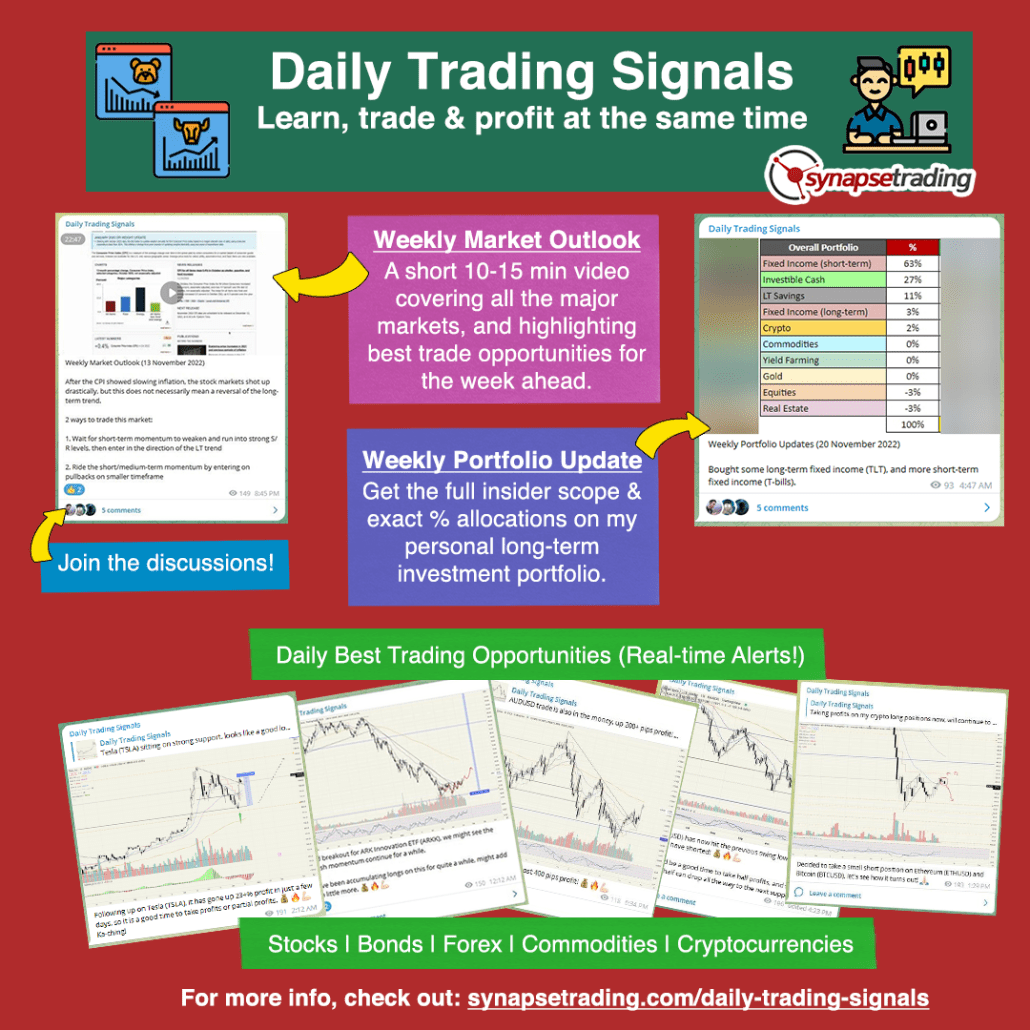 If you're looking for the best trading opportunities every day across various markets, and don't want to spend hours doing the research yourself, check out our private Telegram channel!


Leave a Reply
Want to join the discussion?Feel free to contribute!