• Link to Facebook
  • Link to X
  • Link to Instagram
  • Link to Youtube
  • Link to LinkedIn
  • Link to Mail
Synapse Trading
  • Home
  • About
    • My Background
    • My Trading Journey
    • My Travel Log
    • Media & Interviews
  • Mentoring
    • Trading Mastery Program
    • Results & Testimonials
  • Signals
    • Telegram (Free to join!)
    • Daily Trading Signals
    • Daily Trading Signals (Results)
  • Resources
    • Free Trading Guides
    • Tools & Resources
    • Blog & Infographics
  • Contact
    • Contact Us
    • Partnership Opportunities
  • Click to open the search input field Click to open the search input field Search
  • Menu Menu

Tag Archive for: trading for a living

Spencer Li

FREE Market Outlook Seminar in Penang: What are the Best Investment Opportunities for 2017?

News & Events
penang market outlook

This coming Saturday (25 Feb 2017), I have been once again invited to speak in Malaysia about the market outlook, and this time I will be speaking in Penang! [Scroll all the way down to register.]
 

Thanks for the full-house turnout during my speaking slot! It was really exciting to share the stage with so many other prominent speakers, such as Hu Liyang, Kathlyn Toh, David Kuo, Dr Thiti Tharasuk, etc ??? #investfair #guestspeaker #fullhouse

A post shared by Spencer Li ?? Synapse Trading (@iamrecneps) on Jul 4, 2016 at 12:19am PDT


For those of you (outside Singapore) who don’t know me, I am a professional trader with over 10 years of market experience, and have been featured more than 20 times in various media. I hold double degrees in accounting & finance (dean’s list), and I’m also a globally accredited CFTe, and one of the few official trainers for the Singapore Stock Exchange (SGX).


I was thrust into the media limelight when I retired at 27 (in 2013) and spent the next few years travelling around the world (50+ countries) while trading just 15 minutes a day.

Since this is my first time in Penang, I will be conducting an exclusive FREE workshop to share the 4 strategies that my students and I use to make 20-40% annual returns consistently. These strategies work for stocks, forex, CFDs, etc.

In addition, I will be logging into my live trading account to show my all my trades and also the records of my students.

Workshop details:

  • Date: 25 February 2017
  • Time: 9.00 am to 12.00 pm
  • Venue: YMCA Penang

To register, please whatsapp +65-9772-4280 or email info@synapsetrading.com with the following details:

  • Full name
  • Email address
  • Contact number
  • Number of tickets

Seats are very limited for this one-time event, so it will be based on a first-come, first-serve basis.

Good luck, and see you there! 😀

0 Comments/by Spencer Li
https://synapsetrading.com/wp-content/uploads/2017/02/penang-market-outlook.png 533 1029 Spencer Li https://synapsetrading.com/wp-content/uploads/2019/10/logo.jpg Spencer Li2017-02-21 00:20:042018-09-05 03:02:10FREE Market Outlook Seminar in Penang: What are the Best Investment Opportunities for 2017?
Spencer Li

Dubai, South Africa, Lesotho – Over 3,000km by Road!

Travel & Lifestyle
south africa trip

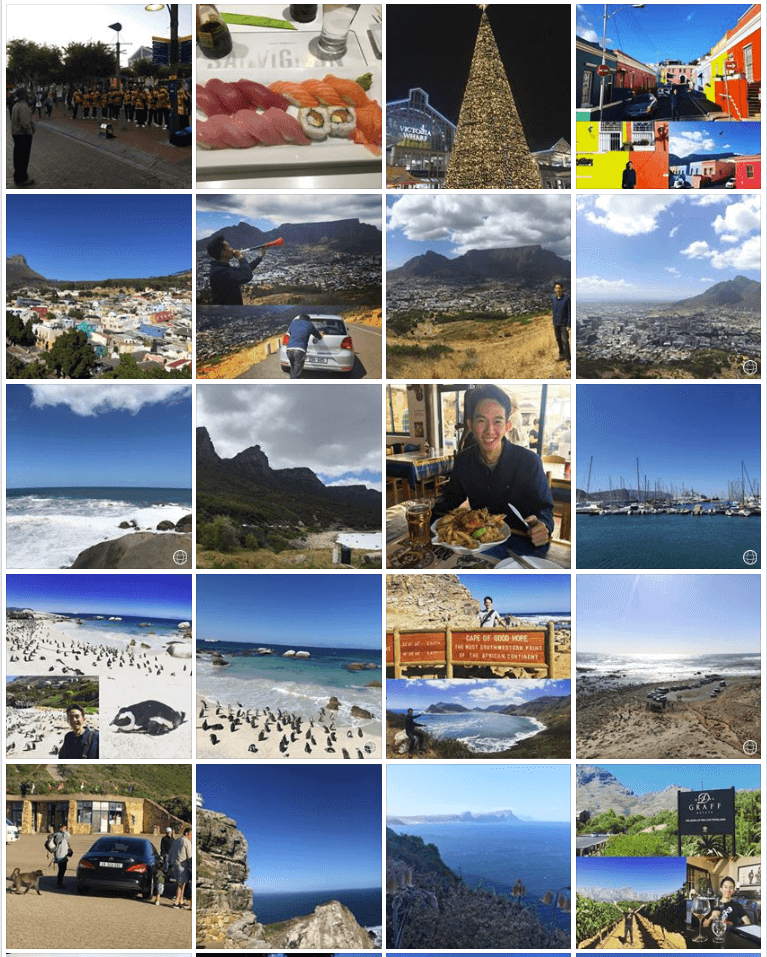
Last month, I embarked on a 2-week trip to Dubai, South Africa and Lesotho, and  it was truly a unique experience, especially driving over 3000km in 2 weeks, trying out the shark-cage diving, riding an ostrich, and doing a self-drive safari.

And the best part was that by continuing to trade 15 minutes a day, I managed to make a tidy 5-figure profit during these 2 weeks of travelling, which was more than sufficient to cover the cost of the whole trip! 😀

To see the full photo albums for this trip, please visit: https://synapsetrading.com/travel-log/


Here are some photos from the trip:

Dubai, South Africa, Lesotho


Once again, to see the full photo albums for this trip, please visit: https://synapsetrading.com/travel-log/

Enjoy! 😀

0 Comments/by Spencer Li
https://synapsetrading.com/wp-content/uploads/2017/01/south-africa-trip.png 957 767 Spencer Li https://synapsetrading.com/wp-content/uploads/2019/10/logo.jpg Spencer Li2017-01-29 02:47:142022-03-09 13:53:13Dubai, South Africa, Lesotho – Over 3,000km by Road!
Spencer Li

Exploring the Wonders of Europe: Ireland, Iceland & UK!

Travel & Lifestyle
fb album ireland iceland uk

In October, I embarked on a 2-week trip with my sister to Ireland, Iceland and the UK, and it was an amazing trip! 😀

In 2 days, I will be going for another 2-week trip, this time covering Dubai, South Africa and Lesotho. (Yes, this is a country!)

Of course, I will continue trading as I travel, and continue supporting my students and traders. Stay tuned for my market updates!

To see the full photo albums for this trip, please visit: https://synapsetrading.com/travel-log/


Here are some photos from my last trip:

fb-album-ireland-iceland-uk


Once again, to see the full photo albums for this trip, please visit: https://synapsetrading.com/travel-log/

Enjoy! 😀

0 Comments/by Spencer Li
https://synapsetrading.com/wp-content/uploads/2016/12/fb-album-ireland-iceland-uk.png 954 770 Spencer Li https://synapsetrading.com/wp-content/uploads/2019/10/logo.jpg Spencer Li2016-12-20 03:40:082020-02-13 02:15:54Exploring the Wonders of Europe: Ireland, Iceland & UK!
Spencer Li

Personal Checklist: The Top 5 Habits of Singaporean Self-Made Millionaires

Living Your Best Life
singapore millionaires

Just last week, I came across this interesting article, talking about some of the prominent millionaires in Singapore, and how they created their wealth.

vulcan-postSource: Vulcan Post

As I read it through, I couldn’t help but think about what they did to make, keep, and grow their wealth. Sure, some of them inherited their wealth, but it takes a different kind of education in order to preserve and grow the inherited wealth.

It is definitely not chance that these people have achieved phenomenal success. There were, in fact, common patterns of behaviour that keep them successful.

The difference lies in just 5 actions they take consistently:

1. THEY CREATE MULTIPLE INCOME STREAMS

The average person lives from paycheck to paycheck, while the average wealthy person receives cash from various sources, so that even if one source were to be temporarily cut off, they can still enjoy the same standard of living they currently have. Here are just some of the commonly known income streams that they have:

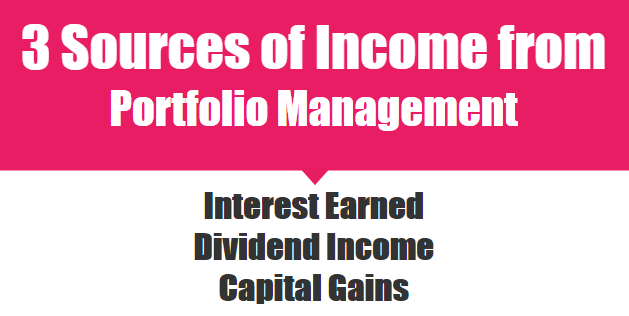
Earned Income: working for money

Interest Earned: earning money by lending it

Dividend Income: earning money by share ownership

Profit: Selling something you make or own

Capital Gains: Selling something higher than what you bought it for

Rental Incomes: Money gotten from owning real estate

Royalty Incomes: Money from selling intellectual property or franchise systems

3

Having multiple streams of income is like having many waterfalls flowing into the same ocean. The more streams you have, the more reliable the flow.

Which do you currently have? The average person struggles to survive because he only has one stream. Personally, I like trading and portfolio management. The great thing about portfolio management is that you can enjoy interest earned, dividend income, and capital gains.

2


2. THEY TREASURE EVERY SECOND OF THEIR TIME

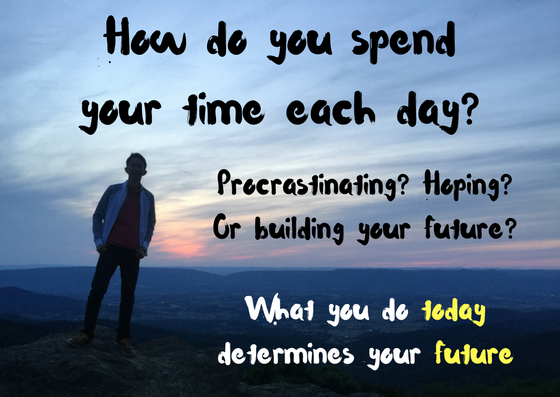
Let’s be honest with ourselves; how many hours a day do you do things that do not contribute to your financial success? Most people would rather procrastinate or spend time on enjoyment rather than on what really matters.

I found this really interesting image of how most people spend their time in a year:

4Source: The Visual Communication Guy

It’s amazing; out of 365 days a year, 183.7 days are spent on media! If we were honest with ourselves, perhaps what we need is to rethink the way we live. Perhaps if we all take some time away from Media and reallocate it to self-improvement, learning, investing, and growing as a person, we could be living a very different life indeed.

How would your life look if you re-arranged your priorities?

Robert Kiyosaki once made a quip about what he noticed of rich and poor dads; he said that poor dad would sit on the couch and watch TV every night, while rich dad would review his investments and upgrade his skills every night. Poor dad would spend the weekends wasting time, while rich dad would build a business during the weekends.

2

Many of you would know that I read more than 200 books before I embarked on my trading journey. Even now, I make it a point to read at least 3 books a week, because I feel that it is important to never stop learning and upgrading oneself. Here are some key pointers:

  • Don’t waste time. Find out what you need to do, and do it.
  • Re-prioritize. Find out which areas of your life you can do away with, and cut them out quickly.
  • Learn. Just because you have graduated doesn’t mean you should stop learning. Successful people get where they are because they have an attitude of lifelong-learning.


3. HAVING A MENTOR MAKES A BIG DIFFERENCE

Mentors are looking for people who are humble, hungry, and hard-pressed for success. No matter where you are in your career or life, it helps to have successful people to reach out to and learn from. They’ll be able to quickly point you in the right direction if you are going off-track.

When I started my trading career at a professional fund, I had wonderful, experienced mentors to guide me in the right direction. I quickly picked up on what worked and what did not. I learnt their habits, their lifestyle, and the difficulties that they went through to get where they were.

Where can you look for mentors if you have no one at the moment? This is what many people ask me from time to time.

  • Build connections: Networks are not built overnight. As you expand your social circle to include successful people, you will start to find people who could potentially guide you to where you want to go.
  • Be inquisitive: People will only want to mentor someone who has the attitude for success. While at the beginning you might lack aptitude, the right mentality and motivation would attract the right people to you.
  • Keep learning: As you learn more, you discover you will have the vocabulary to connect with people. With greater proficiency, you would be able to speak at the same level as industry practitioners, asking smart questions, being able to understand jargon, and make an impression.


4. THEY VISUALIZE THEIR DREAMS IN DETAIL

Goals without dreams are dead; they become mere tasks rather than the exciting outcome that you hope for. It helps to have an idea of what you want; most people want to be wealthy but don’t know what it would look like.

What does a wealthy life look like for you? For YOU personally?

For some, it could mean having to work only 2-3 days a week. Financial goals differ from person to person, and it’s not just the monetary goal, but also the lifestyle goal. For me, I knew I wanted to have the luxury of making passive income even when I am travelling. This may not be everyone’s goal.

“How much money do you want to make exactly, and what would that lifestyle look like exactly?”

Many people want to lose weight. Losing weight isn’t a definite enough goal; Losing 12 kg by the end of 6 months is a definite goal. Many people fail to achieve their goals because they don’t even define their goals!

It’s also important to visualize yourself doing what you hope to be doing. Having a lot of money is pointless if all you are going to do is sit aroud with the cash; it is accomplishing the goals you have, those bucket lists, that make life worthwhile.

So what is it for you?

Grab a piece of paper and start getting your hands dirty. It doesn’t matter if you are old or young, experienced or inadequate; what matters is a willing heart and dilligent hands, and of course, a big enough dream that will knock you off your sofa and get you started.

  • Be specific about your goals. General goals generally don’t work. Specific goals help you to move toward exactly what you want.
  • Keep track of your progress. You never know if you are on the right path if you don’t take stock regularly. Even better, get a mentor to help you evaluate where you are.
  • Focus on the dream with its details. Keep reminding yourself of where you eventually want to be. Otherwise, you’ll just lose steam and burn out, bum around, and end up not getting where you were heading toward.


5. THEY DO NOT GIVE UP OR QUIT

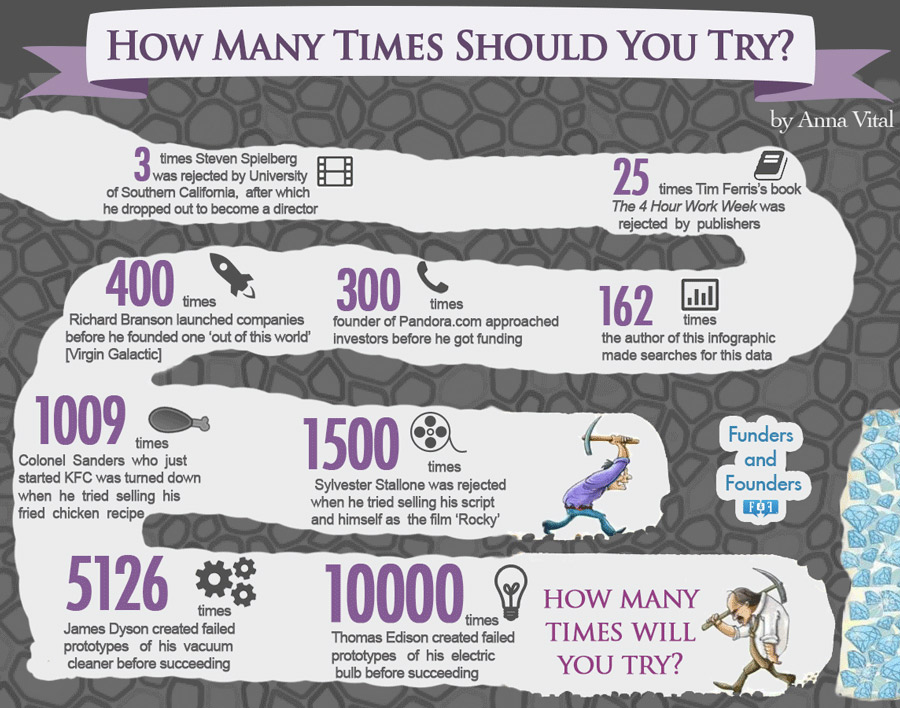
If you’ve got your foot into the investing arena, you would be familiar with financial losses. It is at this point where your mettle is truly tested; is this what you want? Are you willing to sit through heartache and tough lessons to get where you want? Is the life you left behind really worth going back to? Do you still believe in the dream you have?

When that business fails, would you stand up again and start all over? When you family doubts you and the pressure to provide hits you, will you continue to stand by your dream? People want the glory without the trials and training. Just take a look at the infographic below that I found:

33Source: Anna Vital (Founders & Founders)

I also came across this interesting quote, which I thought was very useful in clarifying what we really value. Millionaires invest their money and make investing a priority, while poor people spend their money first and make spending a priority.

5Source: Gecko and Fly

Always, always seek to make investing your primary objective. Invest your time, invest your money, invest in your team if you are running a business. Invest, invest and invest.

Is investing your primary objective, or is spending your primary objective? Would you be willing to delay gratification, in order to enjoy a lot more in the future, far more than you can ever imagine?

  • Do not quit. Ensure that you have made a commitment. Tell your friends, and engage people to keep you on this path.
  • Invest your money, your time, and in your team. Investing is what multiplies your returns in the long-run. Keep at it!
  • Prioritize learning, rather than earning. It pays to be more proficient at what you want to do. When you are starting out, make learning a priority, and the profits will come eventually.

Don’t give up on your dreams!

555

Feel free to share this with people you know who are working hard toward their dreams, and striving to build their first pot of Gold. And with these 5 actionable steps, you’ll be one step closer to your first million! 😀

Bonus: Download free ebook: The 7 Best-Kept Secrets of Professional Traders

RESEARCH SOURCES & REFERENCES

vulcanpost.com/593788/in-forbes-2016-asias-richest-families-list-we-see-some-prominent-singaporean-names
businessinsider.sg/habits-of-self-made-millionaires-2016-3/#rJDS8hCPPhHm5qpK.97
fastcompany.com/3052770/how-to-be-a-success-at-everything/7-habits-of-self-made-millionaires
allbusiness.com/slideshow/9-smart-habits-of-real-millionaire-entrepreneurs-16769866-1.html
huffingtonpost.com/timothy-sykes/top-30-millionaire-habits_b_8260134.html


thumbnail an unofficial guide to living our best life beyond financial freedom

If you are excited to get more life hacks, also check out: “Beyond Financial Freedom: An Unofficial Guide to Living Your Best Life”

0 Comments/by Spencer Li
https://synapsetrading.com/wp-content/uploads/2016/11/singapore-millionaires.jpg 427 816 Spencer Li https://synapsetrading.com/wp-content/uploads/2019/10/logo.jpg Spencer Li2016-11-16 06:17:012021-10-04 22:40:41Personal Checklist: The Top 5 Habits of Singaporean Self-Made Millionaires
Spencer Li

5 Practical Tips on How to Trade on the Go (With 15 Minutes a Day)

Trading Tips
2016 07 10 10.20.49

How to Trade on the Go: 5 Practical Tips to Trade in 15 Minutes a Day

Last updated: 3 July 2026 · By Spencer Li, CFTe


You can trade on the go in 15 minutes a day by trading larger timeframes (1-hour and above), preparing a fixed watchlist before you travel, and only taking the few setups that jump off the chart. The reason it works is mechanical, not magical: on a daily or 4-hour chart you only need to check your positions a handful of times a day, your stops are wider, your size is smaller, and the small intraday wiggles stop mattering. So you stop staring at charts. You scan your watchlist in the spare pockets of time you already have (waiting for a bus, waiting for your food), and you are done. The whole thing rests on one habit: every trade gets a stoploss the moment it goes on, so a dropped connection or a flight can never hurt you.

I have traded across 48 countries doing exactly this. Here are the five tips that make it work, why each one matters, and where people get it wrong.

Can you really trade while travelling?

Yes, and it is easier than it sounds. In most countries you can get wifi or buy a local data plan, so as long as you have your phone, you can place trades as you move. The hard part is not access. The hard part is discipline: not over-trading, not chasing small timeframes, and not letting a patchy connection leave you holding an unprotected position.

The five tips below are the system I actually use on the road. They are deliberately boring, because boring is what survives a weak airport connection and a 14-hour time difference.

The 5 tips at a glance

TipWhat you doWhy it matters
1. Lock in a connectionUse hotel/cafe wifi or buy a local SIM; always have a stop in placeA dropped connection mid-trade is the one failure that can actually hurt you
2. Few setups, few productsPre-build a watchlist (mine is 20+ forex/commodity pairs)You scan in minutes and only ever take the best of the best
3. Trade larger timeframesNothing below the 1-hour; prefer 4-hour and dailyYou only need to check in every few hours, not every few minutes
4. Cap it at 15 minutes a dayUpdate positions in spare pockets of timeTrading fits around your life instead of swallowing it
5. Use a network of tradersLearn from other good traders’ actual tradesYou compress years of reps by watching how others read the same charts

Tip 1: Make sure you have a good internet connection

This is a no-brainer, but it is the one that bites people. The worst position to be in is sitting on open trades with no internet, unable to input your stoploss or your targets. Take full advantage of wifi hotspots at hotels and cafes. Better still, buy a local SIM card and data plan the moment you land.

And if your access is going to be intermittent, on a flight, for example, then the rule is simple: every trade already has a stoploss in place before you lose signal. Do that and a dead connection becomes a non-event. You are protected whether you are online or at 35,000 feet.

Tip 2: Focus on a handful of setups and products

You do not want to spend an hour browsing the markets, so prepare a simple watchlist beforehand. Personally, I focus on about 20+ forex and commodity pairs. That is small enough to scroll through all of them in a few minutes on my phone, and broad enough that something good usually turns up.

Because you are only taking a few trades, you get to be picky. You can take the best of the best. Here is my filter: when you see a genuinely good setup, it should jump off the chart and right into your face. You should feel the pull to take it. If you have to squint at the chart and think three times about whether it is a good trade, let it go. The trade you have to talk yourself into is usually the one that costs you.

A watchlist is also where a scanner earns its keep. A scanner (a tool that flags chart patterns automatically) will surface candidates for you in seconds. What it will not do is tell you which one is worth the risk and which to skip. That judgment is the first of the Five Edges a machine cannot trade for you, and it is exactly the muscle a tight watchlist trains.

Tip 3: Use a larger timeframe to place your trades

If you are on the move, you obviously cannot stare at charts all day. So you should not be using small-timeframe charts like the 5-minute or 15-minute. Personally, I would not recommend anything below the 1-hour.

Larger timeframes (1-hour, 4-hour, daily) mean you only check the charts at infrequent intervals: every hour, every four hours, or once a day. You stop worrying about your positions between checks, because your stops are naturally wider and your positions are correspondingly smaller. The small market fluctuations that would shake you out on a 5-minute chart simply do not reach you. This is the single change that makes “15 minutes a day” possible.

Tip 4: Do not spend more than 15 minutes a day

Once you are off the small timeframes, you no longer have to monitor the market constantly. You only have to periodically check and update your positions, and you can do that inside the “wasted” pockets of time you already have throughout the day.

Think about where those pockets are. Waiting for a bus, taxi, MRT, plane, or train. Waiting for your food to arrive. Instead of opening a mindless mobile game or scrolling random articles, open your trading app and update your positions. That is the whole routine. It is not that you find more time to trade. It is that trading stops asking for time you do not have.

Tip 5: Leverage on a good network of traders

Lastly, learn from other good traders. Watching how someone else reads the same chart, where they enter, where they cut, what they skip, is one of the fastest ways to hone your own skills. You compress a lot of reps by seeing real trades narrated, not just outcomes.

This is the one tip that does not depend on you being on the road. A network shortens the learning curve whether you are at home or in an airport lounge.

How is this different from day trading?

Day trading and “trade on the go” sit at opposite ends of the same spectrum. Day trading lives on small timeframes, demands constant screen time, and turns a handful of price ticks into your edge. Trading on the go does the reverse: it pushes you up to higher timeframes so that time at the screen stops being the input that matters. One asks you to be present all day. The other is built to survive you being absent most of it.

That is why the 15-minute routine is well suited to swing trading (holding positions for days to weeks), and poorly suited to scalping. If your method needs you watching every bar, you cannot do it from a moving train. If your method is patient, you can do it from almost anywhere.

FAQ

Can you really trade with just 15 minutes a day?
Yes, if you trade larger timeframes. On a 1-hour, 4-hour, or daily chart you only need to check your positions a few times a day, so the work compresses into short pockets of time. It does not work on 5-minute charts, where you have to watch constantly.

What timeframe is best for trading on the go?
Nothing below the 1-hour. The 4-hour and daily are better still. Larger timeframes mean wider stops, smaller positions, and infrequent check-ins, which is what lets you trade without staring at the screen.

How many instruments should I watch when trading on the go?
Keep it to a fixed, pre-built watchlist you can scan in a few minutes. I personally track 20+ forex and commodity pairs. A tight list forces you to take only the best setups instead of hunting the whole market.

What is the biggest risk of trading while travelling?
Losing your internet connection while holding an unprotected position. The fix is non-negotiable: every trade gets a stoploss the moment it goes on, so a dropped connection or a flight can never turn into an uncapped loss.

Is trading on the go suitable for beginners?
The mechanics (wider stops, fewer trades, higher timeframes) are actually beginner-friendly, but the setup-reading is not automatic. Start by learning to spot a small number of clean setups well before you try to do it from the road.


So which of the five do you already do, and which one are you missing? In my experience the missing one is almost always Tip 3, people keep drifting back down to the small timeframes and then wonder why trading eats their whole day.

If you want the bigger picture on how this fits a complete approach, read the pillar: The Definitive Guide to Swing Trading.

Want the exact routine? Grab the free 15-Minute Swing Trading Starter Kit. It is the same scan-once-a-day system I use to trade any market in 15 minutes, the one behind all five tips above.


About the author. Spencer Li is the founder of Synapse Trading and a Certified Financial Technician (CFTe) with 15 years of trading across stocks, forex, crypto, commodities, and bonds. His trade log is public, 404 trades, losses left in. He teaches low-risk swing trading in 15 minutes a day, one system for any market.

Education, not financial advice. Synapse Trading is not licensed by MAS to advise on investment products. Trading carries risk of loss; past performance is not indicative of future results.


Related

Definitive Guide to Swing Trading (pillar) · How to build a trading watchlist · Best timeframe for swing trading · How to set a stoploss

0 Comments/by Spencer Li
https://synapsetrading.com/wp-content/uploads/2016/07/2016-07-10-10.20.49.jpg 3024 4032 Spencer Li https://synapsetrading.com/wp-content/uploads/2019/10/logo.jpg Spencer Li2016-10-18 08:00:542026-07-06 00:31:555 Practical Tips on How to Trade on the Go (With 15 Minutes a Day)
Page 3 of 14‹12345›»

Free Trading Guides

Free Trading Guides

Blog Categories

  • Beginner's Guide
  • Blockchain & Crypto
  • Book Summaries
  • Economics & News Trading
  • Investing & Portfolio Management
  • Living Your Best Life
  • Market Analysis
  • Markets & Products
  • News & Events
  • Promotions
  • Risk & Money Management
  • Stock Trading
  • Technical Analysis & Price Action
  • Testimonials
  • Tools & Resources
  • Trading Psychology
  • Trading Strategies
  • Trading Tips
  • Travel & Lifestyle

Free Trading Guides

Free Trading Guides

Contact Us

Synapse Trading Pte Ltd
Registration No. 201316168H

Whatsapp: +65-8897-1204
Telegram: @iamrecneps
Email: info@synapsetrading.com

Links

Disclaimer
Privacy policy
Terms & Conditions
Contact us
Partnerships

© 2012-2024 Synapse Trading | All rights reserved | - powered by Enfold WordPress Theme
  • Link to Facebook
  • Link to X
  • Link to Instagram
  • Link to Youtube
  • Link to LinkedIn
  • Link to Mail
Scroll to top Scroll to top Scroll to top