
us china trade deal

I just got back from one month of travelling in Eastern Europe, and I’m glad to see some progress on the trade war resolution.

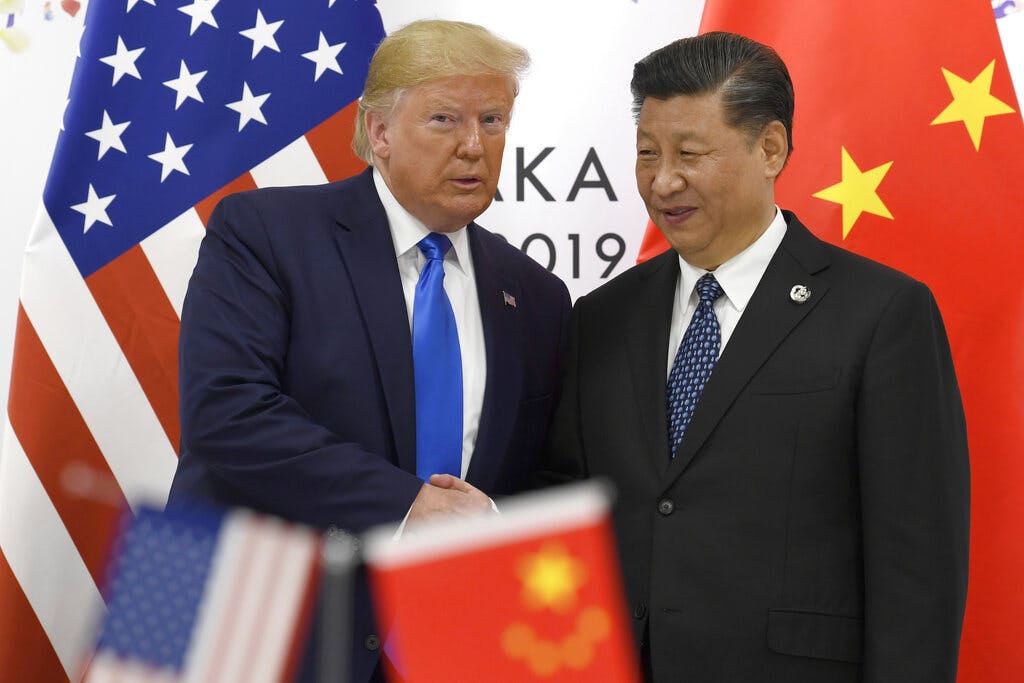
The US and China finally agreed on Phase One of the trade deal on Friday (Dec 13), including immediate cuts on import tariffs.

This is good news for Trump who is now battling impeachment, and with his 2020 reelection campaign coming up, he needs to give voters some small wins.

If this deal was not reached, a new round of tariffs on consumer electronics like cell phones and computers would have kicked in on Sunday.

As a sweetener, the US will also slash in half the 15% tariffs imposed on US$120 billion of Chinese goods that were imposed on Sep 1 previously.

US & China Reach Phase One of Trade Deal

However, existing tariffs of 25% on US$250 billion of Chinese imports would stay in place pending further negotiations on a second phase deal.

In return, China is committing to increasing purchases in four sectors: Agriculture, manufacturing, energy, and services.

In a sign that tensions remain high, Foreign Minister Wang Yi accused the US of “suppressing” China in a number of fields, including the economy, trade and technology and had “seriously damaged the foundation of hard-earned trust between China and the US.”

The US also angered Beijing by backing Hong Kong’s pro-democracy movement and criticising China’s mass detention of mostly Muslim minorities in the northwest region of Xinjiang.

US & China Reach Phase One of Trade Deal 2

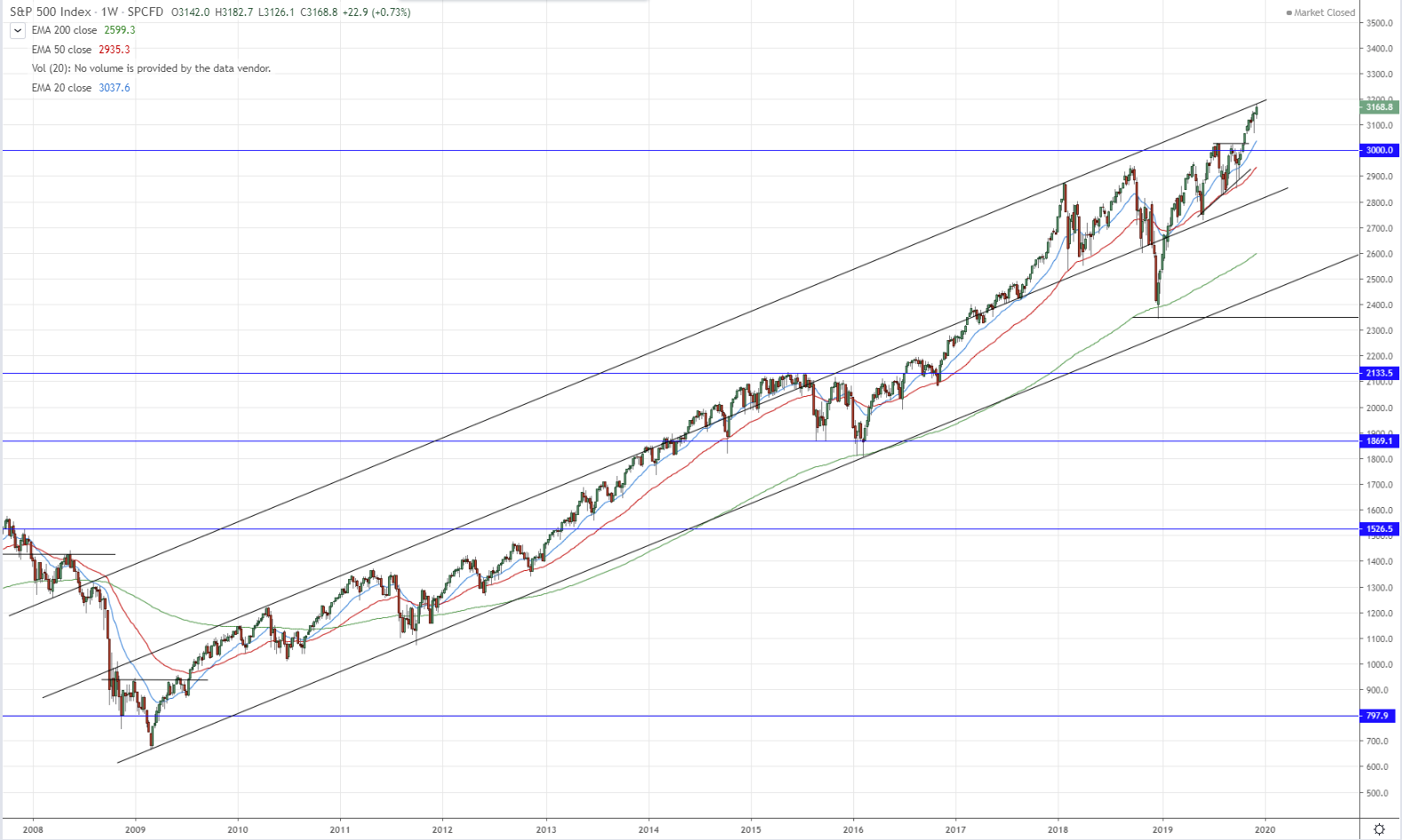
Looking at the chart of the S&P 500, stocks have continued to climb even during the trade war, which shows that the uptrend is still very strong.

Now that we are at the top of the trend channel, we might see some correction to the middle or bottom of the channel.

If there are no major political surprises or escalation of the trade war, then we might even see a Christmas rally before the year end.

Overall, I would be looking to invest in high growth US stocks.

SP 500 261019 1

In the news, U.S. and Chinese officials are “close to finalizing” some parts of a trade agreement after high-level telephone discussions on Friday, the U.S. Trade Representative’s office and China’s Commerce Ministry said.

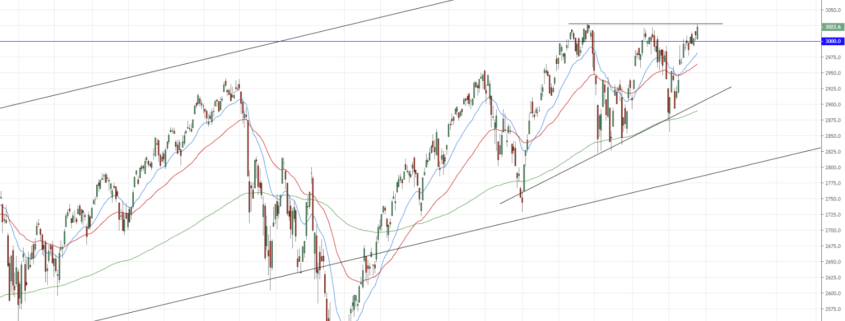
This seems to bode well for the stock market, with prices already creeping up to test the prior highs.

So will we see new highs? And how bullish are these new highs?

US-China Finalizing Phase One of Trade Deal

Unless there is a drastic turn of events, I am pretty confident we will see new highs.

However, the question of how sustainable these new highs are are more difficult to answer.

For example, there are other factors to consider, such as whether both sides stick to the agreement and the trade war does not escalate again.

There is also the Trump impeachment which is going on.

And there is also the softening of the US economy, which will also affect markets negatively.

So it is a matter of balancing the positive and negative catalysts, and deciding which are more important in the short-run and long-run.

Unfortunately, I am not seeing many long-term positive catalysts.

usdjpy 092210

Yesterday, we saw an incredible spike in Bitcoin of close to $2500, which is 40+% move.

Even though price has corrected slightly, it is currently still up by about 30% from its recent lows.

Bitcoin Spikes

Although no one really knows the reason for such a sudden move, many people have attributed it to remarks by the Chinese President, Xi Jinping, who said the country needs to “seize the opportunity” afforded by blockchain technology.

Speaking as part of the 18th collective study of the Political Bureau of the Central Committee on Thursday in Beijing,  he said that blockchain technology has a wide array of applications within China, listing topics ranging from financing businesses to mass transit and poverty alleviation.

Although he was talking about Blockchain technology rather than cryptocurrencies, traders seem to have felt that it would still have a positive effect, at least based on what the market is reflecting.

For a technical perspective, the chart is starting to look more bullish medium/long-term, with the breakout of the falling wedge pattern.

usdjpy 092210

Tesla recently posted a cash balance increase to $5.3 billion and reported a profit of $1.86 per share, shattering analyst expectations for a loss of 42 cents per share.

Elon Musk promised a 2020 rollout of a cheaper SUV and more self-driving technology to stay ahead of larger rivals rushing into the premium electric vehicle market he created.


Tesla Shares Spike 21% on Earnings Surprise


Looking at the chart of Tesla, we can see that it traded between the range of $250-$390 for almost 2 years (mid 2017 to mid 2019), before breaking to test a major support level at $180.

From there, it has made a strong recovery, with a whooping 70% gain from its June 2019 bottom.

Now, prices are close to $300, and it looks poised to test the highs of $390 again.

I will continue to hold and look for opportunities to accumulate more again.

how to trade price patterns

This article is going to be a little longer than usual, as I endeavor to make a balanced view about exactly why price action is preferred in the marketplace.

If you’re keen to expand your mind, deepen your knowledge, or simply learn something new about the financial markets, then please read on.

Throughout the centuries, traders around the world have tried to find every method possible to exploit the market for profits. The search for a trading edge has led to countless hours of research, hard work, and dedication. More recently, programming has become the rage as hedge funds, institutions, and large traders seek to find the optimal way to extract profits from the market.

While the internet is rife with methods, formulas, and patterns that claim to bring in profits, through my years of trading, I’ve found that trading plan or strategies fall into these 3 simple categories.

Most Trading Strategies Fall into 3 Categories


1. Trend-following

Many beginners make the mistake of asking these 2 questions: “When should I buy? When should I sell?”

Beneath these two questions, are actually several important questions to ask before deciding when to buy and sell. You see, trend-following is the act of buying in an uptrend, and selling in a downtrend. It sounds simple, but several questions come to mind when a trader attempts to follow a trend:

  • Has the trend started? When did it start?
  • When will the trend end?
  • Where should I get in on the trend?
  • Is it a volatile trend, or a gentle trend?
  • Is it a strong trend, or a weak trend?

All of this has to be taken into account as the market unfolds before a trader’s eyes. The confluence of answers to these questions would allow a price action trader to buy or to sell. While it is impossible to predict what would happen, the better a trader can answer the above questions, the better he or she is positioned to make some money.

Why is price action preferred by professional traders?

Price action involves reading clean price charts, and understanding the motivation of buyers and sellers when taking trades. With proper training, a trader can answer all the above questions, and make the most efficient trade during a trending market situation.

Top 3 Reasons Why Price Action is Chosen by Professional Traders

Traders have to process large quantities of information at a go. Making the price chart as clean as possible allows the trader to clearly see what is happening, and simplifies his analysis. For example, in the above chart, buyers are committed during the most recent 10 bars, and a reasonable trade would be to buy on a pullback to the EMA or trendline.


2. Mean-reversion

Mean-reversion is simply doing the opposite of a trend-follower. In essence, a mean-reversion trader would be asking the following questions:

  • Has the trend ended?
  • Where might the trend end?
  • Are the traders taking profits, or are they initiating new positions?
  • What price levels are mean-reversion traders looking at?

Based on my experience, beginners should not look to be mean-reversion traders until they are profitable trend-followers. It is much harder than it looks when taking a trade in the opposite direction of the trend.

In my trading foundation workshops, I emphasize time and again that a trade setup must occur in the opposite direction before taking a reversal trade. In fact, instead of going against the trend, I would much prefer that the trend has already changed direction, and then I hop on to that new trend for a lower-risk trade.

Price action traders consider many more options and ask more questions than indicator-based or value-based traders.

The financial marketplace is filled with professional traders seeking to make a quick buck out of unsuspecting, ill-disciplined, or even lazy traders. It is just like in the Olympics; at the highest level of sporting excellence, sportsmen that miscalculate their aim or fail to squeeze out that last ounce of energy could miss finishing in the top 3.

Top 3 Reasons Why Price Action is Chosen by Professional Traders 2

In a bull market, going against the trend is much harder than you think. That is why price action is so important; it helps you decipher when the trend is going to end, and whether it is wise to enter or not.


3. Spread-Betting (Betting during volatility)

Spread-betting is used by institutional traders and proprietary funds to make short-term bets during times of volatility. The software and execution technology required is often expensive, and is not suitable for a retail trader. The strategy is complex, because bets are placed on both sides during a volatile event, and it requires strict discipline when trading. I won’t go into great detail on how this is done, but you can read up about it.


Why Then, is Price Action Preferred by Professional Traders?


1. CLARITY

Price action trading is trading with clean charts. The only information you need is the current price, and these are displayed using candlestick charts. In the charts below, we see that the blank chart is far clearer and easier to read than the complicated one with many indicators.

CLARITY CLARITY 2


2. SPEED

When trading intra-day, traders need to quickly make a decision when the price action unfolds before them. While checklists and criteria do help, having a solid price action foundation would allow the trader to make a decision quickly. How would you make a trading decision, if you had to look at 12 screens at once?

SPEED

Image Source: LifeHacker.com

In contrast, I can make my trades on a single laptop computer, or even on my mobile devices. Something like this is more than sufficient:

SPEED 2

Image Source: MyCompas.com


3. UNIVERSALITY

Perhaps the biggest reason why price action is preferred, is that price action is universal. You can trade commodities, currencies, stocks, bonds, ETFs, REITs, futures on just about anything, and even options, because every product has a price chart. You can be just as sure that Coffee Futures have the same price action mechanics as Apple stock, and you wouldn’t have a problem transiting between products.

Trading is very much like selecting from a diverse menu in a fancy restaurant; while there are many products to trade, many traders settle on trading a few products and get proficient at them.

UNIVERSALITY

Price action works on just about anything with a price chart and a liquid secondary marketplace.
Image Source: TheActuary.com


How Can I Get Started On Price Action Trading?

For a start, I recommend using the old-school way by getting your hands on a few solid price action books. Many of these are available in public libraries, and if you have some spare cash, you can consider buying them on amazon.

Next, is to practice! While reading books and watching others trade is a great way to learn, nothing beats learning to trade by actually making trades yourself.

If you currently use many indicators and are not profitable, perhaps the question to ask yourself is whether you would like to understand what is behind the price chart and the indicators. It is not enough to use a formula, because market conditions change over time.

Here’s to wishing you all the best on your trading journey, and I hope this article has expanded your mind just a little more!