Best Investments During a Recession: Where to Put Your Money in a Downturn
Last updated: 3 July 2026 · By Spencer Li, CFTe
The best investments during a recession are defensive, cash-flow-stable assets that hold up when growth stalls: high-quality government bonds (like US Treasuries), defensive stocks (utilities, healthcare, consumer staples), gold, and well-timed real estate. History backs this. In the 2008 to 2009 Great Recession, the US Treasury bond market gained 12.7% as investors fled to safety, gold rose more than 25%, and the healthcare sector held up far better than the broad market while the S&P 500 fell roughly 56% from its October 2007 peak. The common thread is simple: in a downturn, money moves from things that need growth to things that survive without it. No asset is truly recession-proof, so the real job is diversification and position sizing, not finding one magic ticker.
Here is what a recession actually is, the early warning signs to watch, how it hits each market, and where the safer money tends to go.
What is a recession?
A recession is a period of economic decline marked by falling Gross Domestic Product (GDP, the total value of goods and services an economy produces), rising unemployment, and shrinking consumer and business spending.
It is usually triggered by a mix of factors, not a single one. A drop in demand, a supply shock, a financial crisis, or an external event can all start the slide, and they often compound each other.
To fight a recession, governments and central banks lean on monetary and fiscal policy: cutting interest rates, raising government spending, and offering tax incentives to restart growth. The damage can outlast the downturn itself, showing up as higher poverty, tighter credit, and lower consumer confidence.
What causes a recession?
Recessions rarely have one clean cause. These are the usual suspects, often several at once:
- Tight monetary policy. When the central bank raises interest rates to control inflation, borrowing and spending fall, which can tip the economy into contraction.
- Bursting asset bubbles. A speculative run-up in real estate or stocks that suddenly reverses can drag the whole economy down with it.
- External shocks. Natural disasters, wars, or pandemics can disrupt activity fast.
- Fiscal policy. Sharp changes in government spending or taxation can cool the economy.
- Supply shocks. A sudden jump in a key input, like a major oil price spike, can choke growth.
- Banking crises. When banks stop lending, investment and activity seize up.
- Trade imbalances. Large imbalances or protectionist policies can disrupt international trade enough to cause a downturn.
What are the early warning signs of a recession?
No single indicator predicts a recession with certainty. But a handful of signals tend to flash before the downturn arrives, and they matter more when several show up together.
| Warning sign | What it means |
|---|---|
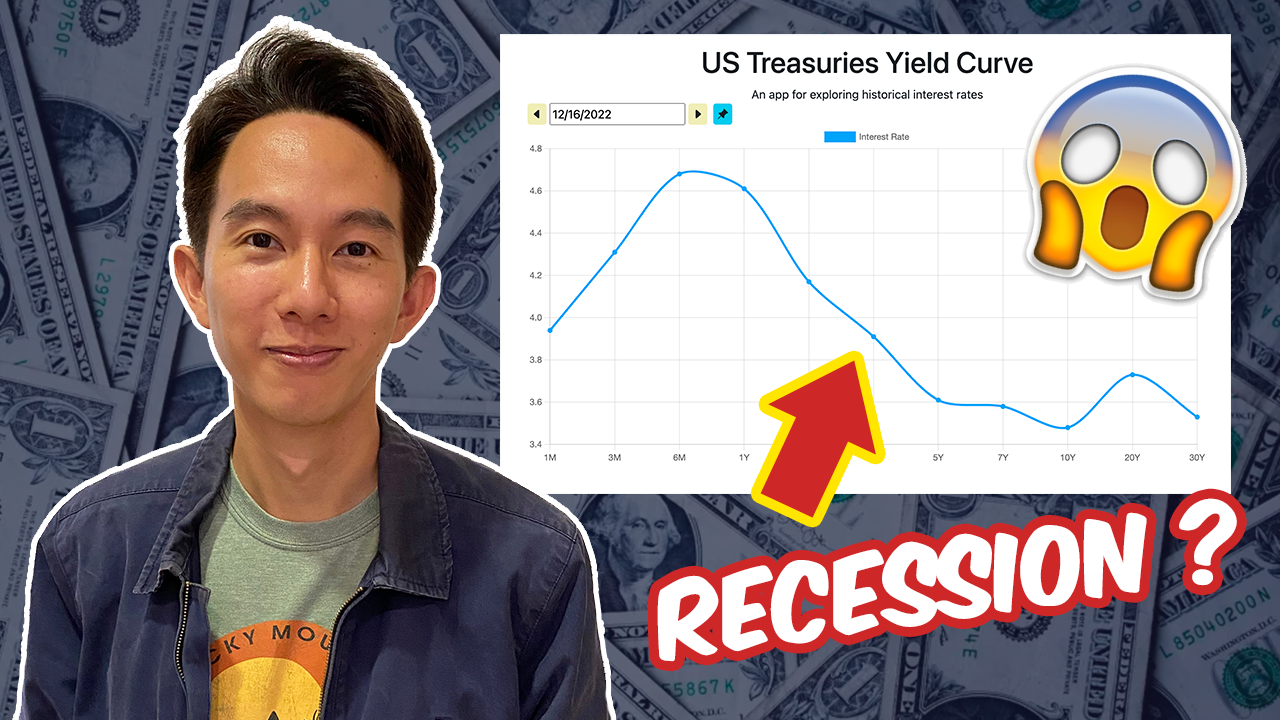
| Inverted yield curve | Short-term bonds yield more than long-term bonds, a sign investors have lost confidence in the long-term outlook |
| High debt levels | Households, companies, or governments carrying excessive debt that gets hard to sustain |
| Slowing job growth | Hiring stalls or unemployment starts rising, an early tell that the economy is weakening |
| Falling consumer spending | People cut back, signalling lower confidence and softening demand |
| Stock market decline | A sharp, sustained drop suggests investors are worried about what is coming |
The inverted yield curve (when short-term interest rates rise above long-term rates) is the one most analysts watch, because it has preceded most modern US recessions. None of these is a guarantee. Read them as a cluster, not a crystal ball.
How does a recession affect the financial markets?
A recession ripples through every major market, and not always in the same direction. Here is how it has played out historically.
- Stocks decline. Markets fall as investors turn pessimistic. In the 2008 recession, the S&P 500 dropped around 56% from its peak in October 2007 to its low in March 2009.
- Bonds rally. As stocks fall, money moves into safer bonds, pushing bond prices up and yields down. The 10-year US Treasury yield fell from around 4% in mid-2007 to below 2% by the end of 2008.
- Currencies can devalue. If investors lose faith in a country, its currency can drop. During the late-1990s Asian financial crisis, the Thai baht lost around 50% against the US dollar and the Indonesian rupiah lost around 80%.
- Commodities fall. Demand for oil, copper, and similar inputs drops with activity. In 2008, oil fell from around $145 a barrel in July to roughly $30 by December.
Not every recession hits the markets the same way, and there is wide variation in how individual sectors and asset classes hold up. That variation is exactly why the asset class you choose matters.
What is the best asset class to invest in during a recession?
During a downturn, investors look for safe havens that can ride out the storm. Four asset classes have historically done that job, each with a real example from the 2008 to 2009 Great Recession.
| Asset class | Why it holds up | 2008 to 2009 example |
|---|---|---|
| Government bonds (e.g. US Treasuries) | Considered among the safest assets; benefit from the flight to safety | US Treasury bond market gained 12.7% as investors flocked to safety |
| Defensive stocks (utilities, healthcare, staples) | Sell essentials people buy in any economy, so earnings are steadier | S&P 500 healthcare sector was one of the few that did not decline as much |
| Gold | Traditional safe haven that tends to do well in uncertainty | Gold rose more than 25% as investors sought protection |
| Real estate | Low rates and lower prices create entry points for long-term holders | Housing prices fell sharply, but had rebounded and were rising again by 2012 |
A few honest caveats. Bonds and gold are defensive, not magic; they can lag badly once the recovery starts. Real estate is the slowest to turn and the hardest to exit in a panic, so it rewards patience and a long horizon, not a quick flip. And no asset here is fully recession-proof. Every one of them carries risk.
That is why the answer is not a single ticker. It is a diversified mix, sized so that no one position can sink you, matched to your own risk tolerance and time horizon.
Where the human edge comes in
A screener can rank every defensive sector for you in a second, and a model can plot the yield curve and tell you it just inverted. That part is basically free now. What the machine will not do is tell you how much of your portfolio to actually move, when to stop buying the dip because your sizing is already stretched, or whether you have the temperament to hold a falling asset through the worst of it. The data is the easy part. Knowing how much to commit and when to sit on your hands is the judgment, and that is the first of the Five Edges no algorithm trades for you.
How to prepare your portfolio before a recession
You do not have to predict the exact top to be ready. A few steps go a long way:
- Diversify across asset classes, so a hit to one market does not take out the whole portfolio.
- Hold some cash and high-quality bonds, which give you both stability and dry powder to deploy when prices are low.
- Know your risk tolerance and time horizon before the stress hits, not during it. Decisions made in a panic are almost always worse.
If you want a repeatable way to read market conditions and size positions instead of reacting to headlines, that is exactly what a tested system is for.
FAQ
What is the safest investment during a recession?
High-quality government bonds, such as US Treasuries, are generally considered among the safest. In the 2008 to 2009 Great Recession, the US Treasury bond market gained 12.7% as investors moved money into safety.
Does gold go up in a recession?
Often, yes. Gold is a traditional safe haven and tends to do well during economic uncertainty. During the 2008 to 2009 recession, gold prices rose more than 25%. It is not guaranteed, though, and gold can lag once a recovery begins.
Is real estate a good investment during a recession?
It can be for long-term investors, because interest rates tend to be low and property prices may fall, creating entry points. In 2008 to 2009, housing prices dropped sharply but had rebounded by 2012. Real estate is slow to turn and hard to exit quickly, so it rewards patience.
What are the early warning signs of a recession?
The most-watched signals are an inverted yield curve, high debt levels, slowing job growth, falling consumer spending, and a declining stock market. No single one is decisive; they are most reliable when several appear together.
Is any investment fully recession-proof?
No. Every asset class carries some risk, and recessions do not all behave the same way. The practical defence is diversification and position sizing matched to your own risk tolerance, not a single “safe” asset.
Now that you know where the safer money tends to go, the harder question is how much of your portfolio to actually move, and when. How are you preparing for the next downturn? Let me know in the comments.
And if you want the bigger picture of how to build a portfolio that survives any market cycle, read the pillar: The Beginner’s Guide to Investing and Trading.
Want a system instead of a reaction? Grab the free 15-Minute Swing Trading Starter Kit. It’s the exact routine I use to read market conditions and trade any market in 15 minutes a day.
About the author. Spencer Li is the founder of Synapse Trading and a Certified Financial Technician (CFTe) with 15 years of trading across stocks, forex, crypto, commodities, and bonds. His trade log is public, 404 trades, losses left in. He teaches low-risk swing trading in 15 minutes a day, one system for any market.
Education, not financial advice. Synapse Trading is not licensed by MAS to advise on investment products. Trading carries risk of loss; past performance is not indicative of future results.
Related
The Beginner’s Guide to Investing and Trading (pillar) · How to build a diversified portfolio · Safe haven assets explained · How to read the yield curve