monthly market wrap feb 2026

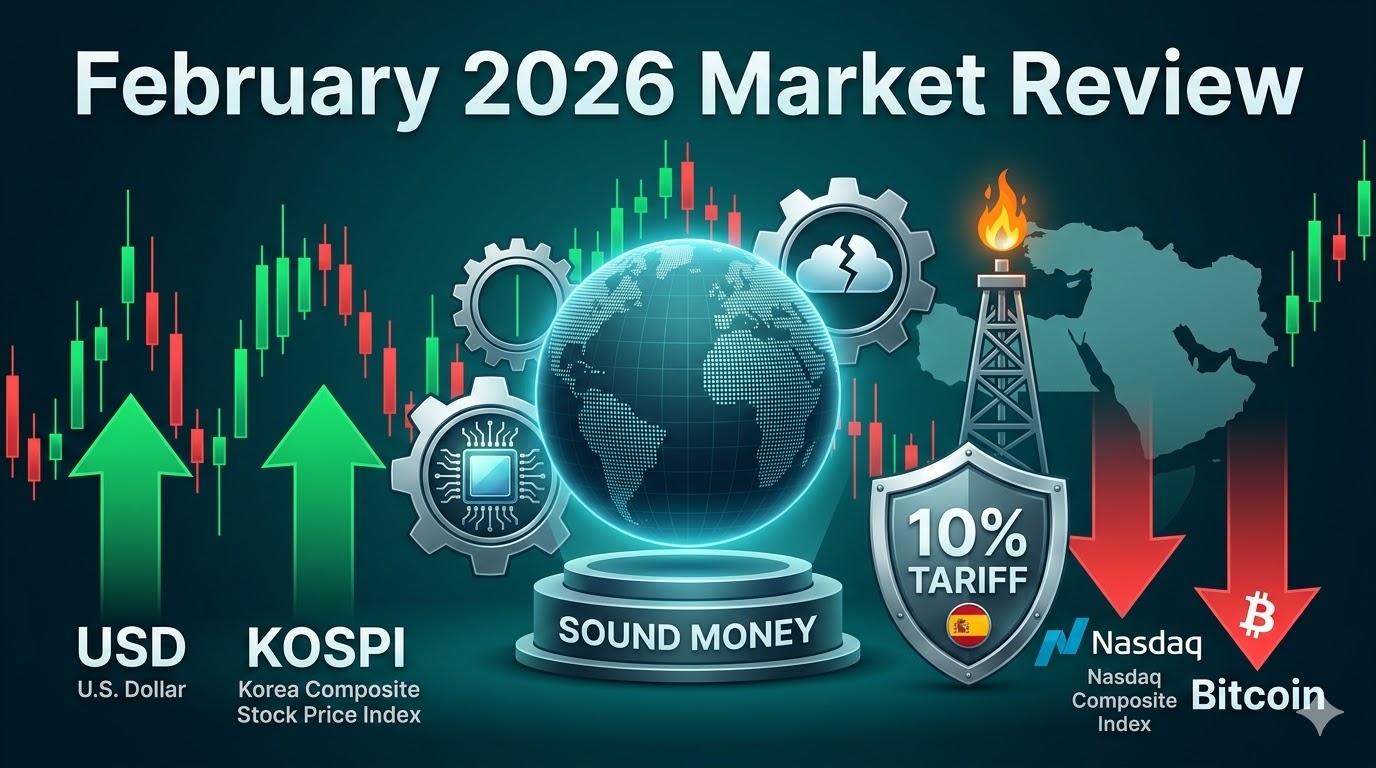
The month of February 2026 represents a seminal inflection point in American monetary history, defined by a shift from the cautious, data-dependent stance of the Jerome Powell era toward a more disciplined, rules-based doctrine following the nomination of Kevin Warsh as the next Chair of the Federal Reserve. This transition occurred against a backdrop of complex economic signals, where the lagging effects of a 2025 government shutdown collided with robust January labor data, creating a paradox of cooling growth and stubborn inflation. The “Warsh Shock,” as dubbed by market participants, triggered a violent repricing across all major asset classes, as investors recalibrated expectations for a central bank that would prioritize currency stability and balance sheet reduction over asset price support.

1. The Macro-Monetary Pivot: Federal Reserve Transition and the Warsh Shock

The nomination, announced on January 30 and reverberating through February, positioned Warsh as the architect of a new monetary doctrine. Having served as a Fed Governor during the 2008 financial crisis and as a partner at Morgan Stanley, Warsh brought a “triple-threat” background of market mechanics, crisis management, and institutional critique. His long-standing opposition to expansive quantitative easing and his advocacy for a “monetary humility” that follows market signals rather than leading them suggests a definitive pivot toward “Sound Money”. The immediate market reaction saw the U.S. Dollar Index surge while inflation-hedge assets, specifically gold and bitcoin, faced a brutal sell-off, reflecting a belief that the “Fed backstop” for speculative excesses was being dismantled.

Indicator Pre-Nomination Trend Post-Nomination Reaction (Feb) Strategic Implication
U.S. Dollar Index (DXY) Multi-week decline Sharp recovery and breakout Shift toward dollar scarcity and higher real rates.
Gold (XAU/USD) Near record highs 9% – 18% decline depending on duration Reduced demand for inflation-hedges under “Sound Money.”
Bitcoin (BTC) Consolidating above $100k >25% decline to sub-$75k levels Recalibration of “digital gold” as a liquidity play.
10-Year Treasury Yield Declining toward 4.0% Bear steepening; long-term yields rose Anticipation of active MBS/Treasury sales (QT).

The transition is not merely a change in personnel but a change in the Fed’s reaction function. Warsh is expected to implement a “QT-for-cuts” strategy, a framework that potentially offers front-loaded interest rate reductions to support the administration’s growth agenda while simultaneously accelerating the shrinkage of the Fed’s $6.6 trillion balance sheet. This approach aims to decouple the federal funds rate from long-term market rates, allowing the Fed to exit its role as an active market participant while maintaining the stability of the currency. However, critics argue that aggressive selling of mortgage-backed securities (MBS) could introduce volatility into the housing market, which is already reeling from its sharpest decline in sales activity since the 2020 lockdowns.

2. Labor Market Dynamics and the Economic Growth Rebound

The U.S. labor market demonstrated unexpected resilience in early 2026, serving as a stabilizing force amidst the broader monetary and geopolitical turmoil. The January employment report, released in February, revealed a robust increase in nonfarm payrolls of 130,000 jobs, significantly outperforming the consensus estimate of 55,000. This strength was primarily localized in the private sector, which added 172,000 positions, effectively offsetting a 34,000-job contraction in the federal government sector—a byproduct of continued separations following deferred resignation programs initiated in 2025.

Despite this headline strength, the underlying data suggested a cooling trend that had been masked by the government shutdown. Annual benchmark revisions implemented in February reduced estimates of monthly job gains for 2025 by approximately 35,000 per month, leaving the average monthly gain for that year at a modest 15,000. This revision paints a picture of a labor market that is “stabilizing” rather than “accelerating,” with the unemployment rate ticking down to 4.3% from 4.4% in December 2025.

Labor Market Metric January 2026 Actual Consensus Forecast Historical Context (2025 Avg)
Nonfarm Payrolls +130,000 +55,000 +15,000 (after revisions)
Private Sector Payrolls +172,000 +70,000 +45,000
Unemployment Rate 4.3% 4.4% 4.2% (SEP Median)
Labor Participation 62.5% 62.4% 62.5% (Flat YoY)
Real Avg. Hourly Earnings +1.2% YoY +1.0% YoY +0.8% YoY

Sector-specific analysis reveals a concentration of growth in healthcare (+33,000) and social assistance (+42,000), while financial activities saw a decline of 22,000 jobs, continuing a downward trend that began in mid-2025. The manufacturing workweek edged up slightly to 40.1 hours, suggesting that while hiring remains selective, existing capacity is being utilized more intensely. This labor stability provides a critical buffer for the economy as it attempts to rebound from the 1.4% annualized GDP growth recorded in Q4 2025—a figure heavily suppressed by the federal shutdown. Early indications for 2026 suggest a return to “above-trend” growth, supported by robust investments in artificial intelligence and a recovery in private domestic final demand, which maintained a 2.9% growth rate even during the shutdown period.

3. Inflationary Pressures and the Consumption Landscape

Inflation remained a primary concern for policymakers throughout February, with headline and core figures continuing to hover above the FOMC’s 2% long-term goal. As of December 2025, the 12-month headline Personal Consumption Expenditures (PCE) price index stood at 2.9%, with core PCE—excluding volatile food and energy—unchanged at 3.0%. Consumer Price Index (CPI) data for the same period showed a headline rate of 2.7%, down from 3.0% in September but still elevated relative to the pre-pandemic era.

The persistence of inflation is largely attributed to “supercore” inflation—core services excluding housing—which remains stubbornly elevated. While housing inflation has begun to ease, the imposition of new tariffs has introduced a fresh layer of “goods price inflation”. The Supreme Court’s February ruling on tariff authorization has introduced significant uncertainty into the inflation outlook, as producers continue to pass through the costs of existing tariffs to consumers. Federal Reserve officials, including New York Fed President John Williams, have noted that while these tariffs may have “one-off” effects on the price level, the lack of second-round effects on wages suggests that the underlying trend toward 2% remains intact, albeit delayed.

Inflation Gauge Dec 2025 / Jan 2026 Value Fed Target Primary Driver
Headline PCE (YoY) 2.9% 2.0% Services and Tariff Pass-through
Core PCE (YoY) 3.0% 2.0% Persistent “Supercore” services
Headline CPI (YoY) 2.7% 2.0% Energy goods and Food stability
Core Goods Prices 0.0% (Flat) N/A Tariff pass-through vs. AI productivity
Producer Price Index (YoY) 2.88% N/A Manufacturing input cost acceleration

Consumer behavior in February reflected this nuanced inflationary environment. Existing home sales experienced an 8.43% month-over-month decline, the sharpest drop since the COVID-19 lockdowns, as high mortgage rates and record-high prices finally dampened demand. The median sales price for an existing home fell below $400,000 for the first time in nearly a year, suggesting that the housing market may be reaching a cyclical peak. Conversely, retail sales and food services showed a slight contraction of 0.02%, while consumer confidence fell to a 12-year low, driven by geopolitical angst and uncertainty surrounding the Federal Reserve’s independence.

4. Geopolitical Kineticism: The February 28 Iran Strikes

The geopolitical risk profile of the global economy shifted dramatically on February 28, 2026, when the United States and Israel launched a coordinated military strike against the Islamic Republic of Iran. The operation, described by President Trump as an effort to dismantle Iran’s nuclear program and end the regime’s power, resulted in the confirmed death of Supreme Leader Ayatollah Ali Khamenei. This event represents a departure from the “symbolic attacks” of previous years, signaling a move toward “major combat operations” and regime change.

The immediate market response was a classic “flight to safety,” though the assets chosen for refuge differed from previous cycles. While the U.S. dollar and gold surged initially, the impact on energy markets was the most profound. Iran’s reported closure of the Strait of Hormuz—a chokepoint through which approximately 20% of global oil flows—triggered an immediate 6% spike in WTI crude oil prices during Asian trading sessions.

Geopolitical Event Immediate Asset Impact Strategic Concern
Iran Nuclear Strikes WTI spikes above $70; Nasdaq futures fall 0.9% Prolonged regional war involving Gulf states.
Khamenei Death “Haven first” flows into USD; Gold volatility Power vacuum and potential hardline military successor.
Strait of Hormuz Closure Brent-WTI spread widens; Shipping stocks volatile Disruption of OPEC exports and global supply chains.
Spain Trade Halt Spanish ADRs (Santander) drop 14% Weaponization of trade over military base access.

The death of Khamenei and the potential rise of a military dictatorship led by the Revolutionary Guard have introduced a “regime change” premium into oil prices. Historically, such transitions in major oil-producing nations have led to price spikes averaging 76% from onset to peak. Furthermore, the escalation has drawn in neutral countries, with Iran reportedly launching retaliatory strikes against U.S. assets in Saudi Arabia, the UAE, and Qatar. This regionalization of the conflict threatens the “deterrence” bull case that had dominated market sentiment throughout early February, moving the global economy into “uncharted territory”.

5. Trade Policy and the Reauthorization of Section 122 Tariffs

February 2026 saw a significant reconfiguration of the American trade regime following a landmark Supreme Court decision on February 20. The Court upheld a ruling that the International Emergency Economic Powers Act (IEEPA) does not grant the President the authority to impose tariffs unilaterally. In an immediate pivot, President Trump utilized Section 122 of the Trade Act of 1974 to impose a 10% universal tariff on all imports, effective February 24.

The Section 122 tariffs are designed to address large-scale balance of payments deficits and provide the executive branch with a different statutory basis for trade intervention. While the administration exempted civil aviation products and initiated trade investigations into other sectors, the broad application of these tariffs has intensified concerns regarding “second-round” inflationary effects.

Tariff Authority Legal Status (Feb 2026) Economic Impact
IEEPA Restricted by Supreme Court Removed as a tool for broad-based import duties.
Section 122 Activated (10% Universal) Immediate input price pressure for U.S. manufacturers.
Section 301 Active (Targeted) Continued pressure on specific technology and raw material imports.
Canada-China Roadmap Challenged by U.S. Led to threats of retaliatory tariffs against Canada.

The trade landscape was further complicated by idiosyncratic disputes, notably a total trade halt with Spain. This move, triggered by Spain’s refusal to allow U.S. aircraft to use military bases for strikes on Iran, highlights the increasing intersection of trade policy and geopolitical objectives. Market participants have noted that while such “tantrums” create short-term volatility—exemplified by the 14% drop in Spanish banking stocks—they also present buying opportunities for those who believe the structural integrity of the European trade zone will eventually limit the duration of such halts.

6. The AI Scare and Sectoral Rotation in Equity Markets

The U.S. equity market in February was defined by a profound “AI Scare,” a phenomenon where the rapid advancement of artificial intelligence began to be viewed as a disruptive threat rather than a purely additive growth driver. While the S&P 500 and Nasdaq Composite posted monthly declines of 0.8% and 3.3% respectively, the internal dispersion was extreme. The cap-weighted Nasdaq 100 had its worst monthly performance since March 2025, falling 2.3%, while the S&P 500 Equal Weight Index rose 3.5%, outperforming its cap-weighted counterpart for the fourth consecutive month.

The “AI Scare” was catalyzed by product releases from startups like Anthropic, whose “Claude Code” tool demonstrated the ability to modernize legacy COBOL programming—a core pillar of enterprise IT infrastructure. This sparked a “SaaS-pocalypse” narrative, where investors feared that AI agents could automate the functions of thousands of software-as-a-service (SaaS) licenses.

Sector / Index Feb 2026 Total Return YTD Total Return Narrative Driver
Utilities (XLU) +10.4% +8.2% Defensive safe haven + power demand for data centers.
Energy (XLE) +9.5% +11.3% Iran conflict and rising oil/gas prices.
Information Tech (XLK) -3.6% +6.0% “AI Scare” disruption fears in software.
Financials (XLF) -3.8% -4.1% Private credit fears and Warsh “QT” concerns.
Nasdaq Composite -3.3% -2.7% Top-heavy concentration in disrupted growth names.
S&P 500 Equal-Weight +3.5% +7.0% Broadening participation in cyclicals/defensives.

The “AI Paradox” of 2026 is that the market is simultaneously pricing in the disruption of software incumbents and the overbuilding of AI infrastructure. While the iShares Expanded Tech-Software Sector ETF (IGV) plummeted 9.9% in February, semiconductor and networking equipment providers continued to report strong demand. This suggests a rotation of capital toward firms that profit from AI expenditure (the “picks and shovels”) and away from those at risk of AI obsolescence.

7. Corporate Earnings Analysis: Q4 2025 and FY 2026 Guidance

Corporate earnings for the fourth quarter of 2025 remained “solid,” with the S&P 500 reporting double-digit earnings growth for the fifth consecutive quarter. With 96% of companies having reported by late February, 73% exceeded EPS estimates and 73% beat revenue expectations. The blended year-over-year earnings growth rate stood at 14.2%, while revenue growth reached 9.4%, the highest rate since Q3 2022.

However, the “Magnificent Seven” continued to carry a disproportionate share of the load. These seven companies reported actual earnings growth of 27.2%, while the remaining 493 S&P 500 companies grew at a more modest 9.8%.

Company Q4 2025 EPS (Actual) EPS Surprise FY 2026 Outlook
NVIDIA (NVDA) $1.62 +5.2% Sustained demand for Blackwell GPUs.
Alphabet (GOOGL) $2.82 +31.2% Rebound in ad spend and Gemini growth.
Microsoft (MSFT) $4.14 +5.9% Strong Azure growth but AI Capex scrutiny.
Boeing (BA) $9.92 N/A Driven by a $9.6B gain on DAS transaction.
Cisco (CSCO) $1.04 (Non-GAAP) +11.0% Networking refresh and AI infrastructure surge.
Workday (WDAY) $2.47 +28.6% AI Agent push despite slight outlook miss.
Celsius (CELH) $0.26 +38.4% Market share expansion in U.S. energy drinks.

The earnings narrative in February shifted from “past performance” to “future disruption.” While results were strong, analysts lowered Q1 2026 EPS estimates by 1.5% during the first two months of the quarter, even as they increased estimates for the later half of the year. This suggests a “wait-and-see” approach as companies navigate the impact of tariffs and the AI transition. Notably, software companies like Workday and Salesforce are repositioning their platforms around “agentic AI” to prove their value in a changing landscape.

8. Global Market Dispersion: Asia and Europe Outperformance

A significant trend in February was the continued outperformance of international equities relative to major U.S. benchmarks. Emerging markets led the way, advancing 5.5% as investors doubled down on the Asian technology supply chain.

South Korea’s KOSPI Index emerged as the standout market, surging 20% in February alone. This rally reflects heavy investor inflows into semiconductor and chip equipment companies viewed as the “backbone” of the AI build-out. In contrast to the “AI Scare” in the U.S., Asian firms are being valued as essential suppliers within the global technology supply chain, insulating them from SaaS-related disruption fears.

Global Market Index Feb 2026 Performance Primary Driver
MSCI Asia Pacific +6.7% Record February; AI infrastructure demand.
Kospi (S. Korea) +20.0% World’s best-performing major gauge.
Nikkei 225 (Japan) +5.8% Strong exports; thinned Lunar New Year trading.
MSCI Europe ex UK +3.5% Solid earnings; signs of economic stabilization.
FTSE 100 (UK) > 10,000 Level Surpassed record highs despite political angst.
MSCI Emerging Markets +5.5% Capital flows returning to growth regions.

European markets also demonstrated resilience, with several benchmarks reaching all-time highs. The Eurozone economy grew by 0.3% in Q4 2025, exceeding expectations, with Spain leading the way despite political tensions surrounding Greenland and Venezuela. The UK’s FTSE 100 surpassed the 10,000 level for the first time, supported by a positive surprise in growth data and improved consumer confidence, even as inflation rose to 3.4%.

9. Commodity Markets: Haven Demand and the Warsh Effect

The commodity asset class experienced a volatile February, characterized by sharp price reversals and shifting sentiment. Precious metals, which had reached record highs in January (Gold > $5,500), saw their 30-day volatility surge to levels not seen since the 2008 financial crisis.

The nomination of Kevin Warsh acted as a major headwind for gold and silver, as the anticipation of a stronger dollar and higher real rates reduced the appeal of non-yielding assets. Gold fell nearly 18% from its early-month peaks in some sessions, while silver experienced a 26% plunge. However, by the end of the month, the escalation of the Iran conflict reignited “haven demand,” helping gold to stabilize and post a 7.9% gain for the full month of February.

Commodity Feb 2026 Return Peak/Key Level Market Narrative
Gold (XAU) +7.93% $5,626 (Record) Warsh shock vs. Iran haven demand.
Silver (XAG) +12.66% $92.15 Multi-decade volatility highs; industrial demand.
WTI Crude +2.88% $70.00 (Resistance) Geopolitical spike vs. soft global demand.
Brent Crude -0.48% $71.90 Middle East benchmark outperforming WTI.
Natural Gas -10.0%+ $3.10 U.S. price drop vs. European spike.
Copper +0.37% (Daily) $5.96/lb AI data center and electrical infrastructure demand.

Energy products outperformed crude oil, with gasoline and heating oil futures posting gains of 5.3% and 7.3% respectively. This was driven by the expectation of a strong 2026 driving season and the “distillate refining spreads” that favor Brent-linked products. Agriculture also saw a rally, with soybean and wheat futures rising over 8% due to uncertainty over Northern Hemisphere weather and the ongoing war in Ukraine.

10. Foreign Exchange and Fixed Income: The Dollar’s Structural Edge

In the foreign exchange markets, the U.S. dollar maintained a structural advantage throughout February. As geopolitical risks intensified, the gap between “energy producers” (like the U.S.) and “energy importers” (like Europe and Japan) widened, lifting the dollar across the G10 space.

The British Pound was the hardest hit among major currencies, falling 1.5% against the dollar—its biggest monthly decline since October 2025. This was driven by political uncertainty following a by-election defeat for the Labour party and growing expectations for Bank of England rate cuts as inflation began to cool. The Euro also faced pressure, trading near the 1.18 level, as the “energy squeeze” in Europe weighed on business activity.

Currency Pair Feb 2026 Close (Ask) Monthly Change Central Bank Stance
EUR/USD 1.1805 -0.04% ECB “agile” but core inflation sticky.
GBP/USD 1.3519 -1.50% BoE March cut “finely balanced.”
USD/JPY 155.72 Volatile BoJ intervention risks at 160 level.
AUD/USD 0.7077 Resilient RBA raised rates to 3.85% in February.
DXY Index 97.62 Strong “Warsh Shock” recovery from 4-year lows.

In the fixed income market, Treasury yields fell sharply during the month, with the 10-year yield dropping 29 basis points to 3.97%. This rally in bonds occurred despite a “hot” wholesale inflation report, suggesting that investors were more concerned about “economic growth momentum” and AI-driven displacement than near-term price pressures. However, the yield curve experienced a “bear steepening” in the final days of the month as the market began to price in Warsh’s preference for balance sheet reduction over balance sheet expansion.

11. Digital Assets: Institutional Retreat and the Warsh Repricing

The cryptocurrency market faced significant headwinds in February 2026, marking its fifth consecutive month of decline. Institutional interest in Bitcoin and Ethereum ETFs waned, with record outflows totaling over $9 billion across both assets during the past four months.

Bitcoin, which had reached a peak of $126,000 in late 2025, ended February near the $66,000 level. The asset class was particularly sensitive to the “Warsh Shock,” as the nominee’s “Sound Money” rhetoric directly challenged the “inflation-hedge” and “liquidity-proxy” bull cases for crypto. Furthermore, Bitcoin failed to act as a safe haven during the Iran conflict, sliding as investors pivoted toward traditional haven assets like the U.S. dollar and tokenized gold.

Crypto Asset Feb 2026 Return Price (Feb 27) Peak to Trough
Bitcoin (BTC) -21.7% $65,883.99 -47% from Oct 2025 peak.
Ethereum (ETH) -28.5% $1,931.32 -60% from Aug 2025 high.
BTC ETF Flows -$6.39B (4mo) N/A Longest monthly outflow streak.
ETH ETF Flows -$2.76B (4mo) N/A Substantial institutional exit.

12. Individual US Equities: High-Volume Movers and Performance Outliers

Individual stock performance in February was a study in extreme momentum and rapid sector rotation. While the software sector bled, energy and commodity-oriented technology stocks saw massive fair-value increases.

Fastly (FSLY) emerged as the top performer of the month, gaining 107.2%, followed by Kosmos Energy (KOS) at 71.3%. These moves were driven by specific catalysts: FSLY benefitted from a massive rotation into edge computing and networking infrastructure, while KOS surged on rising oil prices and geopolitical tensions.

Ticker Feb 2026 Gain/Loss Industry Volume/Catalyst
FSLY +107.2% Technology Monthly leader; Edge infrastructure demand.
KOS +71.3% Energy Iran conflict; YTD leader (+161%).
VAL +65.5% Energy Offshore drilling demand; Crude spike.
GLW +45.6% Technology Shortage in commodity-oriented AI products.
IBM -23.7% Technology “Claude Code” COBOL modernization scare.
RDDT -33.3% Comm. Services Down 33% YTD; post-IPO volatility.
HOOD -30.7% Financials Crypto volume decline; Warsh shock.
SNDK +396% (FV increase) Technology Extreme shortage in commodity storage.

Late-cycle technology stocks, particularly those considered “commodity-oriented,” saw the greatest fair value increases. Morningstar increased its valuation on SanDisk (SNDK) by 396%, Western Digital (WDC) by 68%, and Corning (GLW) by 58%. These companies are benefiting from a severe shortage in products whose supply was previously taken for granted during the AI build-out. Conversely, consumer cyclical stocks and retailers like Amazon, Shopify, and Coinbase faced heavy selling pressure as the “AI Scare” and “Warsh Shock” dampened risk appetite.

13. Synthesis and Strategic Outlook for Q2 2026

The month of February 2026 has fundamentally altered the trajectory of the global economy for the remainder of the year. The “Warsh Shock” has introduced a “Sound Money” regime that will likely prioritize balance sheet integrity and currency stability over the accommodative liquidity that fueled the 2024-2025 bull market. While interest rate cuts remain on the table—primarily to offset the drag of a cooling labor market and the friction of new tariffs—the simultaneous acceleration of Quantitative Tightening (QT) will create a challenging environment for long-duration assets and highly leveraged firms.

The “AI Scare” has marked the end of the “speculative momentum” phase of the artificial intelligence boom. Investors are now distinguishing between the “infrastructure providers” (Asia, semiconductor capital equipment, networking) and the “software incumbents” (SaaS, enterprise services). The rotation away from top-heavy tech leadership toward cyclicals, defensives, and small caps—which remain at a 13% discount to fair value—suggests a healthier, more balanced market structure.

Geopolitically, the direct military engagement with Iran and the closure of the Strait of Hormuz represent the most significant near-term threat to global stability. The “deterrence” model of 2025 has been replaced by a “combat” model, which carries far greater ramifications than previous geopolitical flare-ups. If oil prices remain sustained above $70-$75, the “disinflation” narrative that allowed the Fed to begin its cutting cycle may be at risk.

As we move into March and the second quarter of 2026, the key variables to monitor include:

  1. Fed Independence and the Warsh Confirmation: The Senate’s vetting process for Kevin Warsh will provide critical signals on the future of the Fed’s balance sheet and the “QT-for-cuts” strategy.

  2. Strait of Hormuz Duration: The duration of the waterway closure and the potential for a “protracted oil supply disruption” will determine the path of interest rates and the probability of a 2026 recession.

  3. Tariff Pass-Through: The speed at which producers pass the 10% Section 122 tariffs through to consumer prices will be the deciding factor in whether the Fed can achieve its 2% inflation target by year-end.

  4. AI ROI Validation: Future earnings reports must demonstrate that the massive AI Capex is translating into productivity gains and revenue for the software sector to stem the current “SaaS-pocalypse”.

14. Summary of Market Movers

February 2026 was a month of profound structural shifts, headlined by the “Warsh Shock” and a radical repricing of the artificial intelligence narrative. The U.S. economy, while demonstrating labor market resilience with 130,000 new jobs and a 4.3% unemployment rate, faced headwinds from a 1.4% GDP growth slowdown and the imposition of a 10% universal tariff under Section 122. The nomination of Kevin Warsh as the next Fed Chair signaled a transition to “Sound Money” and “Monetary Discipline,” causing a surge in the U.S. dollar and a sharp decline in gold and bitcoin, as markets anticipated a less interventionist central bank and an accelerated reduction of the Fed’s balance sheet.

The “AI Scare” trade upended the technology sector, driving a massive rotation from disrupted software incumbents like Salesforce and IBM toward “picks and shovels” infrastructure providers, particularly in Asia. While the Nasdaq Composite fell 3.3%, international markets like South Korea’s KOSPI surged 20%, highlighting a global dispersion in AI-related optimism. Geopolitically, the U.S.-Israel strike on Iran and the death of its Supreme Leader introduced a “regime change” premium into energy markets, with the closure of the Strait of Hormuz pushing WTI crude above critical resistance at $70 and raising fears of a protracted regional conflict.

As we look toward the second quarter, the investment landscape is defined by “consolidation and verification.” The era of speculative momentum has been replaced by a focus on “Sound Money” fundamentals and the actual ROI of AI investments. While earnings remain solid and global growth resilient, the convergence of trade policy uncertainty, geopolitical volatility, and a shifting monetary reaction function suggests that the “taste of volatility” seen in February is merely a harbinger of a more turbulent 2026. Investors are encouraged to maintain a “barbell” approach, balancing exposure to high-growth AI infrastructure with high-quality, value-oriented defensives to navigate the transition.

monthly market outlook jan 2026

January 2026 will be recorded in financial history as a month of profound regime change, a period where the tectonic plates of geopolitics, monetary policy, and market structure shifted simultaneously, generating extreme volatility and forcing a re-evaluation of risk premiums across every major asset class. The month began with a decisive reassertion of American hard power in the Western Hemisphere and concluded with a dramatic reshaping of the Federal Reserve’s leadership trajectory, events that collectively dismantled the “soft landing” consensus that had prevailed entering the year.

Financial markets in January were characterized by a violent decoupling of asset correlations. While U.S. equities flirted with record highs before succumbing to sector-specific shocks, commodities experienced a historic bifurcation: oil stabilized around a new geopolitical equilibrium, while precious metals suffered a liquidation event of a magnitude not seen since the early 1980s. The driving force behind these movements was the sudden return of “headline risk” as a primary determinant of price action. From the U.S. special forces operation in Venezuela to the surprise nomination of Kevin Warsh as the next Federal Reserve Chairman, investors were forced to navigate a landscape where policy decisions—not just economic fundamentals—dictated capital flows.

Underlying the volatility was a macroeconomic paradox. The U.S. economy displayed signs of “supercharged” productivity, with GDP nowcasts surging above 5%, yet the labor market exhibited alarming weakness, adding a mere 50,000 jobs in December. This divergence complicated the Federal Reserve’s mandate, leading to a “hawkish pause” in interest rates that caught liquidity-dependent assets—from Bitcoin to Silver—off guard. Simultaneously, the corporate earnings season revealed a ruthless market discipline: companies demonstrating efficient capital allocation, such as Meta Platforms, were rewarded, while those viewed as overspending on artificial intelligence infrastructure without immediate returns, like Microsoft, faced punishment.

This market wrap provides an exhaustive analysis of the market dynamics observed in January 2026, dissecting the causal chains linking Washington’s policy shifts to Wall Street’s repricing events.

1. The Macroeconomic Landscape: A Decoupling of Growth and Labor

The economic data released throughout January 2026 painted a picture of an economy in the midst of a complex structural transition. The traditional relationship between output growth and labor demand appeared to fracture, creating a “productivity boom” narrative that clashed with recessionary signals emanating from hiring metrics. This ambiguity deprived the Federal Reserve of a clear policy roadmap, contributing significantly to the month’s volatility.

1.1 Inflation: The “Last Mile” Stagnation

The battle against inflation, declared largely won by many strategists in late 2025, encountered significant friction in January. The data suggested that price stability remains elusive, particularly in the service sector, forcing market participants to price out imminent rate cuts.

Consumer Price Index (CPI) Analysis The December 2025 CPI data, released on January 13, 2026, revealed that headline inflation had stalled above the central bank’s target. The headline CPI rose 2.7% year-over-year, unchanged from the previous month, while core CPI (excluding food and energy) persisted at 2.64%.

Inflation Component Monthly Change (Dec ’25) Annual Change (YoY) Key Drivers & Insights
Headline CPI +0.3% +2.7% Stabilized but sticky; failed to show continued disinflationary momentum.
Core CPI +0.2% +2.64% Resistance in services and housing kept this metric elevated.
Food (Total) +0.7% +3.1% A re-acceleration in food prices, particularly concerning for consumer sentiment.
Food Away from Home +0.4% +4.1% High labor costs in the hospitality sector are being passed to consumers.
Shelter +0.4% N/A The single largest contributor to the monthly increase; housing inflation remains the most stubborn component.
Energy +0.3% +2.3% Energy prices began to creep up, reversing the deflationary trend of late 2025.

Table 1.1: Detailed breakdown of December 2025 CPI Data.

Structural Implications of Inflation Data: The persistence of inflation above 2.5% is largely driven by the “shelter lag” and the service sector. The 4.1% rise in “Food Away from Home” indicates that despite cooling labor volume, wage rates in the service industry remain high enough to force price hikes. Furthermore, the data exhibited significant regional disparities. The Northeast region experienced the highest inflation at 3.3%, while the South saw the lowest at 2.2%. This divergence complicates monetary policy, as a rate sufficiently restrictive for the overheating Northeast might be overly punitive for the cooling South.

1.2 The Labor Market: Cracks in the Foundation

In stark contrast to the sticky inflation data, the labor market showed profound weakness, triggering alarm bells regarding the sustainability of consumer spending. The Employment Situation Summary released on January 9, 2026, was a watershed moment that shifted the narrative from “labor hoarding” to “labor shedding.”

Non-Farm Payrolls (NFP) Breakdown The U.S. economy added only 50,000 jobs in December 2025, missing the consensus forecast of 70,000 and marking the weakest annual expansion since 2020. More critically, downward revisions to October and November data subtracted 76,000 jobs from previous estimates, meaning the net employment trend for the fourth quarter was drastically weaker than real-time data had suggested.

Metric Actual (Dec ’25) Consensus Previous (Nov) Implications
Non-Farm Payrolls +50,000 +70,000 +64,000 Severe deceleration in hiring velocity.
Unemployment Rate 4.4% 4.4% 4.5% Stabilized only due to participation rate shifts.
Wage Growth (YoY) +3.8% +3.6% +3.5% The “Stagflation” signal: low hiring + high wage demands.

Table 1.2: Key Labor Market Metrics.

Sectoral “Hollowing Out”:

The composition of job gains revealed a dangerous reliance on non-cyclical, government-supported sectors.

  • Healthcare & Social Assistance: Added 39,000 jobs, accounting for nearly 80% of the net gains.

  • Government: Added 13,000 jobs.

  • Manufacturing: Lost 8,000 jobs, signaling a recession in the industrial base, likely exacerbated by trade uncertainties and tariff implementations.

  • Private Sector Weakness: Excluding health and government, the private sector effectively contracted. This “narrow breadth” in hiring is a classic late-cycle indicator, suggesting that cyclical industries are already bracing for a downturn.

The Tariff Tantrum Effect: KPMG Chief Economist Diane Swonk noted that the dramatic slowing of payroll gains in 2025 was exacerbated by the “tariff tantrum” in financial markets, which froze capital expenditure and hiring plans in trade-sensitive sectors. Employers adopted a “wait and see” approach, unwilling to expand headcount amidst uncertainty regarding the new administration’s trade war escalations.

1.3 The Growth Enigma: The Productivity Miracle vs. Data Vacuum

Perhaps the most confounding aspect of the January macro landscape was the divergence between the cooling labor market and accelerating GDP estimates.

  • The GDPNow Surge: On January 8, the Atlanta Fed’s GDPNow model revised its Q4 2025 growth estimate upward to 5.4%, a massive jump from the 2.7% estimate just days prior. This revision was driven by stronger-than-expected personal consumption expenditures (revised to 3.0%) and a positive swing in net exports.

  • The Productivity Link: How can GDP grow at 5.4% while job growth stalls at 50k? The answer lies in a productivity surge. Q3 2025 productivity jumped 4.9%, with unit labor costs falling despite wage increases. This indicates that U.S. corporations successfully implemented efficiency measures (likely AI and automation driven) to boost output without adding headcount. This “jobless growth” scenario supports corporate margins but poses a long-term risk to consumer demand.

  • The Data Delay: Compounding the uncertainty, the Bureau of Economic Analysis (BEA) announced that the official Advance Estimate for Q4 GDP, originally scheduled for January 29, was delayed to February 20, 2026. This delay, caused by data collection gaps during the partial government shutdown and transition issues, forced the market to trade purely on model-based “nowcasts” rather than confirmed data, elevating volatility as traders speculated on the true state of the economy.


2. Monetary Policy: The Pivot to “Neutral” and the Leadership Shock

January 2026 marked the end of the “easy money” speculation that had fueled markets in late 2025. The Federal Reserve, facing sticky inflation and a political sea change, executed a “hawkish pause,” signaling that the path to lower rates would be neither linear nor guaranteed.

2.1 The FOMC Decision: A Halt to Easing

On January 28, the Federal Open Market Committee (FOMC) concluded its meeting by maintaining the federal funds rate at the 3.50%–3.75% range. This decision halted a cycle of three consecutive rate cuts in late 2025 that had lowered the rate by 75 basis points.

The “Neutral” Narrative: Chair Jerome Powell framed the pause not as a tightening measure, but as a recalibration to “neutral.” The central bank’s language shifted from “supporting growth” to “stabilizing the labor market while allowing inflation to resume its downward trend”.

  • The Logic: With the funds rate now near the estimated neutral range (neither stimulative nor restrictive), the Fed argued it was “well positioned” to wait and assess the impact of incoming data, specifically the effects of new tariff policies.

  • The Dissent: The decision exposed fractures within the committee. Governors Stephen Miran and Chris Waller voted against the pause, advocating for a further 25 basis point cut. Their dissent highlighted a growing fear that the Fed is falling behind the curve on the deteriorating labor market, prioritizing sticky inflation over the risk of a recession.

Legal & Political Pressure: The meeting took place under extraordinary external pressure. Reports surfaced that the Justice Department had subpoenaed the Fed as part of a criminal investigation into Chair Powell regarding testimony given in June 2025 about building renovations. While Powell publicly defended the institution’s independence, the investigation cast a shadow over the proceedings, fueling speculation about his tenure.

2.2 The Warsh Nomination: A Regime Change

The most consequential monetary event occurred on January 30, when President Trump nominated Kevin Warsh to succeed Jerome Powell as Federal Reserve Chairman upon the expiration of Powell’s term in May.

Profile of the New Chair:

Kevin Warsh, a former Fed Governor (2006–2011), is a stark departure from the technocratic consensus of the Powell era.

  • Hawkish Reputation: Warsh is historically a critic of quantitative easing and “easy money” policies. He has frequently argued that the Fed’s bloated balance sheet distorts asset prices and fuels speculative bubbles.

  • The “Sound Money” Doctrine: His nomination was interpreted by markets as a pivot toward “sound money”—prioritizing a strong dollar and inflation control over maximizing employment. This defied the expectation that Trump would appoint a loyalist solely to slash rates; instead, he appointed a hawk who aligns with the administration’s desire to curb inflation but disagrees with the mechanism of low rates to do so.

Market Reaction to Warsh:

The announcement triggered an immediate and violent repricing of risk:

  • Yields Spiked: The 10-year Treasury yield jumped as bond traders priced out future rate cuts, anticipating a “higher for longer” regime.

  • Dollar Rally: The US Dollar Index (DXY) surged, putting immense pressure on commodities and emerging market currencies.

  • Asset Liquidation: As discussed later in this report, the Warsh nomination was the primary catalyst for the flash crash in silver and the bear market in crypto, as both asset classes rely heavily on the “debasement” and “liquidity” narratives that Warsh explicitly opposes.


3. Geopolitical Analysis: The Era of Direct Intervention

January 2026 signaled the end of passive diplomacy and the return of direct interventionism as a primary tool of U.S. economic statecraft. The administration utilized military and economic force to secure strategic resources, fundamentally altering the risk profile of global energy and mineral markets.

3.1 Operation in Caracas: The Capture of Maduro

On January 3, 2026, U.S. special forces executed a raid in Caracas, Venezuela, capturing President Nicolás Maduro and his wife, Cilia Flores, and transporting them to New York to face narco-terrorism charges.

Strategic Objectives & Market Impact:

  • Resource Control: The administration explicitly stated its intent to control Venezuela’s oil flows indefinitely, with a stated goal of driving global oil prices down to $50 per barrel to combat domestic inflation.

  • Supply Reality vs. Hype: While the geopolitical shock was immense, the immediate supply impact was muted. Experts noted that Venezuela’s oil infrastructure is in a state of “decrepit disrepair” and would require massive capital injection to recover. Realistic estimates suggest only 250,000–300,000 barrels per day could be added in 2026, limiting the immediate bearish impact on global prices.

  • Corporate Beneficiaries: The market immediately identified U.S. oil majors as the beneficiaries of this regime change. Chevron, the only U.S. major with active operations in Venezuela, saw its stock jump 5.5% ($8.51). Halliburton (+7.8%) and Schlumberger (+10%) rallied on the expectation of massive contracts to rebuild the degraded energy infrastructure.

3.2 The Middle East: Diplomacy of Force

Simultaneously, the administration ramped up pressure on Iran, deploying a naval strike group (“The Armada”) to the Persian Gulf early in the month.

  • The Price Floor: This militarization created a high “geopolitical risk premium” ($3-$4 per barrel) that prevented oil prices from collapsing despite the Venezuelan news.

  • The Pivot: By month-end, President Trump shifted tone, expressing openness to a new nuclear deal with Iran. This duality—military threat combined with transactional diplomacy—kept WTI crude prices pinned in a narrow range, closing the month at $65.21, a level that balances the risk of conflict with the reality of abundant U.S. supply.

3.3 Greenland: The Mineral Sovereignty Dispute

Expanding the resource-focused foreign policy, the administration renewed threats of tariffs and potential force regarding Greenland, aiming to secure access to critical rare earth minerals essential for the tech and defense sectors.

  • Alliance Strain: These threats initially unsettled markets (Jan 20) and strained relations with European allies. However, the administration’s subsequent backing off (Jan 21) led to a relief rally in equities, highlighting how sensitive global markets have become to the administration’s rhetorical volatility.


4. Equity Market Performance: Sectoral Shocks and Earnings Divergence

The U.S. equity market in January 2026 was a story of two distinct halves. The first half was dominated by optimism surrounding the “GDP surge” and the hope for continued rate cuts. The second half was characterized by a brutal rotation as the “Warsh reality” set in and specific sectors faced regulatory cliffs. The S&P 500 briefly touched the 7,000 milestone mid-month but failed to hold it, closing at 6,939.03, down 0.43% on the final day.

4.1 The Healthcare Crash: A Regulatory Black Swan

The most significant sectoral destruction occurred in healthcare, specifically among Managed Care Organizations (MCOs).

The Catalyst: On January 27, the Centers for Medicare & Medicaid Services (CMS), led by Administrator Dr. Mehmet Oz, proposed a 0.09% increase in Medicare Advantage reimbursement rates for 2027. This figure was a catastrophic miss compared to the 4% to 5% increase that Wall Street analysts had modeled.

The Market Reaction:

The repricing was instantaneous and severe, wiping tens of billions of dollars from market capitalizations in a single session.

  • UnitedHealth Group (UNH): Plunged ~20% on Jan 27. The company compounded the damage by issuing weak 2026 guidance, forecasting revenue of $439 billion (vs. $456 billion consensus) and signaling its first annual revenue decline in over 30 years.

  • Humana (HUM): Crashed 21% and was the worst-performing stock in the S&P 500 for the week.

  • CVS Health (CVS): Fell 14%.

Implication: This event signaled a new era of “populist austerity” in healthcare. The administration is signaling a refusal to subsidize insurance profits, forcing companies to shrink their footprints and prioritize margins over membership growth. UNH explicitly stated it would reduce its Medicare Advantage rolls by up to 1.4 million members.

4.2 Technology & Earnings: The “AI CapEx” Divide

The reporting season for the “Magnificent 7” stocks revealed a maturing AI market where investors are increasingly skeptical of capital expenditures (CapEx) that do not yield immediate revenue growth.

Meta Platforms: The Efficiency Winner

Meta emerged as the clear winner of the earnings season.

  • Results: Reported EPS of $8.88 (beating the $8.19 estimate) and Revenue of $59.9 billion (+24% YoY).

  • Narrative: Despite raising its 2026 CapEx guidance to a staggering $115B-$135B, the stock rallied. Why? Because the core advertising business is growing fast enough (24%) to fund the AI spend without compressing margins. Investors viewed Meta’s AI as “self-funding”.

Microsoft: The Infrastructure Burden

Microsoft faced a harsher reception.

  • Results: Beat EPS ($5.23 vs $4.14 non-GAAP) and Revenue ($81.3B, +17% YoY).

  • Cloud Growth: Azure grew 39%, accelerating from previous quarters.

  • Reaction: Stock fell 7.7%. Investors focused on the company’s “capacity constraints” (inability to meet demand due to hardware shortages) and the spiraling costs of building data centers. The market punished MSFT for “leaving money on the table” due to supply chain issues while simultaneously spending record amounts.

Netflix: The Ad-Tier Acceleration

  • Results: Revenue grew 18% to $12.05B; subscribers crossed 325 million.

  • Key Metric: Ad revenue grew 2.5x year-over-year.

  • Reaction: Mixed/Flat. While growth is strong, the guidance for 2026 operating margins (31.5%) came in slightly below consensus (32.7%), suggesting that future growth will be more expensive to acquire.

Tesla: The Growth Stall

  • Results: Revenue missed expectations ($24.9B vs $25.1B) and declined 3% YoY. EPS of $0.50 beat slightly.

  • Narrative: The company is fully pivoting to the “Robotaxi” narrative, citing progress on unsupervised FSD in Austin. However, the core automotive business is shrinking in revenue terms, leaving the stock highly sensitive to execution on future promises rather than current fundamentals.

4.3 The “Project Genie” Gaming Crash

A specific, sector-wide shock hit the video game industry late in the month following Google’s announcement of “Project Genie,” a generative AI platform capable of creating playable games from prompts.

  • Market Impact: This technological disruption caused a sell-off in traditional gaming engine and platform stocks, as investors feared their business models could be rendered obsolete.

  • Unity Software (U): Fell 12%.

  • Roblox (RBLX): Dropped 8%.

  • Take-Two Interactive (TTWO): Slid 7%.

4.4 Retail Sentiment: The Return of the “Roaring Kitty” Era?

In a surprising twist, speculative retail interest surged back into GameStop (GME).

  • The Burry Endorsement: Michael Burry, the famous “Big Short” investor, disclosed a long position in GME. Unlike the 2021 squeeze, his thesis was fundamental: he endorsed CEO Ryan Cohen’s plan to transform GameStop into a diversified holding company (a “mini-Berkshire”) using its $9 billion cash pile.

  • The Strategy: Cohen announced plans to acquire companies in the consumer/retail space, effectively abandoning the pure “video game retailer” model.

  • Performance: The stock rallied ~20% in January and over 3.7% on Jan 30 alone, defying the broader market sell-off.


5. The Commodity Flash Crash

Friday, January 30, witnessed one of the most violent dislocations in commodity market history. The sell-off was not a correction but a liquidation event, driven by the collision of over-leveraged positioning and the sudden hawkish pivot of the Federal Reserve.

5.1 The Carnage in Precious Metals

  • Silver: The metal experienced a flash crash of historic proportions, plummeting approximately 33% in a single trading session. Prices fell from highs near $121/oz to close at $78.53/oz. This -36% intraday drop was cited as the worst since 1980.

  • Gold: Gold prices fell 11.4% on the day (futures), breaking below the psychological $5,000 barrier to close at $4,745/oz.

  • Miners: The GDX and related mining stocks were decimated. Newmont (NEM) fell 14.4%, and Hecla Mining dropped 14.4%.

5.2 Anatomy of the Crash

Why did metals collapse while stocks only dipped slightly?

  1. The Warsh Effect: The nomination of Kevin Warsh (Section 2.2) signaled a strong dollar and higher real yields. Gold and Silver are non-yielding assets that act as hedges against currency debasement. A “Warsh Fed” is the antithesis of the investment thesis for metals.

  2. Margin Calls: Leading up to the crash, the CME Group had raised margin requirements on silver and gold futures twice in three days to curb volatility. This forced leveraged speculators to sell positions to meet capital requirements, creating a forced selling loop.

  3. Algorithmic Trigger: A Reuters report circulated regarding the potential end of US government support for strategic metals stockpiling. Algorithms scraped this headline and initiated massive sell orders in thin liquidity, exacerbating the move.

  4. The “Melt-Up” Reversal: Silver had rallied 70% year-to-date prior to the crash. The market was historically overbought (RSI > 85), making it a tinderbox waiting for a spark.

5.3 Oil: The Stability Amidst Chaos

While metals burned, WTI Crude settled at $65.21, down only marginally.

  • The Equilibrium: Oil has found a “Goldilocks” zone. $65 is high enough to sustain U.S. shale production but low enough to avoid crushing the consumer. The geopolitical risk premium (Iran/Venezuela) is creating a floor, preventing prices from following metals lower despite the stronger dollar.


6. The Digital Asset Winter

Cryptocurrencies, which often function as a liquidity proxy, reacted negatively to the month’s events, entering a confirmed bear market.

7.1 Price Action

  • Bitcoin (BTC): Closed the month below $80,000, trading at approximately $78,719 on Jan 31. This represents a sharp decline from peaks above $90,000 earlier in the cycle.

  • Ethereum (ETH): Performed worse, dropping to $2,387 (-11.7% on Jan 31), struggling with regulatory uncertainty and competition.

7.2 Drivers of the Downturn

  • The Liquidity Drain: January saw $1.6 billion in net outflows from Spot Bitcoin ETFs, the third-worst month on record. Institutional capital, which drove the 2024-2025 rally, appears to be retreating.

  • The Warsh Threat: Kevin Warsh is viewed as hostile to “stateless currency.” His nomination signals a potential regulatory crackdown and, more importantly, a reduction in the “excess liquidity” that crypto assets rely on to appreciate.

  • Technical Damage: Bitcoin lost its 21-week Exponential Moving Average (EMA), a critical trendline. Historically, losing this level signals the start of a prolonged “crypto winter”.


7. Strategic Outlook: Risks and Opportunities

As markets enter February 2026, the landscape has fundamentally altered. The “Trump Trade”—betting on deregulation and easy money—has mutated. Deregulation is real (as seen in the gaming and AI approvals), but “easy money” is dead, killed by the Warsh nomination and sticky inflation.

Key Risks for February:

  1. The GDP Reality Check: The delayed Q4 GDP release on February 20 is the most critical upcoming data point. If it confirms the >5% growth seen in nowcasts, it will validate the Fed’s pause. If it misses, fears of stagflation (slow growth + sticky 2.7% inflation) will spike.

  2. Healthcare Contagion: The crash in UNH and HUM has not yet fully filtered through to the broader hospital and medical device ecosystem. Further repricing is likely as the reality of a 0% rate hike sets in.

  3. Geopolitical Miscalculation: While Iran tensions have cooled slightly, the presence of US naval assets and the new aggressive posture in Venezuela means a single kinetic event could spike oil back to $90, shattering the economic equilibrium.

Opportunities:

  1. Efficiency Plays: Meta’s performance proves that companies effectively monetizing AI while controlling core costs will be rewarded. The market is hunting for “applied AI” rather than “infrastructure AI.”

  2. Resource Independence: The uranium boom in Australia and the resilience of U.S. oil majors highlight that energy security remains a dominant, investable theme in a fracturing world.

In summary, January 2026 was the month the market learned that the new administration’s policies come with a cost: higher volatility, sector-specific pain, and the end of the liquidity-fueled “everything rally.”

december market report

December 2025 marked the conclusion of a tumultuous yet resilient year for global financial markets, characterized by a complex interplay of monetary easing, geopolitical escalation, and the persistent dominance of the artificial intelligence investment theme. The month served as a microcosm of the broader 2025 narrative: equities grinded higher despite structural economic cracks, while safe-haven assets—specifically gold—reached historic valuations amid renewed global instability.

The defining economic event of the month was the Federal Reserve’s decision to cut interest rates by 25 basis points to a range of 3.50%–3.75%, a move widely interpreted as “insurance” against a softening labor market. This decision was complicated by a “data fog” resulting from the earlier 43-day government shutdown, which delayed critical employment and inflation readings, forcing policymakers and investors to navigate with incomplete visibility. While the S&P 500 and Nasdaq posted double-digit gains for the year, December trading revealed exhaustion in the momentum trade, with major indices finishing the month slightly lower or flat as investors digested high valuations and tax-loss harvesting.

Geopolitically, the end of the year was punctuated by severe escalation in Venezuela, culminating in a US military operation to capture President Nicolás Maduro in early January 2026, a sequence of events that began intensifying throughout December. Surprisingly, crude oil markets remained subdued due to overwhelming supply gluts, contrasting sharply with the meteoric rise of gold, which breached $4,500 per ounce, cementing its status as the premier hedge of the era.

This market wrap provides an exhaustive analysis of the market dynamics observed in December 2025, dissecting the macroeconomic data, corporate earnings divergences, and asset class performance that will define the investment landscape entering 2026.

1. Macroeconomic Landscape: Policy in the Dark

The macroeconomic environment in December 2025 was defined by the divergence between official policy actions and the opacity of the underlying economic data. The fallout from the record-breaking government shutdown in October and November continued to distort economic indicators, creating a “fog of war” for the Federal Reserve.

1.1 Monetary Policy: The “Insurance” Cut

On December 10, 2025, the Federal Open Market Committee (FOMC) voted to lower the federal funds rate by 25 basis points to a target range of 3.50%–3.75%. This marked the third rate reduction of the year. However, unlike previous unanimous decisions often seen during crises, this meeting revealed deep fissures within the central bank’s leadership.

The decision was approved by a 9-3 vote, a level of dissent unusual for the Powell-led Fed. The split highlighted a fundamental disagreement regarding the primary threat to the economy:

  • The Dovish Camp: Chair Powell and the majority viewed the labor market as the paramount risk. Powell cited concerns that job growth over the summer may have been revised downward significantly, potentially by 60,000 jobs per month, suggesting the economy was weaker than headline numbers indicated.

  • The Hawkish Dissent: Presidents Jeffrey Schmid (Kansas City) and Austan Goolsbee (Chicago) voted to hold rates steady, arguing that inflation remained stubbornly above target and that premature easing could reignite price pressures.

  • The Aggressive Dove: Governor Stephen Miran dissented in favor of a larger 50-basis-point cut, arguing that the policy rate remained too restrictive given the deteriorating employment data.

The central bank’s “dot plot,” released alongside the decision, signaled a cautious path forward, with most officials projecting only one additional cut in 2026. This conservative outlook clashed with market expectations, which had priced in a more aggressive easing cycle to combat the perceived recessionary risks.

1.2 Inflation: The “Data Void” and False Signals

The release of the November Consumer Price Index (CPI) on December 18 was a critical event, as it was the first major inflation data point following the government shutdown. The Bureau of Labor Statistics (BLS) reported a headline CPI increase of 2.7% year-over-year, significantly lower than the forecasted 3.1%.4 Core CPI (excluding food and energy) rose 2.6% annually.

While outwardly positive, analysts treated this report with extreme caution. The BLS did not collect survey data for October due to the lapse in appropriations, meaning the November data relied on partial reconstructions and non-survey sources for certain indexes. This disruption likely smoothed out volatility, potentially masking underlying inflationary stickiness in the services sector.

Table 1: November 2025 Inflation Components (Year-over-Year)

Component Change (YoY) Context
Headline CPI 2.7% Below forecast; distorted by shutdown gaps
Core CPI 2.6% Decelerating, but services remain sticky
Energy 4.2% Driven by electricity (+6.9%) and fuel oil (+11.3%)
Food 2.6% Food away from home (+3.7%) outpaced groceries
Shelter 3.0% A lagging indicator that continues to prop up core
Used Cars/Trucks 3.6% Re-accelerating after previous declines

Source: Bureau of Labor Statistics

The divergence between goods and services inflation persisted. While apparel and recreation prices fell month-over-month, essential services like shelter, medical care (+2.9%), and electricity continued to rise, suggesting that the “last mile” of the inflation fight remains arduous.

1.3 Labor Market: Cracks in the Foundation

The employment situation presented the most alarming data of the month. The November jobs report, delayed until December 16, revealed a volatile and weakening labor market. The US economy added 64,000 jobs in November, a rebound from a loss of 105,000 jobs in October.

Crucially, the unemployment rate ticked up to 4.6%, hitting a four-year high. This metric was the primary catalyst for the Fed’s rate cut. The data indicated a “K-shaped” labor deterioration:

  • Sector Concentration: Job growth has become dangerously narrow. Private education and health services have accounted for the vast majority of net job gains in 2025. Excluding healthcare, the broader private sector would have registered net job losses for the year.

  • Government Shedding: Federal government employment fell by 162,000 in October and another 6,000 in November, reflecting the expiration of temporary contracts and the impact of the shutdown.

  • Multiple Job Holders: The share of workers holding multiple jobs rose to 5.8%, the highest level in 25 years, indicating that the headline wage growth (+3.5% YoY) is insufficient to keep up with the cumulative inflation of the past three years.

The “Sahm Rule”—a recession indicator based on the three-month moving average of the unemployment rate—is now flashing warning signs, validating the fears of the dovish dissenters at the Fed.


2. Geopolitical & Political volatility: The Venezuelan Crisis

December 2025 saw a rapid deterioration in US-Venezuela relations, serving as a prelude to one of the most significant geopolitical events of the decade. Following months of escalating tensions regarding drug trafficking accusations and the designations of Venezuelan gangs as foreign terrorist organizations, the US military posture in the Caribbean shifted aggressively.

2.1 The Buildup and Capture

Throughout December, the US sustained a naval blockade and conducted strikes against vessels alleged to be trafficking narcotics, resulting in casualties and heightened rhetoric between Washington and Caracas. This culminated in the dramatic capture of Venezuelan President Nicolás Maduro on January 3, 2026, an operation that was planned and staged throughout December.

While the immediate military operation occurred just after the month closed, the market spent December pricing in this risk. However, the reaction in energy markets was counterintuitive. Historically, such an intervention in a major oil-producing nation would spike crude prices. Instead, prices remained depressed (see Section 5), highlighting that the market viewed Venezuela’s production capacity as already shattered by years of underinvestment, rendering the geopolitical shock irrelevant to immediate global supply balances.

2.2 Trade Policy: The “Taco” Trade

Domestically, the “Liberation Day” tariff shocks from earlier in 2025 continued to ripple through the economy. While the Trump administration rolled back some levies, the average effective tariff rate remained at its highest level since 1935.

Investors adopted a cynical stance known as the “Taco” trade (“Trump Always Chickens Out”), betting that aggressive tariff threats would eventually be diluted to prevent consumer backlash. This cynicism supported equity valuations, as markets discounted the worst-case scenarios of a full-blown trade war, assuming pragmatic deal-making would prevail. However, earnings reports from consumer-facing companies like Nike suggested that the operational reality of tariffs was already hurting margins.


3. Equity Market Performance: The AI Divergence

US equity markets in 2025 were defined by a stark bifurcation: the relentless ascent of artificial intelligence (AI) beneficiaries versus the stagnation of cyclical and defensive sectors. The S&P 500 closed the year at 6,845.50, posting a 16.4% annual gain, while the Nasdaq Composite surged 20.5%. However, December itself was a month of consolidation and rotation.

3.1 Index and Sector Performance

The final trading days of December saw a pullback, with the S&P 500 falling 0.7% on New Year’s Eve. Despite this soft finish, the yearly trends were clear. Technology and Communication Services were the dominant engines of return, accounting for nearly 60% of the market’s total gains in 2025.

Table 2: 2025 Sector Performance Summary

Sector Annual Return Context
Communication Services +33.9% Led by Meta and Alphabet; ad spending resilient
Information Technology +21.4% Driven by NVIDIA (+34.8%), Micron, and Broadcom
Industrials +18.7% Benefited from on-shoring and defense spending
Financials +16.9% Resilient despite rate volatility
Consumer Defensive +1.1% Worst performer; hit by inflation and tariffs
Real Estate +4.1% Lagged due to high rates; commercial office weakness

Source: Morningstar Sector Return

December saw a rotation into value, with Morningstar noting that Real Estate and Energy had become the most undervalued sectors, trading at 10% and 9% discounts to fair value, respectively. This suggests smart money began positioning for a lower-rate environment in 2026, seeking yield and mean reversion in battered asset classes.

3.2 The Earnings Story: A Tale of Two Economies

December’s earnings releases provided a microscopic view of the macroeconomic divergence. The contrast between Micron Technology (AI infrastructure) and Nike (consumer discretionary) perfectly illustrated the K-shaped market.

Micron Technology (MU): The AI Supercycle

Micron delivered the quarter of the year, cementing the thesis that AI infrastructure spending is accelerating rather than slowing.

  • Revenue: $13.64 billion, up 57% year-over-year, beating estimates of $12.88 billion.

  • Earnings: Adjusted EPS of $4.78, crushing the consensus of $3.94.

  • Guidance: The company forecasted Q2 revenue of ~$18.7 billion, driven by insatiable demand for High Bandwidth Memory (HBM) chips used in data centers.

  • Market Reaction: MU shares surged, finishing the year up nearly 240%, making it one of the top performers in the S&P 500.

Micron’s results confirmed that the “AI capex cycle” has legs well into 2026, validating the valuations of the “Mag 7” and the broader semiconductor ecosystem.

Nike (NKE) & FedEx (FDX): The Consumer Slowdown

In sharp contrast, Nike’s earnings exposed the fragility of the global consumer, particularly in China.

  • Nike: Shares slumped 11% after reporting a sixth consecutive quarter of declining sales in Greater China. The company cited shrinking margins and a lackluster consumer environment, exacerbated by trade tensions.

  • FedEx: While FedEx raised its full-year guidance and reported strong earnings (Adjusted EPS $4.82 vs $4.05 YoY), the stock fell 1.4% initially due to caution regarding the macro outlook. However, the company’s “Tricolor” cost-cutting initiatives and the planned spinoff of FedEx Freight in mid-2026 provided a floor for the stock.

3.3 Notable Stock Movers

  • Oracle (ORCL): Gained 6.6% in mid-December after news broke of a joint venture with ByteDance (TikTok), securing Oracle a 15% stake in the new “TikTok USDS” entity.

  • The Losers: The list of 2025’s worst performers was populated by companies caught on the wrong side of valuation compression and rate sensitivity. Fiserv (FISV) and The Trade Desk (TTD) saw significant drawdowns despite decent fundamentals, victims of multiple contraction. Strategy Inc (MSTR), a proxy for Bitcoin, fell 14% in December as the crypto rally stalled, highlighting the volatility of leveraged crypto-equity plays.


4. Commodities: The Gold Standard

While equities garnered headlines, the commodities market told a more urgent story about the state of the world.

4.1 Gold: The Ultimate Safe Haven

Gold experienced a historic run in 2025, culminating in a parabolic rise in December. Prices breached $4,500 per ounce, finishing the year up approximately 64%.

This rally was driven by a “perfect storm” of factors:

  1. Geopolitical Hedging: The Venezuelan crisis and persistent trade wars drove investors toward non-sovereign stores of value.

  2. Central Bank Buying: Sovereigns continued to diversify reserves away from US Treasuries, creating a sustained bid under the market.

  3. Debasement Fears: With the US deficit remaining high ($1.8 trillion) and the Fed cutting rates despite sticky inflation, gold served as a hedge against monetary debasement.

4.2 Energy: The Supply Glut

Crude oil defied geopolitical logic. Despite the US military intervention in Venezuela and conflict in the Middle East, WTI Crude languished in the $57–$63 range throughout December.

The International Energy Agency (IEA) reported that global oil supply is set to exceed demand by over 1 million barrels per day in 2025 and 2026. The “flood” of supply from non-OPEC+ nations (specifically the US and Brazil) has neutered the geopolitical risk premium. Even significant production outages in OPEC+ nations failed to sustain price rallies. This low-energy-price environment acted as a crucial buffer for the global economy, preventing the inflation data from spiraling higher.


5. Digital Assets: Consolidation and Resurrection

The cryptocurrency market spent December in a frustrating consolidation phase before erupting in the first week of January 2026.

5.1 Bitcoin and Ethereum

Throughout Q4 2025, Bitcoin was trapped in a range between $84,000 and $94,000, failing to capture the “Santa Claus” rally observed in equities. The market was working off “froth” and excessive leverage accumulated earlier in the year.

  • Ethereum: Faced deeper struggles in December, dealing with a “death cross” technical pattern. It traded between $2,650 and $3,400, lagging Bitcoin significantly.

  • The Turn: As the calendar flipped to 2026, the narrative shifted instantly. By January 5, Bitcoin surged past $93,000, and Ethereum reclaimed $3,100.

  • Drivers: The renewed interest was driven by institutional allocations for the new year (“positioning for the year ahead”) and the maturation of the stablecoin market, which hit a capitalization of $312 billion. Additionally, technical upgrades on Ethereum, including progress on “zkEVMs” (Zero-Knowledge Ethereum Virtual Machines), helped restore confidence in its long-term scalability.

6. 2026 Outlook & Conclusions

As investors turn the page to 2026, the market sits at a precarious equilibrium. The “Soft Landing” narrative is being challenged by the reality of a “K-shaped” economy where AI and services thrive while manufacturing and lower-income consumers struggle.

6.1 Key Themes for 2026

  1. The Fed’s Dilemma: The divergence between the “insurance cut” narrative and sticky inflation data suggests the Fed may have to pause easing earlier than expected. If inflation re-accelerates due to tariffs or wage pressures (from the strikes and shortages mentioned in labor contexts), the bond market could experience significant volatility.

  2. Valuation Rotation: With the S&P 500 trading at elevated multiples and sectors like Consumer Defensive and Real Estate trading at deep discounts, 2026 is primed for a rotation. Value and Small-Cap stocks, which began to outperform in November, may take the baton if the economy avoids a deep recession.

  3. The AI “Show Me” Year: While Micron’s earnings prove the infrastructure build-out is real, 2026 will demand evidence of monetization from the software layer. Companies like Salesforce and Adobe will need to prove AI is generating revenue, not just costs.

  4. Geopolitical Tail Risk: The Venezuelan operation introduces a new variable. While oil markets have shrugged it off, any expansion of conflict could rapidly re-price risk assets.

Conclusion

December 2025 was a month of strategic positioning rather than explosive action. The markets have priced in a perfection scenario: continued AI growth, a supportive Fed, and contained geopolitical conflict. The data, however—specifically the 4.6% unemployment rate and the distortion of inflation metrics—suggests the foundation is more fragile.

For institutional allocators, the prudent course entering 2026 involves maintaining exposure to the secular AI theme (via infrastructure plays like Micron) while aggressively diversifying into undervalued, defensive sectors (Real Estate, Healthcare) and holding significant allocations in non-correlated assets like Gold to hedge against policy error and geopolitical shocks. The “fog” of data that characterized December will likely clear in Q1 2026; the resulting picture may be far more volatile than the serene surface of the 2025 year-end rally suggests.

november market wrap

Macroeconomic Indicators and Central Bank Policy

The U.S. Federal Reserve entered November on pause but firmly tilted toward easing. With key data releases disrupted by a federal funding shutdown (the longest in history at 43 days), Fed officials increasingly signaled a readiness to cut rates. By late month, markets were pricing in roughly 85 percent odds of a 25 bps Fed rate cut in December.

New York Fed President John Williams hinted that the time for policy easing was nearing, helping convince forecasters like J.P. Morgan to pull forward their cut expectations from 2026 into December 2025. The shutdown’s impact was evident: October’s jobs and inflation reports were canceled or delayed, leaving policymakers flying blind on recent data.

When government offices reopened mid-November, a backlog of reports showed a mixed picture. For instance, consumer confidence for November plunged to 88.7, a post-pandemic low, and retail sales in September (finally reported in late November) rose just 0.2 percent, undershooting forecasts.

On the inflation front, producer prices were tame (0.3 percent in September, with core PPI only 0.1 percent), and the absence of an official CPI release suggested price pressures remained contained. Meanwhile, labor market signals weakened slightly: a private ADP report indicated U.S. employers shed jobs through late October, and weekly jobless claims crept up – subtle signs that the once-hot job market is cooling.

Treasury yields responded dramatically to the shifting outlook: the 10-year yield, which had been above 5 percent earlier in the fall, fell to around 4.0 percent by late November, reflecting investors’ expectations of imminent Fed easing. In fact, the entire yield curve eased and started to re-steepen (the 2-year yield slid under 3.6 percent while longer yields held around 4.0 to 4.6 percent), a bullish signal for future growth. The prospect of the Fed pivoting to rate cuts, combined with the restoration of government operations, helped brighten market sentiment in the latter half of the month.

Other major central banks also positioned themselves more dovishly as inflation showed signs of peaking. The European Central Bank (ECB) held interest rates unchanged again at its late-October meeting, keeping the deposit rate at 2 percent. ECB President Christine Lagarde stated policy is in a good place with the euro-zone economy proving resilient despite past rate hikes. Indeed, euro-area Q3 GDP grew a modest 0.2 percent, better than expected, and headline inflation continued to ease toward the 2 percent target.

With risks to growth abating helped by improved trade relations and a calmer geopolitical backdrop, officials saw no urgency to cut rates immediately. However, with internal forecasts likely to show sub-target inflation in coming years, discussion of future rate cuts is expected to heat up at the December ECB meeting. Financial markets are already pricing in at least one ECB rate reduction by mid-2026, reflecting confidence that the tightening cycle is over.

Over in the UK, the Bank of England (BoE) similarly stood pat but with greater debate. At its early November meeting, the BoE voted 5 to 4 to keep Bank Rate at 4.00 percent, as four MPC members dissented in favor of an immediate 25 bps cut. This razor-thin decision underscores that British monetary policy may have reached a turning point: inflation in the UK is finally trending down (CPI about 3.8 percent by autumn) and prior rate hikes have cooled wage growth.

The BoE noted that underlying inflation is easing amid subdued economic growth and slackening labor markets. Having already begun a gentle cutting cycle (the BoE has reduced rates five times since mid-2024), officials indicated that further cuts will depend on continued disinflation progress. In short, the BoE’s stance has shifted toward cautiously easing, provided inflation stays on track to hit 2 percent in the medium term.

In Asia, policymakers faced a somewhat different backdrop. The Bank of Japan (BOJ) which had finally exited its ultra-loose stance earlier in 2025 moved closer to raising rates again. Japan’s core CPI in Tokyo rose 2.8 percent YoY in November, holding well above the BOJ’s 2 percent goal. Price pressures in Japan have proven more durable than expected, driven by surging food costs and a tight labor market, and inflation excluding food and energy is running around 3 percent.

BOJ officials, including Governor Ueda, signaled that if these trends persist, a rate hike could come as soon as December. The benchmark policy rate has been at 0.50 percent since January (when the BOJ hiked for the first time in 17 years), and many on the Board believe conditions now merit another increase.

A major concern is the yen’s weakness – the yen slid to around 155 per USD, a 9 to 10 month low, during November. This yen slump, partly a result of U.S.–Japan rate differentials, is pushing up import costs and stoking inflation further. Japanese authorities ramped up verbal warnings about possible FX intervention if yen declines continue.

The government in Tokyo is also grappling with softer economic momentum; Japan’s economy shrank in Q3 2025, and consumer spending remains lukewarm. This puts the BOJ in a bind: raise rates to support the yen and rein in prices, or hold to support growth. As of late November, the consensus is that a near-term BOJ rate hike is likely – if only to reinforce the message that the era of zero rates and yield-curve control is truly over.

In China, by contrast, the central bank (PBoC) maintained an accommodative bias. China’s one-year Loan Prime Rate stayed at 3.45 percent for the fifth consecutive month in November, and policymakers hinted at potential RRR or rate cuts in early 2026 if needed. China’s economy is sending mixed signals: manufacturing PMIs remain under 50 (contractionary), and services growth slipped to a 5-month low in November, pointing to an uneven post-pandemic recovery.

With inflation near zero and credit growth sluggish, Chinese authorities have rolled out targeted support measures (such as modest fiscal stimulus and property market easing) rather than broad rate cuts. Still, markets anticipate the PBoC could resume easing in coming months to spur demand, especially if global conditions worsen.

Crucially, global bond yields retreated in November on the evolving monetary policy outlook. The U.S. 10-year Treasury yield fell under 4.1 percent, down from around 5 percent just a month prior, as investors priced in the Fed’s impending rate cuts. German 10-year Bund yields similarly declined (to around 2.2 percent) as euro-area inflation waned and the ECB struck a neutral tone. In the UK, gilt yields oscillated around 4.3 percent, off their highs, amid the BoE’s divided decision.

Notably, yield curves began steepening in several markets: the U.S. 2 to 10 year spread became less inverted as short rates dropped on Fed pivot bets. Lower yields and the prospect of cheaper credit ahead provided a tailwind to equities and other risk assets (particularly benefiting rate-sensitive sectors like housing and utilities). Even corporate credit spreads tightened to historically low levels, reflecting investors’ comfort with the economic outlook and search for yield.

In currency markets, the U.S. dollar index drifted weaker, falling below 100 for the first time in over a year. The dollar lost ground against the euro (EUR/USD up to about 1.16) as the Fed pivot narrative gained traction. However, the dollar strengthened versus the yen given expectations of only a minor BOJ hike (USD/JPY hit 154 to 155 before month-end). Overall, November saw a macro regime shift: investors began looking past the most aggressive tightening cycle in decades and embracing the dawn of rate cuts, underpinning a broad improvement in financial conditions.

Major Political and Geopolitical Developments

U.S. Fiscal Policy and Government: The month began under the cloud of a U.S. government shutdown, which had started in early October and dragged on for 43 days, the longest federal shutdown on record. This funding lapse furloughed hundreds of thousands of workers and halted key economic reports, injecting uncertainty into markets. By mid-November, however, Congress passed legislation to reopen the government, bringing a sigh of relief to investors and businesses. The resolution (a stopgap spending bill brokered in the House and Senate) ended the standoff and restored normal federal operations.

One quirk of the prolonged shutdown was that several data releases (including the October employment report and CPI) were omitted entirely, which was confirmed by the White House – those data might never be released officially. The shutdown’s end meant delayed figures (like retail sales and producer prices) were finally published, and agencies like the BLS and BEA resumed work. The market impact of the shutdown proved limited in the end; while it did shave some GDP growth due to lost government output, the primary effect was to muddle the economic picture for a time. Once resolved, attention turned back to fundamentals, and the removal of this political overhang provided a modest boost to market sentiment.

In Washington, monetary politics also made headlines. With Fed Chair Jerome Powell’s term ending in early 2026, President Donald Trump began vetting candidates to lead the central bank. Treasury Secretary Scott Bessent indicated an announcement of the next Fed Chair is likely before Christmas 2025. Markets widely expect Trump to not reappoint Powell, but instead choose a more dovish figure aligned with his growth-friendly, low-rate preferences. This comes amid Trump’s ongoing public pressure on the Fed – he has repeatedly urged deeper rate cuts and even mused about restarting quantitative easing.

One Fed official already in focus is Atlanta Fed President Raphael Bostic, who announced he will retire in February 2026. Bostic has been a relatively hawkish voice concerned about inflation, so his departure and eventual replacement by a Trump nominee is seen as potentially tilting the Fed more dovish. These political developments – an incumbent president actively trying to reshape the Fed – are unusual and added a layer of uncertainty. However, for now investors reacted positively, assuming a Trump-picked Fed leadership in 2026 would likely mean earlier rate cuts or easier policy than otherwise, reinforcing the Fed pivot narrative.

Trade and International Relations: On the global stage, November actually brought some easing of tensions in critical areas. Notably, the U.S. and China made incremental progress on trade issues. In late October, President Trump and President Xi Jinping reached an agreement to trim tariffs on each other’s goods. This marked a significant de-escalation in the trade war that has simmered since 2018. Details of the deal suggested that both sides would roll back certain tariffs implemented in recent years, a move which Lagarde cited as having mitigated downside risks to growth in Europe and globally. Indeed, the prospect of lower U.S.–China tariffs improved business confidence, especially in export-focused economies like Germany and South Korea.

Furthermore, the U.S. and EU finalized the outlines of a trade deal of their own, heading off a threatened new round of U.S. auto tariffs on European cars (which had loomed for late 2025). The Trump administration postponed those tariffs indefinitely as talks yielded a framework on other trade issues. Combined, these developments suggest a pivot from protectionism to negotiation, reassuring markets that trade frictions were easing at the margin.

That said, some sticking points remain – for example, the U.S. continued enforcing high-tech export controls on China (especially around semiconductors and AI technology), and China’s economy is still contending with weak external demand partly due to prior tariff regimes. But on balance, November’s news on trade was the most encouraging in years, and stocks in sectors like industrials and materials (sensitive to trade) got a boost from this détente.

Geopolitical events saw mixed turns, with one major conflict entering a quieter phase. In the Middle East, the war between Israel and Hamas (which had erupted in Gaza in late 2024) saw a ceasefire agreement take hold in November. This ceasefire – brokered by international mediators – paused hostilities long enough for humanitarian aid to flow and hostage negotiations to progress. The respite calmed fears of a broader regional escalation that might disrupt oil supplies. In fact, the de-escalation in Gaza, alongside diplomatic efforts with other regional players, contributed to a sharp drop in oil prices.

Another positive note was struck in Eastern Europe: rumors swirled of potential peace talks in the Ukraine war, as both Russia and Ukraine faced war fatigue by late 2025. While no formal peace had been achieved, even the hint of a roadmap (such as a temporary truce or negotiations around the new year) was enough to spur peace hopes in markets. These hopes helped strengthen the euro and lift European investor sentiment, given Europe’s heavy stake in an end to the conflict. It’s worth noting that gold prices – often a geopolitical risk barometer – initially surged to record highs in early November, but then pulled back slightly as some of these international risks abated.

On the other hand, political risks did not vanish entirely. In the U.S., partisan divides over government spending and debt remain unresolved – the November funding bill was a temporary measure, meaning a potential return of shutdown threats in 2026. Additionally, the approaching presidential election year is expected to bring policy uncertainty (though at this point, markets are assuming a continuation of Trump’s pro-business, tax-cutting stance).

In global politics, U.S.–China strategic rivalry persisted despite the trade truce. A notable flare-up came when President Trump signed a Taiwan relations act in early December, bolstering U.S. support for Taiwan. China’s government angrily condemned this move, and while it did not derail the trade agreement, it underscored ongoing geopolitical tension between the two superpowers. Meanwhile, Japan found itself under U.S. trade pressure earlier in the year (with tariffs on Japanese goods impacting its exports), and those issues remained only partly resolved. Japanese officials in November raised concerns about higher U.S. tariffs on certain goods and their drag on Japan’s industrial output. This indicates that while the U.S. eased up on China and Europe, it has taken a harder line on trade with some allies, an unconventional approach that could have longer-term repercussions.

Lastly, domestic unrest in China (stemming from a property sector crisis and youth unemployment) and in some emerging markets (over high food prices) remained under the radar but could resurface as flashpoints. None of these reached a boiling point in November, but investors are keeping an eye on them as latent risks.

Overall, November saw a reduction in acute political threats to markets. The U.S. government shutdown ended without major damage, trade winds turned more favorable, and even geopolitical conflicts saw tentative improvements (a Gaza ceasefire, hints at Ukraine talks). These developments, collectively, removed some of the tail-risk that had weighed on sentiment earlier in the autumn. They also complemented the macro narrative of lower inflation and easier central banks, giving investors a double dose of relief.

It is telling that the VIX volatility index fell to multi-month lows in late November, and global risk premia compressed – a sign that markets perceived the geopolitical and fiscal backdrop to be improving. Still, as noted, new challenges could emerge (from U.S. election politics to unresolved trade issues), so the landscape remains fluid. But heading into year-end 2025, the major political headwinds were significantly calmed compared to just a month or two prior.

Equity Markets Performance

U.S. equities managed to extend their gains in November, though the advance was minor and marked by significant internal rotation. The S&P 500 index finished the month essentially flat, up roughly 0.1 percent. This tepid result masked a bifurcated market: high-flying technology stocks stumbled after months of outperformance, while previously lagging sectors like financials and industrials took the lead. Indeed, the tech-heavy Nasdaq Composite posted a small loss in November (around minus 0.5 to 1 percent), its first down month since early 2025, as the AI-driven rally in mega-cap tech stocks paused.

In contrast, the Dow Jones Industrial Average, which is weighted more toward cyclical and value stocks, climbed about 1 percent and notched new record highs during the month. On November 12, the Dow closed above 48,250 (a record) even as the Nasdaq slipped, highlighting this divergence. Investors essentially rotated out of richly valued tech and into other areas of the market that stood to benefit from lower interest rates and economic reopening. The S&P 500 Value Index gained 0.4 percent in November, outperforming the Growth Index, which fell 0.2 percent.

Sector-wise, Information Technology was the clear laggard, dropping roughly 4 percent for the month, its worst monthly showing since March 2025. After an extraordinary year-to-date run, tech stocks were hit by a wave of profit-taking and a few stock-specific disappointments. For instance, some of the high momentum AI trade names saw sharp pullbacks: Nvidia shares, despite stellar earnings, seesawed and ended November below their peak; Palantir (an AI software favorite) tumbled more than 15 percent from its highs; and the broader Philadelphia Semiconductor Index fell about 5 percent in November.

This AI wobble in early November was a stark reminder of the market’s heavy reliance on tech. At one point, the S&P 500 and Nasdaq suffered their largest one-day drops in months due to a sharp tech sell-off. As Reuters noted, technology’s weight in the S&P 500 had swelled to approximately 36 percent – higher than even during the dot-com bubble – leaving the index vulnerable to negative developments in that sector. Thus, when tech faltered in November, it restrained the entire market’s advance.

On the flip side, more cyclical sectors rallied. Financials were strong, with bank stocks surging as Treasury yields fell, improving the outlook for interest margins. The S&P 500 Banks index jumped about 6 percent for the month, and heavyweight bank JPMorgan Chase hit a 52-week high. Industrials and transportation stocks also outperformed: the Dow Jones Transportation Average rose 0.8 percent in one mid-month session to its best level in over a year, boosted by airline and railroad shares. Companies like Delta Air Lines and Union Pacific benefited from hopes that, with the government shutdown resolved, operations such as air traffic control staffing would normalize and travel demand would remain robust. Energy stocks were mixed – oil prices plunged, which hurt oil producers’ stocks but helped industries for whom oil is an input, like airlines and chemicals. Utilities and Real Estate sectors got a belated lift from the decline in long-term interest rates, as investors sought high dividend payers once yields on bonds fell.

Market leadership broadened in November: instead of just a handful of tech giants driving index gains (as was the case much of 2025), other groups like small-caps and international stocks saw renewed investor interest. The Russell 2000 (small cap) index, for example, rose about 3 percent for the month, outpacing the S&P, as easier financial conditions tend to aid smaller companies. This rotation is a healthy sign, indicating improving breadth in the equity rally even as the marquee tech names take a breather.

European equity markets had an upbeat November, with many indices climbing to all-time highs. The overall MSCI Europe index (which covers developed European markets) was up 1.49 percent in November and an impressive 31 percent year-to-date through November, outperforming the U.S. market’s YTD gains. Investor sentiment in Europe benefited from the same themes as in the U.S.: declining inflation and the prospect of stable or lower interest rates. Additionally, the reduction in transatlantic trade tensions (with the U.S. delaying auto tariffs and an improving U.S.–China trade climate) buoyed Europe’s export-heavy industries.

Germany’s DAX index and France’s CAC 40 both reached record territory during the month, reflecting optimism that the euro-zone might avoid a severe downturn. In the UK, the FTSE 100 index lagged somewhat (UK stocks were flat to slightly down in November), hampered by a strong pound and weakness in commodity-linked shares. But even there, domestically focused mid-cap stocks rose on hopes that BoE rate cuts in 2026 would revive the British economy.

Asian markets were a tale of two regions. Japan’s Nikkei 225 index continued to climb and at one point breached the 50,000 level, nearing its highest values since the early 1990s. In fact, the Nikkei touched an intra-month peak above 52,000 – marking a new multi-decade record. Japanese equities have been buoyed by robust corporate profits, ongoing share buybacks, and the yen’s weakness, which boosts exporters’ earnings. Automakers like Toyota and tech firms like Sony saw stock gains on anticipation that a modest BOJ rate hike (if it happens) would not derail growth. However, toward the very end of November, the Nikkei did pull back slightly as yen strengthened off its lows on those BOJ hike rumors.

Elsewhere in Asia, emerging market stocks faced headwinds. The MSCI Emerging Markets Asia index fell about 3.2 percent in November, underperforming global markets. A big drag was South Korea, where the KOSPI index dropped 7.9 percent in the month. Korean markets are heavily weighted to semiconductor and electronics names (for example Samsung, SK Hynix), which slumped in tandem with U.S. tech and on concerns of peaking chip demand. Taiwan’s market was similarly down (5.0 percent in November), as its dominant semiconductor firms saw profit-taking after strong runs.

In China, equity performance was mixed. Mainland Chinese indexes (Shanghai and Shenzhen) were roughly flat amid ongoing worries about the property sector and mediocre economic data. However, Hong Kong’s Hang Seng Index managed to rise about 2.5 percent in November, aided by a late-month rally. Hong Kong and China-exposed stocks got a lift from some better news on China’s economy – for example, Chinese GDP growth for Q3 came in a bit above forecasts thanks to government stimulus, and November saw rumors of further policy support for real estate developers. Additionally, the U.S.–China tariff rollback news in late October helped sentiment for Chinese export-oriented companies.

Volatility stayed low; the VIX averaged in the low teens. One notable milestone: the Dow Jones Industrial Average entered December having gained for eight consecutive weeks, its longest weekly winning streak in over four years. This underscores how steadily bullish the late-2025 environment became after the autumn pullback. Still, some caution signs flashed: market breadth, while better than early 2025, was not extremely strong – a handful of megacaps still accounted for an outsized share of YTD gains. And valuations remained elevated, with the S&P 500 forward P/E around 22 to 23x, well above its 10-year average of about 18.8x. Even after the November dip, the tech sector’s forward P/E, approximately 32x, was lofty, prompting some analysts to warn of potential correction if earnings growth doesn’t materialize.

Indeed, strategists from major banks cautioned during the month that U.S. equities might be due for a drawdown, citing those stretched valuations and the market’s heavy reliance on one sector. Thus, while November ended on a broadly positive note for stocks, investors remained mindful of risks from AI bubble concerns to uncertain 2026 economic growth that could introduce volatility down the line.

Notable Corporate Earnings and Stock Moves

U.S. Mega-Cap Tech Earnings: November saw the tail end of the Q3 earnings season, with several mega-cap tech companies reporting results that significantly moved their stocks. Apple, the world’s largest company, announced its fiscal Q4 (September quarter) earnings on October 30. Apple delivered record revenue of 102.5 billion dollars, up 8 percent year-over-year, driven by strong iPhone 17 sales, and quarterly EPS of 1.85 dollars, up 13 percent year-over-year.

These better-than-expected results (especially the iPhone revenue record) propelled Apple’s stock to new all-time highs in early November. Apple briefly traded above 250 dollars, reflecting investors’ enthusiasm for the company’s resilient demand and expanding services business. Apple’s report showed that consumer spending on premium smartphones and wearables remained robust despite a soft macro environment. The company did issue cautious guidance, noting some impact from foreign exchange and the late launch of certain new products, but the market largely looked through it.

In a rare corporate move, Apple also announced layoffs of a few hundred sales staff in November to streamline operations. While any layoffs at Apple are notable (given it had avoided job cuts earlier when peers were downsizing), the affected roles were limited and related to government and enterprise sales teams, some of whom were constrained during the shutdown. This minor cost-cutting was taken as a positive sign of discipline. Overall, Apple’s earnings underscored the strength of its ecosystem, and its stock finished November with roughly a 5 percent gain for the month, adding to its impressive year-to-date rise.

Perhaps the most anticipated report was from Nvidia, the poster child of the 2023 to 2025 AI boom. Nvidia announced blowout Q3 FY2026 earnings on November 19, smashing expectations yet again. Revenue came in at 57.0 billion dollars for the quarter, up 62 percent year-over-year, a new record, with data center sales (AI chips) surging to 51.2 billion dollars. Both revenue and EPS handily beat analyst estimates, and the company raised guidance for the next quarter, projecting an unheard-of 65 billion dollars in Q4 revenue. These numbers illustrated extraordinary demand for Nvidia’s AI accelerators (Blackwell GPU chips), which CEO Jensen Huang said are sold out as compute needs keep accelerating and compounding in the AI era.

Upon the earnings release, Nvidia’s stock initially spiked around 5 percent in after-hours and the following morning, briefly pushing Nvidia’s market cap near 1.7 trillion dollars. This upbeat reaction buoyed the tech sector broadly for a short time. However, in the days after the report, Nvidia’s stock surrendered those gains and turned negative, as some traders took profits and worried that even fantastic results might not propel the stock much higher given its rich valuation. Furthermore, a separate development weighed on Nvidia and its peers: reports emerged that Meta (Facebook) was considering sourcing some AI chips from Alphabet’s Google, which has started designing its own AI semiconductors. This news on November 25 sent Nvidia’s shares down about 2.6 percent and hit other chipmakers like AMD, which dropped 4.1 percent that day, as investors mulled rising competition in the AI hardware space.

In any case, Nvidia’s year-to-date stock gain remained enormous (well over 200 percent), and it continued to be the top-performing S&P 500 component of 2025. But November showed that even Nvidia is not immune to profit-taking and that expectations have risen incredibly high – any hint of a plateau in its AI dominance could jolt its stock and the market.

Alphabet (Google’s parent company) had an eventful month as well. While Google’s Q3 earnings (released in late October) were solid – driven by a rebound in advertising and steady cloud growth – the bigger buzz came from its advancements in Artificial Intelligence. On November 18, Google launched Gemini 3, its latest AI model, and notably integrated it directly into Google Search from day one. CEO Sundar Pichai touted Gemini 3 as Google’s most intelligent model yet, capable of handling text, images, and complex reasoning tasks. The immediate embedding of this AI into core products like Search and Gmail signaled Google’s aggressive push to compete with OpenAI’s ChatGPT and Microsoft’s AI offerings.

Alphabet’s stock jumped over 6 percent in the two days around the Gemini 3 announcement. In fact, on November 24, Google shares rose 6.3 percent – their biggest one-day gain in years – after the company demoed Gemini’s capabilities and some Wall Street analysts upgraded the stock. Google’s rally made it one of November’s best-performing megacaps and briefly lifted its market cap above 2 trillion dollars again. The AI war is clearly heating up: Google’s moves put pressure on OpenAI and Microsoft, and as noted, Meta and others are seeking alternate AI chip suppliers to reduce reliance on Nvidia. This dynamic introduced new competitive threads in the tech industry that investors are now parsing. For example, could Google’s Tensor Processing Units challenge Nvidia’s GPUs in the long run? Will Amazon or others follow suit in chip design? So far, it’s early stages, but Google’s strong execution in AI in November reassured investors that it remains a formidable player in the space.

Other U.S. tech giants mostly reported in late October, but their stock moves carried into November. Microsoft delivered better-than-expected earnings, with Azure cloud growth re-accelerating to around 29 percent, and issued optimistic guidance on AI services demand. Its stock hovered near record highs around 400 dollars through most of November, though it dipped slightly when the tech sector sold off mid-month. Meta Platforms had surged in October after an earnings beat (driven by a rebound in ad spending and promising VR and AI developments), but Meta shares gave back some gains in November, down approximately 4 percent, amid the broader tech pullback and the aforementioned news that its data center strategy might involve third-party AI chips, potentially favoring Google over Nvidia.

Amazon surprised the street with a big revenue beat and margin improvement in Q3, announced in late October, propelling its stock up around 10 percent. In November, Amazon largely held those gains, trading strong on the back of record-setting holiday shopping forecasts. Early reports suggested Black Friday and Cyber Monday sales were robust, and AWS cloud continued to grow. Toward month-end, Amazon did face an EU antitrust complaint related to marketplace practices, but this had limited stock impact.

Tesla was relatively quiet news-wise in November, but its stock rebounded about 5 percent during the month after a steep drop earlier in the fall. Investors weighed Tesla’s challenges – declining profit margins due to price cuts and rising EV competition globally – against upcoming catalysts. The long-awaited Cybertruck delivery event took place in late November, with Elon Musk handing over the first few Cybertrucks to customers. Reception of the Cybertruck was mixed, but it kept Tesla in headlines. Additionally, speculation grew that Tesla might announce a share buyback or other shareholder-friendly moves as its cash pile grows – another factor that lent support to the stock. Still, Tesla remained roughly 25 percent below its 2025 highs, showing that not all big-cap stocks have been market darlings equally.

Stepping outside the mega-cap universe, corporate earnings in other sectors produced some eye-popping stock moves in November, reflecting a very selective environment for winners versus losers.

Consumer and Retail: Several mid-sized retail companies delivered huge surprises that sent their stocks soaring. Department store chain Kohl’s reported Q3 earnings on November 21 that smashed expectations – notably, Kohl’s showed growth in sales and improved its profitability outlook as new marketing initiatives paid off. The result: Kohl’s stock exploded 42 percent in one day after earnings, one of its largest single-day gains ever. Similarly, apparel retailer Abercrombie and Fitch astonished the market with a massive earnings beat and raised guidance, fueled by a successful brand turnaround and inventory management. ANF shares surged 37 percent on November 21, reaching their highest level in over a decade. These dramatic jumps underscore that pockets of consumer spending (especially among younger shoppers, in ANF’s case) are strong, and that some retailers have navigated the post-pandemic shifts adeptly.

On the other hand, not all was well in retail. Discount chain Burlington Stores issued a weak report and cautious holiday outlook, causing its stock to plunge 12 percent. Burlington struggled with tightening consumer budgets at the low end and inventory snafus, reminding investors that the retail landscape is bifurcated. Macy’s and Foot Locker also fell on lackluster results. Meanwhile, big-box leaders Walmart and Target (which reported earlier) showed diverging trends – Walmart had strong grocery sales and lifted forecasts, whereas Target cited soft discretionary spending. These outcomes collectively hint at a U.S. consumer that is becoming more value-conscious, with strength in essentials and selective splurges but weakness in more discretionary or lower-end segments.

Transportation and Travel: The easing of the shutdown and generally solid travel demand aided names like Delta, American Airlines, and Southwest, which all saw their stocks up high-single-digit percentages in November. There was some turbulence mid-month when a few airlines guided that Q4 revenue might be at the lower end of estimates, citing higher fuel costs earlier and Middle East conflict impacting certain routes. But by end-month, with oil prices collapsing, airline stocks were rallying on the improved profit margin outlook. The Dow Transports index reaching new highs was largely thanks to airlines bouncing off their autumn lows and FedEx continuing to execute cost cuts.

In autos, aside from Tesla, the traditional Big Three automakers (GM, Ford, Stellantis) finally resolved the UAW labor strikes by early November, resulting in new contracts with significant wage increases. Initially, those higher labor costs sparked concern, but auto stocks actually rose in November as investors were relieved that production could normalize and because sales remained healthy. Ford stock gained approximately 10 percent in November, helped also by reports it’s reaccelerating EV development with Chinese partnerships.

Financials: Big banks (JPMorgan, Bank of America, Citi) generally drifted higher as mentioned, benefiting from the yield curve steepening. On the investment banking side, Goldman Sachs and Morgan Stanley got a lift late in the month when deal activity showed signs of life. November saw a few large IPO filings and M&A deals. Additionally, there was speculation that with the Fed cutting soon, capital markets and trading revenues would pick up. One noteworthy development: Berkshire Hathaway disclosed significant stock buybacks and new investments in its Q3 report, which investors read as a bullish signal on value stocks. Berkshire’s stock hit all-time highs, contributing to the financial sector’s strength.

Energy and Industrials: The energy sector was a mixed bag. Despite the plunge in oil prices, many refiners and petrochemical firms saw margin improvement due to cheaper crude feedstock, so names like Valero and Dow Inc. rose. However, pure E and P (exploration and production) companies fell with oil. In industrials, defense contractors like Lockheed and Northrop had been rallying due to global tensions, but the Gaza ceasefire and talk of Ukraine peace led to some cooling off in defense stocks in late November. Instead, infrastructure and construction plays like Caterpillar, which gained around 8 percent, took the baton, as investors bet on U.S. fiscal spending on infrastructure and the housing sector stabilizing with lower rates.

Healthcare: Pharma giants Merck and Pfizer underperformed as they grapple with patent cliffs and, in Pfizer’s case, declining COVID vaccine sales. But biotech staged a small comeback in November after a brutal year, aided by a couple of positive drug trial results at the American Heart Association conference. One example was a new cholesterol-lowering drug. CVS Health jumped after announcing a CEO change and cost cuts. Healthcare was overall not a focus in November’s market narrative, as its defensive nature was less in demand during a risk-on, rate-cut-anticipation phase.

Notable Tech and Media Moves: One standout gainer was Zoom Video. The pandemic-era videoconferencing star reported earnings that beat estimates, with stable user trends and improved profitability as it upsells enterprise products. Its stock popped nearly 10 percent post-earnings, a welcome rebound for a stock that had been heavily sold off earlier in the year. This suggests some of the stay-at-home tech names have found a bottom and can grow again from a smaller base.

In media, Netflix traded volatilely. Early in the month it surged on speculation of strong viewership for new content and rumors of an acquisition (later debunked) of a legacy studio. But by month-end Netflix gave back gains as some hit shows were delayed by the Hollywood actors’ strike, which finally ended around Thanksgiving.

One common theme in Q3 earnings was better-than-feared results. According to FactSet, S&P 500 aggregate earnings grew modestly in Q3, ending the earnings recession of the past year. Profit margins showed resilience even as revenue growth was meager. Many companies cited cost efficiencies and still-solid demand. As a result, about 80 percent of S&P companies beat EPS expectations, a higher share than usual. However, guidance for Q4 was often cautious – firms mentioned macro uncertainties, the delayed impact of high rates, and in some cases, higher labor costs (post union deals) as reasons to be conservative.

Still, the market’s reaction function in November was clear: reward the positive surprises generously, as seen with Kohl’s and Abercrombie, and punish any disappointments swiftly, such as Burlington. This led to outsized single-day moves, reflecting the currently liquid and momentum-driven trading environment.

Overall, the corporate earnings picture in November added fuel to the market by confirming that many companies are navigating the high-rate environment well. Top-line growth has slowed in many industries, but margins are not cratering – indicating resilience. Moreover, sectors that were under pressure like retail and industrials showed that with the right strategy, strong results are achievable. With the Fed expected to ease, many companies also struck a more optimistic tone about 2026.

That said, the stark contrast between winners and losers grew more pronounced: investors have little patience for underperformance when ample alternatives exist, so dispersion in stock returns is high. The months ahead will test whether the market’s lofty valuations for the winners (especially in tech) are justified by continued growth, or whether a broader re-rating might occur if the economy slows.

For now, November’s takeaway was that earnings are good enough to keep the bull case intact, especially if interest rates indeed head lower soon.

Bitcoin and Ethereum

The cryptocurrency market extended its remarkable resurgence in November, led by record-shattering moves in the two largest digital assets, Bitcoin and Ethereum. Bitcoin in particular had a milestone month: prices exploded to new all-time highs, driven by a potent mix of favorable market momentum and growing institutional acceptance. After consolidating around 70,000 dollars in October, Bitcoin surged rapidly in early November.

It blew past its previous peak (around 69,000 dollars from late 2021) and kept climbing, reaching approximately 89,000 dollars at one point. Around Thanksgiving, BTC was trading in the high 80,000s, representing about a 30 percent gain in November alone. By month-end it settled near 87,000 dollars, still up significantly from the start of the month. This rally solidified Bitcoin’s status as one of 2025’s top-performing assets, up over 130 percent year-to-date.

Several factors fueled the run. First, the anticipation and subsequent arrival of spot Bitcoin ETFs unleashed a wave of institutional demand. U.S. regulators had approved the first spot BTC ETFs earlier in 2025, and by November, those funds were accumulating coins. The very existence of easily accessible Bitcoin ETFs increased mainstream legitimacy for crypto. Second, the macro backdrop of falling real interest rates and a peaking U.S. dollar provided a favorable environment for alternative assets like gold and Bitcoin. Indeed, Bitcoin’s rally coincided with gold’s surge, both seen as hedges in a world of abundant liquidity and geopolitical uncertainty.

Third, crypto-specific dynamics, such as the upcoming Bitcoin halving (expected in spring 2026, which will halve BTC’s mining issuance rate), historically tend to boost prices in anticipation. And finally, a general risk-on mood in markets and FOMO likely played a part – as BTC broke to new highs, more buyers piled in, including retail investors, leading to a parabolic move.

That said, November wasn’t entirely one-way traffic: toward month-end, volatility spiked, with Bitcoin briefly dipping from about 89,000 dollars to 80,000 dollars before rebounding, demonstrating its continued price swings. News of regulatory actions or large whale sales occasionally caused sharp intraday moves. For example, when some early Bitcoin ETF filings showed smaller-than-expected initial inflows, BTC had a quick pullback. Nonetheless, the overarching trend remained bullish.

Ethereum, the second-largest crypto, also rallied in November, though it lagged Bitcoin in magnitude. Ether began the month around the mid 2,000s and climbed steadily, crossing the 3,000 dollar threshold by late November. It touched highs around 3,100 dollars during the month, which is the highest level Ether had seen since early 2024. By November 30, ETH was hovering near 3,000 to 3,050 dollars, up roughly 20 percent for November.

Unlike Bitcoin, Ethereum did not break its all-time high (which was around 4,950 dollars in November 2021), but the trajectory was positive and investors are optimistic about upcoming catalysts. A major one is the Ethereum Fusaka network upgrade scheduled for December 2025, which is expected to improve the network’s throughput and efficiency. Anticipation of this upgrade has coincided with increased accumulation by large Ether holders (whales), signaling confidence in Ethereum’s technical roadmap.

Additionally, speculation grew that the SEC could approve a spot Ethereum ETF in 2026, following on the heels of the Bitcoin ETF approvals. Such an ETF would open ETH to a wave of institutional capital. For now, institutional participation in Ethereum is seen via futures ETFs and trusts, but a spot product would be a game-changer.

Like Bitcoin, Ethereum benefited from the macro tailwind of potential Fed easing – lower yields make non-yielding assets like crypto relatively more attractive. Ethereum’s fundamentals also showed strength: network activity in terms of fees generated and transactions picked up in November, partly thanks to a boom in tokenized real-world assets and continued interest in DeFi protocols.

The broader crypto ecosystem reflected these gains. The total cryptocurrency market cap surpassed 3.2 trillion dollars in November, nearing its all-time high. Other altcoins rallied, though with significant variance. Bitcoin’s market dominance rose above 55 percent, as BTC drew disproportionate interest, a typical pattern during the early stages of a crypto bull market. Some popular altcoins like Solana and Ripple saw double-digit percentage gains in November, buoyed by positive project developments and, in Solana’s case, a resurgence of developer activity.

Regulatory news was mixed but did not derail the rally. In the U.S., the SEC delayed some decisions on smaller crypto ETFs, but a U.S. judge also dismissed a high-profile lawsuit against a crypto exchange, which the market took as a legal victory. In Europe, new MiCA regulations (Markets in Crypto-Assets) were being finalized, which actually created more clarity for crypto firms operating in the EU. These regulatory steps, while increasing compliance costs, ultimately legitimize the crypto industry and were thus welcomed by many investors.

One cannot mention crypto in late 2025 without noting gold’s performance in parallel. Gold prices hit fresh records above 4,100 dollars per ounce in November, which is striking as gold and Bitcoin often draw comparisons as alternative stores of value. In November they both rose strongly – a sign that investors were hedging fiat currency debasement and geopolitical risks through multiple avenues. However, gold’s climb was more about real-world uncertainties and perhaps central banks buying gold at record pace, whereas Bitcoin’s surge had a heavier speculative fervor element.

There were moments when Bitcoin’s rapid ascent showed signs of excess – for example, funding rates in crypto futures turned highly positive, meaning many traders were leveraged long, and anecdotal reports of retail frenzy emerged. Yet, unlike the 2017 or 2021 episodes, this time there is a belief that institutional support via ETFs and major asset managers endorsing crypto could make the cycle more durable.

By the end of November, some analysts warned of a potential short-term pullback or consolidation in crypto, given such a rapid run-up. Indeed, early December saw Bitcoin dipping slightly as some profit-taking occurred. But the overall sentiment in the crypto market was bullish entering the final month of 2025. The successful resolution of key uncertainties such as regulatory approvals and macro turning point has re-energized the space. If Ethereum’s Fusaka upgrade goes smoothly and if the Fed indeed cuts rates, crypto proponents argue there could be further upside as liquidity conditions improve. Skeptics, on the other hand, caution that crypto remains highly volatile and macro-sensitive. For instance, if the Fed were to delay cuts or if the economy fell into recession, crypto could retrace.

For now, November will be remembered as a breakout month that cemented crypto’s resurgence, with Bitcoin making history by reaching new heights and reclaiming the mantle of digital gold in spectacular fashion.

Commodities and Other Assets

Oil markets experienced a dramatic downturn in November, flipping from a concern of scarcity to an outlook of oversupply. The price of crude oil plunged to its lowest levels in over two years. U.S. benchmark WTI crude fell roughly 17 percent in November, sliding from the mid 70s per barrel at the start of the month to around 58 dollars by month-end. International Brent crude likewise dropped from approximately 80 dollars to about 62 dollars.

Multiple factors drove this steep decline. On the supply side, there were growing signs of ample supply and even glut potential heading into 2026. The U.S. Energy Information Administration raised its domestic output forecasts, projecting U.S. oil production will hit record highs thanks to shale drilling efficiencies. Similarly, non OPEC producers like Brazil and Guyana have been ramping up output. OPEC Plus itself maintained production cuts during November, but rumors swirled that some members were cheating on quotas given the high prices earlier – leading traders to suspect actual supply was higher than official figures.

Additionally, concerns about Iranian oil returning to markets grew as diplomatic negotiations over Iran’s nuclear program made headway including a U.S.–Iran prisoner deal in October that some saw as a thaw. If sanctions on Iran were eased, that could unleash hundreds of thousands of barrels per day, further boosting supply.

On the demand side, a few developments pointed to softness. Global economic growth forecasts were revised down slightly, with Europe barely skirting recession and China’s recovery weaker than hoped, meaning lower oil demand growth. U.S. demand showed mixed signals. Gasoline consumption was decent, but distillate demand – a proxy for industrial activity – was lackluster. Moreover, November is a seasonally weaker period for crude demand as refinery maintenance season in the U.S. curtails crude buying.

Together, these supply demand shifts created a sentiment that the 2024 oil market might be oversupplied. Once oil prices broke key technical levels (WTI breaking below 65 dollars in mid-month), momentum selling kicked in. By late November, traders were focused on the possibility of peace deals in conflict areas reducing geopolitical risk premiums. The Israel–Hamas ceasefire eased fears of Middle East supply disruptions, and tentative Ukraine peace chatter suggested Russian oil flows – which had been ongoing but under sanctions – would remain stable or even increase. In fact, Russian Urals crude has been trading well below the G7 price cap, indicating plentiful Russian exports despite the war. JP Morgan even published a forecast citing Brent at 57 dollars in 2027 due to structural forces, underscoring the bearish long-term sentiment that took hold.

By end of month, oil analysts’ narrative shifted from 100 dollar oil back to lower for longer. OPEC Plus was set to meet in late November or early December, and many expected the cartel to announce new production cuts to try to floor prices. The swift collapse in oil prices was a boon for global inflation, aiding central banks’ fight, but it raised concerns for oil-exporting nations and the energy industry’s capital expenditure plans.

Natural gas markets diverged regionally. U.S. Henry Hub gas prices actually rose modestly in November (from around 3 to 3.25 dollars per MMBtu) as early winter cold spells in parts of the U.S. boosted heating demand. European natural gas, in contrast, fell amid unusually warm late-fall weather and high storage levels. Dutch TTF gas futures dropped approximately 10 percent to around 30 euros per MWh, far below crisis levels of 2022. The ample European gas storage near 95 percent full entering winter and steady LNG inflows have calmed fears of a winter crunch, even with the Israel–Hamas conflict initially raising concerns about Middle East LNG supply.

The metals sector saw some striking moves, particularly in precious metals. Gold prices soared to all-time highs during November, hitting 4,135 dollars per ounce at one point. This is more than double gold’s price just 3 to 4 years ago, and reflects a confluence of bullish drivers: falling real interest rates as nominal yields drop and inflation, while lower, remains above 2 percent in many places, a weaker dollar which makes gold cheaper in other currencies, and robust safe-haven demand. Geopolitical uncertainties – from wars to trade tensions – and central banks’ voracious gold buying, particularly by China, Russia, and Middle East countries diversifying reserves, have provided strong support for gold.

In November specifically, the anticipation of Fed rate cuts was a catalyst. When weak U.S. data emerged like soft consumer confidence and signs of labor market cooling, markets assumed a December Fed cut was a done deal, which fueled gold’s rally.

Some observers also pointed to hedging against equity volatility – with stocks near highs, savvy investors increased gold allocations as a hedge. Notably, gold’s surge came even as immediate crisis fears such as a U.S. default or a broad war receded, implying structural demand beyond just panic buying. By the end of November, gold had settled slightly below the peak, around 4,050 dollars, as profit-taking set in and the dollar bounced off lows.

Silver followed gold’s lead, jumping to about 55 dollars per ounce, its highest since 2011, given silver’s dual role as precious and industrial metal – benefiting from both safe-haven flows and optimism around solar panel demand.

Industrial metals like copper and aluminum had a more muted month. Copper traded roughly flat around 4.00 dollars per pound. Economic data from China, which consumes half the world’s copper, was mixed, and while U.S. construction and EV demand are supportive, the market is fairly balanced. Some excitement came from reports of low exchange inventories and predictions that 2026 could see a copper deficit due to surging electric vehicle and grid investments – but those are longer-term factors. For now, copper seems range-bound as traders await a clearer global growth trend.

Aluminum prices eased slightly on improved supply, as China ramped up smelter output as power costs fell, and moderate demand. Lithium, the battery metal, continued its downward correction; lithium carbonate prices in China fell again in November, nearly 70 percent off their 2022 peak, as a wave of new mining supply especially from Australia and Africa alleviated the once-insatiable EV battery demand crunch. This has been a relief for EV producers like Tesla, who noted lower battery input costs, but a challenge for lithium miners whose share prices have slumped.

In currencies, aside from the dollar softening broadly (DXY near 99 to 100), some specific moves stood out. The Japanese yen hit around 155 per USD, then firmed to approximately 150 as BOJ hike expectations grew – still far weaker than 130 at the start of 2025. The British pound rose to 1.27 dollars, a multi-month high, on bets the BoE would eventually ease less aggressively than the Fed given U.K. inflation still a bit higher.

Emerging market currencies generally strengthened as global risk appetite improved – for example, the Brazilian real gained 3 percent versus USD, and the Indian rupee recovered slightly from record lows after the RBI intervened. One exception was the Turkish lira, which hit new record lows (TRY 30 per USD) as Turkey’s central bank, despite huge rate hikes this year, struggled to rein in inflation – a reminder that not all EMs are out of the woods on inflation.

Lastly, bond markets had notable moves beyond sovereign yields. Corporate bonds rallied as spreads tightened, and even some distressed debt saw buyers. The U.S. 10-year TIPS inflation-protected yield fell under 2 percent again, after nearing 2.5 percent earlier – a boon to many asset valuations. Global bonds enjoyed their best month of 2025, with major aggregate bond indices up over 2 to 3 percent in November as prices rose. One headline in fixed income: Italy’s 10-year yield dropped from 5 percent to 4.3 percent after the ECB’s no-hurry-to-cut stance reassured investors about policy stability. Italian bonds had been hit in October on deficit worries, but recovered in November.

Another was Chinese government bonds rallying when the PBoC cut banks’ reserve ratio in an attempt to stimulate growth – the 10-year Chinese yield fell to 2.5 percent, a multi-year low, highlighting China’s distinct easing cycle.

Final Summary and Key Takeaways

November 2025 marked a pivotal month across financial markets, characterized by a sharp pivot in macro expectations, a widening of equity market leadership, and breakout moves in crypto and precious metals. The dominant theme was the market’s conviction that the global monetary tightening cycle is effectively over.

Inflation continued to cool in the U.S. and Europe, prompting bond markets to price in multiple rate cuts starting in early 2026. U.S. Treasury yields plunged across the curve, with the 10-year yield falling over 50 basis points during the month, easing financial conditions and reigniting risk appetite.

Equity markets responded with resilience, though the path was not uniform. The S&P 500 ended November nearly flat, but under the surface there was a clear rotation out of mega-cap tech and into cyclicals like financials, industrials, and small caps. This shift suggested healthier market breadth and reflected expectations that rate relief would benefit economically sensitive stocks. Notably, the Dow Jones Industrial Average outperformed, hitting record highs, while the Nasdaq saw its first monthly decline in several months. International markets also performed well — European indices reached new all-time highs, Japan’s Nikkei tested 52,000, and Latin America rallied strongly. China remained a laggard, though Hong Kong equities rebounded slightly.

Earnings season was mostly encouraging. Major tech players like Apple, Nvidia, Google, and Microsoft posted strong results, with AI and cloud themes driving momentum. Retail and industrials produced some of the month’s biggest single-day stock gains on surprising earnings beats, showing that pockets of the real economy remain robust. However, stock market gains were not evenly distributed. Valuations for tech giants remained elevated, prompting profit-taking even on good news, while stocks that missed expectations saw steep drawdowns. Market participants rewarded execution and forward visibility, while punishing weak guidance.

Crypto markets stole the spotlight. Bitcoin smashed its previous all-time highs, rising over 30 percent in November to trade near 87,000 dollars. Ethereum followed with a 20 percent rally, breaking above 3,000 dollars. Institutional interest, spot ETF flows, the upcoming halving, and favorable macro conditions drove this surge. Crypto’s strong performance coincided with gold’s breakout to record highs above 4,100 dollars per ounce — a sign that alternative assets are in demand as investors hedge against inflation, currency debasement, and central bank policy shifts.

Oil prices, in contrast, collapsed. Brent and WTI crude both fell over 15 percent, hitting multi-year lows amid supply surpluses, soft demand, and fading geopolitical risk premiums. This decline in energy prices helped support the disinflation narrative and added fuel to the bond rally. Industrial metals were mixed, while silver tracked gold higher. Currency markets saw the dollar weaken broadly, lifting many emerging market and developed currencies.

The macro narrative now revolves around a synchronized global easing cycle in 2026. Markets are expecting the Fed, ECB, and even the BoE to begin cutting rates in Q1 or Q2. Whether this rate optimism proves premature will be the key risk heading into December and early 2026. For now, markets are embracing a soft landing scenario — one where inflation continues to recede, growth remains positive, and central banks start to ease without triggering instability.

In conclusion, November delivered a broad-based risk rally driven by falling yields, optimism on policy, and investor willingness to look beyond short-term headwinds. Stocks, crypto, gold, and bonds all rallied in concert, suggesting a macro pivot. The challenge going forward will be whether this optimism is matched by economic and earnings data in the new year. But for now, bulls are back in control.

915b3099 3551 4ab7 8dbc 92ca20d97e6d

Global Stock Market Trends

U.S. equity markets bucked the usual September weakness, posting strong gains and even notching new records. The S&P 500 surged around 3.5% for the month, the Nasdaq Composite jumped roughly 5.6%, and the small-cap Russell 2000 climbed nearly 3%, making this the best September for stocks since 2010. All three major indices set fresh all-time closing highs mid-month as investors cheered supportive policy news.

The rally, which had previously been led by mega-cap tech, broadened further. Tech and AI-focused stocks still powered higher, but other sectors and smaller caps participated, reflecting improving market breadth. Seven of the S&P’s eleven sectors rose on the month, with technology leading while energy lagged due to falling oil prices.

Overseas, global stocks followed Wall Street’s lead. Major European indices advanced and some even broke records. Notably, London’s FTSE 100 hit a new record high by the end of the month, capping a 7% quarterly gain as defensive sectors like healthcare surged. Germany’s DAX and France’s CAC 40 hovered near multi-year highs, shrugging off a French credit rating downgrade.

In Asia, Japan’s market continued its stellar run. The Nikkei 225 briefly crossed the 44,000 mark for the first time ever before some profit-taking, underscoring how Japanese equities remain at their highest levels in over three decades. On the other hand, Chinese stocks lagged the global rally. China’s economy showed signs of strain, and only cautious stimulus from Beijing left the Shanghai and Shenzhen indexes relatively flat to modestly higher, underperforming Western peers. Overall, September 2025 delivered robust equity gains worldwide, with optimism about policy easing and economic resilience outweighing persistent pockets of risk.

Macroeconomic and Central Bank Developments

In the United States, economic indicators painted a mixed picture of a cooling yet still stable economy. The labor market showed clear signs of slowdown. Private payrolls unexpectedly declined in September for the first time in over two years, with ADP reporting a 32,000 drop in jobs, versus expectations of a gain. This came on top of very anemic job growth in August (which was revised to a slight decline as well). The unemployment rate edged up toward the mid-4% range, reflecting a labor market that, while not collapsing, is losing momentum.

Meanwhile, inflation ticked slightly higher but remained near the Federal Reserve’s target. The August Consumer Price Index came in around 2.9% year-on-year, up from 2.7% in July, due largely to base effects and rising energy costs over the summer. Importantly, underlying price pressures stayed moderate. The Fed’s preferred core PCE inflation measure held around 2.9% annualized, just a touch above 2%. In short, price growth is a far cry from the peaks of recent years, even as it bears watching.

All eyes were on the Federal Reserve, which at its mid-September FOMC meeting finally delivered the widely anticipated interest rate cut. The Fed lowered its benchmark federal funds rate by 25 basis points to a target range of 4.00% to 4.25%, marking the first rate reduction of 2025. This pivot to easing came after the Fed had kept rates unchanged for over half a year. Chair Jerome Powell cited the weakening job market and accumulating evidence of slowing economic activity as justification for injecting some stimulus. Notably, the Fed also updated its forecasts (dot plot), which indicated policymakers expect further rate cuts over the coming year as long as inflation continues to trend toward 2%.

Markets overwhelmingly priced in this policy shift. Futures had assigned nearly a 100% probability of the September cut following Powell’s dovish hints at August’s Jackson Hole symposium. In the aftermath, short-term Treasury yields tumbled, reflecting expectations of additional easing, and financial conditions loosened. By late September, the 2-year Treasury yield had fallen to about 3.6% (down sharply from ~5% earlier in the year), while the 10-year yield hovered around 4.2%. This rapidly steepening yield curve, now its least inverted in over two years, signaled that bond investors see the Fed firmly in easing mode.

Other central banks were also generally tilting dovish or holding steady. The Bank of England, which had enacted a surprise cut in August, kept its policy rate at 4.0% in September as UK inflation continued to recede from double digits toward the mid-single digits. The European Central Bank similarly held rates unchanged after a year of aggressive monetary easing brought Eurozone inflation down near 2%. European policymakers adopted a wait-and-see stance, monitoring risks like energy prices and the U.S. outlook. Over the summer the ECB had signaled the end of its cutting cycle, and September’s data gave little cause to restart cuts immediately. Japan’s ultra-loose policy remained in place. The Bank of Japan did not change its negative interest rate or yield-curve control settings, although there was continued speculation about a possible tweak later in the year if Japan’s inflation (around 3% recently) stays above target.

In China, the central bank (PBOC) took a more cautious approach despite the country’s economic slowdown. Chinese authorities left key interest rates unchanged in September, opting not to follow the Fed’s cut. Officials noted that parts of China’s economy showed resilience, for instance exports had perked up, and there was concern that too much easy money could inflate asset bubbles. Instead, the PBOC used more modest tools: injecting liquidity into the banking system and indicating willingness to cut reserve requirements or trim rates later in the year if necessary.

China’s leadership appears focused on meeting the ~5% GDP growth goal without unleashing excessive stimulus. Nonetheless, economic headwinds persist in China. Consumer spending is sluggish, the property sector is still in a downturn, and even deflationary pressures have appeared (consumer prices were slightly negative year-on-year over the summer). Beijing’s restrained policy in September suggests a preference to save ammunition and deploy targeted support rather than a broad rate slash, at least until conditions worsen or markets falter.

Trade War and Political Developments

Geopolitics and domestic politics provided plenty of market-moving headlines in September. On the international front, there were tentative signs of easing trade tensions, particularly between the U.S. and China. In mid-September, U.S. President Donald Trump and China’s President Xi Jinping held their first direct call in months, reportedly making progress on trade issues. This outreach raised hopes that the two economic superpowers might dial back some of the tit-for-tat tariffs and tech restrictions that have weighed on global growth. The Trump administration had earlier implemented a limited 90-day tariff reduction on select Chinese imports, and by late month officials hinted at the possibility of renewed trade negotiations. While no comprehensive deal is in place, markets viewed the revived dialogue as a positive step that reduces the risk of a new trade war escalation.

Separately, the U.S. also smoothed over trade frictions with key allies. A long-standing issue with Japan saw resolution as tariffs on Japanese auto imports were lowered effective mid-September as part of a prior bilateral agreement. However, not all trade news was sanguine. For example, China launched a probe into U.S. chip export policies earlier in the month, a move seen as retaliation in the ongoing tech and trade spat. Still, investors largely focused on the thawing U.S.-China tone as a bullish development.

A major political shock hit the U.S. at month’s end. The federal government entered a partial shutdown for the first time since 2023. With Congress deadlocked along partisan lines and failing to pass a budget or even a temporary funding bill by the September 30 deadline, large parts of the U.S. government ceased operations starting October 1. This shutdown immediately injected uncertainty into markets. Beyond the direct economic impact of furloughed workers and halted services, it also threatened to delay key economic data releases like the Labor Department’s September jobs report.

Indeed, investors and the Fed suddenly faced the prospect of making decisions in the dark without fresh government statistics, depending instead on private data. Equity markets wobbled a bit on the news of the shutdown, though the impact was relatively contained as traders assumed a short-lived impasse. The political brinksmanship in Washington did, however, dent the U.S. dollar and consumer sentiment slightly. At the time of this writing, the duration of the shutdown remains uncertain, and it has become a new risk factor to monitor as Q4 begins.

In Europe, one notable development was credit rating agency Fitch downgrading France’s sovereign debt rating by one notch (from AA- to A+) in September, citing concerns over France’s fiscal outlook and debt levels. Surprisingly, markets largely shrugged off the downgrade. French bond yields barely moved and the CAC 40 stock index actually jumped to a multi-week high afterward. Analysts suggested that with the European Central Bank still accommodating and France’s situation long known, this downgrade did not materially alter investors’ view. Elsewhere in European politics, no major elections or crises disrupted markets during the month, though ongoing negotiations over EU budgets and energy policy remained background points of contention.

Geopolitical conflicts saw mixed turns. The war in Ukraine ground on with no decisive breakthroughs. However, Russia’s oil infrastructure came under periodic attack (Ukrainian drone strikes on Russian refineries), which kept a modest risk premium in energy markets. In the Middle East, there was a surprising glimmer of potential progress. The U.S. reportedly brokered a tentative Gaza peace proposal that even won the backing of Israel’s Prime Minister Netanyahu.

While the response from other parties remained uncertain, the mere hint of a peace deal in the Israel-Palestinian conflict was enough for oil analysts to speculate about normalizing Middle East trade flows such as through the Suez Canal and easing geopolitical risk. Overall, September saw a slight reduction in global political risk, with trade wars thawing and a potential Middle East peace gesture, even as new uncertainties like the U.S. shutdown emerged. Markets, for the most part, took these events in stride, with the dominant narrative being one of policy support overcoming political noise.

Corporate Earnings and Stock Market Movers

Between earnings reports and corporate news, several notable U.S. companies saw big stock moves in September. Though this was not a core earnings season for most (with the bulk of Q3 results due in October), a few early reporters and off-cycle firms grabbed headlines. In the transportation sector, FedEx delivered an upbeat surprise. The delivery giant announced quarterly profits and revenues that beat analyst estimates, thanks to aggressive cost-cutting and resilient U.S. package volumes. FedEx’s stock popped about 2 to 3% on the news, and its optimistic outlook provided a positive read-through for the broader economy, suggesting consumer demand and supply chains remain healthy.

On the flip side, homebuilder Lennar signaled continued housing sector challenges. It reported weaker earnings and a soft outlook, including forecasting lower home deliveries than expected, sending its shares down over 4%. The U.S. housing market has been cooling under higher mortgage rates, and Lennar’s results underscored that trend, though with the Fed now cutting rates, some hope for relief is on the horizon.

The technology sector, a stalwart of 2025’s market rally, saw major corporate developments that excited investors. Nvidia announced it will take a 5 billion dollar stake in Intel, forging a new partnership with the struggling chipmaker. Nvidia’s move, coming just weeks after the U.S. government itself had taken a large stake in Intel, provides a lifeline to Intel’s turnaround efforts. The deal will see the two companies collaborate on certain chip technologies, particularly for AI and data centers, though Nvidia stopped short of committing to use Intel’s foundry for its own GPUs.

Markets reacted swiftly. Intel’s stock skyrocketed 23% on the announcement, its biggest one-day gain in decades, as investors saw Nvidia’s backing as a vote of confidence. Nvidia’s shares also rose around 3.8%, as the tie-up potentially opens new avenues for growth without compromising its supply chain flexibility. This unprecedented alliance was a highlight of the month, reflecting the massive strategic shifts underway in the semiconductor industry driven by the AI boom.

Other tech names also pushed markets higher. Apple’s stock jumped over 3% in one trading session after a major brokerage raised its price target, citing optimism around Apple’s latest iPhone launch and services growth. Oracle was another winner as its stock climbed after strong cloud sales and AI-focused partnerships boosted earnings. Meanwhile, Palantir Technologies saw its stock surge during the month amid buzz around its AI offerings and some large government contracts. By contrast, energy sector stocks lagged in September as oil prices declined. Integrated oil companies and shale producers saw their shares pull back from recent highs.

In the consumer sector, one standout was Nike. Nike reported fiscal Q1 results and managed a surprise increase in revenue of 1%, defying expectations of a decline. The company also beat earnings estimates comfortably, indicating its turnaround strategy is beginning to bear fruit even as challenges remain. Nike noted it was successfully clearing excess inventory and saw a return to growth in its wholesale segment. However, executives warned that tariffs and weakness in China are still drags. Higher U.S. import tariffs are expected to cost Nike 1.5 billion dollars this year, more than previously anticipated. Nike’s stock jumped about 3 to 4% in after-hours trading on the earnings beat, providing a boost to retail and apparel stocks. The results were a hopeful sign that U.S. consumer spending is not falling off a cliff and that big brands can navigate the choppy demand environment.

Overall, U.S. corporate news in September was dominated by tech sector moves and a few early earnings beats. The Nvidia-Intel deal underscored the seismic shifts in tech and gave a jolt of excitement to the market. The successful FedEx and Nike reports suggested parts of the economy are holding up better than feared, while some companies like Lennar reminded of pockets of softness. The overall tone from corporate America was cautiously optimistic heading into Q4.

Commodities, Bonds, and Other Assets

Commodity markets experienced notable price swings in September, often in opposite direction to risk assets. The standout story was crude oil’s sharp pullback. Oil prices tumbled after a summer rally as traders braced for a potential wave of new supply. By late September, Brent crude had fallen to around 66 to 67 dollars per barrel, and U.S. WTI crude dropped into the low 60s. For the month, oil was down roughly 5 to 6%, a significant reversal. Several factors drove this decline: reports emerged that OPEC+ might accelerate its output increases, effectively ending production cuts earlier than planned.

Saudi Arabia and allies were said to be considering a 500,000 barrel per day supply hike in November. Those rumors sent oil prices skidding. Compounding the pressure, Iraq’s northern oil exports resumed in September after a long halt, adding supply to markets. On the demand side, concerns about weakening global growth and the U.S. government shutdown weighed on the outlook. The result was a bearishly tilting oil market. Energy equities reflected this weakness, underperforming the broader market.

Precious metals soared. Gold prices rocketed to all-time highs in late September, fueled by safe-haven demand, falling real yields, and a softer dollar. The yellow metal broke its previous record and hit 3,895 dollars per ounce at one point. By the end of the month, spot gold was holding around the 3,850 to 3,880 range, up about 10 to 12% in September alone, marking its best month in 16 years. Investors flocked to gold as the Fed’s dovish turn ignited fears of currency debasement and as U.S. political drama injected uncertainty.

A weaker U.S. dollar contributed as well. The dollar index fell roughly 2% over the month, its lowest in several months, which mechanically makes gold cheaper in other currencies. Additionally, the plunge in short-term Treasury yields made non-yielding assets like gold more attractive. Silver also spiked to about 47 dollars per ounce, a level not seen in 14 years. The ferocity of the rally suggested investors are hedging against potential turbulence. With the Fed expected to continue cutting, gold bugs are optimistic the uptrend has more room, with talk of 4,000 dollars per ounce on the horizon.

In bonds, the story was one of rallying prices and falling yields, at least on the short end. The Fed’s policy shift led to a significant drop in short-term rates. The 2-year Treasury yield plunged into the mid-3% range, down from over 5% in the spring. The 10-year yield ended around 4.2%. The very long end rose slightly to 4.7%. This steepening of the yield curve can be interpreted as bond investors pricing in easier Fed policy and a bit more long-term inflation or deficit risk. Notably, the spread between 10-year and 2-year yields turned positive for the first time since 2022. In corporate bonds, credit spreads remained relatively tight. With equity markets at highs, there was little sign of credit stress, except perhaps in high-yield energy bonds if oil continues to weaken.

Currencies reflected these moves. The U.S. dollar finally lost some of its strength as the Fed’s rate advantage shrank. The euro and yen both gained modestly versus the dollar. The yen’s move was noteworthy as it rallied back into the mid-140s from multi-decade lows earlier, amid speculation the Bank of Japan might tweak policy and as U.S. yields fell. Emerging market currencies broadly benefited from the weaker dollar. The Chinese yuan stabilized around 7.1 per USD after the PBOC took steps to support it.

Industrial metals were mixed, with copper roughly flat on the month. Agricultural commodities had no singular trend. Some crop prices fell on improved harvests, while others like sugar spiked to multi-year highs due to weather-related output hits.

Overall, September saw a rotation in the multi-asset landscape. What was good for stocks proved bad for oil but great for gold. Bonds embraced the Fed’s turn, and the dollar slipped. This reflects a market positioning for the next phase of the cycle, one where growth is slowing but monetary support is rising.

Cryptocurrency Highlights

Cryptocurrencies extended their upward momentum in September, with the focus squarely on Bitcoin and Ethereum. Bitcoin had a historic month, surging to roughly 110,000 to 115,000 dollars at its peak, establishing a new all-time high well above its previous 2021 record. It finished the month around 112,000. Ethereum also rallied, though more modestly, ending the month above 4,100 dollars per coin, its highest level in over a year. Bitcoin’s dominance in the crypto market increased as its rise outpaced many altcoins, suggesting investors were concentrating on the most established digital assets.

Several factors drove the bullish sentiment in crypto. The general risk-on environment, with stocks at highs and the Fed easing, spilled over into speculative assets like crypto. Bitcoin is often seen trading like a high-beta risk asset, so lower interest rates and abundant liquidity boost its appeal. Growing optimism about regulatory approval of Bitcoin investment vehicles gave a tangible catalyst. The U.S. Securities and Exchange Commission is reviewing applications for spot Bitcoin ETFs, and the market increasingly expects a favorable outcome. By late September, analysts put very high odds on multiple spot crypto ETFs being approved in the coming weeks.

The SEC also adopted new standards to streamline ETF approvals, meaning many products could launch without case-by-case greenlights. This regulatory progress opens the door for mainstream investors and institutions to gain exposure to crypto through traditional brokerage accounts. Traders bid up Bitcoin and Ethereum in anticipation of fresh inflows once these ETFs go live. Some analysts even suggested Solana and XRP ETFs could debut as soon as October.

Beyond the ETF narrative, network fundamentals remained strong. Bitcoin’s hash rate and active addresses hovered at record levels. Ethereum’s Shanghai upgrade, completed earlier in 2025, improved staking and liquidity. Ethereum continues to anchor DeFi and NFTs, which saw renewed activity amid the broader crypto rally. Volatility persisted, with Bitcoin briefly pulling back below 110,000 mid-month on profit-taking. But dips were quickly bought by investors demonstrating fear of missing out.

Institutional adoption also advanced. More traditional financial firms explored crypto offerings, and some major tech companies hinted at integrating blockchain services. Macro investors also viewed Bitcoin as a potential hedge, much like gold, given fiat currency uncertainty. With both gold and Bitcoin hitting records in the same month, the debate over Bitcoin as digital gold intensified.

In summary, crypto markets were exuberant in September 2025. Bitcoin’s climb past 110,000 and Ethereum’s solid advance reflected both macro tailwinds and crypto-specific breakthroughs. As Q4 begins, crypto traders are keenly awaiting the SEC’s final ETF decisions and any further central bank easing, both of which could further propel this strong uptrend.

Concluding Thoughts

September 2025 capped an exceptional third quarter for financial markets. Equities rallied broadly to record or near-record levels, supported by cooling inflation and the long-awaited pivot by central banks toward easing. The U.S. Federal Reserve’s first rate cut, in particular, marked a key inflection point. Policymakers are now prioritizing growth risks after a long battle with inflation. This policy U-turn provided a green light for risk assets, even as it came in response to signs of economic fatigue. Markets are celebrating the prospect of Goldilocks: inflation is back near target, interest rates are set to fall, and while growth is slowing, it is not collapsing.

That said, investors are not without challenges heading into the final quarter of the year. The U.S. government shutdown introduces uncertainty and could dent confidence if it drags on. Global growth remains a question mark, with China’s recovery fragile and Europe facing fiscal headwinds. U.S. consumer strength will be tested in the holiday season. Corporate earnings in Q4 will be crucial to justify valuations. Additionally, geopolitical wildcards linger, though September showed some risks can surprise to the upside.

For now, the dominant market theme is cautious optimism. Bonds are signaling easier days ahead, commodities are not flashing inflation alarms, and equities are buoyed by the Fed’s readiness to support growth. The balance of data suggests the soft landing scenario remains possible. Risk assets could continue to perform well if this holds, though vigilance is needed if inflation resurges or growth falters.

In summary, September’s wrap reveals a financial world in transition. From tight policy to accommodative policy, from fear of inflation to concerns about growth, and from narrow leadership to broader participation. Investors have reason to be encouraged by the trends, but the final quarter will determine if 2025 truly ends as a standout year across asset classes.