

Monthly Market Wrap (February 2026)
Join our Telegram channel for more market analysis & trading tips: t.me/synapsetrading
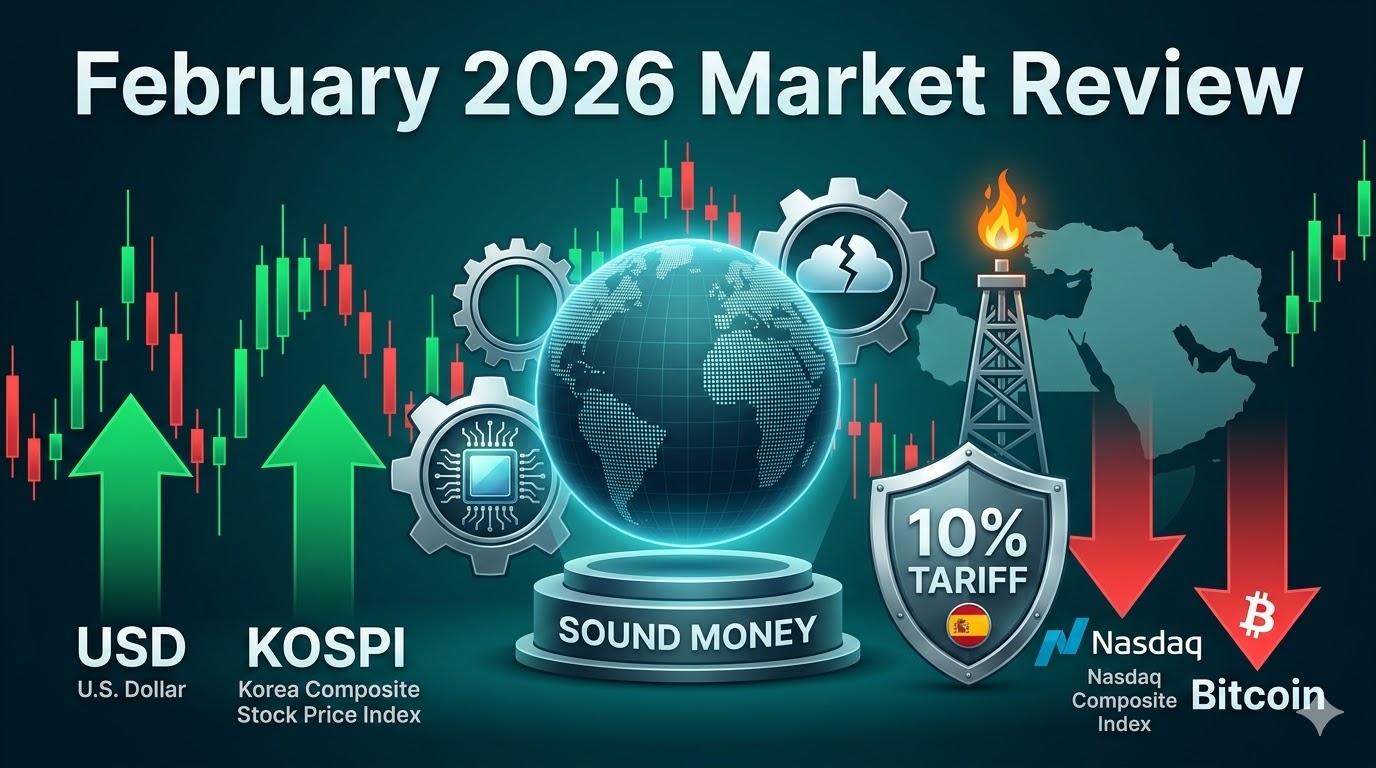
The month of February 2026 represents a seminal inflection point in American monetary history, defined by a shift from the cautious, data-dependent stance of the Jerome Powell era toward a more disciplined, rules-based doctrine following the nomination of Kevin Warsh as the next Chair of the Federal Reserve. This transition occurred against a backdrop of complex economic signals, where the lagging effects of a 2025 government shutdown collided with robust January labor data, creating a paradox of cooling growth and stubborn inflation. The “Warsh Shock,” as dubbed by market participants, triggered a violent repricing across all major asset classes, as investors recalibrated expectations for a central bank that would prioritize currency stability and balance sheet reduction over asset price support.
Table of Contents
1. The Macro-Monetary Pivot: Federal Reserve Transition and the Warsh Shock
The nomination, announced on January 30 and reverberating through February, positioned Warsh as the architect of a new monetary doctrine. Having served as a Fed Governor during the 2008 financial crisis and as a partner at Morgan Stanley, Warsh brought a “triple-threat” background of market mechanics, crisis management, and institutional critique. His long-standing opposition to expansive quantitative easing and his advocacy for a “monetary humility” that follows market signals rather than leading them suggests a definitive pivot toward “Sound Money”. The immediate market reaction saw the U.S. Dollar Index surge while inflation-hedge assets, specifically gold and bitcoin, faced a brutal sell-off, reflecting a belief that the “Fed backstop” for speculative excesses was being dismantled.
| Indicator | Pre-Nomination Trend | Post-Nomination Reaction (Feb) | Strategic Implication |
| U.S. Dollar Index (DXY) | Multi-week decline | Sharp recovery and breakout | Shift toward dollar scarcity and higher real rates. |
| Gold (XAU/USD) | Near record highs | 9% – 18% decline depending on duration | Reduced demand for inflation-hedges under “Sound Money.” |
| Bitcoin (BTC) | Consolidating above $100k | >25% decline to sub-$75k levels | Recalibration of “digital gold” as a liquidity play. |
| 10-Year Treasury Yield | Declining toward 4.0% | Bear steepening; long-term yields rose | Anticipation of active MBS/Treasury sales (QT). |
The transition is not merely a change in personnel but a change in the Fed’s reaction function. Warsh is expected to implement a “QT-for-cuts” strategy, a framework that potentially offers front-loaded interest rate reductions to support the administration’s growth agenda while simultaneously accelerating the shrinkage of the Fed’s $6.6 trillion balance sheet. This approach aims to decouple the federal funds rate from long-term market rates, allowing the Fed to exit its role as an active market participant while maintaining the stability of the currency. However, critics argue that aggressive selling of mortgage-backed securities (MBS) could introduce volatility into the housing market, which is already reeling from its sharpest decline in sales activity since the 2020 lockdowns.
2. Labor Market Dynamics and the Economic Growth Rebound
The U.S. labor market demonstrated unexpected resilience in early 2026, serving as a stabilizing force amidst the broader monetary and geopolitical turmoil. The January employment report, released in February, revealed a robust increase in nonfarm payrolls of 130,000 jobs, significantly outperforming the consensus estimate of 55,000. This strength was primarily localized in the private sector, which added 172,000 positions, effectively offsetting a 34,000-job contraction in the federal government sector—a byproduct of continued separations following deferred resignation programs initiated in 2025.
Despite this headline strength, the underlying data suggested a cooling trend that had been masked by the government shutdown. Annual benchmark revisions implemented in February reduced estimates of monthly job gains for 2025 by approximately 35,000 per month, leaving the average monthly gain for that year at a modest 15,000. This revision paints a picture of a labor market that is “stabilizing” rather than “accelerating,” with the unemployment rate ticking down to 4.3% from 4.4% in December 2025.
| Labor Market Metric | January 2026 Actual | Consensus Forecast | Historical Context (2025 Avg) |
| Nonfarm Payrolls | +130,000 | +55,000 | +15,000 (after revisions) |
| Private Sector Payrolls | +172,000 | +70,000 | +45,000 |
| Unemployment Rate | 4.3% | 4.4% | 4.2% (SEP Median) |
| Labor Participation | 62.5% | 62.4% | 62.5% (Flat YoY) |
| Real Avg. Hourly Earnings | +1.2% YoY | +1.0% YoY | +0.8% YoY |
Sector-specific analysis reveals a concentration of growth in healthcare (+33,000) and social assistance (+42,000), while financial activities saw a decline of 22,000 jobs, continuing a downward trend that began in mid-2025. The manufacturing workweek edged up slightly to 40.1 hours, suggesting that while hiring remains selective, existing capacity is being utilized more intensely. This labor stability provides a critical buffer for the economy as it attempts to rebound from the 1.4% annualized GDP growth recorded in Q4 2025—a figure heavily suppressed by the federal shutdown. Early indications for 2026 suggest a return to “above-trend” growth, supported by robust investments in artificial intelligence and a recovery in private domestic final demand, which maintained a 2.9% growth rate even during the shutdown period.
3. Inflationary Pressures and the Consumption Landscape
Inflation remained a primary concern for policymakers throughout February, with headline and core figures continuing to hover above the FOMC’s 2% long-term goal. As of December 2025, the 12-month headline Personal Consumption Expenditures (PCE) price index stood at 2.9%, with core PCE—excluding volatile food and energy—unchanged at 3.0%. Consumer Price Index (CPI) data for the same period showed a headline rate of 2.7%, down from 3.0% in September but still elevated relative to the pre-pandemic era.
The persistence of inflation is largely attributed to “supercore” inflation—core services excluding housing—which remains stubbornly elevated. While housing inflation has begun to ease, the imposition of new tariffs has introduced a fresh layer of “goods price inflation”. The Supreme Court’s February ruling on tariff authorization has introduced significant uncertainty into the inflation outlook, as producers continue to pass through the costs of existing tariffs to consumers. Federal Reserve officials, including New York Fed President John Williams, have noted that while these tariffs may have “one-off” effects on the price level, the lack of second-round effects on wages suggests that the underlying trend toward 2% remains intact, albeit delayed.
| Inflation Gauge | Dec 2025 / Jan 2026 Value | Fed Target | Primary Driver |
| Headline PCE (YoY) | 2.9% | 2.0% | Services and Tariff Pass-through |
| Core PCE (YoY) | 3.0% | 2.0% | Persistent “Supercore” services |
| Headline CPI (YoY) | 2.7% | 2.0% | Energy goods and Food stability |
| Core Goods Prices | 0.0% (Flat) | N/A | Tariff pass-through vs. AI productivity |
| Producer Price Index (YoY) | 2.88% | N/A | Manufacturing input cost acceleration |
Consumer behavior in February reflected this nuanced inflationary environment. Existing home sales experienced an 8.43% month-over-month decline, the sharpest drop since the COVID-19 lockdowns, as high mortgage rates and record-high prices finally dampened demand. The median sales price for an existing home fell below $400,000 for the first time in nearly a year, suggesting that the housing market may be reaching a cyclical peak. Conversely, retail sales and food services showed a slight contraction of 0.02%, while consumer confidence fell to a 12-year low, driven by geopolitical angst and uncertainty surrounding the Federal Reserve’s independence.
4. Geopolitical Kineticism: The February 28 Iran Strikes
The geopolitical risk profile of the global economy shifted dramatically on February 28, 2026, when the United States and Israel launched a coordinated military strike against the Islamic Republic of Iran. The operation, described by President Trump as an effort to dismantle Iran’s nuclear program and end the regime’s power, resulted in the confirmed death of Supreme Leader Ayatollah Ali Khamenei. This event represents a departure from the “symbolic attacks” of previous years, signaling a move toward “major combat operations” and regime change.
The immediate market response was a classic “flight to safety,” though the assets chosen for refuge differed from previous cycles. While the U.S. dollar and gold surged initially, the impact on energy markets was the most profound. Iran’s reported closure of the Strait of Hormuz—a chokepoint through which approximately 20% of global oil flows—triggered an immediate 6% spike in WTI crude oil prices during Asian trading sessions.
| Geopolitical Event | Immediate Asset Impact | Strategic Concern |
| Iran Nuclear Strikes | WTI spikes above $70; Nasdaq futures fall 0.9% | Prolonged regional war involving Gulf states. |
| Khamenei Death | “Haven first” flows into USD; Gold volatility | Power vacuum and potential hardline military successor. |
| Strait of Hormuz Closure | Brent-WTI spread widens; Shipping stocks volatile | Disruption of OPEC exports and global supply chains. |
| Spain Trade Halt | Spanish ADRs (Santander) drop 14% | Weaponization of trade over military base access. |
The death of Khamenei and the potential rise of a military dictatorship led by the Revolutionary Guard have introduced a “regime change” premium into oil prices. Historically, such transitions in major oil-producing nations have led to price spikes averaging 76% from onset to peak. Furthermore, the escalation has drawn in neutral countries, with Iran reportedly launching retaliatory strikes against U.S. assets in Saudi Arabia, the UAE, and Qatar. This regionalization of the conflict threatens the “deterrence” bull case that had dominated market sentiment throughout early February, moving the global economy into “uncharted territory”.
5. Trade Policy and the Reauthorization of Section 122 Tariffs
February 2026 saw a significant reconfiguration of the American trade regime following a landmark Supreme Court decision on February 20. The Court upheld a ruling that the International Emergency Economic Powers Act (IEEPA) does not grant the President the authority to impose tariffs unilaterally. In an immediate pivot, President Trump utilized Section 122 of the Trade Act of 1974 to impose a 10% universal tariff on all imports, effective February 24.
The Section 122 tariffs are designed to address large-scale balance of payments deficits and provide the executive branch with a different statutory basis for trade intervention. While the administration exempted civil aviation products and initiated trade investigations into other sectors, the broad application of these tariffs has intensified concerns regarding “second-round” inflationary effects.
| Tariff Authority | Legal Status (Feb 2026) | Economic Impact |
| IEEPA | Restricted by Supreme Court | Removed as a tool for broad-based import duties. |
| Section 122 | Activated (10% Universal) | Immediate input price pressure for U.S. manufacturers. |
| Section 301 | Active (Targeted) | Continued pressure on specific technology and raw material imports. |
| Canada-China Roadmap | Challenged by U.S. | Led to threats of retaliatory tariffs against Canada. |
The trade landscape was further complicated by idiosyncratic disputes, notably a total trade halt with Spain. This move, triggered by Spain’s refusal to allow U.S. aircraft to use military bases for strikes on Iran, highlights the increasing intersection of trade policy and geopolitical objectives. Market participants have noted that while such “tantrums” create short-term volatility—exemplified by the 14% drop in Spanish banking stocks—they also present buying opportunities for those who believe the structural integrity of the European trade zone will eventually limit the duration of such halts.
6. The AI Scare and Sectoral Rotation in Equity Markets
The U.S. equity market in February was defined by a profound “AI Scare,” a phenomenon where the rapid advancement of artificial intelligence began to be viewed as a disruptive threat rather than a purely additive growth driver. While the S&P 500 and Nasdaq Composite posted monthly declines of 0.8% and 3.3% respectively, the internal dispersion was extreme. The cap-weighted Nasdaq 100 had its worst monthly performance since March 2025, falling 2.3%, while the S&P 500 Equal Weight Index rose 3.5%, outperforming its cap-weighted counterpart for the fourth consecutive month.
The “AI Scare” was catalyzed by product releases from startups like Anthropic, whose “Claude Code” tool demonstrated the ability to modernize legacy COBOL programming—a core pillar of enterprise IT infrastructure. This sparked a “SaaS-pocalypse” narrative, where investors feared that AI agents could automate the functions of thousands of software-as-a-service (SaaS) licenses.
| Sector / Index | Feb 2026 Total Return | YTD Total Return | Narrative Driver |
| Utilities (XLU) | +10.4% | +8.2% | Defensive safe haven + power demand for data centers. |
| Energy (XLE) | +9.5% | +11.3% | Iran conflict and rising oil/gas prices. |
| Information Tech (XLK) | -3.6% | +6.0% | “AI Scare” disruption fears in software. |
| Financials (XLF) | -3.8% | -4.1% | Private credit fears and Warsh “QT” concerns. |
| Nasdaq Composite | -3.3% | -2.7% | Top-heavy concentration in disrupted growth names. |
| S&P 500 Equal-Weight | +3.5% | +7.0% | Broadening participation in cyclicals/defensives. |
The “AI Paradox” of 2026 is that the market is simultaneously pricing in the disruption of software incumbents and the overbuilding of AI infrastructure. While the iShares Expanded Tech-Software Sector ETF (IGV) plummeted 9.9% in February, semiconductor and networking equipment providers continued to report strong demand. This suggests a rotation of capital toward firms that profit from AI expenditure (the “picks and shovels”) and away from those at risk of AI obsolescence.
7. Corporate Earnings Analysis: Q4 2025 and FY 2026 Guidance
Corporate earnings for the fourth quarter of 2025 remained “solid,” with the S&P 500 reporting double-digit earnings growth for the fifth consecutive quarter. With 96% of companies having reported by late February, 73% exceeded EPS estimates and 73% beat revenue expectations. The blended year-over-year earnings growth rate stood at 14.2%, while revenue growth reached 9.4%, the highest rate since Q3 2022.
However, the “Magnificent Seven” continued to carry a disproportionate share of the load. These seven companies reported actual earnings growth of 27.2%, while the remaining 493 S&P 500 companies grew at a more modest 9.8%.
| Company | Q4 2025 EPS (Actual) | EPS Surprise | FY 2026 Outlook |
| NVIDIA (NVDA) | $1.62 | +5.2% | Sustained demand for Blackwell GPUs. |
| Alphabet (GOOGL) | $2.82 | +31.2% | Rebound in ad spend and Gemini growth. |
| Microsoft (MSFT) | $4.14 | +5.9% | Strong Azure growth but AI Capex scrutiny. |
| Boeing (BA) | $9.92 | N/A | Driven by a $9.6B gain on DAS transaction. |
| Cisco (CSCO) | $1.04 (Non-GAAP) | +11.0% | Networking refresh and AI infrastructure surge. |
| Workday (WDAY) | $2.47 | +28.6% | AI Agent push despite slight outlook miss. |
| Celsius (CELH) | $0.26 | +38.4% | Market share expansion in U.S. energy drinks. |
The earnings narrative in February shifted from “past performance” to “future disruption.” While results were strong, analysts lowered Q1 2026 EPS estimates by 1.5% during the first two months of the quarter, even as they increased estimates for the later half of the year. This suggests a “wait-and-see” approach as companies navigate the impact of tariffs and the AI transition. Notably, software companies like Workday and Salesforce are repositioning their platforms around “agentic AI” to prove their value in a changing landscape.
8. Global Market Dispersion: Asia and Europe Outperformance
A significant trend in February was the continued outperformance of international equities relative to major U.S. benchmarks. Emerging markets led the way, advancing 5.5% as investors doubled down on the Asian technology supply chain.
South Korea’s KOSPI Index emerged as the standout market, surging 20% in February alone. This rally reflects heavy investor inflows into semiconductor and chip equipment companies viewed as the “backbone” of the AI build-out. In contrast to the “AI Scare” in the U.S., Asian firms are being valued as essential suppliers within the global technology supply chain, insulating them from SaaS-related disruption fears.
| Global Market Index | Feb 2026 Performance | Primary Driver |
| MSCI Asia Pacific | +6.7% | Record February; AI infrastructure demand. |
| Kospi (S. Korea) | +20.0% | World’s best-performing major gauge. |
| Nikkei 225 (Japan) | +5.8% | Strong exports; thinned Lunar New Year trading. |
| MSCI Europe ex UK | +3.5% | Solid earnings; signs of economic stabilization. |
| FTSE 100 (UK) | > 10,000 Level | Surpassed record highs despite political angst. |
| MSCI Emerging Markets | +5.5% | Capital flows returning to growth regions. |
European markets also demonstrated resilience, with several benchmarks reaching all-time highs. The Eurozone economy grew by 0.3% in Q4 2025, exceeding expectations, with Spain leading the way despite political tensions surrounding Greenland and Venezuela. The UK’s FTSE 100 surpassed the 10,000 level for the first time, supported by a positive surprise in growth data and improved consumer confidence, even as inflation rose to 3.4%.
9. Commodity Markets: Haven Demand and the Warsh Effect
The commodity asset class experienced a volatile February, characterized by sharp price reversals and shifting sentiment. Precious metals, which had reached record highs in January (Gold > $5,500), saw their 30-day volatility surge to levels not seen since the 2008 financial crisis.
The nomination of Kevin Warsh acted as a major headwind for gold and silver, as the anticipation of a stronger dollar and higher real rates reduced the appeal of non-yielding assets. Gold fell nearly 18% from its early-month peaks in some sessions, while silver experienced a 26% plunge. However, by the end of the month, the escalation of the Iran conflict reignited “haven demand,” helping gold to stabilize and post a 7.9% gain for the full month of February.
| Commodity | Feb 2026 Return | Peak/Key Level | Market Narrative |
| Gold (XAU) | +7.93% | $5,626 (Record) | Warsh shock vs. Iran haven demand. |
| Silver (XAG) | +12.66% | $92.15 | Multi-decade volatility highs; industrial demand. |
| WTI Crude | +2.88% | $70.00 (Resistance) | Geopolitical spike vs. soft global demand. |
| Brent Crude | -0.48% | $71.90 | Middle East benchmark outperforming WTI. |
| Natural Gas | -10.0%+ | $3.10 | U.S. price drop vs. European spike. |
| Copper | +0.37% (Daily) | $5.96/lb | AI data center and electrical infrastructure demand. |
Energy products outperformed crude oil, with gasoline and heating oil futures posting gains of 5.3% and 7.3% respectively. This was driven by the expectation of a strong 2026 driving season and the “distillate refining spreads” that favor Brent-linked products. Agriculture also saw a rally, with soybean and wheat futures rising over 8% due to uncertainty over Northern Hemisphere weather and the ongoing war in Ukraine.
10. Foreign Exchange and Fixed Income: The Dollar’s Structural Edge
In the foreign exchange markets, the U.S. dollar maintained a structural advantage throughout February. As geopolitical risks intensified, the gap between “energy producers” (like the U.S.) and “energy importers” (like Europe and Japan) widened, lifting the dollar across the G10 space.
The British Pound was the hardest hit among major currencies, falling 1.5% against the dollar—its biggest monthly decline since October 2025. This was driven by political uncertainty following a by-election defeat for the Labour party and growing expectations for Bank of England rate cuts as inflation began to cool. The Euro also faced pressure, trading near the 1.18 level, as the “energy squeeze” in Europe weighed on business activity.
| Currency Pair | Feb 2026 Close (Ask) | Monthly Change | Central Bank Stance |
| EUR/USD | 1.1805 | -0.04% | ECB “agile” but core inflation sticky. |
| GBP/USD | 1.3519 | -1.50% | BoE March cut “finely balanced.” |
| USD/JPY | 155.72 | Volatile | BoJ intervention risks at 160 level. |
| AUD/USD | 0.7077 | Resilient | RBA raised rates to 3.85% in February. |
| DXY Index | 97.62 | Strong | “Warsh Shock” recovery from 4-year lows. |
In the fixed income market, Treasury yields fell sharply during the month, with the 10-year yield dropping 29 basis points to 3.97%. This rally in bonds occurred despite a “hot” wholesale inflation report, suggesting that investors were more concerned about “economic growth momentum” and AI-driven displacement than near-term price pressures. However, the yield curve experienced a “bear steepening” in the final days of the month as the market began to price in Warsh’s preference for balance sheet reduction over balance sheet expansion.
11. Digital Assets: Institutional Retreat and the Warsh Repricing
The cryptocurrency market faced significant headwinds in February 2026, marking its fifth consecutive month of decline. Institutional interest in Bitcoin and Ethereum ETFs waned, with record outflows totaling over $9 billion across both assets during the past four months.
Bitcoin, which had reached a peak of $126,000 in late 2025, ended February near the $66,000 level. The asset class was particularly sensitive to the “Warsh Shock,” as the nominee’s “Sound Money” rhetoric directly challenged the “inflation-hedge” and “liquidity-proxy” bull cases for crypto. Furthermore, Bitcoin failed to act as a safe haven during the Iran conflict, sliding as investors pivoted toward traditional haven assets like the U.S. dollar and tokenized gold.
| Crypto Asset | Feb 2026 Return | Price (Feb 27) | Peak to Trough |
| Bitcoin (BTC) | -21.7% | $65,883.99 | -47% from Oct 2025 peak. |
| Ethereum (ETH) | -28.5% | $1,931.32 | -60% from Aug 2025 high. |
| BTC ETF Flows | -$6.39B (4mo) | N/A | Longest monthly outflow streak. |
| ETH ETF Flows | -$2.76B (4mo) | N/A | Substantial institutional exit. |
12. Individual US Equities: High-Volume Movers and Performance Outliers
Individual stock performance in February was a study in extreme momentum and rapid sector rotation. While the software sector bled, energy and commodity-oriented technology stocks saw massive fair-value increases.
Fastly (FSLY) emerged as the top performer of the month, gaining 107.2%, followed by Kosmos Energy (KOS) at 71.3%. These moves were driven by specific catalysts: FSLY benefitted from a massive rotation into edge computing and networking infrastructure, while KOS surged on rising oil prices and geopolitical tensions.
| Ticker | Feb 2026 Gain/Loss | Industry | Volume/Catalyst |
| FSLY | +107.2% | Technology | Monthly leader; Edge infrastructure demand. |
| KOS | +71.3% | Energy | Iran conflict; YTD leader (+161%). |
| VAL | +65.5% | Energy | Offshore drilling demand; Crude spike. |
| GLW | +45.6% | Technology | Shortage in commodity-oriented AI products. |
| IBM | -23.7% | Technology | “Claude Code” COBOL modernization scare. |
| RDDT | -33.3% | Comm. Services | Down 33% YTD; post-IPO volatility. |
| HOOD | -30.7% | Financials | Crypto volume decline; Warsh shock. |
| SNDK | +396% (FV increase) | Technology | Extreme shortage in commodity storage. |
Late-cycle technology stocks, particularly those considered “commodity-oriented,” saw the greatest fair value increases. Morningstar increased its valuation on SanDisk (SNDK) by 396%, Western Digital (WDC) by 68%, and Corning (GLW) by 58%. These companies are benefiting from a severe shortage in products whose supply was previously taken for granted during the AI build-out. Conversely, consumer cyclical stocks and retailers like Amazon, Shopify, and Coinbase faced heavy selling pressure as the “AI Scare” and “Warsh Shock” dampened risk appetite.
13. Synthesis and Strategic Outlook for Q2 2026
The month of February 2026 has fundamentally altered the trajectory of the global economy for the remainder of the year. The “Warsh Shock” has introduced a “Sound Money” regime that will likely prioritize balance sheet integrity and currency stability over the accommodative liquidity that fueled the 2024-2025 bull market. While interest rate cuts remain on the table—primarily to offset the drag of a cooling labor market and the friction of new tariffs—the simultaneous acceleration of Quantitative Tightening (QT) will create a challenging environment for long-duration assets and highly leveraged firms.
The “AI Scare” has marked the end of the “speculative momentum” phase of the artificial intelligence boom. Investors are now distinguishing between the “infrastructure providers” (Asia, semiconductor capital equipment, networking) and the “software incumbents” (SaaS, enterprise services). The rotation away from top-heavy tech leadership toward cyclicals, defensives, and small caps—which remain at a 13% discount to fair value—suggests a healthier, more balanced market structure.
Geopolitically, the direct military engagement with Iran and the closure of the Strait of Hormuz represent the most significant near-term threat to global stability. The “deterrence” model of 2025 has been replaced by a “combat” model, which carries far greater ramifications than previous geopolitical flare-ups. If oil prices remain sustained above $70-$75, the “disinflation” narrative that allowed the Fed to begin its cutting cycle may be at risk.
As we move into March and the second quarter of 2026, the key variables to monitor include:
Fed Independence and the Warsh Confirmation: The Senate’s vetting process for Kevin Warsh will provide critical signals on the future of the Fed’s balance sheet and the “QT-for-cuts” strategy.
Strait of Hormuz Duration: The duration of the waterway closure and the potential for a “protracted oil supply disruption” will determine the path of interest rates and the probability of a 2026 recession.
Tariff Pass-Through: The speed at which producers pass the 10% Section 122 tariffs through to consumer prices will be the deciding factor in whether the Fed can achieve its 2% inflation target by year-end.
AI ROI Validation: Future earnings reports must demonstrate that the massive AI Capex is translating into productivity gains and revenue for the software sector to stem the current “SaaS-pocalypse”.
14. Summary of Market Movers
February 2026 was a month of profound structural shifts, headlined by the “Warsh Shock” and a radical repricing of the artificial intelligence narrative. The U.S. economy, while demonstrating labor market resilience with 130,000 new jobs and a 4.3% unemployment rate, faced headwinds from a 1.4% GDP growth slowdown and the imposition of a 10% universal tariff under Section 122. The nomination of Kevin Warsh as the next Fed Chair signaled a transition to “Sound Money” and “Monetary Discipline,” causing a surge in the U.S. dollar and a sharp decline in gold and bitcoin, as markets anticipated a less interventionist central bank and an accelerated reduction of the Fed’s balance sheet.
The “AI Scare” trade upended the technology sector, driving a massive rotation from disrupted software incumbents like Salesforce and IBM toward “picks and shovels” infrastructure providers, particularly in Asia. While the Nasdaq Composite fell 3.3%, international markets like South Korea’s KOSPI surged 20%, highlighting a global dispersion in AI-related optimism. Geopolitically, the U.S.-Israel strike on Iran and the death of its Supreme Leader introduced a “regime change” premium into energy markets, with the closure of the Strait of Hormuz pushing WTI crude above critical resistance at $70 and raising fears of a protracted regional conflict.
As we look toward the second quarter, the investment landscape is defined by “consolidation and verification.” The era of speculative momentum has been replaced by a focus on “Sound Money” fundamentals and the actual ROI of AI investments. While earnings remain solid and global growth resilient, the convergence of trade policy uncertainty, geopolitical volatility, and a shifting monetary reaction function suggests that the “taste of volatility” seen in February is merely a harbinger of a more turbulent 2026. Investors are encouraged to maintain a “barbell” approach, balancing exposure to high-growth AI infrastructure with high-quality, value-oriented defensives to navigate the transition.
Want our free trading resources by email? Leave your address below.
 Our flagship mentoring program is suitable for both beginners and advanced traders, covering the 4 strategies which I used over the past 15 years to build up my 7-figure personal trading portfolio.
 If you're looking for the best trading opportunities every day across various markets, and don't want to spend hours doing the research yourself, check out our private Telegram channel!

Leave a Reply
Want to join the discussion?Feel free to contribute!