Recently there have been a lot of large fast moves in the financial markets, due to the recent stock market crash, and this has also affected the forex markets, so I am going to share the 2 best trading strategies to tackle such situations.
Although they are quite rare in the stock market, such fast moves are actually quite common on the intraday market, and professional day traders who do news trading or intraday trading will be quite familiar with them.
When I was trading professionally, we would see such sharp moves a few times a week, be it a market crash or market spike.
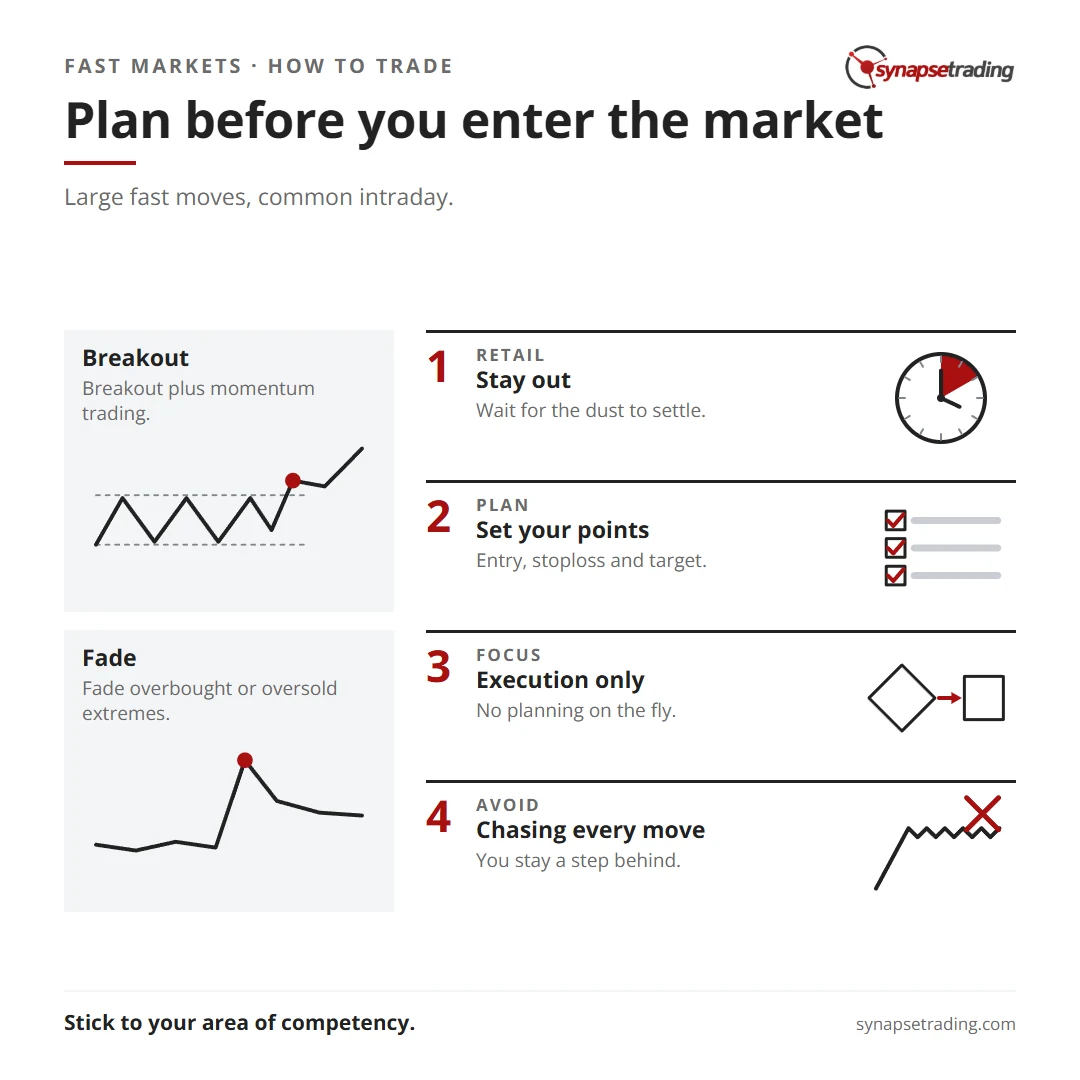
For retail traders, the best trading strategy is to stay out, and wait for dust to settle before coming back into the market. The idea is to stick to your area of competency, if your trading strategy is not suitable for fast markets or news trading.
For those who want to try out fast trading in the stock market or forex market, there are 2 basic trading strategies:
1. Breakout trading + momentum trading
2. Fade extreme moves, like overbought or oversold conditions
The most important part of any strategy is to have a gameplan before you enter the market, or else you will part of be someone’s gameplan.
Your game plan should include your trading strategy, and specific points you will have your entry, stoploss, target, etc.
This way, once the market is open, you can just focus on execution instead of trying to strategize and execute at the same time.
This is especially important if the market is moving fast, or during a market crash, because there is no time to think, and very emotional, hence it would be impossible to make good trading decisions on the fly.
You will end up trying to chase every price movement, and you will always be one step behind those who have a solid game plan and a consistent trading strategy.
Enjoy the video, and remember to “like” and “subscribe”!
Most people think that in trading, the more trades you make, the money more you will end up making.
But is this really true?
Traders who adopt this philosophy will constantly be chasing the next big shiny object, reading every piece of news online, and hunting for new opportunities every day.
The danger with this approach is that you stretch yourself too thin, which leads to decision fatigue. Even when the low-hanging fruit and easy opportunities are right in front of you, you might be too busy out hunting to see and seize those trading opportunities.
The allure of excessive trading attracts new traders, who want to make as many trades as possible, and get rich quickly in a short period of time.
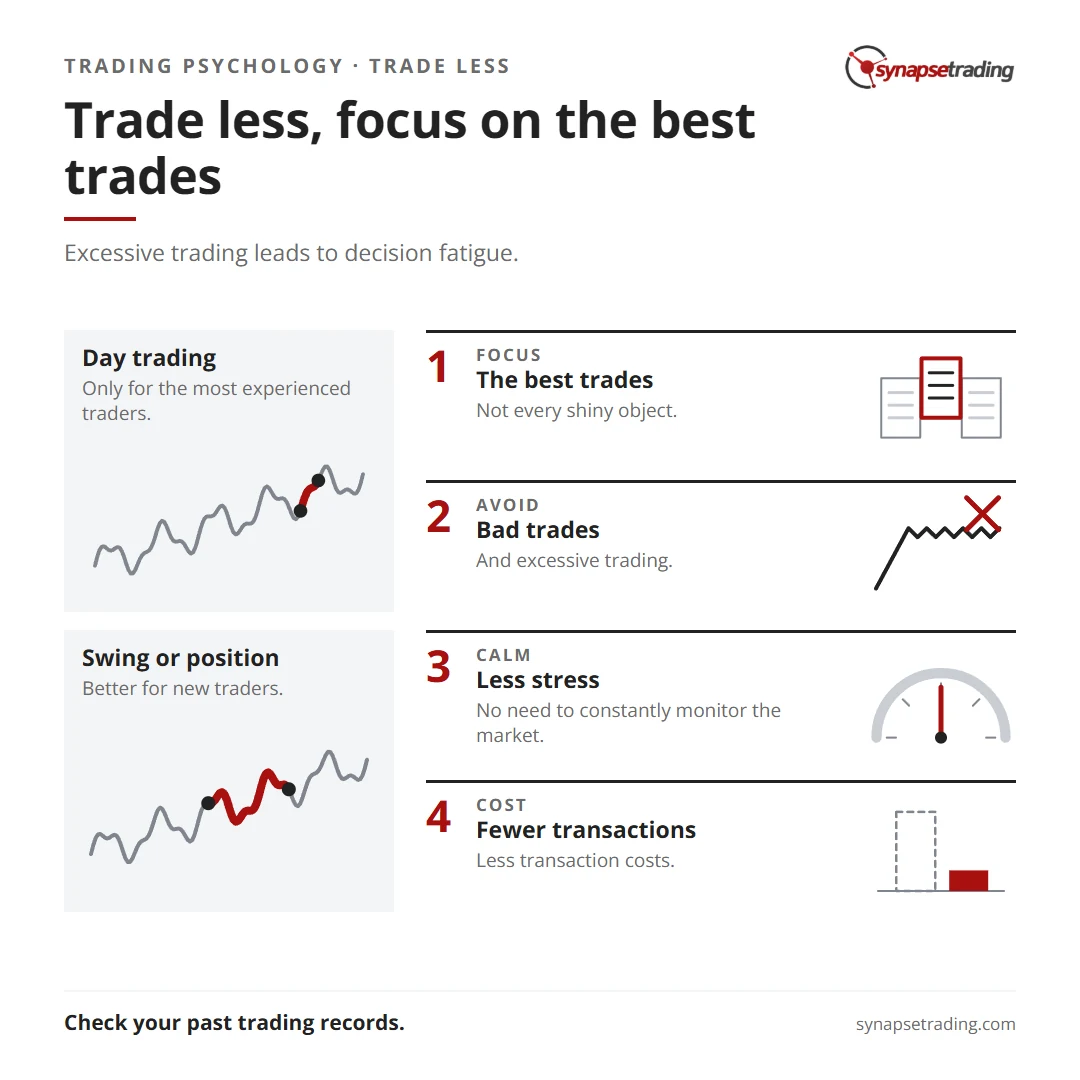
Thus they are attracted to day-trading, even though intraday trading is only suitable for the most experienced and advanced traders. Most new traders would be much better of doing swing trading or position trading, where they can hone their skills in a less fast-paced and risky environment.
The advantages of trading less are numerous:
– allows you to focus on the best trades and best strategies
– helps you avoid bad trades and excessive trading
– makes trading less stressful
– do not need to constantly monitor the market
– less transactions means less transaction costs
Hence, for those traders who are making too many trades, it would be good to check your past trading records, and see if trading less might actually improve your trading results.
Enjoy the video, and remember to “like” and “subscribe”!
https://synapsetrading.com/wp-content/uploads/2026/10/trade-less-make-more-card.webp6301200Spencer Lihttps://synapsetrading.com/wp-content/uploads/2026/10/synapse-logo-horizontal-light.pngSpencer Li2020-03-04 19:36:222026-09-11 12:04:58Why Day Trading Will Make You Less Money (And Bring You More Stress)
From 2017 to 2019, Tesla was trading between the range of $180 to $400.
All that changed when it broke above $400, then went to $500, then $600, then $700, then $800, then $900, all within the span of a few weeks. Will it hit $1000 next?
In this video, I explain my reasons for buying Tesla stock, how I screwed up the trade, and how you can tackle parabolic charts such as this.
Enjoy the video, and remember to “like” and “subscribe”!
https://synapsetrading.com/wp-content/uploads/2026/10/tesla-stock-trade-card.webp6301200Spencer Lihttps://synapsetrading.com/wp-content/uploads/2026/10/synapse-logo-horizontal-light.pngSpencer Li2020-02-23 07:39:352026-07-01 15:37:04How I Screwed Up My Tesla Stock Trade (and What I Learned)
20 Most Common Trading Questions for Beginners, Answered
Last updated: 12 October 2026 · By Spencer Li, CFTe
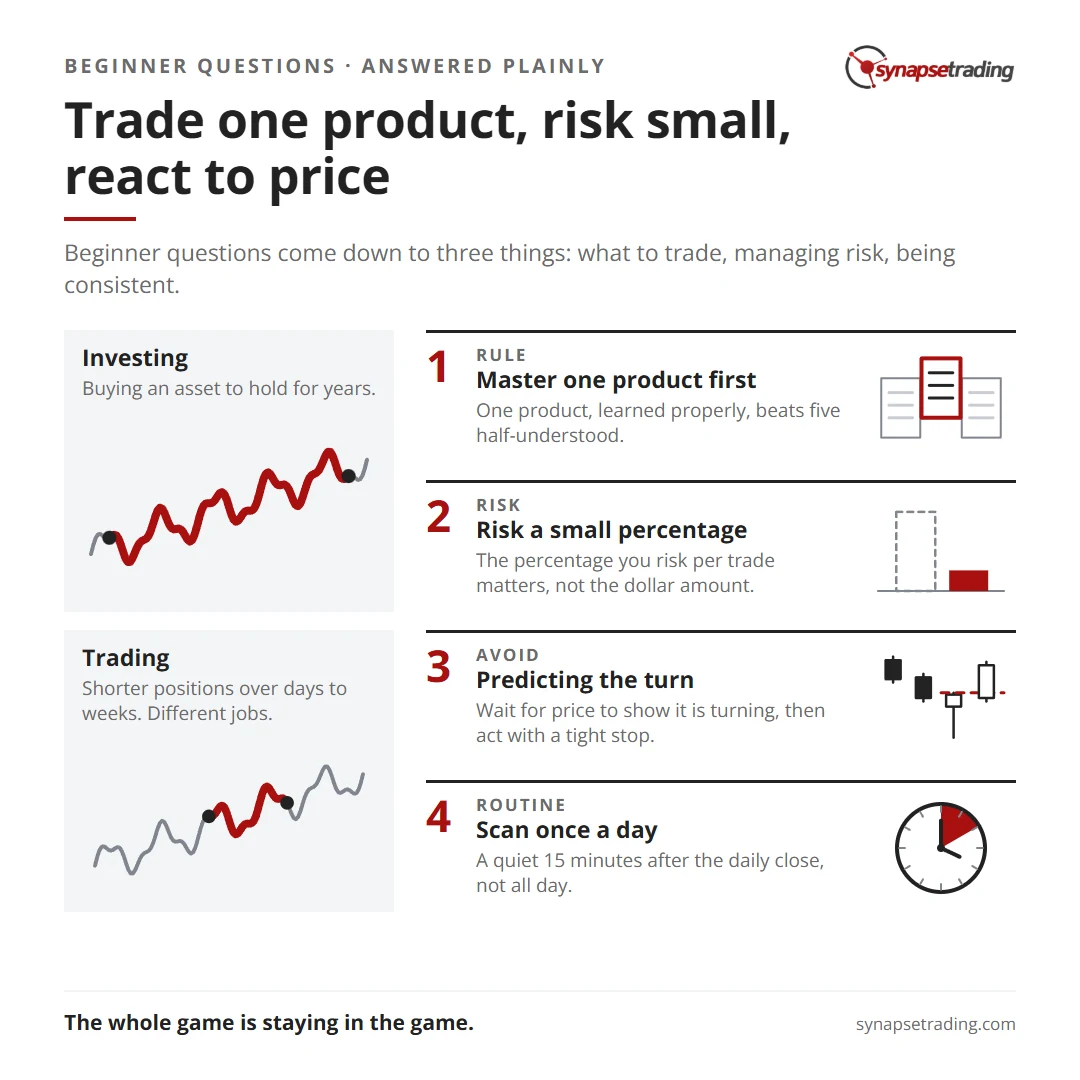
The most common questions beginners ask come down to three things: what to trade, how to manage risk, and how to be consistent. The short answers: trading and investing are different jobs, so pick one on purpose. Start with one product and one timeframe, not five. You do not need a big account, you need a small risk per trade. You cannot predict price, so stop trying; you react to it with a rule. And a “good” return is the one you can repeat without blowing up, not the biggest number you saw online. Below I answer all 20 of the questions new traders ask me most, plainly, with no hype and no promises of returns.
The full video series walks through each one. This page is the written version you can search and skim.
Trading vs investing, and the big-picture questions
What is the difference between trading and investing?
Investing is buying an asset to hold for years, betting on the business or the economy growing. Trading is taking shorter positions to profit from price movement, up or down, over days to weeks. Same markets, different jobs. You can do both, but do not blur them; the worst trade is the losing trade you “turn into an investment” to avoid booking the loss.
Do you believe in the buy-and-hold value investing approach?
Yes, as one tool. Buy-and-hold works for money you do not need to touch and do not want to babysit. It is slow, it is boring, and that is the point. My issue is not with the method, it is with using it as an excuse to never sell, even when the reason you bought has clearly broken.
What is your long-term investment strategy?
Personally, I keep the long-term money mechanical and diversified, rebalanced on a schedule, not on a feeling. The goal of that bucket is to not lose badly in a bad decade, not to win the most in a good one. I keep it completely separate from my trading account so one cannot tempt the other.
Trading is risky, shouldn’t I just buy stocks with good fundamentals?
Good fundamentals tell you what to own, not when, and a great company can still hand you a 50% drawdown on the way to being right. Risk is not the strategy you pick, it is the size you take and the loss you are willing to accept. A “safe” stock with no exit plan is riskier than a small, well-sized trade with a stop.
Strategy, products, and the technical questions
What is your trading strategy?
Low-risk swing trading. I scan once a day, look for a small number of high-probability price patterns, enter where the risk is small and clearly defined, and let the winners run. One system, applied the same way to any market. The edge is not a magic setup, it is taking only the good ones and sizing them sanely.
What products should I trade, and how many?
Start with one. One product, learned properly, beats five products half-understood. Stocks or an index are a fine place to begin because the data is clean and the behaviour is well documented. Add a second product only once the first one is genuinely on autopilot.
What is the difference between technical analysis and fundamental analysis?
Fundamental analysis (FA) studies the business: earnings, debt, growth, valuation. Technical analysis (TA) studies the price chart: trend, support and resistance, patterns. FA tries to answer “is this worth owning?” TA tries to answer “when do I get in and out?” Neither is complete on its own.
Do you use fundamentals in your trading?
Lightly. My entries and exits are technical, but I will glance at the backdrop, what sector is strong, whether earnings are due, the broad regime. I use fundamentals as context, not as a trigger. The chart decides the trade.
What technical indicators do you use to trade?
Fewer than people expect. Price action, structure (higher highs and lower lows), and support and resistance do most of the work. I will use a moving average for trend context and the occasional momentum gauge, but indicators are lagging summaries of price, so I read price first and let an indicator confirm, never lead.
What charts and timeframe do you use, and what is your holding period?
Candlestick charts, daily timeframe as the home base, with a weekly chart for context. As a swing trader my holding period is typically days to a few weeks. Do note that a longer timeframe means fewer trades and fewer decisions, which for most beginners is a feature, not a limitation.
Capital, consistency, and expectations
How much capital do I need to start trading?
Less than you think to learn, more than you think to live on. You can learn the process with a small account because the skill is risk control, not account size. What matters is the percentage you risk per trade, not the dollar amount. Start small enough that the losses (and there will be losses) do not hurt you while you are still learning.
How can I become more consistent in my trading results?
Consistency comes from doing the same thing every time, not from finding a better setup. Same scan, same setups, same risk per trade, same routine. Most inconsistency is behavioural: skipping the rules on the trade that “felt” different, or sizing up after a win. Write the process down and follow it on the boring days.
How can I predict the price of a stock? How do I know when it will turn?
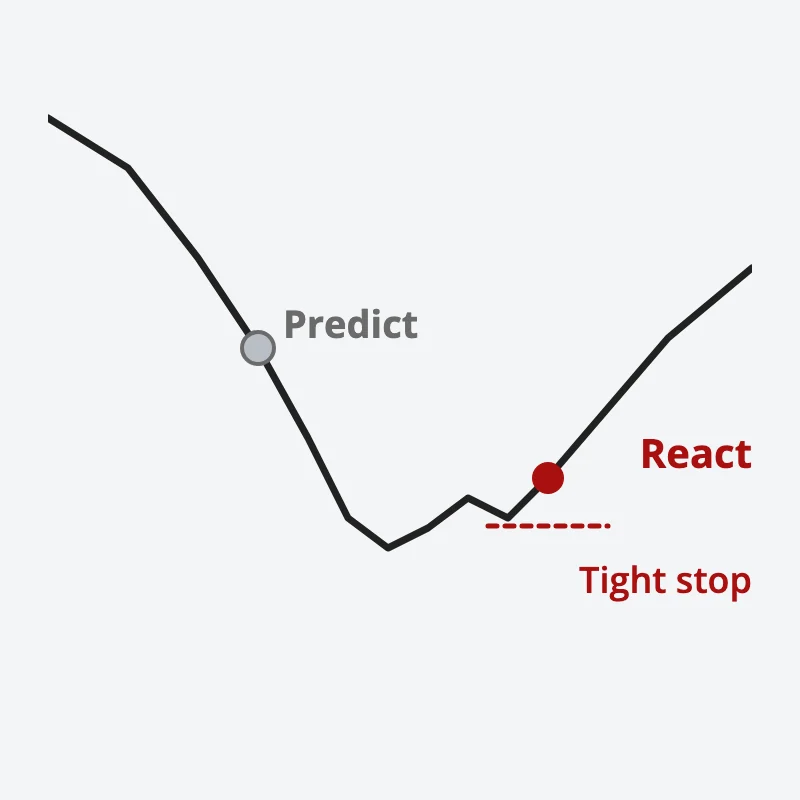
You cannot predict it, and chasing certainty is the trap. Nobody knows the next tick. What you can do is identify spots where the odds favour one side and the risk of being wrong is small and defined, then react. I do not try to call the turn; I wait for price to show it is turning and take a position with a tight stop.
You cannot predict the turn; wait for price to show it, then act with a tight stop.
What is a good annual return to aim for, and how much can I expect?
I will not give you a number, and you should distrust anyone who promises one. Returns are not fixed, they swing with the market, your skill, and your risk. A better target than a percentage is a process you can repeat without blowing up. Aim to survive and stay consistent first; the returns are a by-product of not losing badly, not a goal you can dial in.
Here is the beginner cheat sheet
The fastest way to skip the common mistakes is to flip each one into a rule.
Beginner instinct
The mistake
The rule instead
Trade many products to spread bets
Half-understands all of them
Master one product first
Load up on indicators
Conflicting, lagging signals
Read price first, confirm with one indicator
Predict the turn
Catches falling knives
React after price confirms the turn
Risk a fixed dollar amount
Account size drives the loss
Risk a fixed small percentage per trade
Chase a big annual return
Oversizes, blows up
Target a repeatable process, let returns follow
Trade all day on news
Reacts to noise
Scan once a day, trade the setup
Timing, news, and risk
When should I trade? When is the best time to trade?
Whenever you can be calm and follow your process, which for a swing trader is usually a quiet 15 minutes after the daily close, not all day staring at a screen. The “best time” myth assumes more screen time means more profit. It usually means more overtrading. Pick a fixed slot and scan then.
How do you trade the news, and what news should I watch?
Carefully, and less than you would think. News moves price, but by the time you have read it, the move has often happened, and the reaction is unpredictable. I do not trade headlines. I watch the calendar so a known event (earnings, a central-bank decision) does not blindside an open position, and I let the chart, not the story, tell me what to do.
Is trading safe? Can I lose all my capital? How do you manage risk?
Trading is not “safe”, and anyone who tells you it is, is selling something. You can lose money, and with leverage you can lose more than you put in, which is exactly why I avoid reckless leverage. I manage risk by keeping each trade’s loss small and pre-defined with a stop, sizing every position to that loss, and never betting so big that one trade matters. The whole game is staying in the game.
If everyone uses your strategies, will they stop working?
No, and here is why. The edge is not the setup, which anyone can see. The edge is the discipline to take only the good ones, skip the tempting-but-bad ones, size correctly, and sit through drawdowns. Most people who know the rules still cannot follow them. The information is free; the behaviour is rare.
The professional and the getting-started questions
What is the difference between trading for a fund and trading your own money?
A fund gives you size, infrastructure, and someone else’s rules and pressure. Trading your own money gives you full freedom and full responsibility, no one to blame, no one to answer to but yourself. The mechanics overlap, but the psychology is different: with your own money, the hardest opponent is you.
How can I get started, and what are good resources?
Start by learning one method properly rather than collecting twenty. Read widely, but trade narrowly. The honest path is unglamorous: learn a defined process, practise it on a small account, keep a record of every trade, and review your own mistakes. That last part, reviewing your own trades, teaches you more than any course. It is also why I keep my own trade log public, losses left in.
Where the human edge comes in
A scanner will list these twenty questions and even draft tidy textbook answers in seconds. What it will not do is stop you from oversizing after a winning streak, or talk you out of the trade that “feels” certain, or make you sit on your hands through a drawdown you planned for. The knowledge is the easy part now. The judgment, discipline, and sizing are the part that decides whether you keep your account, and they are the first of the Five Edges that no tool can trade for you.
FAQ
What is the difference between trading and investing?
Investing means holding an asset for years to profit from long-term growth. Trading means taking shorter positions, days to weeks, to profit from price movement in either direction. Same markets, different jobs, and you should pick one on purpose for each pot of money.
How much money do I need to start trading?
Enough to learn the process safely, which is smaller than most people assume, because the skill is risk control, not account size. What matters is the small percentage you risk per trade, not the total in the account.
What is a realistic return for a beginner trader?
There is no fixed number, and you should be wary of anyone who promises one. Returns swing with the market and your skill. A better goal than a percentage is a repeatable process that does not blow up your account.
Which technical indicators should a beginner use?
Fewer than you would expect. Price action, market structure, and support and resistance do most of the work. Add at most one moving average or momentum gauge for confirmation, and read price first.
Can you predict where a stock price will go?
No, and trying to is the classic beginner trap. You cannot know the next move. You can find spots where the odds favour one side with small, defined risk, then react to what price actually does.
That is the written version of the 20 questions I get asked most. If one of your own questions is not here, ask it in the comments and I will answer it.
Want the routine, not just the answers? Grab the free 15-Minute Swing Trading Starter Kit. It is the exact once-a-day process I use to trade any market in 15 minutes.
About the author. Spencer Li is The 15-Minute Trader and the founder of Synapse Trading. He is a Certified Financial Technician (CFTe) with 15+ years of trading, run from 70+ countries. He holds a B.Acc and B.BM from SMU. Every trade he takes is public, dated, losses left in. He teaches low-risk swing trading in 15 minutes a day, one system for any market.
Education, not financial advice. Synapse Trading is not licensed by MAS to advise on investment products. Trading carries risk of loss; past performance is not indicative of future results.
https://synapsetrading.com/wp-content/uploads/2026/10/video-interview-with-spencer-the-20-most-burning-questions-card.webp6301200Spencer Lihttps://synapsetrading.com/wp-content/uploads/2026/10/synapse-logo-horizontal-light.pngSpencer Li2018-08-15 05:01:302026-10-22 13:34:52Video Interview with Spencer: The 20 Most Burning Questions
When it comes to trading, most people think that trading is stressful and boring because it involves staring at a screen the whole day and watching prices move, and then having to execute trades at lightning speeds to make any profits.
That is quite often what is shown in the movies, and very much dramatized.
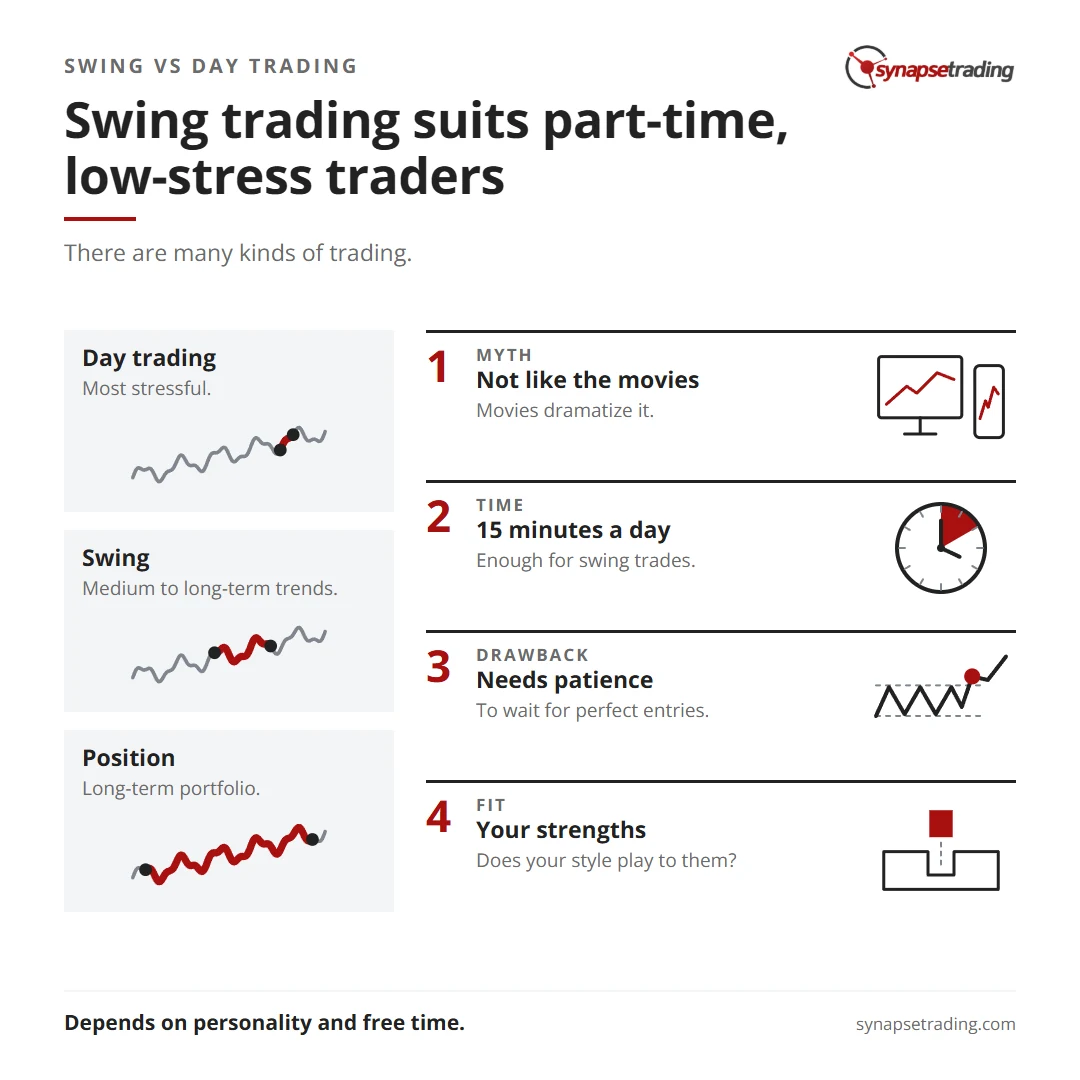
In reality, there are many different kinds of trading, and here is a simple infographic depicting the main categories.
Generally, what you see in the movies tend to depict scalpers and day traders, which is the most stressful kind of trading. I myself tried it for a couple of years, but it started to take a toll on my health, which I decided was not worth the money, even though it was pretty good.
Hence, I find that the most useful kind of trading for anyone who is doing it part-time, or does not want to get too stressed out, is to use a swing trading approach. This means taking tactical positions to capture the medium to long-term trends.
With just 15 minutes a day, it is more than enough for me to place and manage my swing trades, which leaves me more free time to focus on the things that matter in life.
Of course, there are some drawbacks to swing trading as well, for example your income will be more lumpy as compared to intraday trading, and you will need a ton of patience in waiting to enter the perfect trades, and also waiting for trades to play out.
In summary, the type of trading style really depends on each individual personality and amount of free time, but personally I prefer to use the swing trading approach because it gives me the best returns for my time and effort.
Do you know what is your preferred style, and does it play to your strengths? 😀
https://synapsetrading.com/wp-content/uploads/2026/10/swing-trading-vs-intraday-trading-which-is-better-card.webp6301200Spencer Lihttps://synapsetrading.com/wp-content/uploads/2026/10/synapse-logo-horizontal-light.pngSpencer Li2018-06-13 23:21:092026-09-09 22:01:19Swing Trading vs. Intraday Trading: Which is Better?



 Source: