

Sarajevo: The Siege Tunnel, the Olympic Bobsleigh Track and the Spite House
Want the daily routine? Get the free 15-Minute Swing Trader’s Checklist. Get it free →
In late November 2019, near the end of 5 weeks across Eastern Europe and the Balkans, I spent 2 nights in Sarajevo, the capital of Bosnia and Herzegovina.
It was a short stop with a lot packed into it. In 2 days I walked through the tunnel that kept the city alive during the siege, walked down an Olympic bobsleigh track in the fog, and ate dinner in a house that was moved across a river out of spite. This is that stop, from my photos.
Why Sarajevo?
Sarajevo is the city where the 20th century turned twice. In 1914, the shooting of Archduke Franz Ferdinand on one of its street corners set off the First World War. Seventy years later, it hosted the 1984 Winter Olympics.
Then came the siege. From April 1992 to February 1996, the city was surrounded and shelled from the hills for 1,425 days, the longest siege of a capital city in modern warfare.
So you might be thinking, what is left of all that today? More than you would expect. The scars are still in the pavements, on the walls and up on the mountain, and the city has turned many of them into places you can visit.
How do you get in?
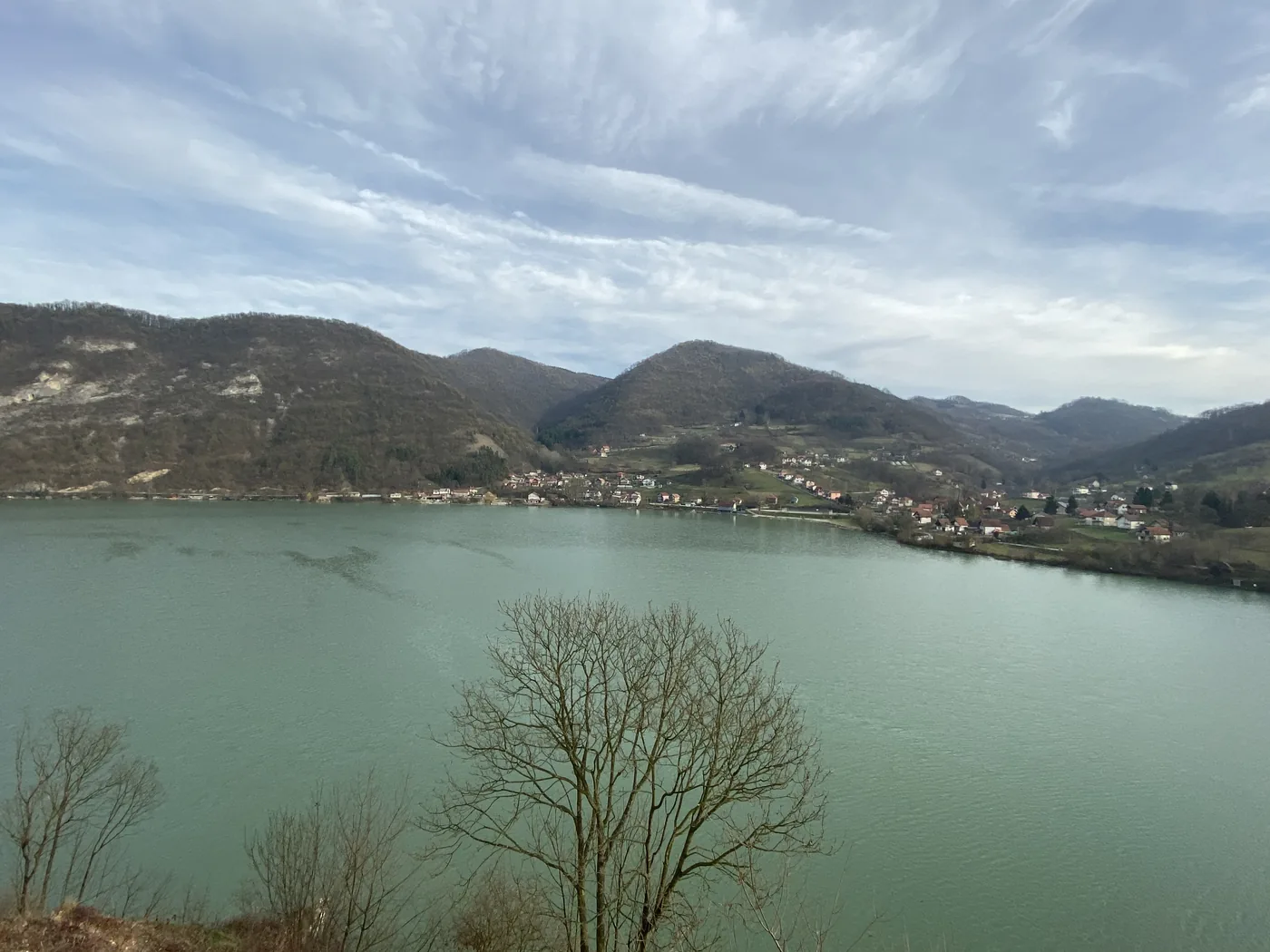
We came in by road from Serbia on 27 November. The border post sat at the end of a bridge over a wide green river, and the road then followed a long reservoir between steep wooded hills.
By late afternoon we were in the old town.
What is Bascarsija like?
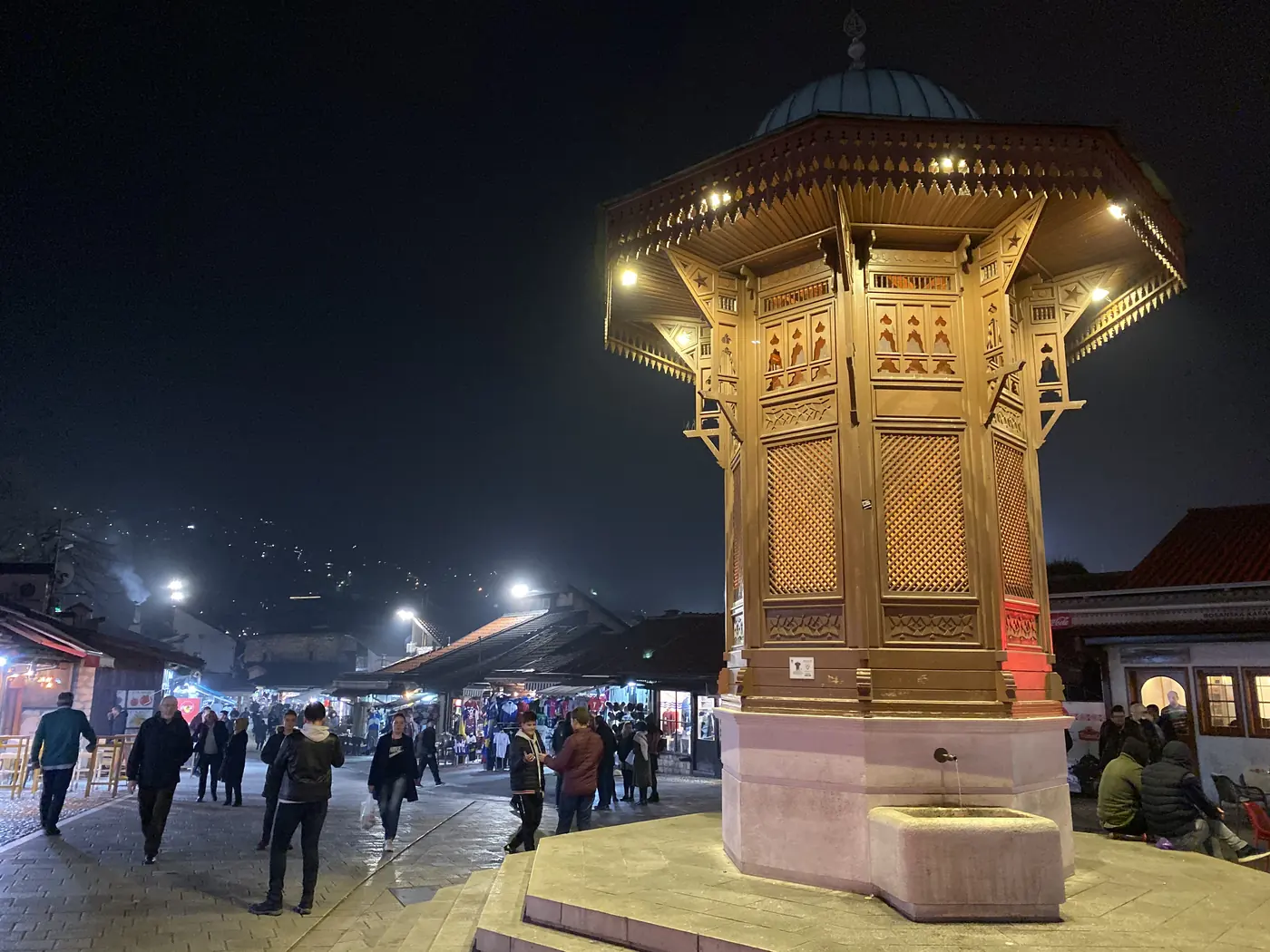
Bascarsija is the old Ottoman bazaar, a grid of low wooden shops selling copper, carpets and lamps, with minarets above the rooftops. At its centre is the Sebilj, a wooden fountain with a copper dome, first built in 1753 and rebuilt in 1891. By the next morning, the square around it was covered in pigeons.
Walk west from the bazaar and the city changes style in a few hundred metres, from Ottoman domes to the tall Austro-Hungarian buildings the empire put up after it took over in 1878. That change is the “Jerusalem of Europe” idea in practice: a mosque, a Catholic cathedral, an Orthodox church and a synagogue all stand within a short walk of each other.
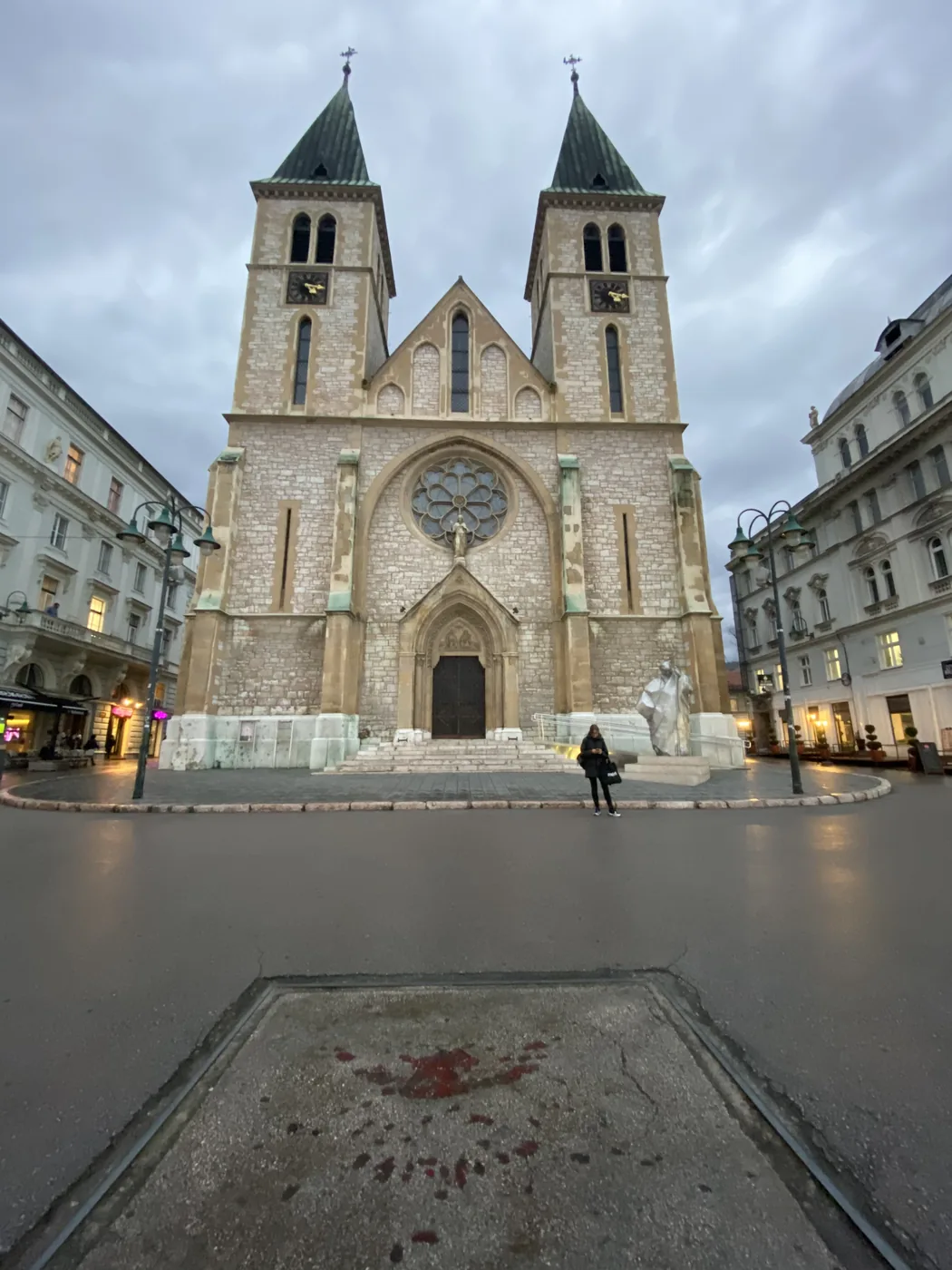
The Sacred Heart Cathedral, finished in 1889, has two tall towers over a small square. On the pavement right in front of it is a Sarajevo rose, which I will come back to.
Where was Franz Ferdinand shot?
On the corner by the Latin Bridge, over the Miljacka river.
On 28 June 1914, a 19-year-old called Gavrilo Princip shot the Archduke and his wife Sophie as their car turned there. The building on that corner is now a small museum about the city under Austria-Hungary, from 1878 to 1918. We reached it just before dusk.
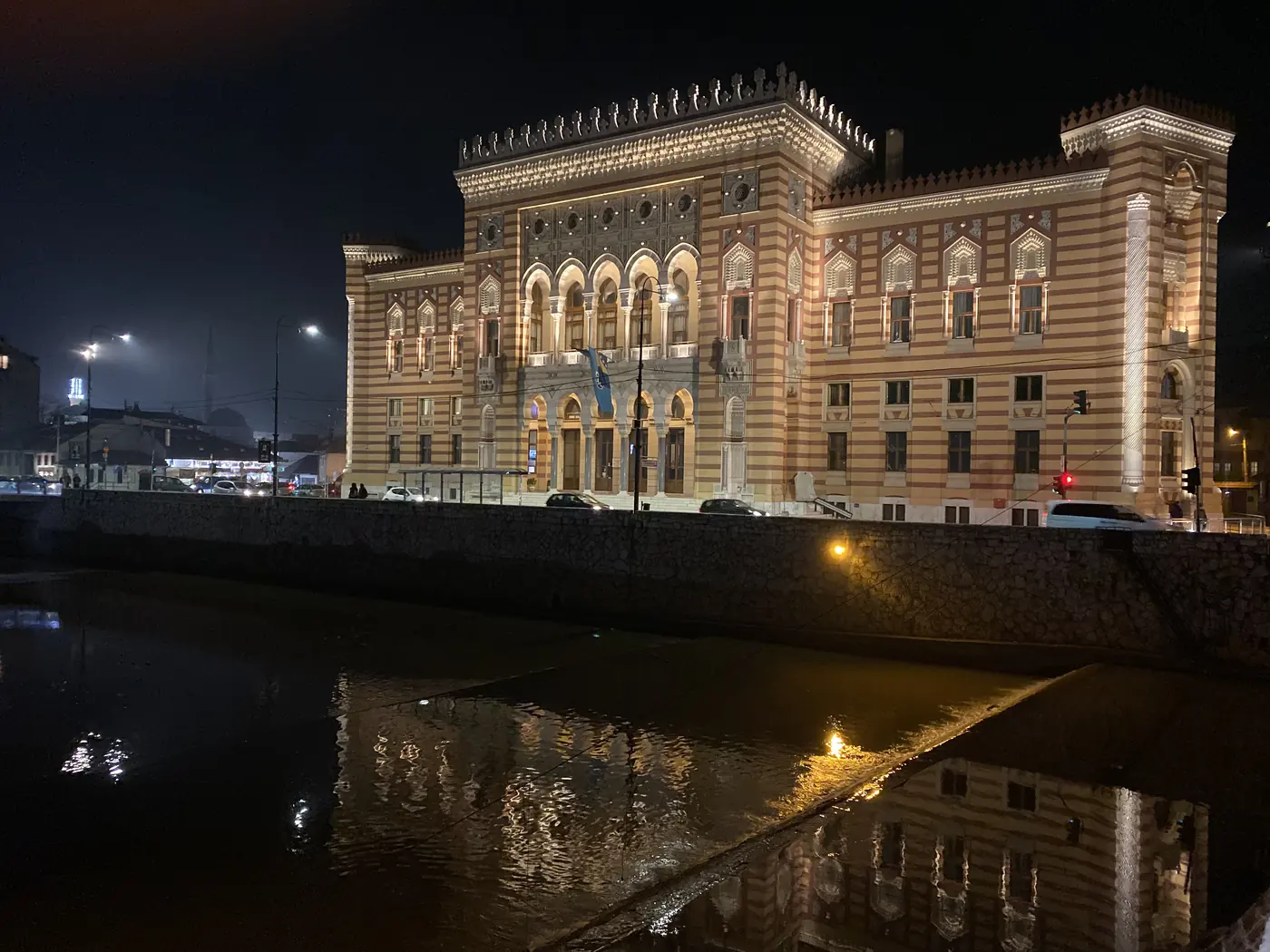
A short walk up the river is the City Hall, the Vijecnica, a striped building in the pseudo-Moorish style that opened in 1896. It later became the national library. On the night of 25 to 26 August 1992, it was shelled and burned, and most of the collection, around 2 million books by one count, went with it. It reopened in 2014, rebuilt from the original plans, and at night it is lit up gold over the river.
What is the Spite House?
Right across the river from the City Hall is a small white house with a dark wooden roof. It is called Inat Kuca, the Spite House, and the story is on the first page of the menu inside.
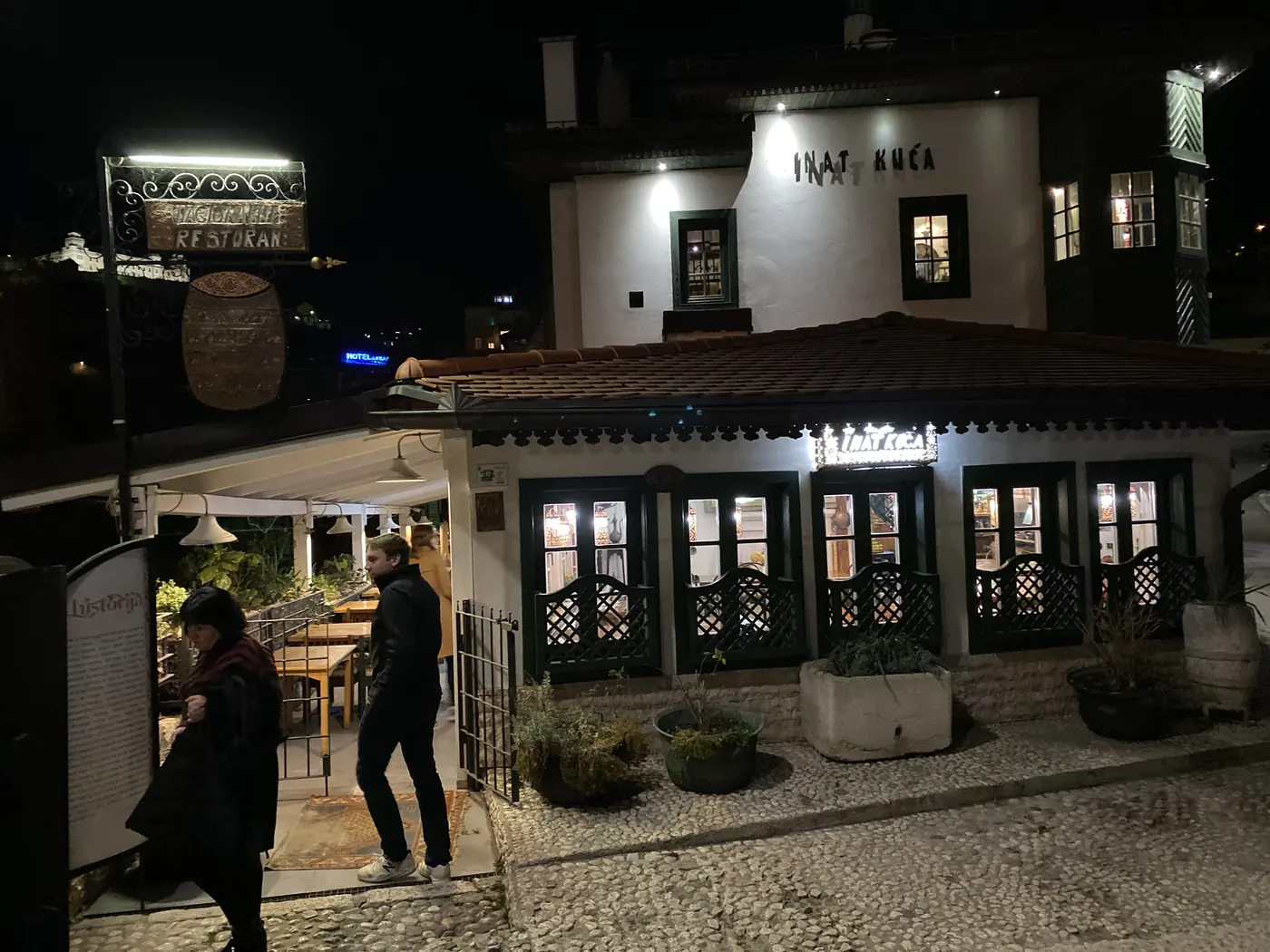
When the Austro-Hungarians wanted to build the City Hall, the exact spot on the right bank of the Miljacka belonged to an old man who would not sell. After long talks, he gave in on two conditions: a bag of gold coins, and his house moved, brick by brick, to the other side of the river. According to the menu, they did exactly that, in 1895.
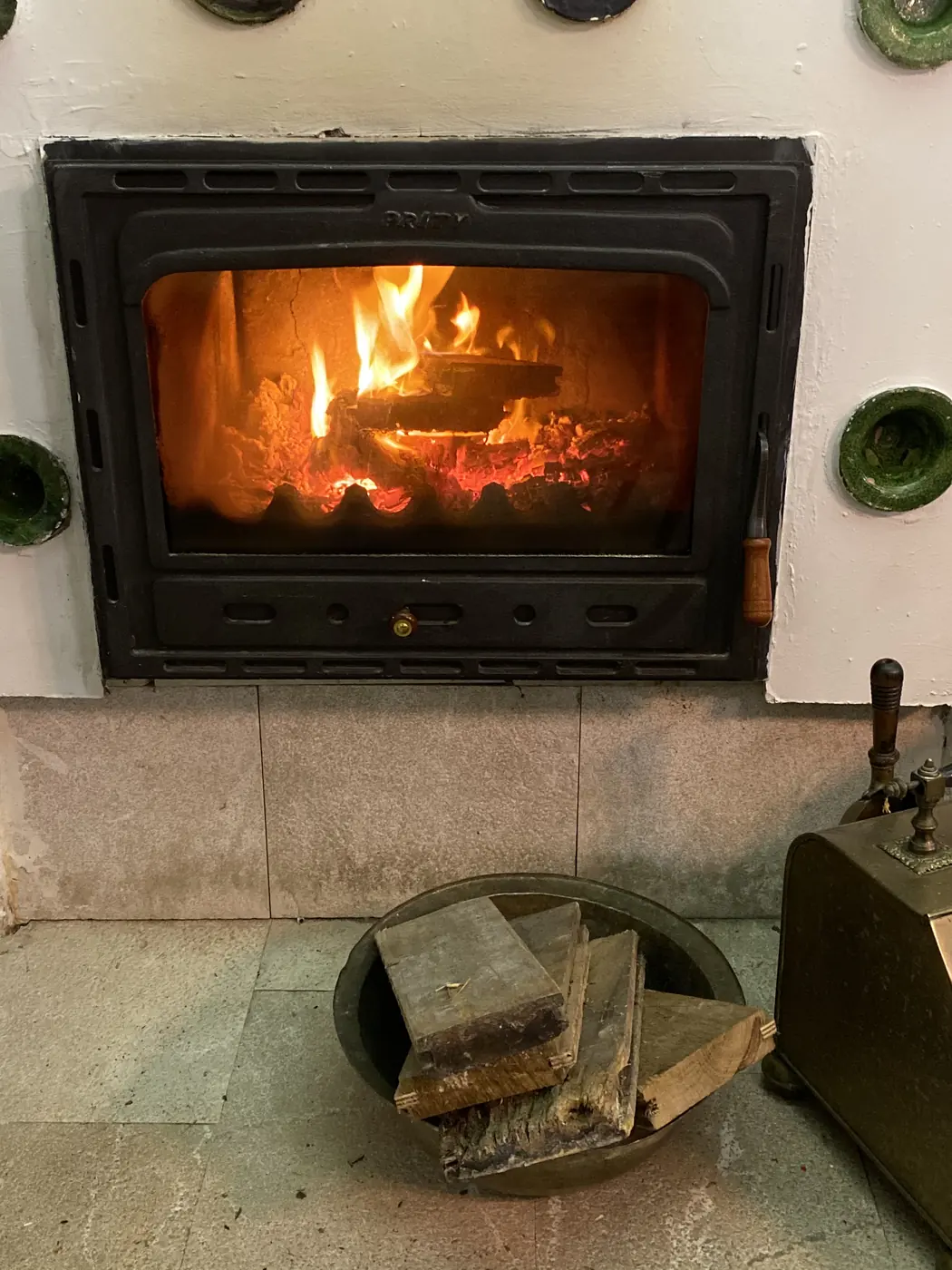
It has been a traditional Bosnian restaurant since 1997. Dinner was a platter of grilled meats and flatbread, with small sausages, patties and chicken, and a copper tray of stews with rice and sour cream, one of them baked in foil. A wood fire was going in the corner.
How did the city survive the siege?
Through a tunnel under the airport.
During the siege, the city was cut off on every side but one. The airport was held by the UN, and beyond its runway lay free territory. So in 1993, the Bosnian army dug a tunnel about 800 metres long under the runway, from the city side to a family house on the far side. Food, aid and weapons came in through it, and people got out.
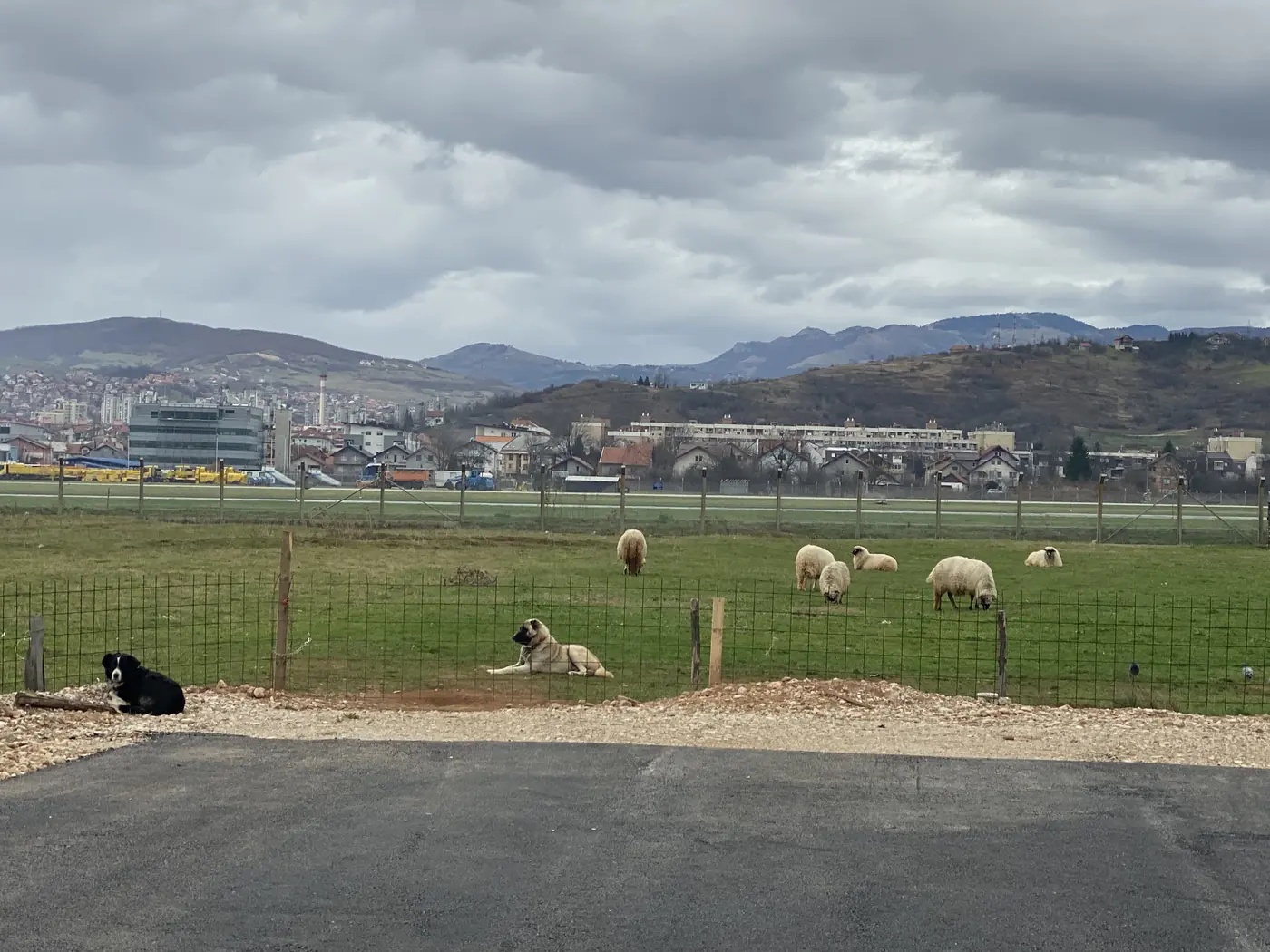
We went on the morning of 28 November. The museum sits in that same house, still pocked with shell and bullet marks, at the edge of open fields. Across the fields you can see the airport, and when we were there a small flock of sheep was grazing between us and the runway.
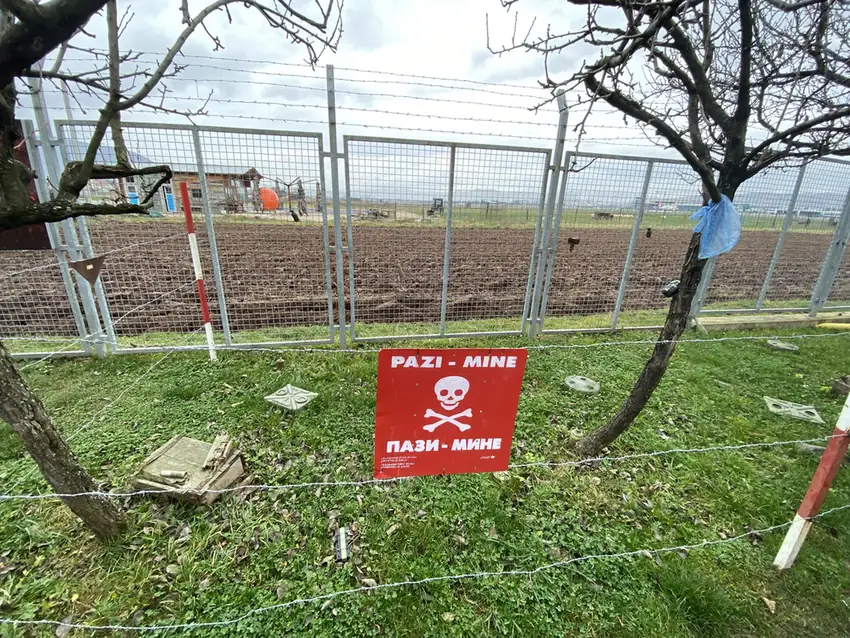
One panel shows Yugoslavia breaking apart into its 7 pieces. Behind a wire fence is a patch of grass with red signs, “Pazi mine”, which means “Watch out, mines”. Old bombs hang from the ceiling of the shed inside.
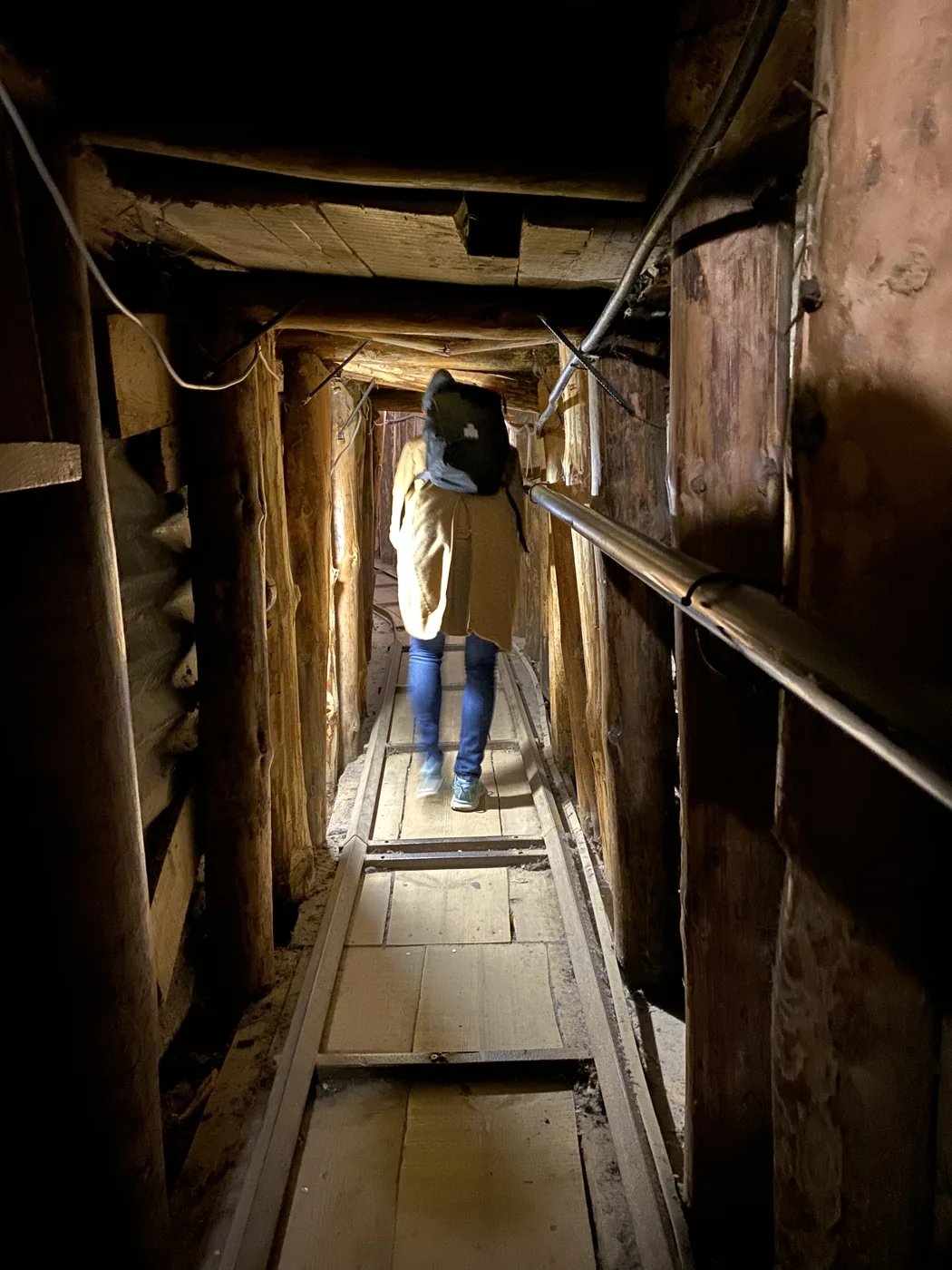
Then the tunnel itself. Only a short stretch is open to visitors, and it is low, narrow and propped up with timber on every side. During the siege, people carried supplies along the full 800 metres of it, in both directions, for more than 2 years.
What is a Sarajevo rose?
On the ground outside the tunnel museum are splashes of red set into the concrete, and the sign beside them explains what they are.
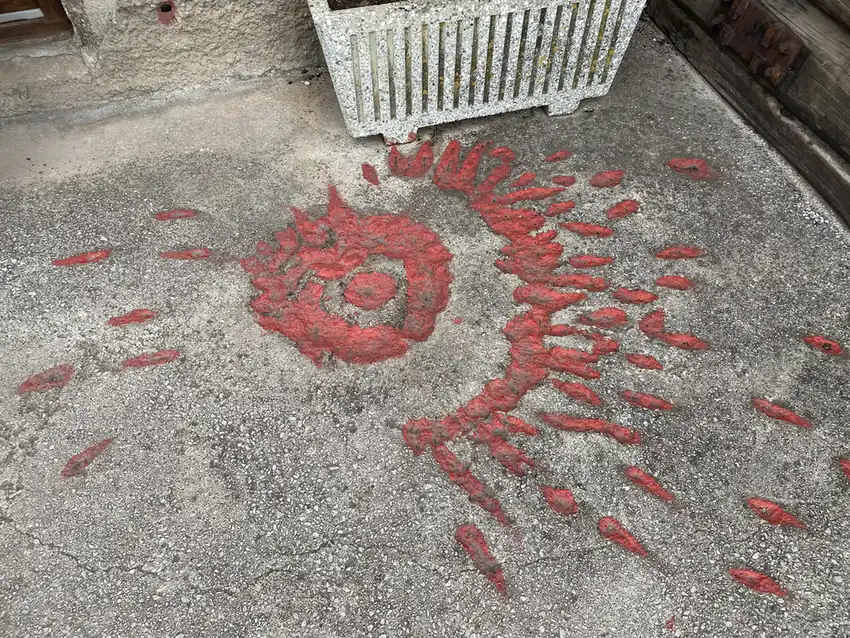
During the siege, the UN counted an average of 330 shell impacts a day on Sarajevo. On a single day, 22 July 1993, the city took 3,777 shells. Every shell left a scar on the roads and pavements, shaped a bit like a flower, and many of them wounded or killed someone. In some places, those scars were filled in with red resin. Those are the Sarajevo roses. The same sign gives the toll of the siege: 11,541 people killed, and 1,601 of them children.
That is what the red mark in front of the cathedral is. About 100 were marked at first, and many have since gone in repairs.
What is on Mount Trebevic?
The 1984 Olympics.
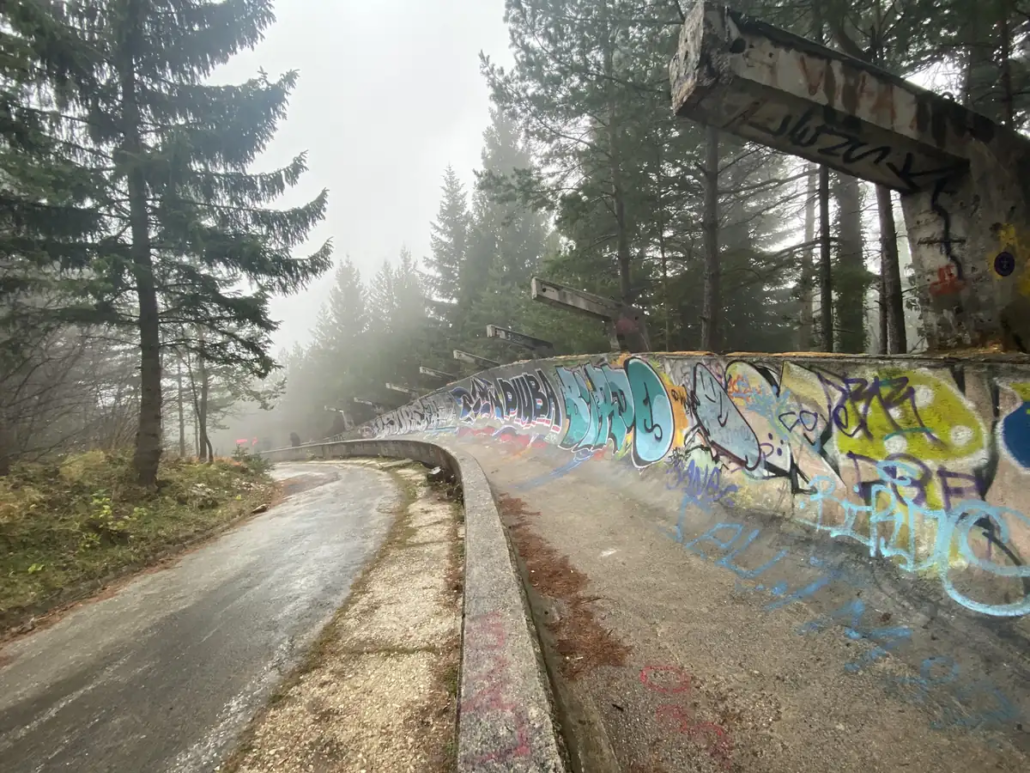
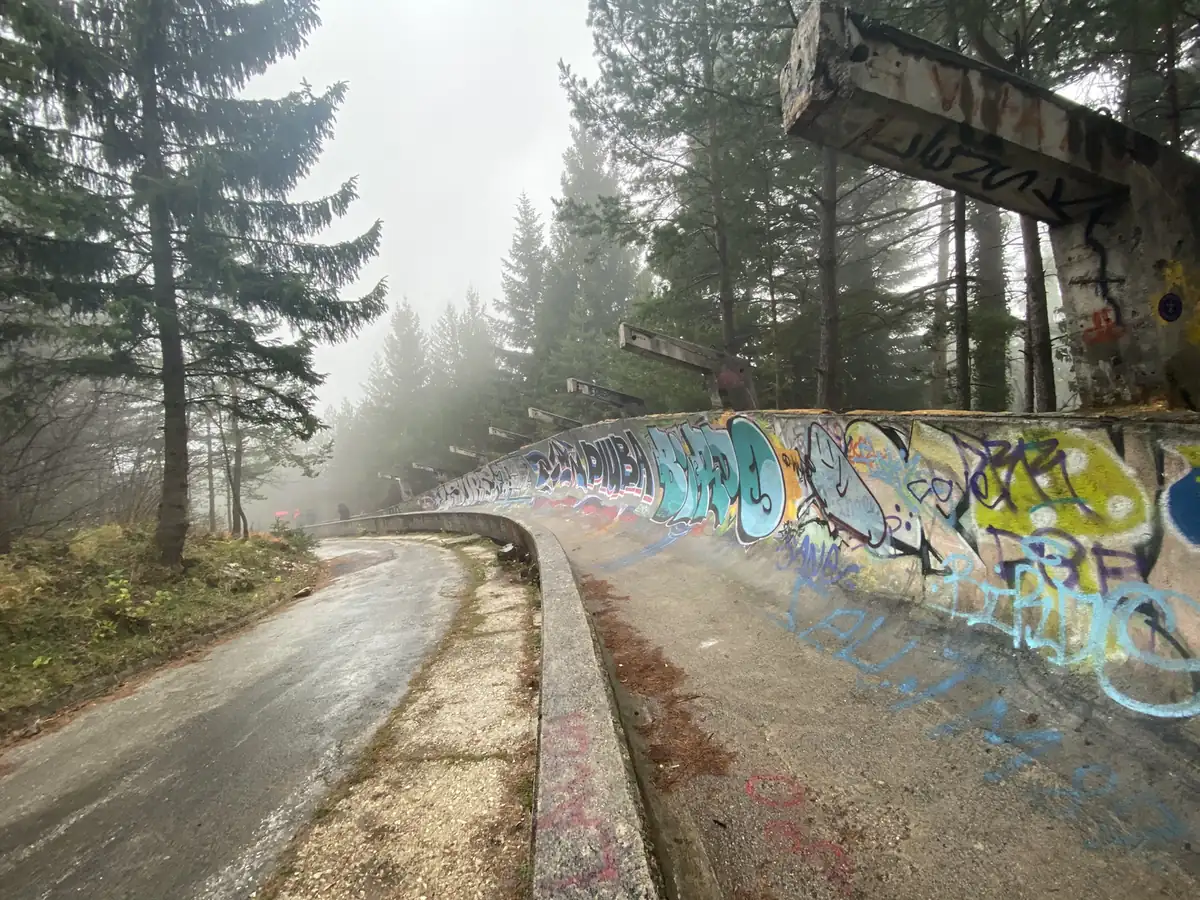
By 12:25 we were up on Mount Trebevic, the mountain right above the city, and it was in thick fog. We walked past the shell of a building covered in graffiti and along a road that faded into white a short way ahead. The cable car up from the old town, which runs again since 2018 after the war destroyed it, slid past overhead in the cloud.
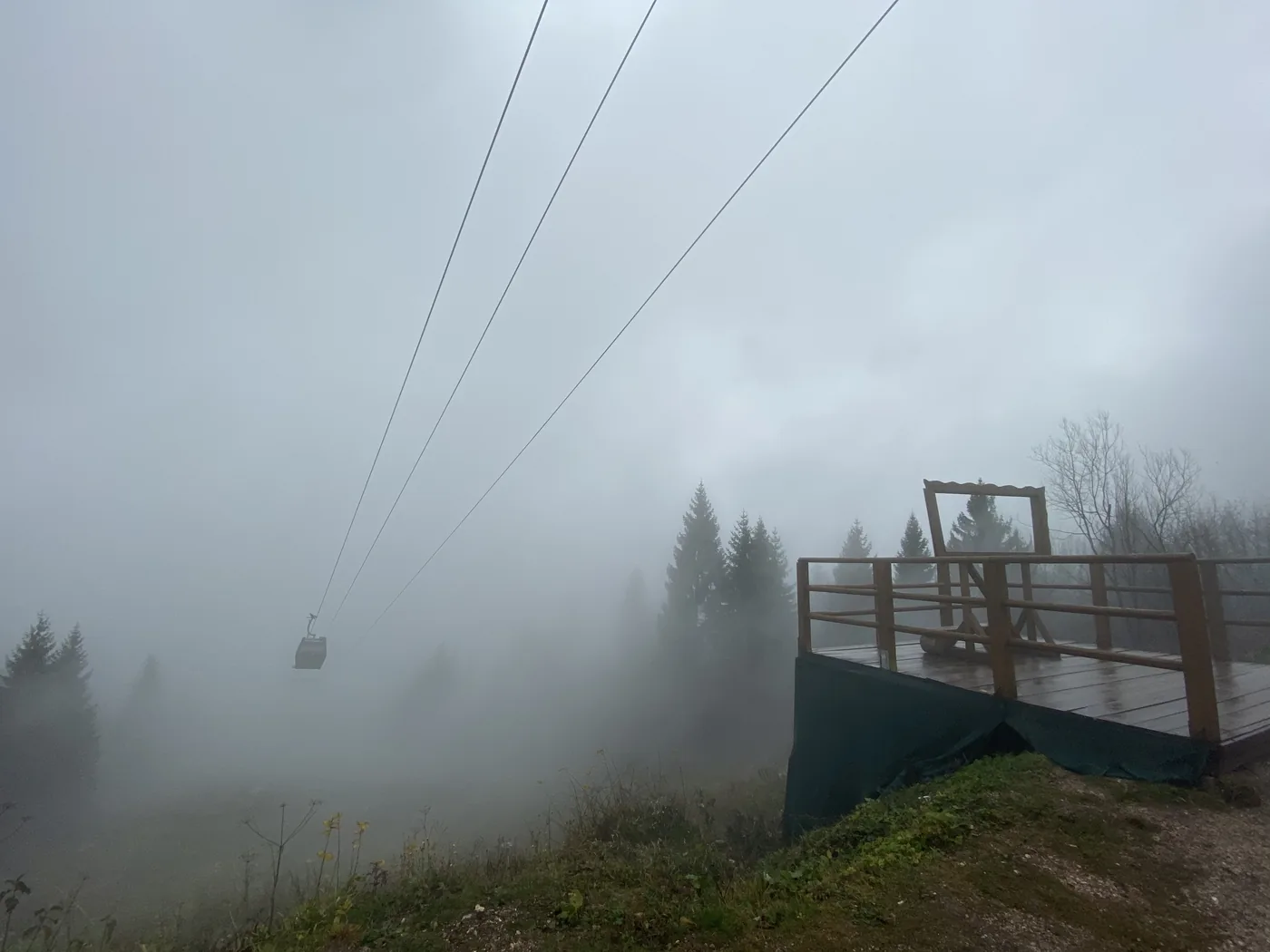
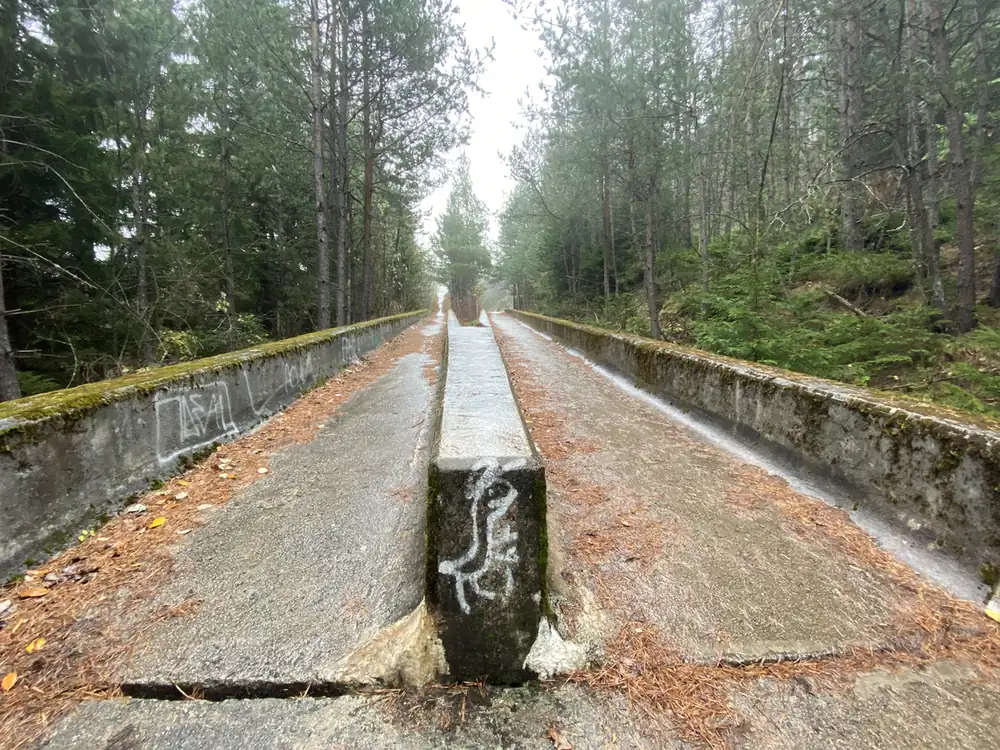
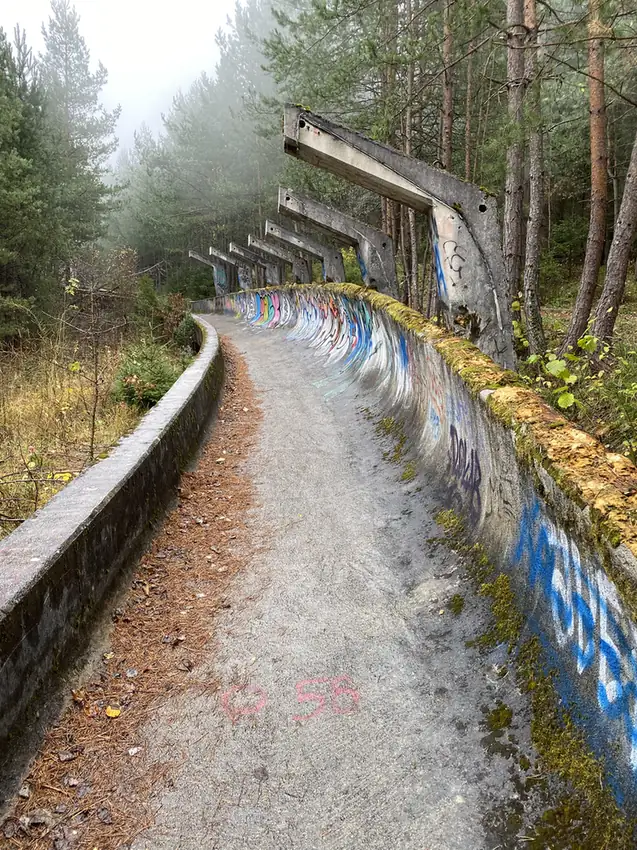
Then the bobsleigh and luge track. Building started in 1981, and it hosted the Olympic events in 1984. During the siege, the mountain was a front line, and the track was used as an artillery position.
Today it is a long concrete channel winding down through the pine forest, and almost every metre of it is covered in graffiti. Some stretches are dead straight. On the curves, the walls bank up until they are almost vertical.
Why is there a war memorial in the Jewish cemetery?
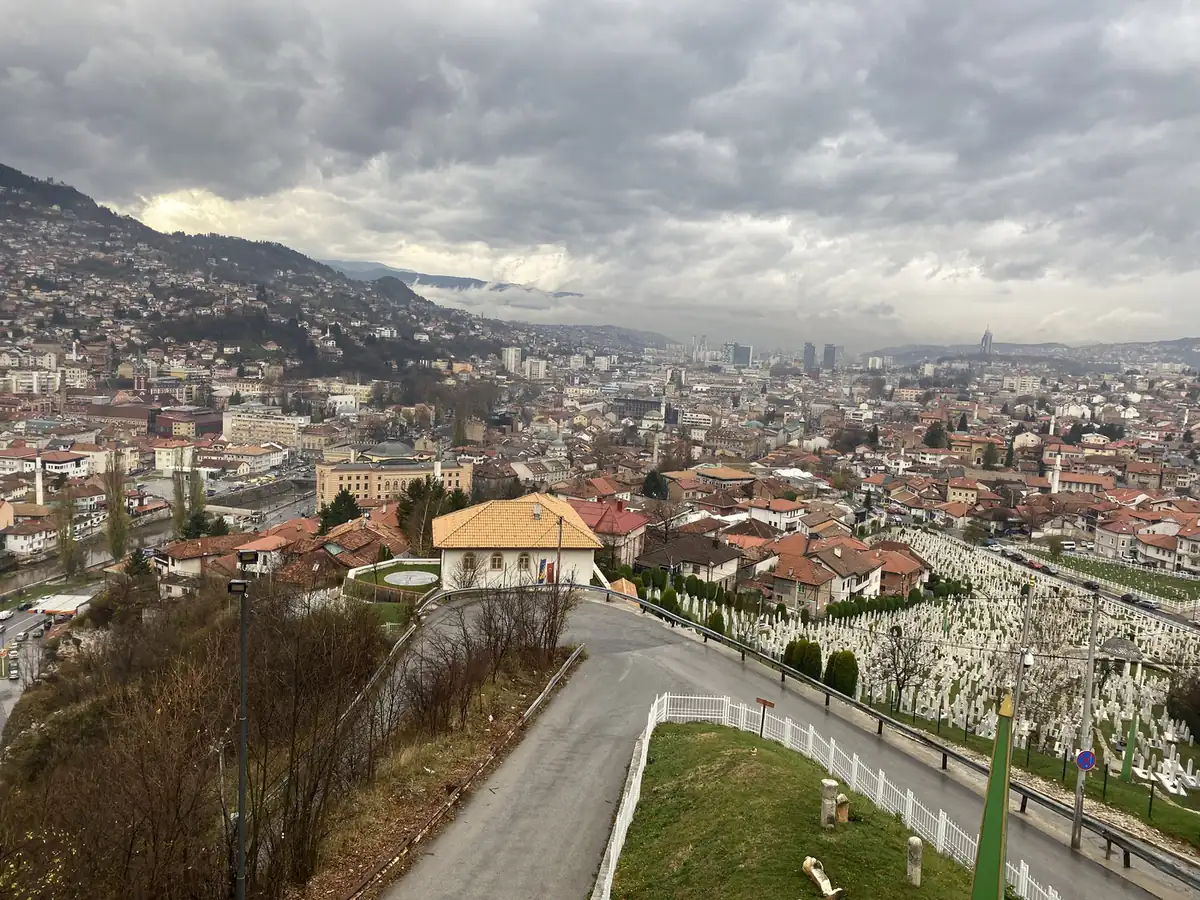
Further down the mountain, on the slope looking over the city, is the Old Jewish Cemetery. It was founded in 1630 by Sephardic Jews, and one source calls it the second-largest Jewish burial ground in Europe after Prague.
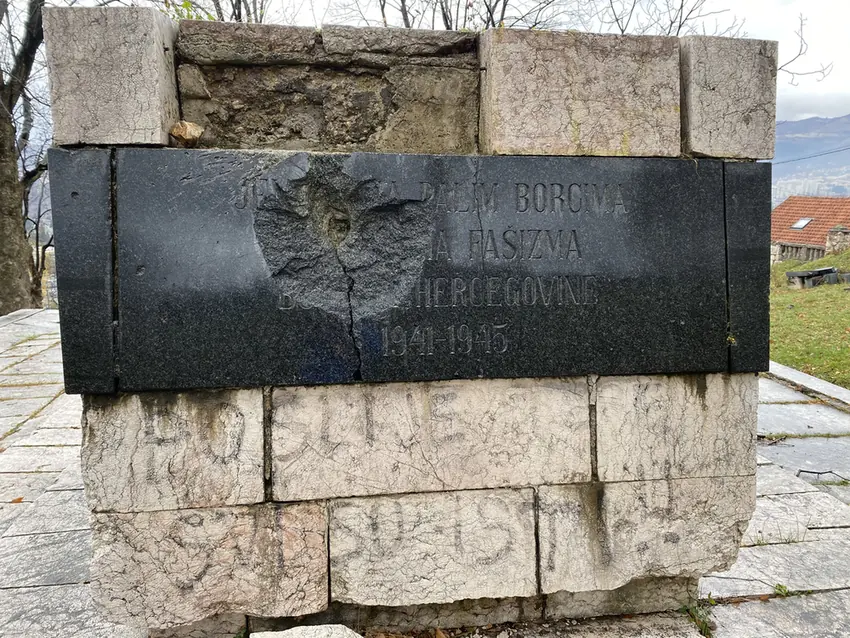
During the siege, it sat on the front line. Its high ground was used as an artillery position, and it was mined before the fighting ended. The stones still show it: a memorial on the hillside to the Jewish fighters and victims of fascism from 1941 to 1945 has a hole blasted through the middle of its granite plaque.
Lower down, the whole valley opens out, red roofs all the way across, with white gravestones on the slopes.
What else is there to see?
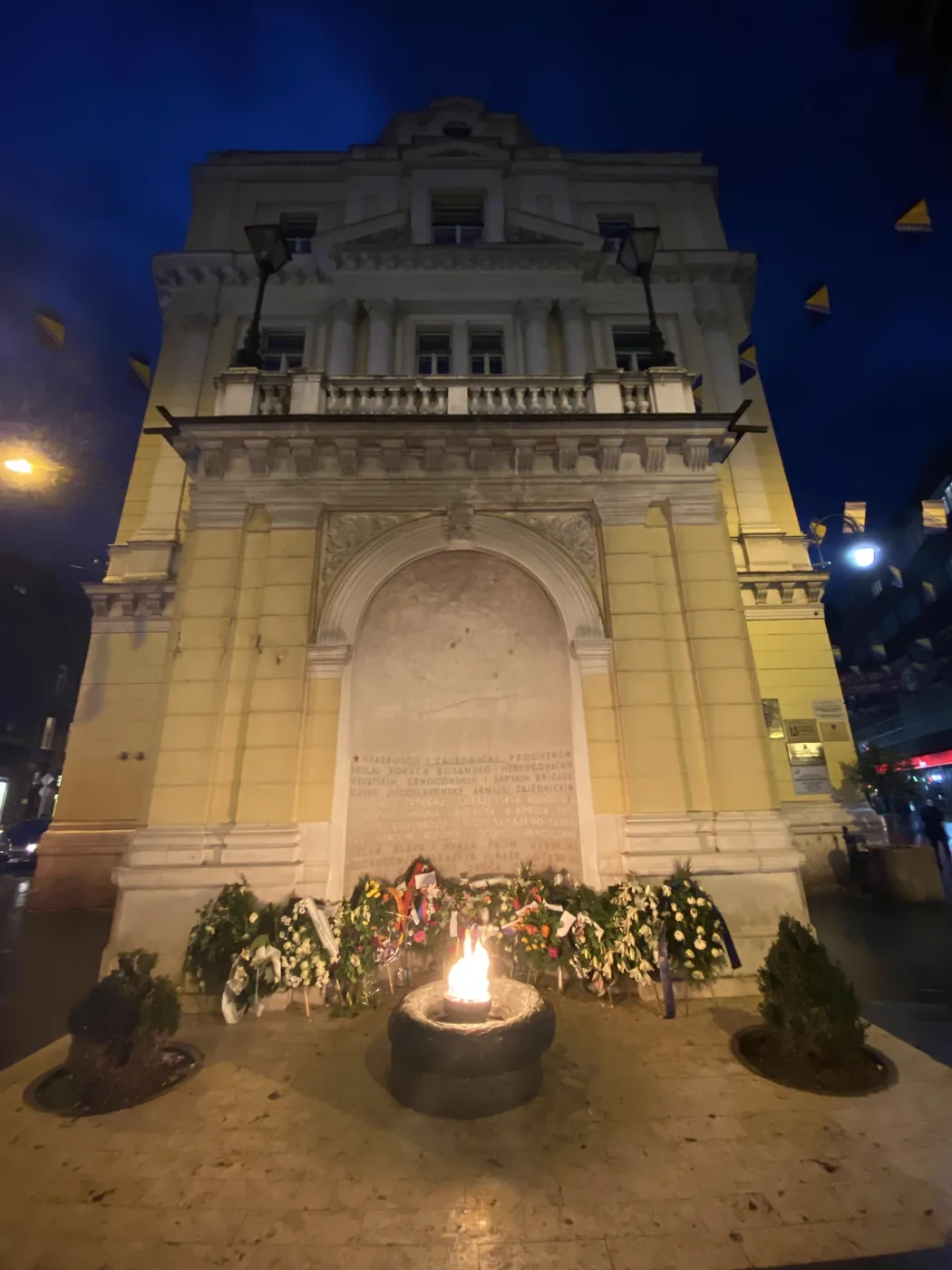
That afternoon we were back in the centre. The Eternal Flame, lit in 1946 for the victims of the Second World War, burns in an archway on the main street. It is still burning.
At the market there were piles of dried meat and pumpkins bigger than a football.
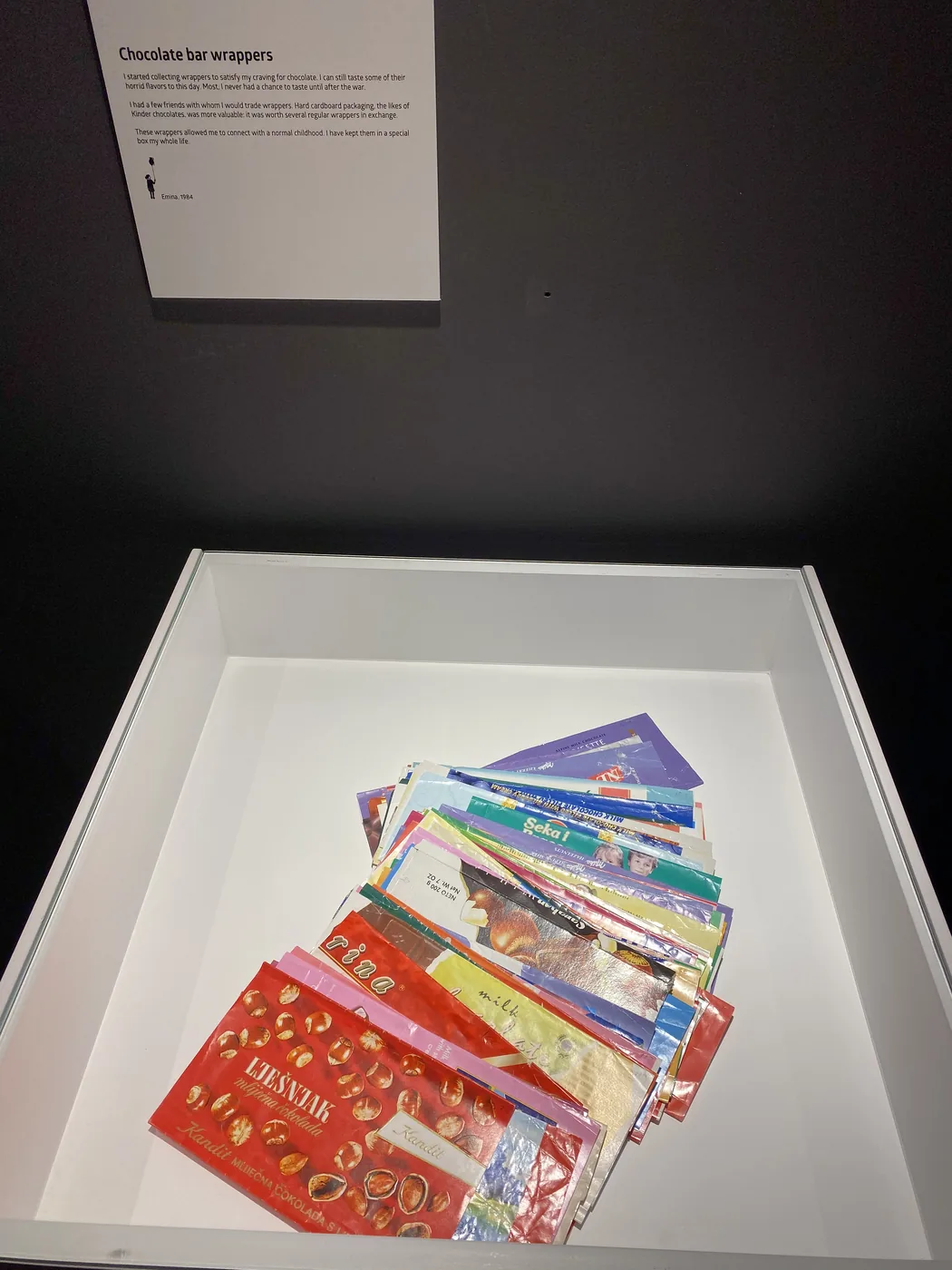
Then 2 museums about the 1990s war. The first, a museum of crimes against humanity and genocide, opens with a panel that dates the war from April 1992 to November 1995. The second, the War Childhood Museum, opened in 2017. Every object in it was given by someone who was a child during the war, with a short note about what it meant to them.
I saw a pile of chocolate bar wrappers, a school chalkboard with a shrapnel hole through it, a diary, a ball and a wall of children’s drawings. Each one has its note beside it.
How did the trading fit in?
The same way it always does, in about 15 minutes a day. Most of this route sits 1 to 2 hours ahead of London, which put the US market open at about 4.30 or 5.30 in the afternoon, local time, right as each day’s touring ended. I wrote up how that works, the watchlist, the alerts and the time zones, in how I trade while travelling.
Where does it fit in the trip?
On the morning of 29 November, the coach left Sarajevo through the mountains and headed north for Croatia. The rest of the 5 weeks, from Belarus to Slovakia, is in Exploring Eastern Europe: 14 countries in 1 month. Every trip is on the travel log, and more photos are on Instagram, @iamrecneps.
Have you been to Sarajevo? Would you walk the tunnel or the bobsleigh track first? Let me know in the comments.
Spencer Li
Want the daily routine? Enter your email for the free 15-Minute Swing Trader's Checklist.
Free 5-page PDF, then occasional trading emails. Education only, not financial advice. Unsubscribe anytime. Kit stores your email in the US: see our privacy policy.
Want to learn the full method? The Trading Mastery Program teaches the 4 strategies I have traded since 2011. It suits beginners and experienced traders.
Rather follow the trades as they happen? Daily Trading Signals is our Telegram channel: my trade ideas with entry, stop and exit, and every trade is public.
Questions about this post? Ask in the free Telegram channel →
Educational content only, not personalised financial advice. Trading carries risk, including loss of capital. Past performance is not indicative of future results. Synapse Trading is not licensed or regulated by MAS.

