

Kyrgyzstan: 5 Days of Yurts, Song-Kol and Issyk-Kul
Want the daily routine? Get the free 15-Minute Swing Trader’s Checklist. Get it free →
In September 2022, after almost 3 years without a real trip, I landed in Bishkek at dawn. It was the first stop of 5 weeks across Central Asia, and Kyrgyzstan was the country with the most stops on the route.
Over the next 5 days, with a small group and a minibus, I went from the capital up to a lake at about 3,000 metres and slept in yurts twice. I watched a yurt go up from bare poles, and finished in a hot spring in Karakol. This is that loop, from my photos.
Why Kyrgyzstan?
About 90% of Kyrgyzstan is mountains, and the Tian Shan range runs right across it. It was part of the Soviet Union until 1991. Its nomad culture is still alive in the summer pastures, where herders bring their animals up and live in yurts until the cold comes back.
So you might be thinking, what is a yurt, exactly? It is a round tent of felt on a folding wooden frame, the home the nomads of Central Asia have carried with them for centuries. By the end of the 5 days I had seen how one is made, piece by piece.
What is Bishkek like?
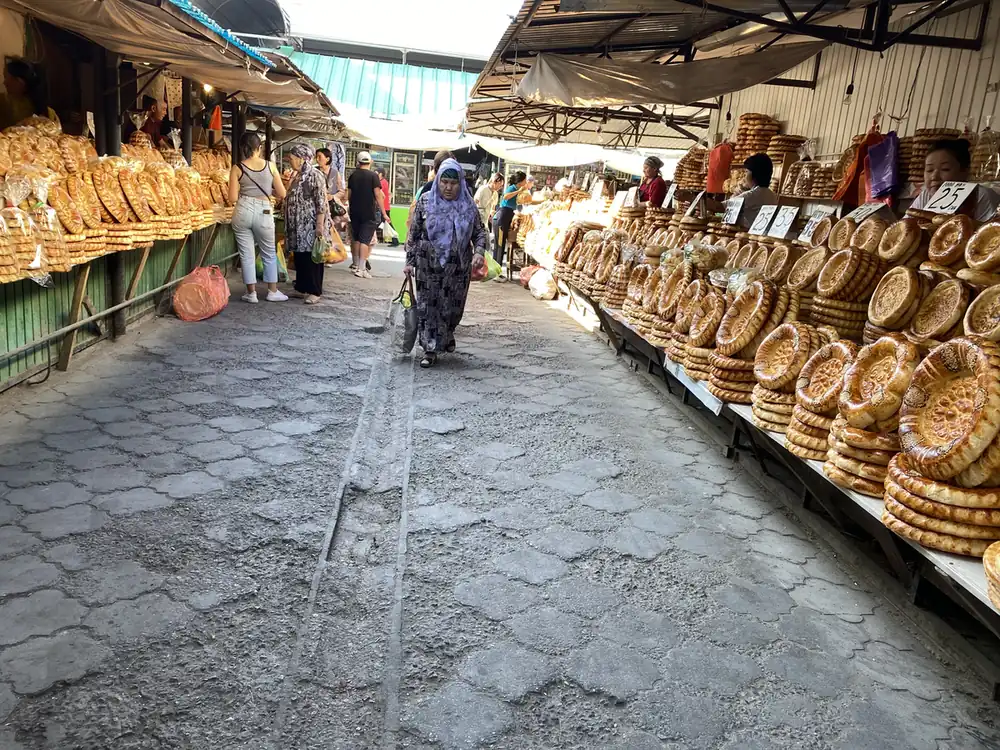
The first morning started at the Osh Bazaar, under a big arch with its name across the top. Inside were rows and rows of round loaves of bread, pyramids of watermelons on the pavement and trays of samsa, the baked pastries filled with meat.
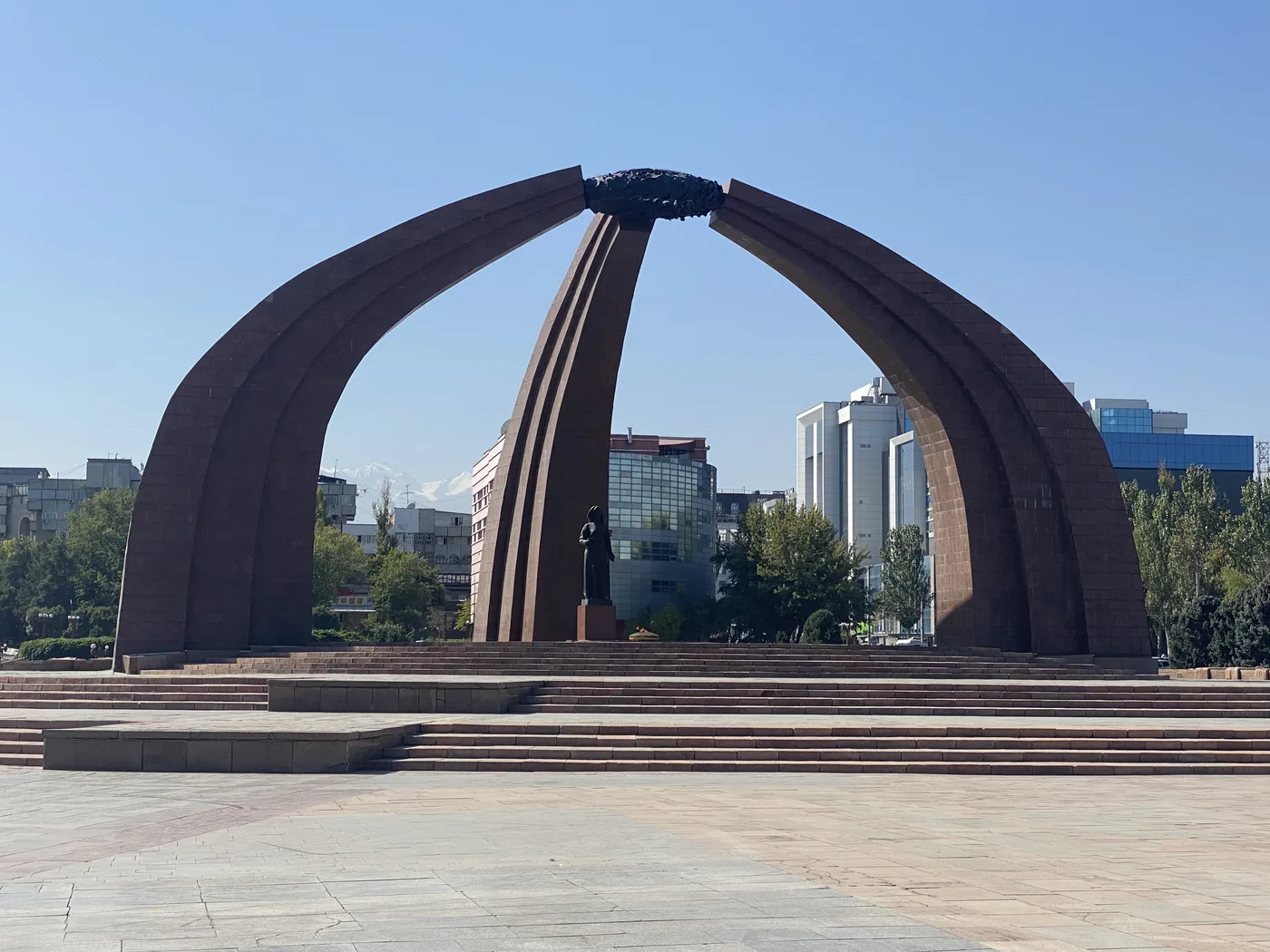
Then the Soviet half of the city. Victory Square has three tall curved arches over an eternal flame, shaped like the frame of a yurt. On Ala-Too Square, the hero Manas rides a horse on a tall plinth, with an honour guard at the flagpole beside it. Lenin used to stand there. He has been moved round to the back of the history museum, still with his arm raised.
In the park nearby there is an old Ferris wheel in red steel, and a red squirrel was eating in the grass under the trees.
What is the Burana Tower?
In the afternoon we drove about 80 km east to the Burana Tower, a brick minaret from the 11th century. It is almost all that is left of Balasagun, a Silk Road city founded at the end of the 9th century. A spiral iron staircase runs up its side to a door halfway up.
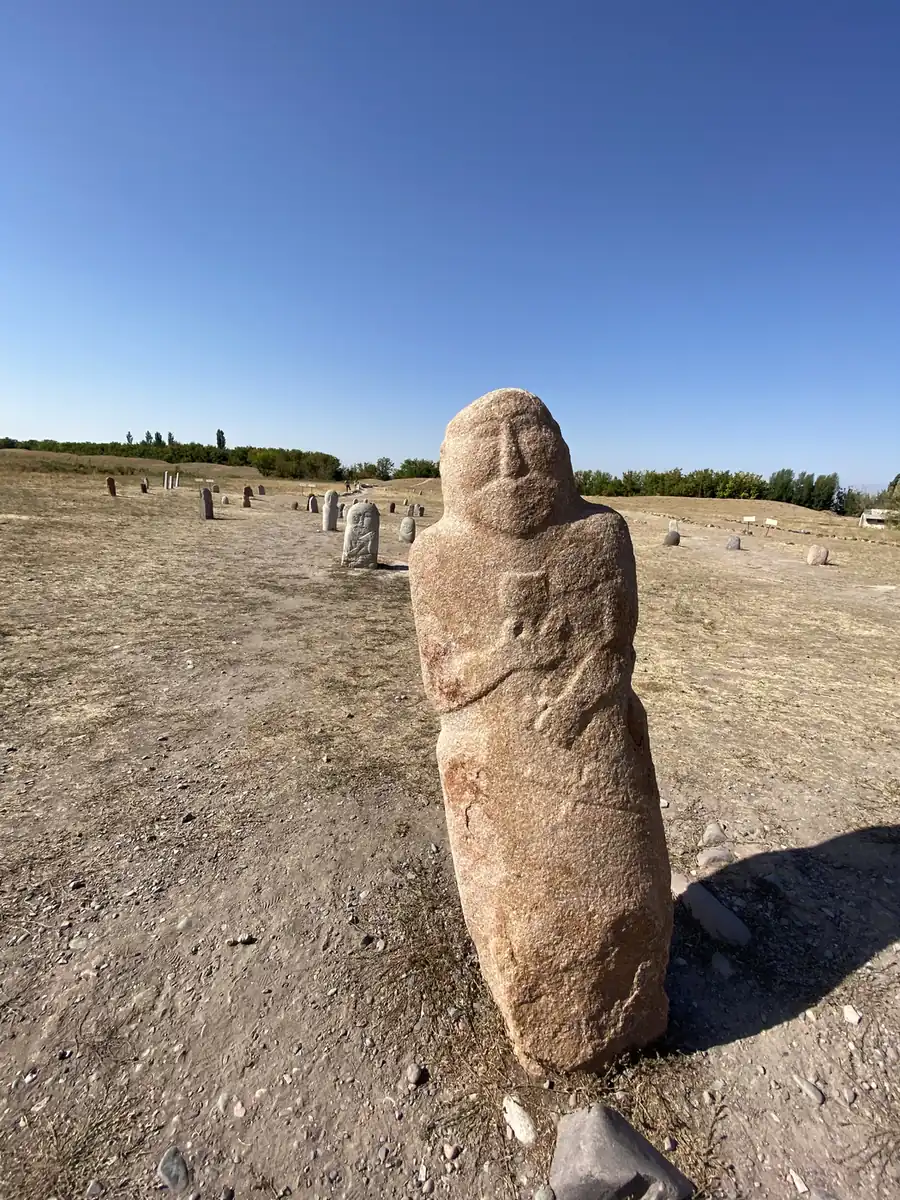
Around it, grassy mounds mark where the old walls stood. In a field beside them stand rows of balbals, old stone grave markers carved into rough human figures, some with faces and hands still visible.
What is Chong-Kemin like?
That night we were in the Chong-Kemin valley. It is a national park with a river running through it. The sun went down behind the mountains at about 18:50.
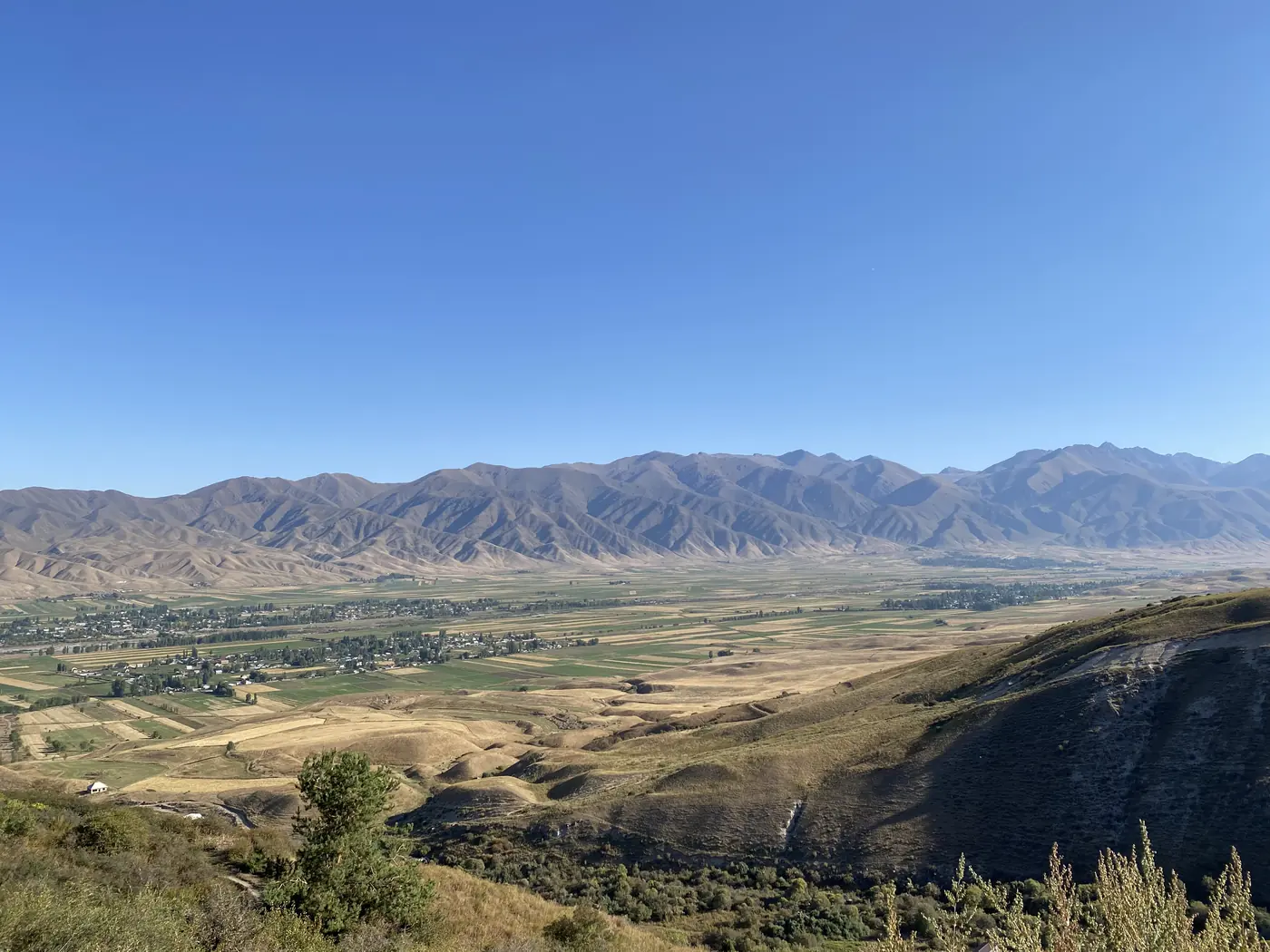
The next morning, a few of us walked up a dirt track along a stream, and a dog came along with us. From the top, the whole valley spread out below, farmland on the floor and bare brown ridges on both sides.
How do you make felt?
Kochkor, a village at about 1,800 metres, is the jumping-off point for Song-Kol. It is also where we stopped at a felt workshop.
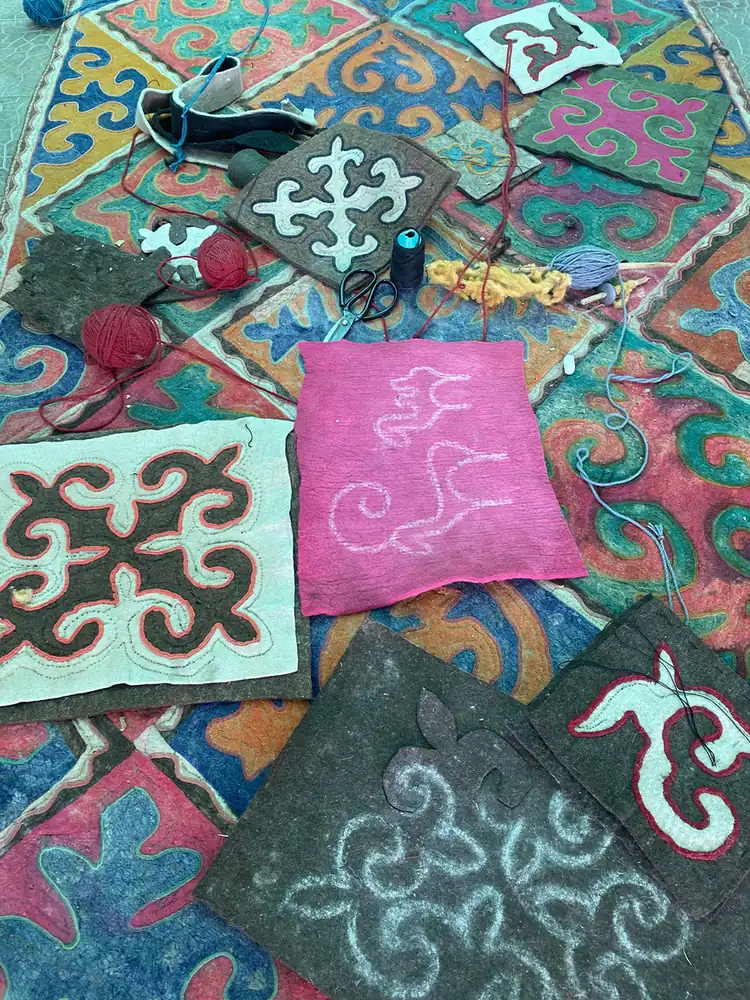
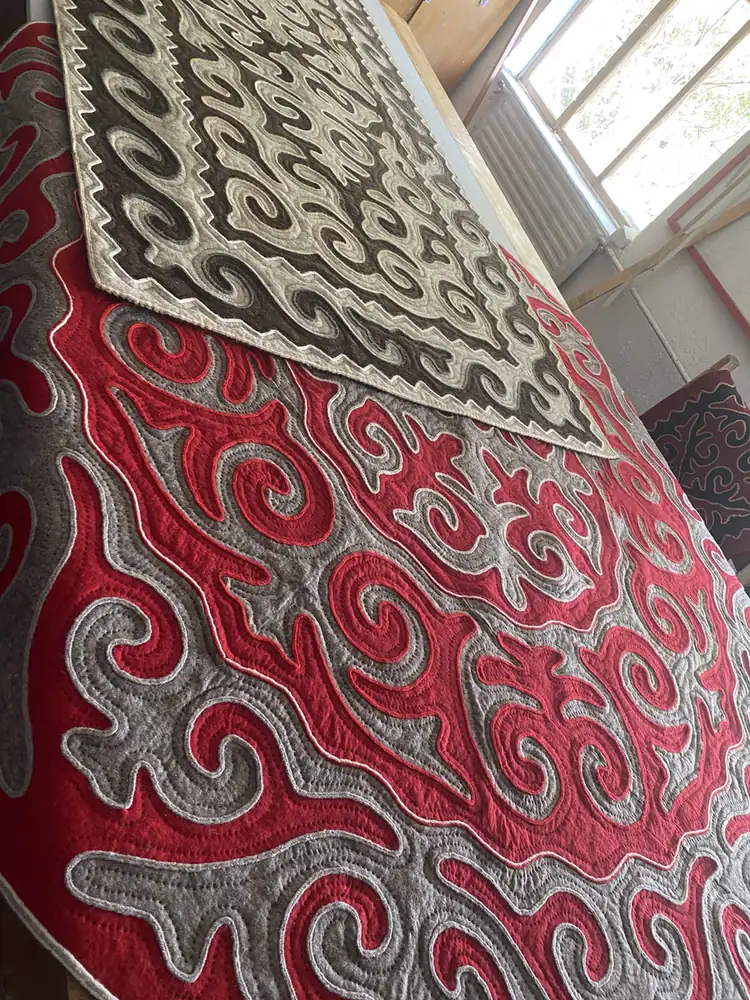
Kyrgyz felt carpets are called shyrdak. The women at the workshop laid out squares of coloured felt, with the patterns cut out and stitched in, mostly curling horn shapes in red, pink, white and grey. Some of us got down on the floor with them and had a go at the pattern.
Lunch was at a long table under a chandelier, with plates of salad, noodles, fruit and a tall pile of fried dough twisted into a spiral.
What is Song-Kol Lake like?
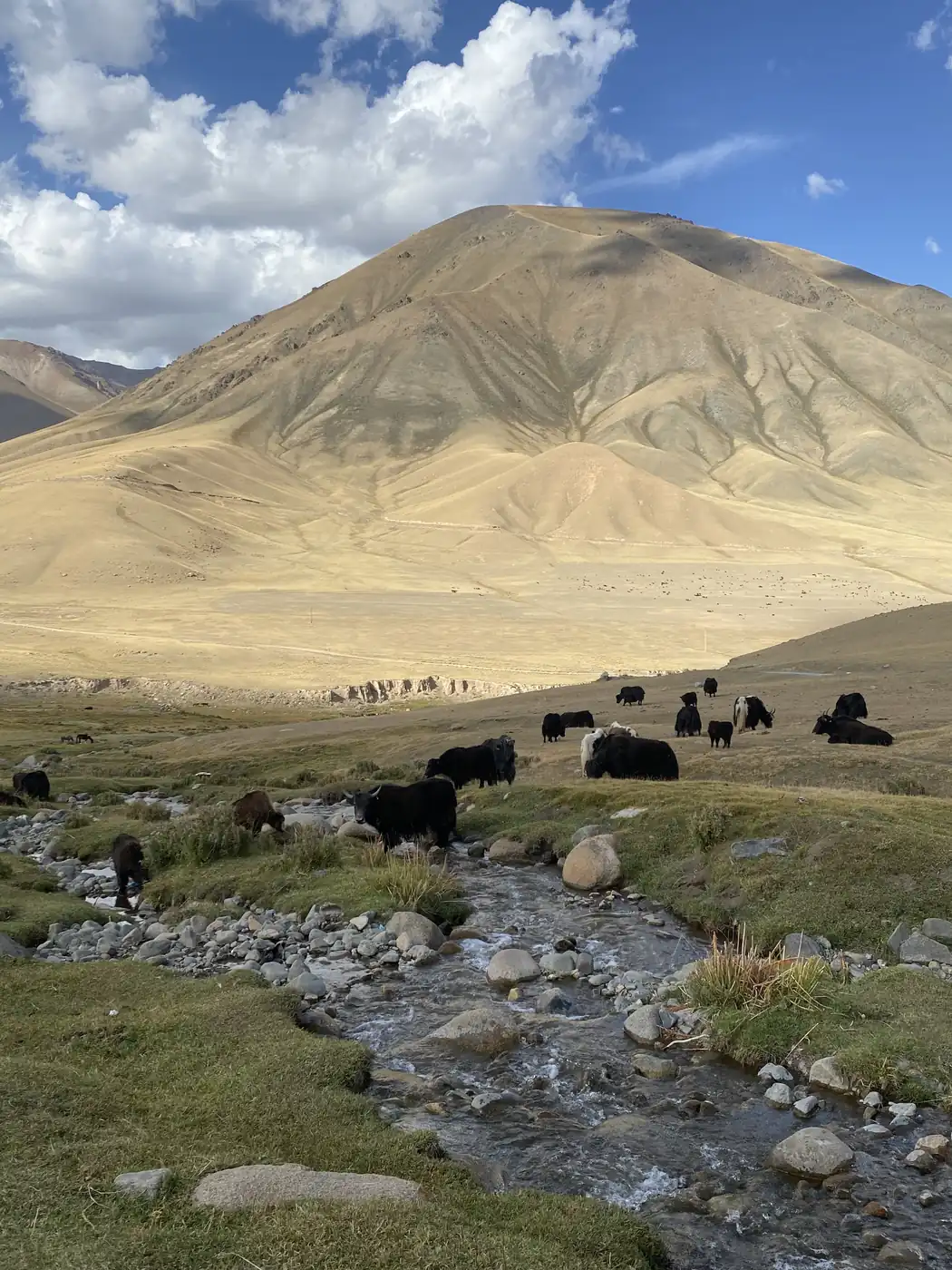
After lunch the minibus climbed into the high pastures. The tarmac gave way to a dirt road, and the land turned gold and brown. Black yaks were grazing along a stream. Higher up, the valley opened out below the road.
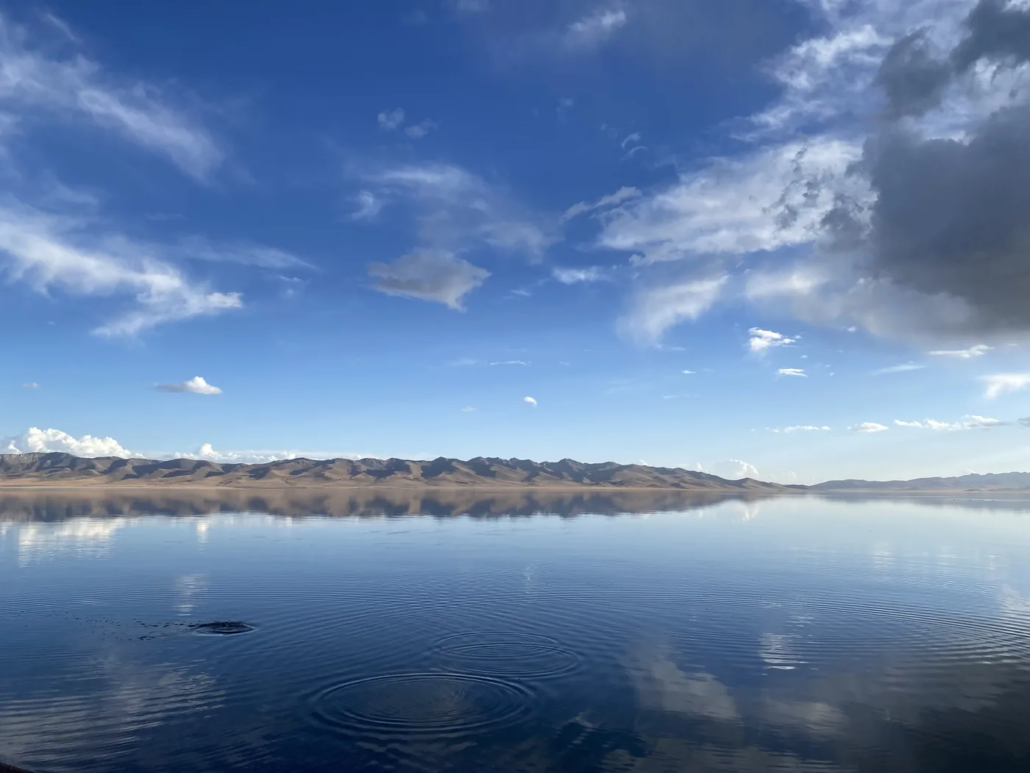
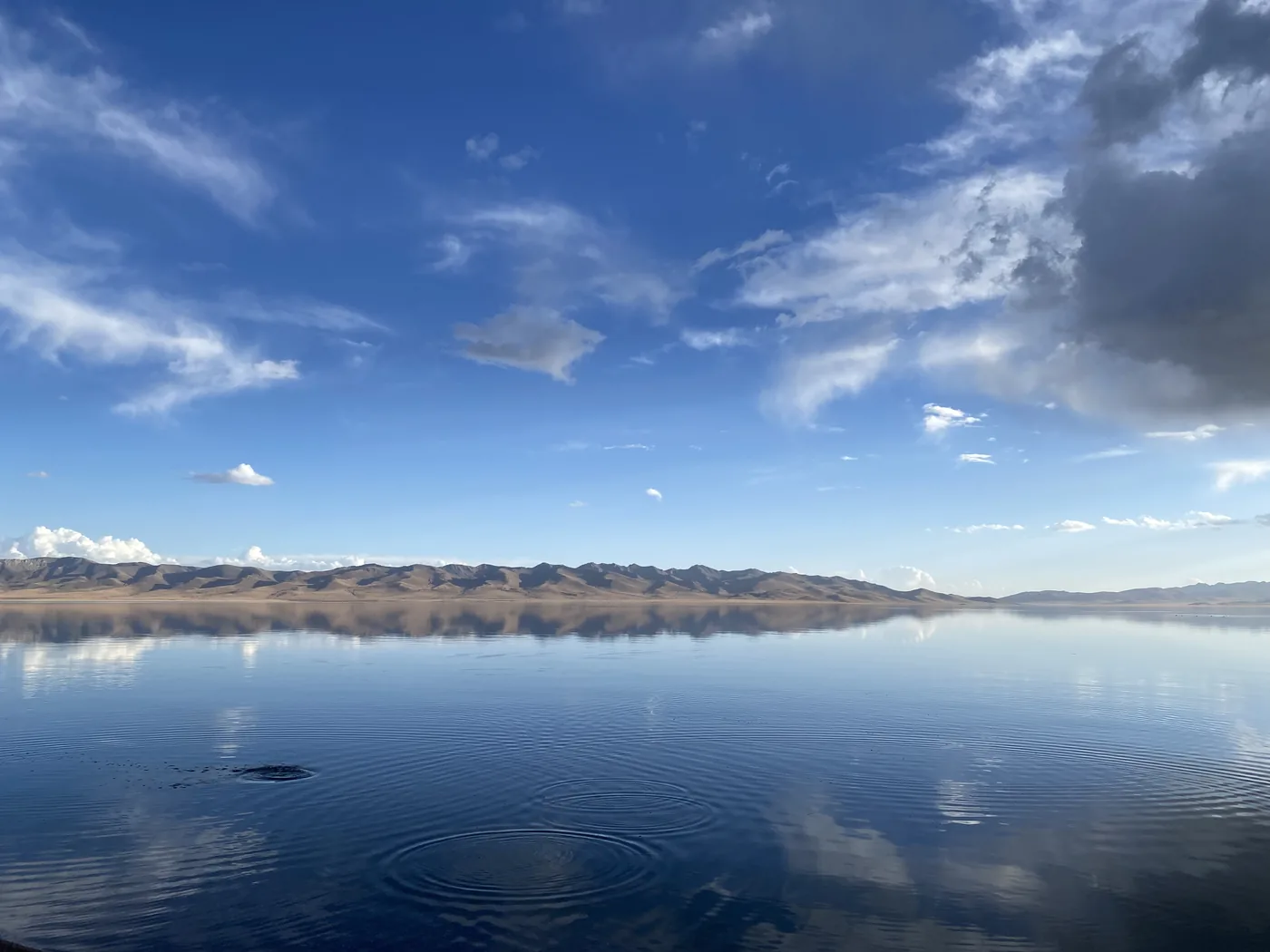
Song-Kol sits at about 3,016 metres, and it is the largest freshwater lake in Kyrgyzstan, about 29 km long and 18 km wide, ringed by the summer pastures where herders bring up their horses and sheep. We reached the shore at about 18:00, when the water was so still it held the whole sky and the mountains on the far side.
That night we slept in a yurt camp on the grass above the lake. Dinner was inside one of the yurts, under its roof poles.
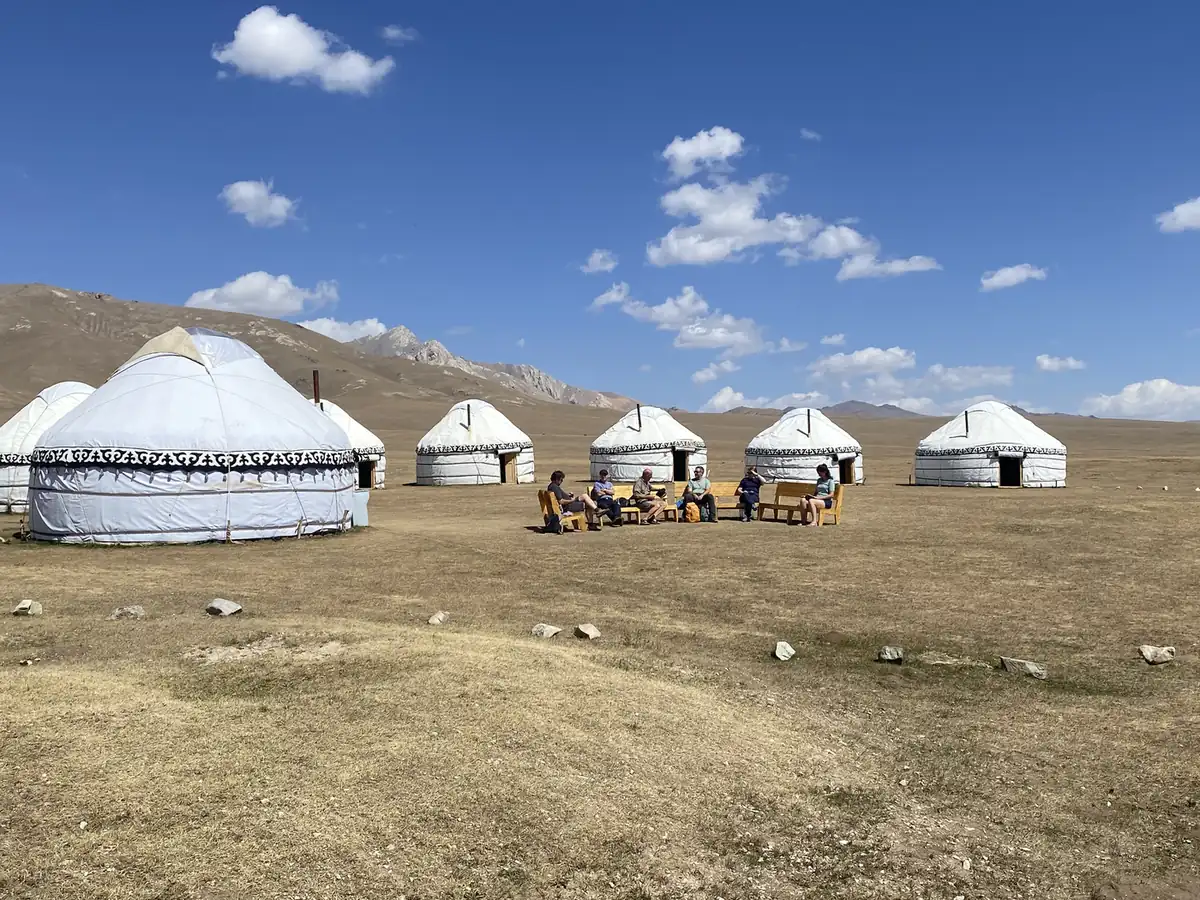
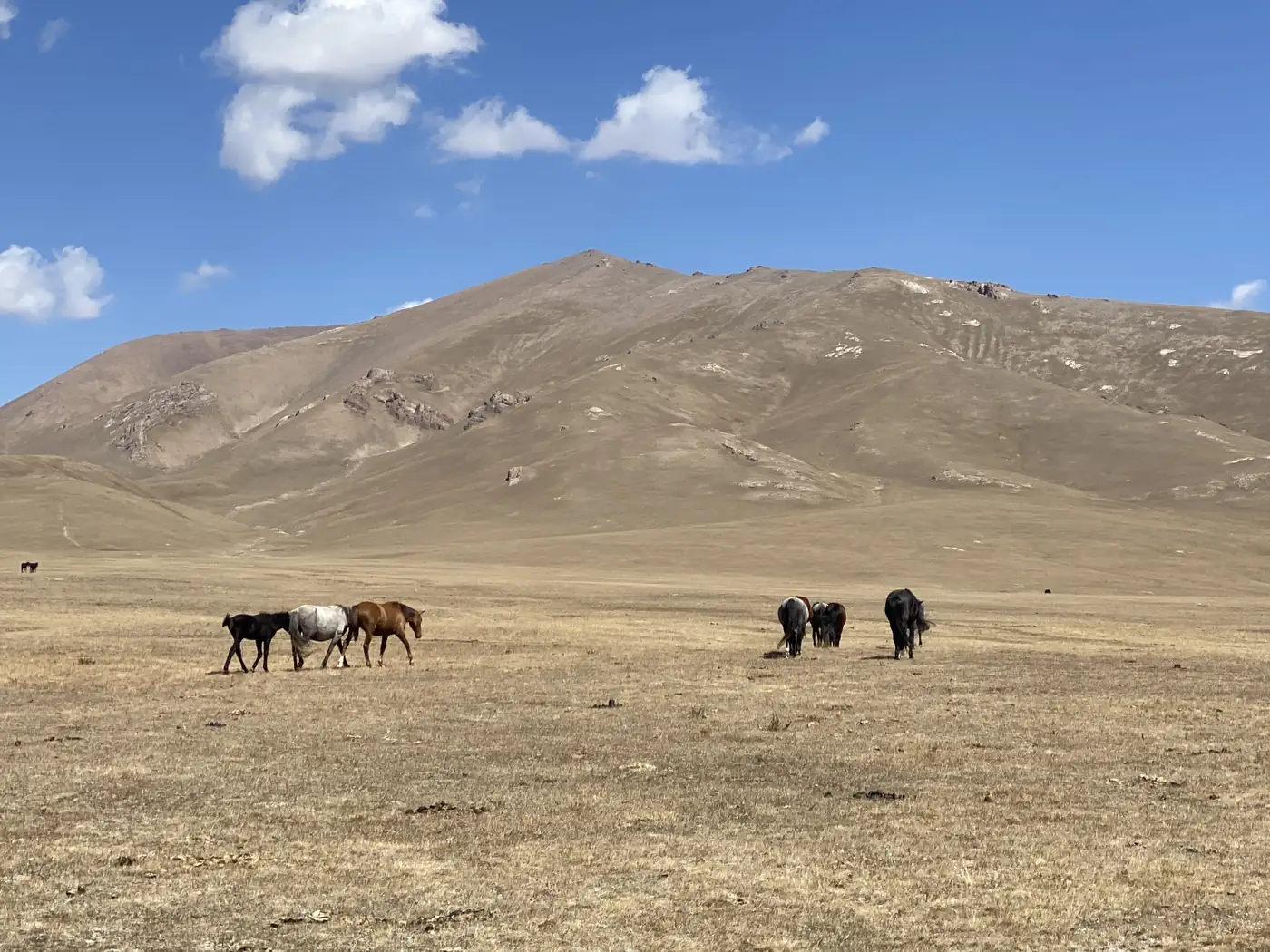
The next morning, I walked up a ridge behind the camp. From the top, the lake runs along the whole horizon, deep blue against the dry gold hills. Near the camp, a herd of horses was grazing on the open slope.
How is a yurt made?
On day 4, we came down to the south shore of Issyk-Kul. This is the big lake, the 2nd-largest salt lake in the world after the Caspian Sea, and its name means “warm lake” because, although it sits at about 1,600 metres and the winters are hard, it never freezes. The beach was almost empty, with red hills behind the sand and a row of yurts at the far end.
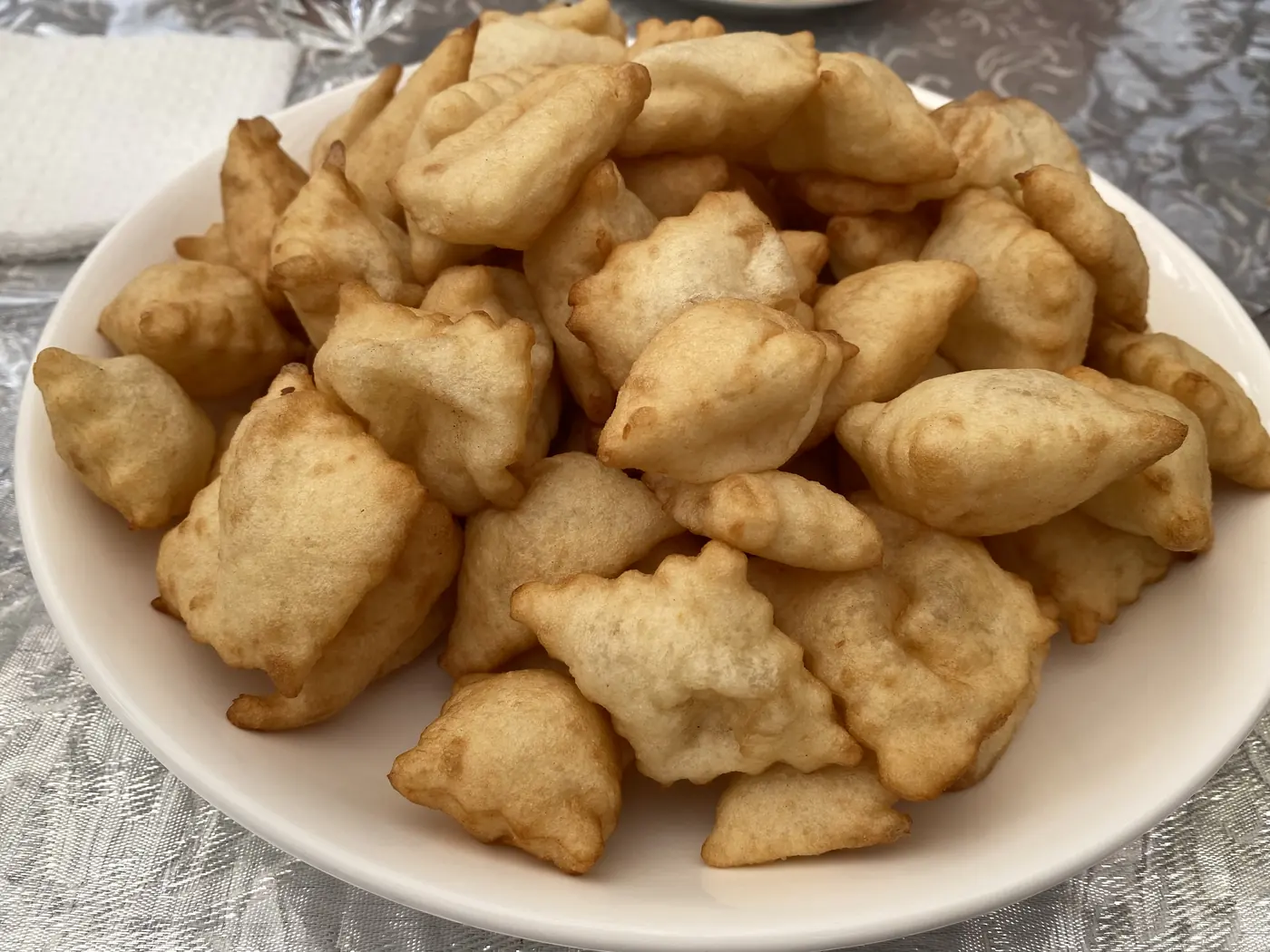
Then the yurt makers. In a village near the lake, craftsmen still make yurts by hand. We ate first. Lunch was in a finished yurt, with boorsok, little squares of fried dough, and a plate of stewed meat and vegetables.
Their workshop is a long room of benches, tools and bent wooden poles. Out in the yard, the group helped put one up. First came the red lattice walls, opened out in a circle. Then the crown went up on a pole in the middle, and the red roof poles were slotted in one by one between the crown and the lattice, until the whole frame stood like a giant red umbrella. Then a reed screen, a blue band and the felt went round the outside. From the inside, looking up, the roof poles meet at the crown in a ring.
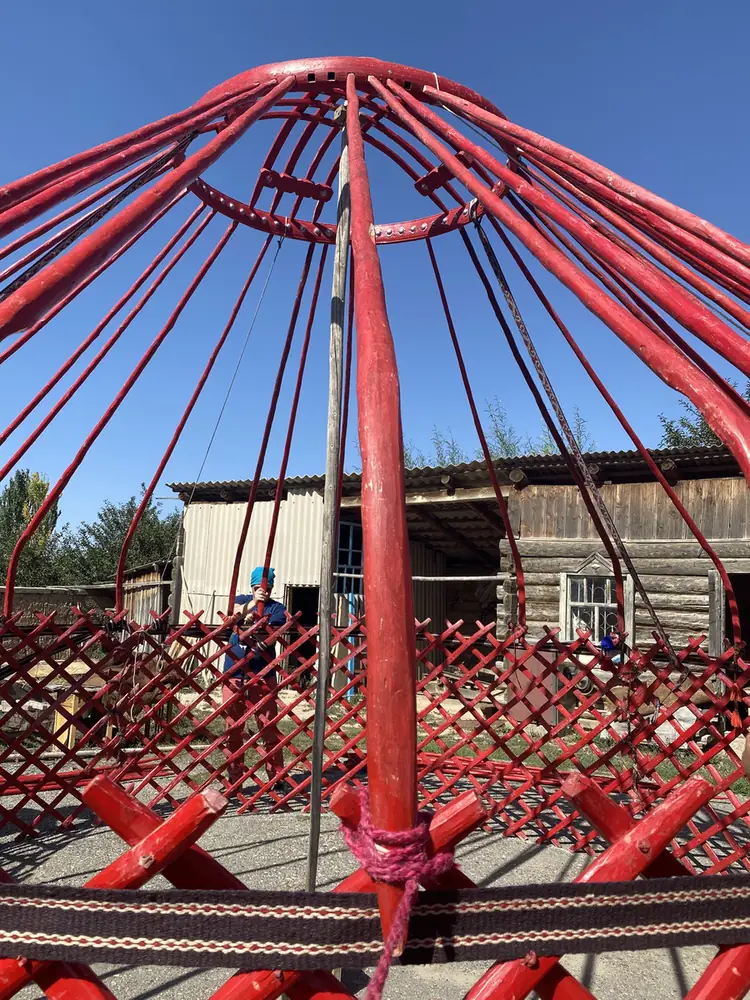
That ring is the tunduk. It is the same shape that sits in the middle of the sun on the Kyrgyz flag.
What is Jeti-Oguz like?
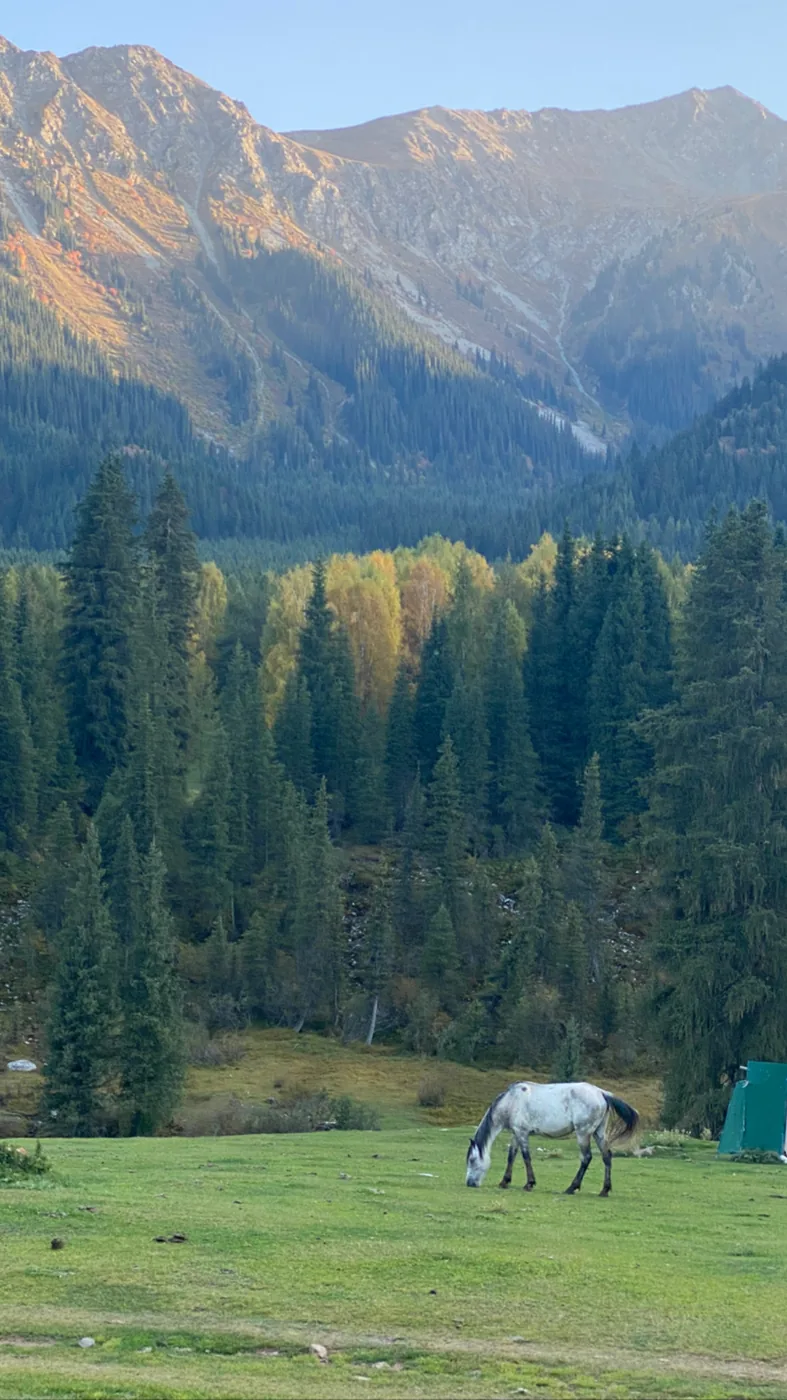
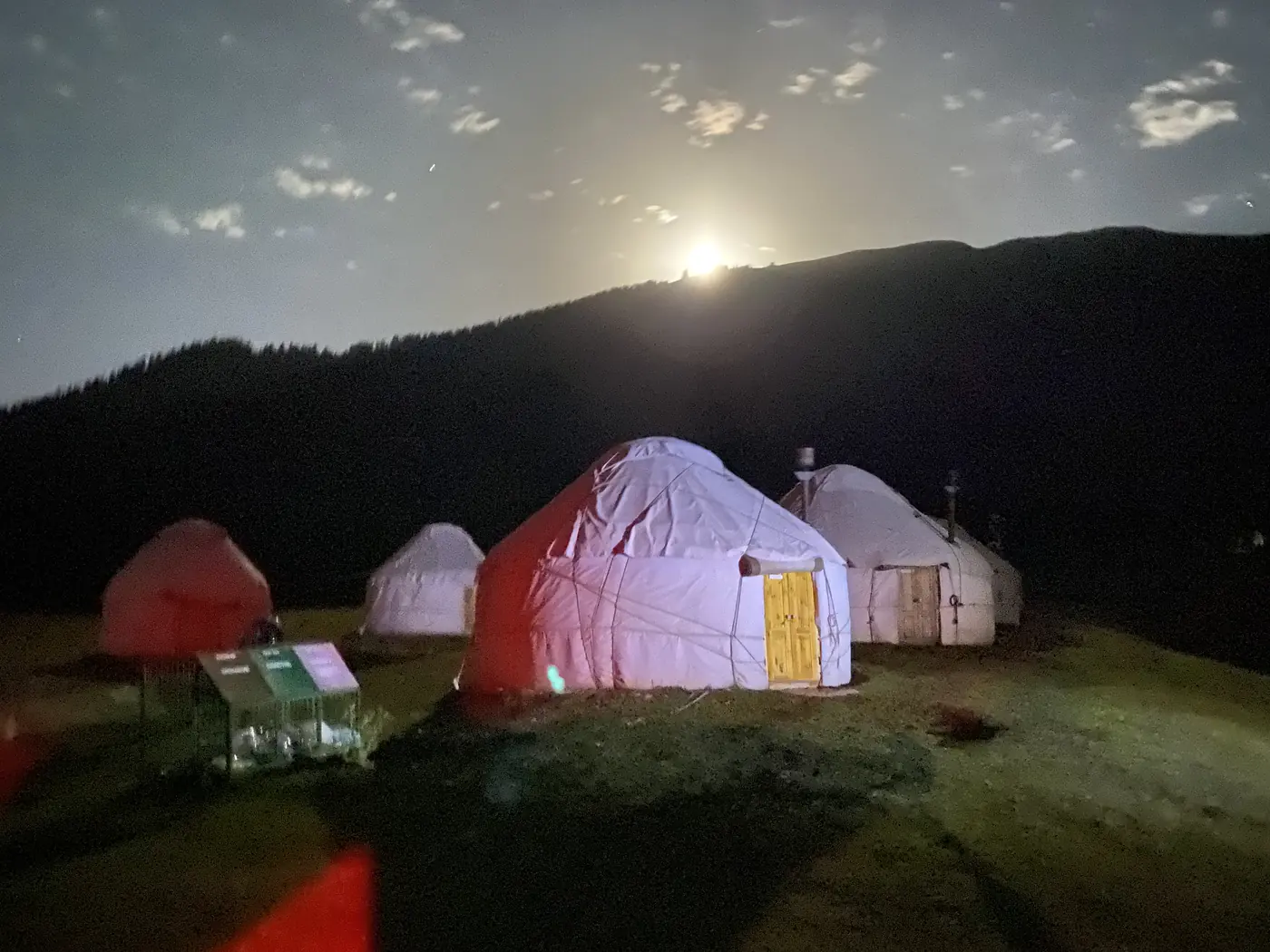
That evening we reached a yurt camp in the Jeti-Oguz valley, among spruce forest. Before dinner, I walked up the valley along a fast grey river, past a white horse grazing in a meadow. By 21:00 the moon had come up over the camp, and the yurts were glowing red and white in the dark.
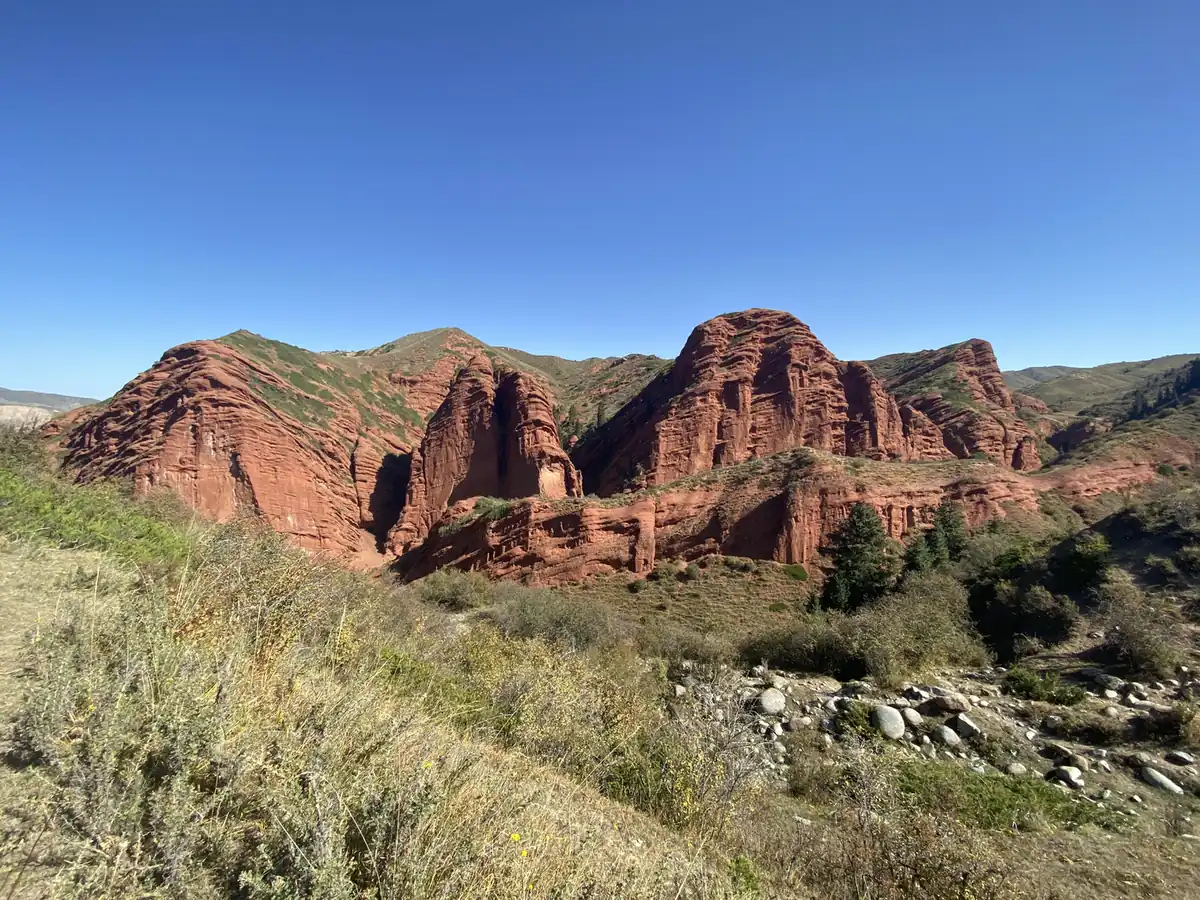
Then the red rocks. Jeti-Oguz means “seven bulls”, and the line of red sandstone cliffs above the village is what the name is talking about. Further on, the cliffs break into big rounded towers of red rock, and one of them is known as the Broken Heart.
What is in Karakol?
Karakol is the 4th-largest city in Kyrgyzstan. It is the base for the eastern end of Issyk-Kul.
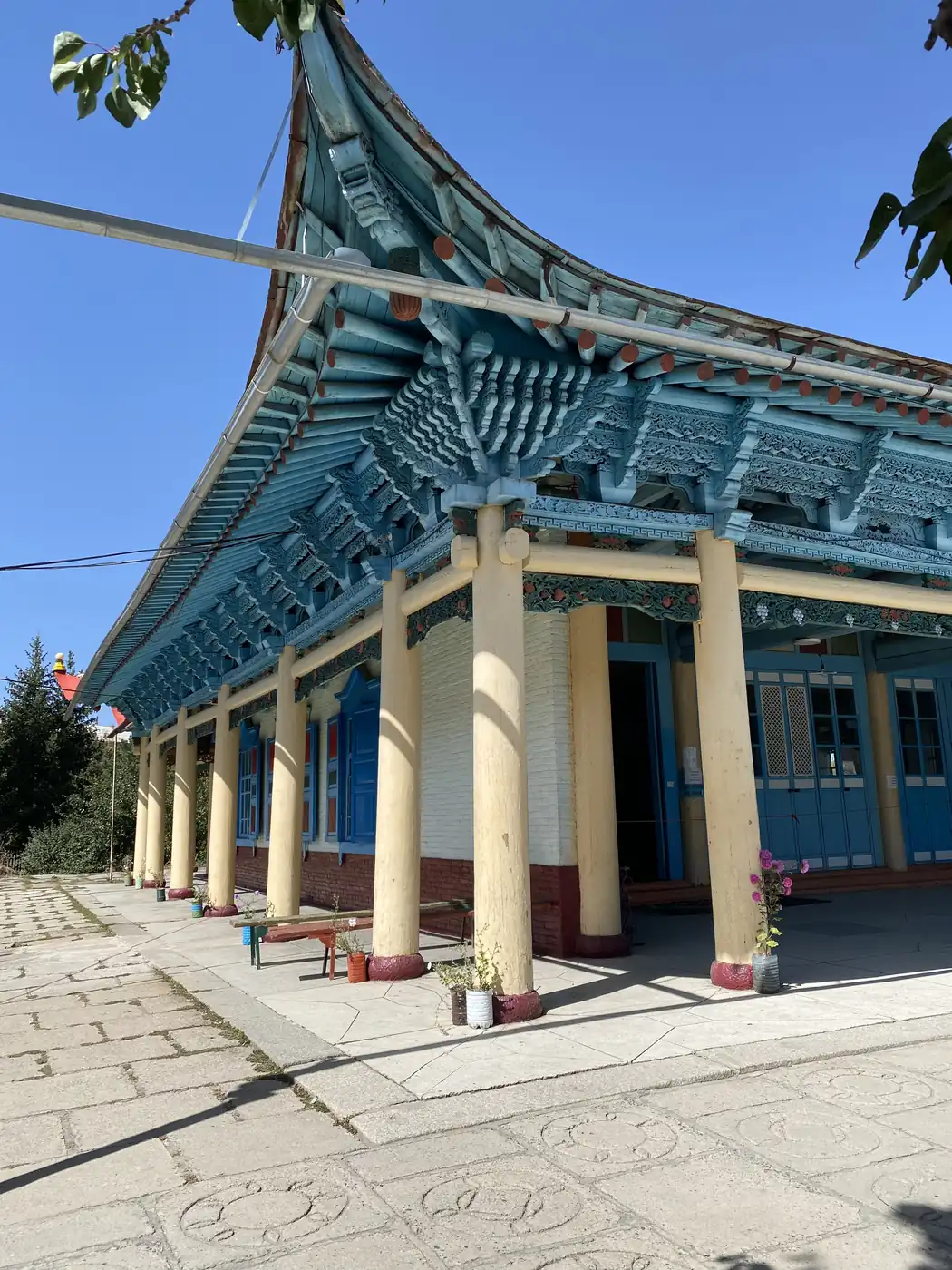
The Dungan Mosque looks more like a Chinese temple than a mosque, with a curved roof and painted wooden brackets in blue, red and green. It was finished in 1910, built by Chinese craftsmen for the local Dungan Muslims out of spruce, walnut and poplar beams joined by grooves and notches, without a single metal nail. Visitors are handed long robes to wear inside the grounds, and on the wall of its porch is a painted picture of the solar system.
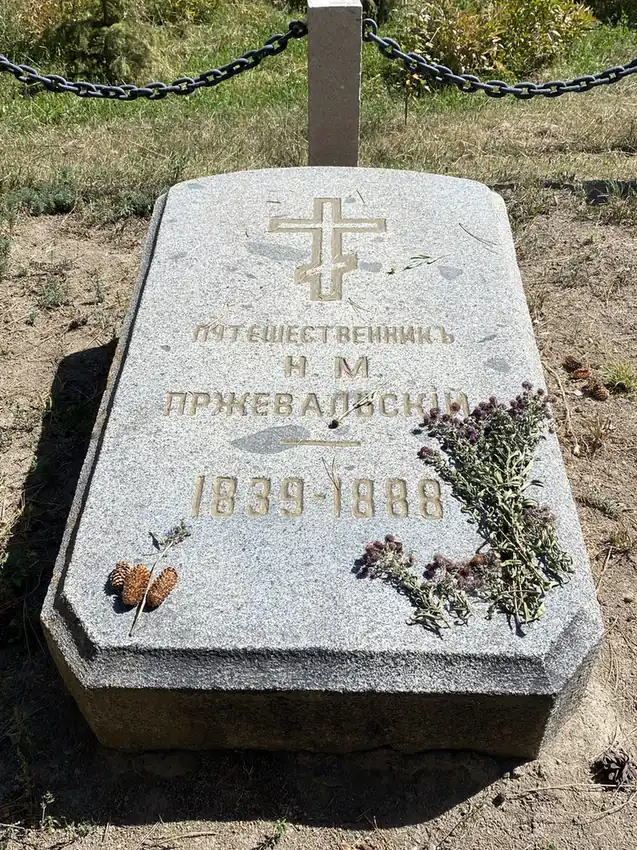
Outside the town is the memorial to Nikolay Przhevalsky, the Russian explorer of Central Asia, with a bronze eagle on top of a stone column. He died in Karakol in 1888. His grave is nearby. The little museum next to it has a giant globe, a stuffed ibex and a marmot.
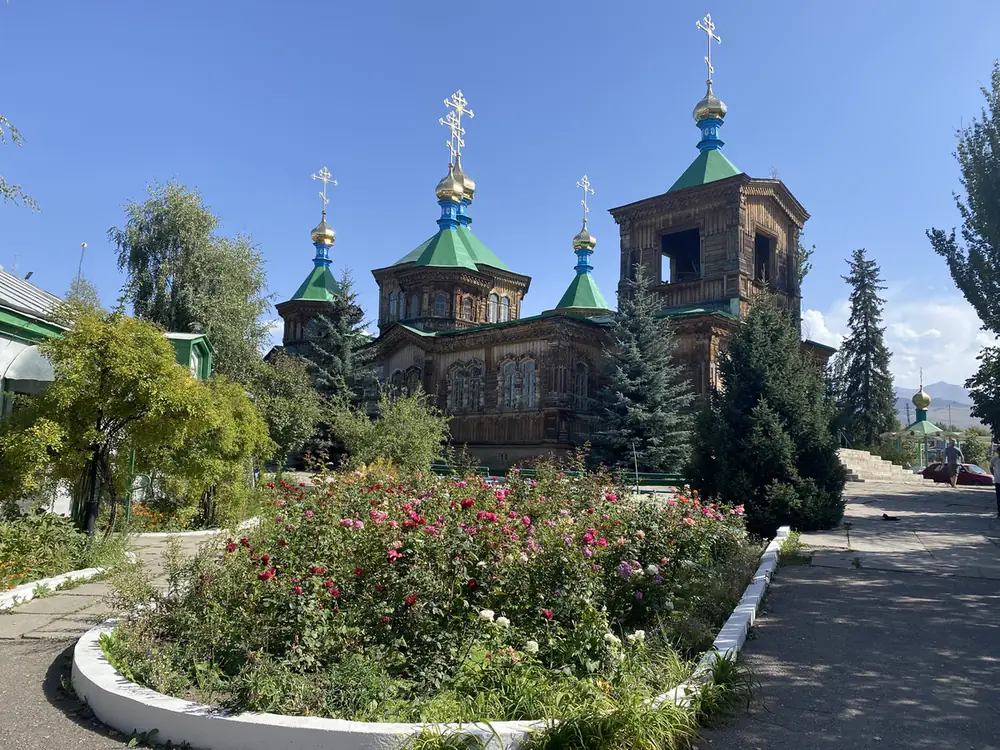
Back in town, the Holy Trinity Cathedral is built of wood, with green domes and gold crosses. The building that stands today was finished in 1895, after an earthquake destroyed the church before it.
The loop ended that night in the open-air pools of a hot spring in the hills, lit by floodlights after dark.
How did the trading fit in?
The same way it always does, in about 15 minutes a day. I wrote up how that works, the watchlist, the alerts and the time zones, in how I trade while travelling.
Where does it fit in the trip?
From Karakol, I went on into Kazakhstan. The rest of the 5 weeks, through the Stans and Turkey, is in Exploring Central Asia. Every trip is on the travel log, and more photos are on Instagram, @iamrecneps.
Would you sleep in a yurt at 3,000 metres? Let me know in the comments.
Spencer Li
Want the daily routine? Enter your email for the free 15-Minute Swing Trader's Checklist.
Free 5-page PDF, then occasional trading emails. Education only, not financial advice. Unsubscribe anytime. Kit stores your email in the US: see our privacy policy.
Want to learn the full method? The Trading Mastery Program teaches the 4 strategies I have traded since 2011. It suits beginners and experienced traders.
Rather follow the trades as they happen? Daily Trading Signals is our Telegram channel: my trade ideas with entry, stop and exit, and every trade is public.
Questions about this post? Ask in the free Telegram channel →
Educational content only, not personalised financial advice. Trading carries risk, including loss of capital. Past performance is not indicative of future results. Synapse Trading is not licensed or regulated by MAS.

