• Link to Facebook
  • Link to X
  • Link to Instagram
  • Link to Youtube
  • Link to LinkedIn
  • Link to Mail
Synapse Trading
  • Home
  • About
    • My Background
    • My Trading Journey
    • My Travel Log
    • Media & Interviews
  • Mentoring
    • Trading Mastery Program
    • Results & Testimonials
  • Signals
    • Telegram (Free to join!)
    • Daily Trading Signals
    • Daily Trading Signals (Results)
  • Resources
    • Free Trading Guides
    • Tools & Resources
    • Blog & Infographics
  • Contact
    • Contact Us
    • Partnership Opportunities
  • Click to open the search input field Click to open the search input field Search
  • Menu Menu
Spencer Li

Weekly Market Wrap: When Will the Fed start Cutting Rates?

Market Analysis
Kyrgyzstan

Currently, there is a potential clash between investors’ hopes for the Federal Reserve (Fed) to cut interest rates and the Fed’s current stance that it is too early to consider such action.

This has caused uncertainty in financial markets for 2023.

Many investors believe that inflation has peaked and that price pressures will fall quickly, leading the Fed to cut rates by the end of the year, as they did in 2019.

However, Fed officials have stated that the current inflation rate is higher than in previous years and therefore, this time will be different.

Despite the slower pace of inflation in December, evidence of inflation pulling back has fueled bets that the Fed will cut rates as early as the second half of the year.

Traders in interest-rate derivatives markets see a high chance of the Fed raising rates twice more this year and then cutting at least once by December.

However, Fed officials have projected that interest rates will continue rising through the spring and have not planned for cuts this year.

The Fed is concerned that a strong labor market could sustain wage growth and keep inflation above their 2% target.

Investors are at risk of being incorrect if they believe interest rates will fall.

The S&P 500 and government bonds have risen but there are concerns that Fed policy could be tougher than expected, leading to a potential decline in the economy and market.

The disconnect between the Fed and investors is caused by differing views on the rate of inflation decline.

For real-time trading signals and daily updates, join our “Daily Trading signals” Telegram channel!


Kyrgyzstan

[Photo: Brokenheart Mountain, Kyrgyzstan – See my full travel photo log!]

For our weekly market wrap, we go through some of the trade calls and analysis from last week, which gives us valuable insights for the week ahead.

We cover 3 main markets with a total of 200+ counters, so we will never run out of trading opportunities:

  • Forex, CFDs, commodities, bonds
  • US stocks, ETFs, global stock indices
  • Cryptocurrencies, crypto indices

By covering a broad range of markets, we can focus our attention (and capital) on whichever market currently gives the best returns.

Click here to receive all these signals in real-time for only $67 a month! You will get several signals a day, and even taking just 1 trade the whole month can easily cover the fee, so what are you waiting for?


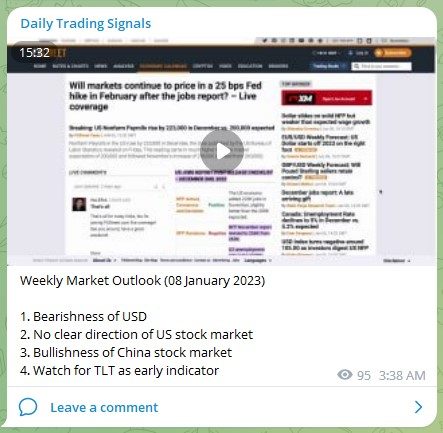
Weekly Market Outlook Video

Trading Signals weekly market outlook 090123

Weekly Market Outlook (08 January 2023)

1. Bearishness of USD
2. No clear direction of US stock market
3. Bullishness of China stock market
4. Watch for TLT as early indicator

Portfolio Highlights

Trading Signals weekly portfolio 090123

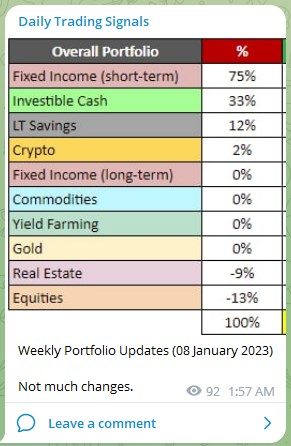
Weekly Portfolio Updates (08 January 2023)

Not much changes.


Trading Signals Markets 090123

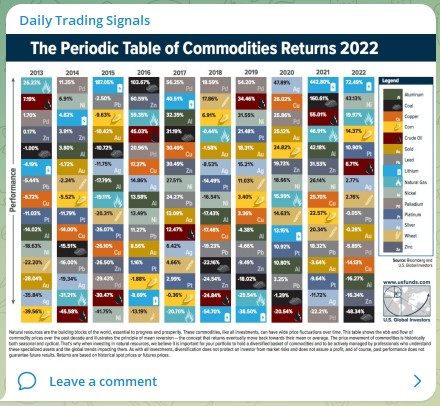
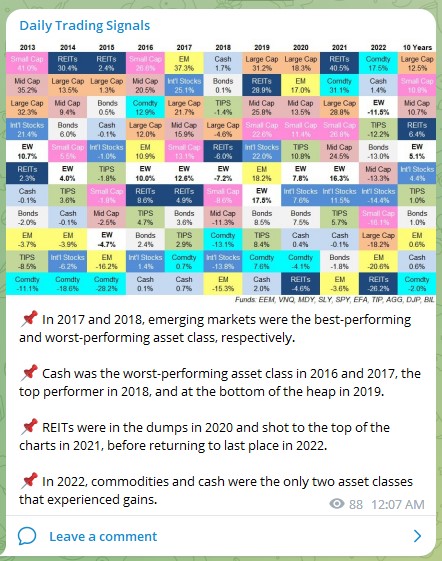
📌 In 2017 and 2018, emerging markets were the best-performing and worst-performing asset class, respectively.

📌 Cash was the worst-performing asset class in 2016 and 2017, the top performer in 2018, and at the bottom of the heap in 2019.

📌 REITs were in the dumps in 2020 and shot to the top of the charts in 2021, before returning to last place in 2022.

📌 In 2022, commodities and cash were the only two asset classes that experienced gains.

📌 8 out of the 10 tracked asset classes had ….

Check out this free video breakdown of the various asset classes:


Forex & Commodities Market Highlights

Trading Signals USDCNY 090123

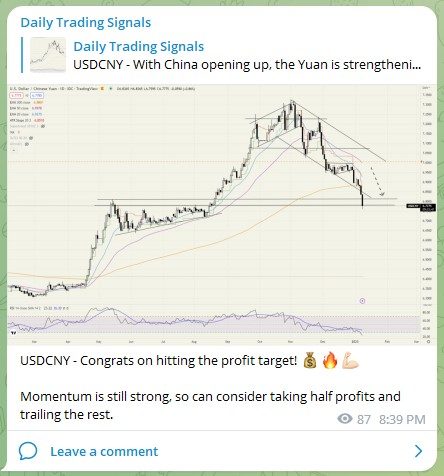
USDCNY – Congrats on hitting the profit target! 💰🔥💪🏻

Momentum is still strong, so can consider taking half profits and trailing the rest.


Trading Signals AUDUSD 090123

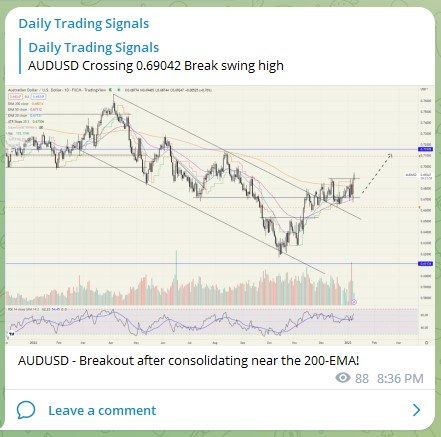
AUDUSD – Breakout after consolidating near the 200-EMA!


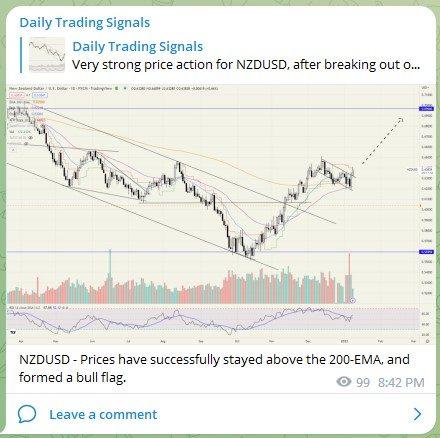
Trading Signals NZDUSD 090123

NZDUSD – Prices have successfully stayed above the 200-EMA, and formed a bull flag.


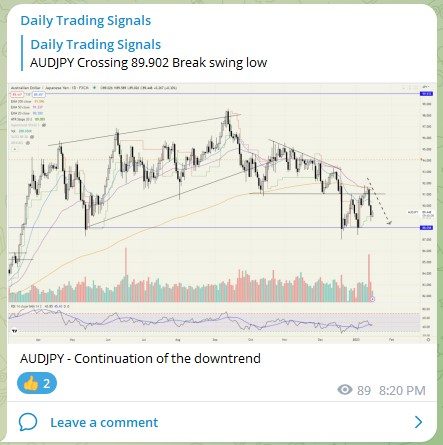
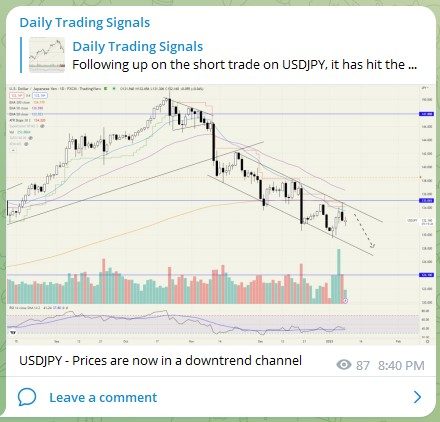
Trading Signals USDJPY 090123

USDJPY – Prices are now in a downtrend channel


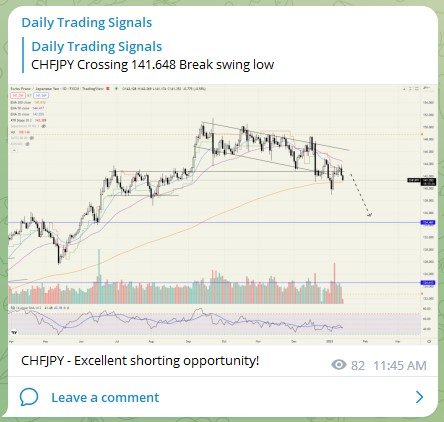
Trading Signals CHFUSD 120123

CHFJPY – Excellent shorting opportunity!


Stock & Bond Market Highlights

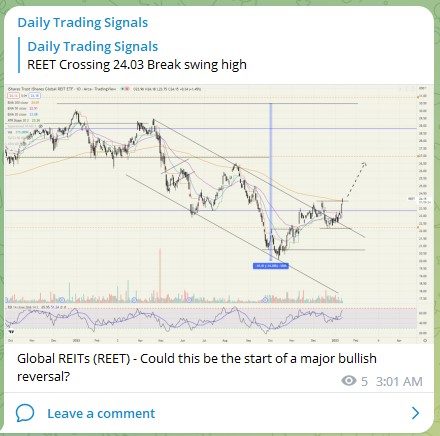
Trading Signals REET 130123

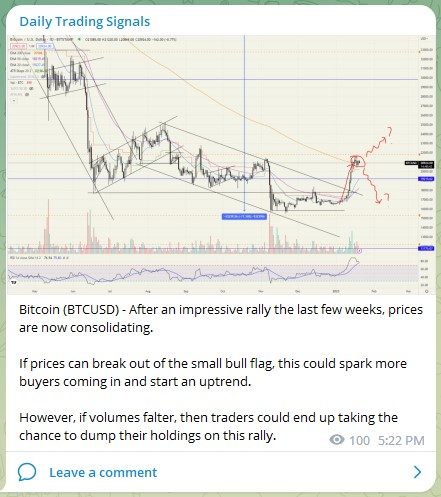
Global REITs (REET) – Could this be the start of a major bullish reversal?


Trading Signals SP500 110123

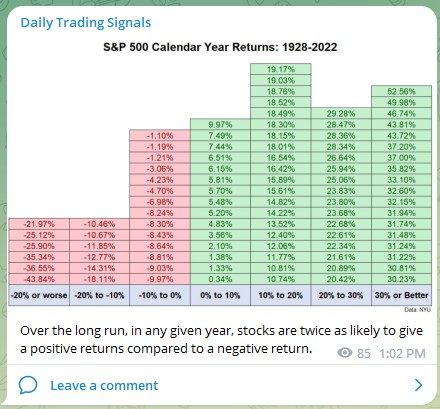
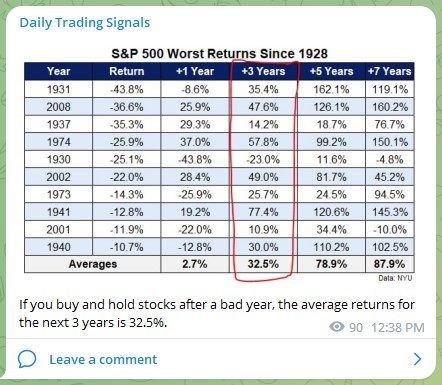
If you buy and hold stocks after a bad year, the average returns for the next 3 years is 32.5%.


Click here to receive all these signals in real-time for only $67 a month! You will get several signals a day, and even taking just 1 trade the whole month can easily cover the fee, so what are you waiting for?

Good luck, and may next week bring more excellent profits!

0 Comments/by Spencer Li
https://synapsetrading.com/wp-content/uploads/2023/01/Kyrgyzstan.jpg 1440 1440 Spencer Li https://synapsetrading.com/wp-content/uploads/2019/10/logo.jpg Spencer Li2023-01-13 03:17:462023-01-13 15:22:47Weekly Market Wrap: When Will the Fed start Cutting Rates?
Spencer Li

What is Stoicism? (13 Practical Ways to Apply it in Your Life!)

Living Your Best Life
Thumbnail What is Stoicism

Thumbnail What is Stoicism

Stoicism is a philosophy that originated in ancient Greece and Rome that emphasizes the development of self-control and fortitude as a means of overcoming destructive emotions.

It teaches that by accepting the present moment as it is, we can achieve peace of mind and inner harmony.

Through the practice of Stoicism, you can learn to live a more virtuous and fulfilling life, and gain valuable insights on how to handle stress and adversity.

In this blog post, I will explore the origins and benefits of this life philosophy, and practical ways you can apply it in your life.


What is Stoicism?

Stoicism is a philosophy that originated in ancient Greece and was later developed by the Romans.

It is a philosophy of personal ethics that emphasizes the development of self-control and fortitude as a means of overcoming destructive emotions.

It teaches that by accepting the present moment as it is, we can achieve peace of mind and inner harmony.

The Stoics believed that by understanding the nature of the universe, and our place in it, we could live a virtuous life in accordance with reason and nature.

This approach advocates the development of self-control and resilience against destructive emotions, like anger, fear, or resentment.

The ultimate goal is to achieve a state of ataraxia (inner peace) and apatheia (emotionlessness) where the individual is not controlled by the emotions and is able to act rationally and ethically.

Origins of Stoicism

The origins of Stoicism can be traced back to ancient Greece, specifically to the city of Athens, where the philosopher Zeno of Citium founded the Stoic school of philosophy in the early 3rd century BCE.

Zeno was a student of the Cynic philosopher Crates of Thebes, but he rejected the Cynics’ way of life and instead focused on developing a rational system of ethics.

The Stoic philosophy was then developed by other philosophers such as Epictetus, Seneca, and Marcus Aurelius.

These philosophers are considered the three most prominent Stoics, and their texts, particularly the Enchiridion of Epictetus and the Meditations of Marcus Aurelius, continue to be read and studied today.

Stoicism was popular among the educated elite of ancient Rome and it has had a significant influence on Western thought, it was a philosophy that was primarily concerned with personal ethics and self-improvement, it was a way of life and a way to find peace and wisdom within oneself and the world.

Stoicism was taught in famous places like the Stoa Poikile or painted porch in Athens, the Stoic school was one of the most influential and prominent schools of philosophy in ancient Greece and Rome.

Benefits of Stoicism

Stoicism can offer many benefits for those who choose to adopt its principles and practices.

Some of these benefits include:

  • Inner peace and contentment: By accepting the present moment and focusing on what is within our control, we can avoid becoming consumed by negative emotions such as anger, fear, or resentment. This can lead to a sense of inner peace and contentment.
  • Improved ability to handle stress and adversity: Stoicism teaches us to maintain a clear and rational mindset in difficult situations, which can help us to better handle stress and adversity.
  • Self-control and resilience: Stoicism emphasizes the importance of self-control and resilience, helping us to develop the ability to maintain our composure and make rational decisions, even in difficult or challenging situations.
  • Virtue development: Stoicism emphasizes the development of virtues such as wisdom, integrity, courage and self-control which can improve one’s character and make them a better person.
  • Rational perspective: It encourages rational thinking, rather than emotional reactions, and to see things in a more objective perspective.
  • Improves decision making: By focusing on what is within our control, and letting go of what is not, we can make more effective and well-informed decisions.
  • Self-awareness and self-improvement: Through the practice of stoicism, we can become more aware of our thoughts, emotions, and actions, which can help us to identify areas for self-improvement.
  • Acceptance: Stoicism encourages acceptance of the present moment, and teaches that by accepting what we cannot change, we can let go of negative emotions, and find a sense of peace.

In general, Stoicism can lead to a more balanced, virtuous and rational way of life, which can have a positive impact on one’s personal and professional life.

How to Apply Stoicism in Your Life

To apply Stoicism in your life, you can try the following practical tips and examples:

  1. Self-awareness: Start by becoming more aware of your thoughts and emotions. Try to identify when you are getting caught up in negative emotions and try to step back and observe them from a distance. This will help you to understand your own thought patterns, which can aid in self-improvement.
  2. Acceptance: Practice acceptance by focusing on what is within your control and letting go of things you cannot control. This will help to reduce feelings of frustration and powerlessness, and improve your ability to cope with difficult situations.
  3. Mindfulness: Practice mindfulness, meditation and journaling to help with self-awareness and to practice acceptance. This can also improve emotional regulation, cognitive flexibility and self-awareness,
  4. Practice gratitude: Try to focus on what you have rather than what you don’t have, and practice gratitude for the positive things in your life.
  5. Separate what you can change and what you cannot change: Try to separate things you can change and things you cannot change, this will help to reduce feelings of frustration and powerlessness.
  6. Negative visualization: Practice negative visualization, where you imagine losing something you hold dear, so you can appreciate what you have. This will help you to develop a sense of perspective and gratitude.
  7. Cultivate virtues: Cultivate virtues such as integrity, courage, wisdom, and self-control. Incorporating these values into your life can improve your character and lead to a more virtuous and fulfilling life.
  8. Keep a rational perspective: Try to keep a rational perspective in difficult situations. Remember that emotions are temporary and that things will pass. Practice rationality and logical thinking.
  9. Read and study the works of Stoic philosophers: Read and study the works of Stoic philosophers such as Epictetus, Seneca, and Marcus Aurelius. These philosophers offer valuable insights and practical advice on how to apply Stoicism in daily life.
  10. Start small: Try to apply stoic principles in small aspects of your life, such as how to deal with a traffic jam, or an unresponsive coworker, small victories will make it easier to apply it to bigger aspects of your life.
  11. Be mindful of your actions: Be mindful of your actions and the choices you make, always try to act in a virtuous way.
  12. Focus on what is essential: Stoicism teaches to focus on what is essential, prioritize your goals and values, and let go of things that don’t align with them.
  13. Be resilient: Cultivate resilience, practice facing difficult challenges and setbacks with a calm, rational, and detached attitude.

All these tips and examples, if practiced regularly, can help you to integrate Stoicism into your daily life and improve your overall well-being.

Remember that the goal is not to suppress or ignore your emotions, but to develop the ability to manage them in a healthy way.

Keep in mind that it takes time and effort to develop a Stoic mindset, but with patience and dedication, you can learn to live a more fulfilling life in accordance with reason and virtue.

Famous Examples of Stoicism

There have been many famous historical figures who have applied Stoicism in their lives and have shared their practical advice on how to live a virtuous and fulfilling life.

Some of the most notable figures include:

  • Epictetus: A slave turned philosopher who taught that the key to happiness is to focus on our own actions rather than external events. He taught that by understanding the difference between what we can control and what we cannot control, we can reduce feelings of frustration and powerlessness. Epictetus emphasized the importance of self-discipline, and stated that the mind should be trained to remain calm in the face of adversity.
  • Seneca: A Roman philosopher and statesman who wrote extensively on the practical application of Stoicism in daily life. Seneca believed that by understanding the nature of the universe, we can live in accordance with reason and nature, and that we should focus on cultivating virtues such as wisdom, courage, and self-control. He also stressed the importance of self-awareness and self-improvement.
  • Marcus Aurelius: Roman Emperor and Stoic philosopher who wrote in his famous book “Meditations” about how to live a virtuous life in the face of adversity. Marcus Aurelius advocated for the importance of virtue, self-control and rationality. He also emphasized the need to detach oneself from emotions, to focus on what is in one’s control, and to live a life of service to others.

All these figures and many others, offer practical advice on how to apply Stoicism in daily life, their works are still read and studied today, for the valuable insights and wisdom that they provide.

Concluding Thoughts

In conclusion, Stoicism is an ancient philosophy that can offer many benefits for those new to it.

It emphasizes the development of self-control and resilience against destructive emotions, and encourages accepting the present moment and focus on what is in one’s control, leading to inner peace and contentment.

It also offers valuable insights on how to handle stress and adversity, virtues development and rational thinking, making it a valuable tool to improve one’s personal and professional life and find inner peace.

Now that I have shared what stoicism is about, and the practical ways you can apply it in your life, do you think this is a life philosophy which you will want to adopt?

For those already embracing this philosophy, what are some other ways which you have applied stoicism in your life?

Let me know in the comments below.


thumbnail an unofficial guide to living our best life beyond financial freedom
If you are excited to get more life hacks, also check out: “Beyond Financial Freedom: An Unofficial Guide to Living Your Best Life”

0 Comments/by Spencer Li
https://synapsetrading.com/wp-content/uploads/2023/01/Thumbnail-What-is-Stoicism.png 720 1280 Spencer Li https://synapsetrading.com/wp-content/uploads/2019/10/logo.jpg Spencer Li2023-01-11 18:14:302023-02-10 19:58:50What is Stoicism? (13 Practical Ways to Apply it in Your Life!)
Spencer Li

Practical Life Philosophies that You Can Use to Improve Your Life!

Living Your Best Life
Thumbnail Practical Life Philosophies that You Can Use to Improve Your Life

Thumbnail Practical Life Philosophies that You Can Use to Improve Your Life

Are you curious about the world around you and looking for a way to make sense of it all?

Look no further than philosophy!

Philosophy is the study of fundamental questions about reality, knowledge, and our place in the world.

It can help you understand yourself and the world around you better.

In this blog post, I will explore the different branches of philosophy, the origins of philosophy and how it can benefit you in your personal and professional life.


What is Philosophy?

Philosophy is a broad field that encompasses many different areas of inquiry.

At its core, however, philosophy is the study of fundamental questions about the nature of reality, knowledge, and our place in the world.

a) Metaphysics

One of the main areas of inquiry within philosophy is metaphysics, which is the branch of philosophy that deals with the nature of reality.

Metaphysics addresses questions such as:

What is the nature of the universe?

What is the relationship between mind and body?

Does free will exist?

What is the nature of time?

b) Epistemology

Another important area of philosophy is epistemology, which is the branch of philosophy that deals with knowledge.

Epistemology addresses questions such as:

What is knowledge?

How do we acquire knowledge?

What is the relationship between knowledge and belief?

How can we justify our beliefs?

c) Ethics

Ethics is another branch of philosophy which deals with the questions of morality, what is good and bad, right and wrong.

It looks at various moral theories like consequentialism, deontology, virtue ethics, and more, and addresses questions such as:

What is the nature of moral responsibility?

How should we make moral decisions?

What is the difference between right and wrong?

d) Living a Good Life

On a more general level, philosophy can also refer to a particular set of beliefs or a way of thinking about the world.

In this sense, philosophy can be understood as an approach to life, a set of guiding principles, or a perspective on the world that shapes one’s actions and decisions.

d) Other branches

There are other branches such as logic, which is the study of reasoning and argument, political philosophy which is the study of government and political systems and social philosophy which is the study of social interactions, institutions and organizations.

Philosophy is an attempt to understand the world and our place in it through reason and critical thinking.

It encourages us to question assumptions, to consider alternative perspectives, and to think deeply about important issues.

Philosophy provides tools and perspectives that can be used to understand and navigate the world and to make sense of our own experiences.

Origins of Philosophy

The origins of philosophy can be traced back to ancient Greece, specifically to the city of Miletus in Ionia, where thinkers such as Thales, Anaximander, and Anaximenes began asking questions about the nature of the universe and our place within it.

The earliest philosophers sought to understand the world and our place in it through reason and observation, rather than through tradition or religious belief.

The word “philosophy” comes from the Greek φιλοσοφία (philosophia), which is composed of two parts: “philo-” meaning “love” and “-sophia” meaning “wisdom.”

The word literally means “love of wisdom.”

Benefits of Philosophy

Philosophy is beneficial or relevant in our lives because it helps us to think critically about the world and our place in it.

It encourages us to question assumptions and to consider alternative perspectives, which can lead to a deeper understanding of ourselves and our relationship to the world around us.

Additionally, philosophical ideas and concepts often have real-world applications in areas such as ethics, politics, and law.

Furthermore, it teaches to make well-informed decisions, to think rationally and logically, which can benefit many aspects in one’s personal life and even in the society.

It can help to provide clarity, purpose and peace of mind for many people.

Practical Life Philosophies

There are many practical ways in which philosophy can help us live a more fulfilling life:

  • Stoicism: accepting whatever life brings, and focusing on what is within your control.
  • Existentialism: individual freedom and choice in shaping one’s own life.
  • Epicureanism: pursuit of simple pleasures as the most important goal in life.
  • Minimalism: only owning and keeping things that add value to your life.
  • Buddhism: living in the present moment, finding peace & happiness through mindfulness & compassion.
  • Humanism: reason, compassion, and the pursuit of knowledge and truth.
  • Utilitarianism: maximizing the happiness and well-being of the greatest number of people.
  • Transcendentalism: ultimate reality is spiritual and transcendent, and that individuals can connect with this reality through intuition and self-reflection.
  • Rationalism: reason and logic in understanding the world and making decisions.
  • Pragmatism: truth of an idea is determined by its practicality and usefulness.

I will be doing a separate blog post on each of these philosophies, with a detailed breakdown of practical applications.

Concluding Thoughts

Philosophy may seem like an academic discipline, but it’s more than that.

It is a way of thinking, an attitude towards life and a set of principles that guide one’s actions and decisions.

Through the study of philosophy, you can learn to think critically and make better decisions, gain a deeper understanding of yourself and the world around you, and find meaning and purpose in life.

Whether you’re trying to figure out what’s truly important in life, or just looking to improve your critical thinking skills, philosophy has something to offer.

As the saying goes, “The unexamined life is not worth living,” so dive in and start exploring the world of philosophy today!

Now that I have shared what philosophy is about, and the practical ways you can apply it in your life, which philosophy do you feel resonates the most with you?

What other useful philosophies do you apply in your life?

Let me know in the comments below.


thumbnail an unofficial guide to living our best life beyond financial freedom

If you are excited to get more life hacks, also check out: “Beyond Financial Freedom: An Unofficial Guide to Living Your Best Life”
0 Comments/by Spencer Li
https://synapsetrading.com/wp-content/uploads/2023/01/Thumbnail-Practical-Life-Philosophies-that-You-Can-Use-to-Improve-Your-Life.png 720 1280 Spencer Li https://synapsetrading.com/wp-content/uploads/2019/10/logo.jpg Spencer Li2023-01-11 17:10:372023-02-10 20:20:24Practical Life Philosophies that You Can Use to Improve Your Life!
Spencer Li

What are Peak Experiences, and How to Get More of it in Your Life?

Living Your Best Life
Thumbnail What are Peak Experiences

Peak Experiences and Flow States: What They Are and How to Have More of Them

Last updated: 3 July 2026 · By Spencer Li, CFTe


A peak experience is an intense moment of joy, awe, or deep connection that leaves you feeling fully present, fulfilled, and changed by it. A flow state (total absorption in a challenging activity) is the kind of peak experience you can deliberately set out to create. The term comes from psychologist Abraham Maslow, who studied self-actualized people and noticed they reported these “sudden, dramatic, and emotionally charged” moments of insight and unity far more often than most. You cannot force a peak experience to happen on command. What you can do is build the conditions for it: pick an activity you find genuinely engaging, protect uninterrupted time for it, stretch yourself slightly past your comfort zone, stay present instead of drifting, and practise gratitude for what you already have. Do that consistently, and these moments arrive more often.

Here is what peak experiences are, where the idea came from, and the five practices that reliably invite more of them into an ordinary week.

What is a peak experience?

A peak experience is a moment of intense psychological or emotional joy, awe, or wonder, sometimes carrying a feeling of transcendence or unity with the world. People who have one often describe it as life-changing, and it can quietly shift how they see themselves and everything around them.

The common thread is total immersion. During a peak experience you are completely absorbed in what you are doing, fully present, often working at the edge of your ability. There is usually a sense of challenge and growth woven through it, not just pleasure.

Peak experiences do not come from one fixed source. Some people find them through art or creative work. Others find them in sport or hard physical effort. Others reach them through spiritual or religious practice, or through a moment of real connection with another person. The trigger varies. The feeling, that immersive, meaningful, slightly-larger-than-yourself quality, does not.

Peak experience or flow state: are they the same thing?

People use the two terms interchangeably, and they overlap heavily, but they are not identical. Here is the simplest way I draw the line.

Peak experienceFlow state
Coined byAbraham Maslow (1960s)Mihaly Csikszentmihalyi (later)
Core feelingAwe, transcendence, unityEffortless, total absorption in a task
TriggerOften spontaneous (a sunrise, a birth, a realisation)Deliberate (a challenging activity matched to your skill)
DurationCan be a single fleeting momentCan last as long as the activity does
Can you plan it?Rarely on demandYes, by designing the conditions

In plain terms: every flow state is a kind of peak experience, but not every peak experience is flow. The sunrise that stops you in your tracks is a peak experience you did not engineer. The hour you lose inside a hard, absorbing piece of work is flow, and flow is the version you can actually set out to create. That distinction matters, because it means peak moments are not purely a matter of luck.

Where did the idea of peak experiences come from?

The concept comes from Abraham Maslow, the humanistic psychologist best known for the hierarchy of needs. Studying psychological and spiritual growth, Maslow noticed that the healthiest, most self-actualized people reported moments of profound insight and understanding that seemed to transform them.

He called these peak experiences and described them as “sudden, dramatic, and emotionally charged.” He believed they could give a person a sense of unity, transcendence, and connection to something larger than themselves.

Maslow’s work shaped a lot of what came after it. His ideas were picked up and developed in positive psychology, education, and management research. The specifics of his theory have drawn fair criticism over the years, but the core observation has held up: these intense, meaningful moments are real, and they matter for how we grow.

What are the benefits of peak experiences?

The reported benefits are consistent across the research and across ordinary lived experience:

  • Increased creativity and problem-solving
  • Greater happiness and well-being
  • Sharper focus and productivity
  • Faster personal and professional growth
  • A stronger sense of connection to other people and to the world

None of that is mystical. When you are fully absorbed and slightly stretched, you tend to produce better work, feel better doing it, and grow from it. Peak experiences are where a lot of that compounding quietly happens.

What are some examples of peak experiences?

They look different for everyone, but here are the common shapes:

  • A moment of spiritual connection, such as during meditation or a ceremony
  • A moment of deep emotional connection, such as falling in love or a real conversation with a close friend
  • A moment of personal accomplishment, such as finishing a marathon or hitting a long-term goal
  • A moment of awe, such as standing in front of a natural wonder
  • A moment of intense emotion, such as the birth of a child or the loss of someone you love
  • A moment of creative inspiration, such as writing a poem or composing music
  • A moment of intense focus on a hard task, such as deep work or meditation
  • A moment of intense physical sensation, such as a dance performance or skydiving
  • A moment of connection with nature, such as hiking in the mountains or swimming in the open sea
  • A moment of self-discovery, such as during a retreat or in therapy
  • A moment of sudden understanding, such as when a hard problem finally clicks

These are deeply personal and they vary from person to person. What they share is intensity and meaning. You tend to remember them for a long time.

How can I have more peak experiences?

You cannot summon a peak experience on demand. You can, though, build the conditions that make them far more likely. Five practices do most of the work.

Identify what genuinely absorbs you. Pay attention to the activities that pull you into flow and leave you fulfilled, then deliberately make more room for them. Most people already know what these are. They just do not protect them.

Protect distraction-free time for it. Block specific time, find a quiet space, and remove the interruptions. Flow needs an uninterrupted runway. It rarely survives a buzzing phone.

Seek out challenge that stretches you. Peak experiences live at the edge of your ability, where the task is hard enough to demand full attention but not so hard that you give up. Learn a new skill, take on something harder than last time, or pick up a problem just beyond your current reach.

Stay present. Practise mindfulness, whether that is following your breath or simply paying full attention to your senses. Presence is the gateway. A wandering mind never drops into flow.

Practise gratitude. Regularly reflect on and appreciate what you already have, and tell the people who support your growth that you see it. Gratitude deepens the fulfilment these moments bring and strengthens your connection to others.

One honest caveat. Peak experiences are not always pleasant in the moment. They often involve hard work, struggle, and even failure. The marathon hurts. The hard problem resists you for hours. But that is usually the point. The struggle is what makes the breakthrough land, and it is through the difficulty that we tend to grow and learn the most.

There is a practical bridge here to the discipline I write about elsewhere. The same conditions that produce flow, a clear challenge, full presence, and no distractions, are also the conditions under which people make their best decisions under pressure. A tool can hand you information instantly. It cannot hand you the present, focused state of mind in which you actually use that information well. That part stays yours.

Concluding thoughts

Peak experiences, and flow states in particular, are intense moments of joy, awe, and absorption that can bring a real sense of transcendence and growth. You will not control when every one arrives. But by finding the activities that absorb you, protecting time for them, seeking out challenge, staying present, and practising gratitude, you can weave far more of them into an ordinary life, and benefit from how they change you.

Now that you know what peak experiences are and how to invite more of them, is this something you want to make a deliberate part of your life? Let me know in the comments below.

If you enjoyed this, you will probably like Beyond Financial Freedom: An Unofficial Guide to Living Your Best Life, which carries the same theme further.

FAQ

What is the difference between a peak experience and a flow state?
A peak experience is any intense moment of joy, awe, or connection, and it often arrives spontaneously. A flow state is total absorption in a challenging activity matched to your skill, and it is the kind of peak experience you can deliberately set up. Every flow state is a peak experience; not every peak experience is flow.

Who came up with the concept of peak experiences?
Psychologist Abraham Maslow introduced it as part of his theory of self-actualization, describing peak experiences as “sudden, dramatic, and emotionally charged” moments of insight and unity.

Can you make a peak experience happen on purpose?
Not on command. You can, however, build the conditions that make one far more likely: choose a genuinely absorbing activity, protect uninterrupted time, stretch yourself slightly, stay present, and practise gratitude.

What are the benefits of having more peak experiences?
They are linked to greater creativity and problem-solving, more happiness and well-being, sharper focus, faster personal growth, and a stronger sense of connection to others and the world.

Are peak experiences always pleasant?
No. They often involve hard work, struggle, and even failure. The effort is usually what makes the breakthrough meaningful, and it is through the difficulty that we tend to grow the most.


About the author. Spencer Li is the founder of Synapse Trading and a Certified Financial Technician (CFTe) with 15 years of trading across stocks, forex, crypto, commodities, and bonds. His trade log is public, 404 trades, losses left in. He teaches low-risk swing trading in 15 minutes a day, one system for any market, and writes occasionally on the parts of a good life that have nothing to do with markets.
Reflection piece, not financial advice. Synapse Trading is not licensed by MAS to advise on investment products. Trading carries risk of loss; past performance is not indicative of future results.


Related

Beyond Financial Freedom: Living Your Best Life · On meaning, mindfulness and the good life
0 Comments/by Spencer Li
https://synapsetrading.com/wp-content/uploads/2023/01/Thumbnail-What-are-Peak-Experiences.png 720 1280 Spencer Li https://synapsetrading.com/wp-content/uploads/2019/10/logo.jpg Spencer Li2023-01-07 12:49:452026-07-06 02:47:52What are Peak Experiences, and How to Get More of it in Your Life?
Spencer Li

Weekly Market Wrap: Stock Market Reacts Positively to Stronger Jobs Data

Market Analysis
Song Kol Lake Kyrgyzstan

In the recent NFP report, the US economy added 223,000 jobs in December, which was slightly better than expected, and the unemployment rate fell to 3.5%.

Average hourly earnings increased by 4.6% year-over-year, which was lower than the expected 5.0% increase and the revised prior reading of 4.8%.

The US stock market rallied strongly after the release of this data due to the strong labor market and easing wage pressures, but we will need to see next week if this rally continues.

The focus will shift to the inflation report next week, and traders expect that inflation may fall further than expected.

The ISM services index also fell into contraction territory for the first time since May 2020, suggesting that the service sector of the economy may be struggling.

For a more detailed analysis (weekly market outlook video), and real-time trading signals, check out our “Daily Trading Signals” Telegram channel!


Song Kol Lake Kyrgyzstan

[Photo: Song-Kol Lake, Kyrgyzstan – See my full travel photo log!]

For our weekly market wrap, we go through some of the trade calls and analysis from last week, which gives us valuable insights for the week ahead.

We cover 3 main markets with a total of 200+ counters, so we will never run out of trading opportunities:

  • Forex, CFDs, commodities, bonds
  • US stocks, ETFs, global stock indices
  • Cryptocurrencies, crypto indices

By covering a broad range of markets, we can focus our attention (and capital) on whichever market currently gives the best returns.

Click here to receive all these signals in real-time for only $67 a month! You will get several signals a day, and even taking just 1 trade the whole month can easily cover the fee, so what are you waiting for?


Weekly Market Outlook Video

Trading Signals weekly video 2 020123

Trading Signals weekly video 020123

daily trading signals comments 070123

Weekly Market Outlook (01 January 2023)

Overview of 2022, and outlook for 2023.

Video is split into 2 parts due to technical issue.


Portfolio Highlights

Trading Signals Weekly portfolio 020123

Weekly Portfolio Updates (01 January 2023)

Not much changes.


Trading Signals clusters 020123

There are 4 main clusters, starting from the top:

1. These are the commodity-related products, performed the best for 2022 due to inflation.
a. DXY (US dollar index) – USD benefited from rising rates
b. GCC (General commodity ETF)
c. WTI (Crude oil)

2. These are the ones which are quite defensive, so they had a small decline during the year.
a. XAU (Gold)
b. US30 (Dow Jones Index) – less tech weightage

3. These are the blue-chip stock and bond indices, which declined roughly between 20-30% for the year.
a. US500 (S&P 500)
b. 2801 (General China stocks ETF)
c. REET (Global REITs ETF)
d. 3067 (China tech stocks ETF)
e. TLT (20-year US Treasury Bonds)
f. US100 (NASDAQ 100) – large tech stocks

4. These are the most high-risk products, including high-growth tech stocks and cryptocurrencies.
a. BTC (Bitcoin)
b. ETH (Ethereum)
c. ARKK (ARK ETF) – An ETF for high-growth stocks


Forex & Commodities Market Highlights

Trading Signals CADJPY 030123

CADJPY – broke new lows again, congrats! 💰🔥💪🏻


Trading Signals AUDCAD 020123

AUDCAD – Breakout from consolidation range


Trading Signals CHFJPY 030123

CHFJPY – Major trend is changing as prices try to break below the 200-EMA.

ST & MT price action is bearish, good opportunity for a short trade.


Trading Signals XAUUSD 020123

Gold (XAUUSD) – After the 2 great buying zones (light green rectangles) we highlighted, Gold has continued to climb steadily.

The next target is $1900, so take the opportunity to buy on any dips. 💰🔥💪🏻


Stock & Bond Market Highlights

Trading Signals Chinatech 030123

China tech stocks (3067) – Following up on this, it recently managed to cross the 200-EMA, and formed a bull flag.

The medium-term momentum is strong, and could lead to a long-term bullish reversal.


Trading signals stock market 020123

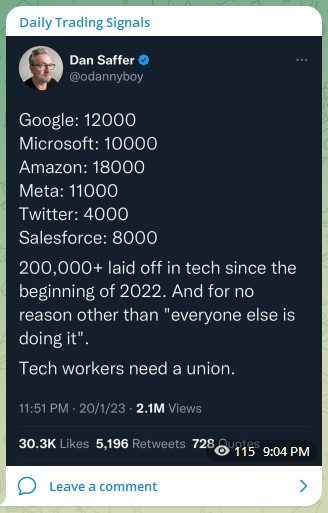
Even well-known companies like Meta, Tesla, and Amazon have seen significant declines in their stock prices this year, with declines of 65%, 65%, and 50% respectively.

While the decrease in the S&P 500 index this year has primarily been due to inflation and actions taken by central banks, analysts believe that negative estimates for future performance will contribute to further declines.

Currently, the consensus among analysts is that the S&P 500 will earn around $216 in 2023, but some more optimistic analysts predict earnings of around $220, representing only slight growth compared to 2022.

On the other hand, a group of bearish analysts believe that earnings per share (EPS) will decrease by about 10% to $200. Morgan Stanley and Bank of America have been particularly bearish, stating that the bear market in stocks will not end until the S&P 500 reaches a range of 3000-3400 later this year.

The current average price target for the S&P 500 for 2023, based on forecasts from 23 analysts, is 4,080.


Trading Signals tech stocks 020123

https://www.wsj.com/articles/the-year-big-tech-stocks-fell-from-glory-11672543952


Click here to receive all these signals in real-time for only $67 a month! You will get several signals a day, and even taking just 1 trade the whole month can easily cover the fee, so what are you waiting for?

Good luck, and may next week bring more excellent profits!

0 Comments/by Spencer Li
https://synapsetrading.com/wp-content/uploads/2023/01/Song-Kol-Lake-Kyrgyzstan.jpg 1536 2048 Spencer Li https://synapsetrading.com/wp-content/uploads/2019/10/logo.jpg Spencer Li2023-01-07 09:25:402023-01-07 22:05:44Weekly Market Wrap: Stock Market Reacts Positively to Stronger Jobs Data
Page 49 of 184«‹4748495051›»

Free Trading Guides

Free Trading Guides

Blog Categories

  • Beginner's Guide
  • Blockchain & Crypto
  • Book Summaries
  • Candlestick Patterns
  • Economics & News Trading
  • Investing & Portfolio Management
  • Living Your Best Life
  • Market Analysis
  • News & Events
  • Price Chart Patterns
  • Promotions
  • Risk & Money Management
  • Stock Trading
  • Testimonials
  • Tools & Resources
  • Trading Psychology
  • Trading Strategies
  • Trading Tips
  • Travel & Lifestyle

Free Trading Guides

Free Trading Guides

Contact Us

Synapse Trading Pte Ltd
Registration No. 201316168H

Whatsapp: +65-8897-1204
Telegram: @iamrecneps
Email: info@synapsetrading.com

Links

Disclaimer
Privacy policy
Terms & Conditions
Contact us
Partnerships

© 2012-2024 Synapse Trading | All rights reserved | - powered by Enfold WordPress Theme
  • Link to Facebook
  • Link to X
  • Link to Instagram
  • Link to Youtube
  • Link to LinkedIn
  • Link to Mail
Scroll to top Scroll to top Scroll to top