

Belarus: Minsk, the Stalin Line, Khatyn and the Castles of Mir and Nesvizh
Want the daily routine? Get the free 15-Minute Swing Trader’s Checklist. Get it free →
In November 2019, I started 5 weeks across Eastern Europe in Belarus. I reached Minsk on the evening of 4 November and flew out to Kyiv late on the 7th.
That gave me 3 full days. One was free, so I spent it on two castles in the countryside. The other two were with a guide: Minsk itself, then an open-air museum of Soviet bunkers and the memorial at Khatyn. This is those 3 days, from my photos.
Why Belarus?
Belarus was part of the Soviet Union until 1991. In Minsk, Lenin still stands in front of the government building.
It is also a country the Second World War went straight through. So you might be thinking, what is there to see? More than you would expect, and most of it is about that war.
What are Mir and Nesvizh?
Two castles about 90 km south-west of Minsk, both on UNESCO’s list. I used my free day on them.
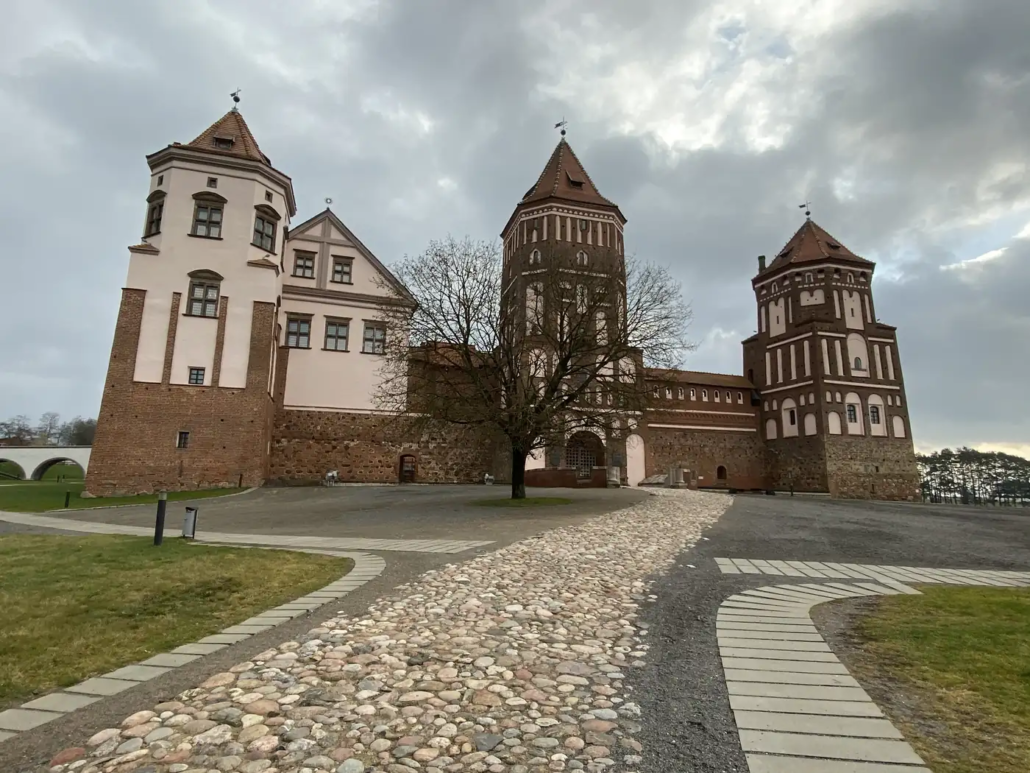
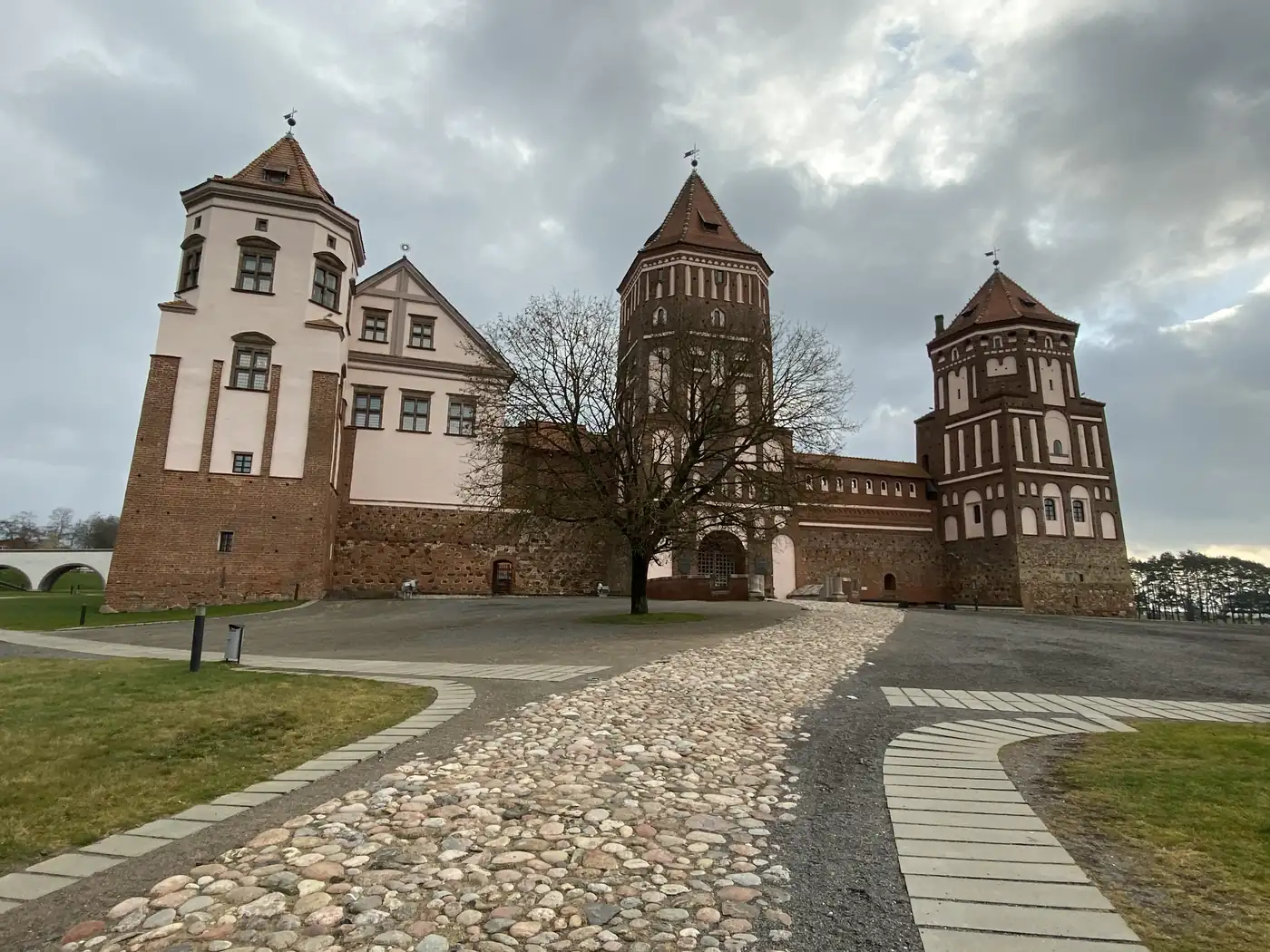
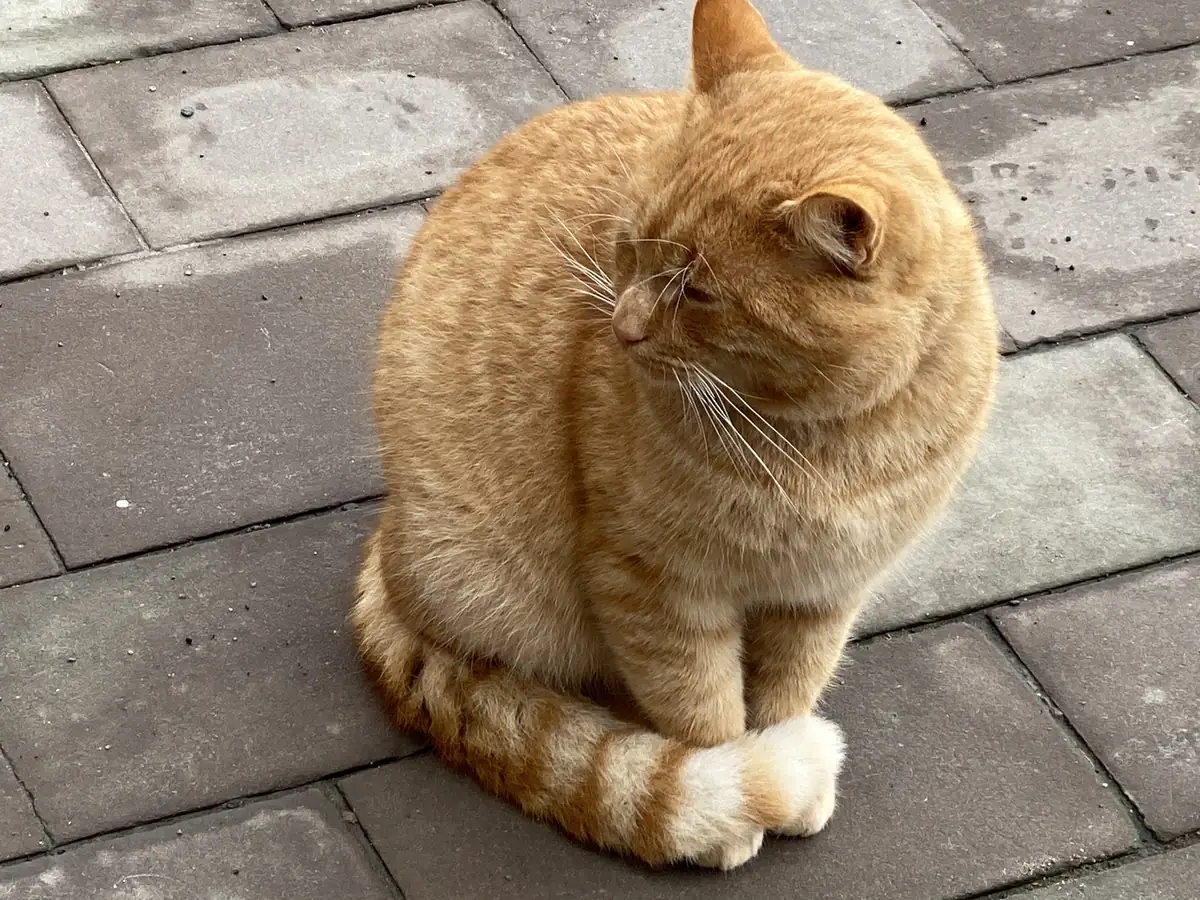
I was at Mir Castle by 10:20 on 5 November. It was built in the 16th century, with red brick towers trimmed in white stone round a square courtyard. Inside are rooms with coffered wooden ceilings, a pile of old cannonballs, and, when I was there, a ginger cat in one of the rooms.
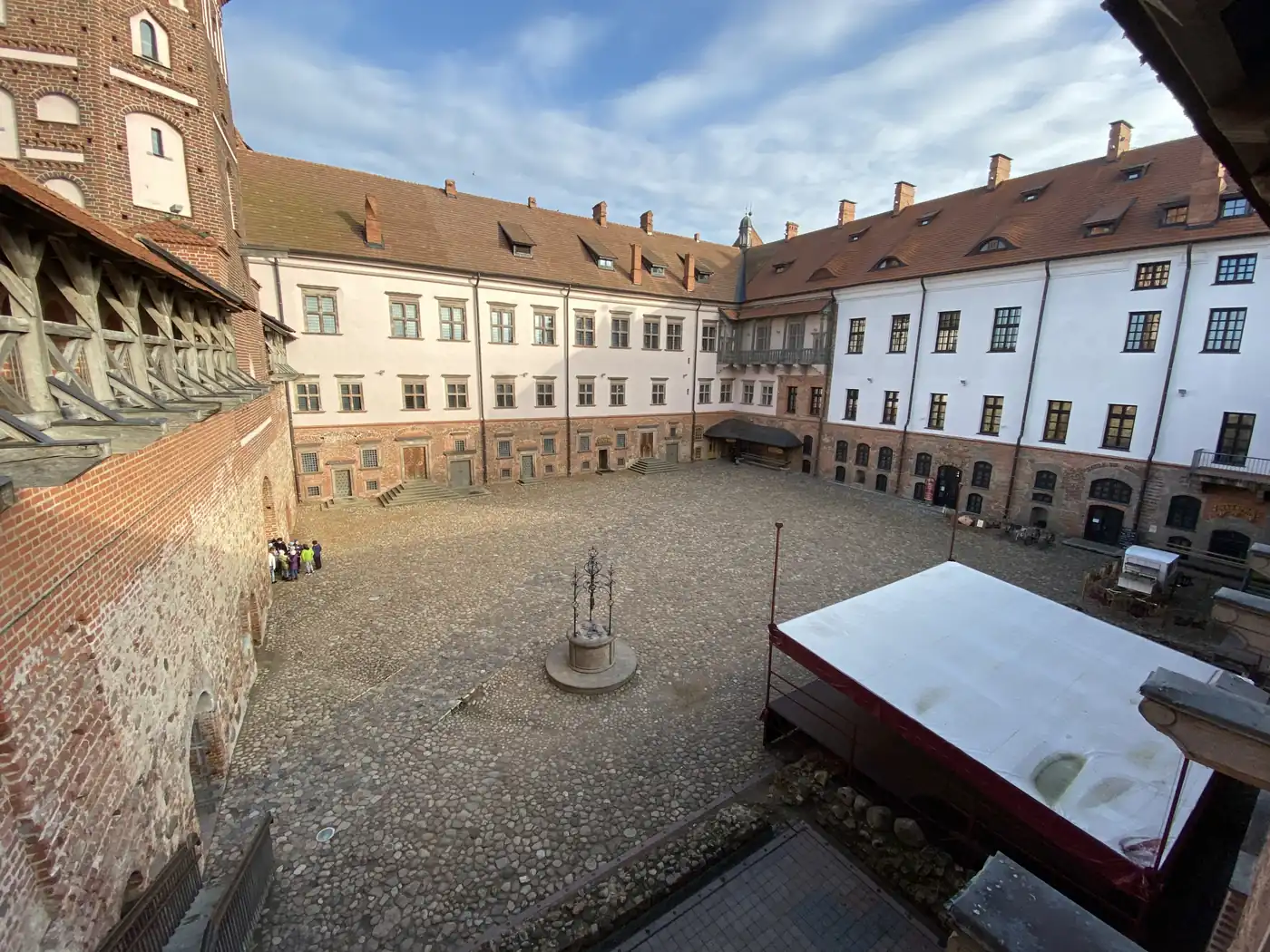
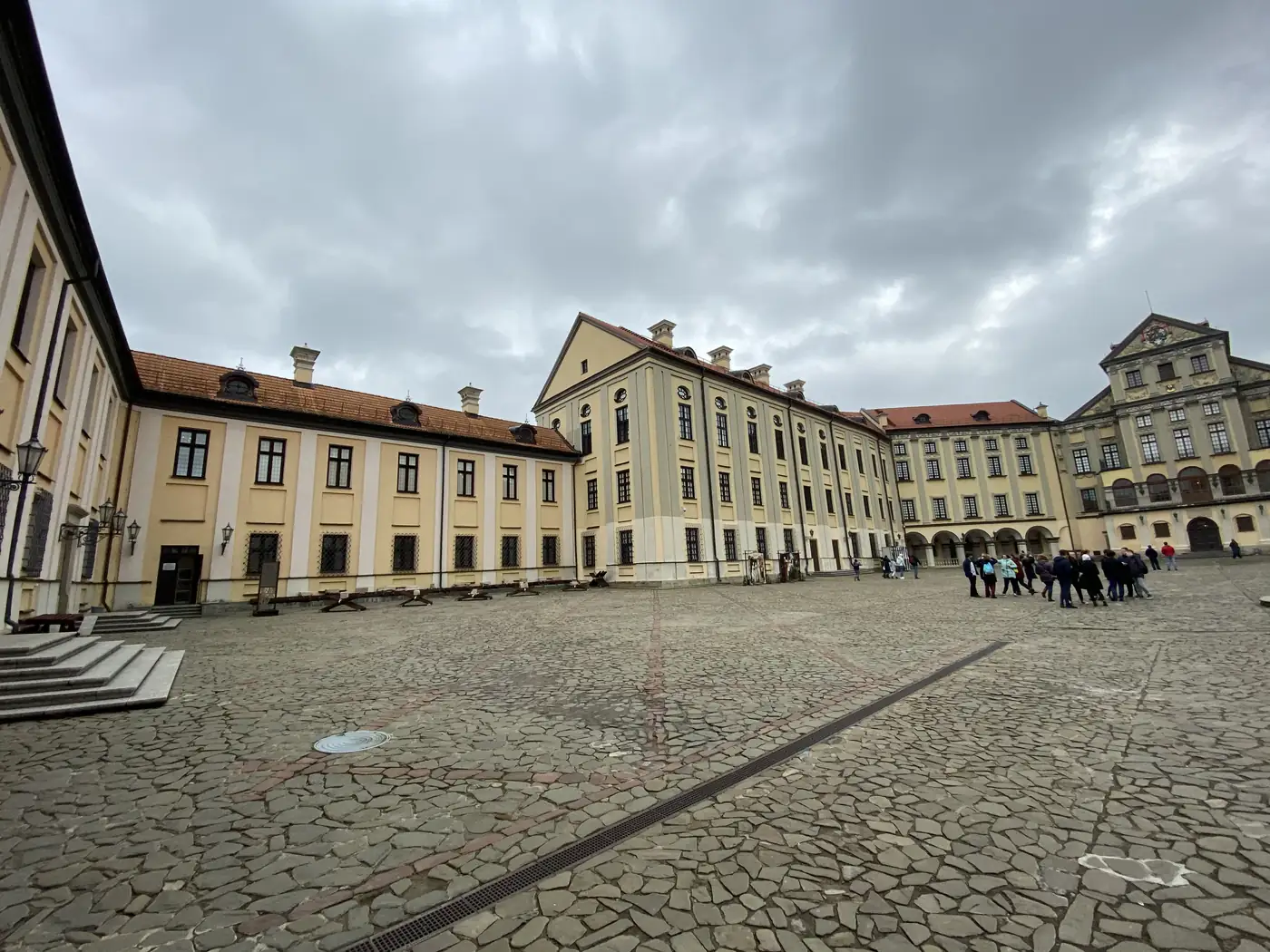
Nesvizh is half an hour further on. It was the seat of the Radziwiłł family, one of the richest in the old Polish-Lithuanian state, from 1533 until 1939. You cross a moat on a bridge to get in. One room has a tapestry with a globe woven into it.
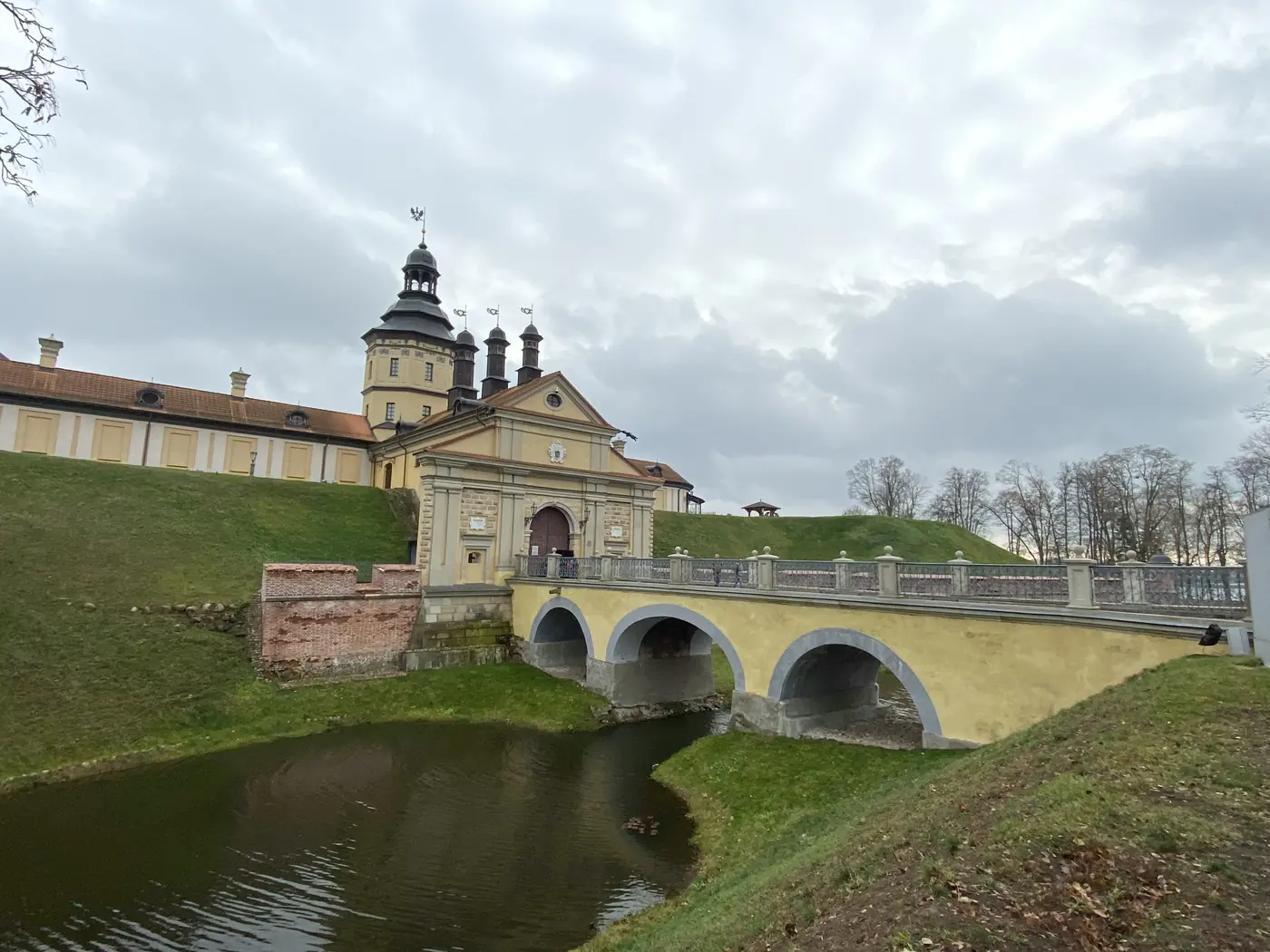
Both castles sat inside Poland between the two world wars, from 1921 to 1939. Mir went on the UNESCO list in 2000 and Nesvizh in 2005.
Back in Minsk that afternoon, I found a museum of miniatures, with scale models of Mir, the opera theatre and the Palace of Independence.
What is Minsk like?
A city of wide avenues. About 80% of the city was destroyed in the war, and its population fell from about 300,000 to 50,000. It was rebuilt to Stalin’s taste, with broad avenues and grand blocks of stone.
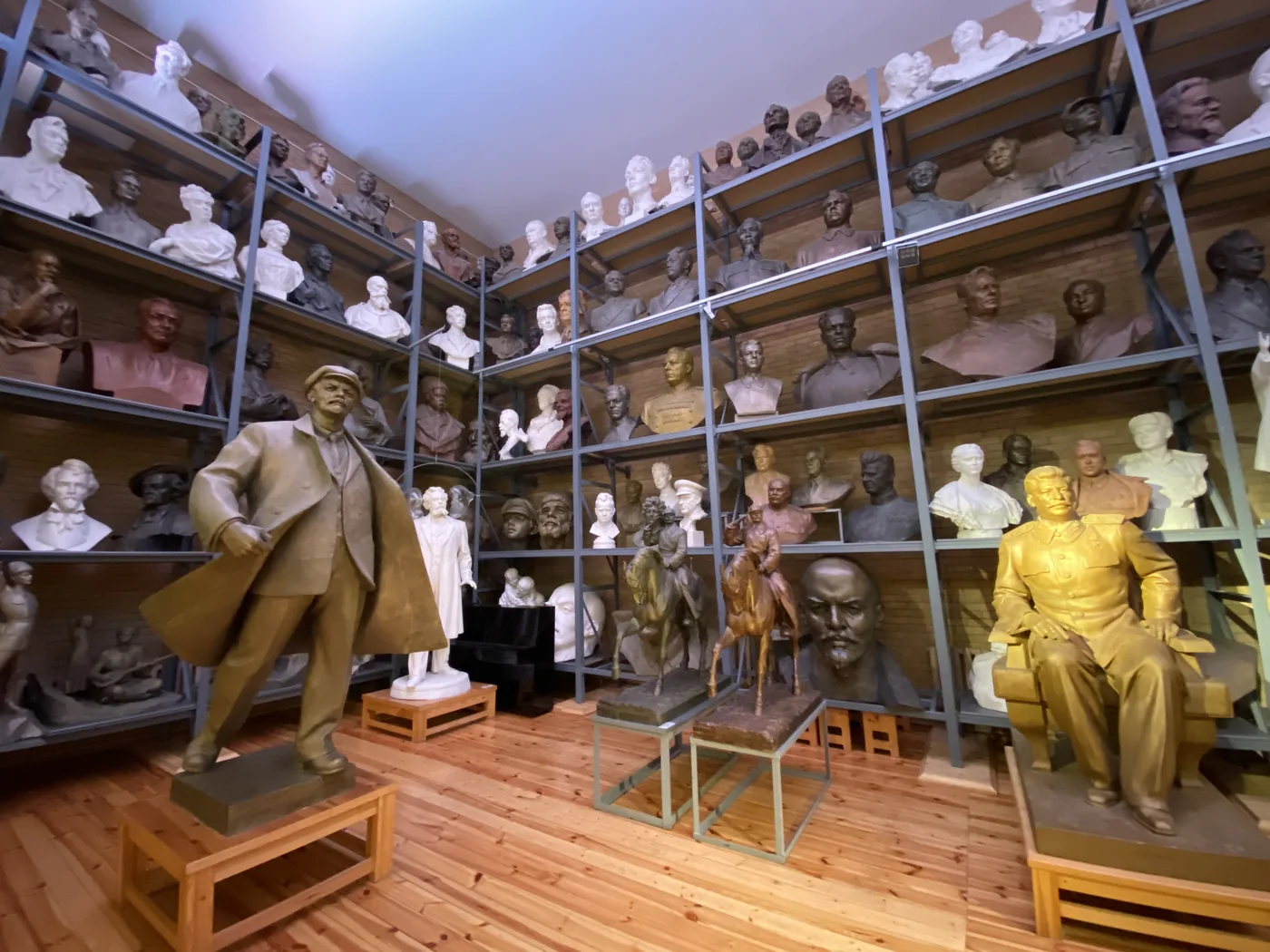
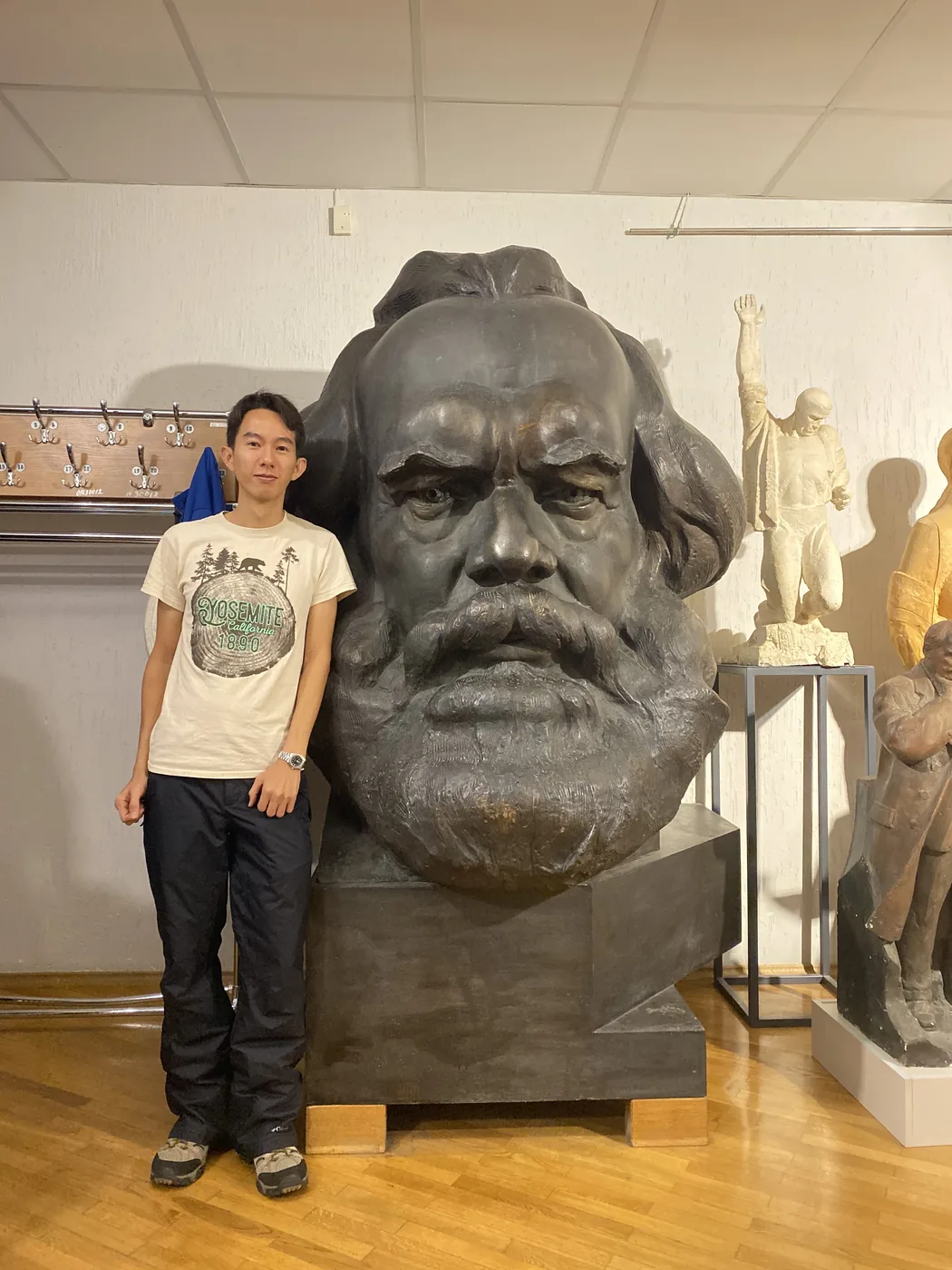
The tour started on the morning of 6 November at a sculptor’s studio. It belonged to Zair Azgur, who made monuments for the Soviet state, and it is now a museum. A giant head of Karl Marx stands at the entrance. Inside, on shelves that run from the floor right up to the ceiling, sit row after row of busts of Lenin, Stalin and Marx.
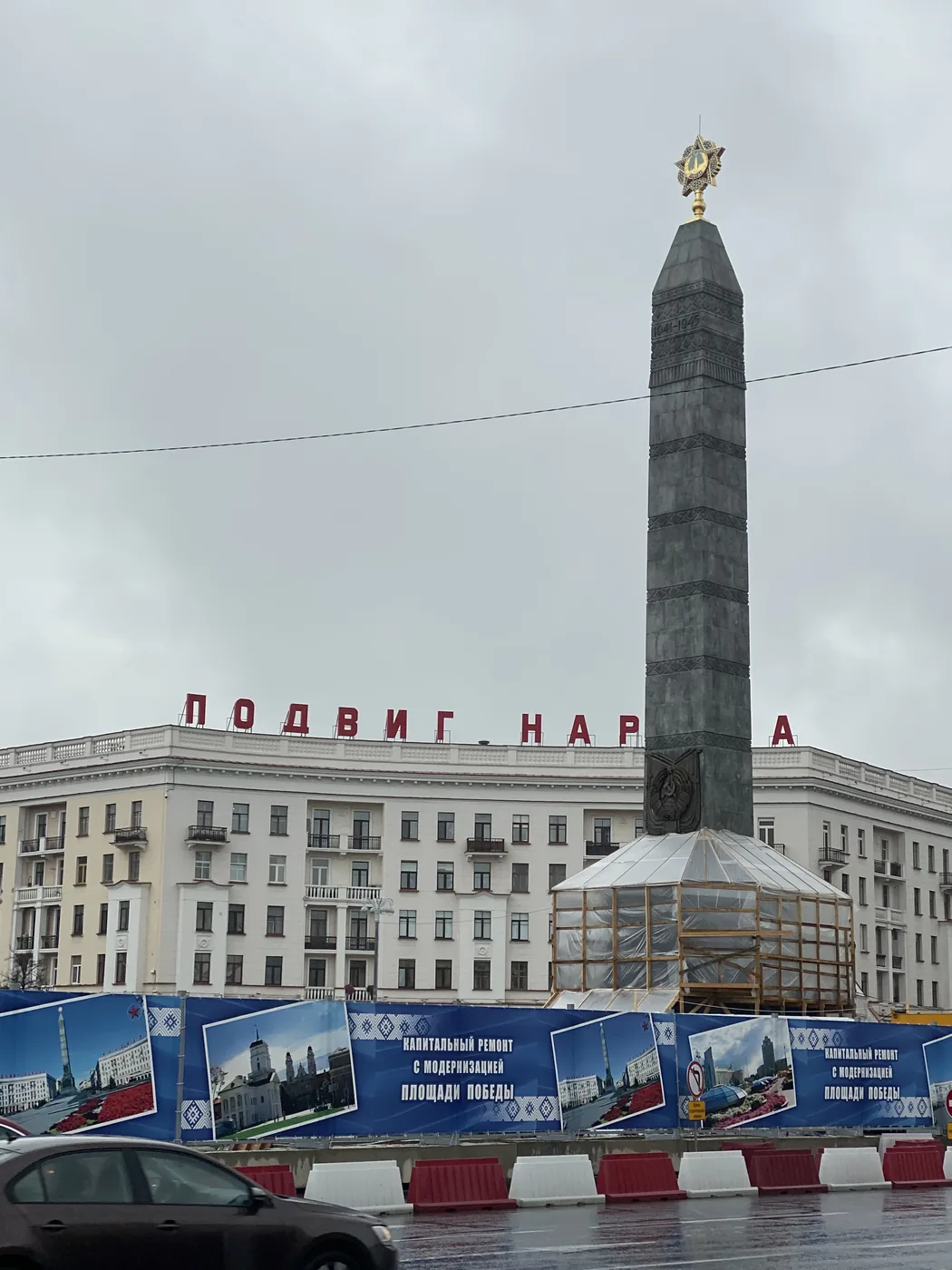
From there, the city’s war memorials. On Victory Square, a tall obelisk stands over an eternal flame. Nearby is the Palace of the Republic, a huge block fronted by columns.
What is the Red Church?
The Church of Saints Simon and Helena, on the corner of Independence Square. Red brick. Neo-Romanesque, finished in 1910.
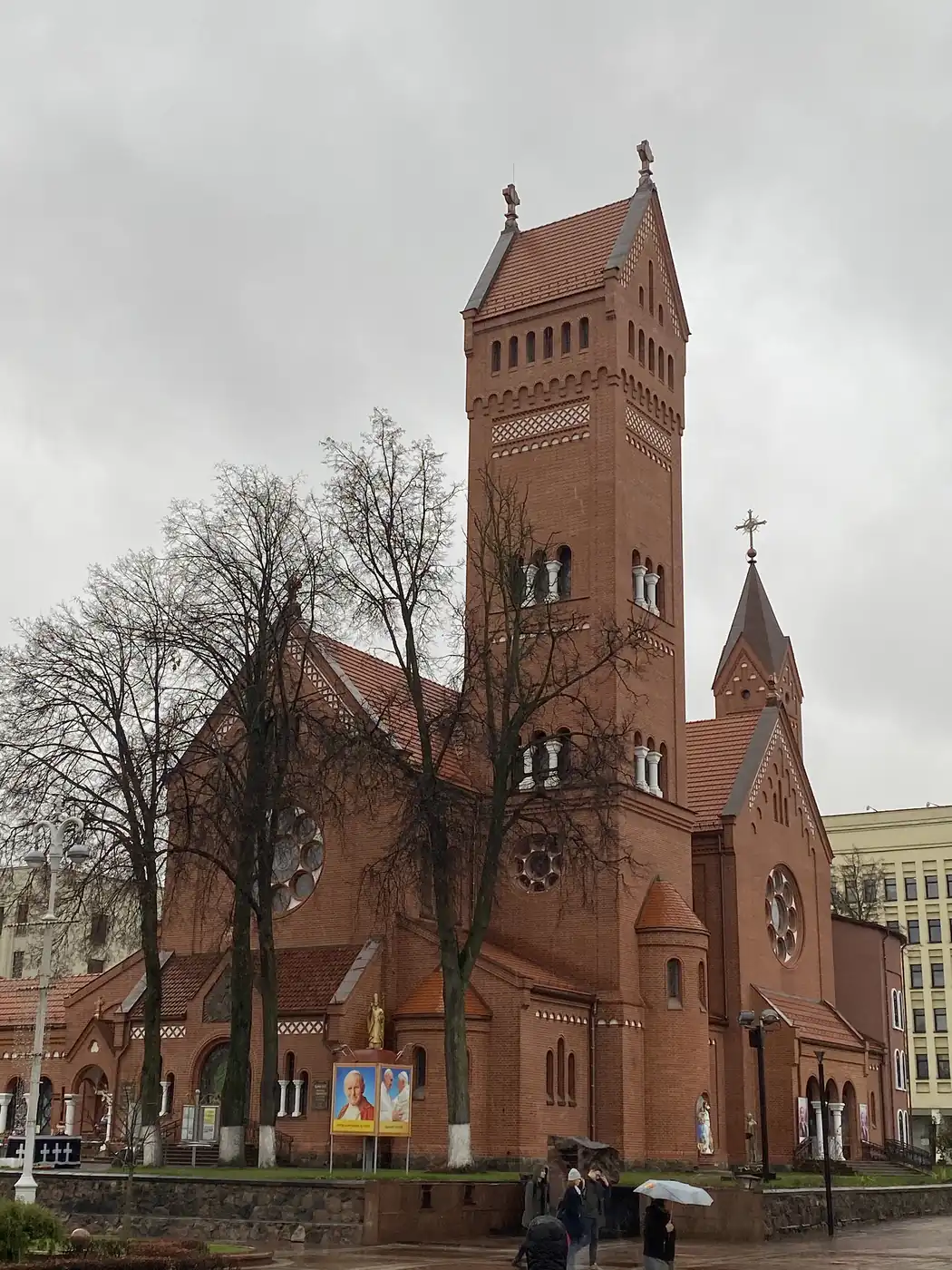
It has a sad story. A local landowner, Edward Woyniłłowicz, paid for it in memory of his two children, Simon and Helena, who had both died young. In Soviet times it was turned into a cinema. It is a church again now.
A short walk across the square, Lenin still stands in front of Government House.
What is the National Library?
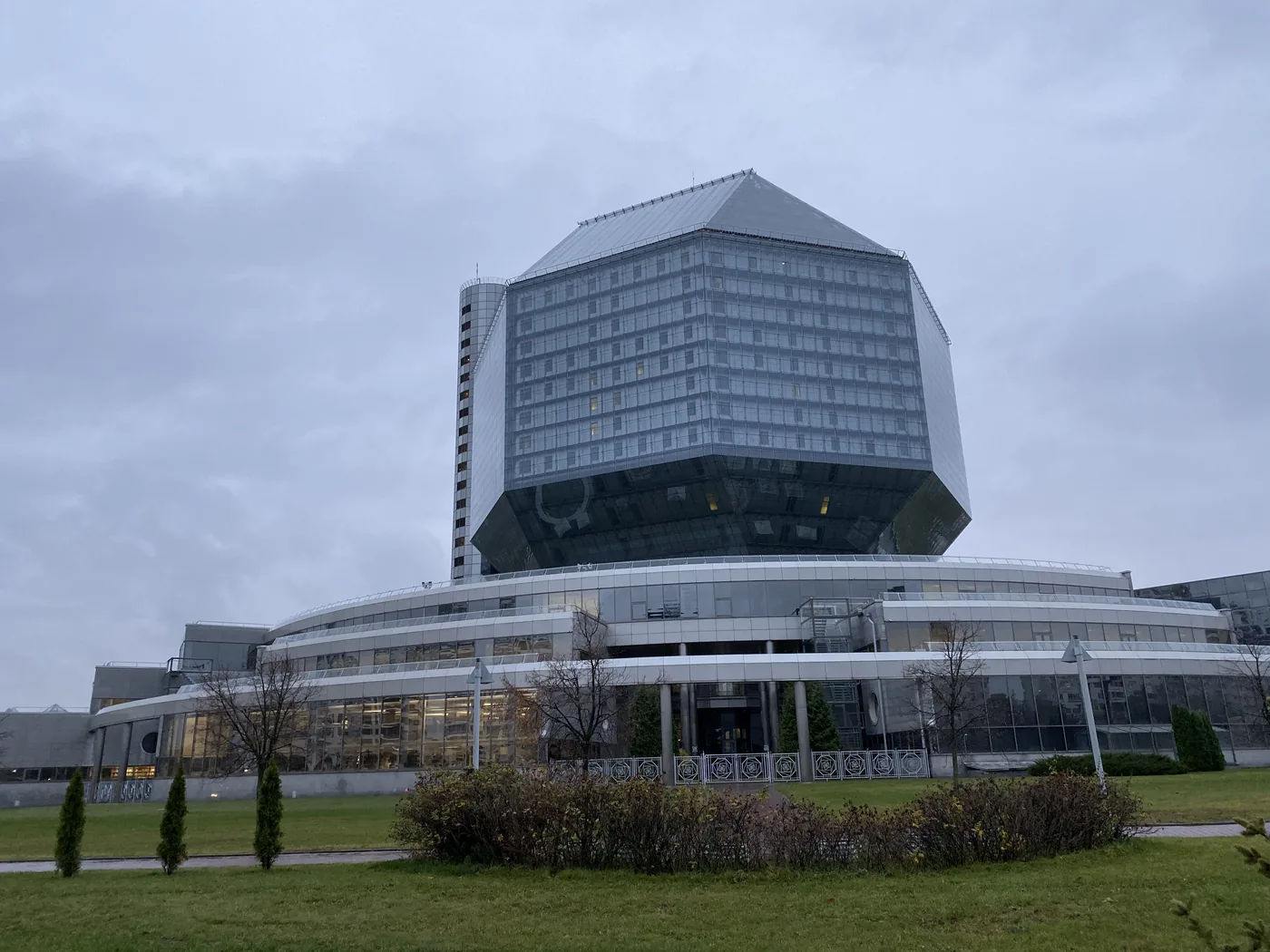
The strangest building in the city. It opened on 16 June 2006, and it is shaped like a giant cut diamond, a rhombicuboctahedron, about 73 metres tall.
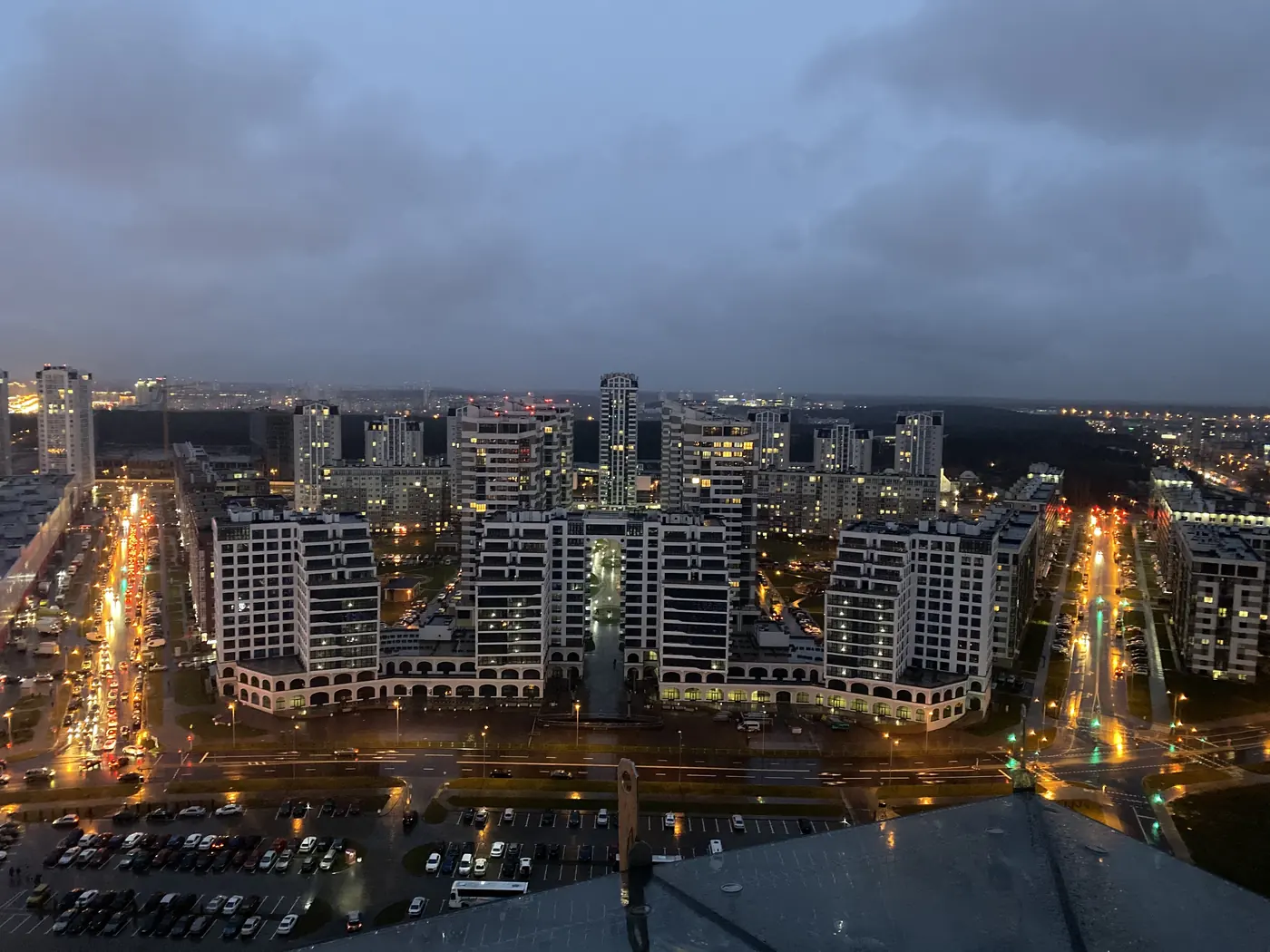
There is a viewing deck on the roof. We went up at about 17:20, just as the light was going, and by 17:40 the whole city was laid out below in the dusk, with the lights coming on along the avenues.
Then a ride on the metro, and borscht for dinner.

What is the Stalin Line?
A line of bunkers built along the old Soviet western border in the 1930s. The sign at the start of the walk dates it from 1928 to 1939. The stretch outside Minsk was opened as an open-air museum on 30 June 2005, for the 60th anniversary of the victory.
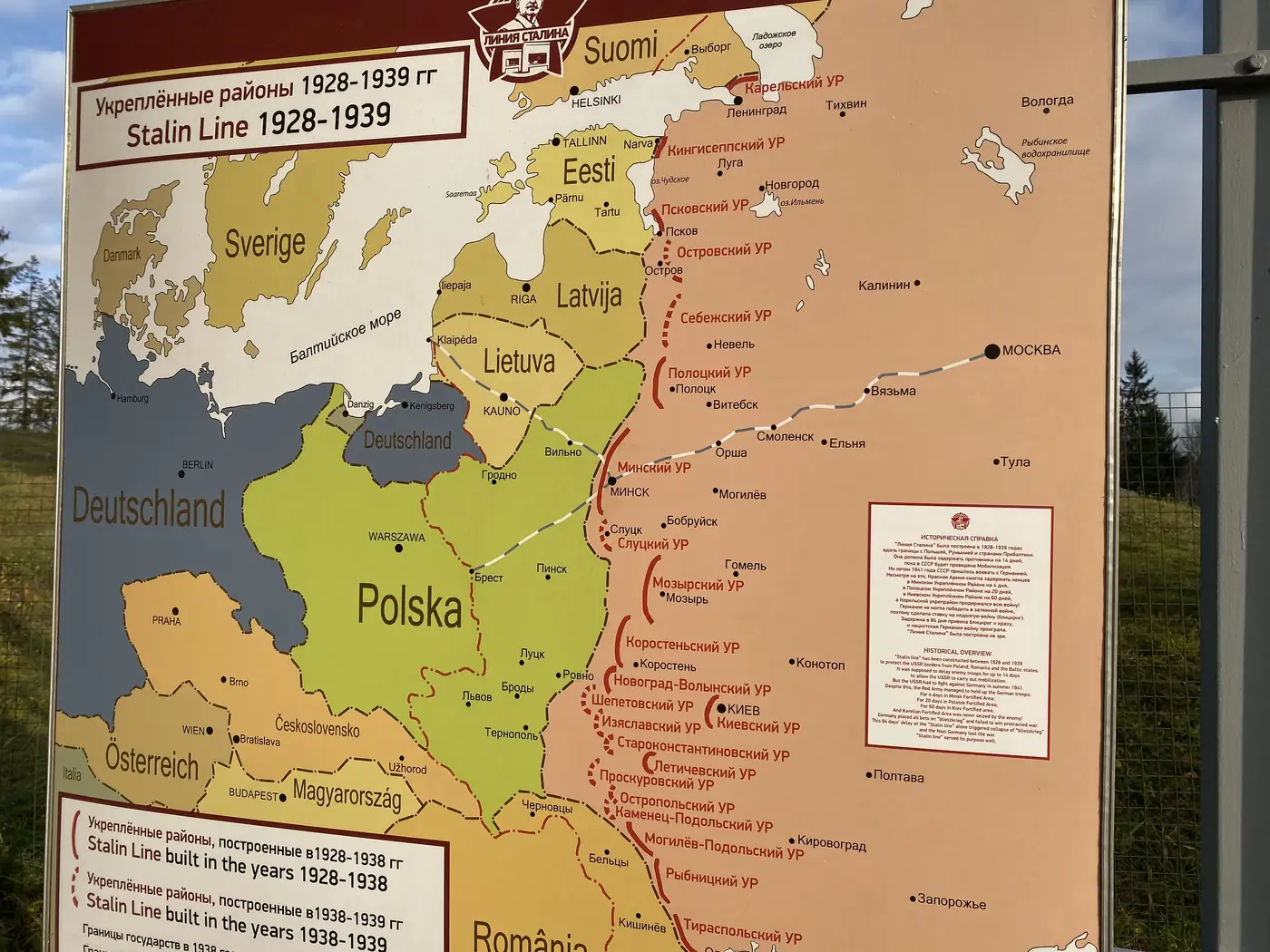
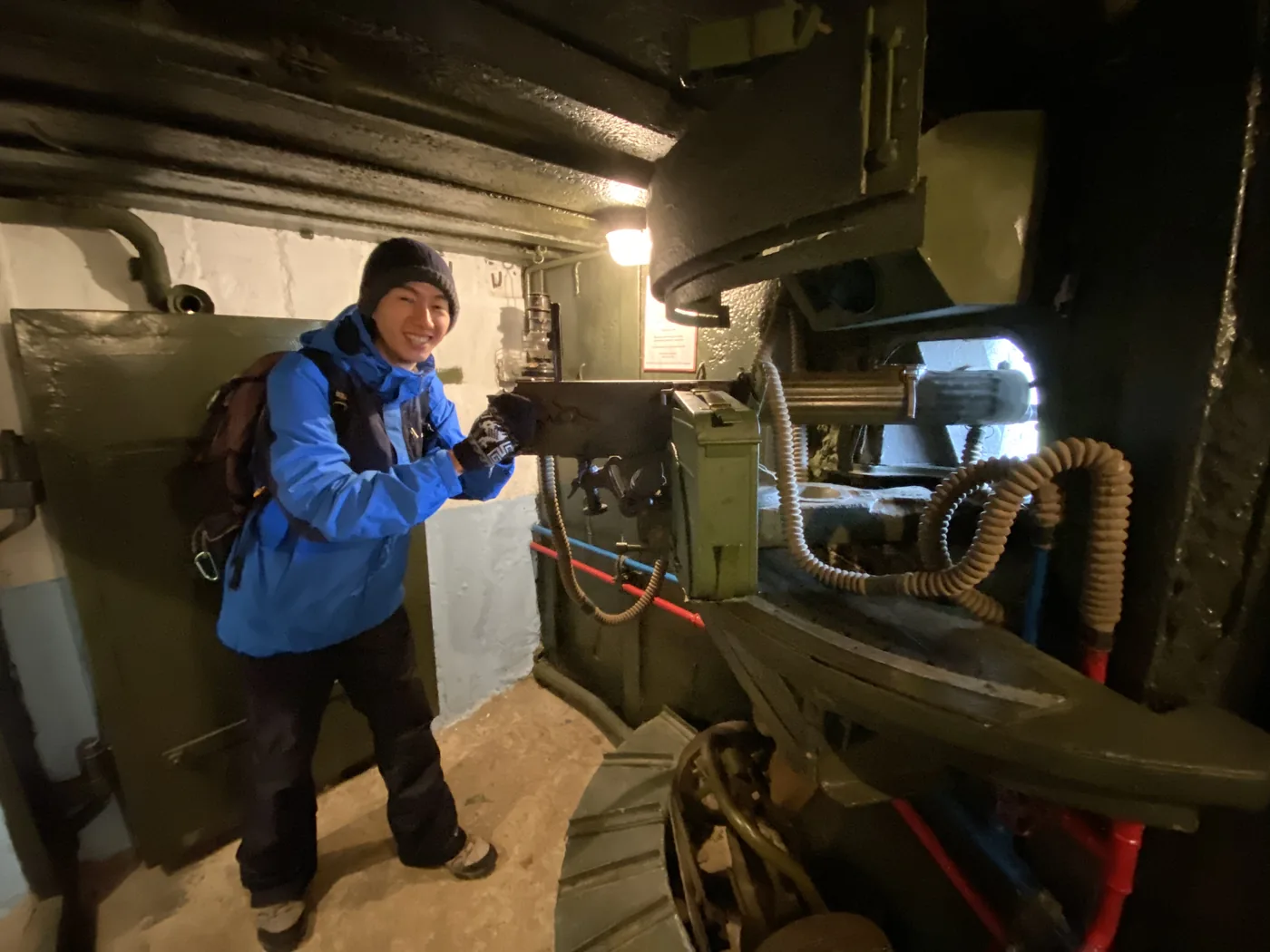
We spent the morning of 7 November there. You walk in under an arch and along a trail of concrete pillboxes, trenches and gun pits. I climbed into one of the bunkers and sat at the machine gun inside it.
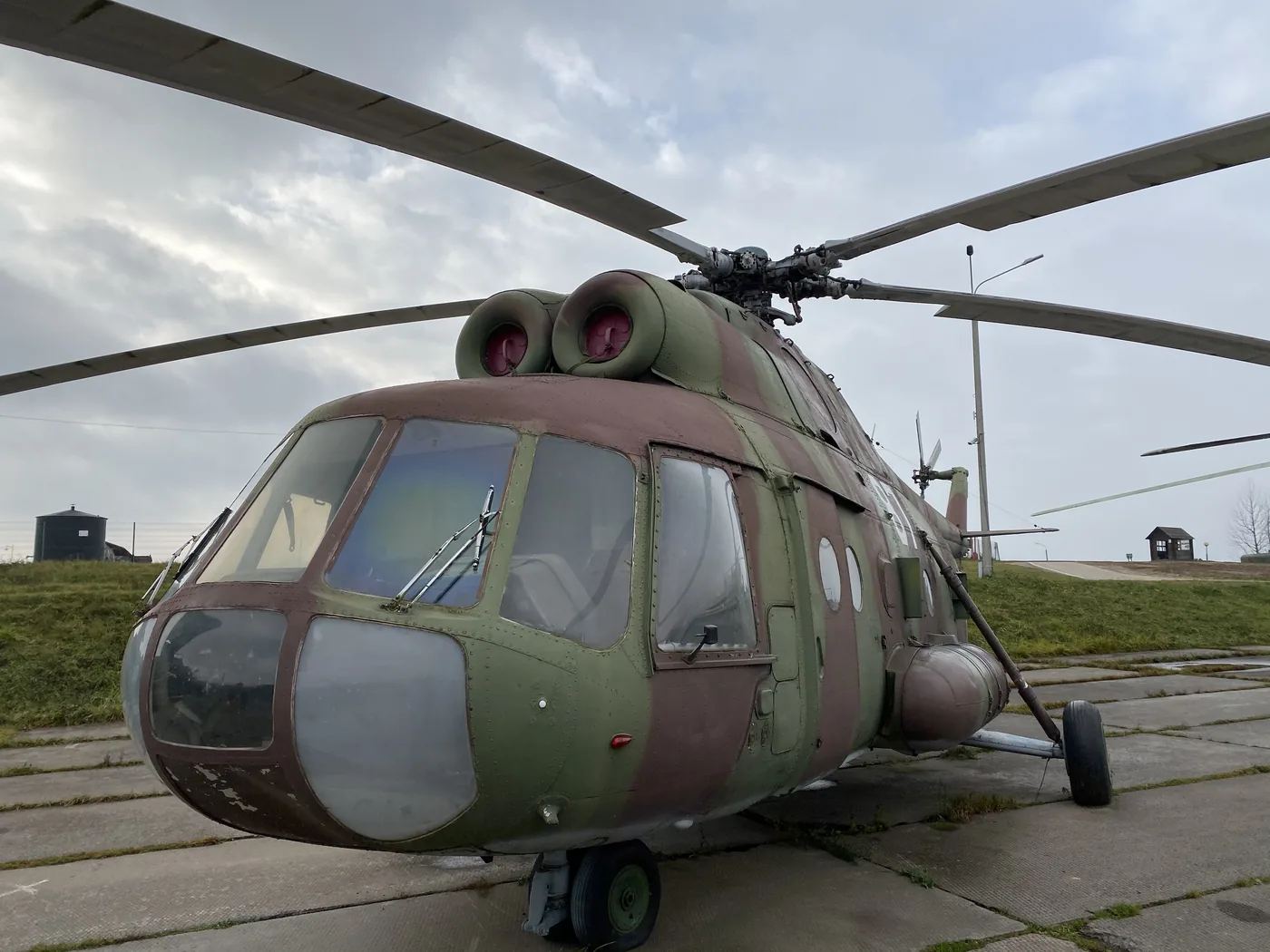
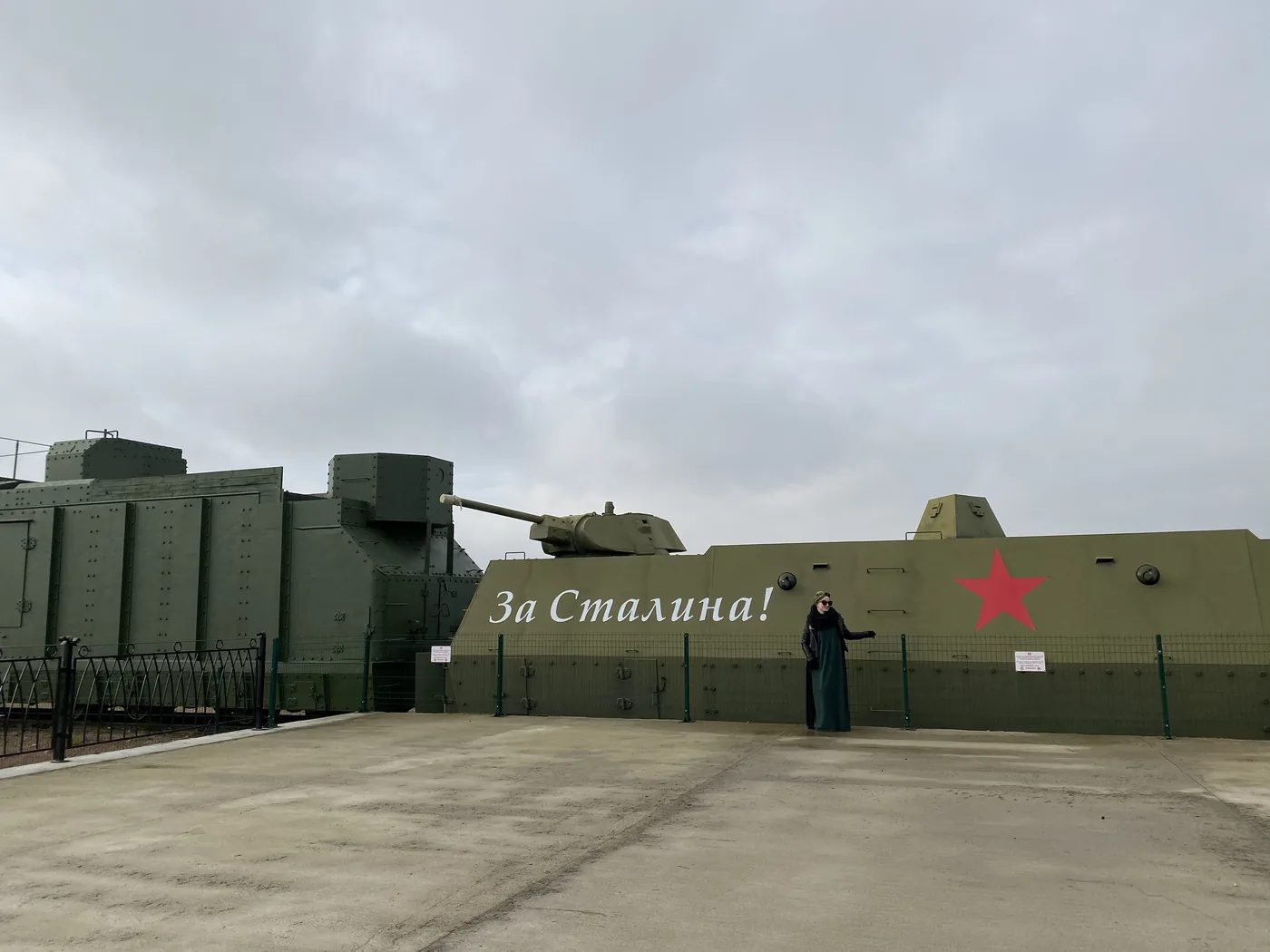
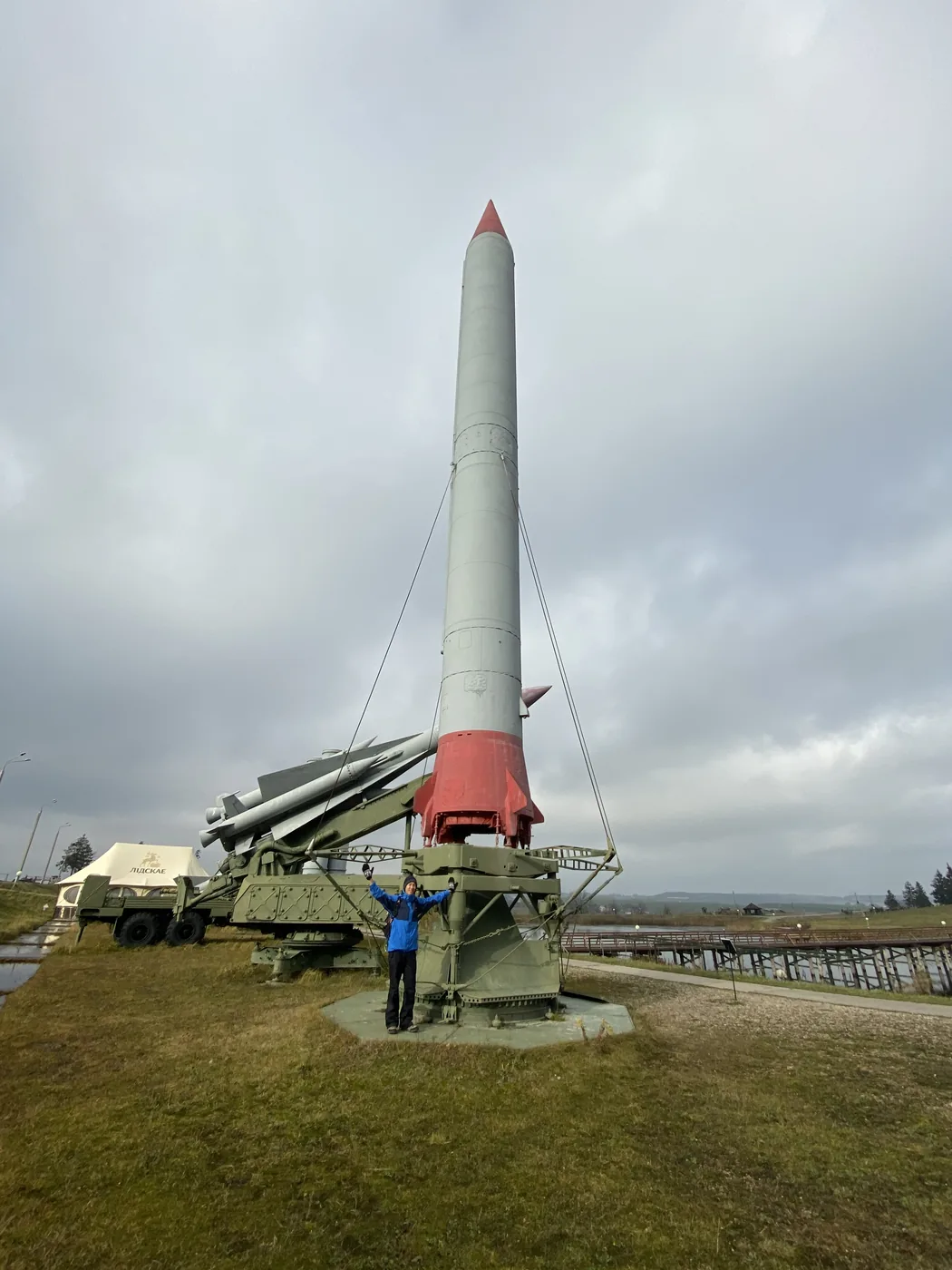
The rest is a field full of the Soviet military. A T-34 tank stands on a plinth. There are Mi-2 and Mi-8 helicopters, a Su-25 ground-attack jet, a hangar of tanks, and an armoured train with “За Сталина!”, “For Stalin!”, painted on its side. At the far end are the launch tubes of an S-300 air defence system and a white missile with a red tip.
Before we left, I stood behind one of the field guns, then put on ear defenders at the shooting range.
What happened at Khatyn?
Khatyn was a village about 50 km north-east of Minsk. On 22 March 1943, it was burned by the occupying forces, with its people locked inside a barn. 149 people were killed, 75 of them children under 16. Only 8 survived.
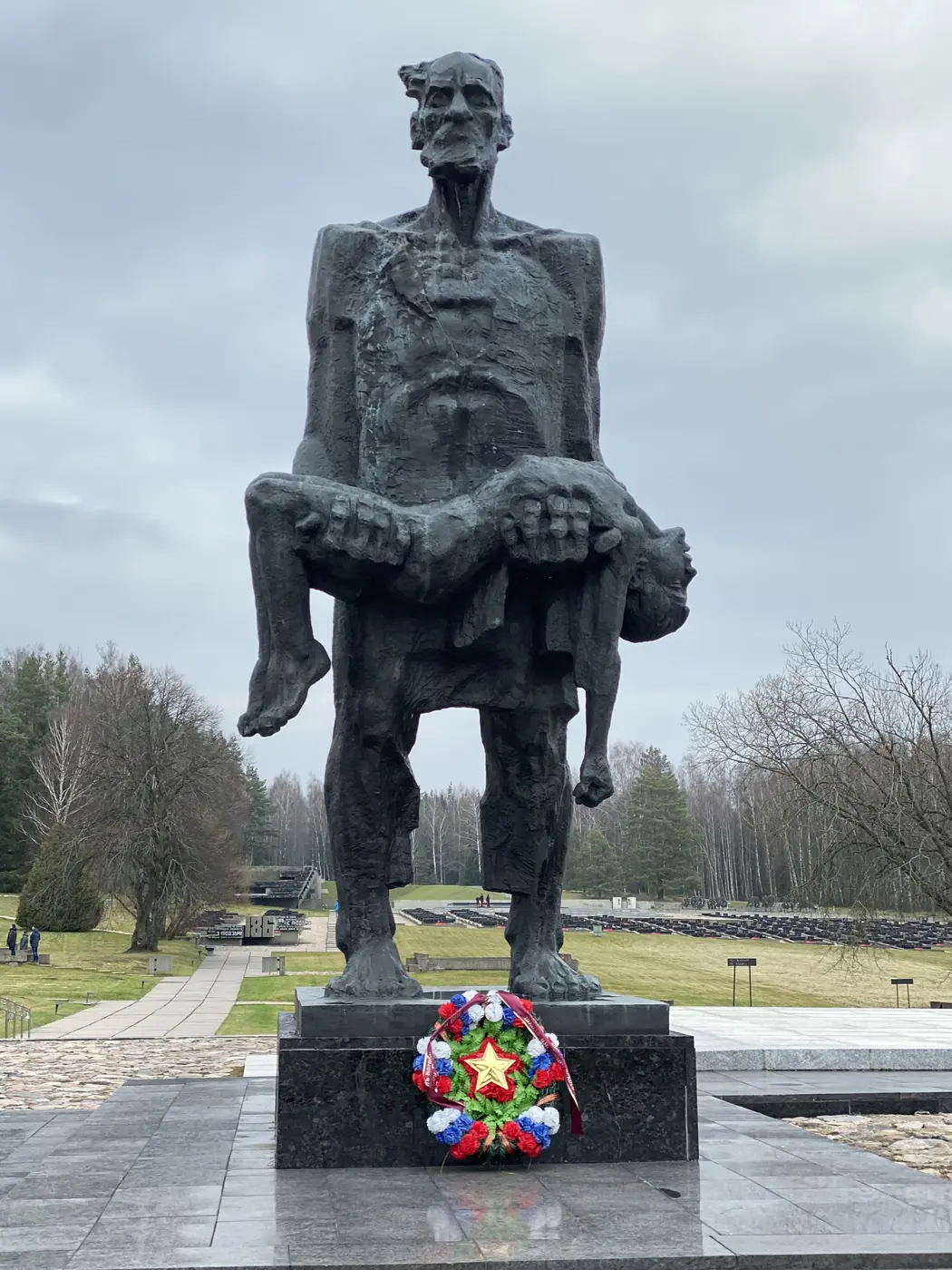
The village was never rebuilt. In 1969, it became a memorial. At the entrance stands the Unbowed Man, a bronze of Yuzif Kaminsky, one of the few survivors, carrying his dead son Adam in his arms. When we were there, there were red carnations at its feet.
Behind him, the outline of each house is marked out on the ground, and where each one stood there is now a tall grey chimney with a small bell on top, one for every family’s home. There were 26 houses.
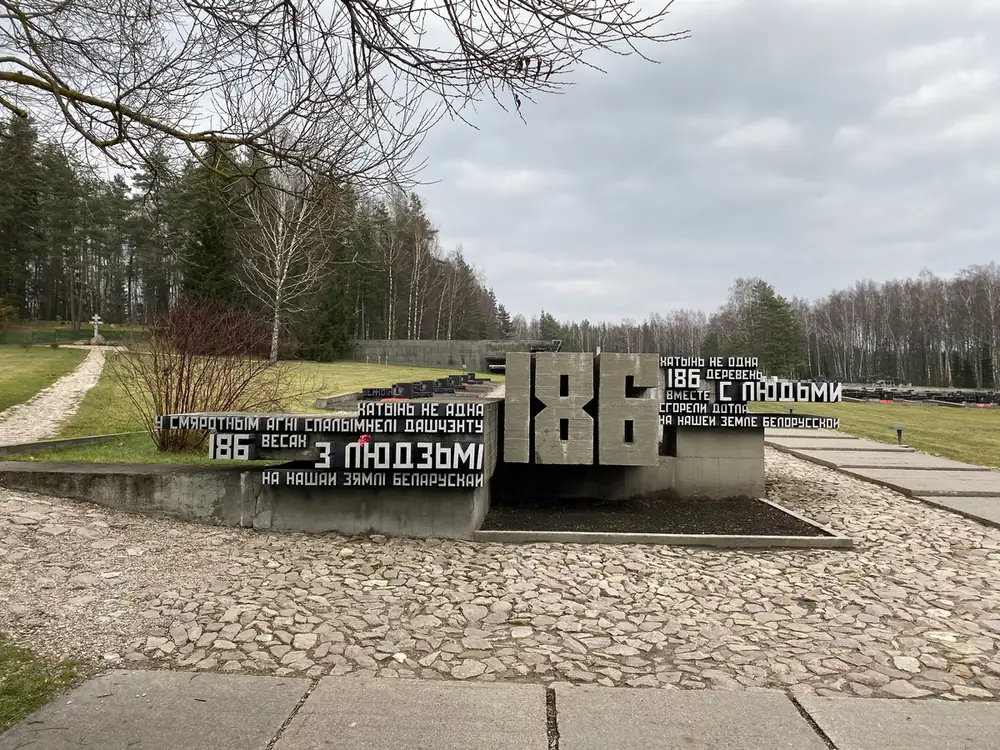
Beside the village is the Cemetery of Villages. It holds soil from 186 other villages in Belarus that were burned with their people in the war and never rebuilt, one urn for each.
How did I leave?
By air, at 22:40 that night. My first plan was the overnight train to Kyiv. Then I worked out that the visa-free entry only works if you fly in and out of Minsk airport, so I flew. Before the flight there was time for one more Belarusian dish: draniki, potato pancakes with sour cream.
How did the trading fit in?
The same way it always does, in about 15 minutes a day. In November, Minsk is 8 hours ahead of New York, so the US market opened at 17:30 local time, right as each day’s touring ended. I wrote up how that works, the watchlist, the alerts and the time zones, in how I trade while travelling.
Where does it fit in the trip?
Belarus was the first of 14 countries. Next came Ukraine, and Chernobyl and the nuclear missile base. The rest of the 5 weeks, all the way to Slovakia, is in Exploring Eastern Europe: 14 countries in 1 month. Every trip is on the travel log, and more photos are on Instagram, @iamrecneps.
Would you go for the castles or the Soviet bunkers first? Let me know in the comments.
Spencer Li
Want the daily routine? Enter your email for the free 15-Minute Swing Trader's Checklist.
Free 5-page PDF, then occasional trading emails. Education only, not financial advice. Unsubscribe anytime. Kit stores your email in the US: see our privacy policy.
Want to learn the full method? The Trading Mastery Program teaches the 4 strategies I have traded since 2011. It suits beginners and experienced traders.
Rather follow the trades as they happen? Daily Trading Signals is our Telegram channel: my trade ideas with entry, stop and exit, and every trade is public.
Questions about this post? Ask in the free Telegram channel →
Educational content only, not personalised financial advice. Trading carries risk, including loss of capital. Past performance is not indicative of future results. Synapse Trading is not licensed or regulated by MAS.

