

Is Insider Buying a Good Sign? What the Research Says, and How to Read a Filing
Want the daily routine? Get the free 15-Minute Swing Trader’s Checklist. Get it free →
Some insider purchases have carried real information. Most insider trades carry none, and the filing tells you which is which
Published: 17 October 2026 · Last updated: 17 October 2026 · By Spencer Li, CFTe
In one well-known study of US company insiders from 1975 to 1996, the shares that insiders bought went on to beat the market by “about 40 basis points per month”, which compounds to roughly 5% a year. The shares they sold did not underperform at all.
So yes, insider buying can be a good sign, but only a certain kind of buying. A director paying cash for shares on the open market is telling you something. A director receiving shares as part of their pay, exercising options, or buying through a plan set up months ago is mostly telling you about their pay package. And even the good kind is a reason to look closer, rather than a reason to buy.
In this post, I’m going to show you where these trades are disclosed in the US and in Singapore, what the research really found, and a simple three-part check: who bought, how they got the shares, and how much.
Where can you see what insiders are buying?
Both the US and Singapore make insiders report their trades within days, and both publish the reports for free.
In the US, the SEC counts officers, directors and anyone holding more than 10% of a company’s shares as insiders. Its investor bulletin is clear on the timing: “Form 4 must be filed within two business days following the transaction date.” The forms sit on the SEC’s EDGAR database, and free sites such as OpenInsider collect them into searchable tables.
In Singapore, the rule sits in the Securities and Futures Act. A director or chief executive must notify the company “within 2 business days” of a change in their interest in its shares. The company then has to announce it to the exchange “as soon as practicable and in any case, no later than the end of the business day following the day on which the corporation received the notice.” So a director’s purchase of an SGX stock usually shows up in the company’s announcements on the SGX website within a few working days. If you are new to the local market, our post on how SGX trading works covers the basics.
Does insider buying really predict stock returns?
On average, in the older data, open-market purchases did. Sales mostly did not.
The study I opened with, by Jeng, Metrick and Zeckhauser, found that “the purchase portfolio earns abnormal returns of about 40 basis points per month”, while “The sale portfolio does not earn abnormal returns.” It also found that only about one-sixth of that extra return arrived in the first five days after the trade. Most of it came later, after the filing was public, which is why ordinary investors care about this at all.
A later study by Cohen, Malloy and Pomorski split insiders into two groups. “Routine” insiders trade in the same month year after year, often for reasons like tax or a bonus date. “Opportunistic” insiders break their own pattern. The opportunistic trades “yields value-weight abnormal returns of 82 basis points per month”, while “the abnormal returns associated with routine traders are essentially zero.”
Here is the arithmetic, so you can see the size of it.
- 40 basis points a month: 1.004 to the power of 12 is about 1.049, so roughly 5% a year above the benchmark.
- 82 basis points a month: 1.0082 to the power of 12 is about 1.103, so roughly 10% a year.
Those are attractive numbers, but do note three things first. Both studies use data that is decades old, and research on market anomalies finds that about half of a published return tends to disappear once the paper is out and traders act on it (McLean and Pontiff, 2016). The figures are averages across hundreds of trades, before trading costs. And the effect has been strongest in smaller companies, where one person’s purchase is a bigger share of the company.
If you want a routine for turning a lead like this into a trade you can actually manage, our free 15-Minute Swing Trader’s Checklist walks through the questions to ask first. Get the free checklist →
Why do insider sales say so little?
Because insiders sell for many reasons, and most of them have nothing to do with the company’s prospects.
The SEC’s own bulletin says it plainly: “insiders may sell company securities for any number of reasons, including for liquidity and diversification purposes.” A founder selling to buy a house or pay a tax bill is doing what anyone with most of their money in one stock would do.
A purchase is different. There is really only one reason to take your own cash and put more of it into a company that already pays your salary. You think the shares are cheap.
How do you read an insider filing?
Ask three questions, and together they sort the useful filings from the noise.
Who bought? A director or a senior officer who sees the business every day carries more weight than a large outside shareholder. In the US, a fund that owns more than 10% also files Form 4, and its buying often reflects its own strategy rather than inside knowledge of the business.
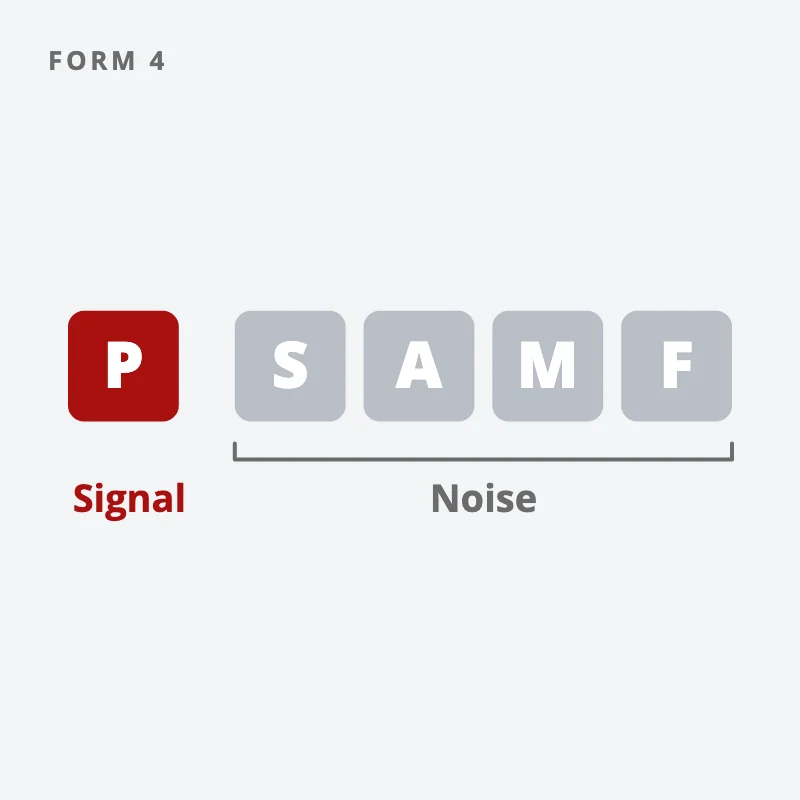
How did they get the shares? This is where most of the filings fall away. On a Form 4, each trade carries a one-letter code, and only one of them is an insider choosing to put cash in.
| Code or type | What it means | What it tells you |
| P | Open market or private purchase | The one that matters: the insider chose to buy with their own money |
| S | Open market or private sale | Little on its own: insiders sell for many reasons |
| A | Grant or award from the company | Nothing: it is part of their pay |
| M | Exercise of an option | Usually nothing: it turns pay into shares |
| F | Shares withheld to pay tax or the exercise price | Nothing: it is paperwork |
| 10b5-1 box ticked | The trade was set up in advance under a trading plan | Less: the decision was made months earlier |
Since April 2023, a US Form 4 also shows a checkbox when the trade was made under a pre-scheduled 10b5-1 plan. Directors and officers usually have to wait at least 90 days after setting up such a plan before it can trade. A ticked box means the decision is old news. In Singapore filings, read the description of the transaction for the same clue: a market purchase is the case you are looking for.
How much did they buy? Compare the size of the purchase with the insider’s existing holding and their likely pay. A chief executive buying a year’s salary worth of shares is a statement. A director adding a token amount after a bad quarter may be a gesture. Several insiders buying in the same few weeks is stronger than one, although one large online test of over 4,000 purchases found that the “several at once” bonus was not reliable on its own.
What are the traps with following insider buying?
The biggest trap is treating a filing as a buy signal with a date on it.
A trader online tested insider purchases as a way to predict the next earnings report, and concluded: “Insider buying was wrong 79% of the time.” It sounds damning. But a reply in the same thread made the better point: “Insider buying is historically a 12–24 month signal, not a next-quarter earnings predictor.” Insiders are only allowed to trade in certain windows, usually just after results, so their purchases reflect what they knew last quarter. Our post on holding stocks through earnings explains why a single report is a coin toss for anyone outside the company.
That test used only 19 names, far too few to settle anything, but it teaches the right lesson. An insider purchase is a slow, patient vote of confidence in the business. It says nothing about next week’s price, and it does not tell you where to get in or where you are wrong.
The other trap is the story. Once you know the chairman bought, every chart looks bullish, which is the narrative fallacy at work.
Should you use insider buying in your own trading?
The safest way to use an insider purchase is as a reason to look, never a reason to buy.
A good filing earns a stock a place on the watchlist. From there, it has to pass the same tests as any other idea: a trend you can see, a clear level to trade from, and a stop that keeps the loss small if the insider turns out to be wrong. Insiders are sometimes wrong, and they can wait years for their view to play out. Our guide on how to find stocks to swing trade shows how that first cut of a watchlist can work.
So, the last time you saw a headline about an insider buying, did you check the code? Was it cash on the open market, or a grant dressed up as news? And was the stock already in a trend you would trade anyway? For more on finding and judging individual shares, see the guide to stocks and CFDs trading.
FAQ
Is insider buying a good sign?
It can be. Open-market purchases by directors and officers beat the market on average in past studies, while sales, grants and option exercises mostly did not. Treat it as a reason to research the stock, rather than a reason to buy it.
Where can I see insider buying for US stocks?
On the SEC’s EDGAR database, where insiders file Form 4 within two business days of a trade. Free sites such as OpenInsider collect these filings into searchable lists.
How do I see director dealings for SGX stocks?
A Singapore-listed company must announce a director’s change in shareholding to the exchange by the end of the business day after it is notified. The announcements appear in the company announcements section of the SGX website.
Is insider selling a bad sign?
Usually not on its own. The SEC notes that insiders sell for many reasons, including liquidity and diversification, and studies found that the stocks insiders sold did not underperform.
Is it legal for insiders to buy their own company’s shares?
Yes, when they trade within the rules and report the trade. Trading on inside information that the public does not have is illegal, which is why insiders usually trade only in open windows after results.
Go deeper
An insider purchase is a lead, and a lead still needs a plan. The free 15-Minute Swing Trader’s Checklist has the daily routine, the questions to ask before every trade, and the five rules that protect your account.
About the author. Spencer Li is The 15-Minute Trader and the founder of Synapse Trading. He is a Certified Financial Technician (CFTe) with 15+ years of trading, run from 70+ countries. He holds a B.Acc and B.BM from SMU. Every trade he takes is public, dated, losses left in. He teaches low-risk swing trading in 15 minutes a day, one system for any market.
Educational content only, not personalised financial advice. Trading carries risk, including loss of capital. Past performance is not indicative of future results. Synapse Trading is not licensed or regulated by MAS.
Want the daily routine? Enter your email for the free 15-Minute Swing Trader's Checklist.
Free 5-page PDF, then occasional trading emails. Education only, not financial advice. Unsubscribe anytime. Kit stores your email in the US: see our privacy policy.
Want to learn the full method? The Trading Mastery Program teaches the 4 strategies I have traded since 2011. It suits beginners and experienced traders.
Rather follow the trades as they happen? Daily Trading Signals is our Telegram channel: my trade ideas with entry, stop and exit, and every trade is public.
Questions about this post? Ask in the free Telegram channel →
Educational content only, not personalised financial advice. Trading carries risk, including loss of capital. Past performance is not indicative of future results. Synapse Trading is not licensed or regulated by MAS.

