

Azerbaijan, Georgia and Armenia: 19 Days Across the Caucasus by Road
Want the daily routine? Get the free 15-Minute Swing Trader’s Checklist. Get it free →
In June 2025, I spent 19 days crossing three countries in the Caucasus: Azerbaijan, Georgia and Armenia.
We flew into Baku on 9 June, crossed into Georgia, then into Armenia, and flew out of Yerevan on 27 June. A private car and a local driver-guide took us the whole way, with a new driver waiting at each border. This is the route, from my photos.
Why the Caucasus?
Three small countries, three alphabets and three faiths, wedged between Russia, Turkey and Iran. Georgia claims about 8,000 years of winemaking. Armenia is held to be the first country to adopt Christianity as its state religion, in 301 AD. Azerbaijan has a hillside that burns on gas seeping out of the rock.
Armenia also sat at number 1 on my own list of places to go. Georgia was on it too.
So you might be thinking, how do you even get between them? You go the long way round. The border between Azerbaijan and Armenia is closed, so the route runs through Georgia, which is why our route went Baku, Tbilisi, Yerevan.
What does Baku look like?
Baku was our first 4 nights. It is a city of two halves.
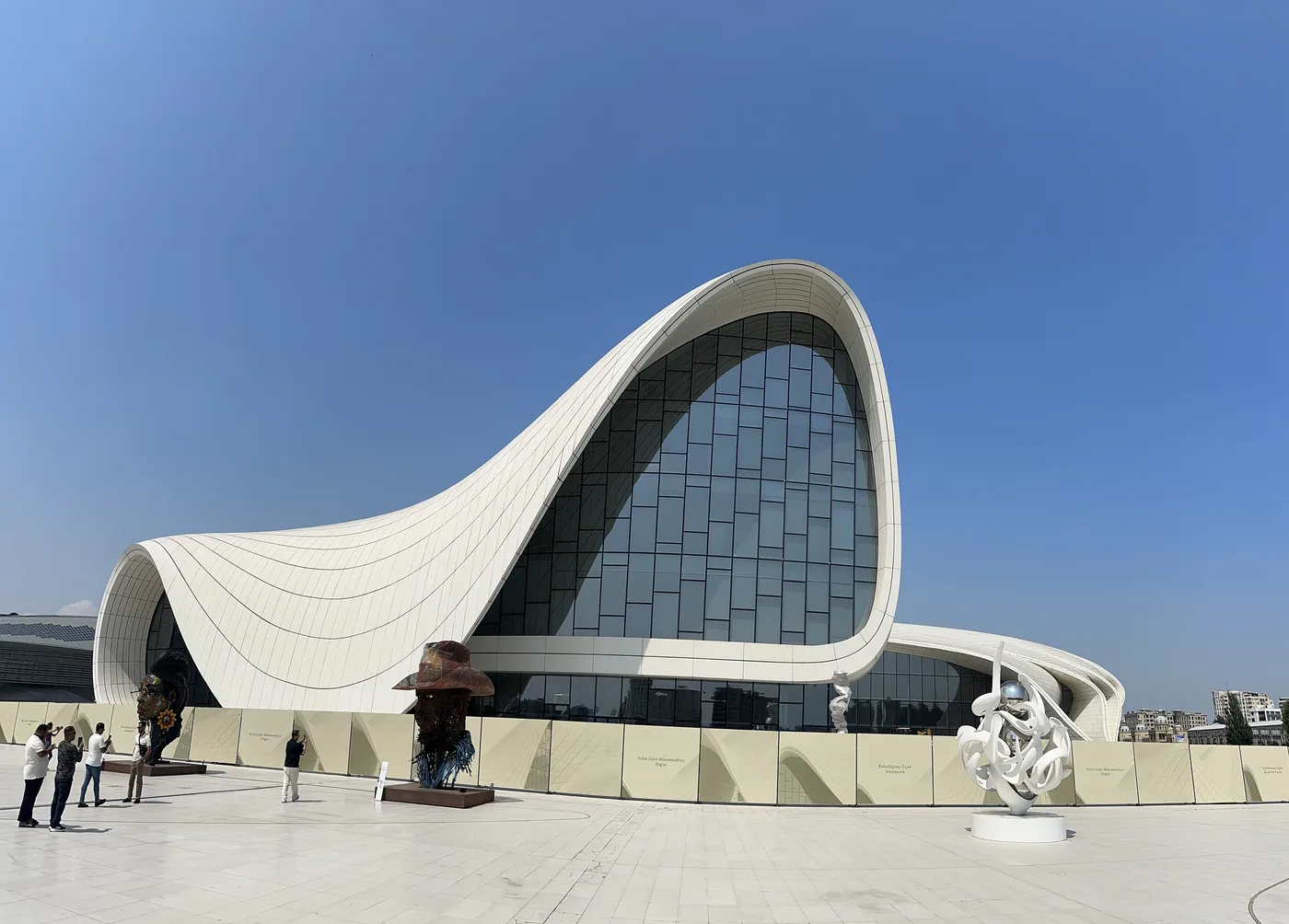
The new half is built on oil money. The Heydar Aliyev Center, designed by Zaha Hadid, is one long white curve with no straight edge on it. From Highland Park at sunset you see the bay below and the three Flame Towers right behind you. They light up at night.
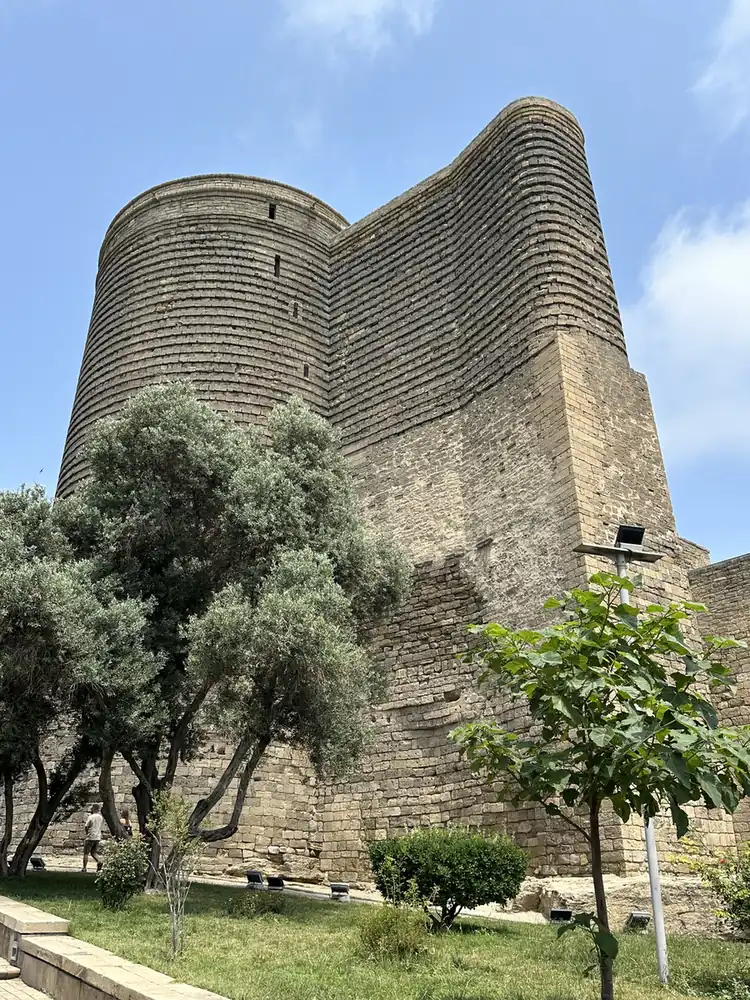
The old half is the walled Old City, a UNESCO site of narrow lanes, with the Maiden Tower at its centre. Tucked into those lanes is a museum of miniature books, with a Guinness certificate on the wall. On the last evening we took a boat out on the bay.
Why is Azerbaijan called the land of fire?
Day 4 was out of the city.
At Gobustan, the rocks are covered in carvings of people and animals, made thousands of years ago. Then we rode out in an old car to the mud volcanoes. They are small grey cones in a flat field. Wet grey mud runs down their sides, and the ground around them dries into a cracked crust.
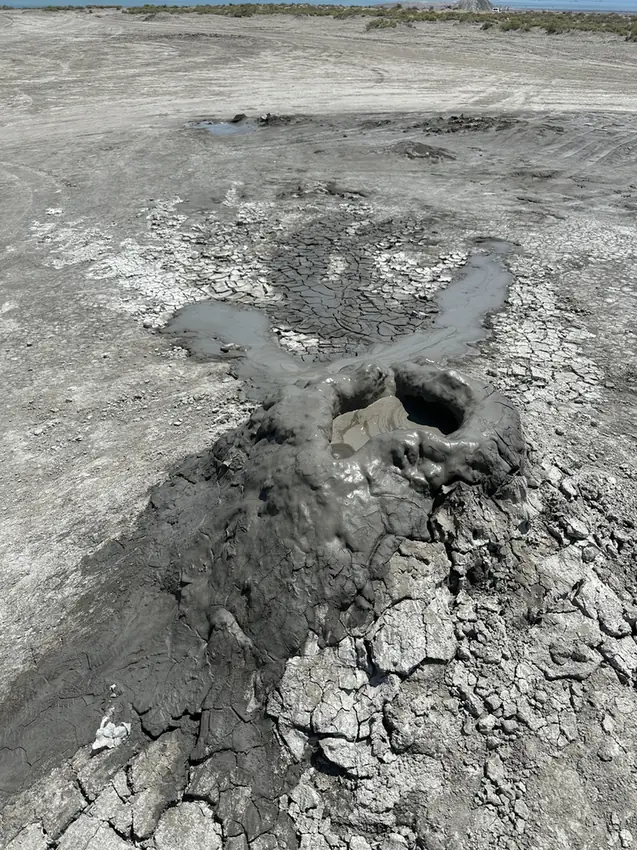
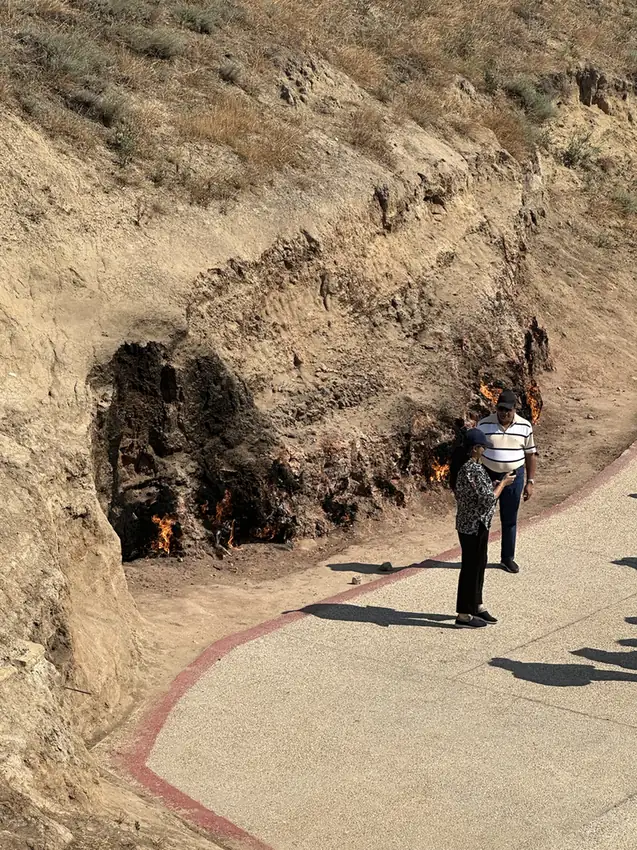
Then the fire. At Yanar Dag, a hillside burns on natural gas seeping from the rock, with flames licking out along the base of a low cliff. At the Ateshgah fire temple nearby, worshippers once kept a flame going for the same reason.
What is Sheki like?
On day 5 we drove north-west into the hills, stopping at waterfalls along the way and then at Nohur Lake near Gabala, where a row of boats was tied up along the water’s edge.
Sheki is an old Silk Road town in the foothills of the Caucasus. The Palace of the Sheki Khans is covered in tiles and painted panels, and its windows are shebeke: small pieces of coloured glass held in a wooden frame without glue or nails. Down the road is an old caravanserai, where traders on the Silk Road once stopped for the night, and in the village of Kish there is a small stone church said to be among the oldest in the Caucasus.
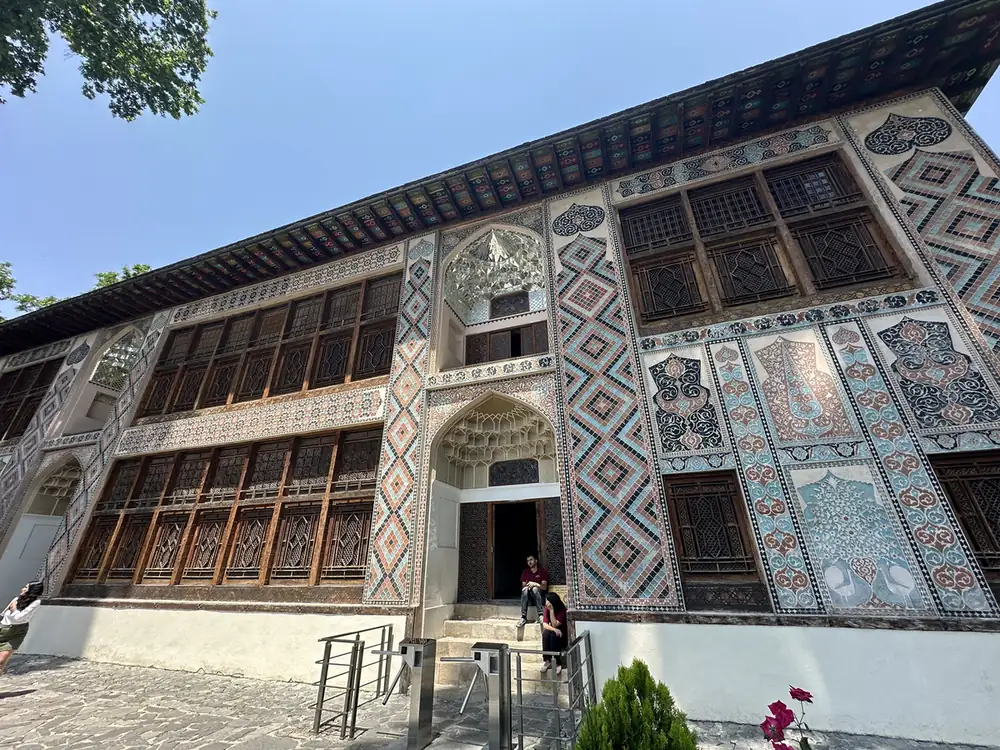
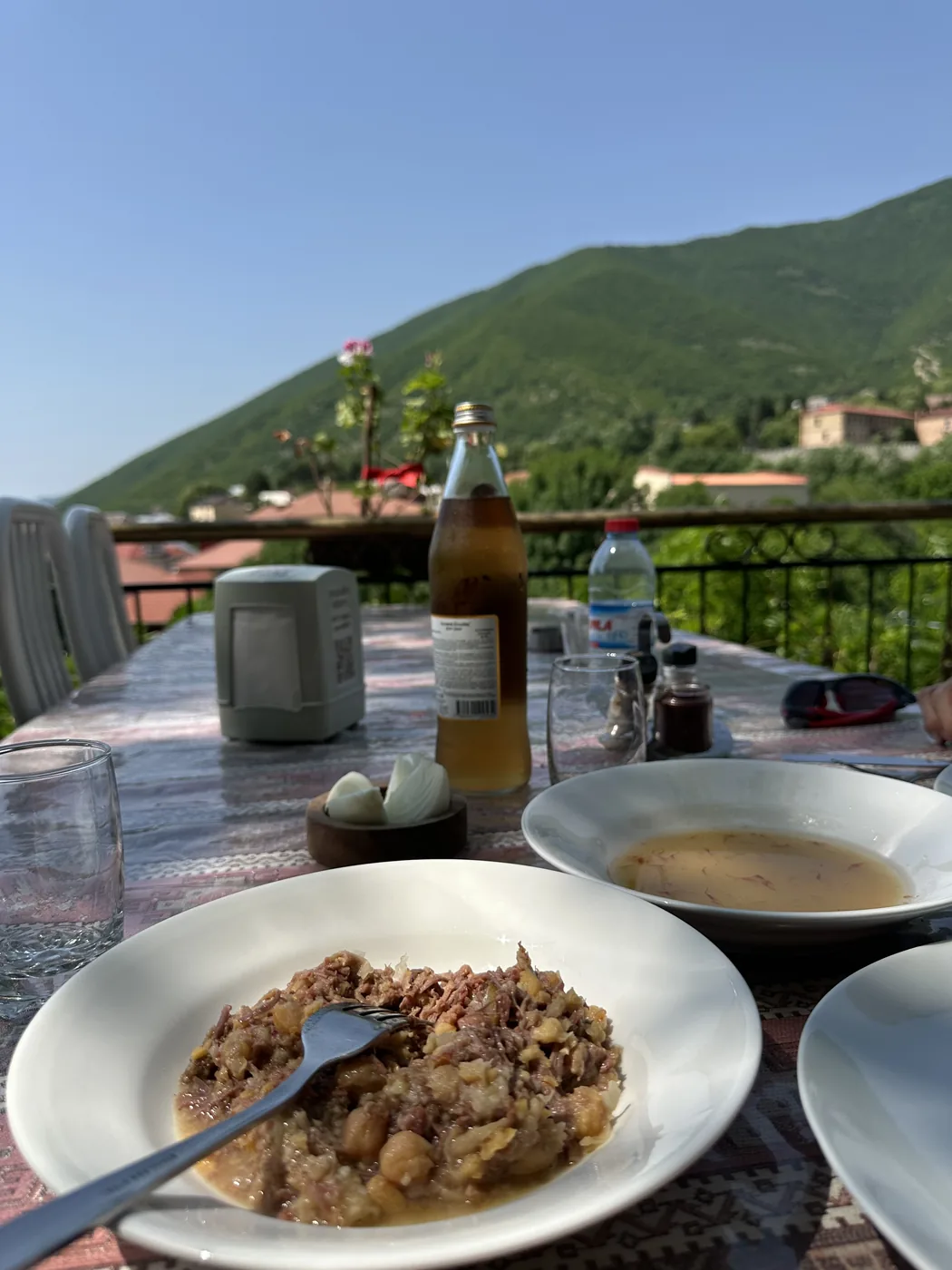
Lunch was Sheki piti, a lamb and chickpea stew. The broth came in its own bowl, apart from the meat and chickpeas.
Is the wine in Georgia really 8,000 years old?
We crossed into Georgia at Lagodekhi on day 7 and went up to Sighnaghi, a hilltop town that calls itself the “City of Love”. It rained most of the afternoon. The town walls and their gate towers still run round the hill.
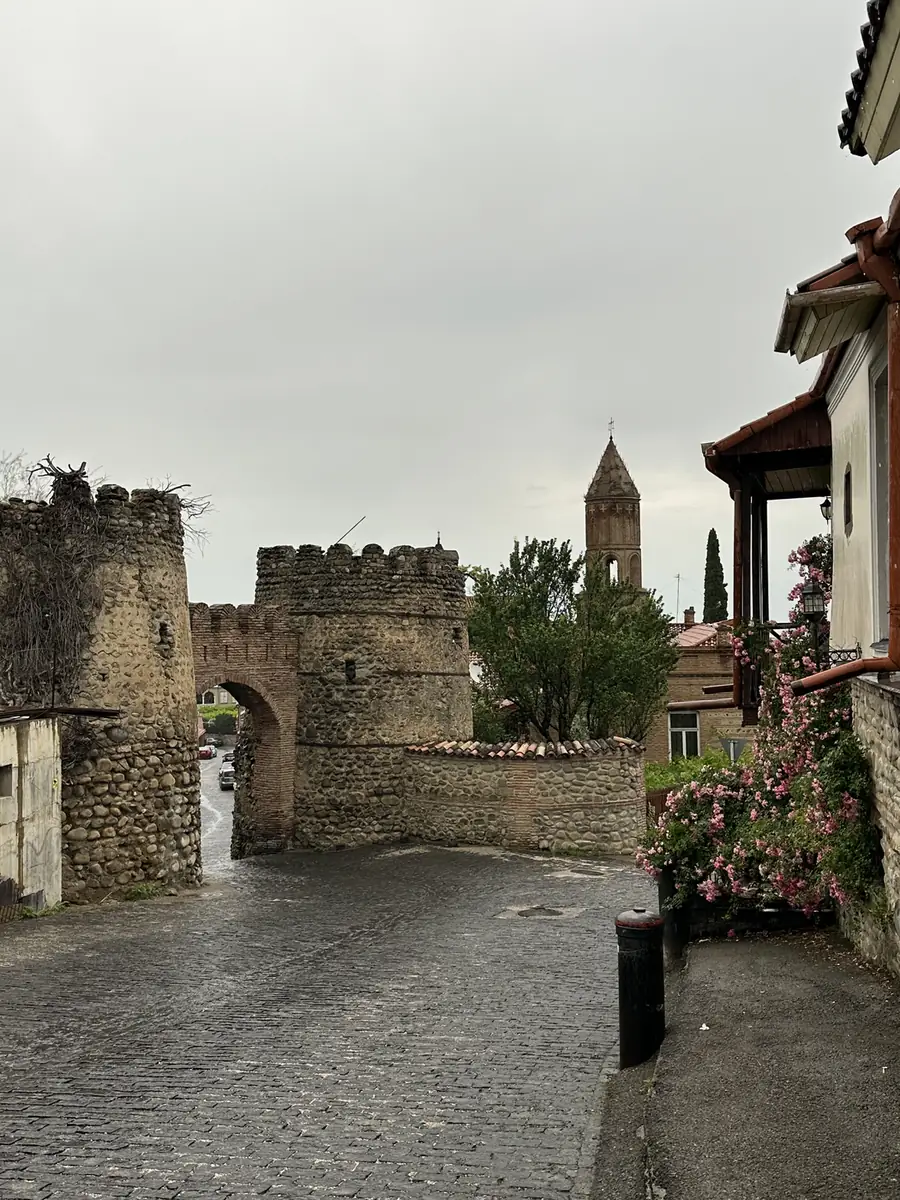
The next day was Kakheti, the wine region, starting at the old Tsinandali estate.
Georgian wine is made in a qvevri, a huge clay jar buried in the ground, and the method is on UNESCO’s list of intangible heritage. At a winery in Kakheti we tasted a Saperavi red made in qvevri, and an amber dry white from the Khikhvi grape, made the same way. The last glass was a fortified wine, which the menu said was made from more than 300 grape varieties from the winery’s own collection vineyard.
That night we were in Tbilisi, looking down on the city lights from Mtatsminda, the hill above it.
What do you see in Tbilisi?
Tbilisi’s old town is a jumble of carved wooden balconies, hanging over the street. Down by the river, the Peace Bridge is a curved canopy of steel and glass, Metekhi church sits on the cliff above the water, and a cable car runs up over the old town to the fortress.
On the way back down, a stall was selling churchkhela, strings of walnuts dipped again and again in thickened grape juice until they look like candles.
What is on the Georgian Military Road?
The road north from Tbilisi to Russia is the Georgian Military Road, and it is lined with sights.
Jvari monastery sits on a hill above Mtskheta, where two rivers meet. Further up, Ananuri is a fortress and church on the edge of a reservoir. Higher still, near Gudauri, the Russia–Georgia Friendship Monument is a big curved arch of painted tiles on the edge of a drop.
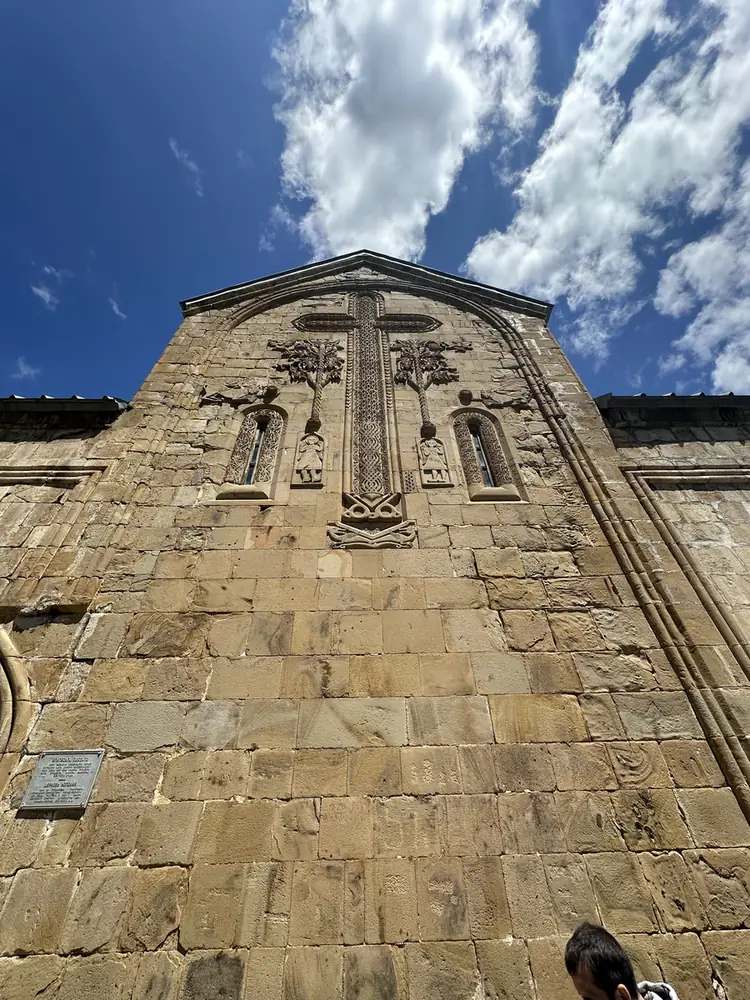
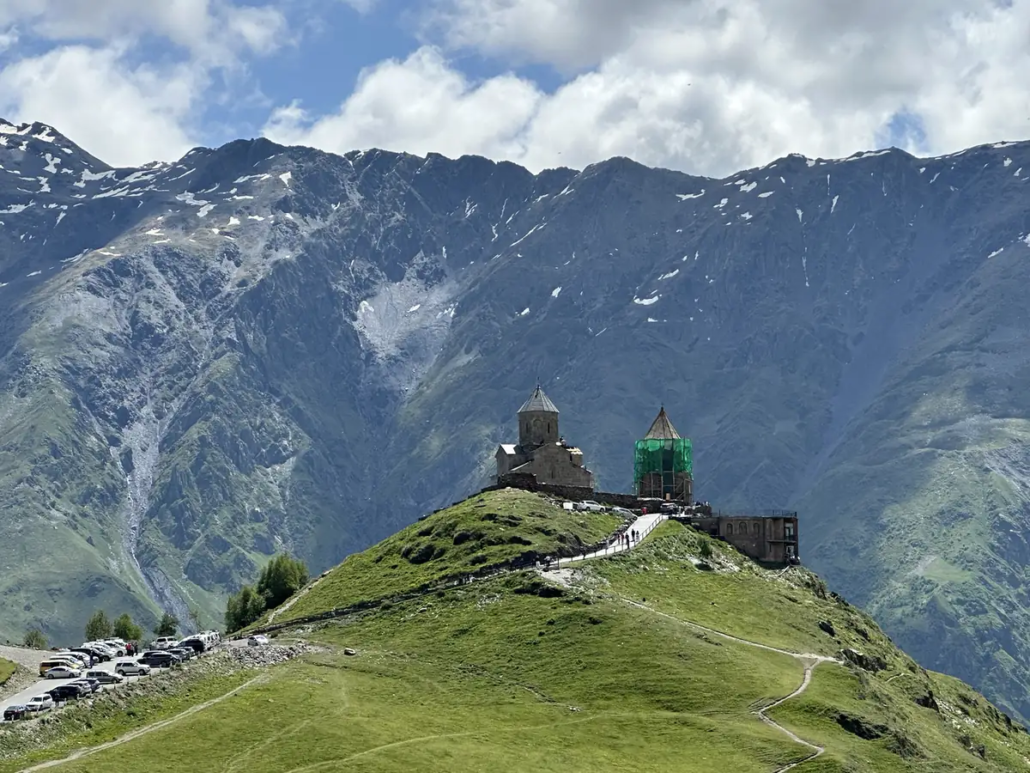
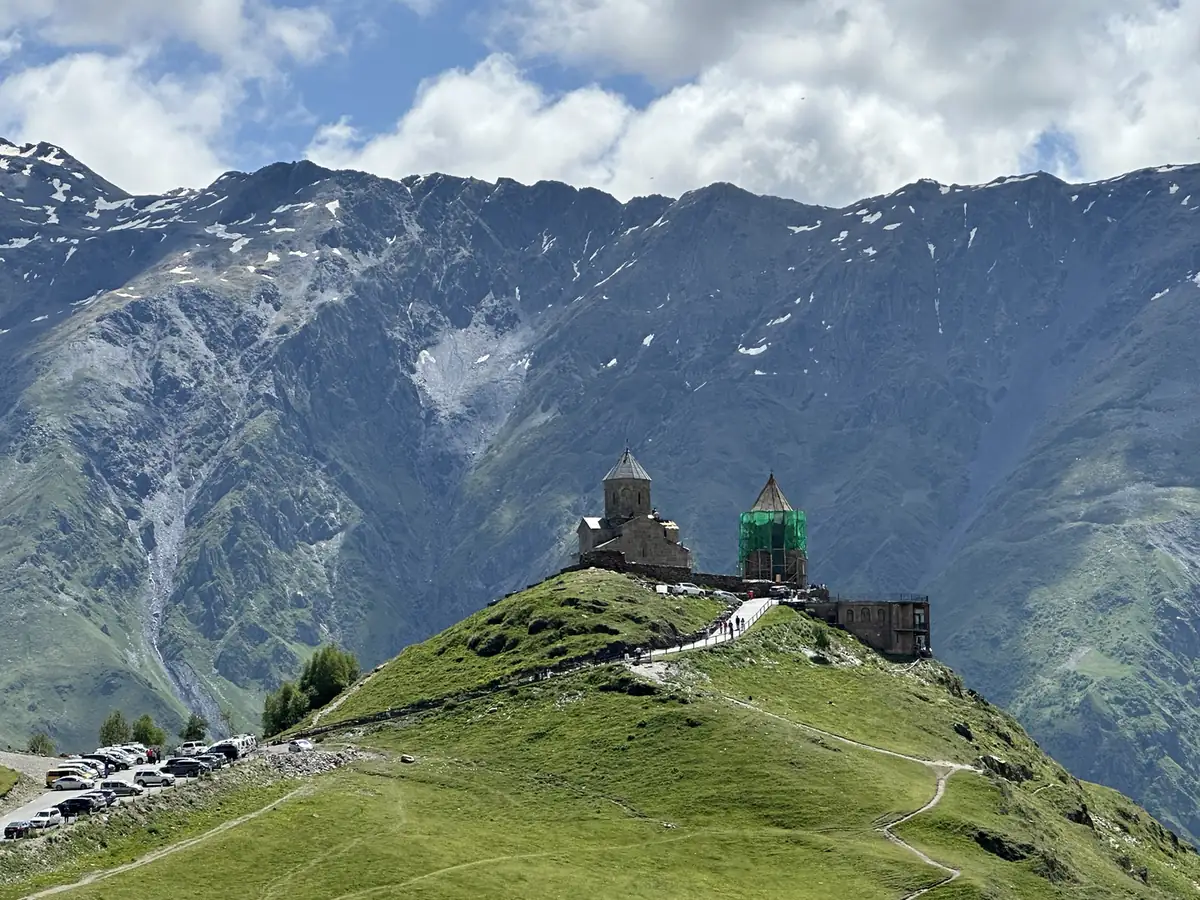
Most visitors stop at Kazbegi. The Gergeti Trinity Church sits on a ridge at about 2,170 metres, with the mountains behind it. On our last afternoon there, Mount Kazbek was clear, snow to the summit, right above the town.
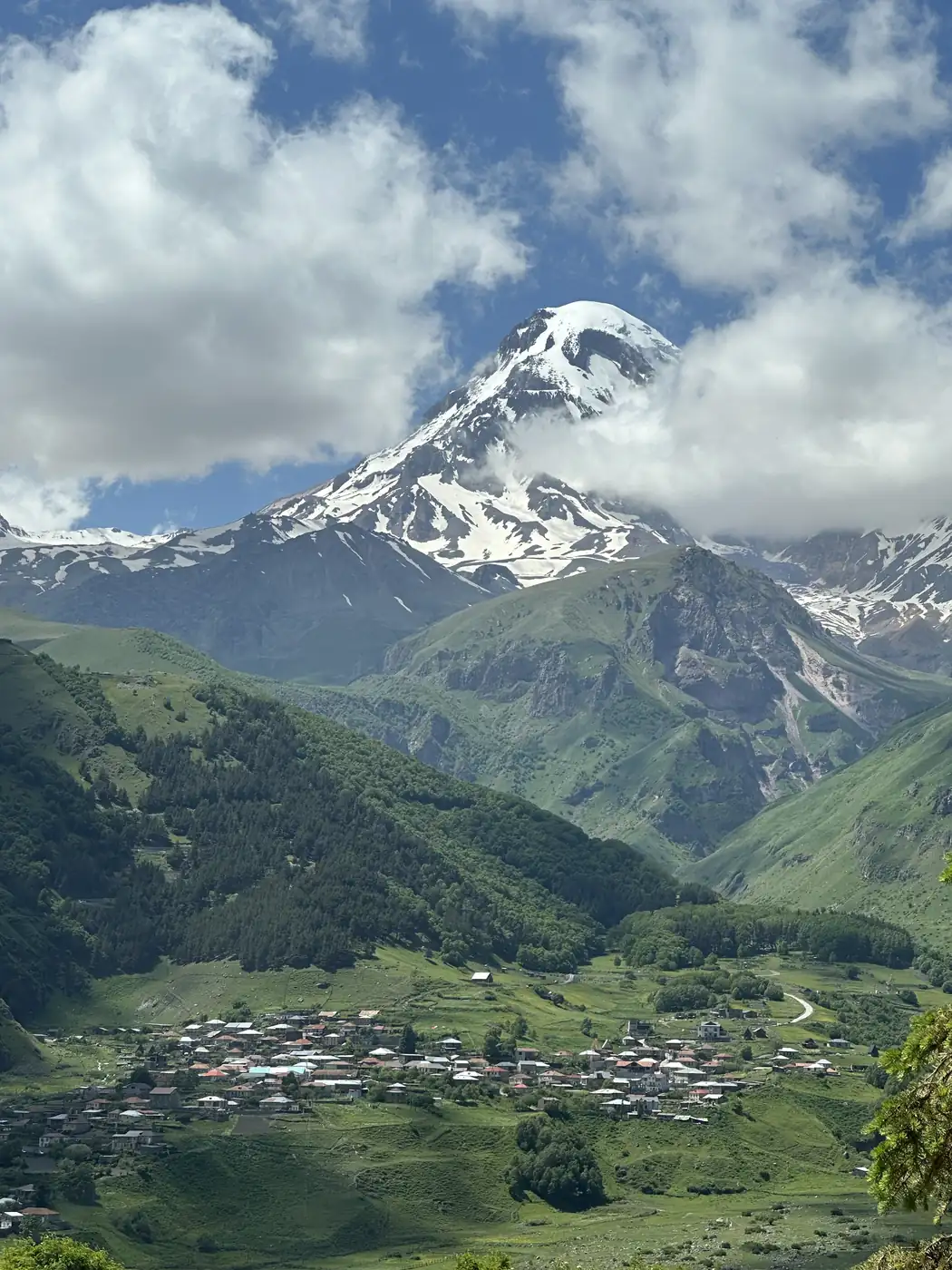
Why is everything in Armenia carved into the rock?
We crossed into Armenia at Sadakhlo on day 13 and went south through the Debed valley, past its old stone monasteries, to Lake Sevan. The lake sits at about 1,900 metres. Sevanavank, a pair of dark stone churches, stands on the peninsula above it.
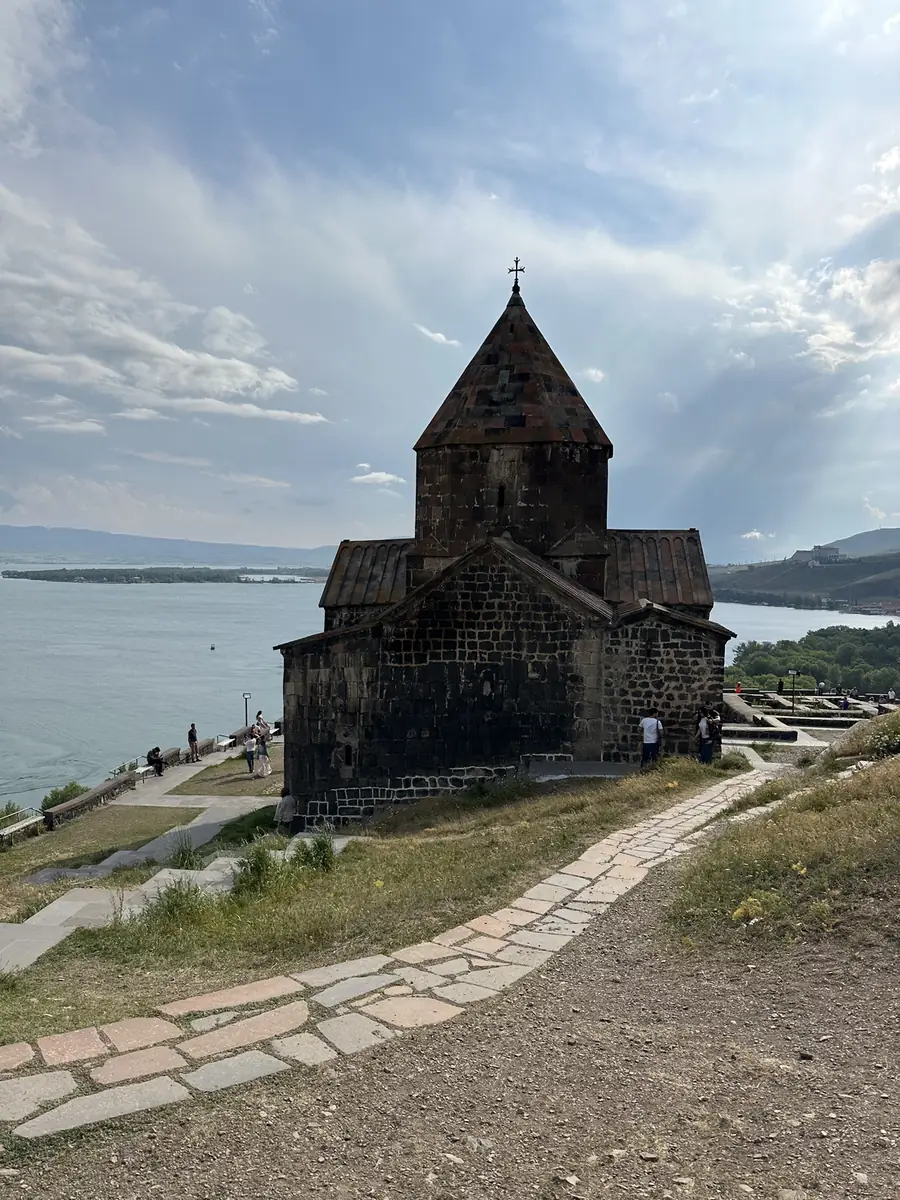
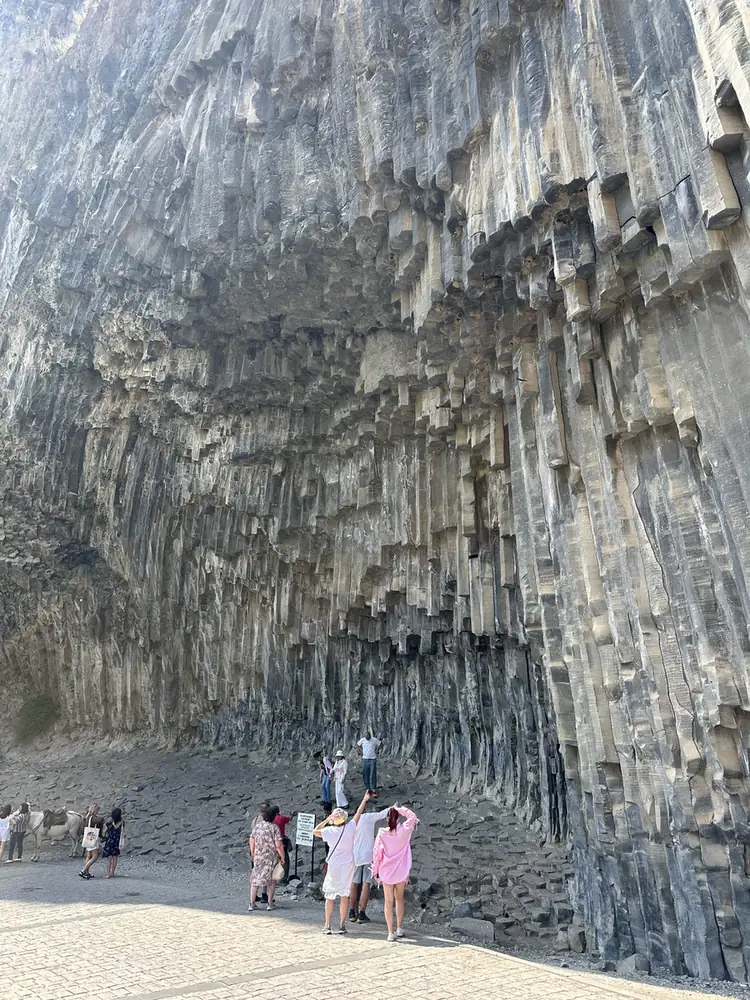
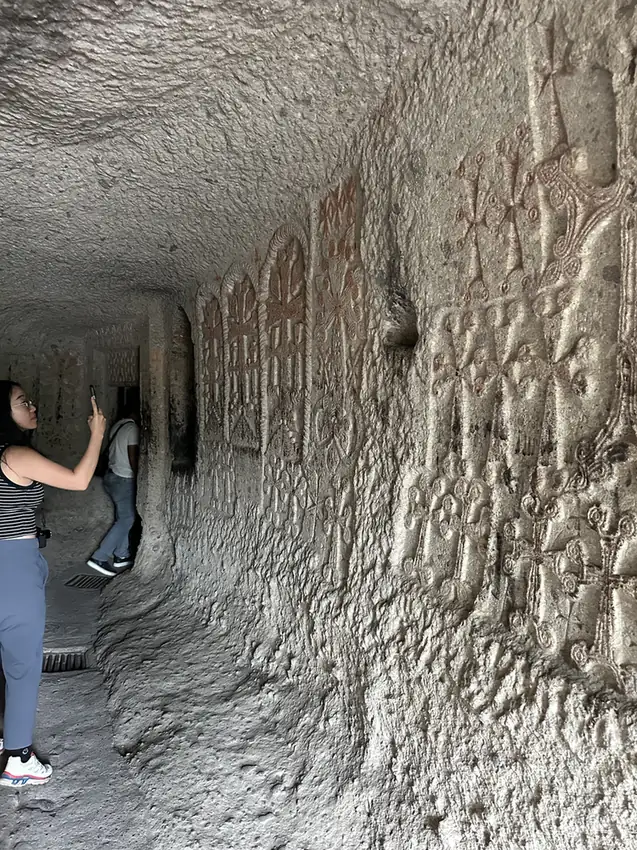
The next day started at the Arch of Charents, you look across the plain to Mount Ararat. Garni is a Greek-style temple from the first century AD. Below it, in the gorge, the Symphony of the Stones is a wall of basalt columns, so regular they look like organ pipes. Geghard is a monastery whose churches are partly carved out of the cliff itself, and inside, the walls are cut straight out of the rock.
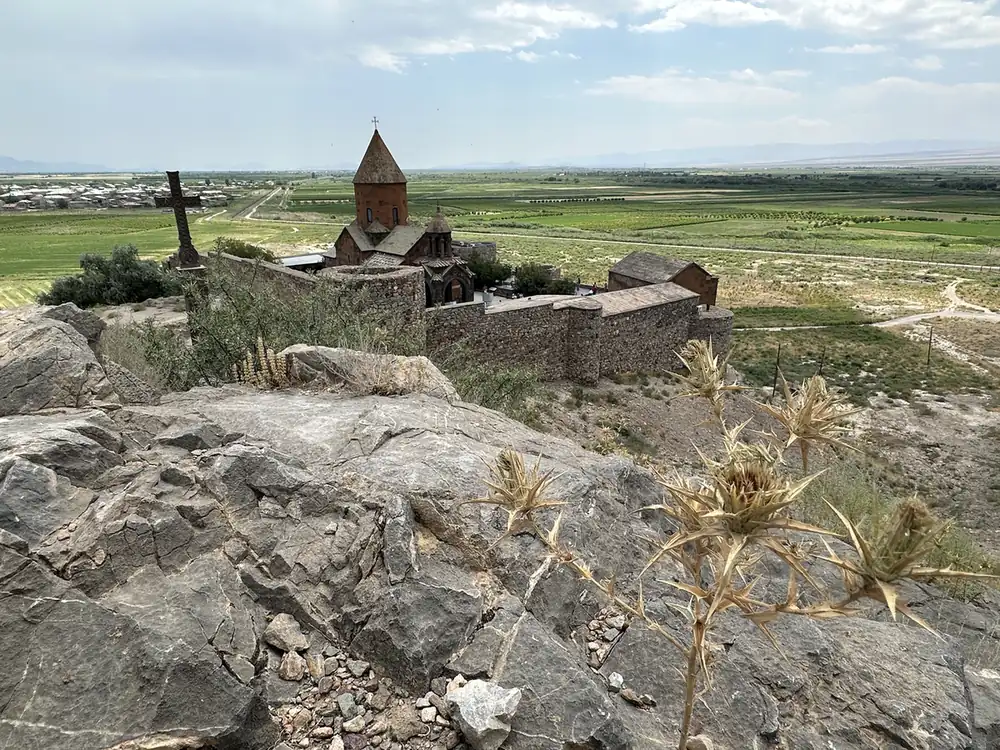
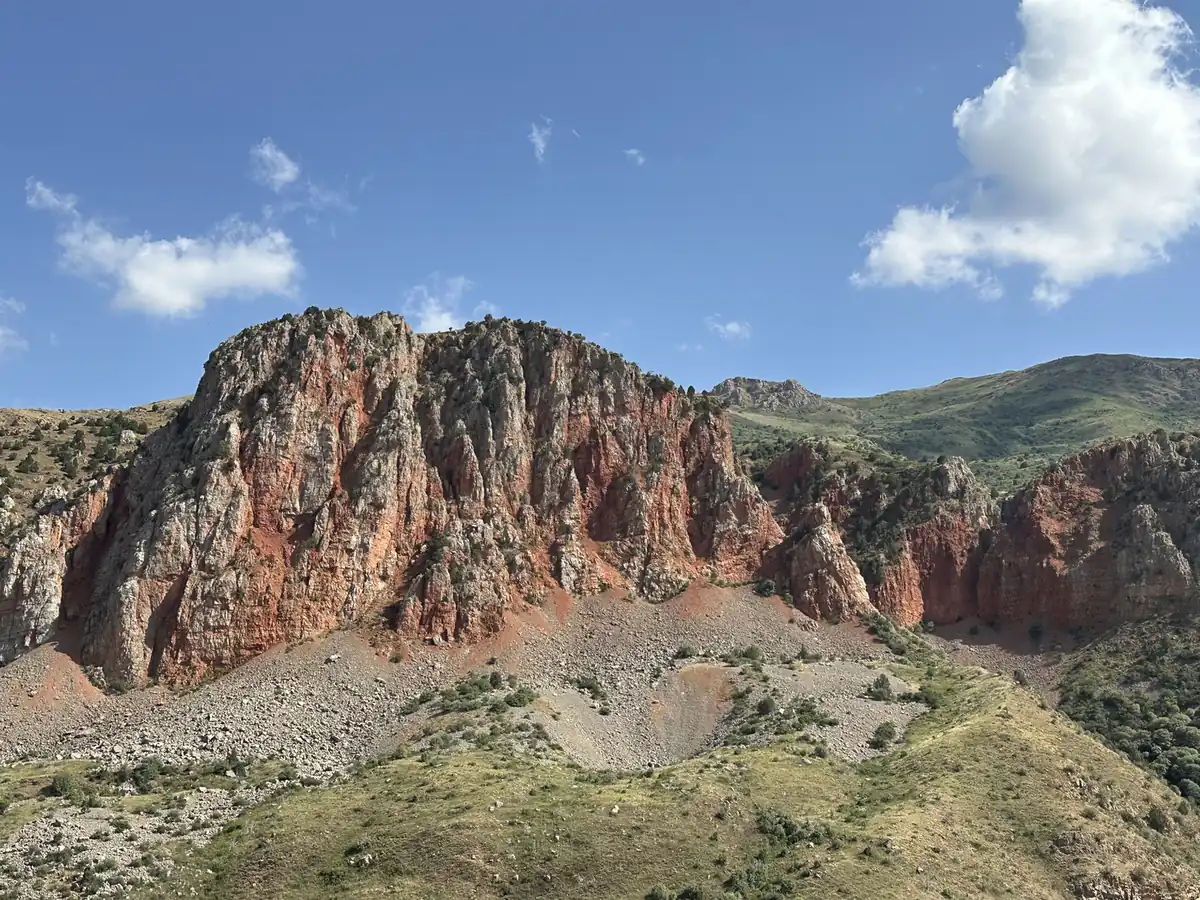
Going south, we stopped at Khor Virap, the monastery right under Ararat. The mountain is in Turkey. Then came Areni. It is wine country again, with a barrel cellar and the Areni-1 cave, where archaeologists found what is thought to be the oldest known winery. Noravank sits at the end of a gorge of red cliffs. We ended that day in Jermuk, a spa town known for its mineral water and its waterfall.
What is the Wings of Tatev?
Day 16 was waterfalls and wildflowers on the road south, with a stop at the Shaki waterfall, fields of purple flowers and a travertine cave with pools inside. That night we slept at a small B&B in Tatev. Dinner was salads, cheese, pickles and lavash.
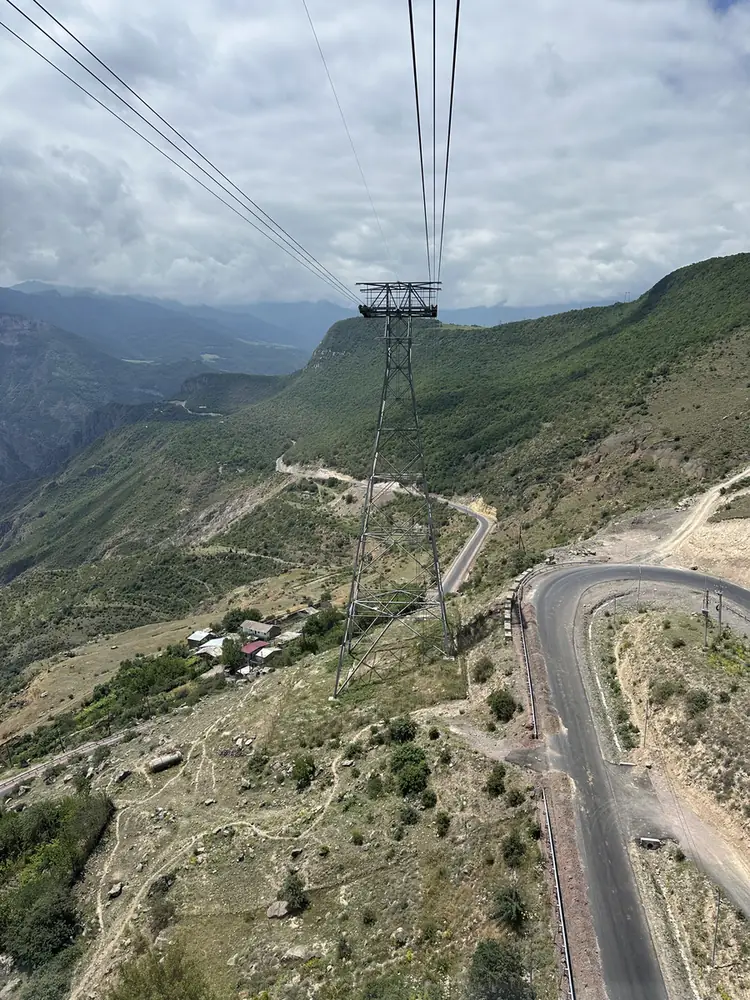
In the morning we saw Tatev monastery, with its old stone oil press, and then the Wings of Tatev. It is a cable car of 5,752 metres across the gorge, listed by Guinness in 2010 as the longest non-stop reversible aerial tramway in the world.
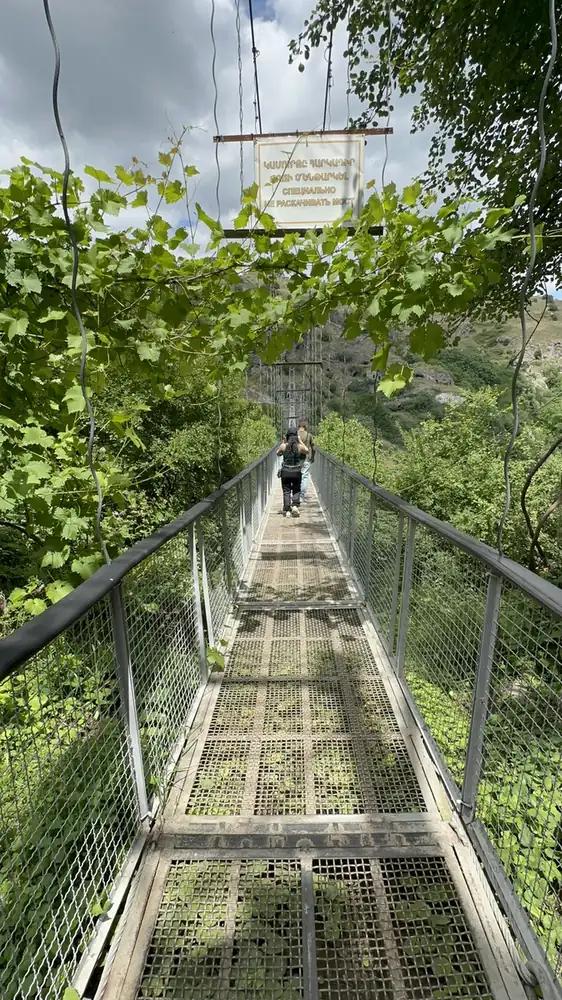
That afternoon we walked across the swinging bridge at Khndzoresk, a footbridge strung over a gorge to the old cave village on the other side. By dusk, on the way back to Yerevan, Ararat was in view again.
What is Yerevan like?
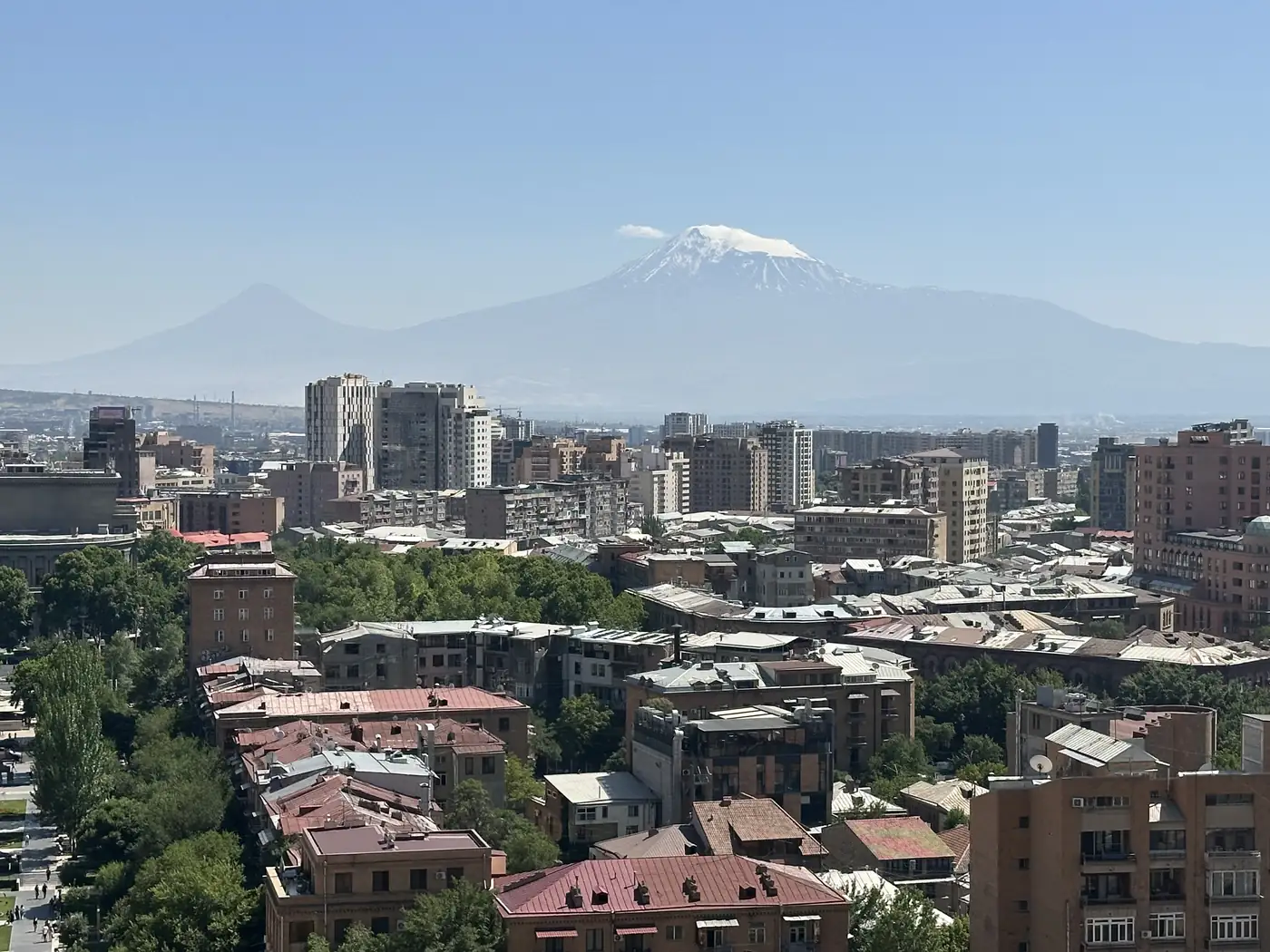
We finished with 2 nights in Yerevan. The Vernissage is an open-air market of carpets, crafts and paintings. The Cascade is a giant stairway of art and fountains, with sculptures at the bottom. From the top, at 19:35 on our last evening, you can see Ararat over the whole city.
How did the trading fit in?
The same way it always does, in about 15 minutes a day.
The trip ran right through the 12-day war between Israel and Iran, and Iran borders both Azerbaijan and Armenia. My camera roll from those days has market screens between the monasteries. On the morning of day 5 there is a chart of how markets reacted to past wars and invasions. Then oil and strike headlines in Sheki the next evening, and a silver chart at 7:28 one morning on the Military Road day. The last is the news of the US strikes on Iran’s nuclear sites, on the morning we drove to Garni.
I wrote up how the routine works, the watchlist, the alerts and the time zones, in how I trade while travelling.
Where does it fit?
Every trip is on the travel log, country by country, and more photos from this one are on Instagram, @iamrecneps.
Have you been to any of the three? Which one would you pick first? Let me know in the comments.
Spencer Li
Want the daily routine? Enter your email for the free 15-Minute Swing Trader's Checklist.
Free 5-page PDF, then occasional trading emails. Education only, not financial advice. Unsubscribe anytime. Kit stores your email in the US: see our privacy policy.
Want to learn the full method? The Trading Mastery Program teaches the 4 strategies I have traded since 2011. It suits beginners and experienced traders.
Rather follow the trades as they happen? Daily Trading Signals is our Telegram channel: my trade ideas with entry, stop and exit, and every trade is public.
Questions about this post? Ask in the free Telegram channel →
Educational content only, not personalised financial advice. Trading carries risk, including loss of capital. Past performance is not indicative of future results. Synapse Trading is not licensed or regulated by MAS.

