

Limitations of Technical Indicators (Why Do Trading Indicators Fail?)
Join our Telegram channel for more market analysis & trading tips: t.me/synapsetrading
Trading signals and indicators are crucial tools in technical analysis, widely used by traders to evaluate price action and create entry and exit strategies.
While popular in markets like CFDs, stocks, and forex, no method can guarantee success.
To use technical indicators effectively, it’s important to understand the risks they pose and why they sometimes fail.
Table of Contents
Lagging Indicators
Lagging indicators provide signals after significant price events, meaning they reflect past price actions.
Common lagging indicators include the Simple Moving Average (SMA) and Moving Average Convergence Divergence (MACD).
- Simple Moving Average (SMA): The SMA can lead to false signals if the price reverses unexpectedly. For instance, if the SMA indicates an upward trend and the price suddenly drops, following the signal could lead to a loss.
- Moving Average Convergence Divergence (MACD): Similarly, MACD signals can fail in certain conditions. For example, if the MACD indicates a bearish trend but the price increases, it could cause traders to lose if they act on the signal. This can often happen during low-volume midday sessions when smaller traders can cause sudden price movements.
One way to mitigate this risk is to lower profit targets during these periods or better understand volatility indicators to identify potential swings.
Leading Indicators
Leading indicators, like the Stochastic Oscillator (SO) and Relative Strength Index (RSI), are designed to signal price moves early.
They offer the potential advantage of catching trends at their beginning, but they also carry risks.
- Relative Strength Index (RSI): RSI measures momentum and often signals overbought or oversold conditions. However, false signals can occur. For example, if the RSI dips into the oversold region and gives a buy signal, but the price remains flat or drops further, it can lead to losses if the trader enters too early.
- Stochastic Oscillator (SO): This indicator signals buying or selling based on momentum. A false signal might occur if the SO enters the oversold region, signaling a buy, but the price doesn’t rise or drops further. Acting on such signals could lead to losses.
The Reason False Indicators Occur
Technical analysis relies on past price data to predict future movements, but it can’t fully predict the future.
Market conditions, especially increased trading volumes, can create volatile price actions that invalidate signals.
The core reason false signals occur is that market conditions can change quickly, and price indicators are not always equipped to handle sudden volatility.
This is particularly true in today’s markets, where higher trading volumes and rapid movements can make technical analysis more challenging.
Managing Risk with Indicators
Despite the occasional failure of indicators, they can still be valuable when used correctly with risk management techniques.
For instance, using stop-loss orders, position sizing, or diversifying trades can help limit potential losses from false signals.
Ultimately, traders should not rely solely on indicators but use them in conjunction with a comprehensive trading strategy that includes proper risk management.
By understanding how these tools work and their limitations, traders can increase their chances of making informed and profitable trades.
Concluding Thoughts
No trading signal or indicator is foolproof, but when used properly with risk management, they can be powerful tools in a trader’s arsenal.
Understanding when indicators might fail and preparing for such scenarios is key to mitigating losses.
Every trader must develop a balanced strategy that incorporates not only indicators but also strong risk management practices to navigate the complexities of the market effectively.
Want the daily routine? Enter your email for the free 15-Minute Swing Trader's Checklist.
Free, 5 pages, PDF. You get the checklist, then my occasional trading emails. Education only, not financial advice. Unsubscribe anytime.
Where your details go: Kit, our email provider, stores your email address in the United States. Our contract with Kit lets it use your address only to send our emails, and requires Kit to keep it secure. The United States has no national privacy law like Singapore's, so that contract is the main protection. More in our privacy policy.
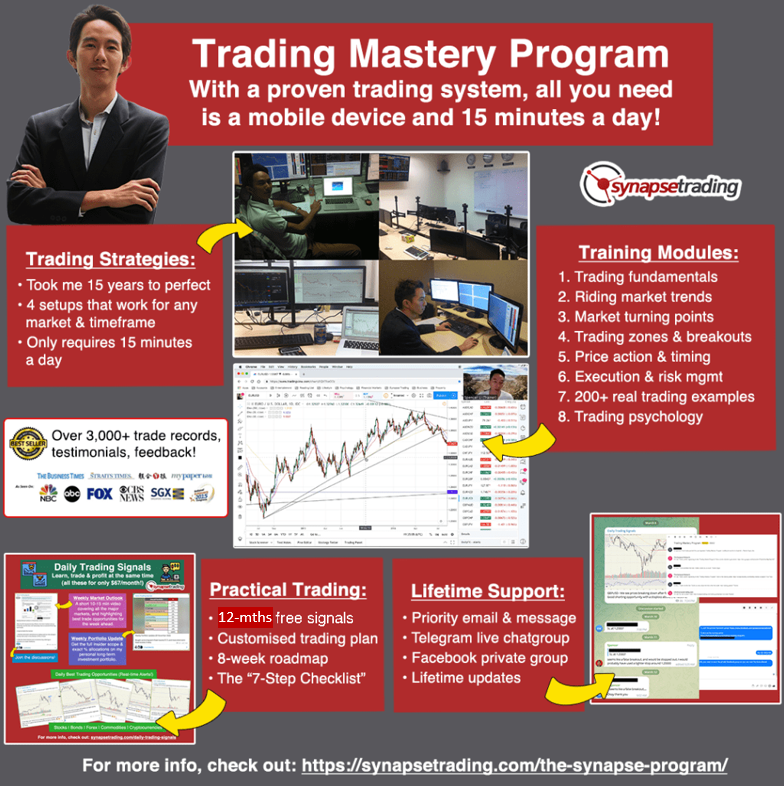 Our flagship mentoring program is suitable for both beginners and advanced traders, covering the 4 strategies which I used over the past 15 years to build up my 7-figure personal trading portfolio.
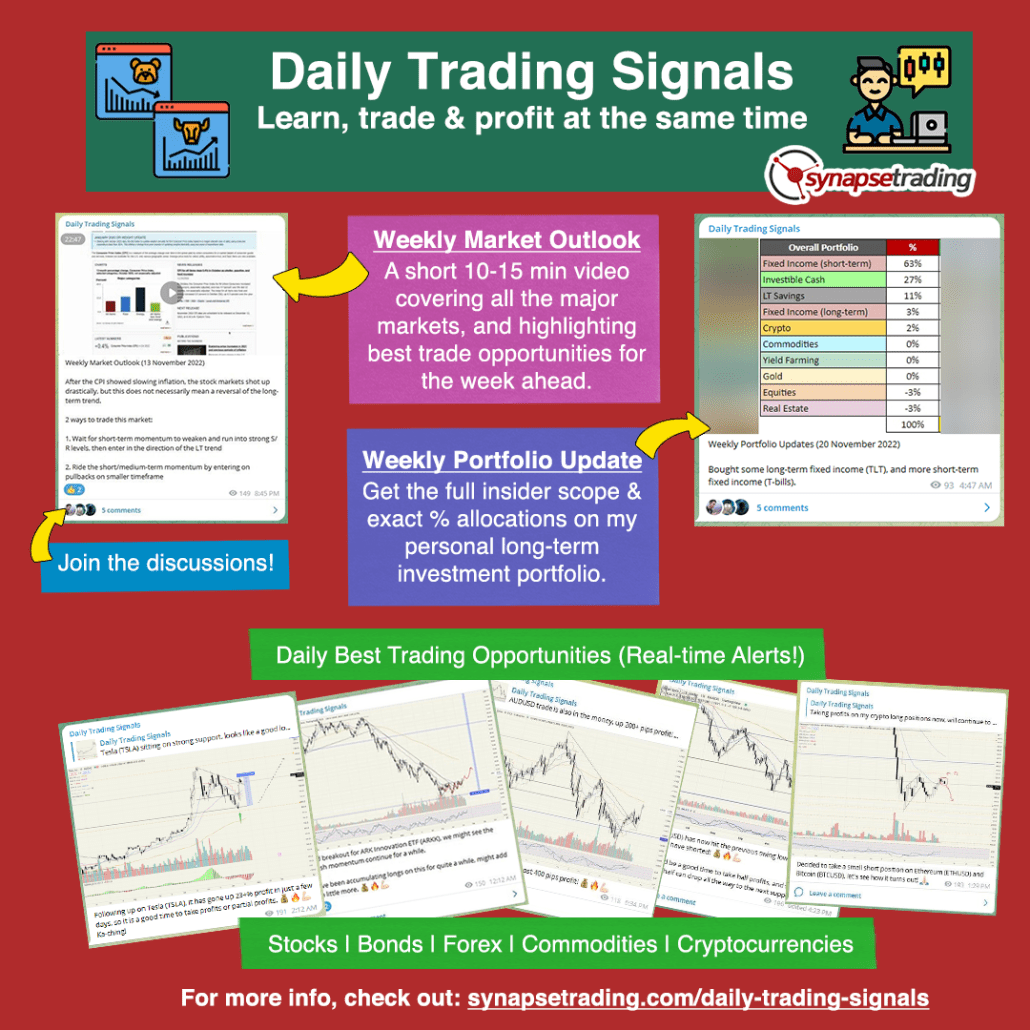 If you're looking for the best trading opportunities every day across various markets, and don't want to spend hours doing the research yourself, check out our private Telegram channel!


Leave a Reply
Want to join the discussion?Feel free to contribute!