Free trading guide

Full List of Trading Products & Markets

By Spencer Li, CFTe · Last updated 17 October 2026

In this trading products guide, you will learn:

  • The various types of trading products available, such as forex, commodities, CFDs, etc
  • How to take advantage of trends to find good trades
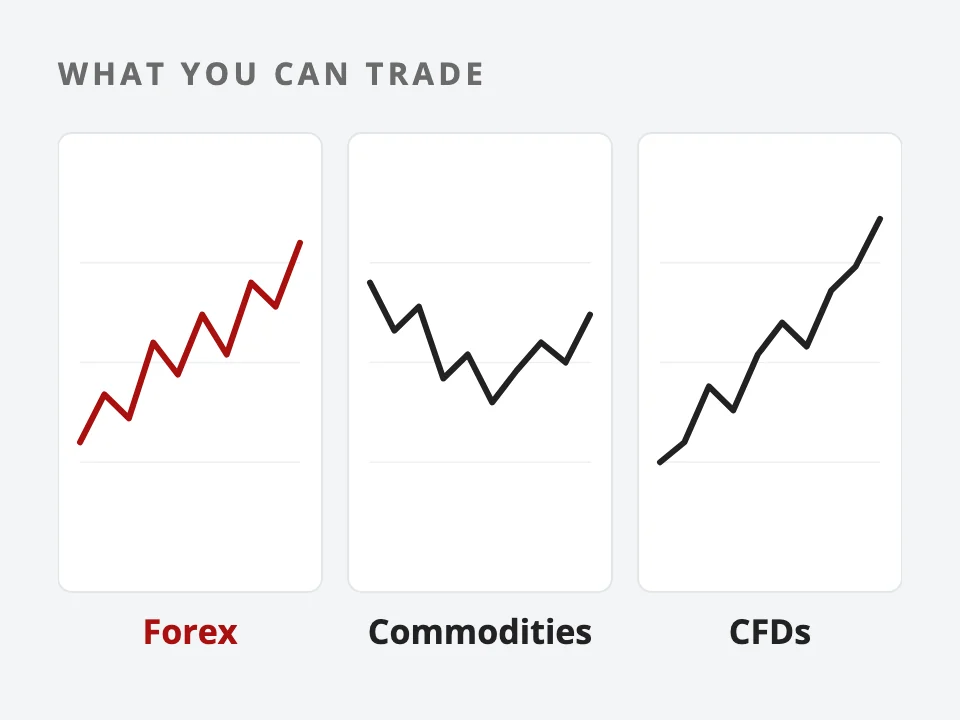
Three small charts side by side, labelled Forex (in red), Commodities and CFDs

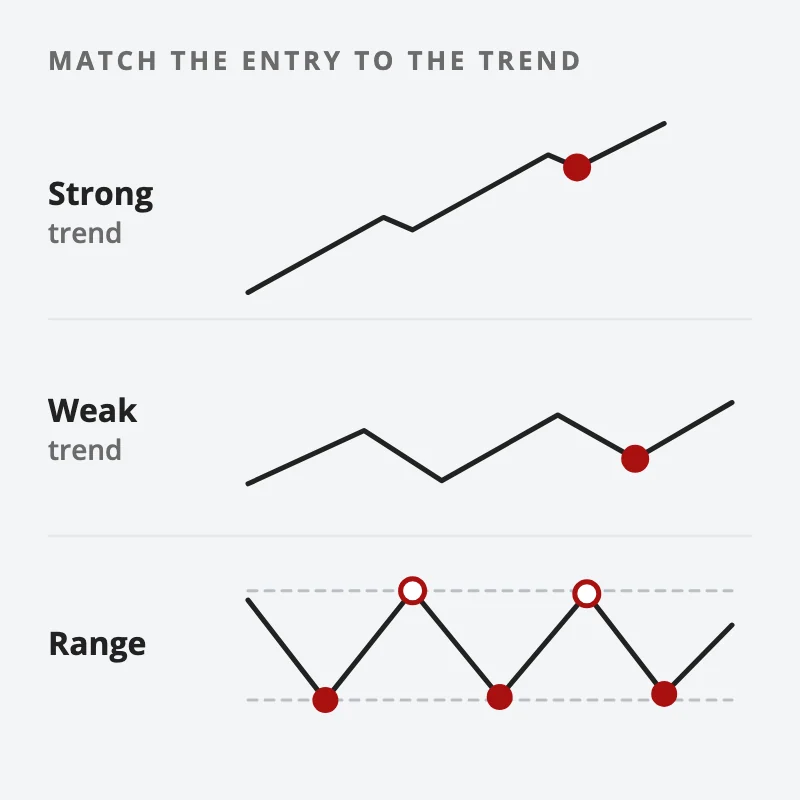
Three small charts: a strong trend entered on a small pullback and a weak trend entered on a larger pullback (red dots), and a range bought at the low (red dots) and sold at the high (red rings)

Chapter 1 of 6

How to Trade Each Trend

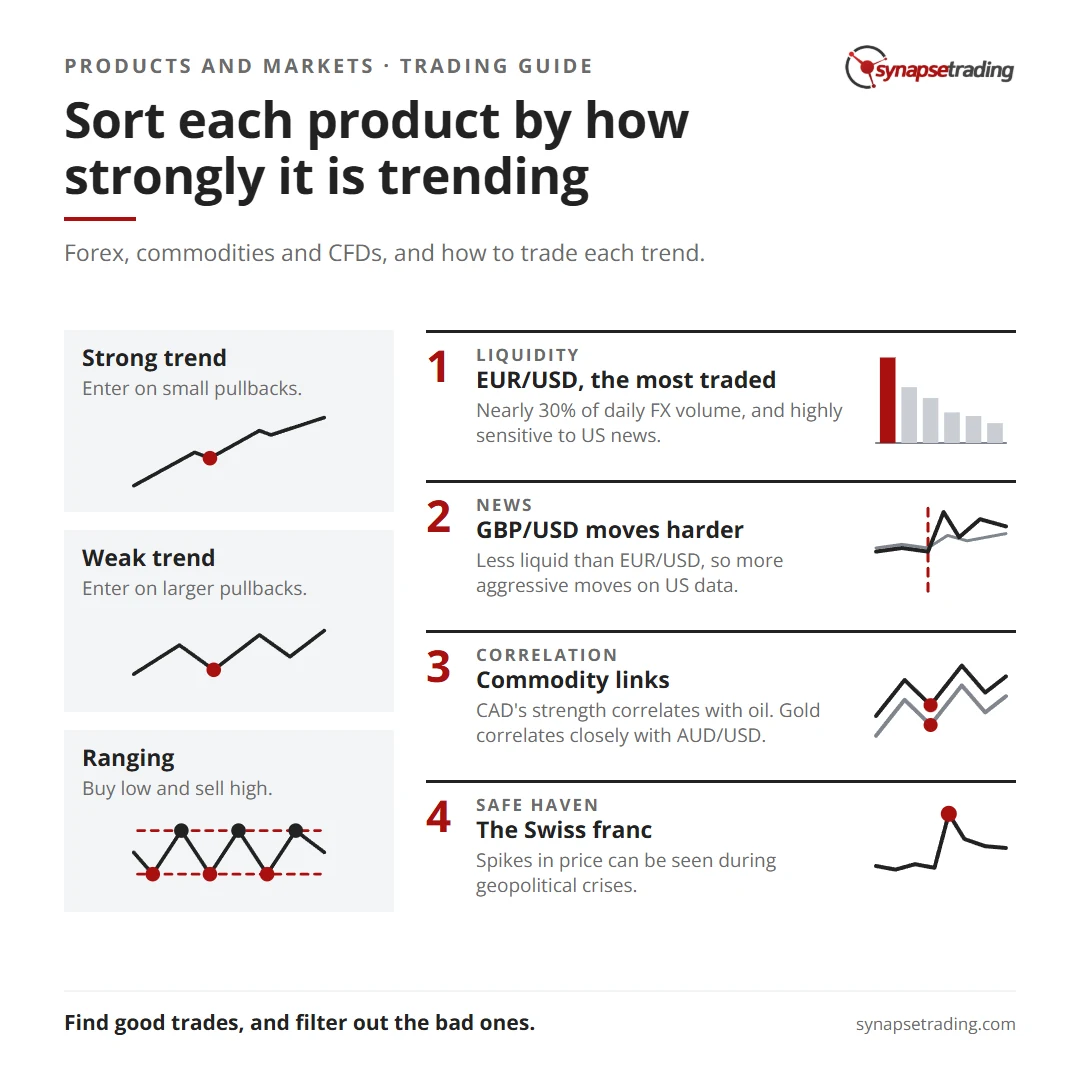
Our free Telegram channel posts monthly market wraps and trade updates. Between those, sort each product by how strongly it is trending, then pick your entry.

For strong trends, we should aim to enter on small pullbacks, while for weak trends we aim to enter on larger pullbacks.

For ranging markets, we should aim to buy low and sell high.

This will help you find good trading opportunities, and filter out the bad ones!


Chapter 2 of 6

Major World Currencies

USD (US Dollar)

  • Country: USA
  • Central bank: Federal Reserve System (Fed)
  • Nickname: Buck, Greenback

EUR (Euro)

  • Country: Eurozone
  • Central bank: European Central Bank (ECB)
  • Nickname: Fiber

GBP (British Pound)

  • Country: United Kingdom (UK)
  • Central bank: Bank of England (BoE)
  • Nickname: Sterling, Cable

AUD (Australian Dollar)

  • Country: Australia
  • Central bank: Reserve Bank of Australia (RBA)
  • Nickname: Aussie

NZD (New Zealand Dollar)

  • Country: New Zealand
  • Central bank: Reserve Bank of New Zealand (RBNZ)
  • Nickname: Kiwi

CHF (Swiss Franc)

  • Country: Switzerland
  • Central bank: Swiss National Bank (SNB)
  • Nickname: Swiss

CAD (Canadian Dollar)

  • Country: Canada
  • Central bank: Bank of Canada (BoC)
  • Nickname: Loonie, Toonie

JPY (Japanese Yen)

  • Country: Japan
  • Central bank: Bank of Japan (BoJ)
  • Nickname: None

Chapter 3 of 6

Major Forex Pairs

Table: the 14 major currency pairs, with the value per pip (standard lot), contract size per lot, minimum lot size and average spread in pips of each

EUR/USD

  • Country: Eurozone / USA
  • Pairs that correlate: EUR/CAD, EUR/AUD, NZD/USD

The EUR/USD is the most traded currency pair in the world, accounting for nearly 30% of the total daily volume in FX. This sheer volume makes it incredibly liquid. EUR/USD is highly sensitive to fundamental news announcements released by the U.S., and due to its popularity, traders can access a wealth of analytical information.

GBP/USD

  • Country: United Kingdom / USA
  • Pairs that correlate: GBP/NZD, GBP/CAD, GBP/AUD

Also known as “cable,” GBP/USD is the third most traded pair. Price movements in cable are known to correlate with EUR/USD. Since the pair isn’t as liquid as the EUR/USD, GBP/USD experiences more aggressive price movements when U.S. data is released. The UK has the second largest economy in Europe, after Germany.

USD/JPY

  • Country: USA / Japan
  • Pairs that correlate: NZD/JPY, CAD/JPY, EUR/JPY

The USD/JPY is one of the major pair types and is the second most traded pair in the world. Japan has the third largest GDP after the United States and China. Since Japan’s economy is driven by its exports, the country prefers a weak yen to increase international sales.

USD/CHF

  • Country: USA / Switzerland
  • Pairs that correlate: USD/SGD, AUD/CHF, USD/TRY

The Swiss franc became a safe-haven currency in times of crises due to Switzerland’s history of remaining neutral in times of war. The franc remains a safe haven currency and spikes in price can be seen during geopolitical crises.

USD/CAD

  • Country: USA / Canada
  • Pairs that correlate: USD/SGD, AUD/CHF, USD/TRY

Canada’s economy is heavily dependent on exporting raw materials. As a result, the CAD’s strength correlates with the price of oil.

AUD/USD

  • Country: Australia / USA
  • Pairs that correlate: AUD/CAD, AUD/CHF, GBP/USD

The AUD/USD is considered one of the three most popular commodity pairs. Price action in this commodity pair is influenced by the price of Australia’s natural resources. In particular, the price of gold is known to correlate closely with AUD/USD.

NZD/USD

  • Country: New Zealand / USA
  • Pairs that correlate: EUR/USD, NZD/JPY, AUD/JPY

New Zealand’s economy is heavily dependent on exporting raw materials. As a result, the NZD’s strength correlates with the price of gold.


Chapter 4 of 6

Minor Forex Pairs

Table: 18 minor currency pairs, with the value per pip (standard lot), contract size per lot, minimum lot size and average spread in pips of each

Spencer Li with the 15-Minute Swing Trader's Checklist

Free checklist

New to trading? Start here

The 15-Minute Swing Trader's Checklist is the daily and weekly routine I use to find, manage and review trades in about 15 minutes a day. Five pages, free, straight to your inbox.

Free 5-page PDF, then occasional trading emails. Education only, not financial advice. Unsubscribe anytime. Kit stores your email in the US: see our privacy policy.


Chapter 5 of 6

Commodities

Table: 5 commodities (gold, silver, WTI and Brent crude oil, natural gas), with the value per contract, quote digits, contract size per lot, minimum lot size and average spread of each

Chapter 6 of 6

CFDs (Stock Indices, Bonds)

Table: 16 index and bond CFDs, with the value per contract, quote digits, contract size per lot, minimum lot size and average spread of each

Spencer Li

About the author

Spencer Li is The 15-Minute Trader and the founder of Synapse Trading. He is a Certified Financial Technician (CFTe) with 15+ years of trading, run from 70+ countries. He holds a B.Acc and B.BM from SMU. Every trade he takes is public, dated, losses left in. He teaches rules-based swing trading in 15 minutes a day, one system for any market.

Education, not financial advice. Synapse Trading is not licensed by MAS to advise on investment products. Trading carries risk of loss; past performance is not indicative of future results.