• Link to Facebook
  • Link to X
  • Link to Instagram
  • Link to Youtube
  • Link to LinkedIn
  • Link to Mail
Synapse Trading
  • Home
  • About
    • My Background
    • My Trading Journey
    • My Travel Log
    • Media & Interviews
  • Mentoring
    • Trading Mastery Program
    • Results & Testimonials
  • Signals
    • Telegram (Free to join!)
    • Daily Trading Signals
    • Daily Trading Signals (Results)
  • Resources
    • Free Trading Guides
    • Tools & Resources
    • Blog & Infographics
  • Contact
    • Contact Us
    • Partnership Opportunities
  • Click to open the search input field Click to open the search input field Search
  • Menu Menu

Tag Archive for: trading

Spencer Li

Tips & Strategies for Trading While Travelling

Trading Strategies
Thumbnail Tips Strategies for Trading While Travelling

Thumbnail Tips Strategies for Trading While Travelling

Are you ready to combine your love of trading and traveling?

Imagine waking up in a new city every few weeks, with the freedom to explore and experience new cultures while also making smart financial decisions and potentially earning passive income through the financial markets.

Trading and traveling go hand in hand, allowing you to live a nomadic lifestyle while still being able to earn a living.

Are you ready to join the ranks of successful traders who have turned their passion for finance into a globally-mobile career?

In this blog post, I will cover all the best tips for trading while travelling, and some simple strategies you can use to make it as stress-free as possible so you can still enjoy your holiday.


Infographic Tips Strategies for Trading While Travelling


The Right Mental State

Trading can be a stressful activity, especially when it involves significant amounts of money.

It’s important to adopt a stress-free mental state while trading and travelling in order to make better decisions and reduce the risk of making mistakes.

Here are a few tips to help you adopt a stress-free mental state while trading:

  1. Have a plan: It’s important to have a clear plan in place before you start trading. Know your goals, risk tolerance, and exit strategy before you enter a trade. This can help you stay focused and make better decisions.
  2. Take breaks: It’s important to take breaks and step away from the markets from time to time. Take breaks to clear your mind and relax. This means limiting your trading time to a minimum while on holiday.
  3. Practice mindfulness: Mindfulness is the practice of being present in the moment and not getting caught up in the past or the future. It can help you stay focused and make better decisions.

Tips for Trading while Travelling

Trading while travelling can be challenging, as it requires staying up-to-date with the latest market news and having access to a reliable internet connection.

However, with the right tools and strategies, it is possible to continue trading while on the go.

Here are some tips for how to trade while travelling:

  • Use a reliable trading platform: Choose a trading platform that is accessible from your smartphone or laptop, and that offers real-time market data and analysis. This will allow you to stay on top of market movements and make informed trading decisions while on the move.
  • Keep up with the news: Follow financial news outlets and use their app or website to stay up-to-date with the latest market news and analysis. This will help you understand the factors that are influencing the market and make more informed trading decisions.
  • Use stop-loss orders: Stop-loss orders are a useful tool for managing risk while trading. These orders allow you to set a maximum loss that you are willing to incur on a trade, and the trade will be automatically closed if this loss threshold is reached. This can help protect your capital while you are unable to actively monitor the market.
  • Use a VPN: A virtual private network (VPN) can help protect your online activity and keep your personal information secure while you are travelling. This is especially important if you are using public Wi-Fi to access your trading platform.
  • Always plan beforehand: Have a clear trading plan and stick to it, even while travelling, to help you stay disciplined and focused on your trading goals.
  • Track your trades: Stay organized and keep track of your trades, so you can easily review your performance and make any necessary adjustments to your trading strategy.
  • Less is more: Remember to take breaks and relax, as travelling can be stressful and can impact your ability to make good trading decisions.
  • Keep your trading plan simple: While it can be tempting to try and take advantage of every trading opportunity while you are travelling, it is important to keep your trading plan simple and focused. Stick to your trading strategy and avoid making rash decisions based on limited information.
  • Time zones and market conditions: If you are traveling across time zones, you will need to take into account the different trading hours of the markets that you are interested in. In addition, you may need to adjust your trading strategy to account for any changes in market conditions or liquidity that may result from your travel.
  • Use your “spare” time: When you are waiting at the airport, or travelling on long bus rides, you can use this time look at charts and place price alerts, so that afterwards you can focus on enjoying your holiday, and only need to take action when the price alerts get triggered.

Trading Strategies that Require Less Time

Once you have these things in place, you can start thinking about the actual trading.

If you are an experienced trader, you may already have a strategy that you can use while traveling.

If not, you may want to consider swing trading, or simple trend-following strategies that can be easily implemented even when you are on the go.

a) Swing Trading Strategies

Swing trading is a trading strategy that involves holding assets for a few days to a few weeks, aiming to capture medium-term price movements.

It is a form of active trading that is intermediate in nature, falling between long-term investing and day trading, so it does not require you to spend much time monitoring the markets like in day trading.

Swing traders typically look for assets that are showing strong price momentum and aim to enter trades at key support and resistance levels.

They may use technical analysis tools, such as chart patterns and indicators, to help identify potential trades.

One of the benefits of swing trading is that it allows traders to take advantage of both the uptrends and downtrends in the market.

It also gives you more trading opportunities compared to long-term investing because it doesn’t involve holding assets for several years or more.

b) Trend-following Strategies

Trend following is a trading strategy that involves buying assets that are showing an uptrend and selling assets that are showing a downtrend.

The idea behind trend following is that prices tend to trend in a particular direction over time, and by following the trend, traders can potentially profit from these price movements.

Trend followers typically use technical analysis tools, such as moving averages, to help identify trends and make trading decisions.

They may also use stop-loss orders to limit potential losses if the trend reverses.

Trend following can be a viable trading strategy for traders who are looking to take a more passive approach to trading.

It allows traders to potentially profit from both long-term and short-term trends in the market.

How to Find Good Internet while Travelling

Finding good internet while traveling can be a challenge, especially if you’re in a country or region with limited or unreliable internet access. Here are a few tips to help you find good internet while traveling:

  1. Research ahead of time: Before you leave, research the internet access and connectivity in the places you’ll be visiting. Look for reviews or ask locals for recommendations.
  2. Use a SIM card: Many countries offer prepaid SIM cards with data plans that you can use on your phone or tablet. This can be a convenient and cost-effective way to stay connected.
  3. Consider using a personal hotspot: A personal hotspot is a small device that creates a wireless internet connection for your devices. You can use it with a SIM card or connect it to a wired internet connection.
  4. Look for wifi hotspots: Many restaurants, cafes, and other public places offer free wifi for customers. Look for these hotspots and connect to them when you can.
  5. Use a VPN: As mentioned above, a virtual private network (VPN) encrypts your internet connection and can help you access websites that might be blocked in the country you’re visiting.

By following these tips, you should be able to find good internet while traveling and stay connected while on the go.

Concluding Thoughts

Overall, trading while travelling requires careful planning and the use of tools and strategies to help manage risk and stay connected to the market.

By following the tips above, you can continue to trade effectively while on the go.

Now that I have shared all about trading while travelling, is this something that you would consider trying out?

Which is your favourite trading/travelling tip, and do you have any of your own to share?

Let me know in the comments below.
 

0 Comments/by Spencer Li
https://synapsetrading.com/wp-content/uploads/2022/12/Thumbnail-Tips-Strategies-for-Trading-While-Travelling.png 720 1280 Spencer Li https://synapsetrading.com/wp-content/uploads/2019/10/logo.jpg Spencer Li2022-12-16 21:54:372023-01-10 01:51:45Tips & Strategies for Trading While Travelling
Spencer Li

Should I Start with Trading or Investing?

Beginner's Guide
should you start with investing or trading


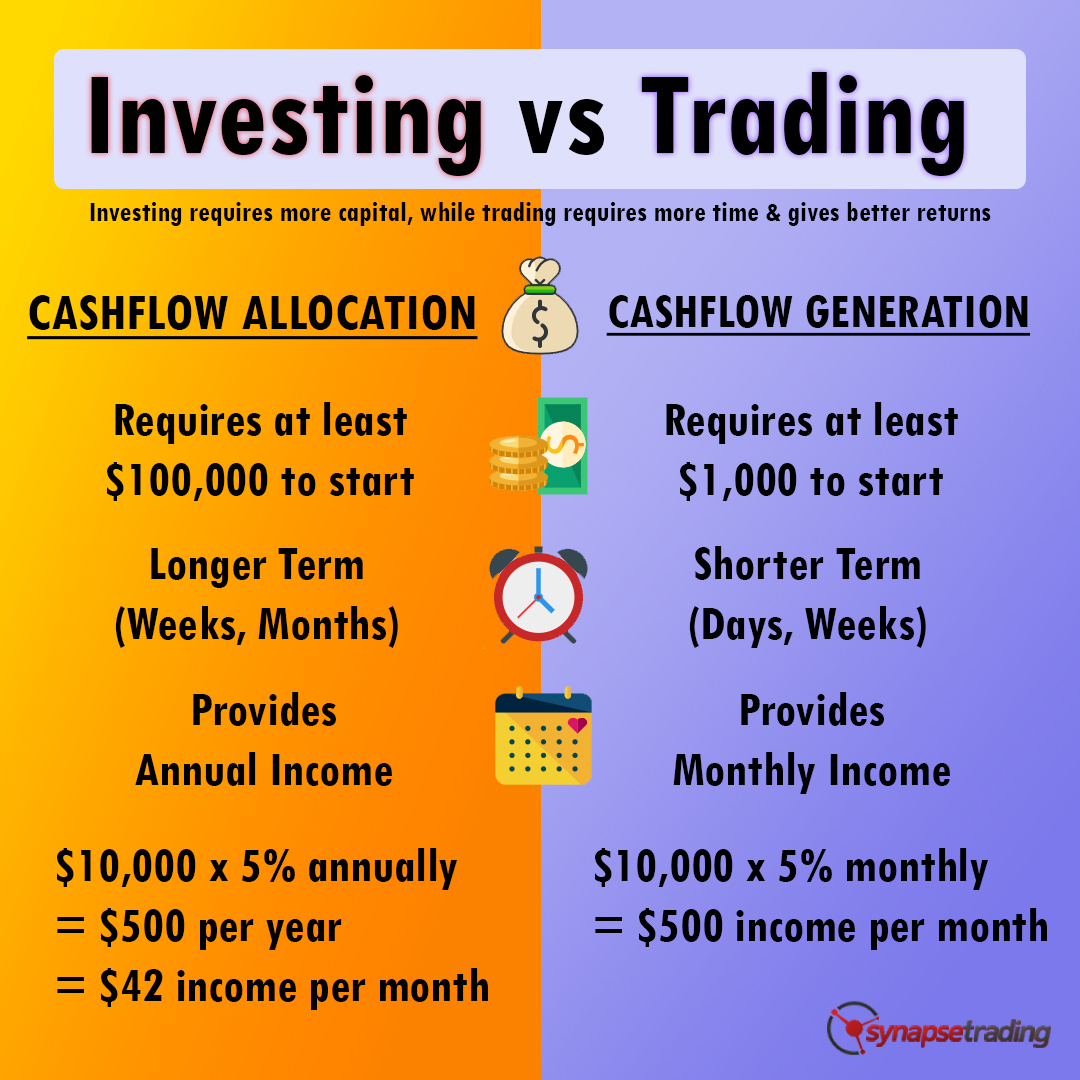
The first problem many people face is not knowing whether to use their money for investing or trading.

Since they usually start off with a fixed sum of money, they have to decide on one or the other to start off.


Investing vs Trading

Many people will small sums of money then make the common mistake of “playing it safe”, perhaps after hearing stories of Warren Buffett or about how “risky” trading is, and then decide to just put their money in things like bonds or ETFs, with a low return of 1-5% a year.

The problem with this approach is that unless you have a large amount of money to start with, you will take a whole lifetime just to build a decent-sized portfolio.

For example, if you consistently grow your portfolio at a compounded rate of 3% every year with no losses, it would take you 24 years just to double your portfolio.

And what happens if you get caught in a market crash?

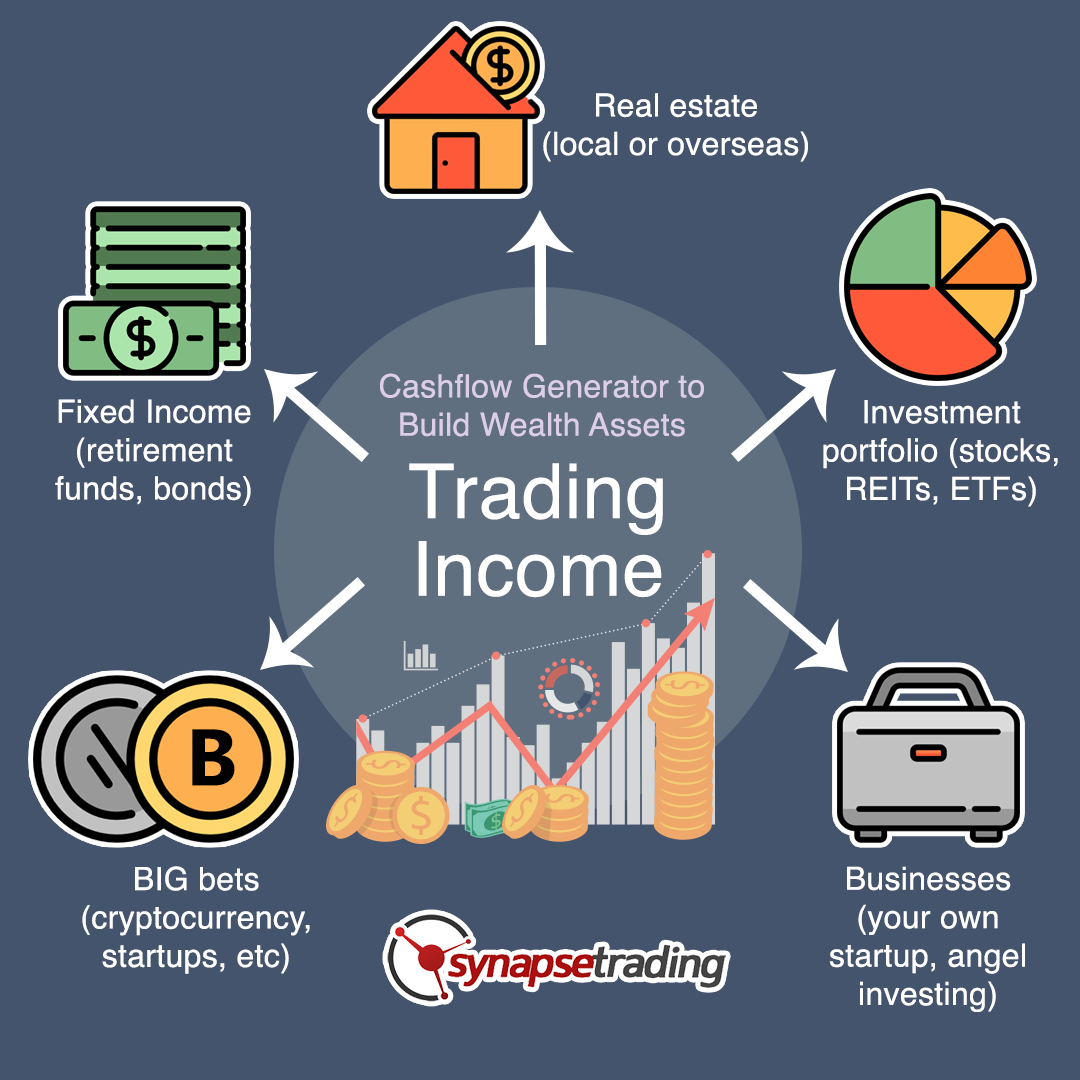
So if you are starting with a small sum of money, it definitely makes more sense to focus on trading at the start, which can give you 3-5% monthly cashflow, which you can then use to grow your long-term investment portfolio faster.


trading income cash generator infographic

As a simple rule, I would suggest for you to focus on trading until you have at least $100,000 capital before you start looking to do investing.

And once you have hit that milestone, you can continue to do both trading and investing, because trading can provide monthly cashflow, while investing can provide long-term passive income, so they both complement each other.


thumbnail beginner guide to trading and TA

If you would like to learn how to get started in trading, also check out: “The Beginner’s Guide to Trading & Technical Analysis”

0 Comments/by Spencer Li
https://synapsetrading.com/wp-content/uploads/2021/06/should-you-start-with-investing-or-trading.jpg 720 1280 Spencer Li https://synapsetrading.com/wp-content/uploads/2019/10/logo.jpg Spencer Li2021-06-18 06:31:462022-12-21 02:54:12Should I Start with Trading or Investing?
Spencer Li

New Batch of Traders for Our SkillsFuture Credit-Eligible Course!

News & Events
skillsfuture feedback 060621

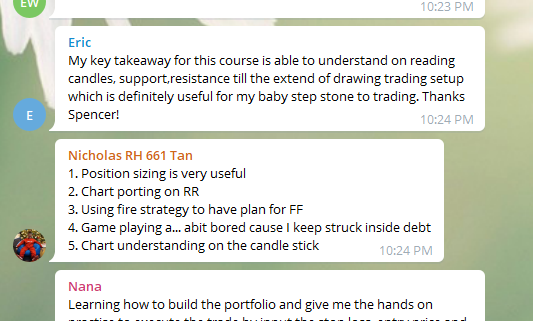
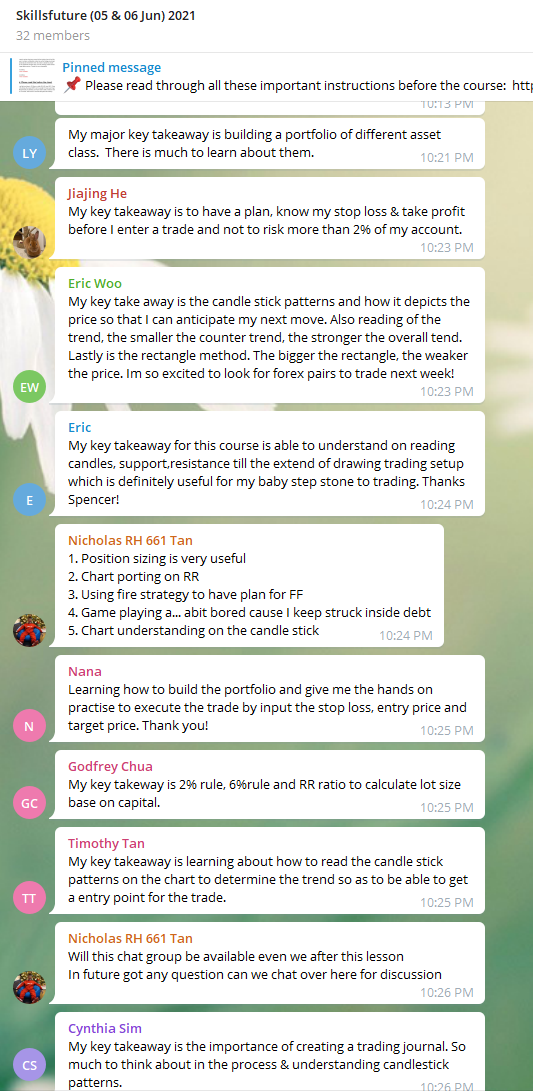
Last weekend, we conducted an online workshop (SkillsFuture credit-claimable) on the basics of trading and investing, and the response was overwhelming.

Thanks for the support! ?

Here is some of the feedback and learning points from participants, after our hands-on market analysis session to find trading opportunities in the market.

If you are keen to learn more using your SkillsFuture credits, you can check out our courses:

  • Beginner’s Course on Trading & Investing
  • Beginner’s Course on Tech Stocks & Crypto

P.S. To ensure optimal learning, we have capped the maximum class size.

Register early to avoid disappointment!

Future Credit-Eligible CourseFuture Credit-Eligible Course 2

0 Comments/by Spencer Li
https://synapsetrading.com/wp-content/uploads/2021/06/skillsfuture-feedback-060621.png 1091 533 Spencer Li https://synapsetrading.com/wp-content/uploads/2019/10/logo.jpg Spencer Li2021-06-07 20:31:312022-03-10 14:18:09New Batch of Traders for Our SkillsFuture Credit-Eligible Course!
Spencer Li

Top 3 Reasons Why Price Action is Chosen by Professional Traders

Trading Tips
how to trade price patterns

This article is going to be a little longer than usual, as I endeavor to make a balanced view about exactly why price action is preferred in the marketplace.

If you’re keen to expand your mind, deepen your knowledge, or simply learn something new about the financial markets, then please read on.

Throughout the centuries, traders around the world have tried to find every method possible to exploit the market for profits. The search for a trading edge has led to countless hours of research, hard work, and dedication. More recently, programming has become the rage as hedge funds, institutions, and large traders seek to find the optimal way to extract profits from the market.

While the internet is rife with methods, formulas, and patterns that claim to bring in profits, through my years of trading, I’ve found that trading plan or strategies fall into these 3 simple categories.

Most Trading Strategies Fall into 3 Categories


1. Trend-following

Many beginners make the mistake of asking these 2 questions: “When should I buy? When should I sell?”

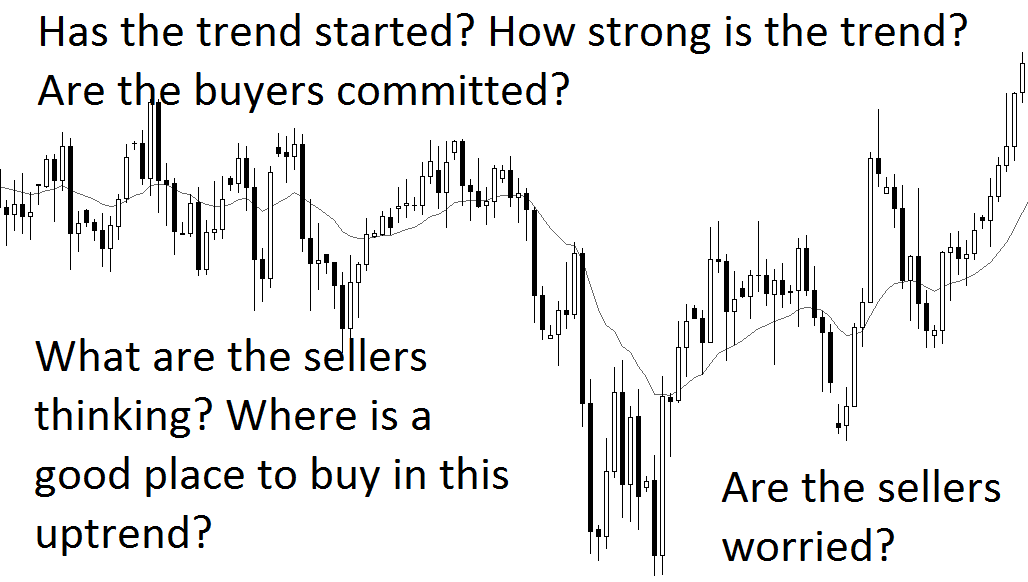
Beneath these two questions, are actually several important questions to ask before deciding when to buy and sell. You see, trend-following is the act of buying in an uptrend, and selling in a downtrend. It sounds simple, but several questions come to mind when a trader attempts to follow a trend:

  • Has the trend started? When did it start?
  • When will the trend end?
  • Where should I get in on the trend?
  • Is it a volatile trend, or a gentle trend?
  • Is it a strong trend, or a weak trend?

All of this has to be taken into account as the market unfolds before a trader’s eyes. The confluence of answers to these questions would allow a price action trader to buy or to sell. While it is impossible to predict what would happen, the better a trader can answer the above questions, the better he or she is positioned to make some money.

Why is price action preferred by professional traders?

Price action involves reading clean price charts, and understanding the motivation of buyers and sellers when taking trades. With proper training, a trader can answer all the above questions, and make the most efficient trade during a trending market situation.

Top 3 Reasons Why Price Action is Chosen by Professional Traders

Traders have to process large quantities of information at a go. Making the price chart as clean as possible allows the trader to clearly see what is happening, and simplifies his analysis. For example, in the above chart, buyers are committed during the most recent 10 bars, and a reasonable trade would be to buy on a pullback to the EMA or trendline.


2. Mean-reversion

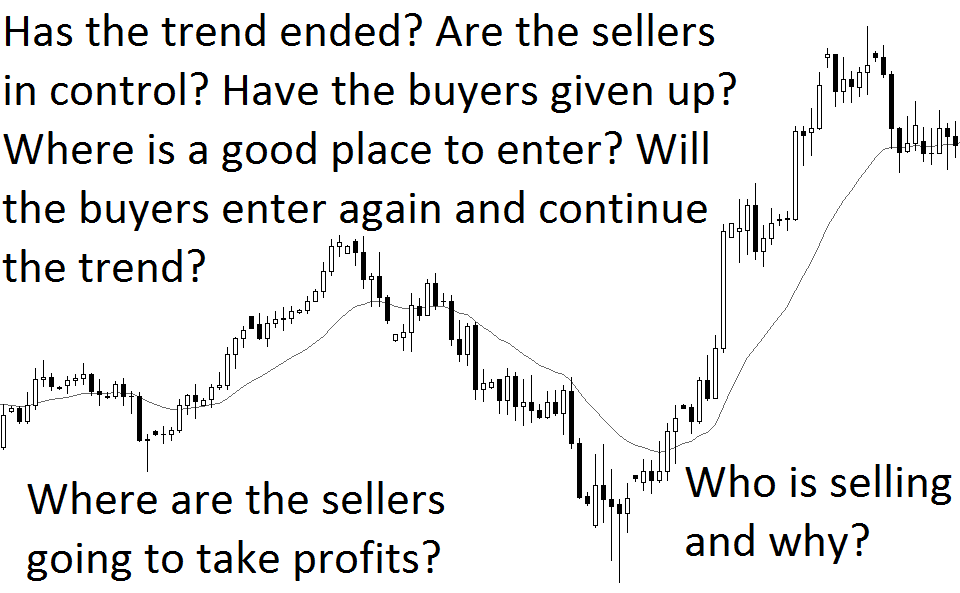
Mean-reversion is simply doing the opposite of a trend-follower. In essence, a mean-reversion trader would be asking the following questions:

  • Has the trend ended?
  • Where might the trend end?
  • Are the traders taking profits, or are they initiating new positions?
  • What price levels are mean-reversion traders looking at?

Based on my experience, beginners should not look to be mean-reversion traders until they are profitable trend-followers. It is much harder than it looks when taking a trade in the opposite direction of the trend.

In my trading foundation workshops, I emphasize time and again that a trade setup must occur in the opposite direction before taking a reversal trade. In fact, instead of going against the trend, I would much prefer that the trend has already changed direction, and then I hop on to that new trend for a lower-risk trade.

Price action traders consider many more options and ask more questions than indicator-based or value-based traders.

The financial marketplace is filled with professional traders seeking to make a quick buck out of unsuspecting, ill-disciplined, or even lazy traders. It is just like in the Olympics; at the highest level of sporting excellence, sportsmen that miscalculate their aim or fail to squeeze out that last ounce of energy could miss finishing in the top 3.

Top 3 Reasons Why Price Action is Chosen by Professional Traders 2

In a bull market, going against the trend is much harder than you think. That is why price action is so important; it helps you decipher when the trend is going to end, and whether it is wise to enter or not.


3. Spread-Betting (Betting during volatility)

Spread-betting is used by institutional traders and proprietary funds to make short-term bets during times of volatility. The software and execution technology required is often expensive, and is not suitable for a retail trader. The strategy is complex, because bets are placed on both sides during a volatile event, and it requires strict discipline when trading. I won’t go into great detail on how this is done, but you can read up about it.


Why Then, is Price Action Preferred by Professional Traders?


1. CLARITY

Price action trading is trading with clean charts. The only information you need is the current price, and these are displayed using candlestick charts. In the charts below, we see that the blank chart is far clearer and easier to read than the complicated one with many indicators.

CLARITY CLARITY 2


2. SPEED

When trading intra-day, traders need to quickly make a decision when the price action unfolds before them. While checklists and criteria do help, having a solid price action foundation would allow the trader to make a decision quickly. How would you make a trading decision, if you had to look at 12 screens at once?

SPEED

Image Source: LifeHacker.com

In contrast, I can make my trades on a single laptop computer, or even on my mobile devices. Something like this is more than sufficient:

SPEED 2

Image Source: MyCompas.com


3. UNIVERSALITY

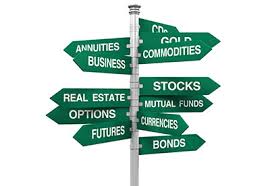
Perhaps the biggest reason why price action is preferred, is that price action is universal. You can trade commodities, currencies, stocks, bonds, ETFs, REITs, futures on just about anything, and even options, because every product has a price chart. You can be just as sure that Coffee Futures have the same price action mechanics as Apple stock, and you wouldn’t have a problem transiting between products.

Trading is very much like selecting from a diverse menu in a fancy restaurant; while there are many products to trade, many traders settle on trading a few products and get proficient at them.

UNIVERSALITY

Price action works on just about anything with a price chart and a liquid secondary marketplace.
Image Source: TheActuary.com


How Can I Get Started On Price Action Trading?

For a start, I recommend using the old-school way by getting your hands on a few solid price action books. Many of these are available in public libraries, and if you have some spare cash, you can consider buying them on amazon.

Next, is to practice! While reading books and watching others trade is a great way to learn, nothing beats learning to trade by actually making trades yourself.

If you currently use many indicators and are not profitable, perhaps the question to ask yourself is whether you would like to understand what is behind the price chart and the indicators. It is not enough to use a formula, because market conditions change over time.

Here’s to wishing you all the best on your trading journey, and I hope this article has expanded your mind just a little more!

0 Comments/by Spencer Li
https://synapsetrading.com/wp-content/uploads/2019/09/how-to-trade-price-patterns.png 491 736 Spencer Li https://synapsetrading.com/wp-content/uploads/2019/10/logo.jpg Spencer Li2019-10-18 01:18:412022-03-09 12:57:48Top 3 Reasons Why Price Action is Chosen by Professional Traders
Spencer Li

15 FREE Animated Videos on the Basics of Trading & Investing

Trading Tips
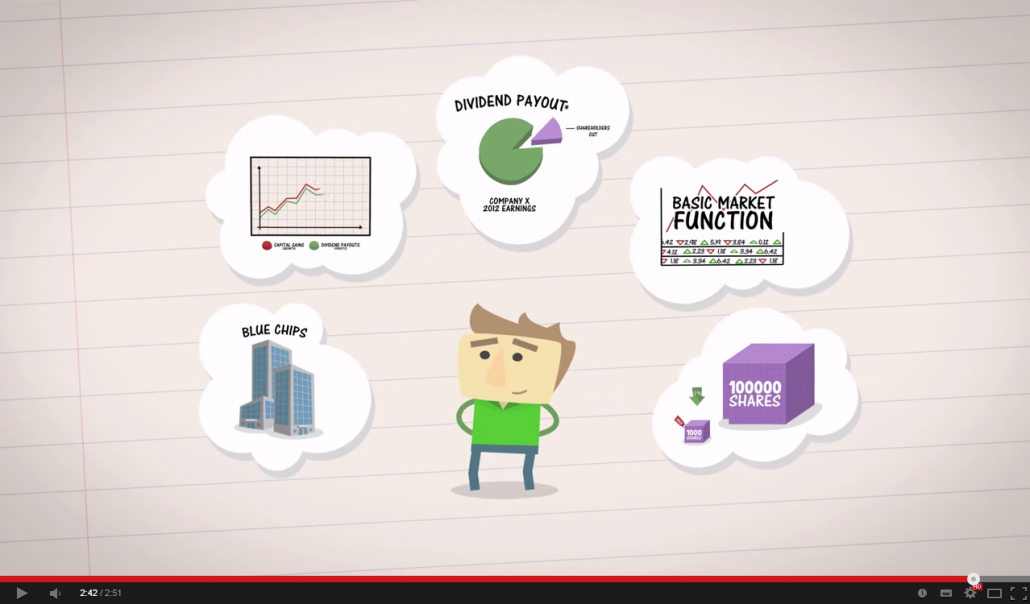
1b Stock Market Basics

Trading & Investing

In collaboration with TradeHero (now Ayondo) & SGX (Singapore Exchange), we have developed a series of 15 animated video tutorials that will make learning fun & easy for all beginners!

I have been tasked as the mastermind behind the content, drawing from my knowledge of the 200+ books I have read and 10,000+ hours of professional market experience as mentioned in the video.

The videos are divided into 5 parts:

  • Part 1 – Basics of Trading & Investing

    • Video Tutorial 1(a) General Market Basics
    • Video Tutorial 1(b) Stock Market Basics
    • Video Tutorial 1(c) An Easy Way to Diversify your Portfolio
  • Part 2 – Riding the Big Market Cycles

    • Video Tutorial 2(a) Business & Market cycles
    • Video Tutorial 2(b) What Moves the Markets?
    • Video Tutorial 2(c) The Top 3 Economic Indicators
  • Parts 3 – The ABCs of Stock Valuation

    • Video Tutorial 3(a) Finding Value In Stocks
    • Video Tutorial 3(b) Reading Financial Statements
    • Video Tutorial 3(c) Financial Ratio Shortcuts
  • Part 4 – Behavioral Analysis & Market Timing

    • Video Tutorial 4(a) Basics of Market Timing
    • Video Tutorial 4(b) Identifying Market Trends
    • Video Tutorial 4(c) Support & Resistance
  • Part 5 – Making Your First Trade

    • Video Tutorial 5(a) The Math Behind Trading
    • Video Tutorial 5(b) The 2% Money Management Rule
    • Video Tutorial 5(c) How to Place Orders
0 Comments/by Spencer Li
https://synapsetrading.com/wp-content/uploads/2014/09/1b-Stock-Market-Basics.png 750 1278 Spencer Li https://synapsetrading.com/wp-content/uploads/2019/10/logo.jpg Spencer Li2018-08-15 04:51:482022-03-07 12:27:0515 FREE Animated Videos on the Basics of Trading & Investing
Page 1 of 212

Free Trading Guides

Free Trading Guides

Blog Categories

  • Beginner's Guide
  • Blockchain & Crypto
  • Book Summaries
  • Economics & News Trading
  • Investing & Portfolio Management
  • Living Your Best Life
  • Market Analysis
  • Markets & Products
  • News & Events
  • Promotions
  • Risk & Money Management
  • Stock Trading
  • Technical Analysis & Price Action
  • Testimonials
  • Tools & Resources
  • Trading Psychology
  • Trading Strategies
  • Trading Tips
  • Travel & Lifestyle

Free Trading Guides

Free Trading Guides

Contact Us

Synapse Trading Pte Ltd
Registration No. 201316168H

Whatsapp: +65-8897-1204
Telegram: @iamrecneps
Email: info@synapsetrading.com

Links

Disclaimer
Privacy policy
Terms & Conditions
Contact us
Partnerships

© 2012-2024 Synapse Trading | All rights reserved | - powered by Enfold WordPress Theme
  • Link to Facebook
  • Link to X
  • Link to Instagram
  • Link to Youtube
  • Link to LinkedIn
  • Link to Mail
Scroll to top Scroll to top Scroll to top