

Pepecoin: The Meme Coin Craze That’s Making Waves in the Crypto World
Want the daily routine? Get the free 15-Minute Swing Trader’s Checklist. Get it free →
What Are Meme Coins, and Is Pepecoin (PEPE) a Good Investment?
Last updated: 26 September 2026 · By Spencer Li, CFTe
A meme coin is a cryptocurrency built around an internet joke or mascot, with little or no underlying utility, that trades almost entirely on community hype and social-media momentum. Pepecoin (PEPE), based on the Pepe the Frog meme, is one of the best-known examples. Is it a good investment? Honestly, no, not in the sense most people mean by “investment.” Pepecoin has no cash flow, no product, and no intrinsic value to anchor a price. It rose more than 1,500% in 14 days in 2023, then dropped over 42% from its all-time high almost immediately. That is a trading vehicle. You can trade a meme coin if you size it as pure speculation and accept you may lose all of it. You should not park money you need in one. The rest of this post explains what meme coins actually are, what drove Pepecoin’s rise and crash, and how to think about the risk before you touch one.
What are meme coins?
Meme coins are cryptocurrencies built around comical, animated imagery and enthusiastic online trading communities. They are high-risk by design. Most have little or no intrinsic value (no product, no revenue, no real-world use), so they function as trading instruments.
You will have seen the regulars: Dogecoin, Shiba Inu, Baby Doge, Dogelon Mars, and now Pepecoin. Major cryptocurrencies like Bitcoin and Ethereum are not meme coins; they have actual networks and use cases behind them.
The thing that defines meme coins is volatility. Only a handful, such as Dogecoin and Shiba Inu, even carry the daily trading volume (over $1 million) to move size in and out without slippage wrecking you. The rest are thin, and thin markets are where you get hurt.
What is Pepecoin (PEPE)?
Pepecoin is a meme-based cryptocurrency that draws on the Pepe the Frog meme. Note this clearly: it uses the character’s likeness, but there is no official connection to Matt Furie, the cartoonist who created Pepe the Frog. That alone tells you something about the foundations.
A few facts on the coin itself:
- Maximum supply: 420,690,000,000,000 coins (yes, that many; the number itself is a meme).
- Rank: it climbed into the top 50 largest cryptocurrencies, and at its peak sat at #45 by overall valuation.
- Market cap: crossed $1 billion.
- The catalyst: trading volume jumped 425% on the Friday it was listed in Binance’s “innovation zone.”
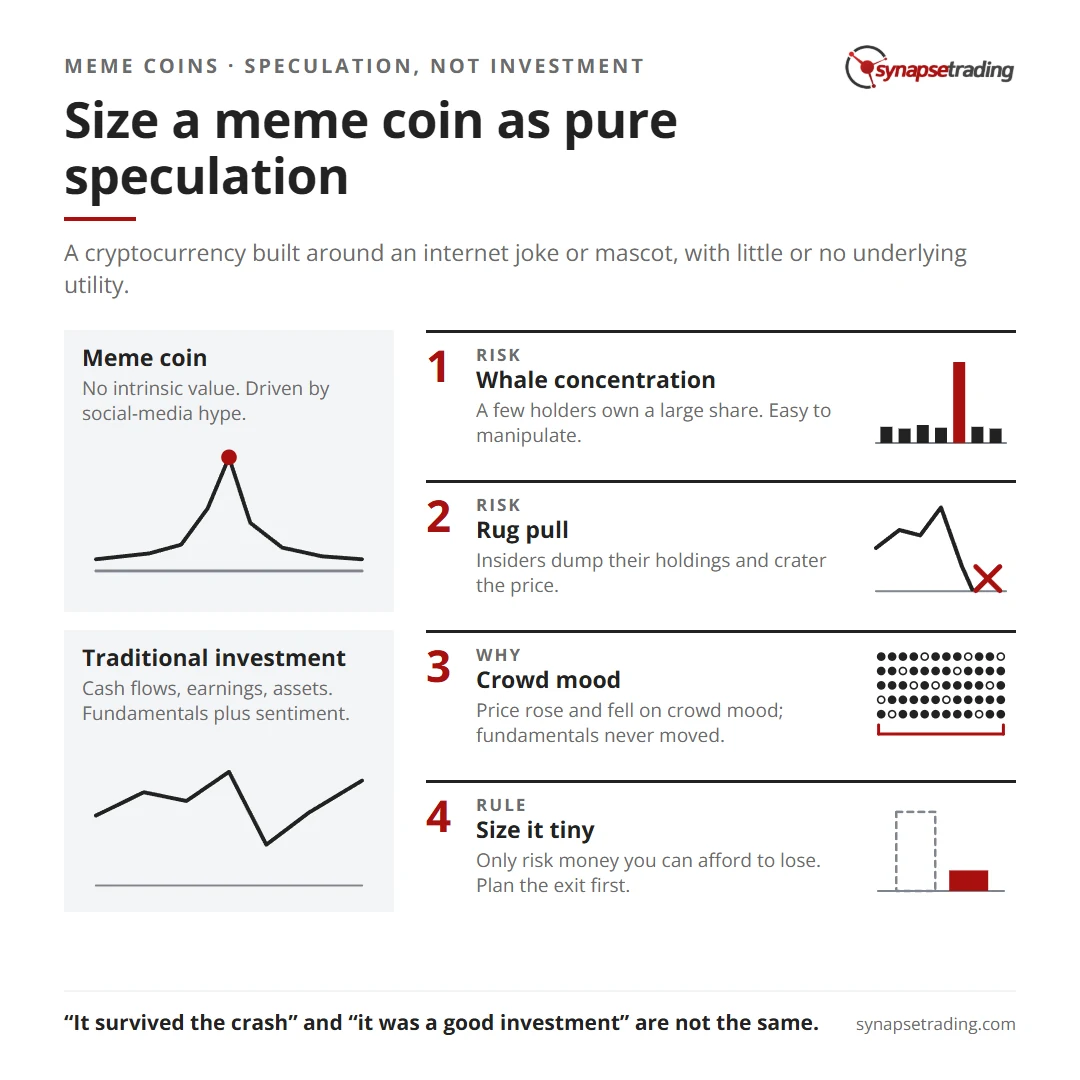
Here is my concern, and it is the one that matters most. Whales (a few holders sitting on enormous quantities of the coin) own a large share of the supply. Concentrated ownership like that makes the market easy to manipulate and leaves it open to a rug pull (where insiders dump their holdings and crater the price for everyone else). When a handful of wallets can decide your exit price, you are not really in control of the trade.
Why did Pepecoin’s price suddenly jump?
A few things lined up at once.
First, the so-called “crypto winter” was ending, and risk appetite was coming back. When the broad market thaws, meme coins are usually the first thing to run, because they are the purest expression of speculative mood.
Second, the Binance “innovation zone” listing gave it a layer of mainstream validation. A listing on a major exchange is not an endorsement of value, but it makes a coin far easier to buy, and easier-to-buy plus rising-mood is rocket fuel for a meme coin.
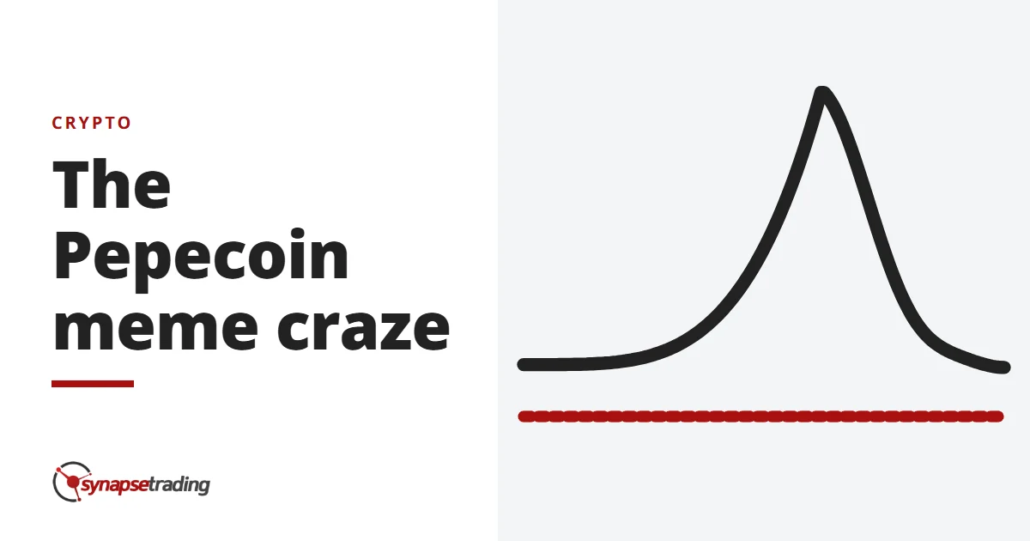
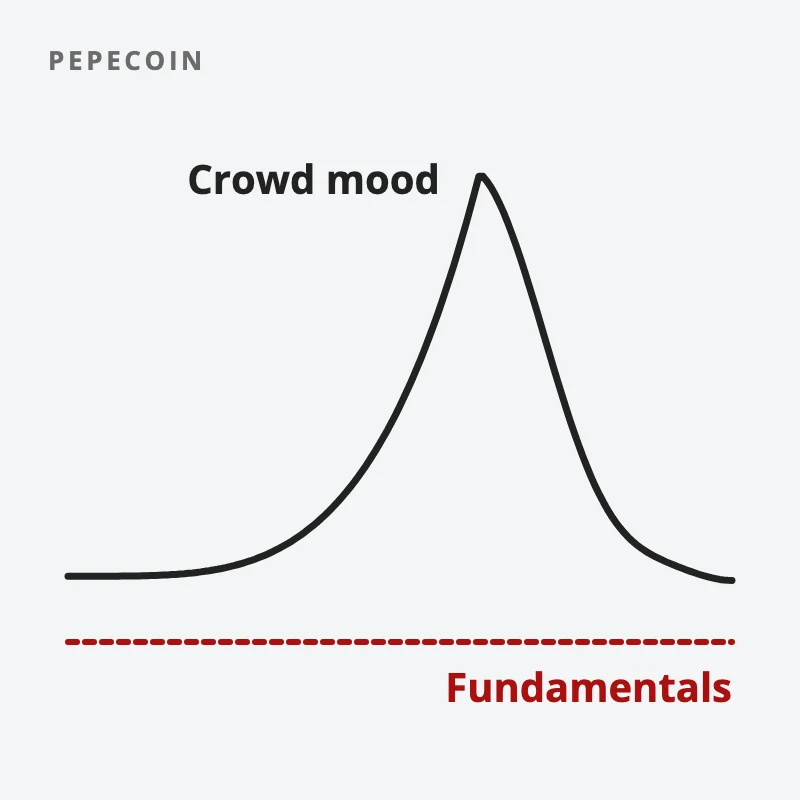
Put together, Pepecoin’s value rose roughly 500% in two weeks, and the headline figure was a 1,503.9% surge within just 14 days. That is the power of social media and community-driven enthusiasm, and it is also exactly why these moves are so dangerous. Nothing changed about the coin’s fundamentals (there were none). Only the crowd’s mood changed.
The crash: a $600,000 lesson
The flip side showed up fast. Shortly after hitting its all-time high on May 6th, Pepecoin dropped more than 42%.
One crypto whale had bought 962.3 billion Pepe tokens just days before the plunge, and was left sitting on an unrealized loss of roughly $600,000. That is the part to sit with. Even a “smart money” buyer with size got caught, because in a market this driven by momentum, the timing of the crowd matters more than the quality of the asset.
To be fair, even after the drop, Pepecoin held a market cap above $1 billion and stayed the 45th largest cryptocurrency. So meme coins can keep real market presence despite the risk. But “it survived the crash” and “it was a good investment” are not the same statement.
Meme coin vs. a real asset: the honest comparison
Here is how a meme coin like Pepecoin stacks up against the kind of asset you would actually invest in.
| Meme coin (e.g. Pepecoin) | Established crypto (e.g. Bitcoin/Ethereum) | Traditional investment (e.g. an index fund) | |
|---|---|---|---|
| Intrinsic value | None | Network and use case | Cash flows, earnings, assets |
| Main price driver | Social-media hype, community mood | Adoption, network use, macro | Fundamentals plus sentiment |
| Volatility | Extreme (1,500% up, 42% down in days) | High | Moderate |
| Ownership concentration | Often heavy whale concentration | More distributed | Regulated, disclosed |
| Rug-pull / manipulation risk | High | Low | Very low |
| Honest label | Speculation | Investment with high risk | Investment |
The point of the table is not that meme coins are evil. It is that they belong in the “speculation” column, and you should treat the money you put in like money you are prepared to lose entirely.
Is Pepecoin a good investment?
With any investment, especially in crypto, there are no guarantees. Pepecoin has seen impressive growth, but meme coins have historically struggled to hold their value. Some people characterize them, fairly, as pump-and-dump schemes. Add the concentrated ownership and the insider-trading risk, and the case for “investment” gets thin.
So my honest answer: meme coins like Pepecoin and Dogecoin are an extremely risky speculation, not an investment, because they lack fundamentals and carry extreme price volatility. If you choose to trade one anyway, do it with money you can afford to lose, size it tiny, and have an exit plan before you enter.
Where the human edge comes in
A screener will tell you Pepecoin is up 1,500% in a second. It will not tell you to stay out. Spotting the runner is the easy, now-free part. The judgment to recognise that a thing with no fundamentals, heavy whale concentration, and a parabolic chart is a trade to size tiny or skip entirely, and the discipline to set your exit before you are emotionally in the position, is the part no tool supplies for you. That judgment is the first of the Five Edges an algorithm cannot trade for you.
FAQ
What is a meme coin?
A meme coin is a cryptocurrency built around an internet joke, mascot, or community (like a frog or a dog) rather than a product or technology. It usually has little or no intrinsic value and trades mostly on social-media hype. Examples include Dogecoin, Shiba Inu, and Pepecoin.
What is Pepecoin (PEPE)?
Pepecoin is a meme-based cryptocurrency inspired by the Pepe the Frog meme, with a maximum supply of 420,690,000,000,000 coins. It has no official connection to Pepe’s original creator, Matt Furie, and at its peak ranked among the top 50 cryptocurrencies with a market cap over $1 billion.
Is Pepecoin a good investment?
Pepecoin has no fundamentals, cash flow, or intrinsic value, so it is better described as a speculation than an investment. It rose over 1,500% in 14 days and then fell more than 42% from its all-time high soon after, which shows the extreme volatility involved. Only risk money you can afford to lose entirely.
Why did Pepecoin’s price rise so fast?
Three things combined: the end of the 2023 “crypto winter” revived risk appetite, a listing in Binance’s “innovation zone” gave it mainstream access and validation, and social-media community hype did the rest. None of it reflected any change in fundamentals.
What is a rug pull, and is Pepecoin at risk of one?
A rug pull is when insiders or large holders suddenly dump their coins and collapse the price for everyone else. Pepecoin carries elevated risk here because a small number of whales hold large quantities of the supply, which makes the market easier to manipulate.
So, before you buy a meme coin: are you prepared for the volatility and the risk, and given the concentrated ownership, how will you make sure you are deciding with your head and not the crowd’s hype? Let me know in the comments.
If you want the bigger picture on how this asset class actually works, read the pillar: The Ultimate Guide to Blockchain and Cryptocurrencies.
Want a system that keeps you out of trades like this? Grab the free 15-Minute Swing Trading Starter Kit. It is the exact routine I use to scan once a day and trade any market in 15 minutes, with the risk rules that stop a hype trade from blowing up an account.
About the author. Spencer Li is The 15-Minute Trader and the founder of Synapse Trading. He is a Certified Financial Technician (CFTe) with 15+ years of trading, run from 70+ countries. He holds a B.Acc and B.BM from SMU. Every trade he takes is public, dated, losses left in. He teaches low-risk swing trading in 15 minutes a day, one system for any market.
Education, not financial advice. Synapse Trading is not licensed by MAS to advise on investment products. Trading carries risk of loss; past performance is not indicative of future results.
Related
The Ultimate Guide to Blockchain and Cryptocurrencies · What is Bitcoin and how does it work? · How to spot a pump-and-dump scheme · Risk management for traders
Want the daily routine? Enter your email for the free 15-Minute Swing Trader's Checklist.
Free 5-page PDF, then occasional trading emails. Education only, not financial advice. Unsubscribe anytime. Kit stores your email in the US: see our privacy policy.
Want to learn the full method? The Trading Mastery Program teaches the 4 strategies I have traded since 2011. It suits beginners and experienced traders.
Rather follow the trades as they happen? Daily Trading Signals is our Telegram channel: my trade ideas with entry, stop and exit, and every trade is public.
Questions about this post? Ask in the free Telegram channel →
Educational content only, not personalised financial advice. Trading carries risk, including loss of capital. Past performance is not indicative of future results. Synapse Trading is not licensed or regulated by MAS.
