• Link to Facebook
  • Link to X
  • Link to Instagram
  • Link to Youtube
  • Link to LinkedIn
  • Link to Mail
Synapse Trading
  • Home
  • About
    • My Background
    • My Trading Journey
    • My Travel Log
    • Media & Interviews
  • Mentoring
    • Trading Mastery Program
    • Results & Testimonials
  • Signals
    • Telegram (Free to join!)
    • Daily Trading Signals
    • Daily Trading Signals (Results)
  • Resources
    • Free Trading Guides
    • Tools & Resources
    • Blog & Infographics
  • Contact
    • Contact Us
    • Partnership Opportunities
  • Click to open the search input field Click to open the search input field Search
  • Menu Menu

Understand behavioral science and psychology to boost your consistency and results!

Spencer Li

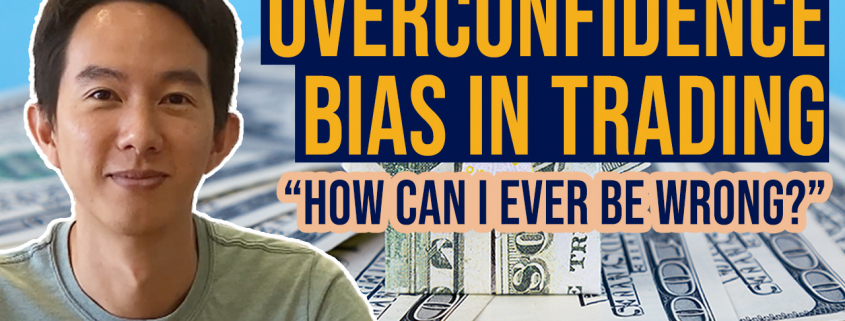
Overconfidence Bias in Trading – How Can I Ever Be Wrong?

Trading Psychology
Overconfidence Bias in Trading

Overconfidence Bias in Trading: What It Is and How to Fix It

Last updated: 3 July 2026 · By Spencer Li, CFTe


Overconfidence bias in trading is the unwarranted faith in your own judgment, predictions, and abilities, the gap between how good you think your decisions are and how good they actually are. It shows up in two forms: prediction overconfidence (your forecasts are too precise, your confidence intervals too narrow) and certainty overconfidence (you are too sure you are right). It hurts your trading in concrete ways: you take positions too large, skip the stoploss, hold losers too long, and trade too often. The fix is one disciplined habit. No matter how good your analysis is, assume your edge is at most 60-70%, which means there is always a 30-40% chance you are wrong. Trade from that number and you keep your risk management, your contingency plan, and your stoploss in place. Trading is a game of probabilities, and nothing is 100%.

Here is what the bias is, the two types, how each one damages your account, and how to keep it in check.

What is overconfidence bias?

Consider this: “Despite the fact that more than 90% of car accidents involve human error, three-quarters (73 percent) of drivers consider themselves better-than-average drivers.”

That sounds delusional. The same thing happens in trading. Most people think they can beat the markets. But is that true?

First, what is confidence? According to Wikipedia, confidence is “a state of being clear-headed either that a hypothesis or prediction is correct or that a chosen course of action is the best or most effective.” The word comes from the Latin fidere, “to trust.” So self-confidence is trust in yourself, and that is a good thing to have.

But too much of a good thing turns bad. Overconfidence bias (the unwarranted faith in one’s intuitive reasoning, judgments, and cognitive abilities) is what you get when there is too much of it. In plain terms, people think they are smarter and make better decisions than they actually do.

“Too many people overvalue what they are not and undervalue what they are.” – Malcolm S. Forbes

Why does overconfidence bias happen?

Studies have shown that people overestimate two separate things:

  • Their own predictive abilities, and
  • The precision of the information they have been given.

In the first case, people think they are smarter than they are. In the second, they think their information is better than it is.

Here is the everyday version. Someone gets a tip from a broker, or reads something off the internet, and they are ready to place a trade right away on the strength of that perceived knowledge advantage. But if there is no logical basis for the advantage, the edge does not exist at all, no matter what the trader thinks he knows. They are too confident the information is accurate without doing the work to verify it before acting.

There is one more layer. People are poorly calibrated at estimating probabilities. Events they think are certain to happen are often less than 100% certain to happen.

What are the two types of overconfidence bias?

There are two kinds, and they fail in different ways. Prediction overconfidence is about how accurately right you think you are. Certainty overconfidence is about how likely you think you are to be right.

What it isHow it soundsHow it shows up in trading
Prediction overconfidenceYour confidence intervals are too narrow, your forecasts too precise“It will hit exactly $182.50 in 11 days”Chasing precise price targets, trusting “expert” forecasts, betting on a pinpoint that no one can actually call
Certainty overconfidenceYou are too sure your judgment is correct“This is a sure-win”Oversized positions, higher risk, no stoploss, no contingency, blind to the chance of a loss

Prediction overconfidence bias

Here the confidence intervals traders assign to their predictions are too narrow. The classic example is “experts” forecasting precise price targets. You see it in the news all the time, a celebrity or an analyst or a bank putting out some ridiculous price projection.

It is simply not possible to forecast with that kind of accuracy. Even professional traders only get an idea of direction and some idea of magnitude. No one is going to pinpoint the exact price a stock reaches on an exact day. That is prediction overconfidence, or most of the time, just fabricating numbers for attention.

Certainty overconfidence bias

Here traders are too certain of their judgments. At the professional level, even when you find a good trade, you are at most 60-70% certain, and that is good enough to be profitable over the long run.

But when an amateur sees that same trade, they get 90-100% certain it is a winner. So they treat every trade as a “sure-win,” go blind to the prospect of a loss, and then feel surprised and disappointed when it performs poorly.

That same overconfidence pushes them into larger positions, higher risk, and no contingency plan or stoploss. After all, why would you need a stoploss if your trade is a “sure-win”?

How does overconfidence bias affect your trading?

The dangers are numerous, and they stack:

  • You go blind to warning signs. If you overestimate your ability to pick a winner, you stop seeing the information that says your decision was wrong. That gets you into bad trades and keeps you in losing ones.
  • You overtrade. If you believe you have special knowledge, you trade more often than your real edge justifies.
  • You underestimate downside. In the worst cases this means trading with no stoploss at all, which is how small mistakes become account-ending ones.

How do you prevent overconfidence bias?

There is a fine line between confidence and overconfidence. You need enough confidence to trust your analysis and not get swayed by the crowd, yet not so much that you think your analysis is 100% correct.

The rule that holds the line is a single number. No matter how good your analysis and research is, assume the edge you have is at most 60-70%, which means there is still a 30-40% chance you are wrong.

Enter every trade with that mentality and the rest follows naturally. You do your proper risk and money management. You keep a contingency plan. You place your stoploss to cap the downside. That is the whole defence, and it works because it is built into your process rather than relying on you to feel humble in the moment.

Always keep in mind: trading is a game of probabilities, and nothing is 100%.

Where the human edge comes in

A backtest can hand you a strategy with a positive expectancy. A screener can rank a hundred setups in a second. What no tool will do is hold your size down when a setup feels like a sure thing, or make you place the stoploss you do not think you need. Overconfidence is not a data problem, it is a judgment problem, and judgment is the first of the Five Edges a machine cannot trade for you. The 60-70% rule is how you install that judgment as a habit instead of a feeling.

FAQ

What is overconfidence bias in trading?
Overconfidence bias is the unwarranted faith in your own judgment, predictions, and abilities, the gap between how good you think your trading decisions are and how good they actually are. It leads to oversized positions, skipped stoplosses, and overtrading.

What are the two types of overconfidence bias?
Prediction overconfidence (your forecasts are too precise and your confidence intervals too narrow) and certainty overconfidence (you are too sure you are right). The first makes you chase exact price targets, the second makes you treat trades as “sure-wins.”

How does overconfidence affect trading decisions?
It makes you take larger positions, skip the stoploss, hold losers too long because you ignore warning signs, and trade too often because you believe you have special knowledge. All of it underestimates downside risk.

How do you overcome overconfidence bias in trading?
Assume your edge on any trade is at most 60-70%, never higher. That built-in 30-40% chance of being wrong keeps your risk management, contingency plan, and stoploss in place on every trade.

Is confidence bad for trading?
No. Confidence is necessary, you need it to trust your analysis and not get swayed by the crowd. The problem is overconfidence, when you think your analysis is 100% correct. Trading is a game of probabilities, and nothing is 100%.


Now that you know the two types of overconfidence and the 60-70% rule that defends against them, how do you think the bias has affected your own trading decisions? Let me know in the comments.

And if you want the full set of mental traps mapped out, read the pillar: The Complete Guide to Investing and Trading Psychology.

Want a system that takes the ego out of it? Grab the free 15-Minute Swing Trading Starter Kit. It’s the exact routine I use to scan once a day and trade any market in 15 minutes, with the risk rules built in so a “sure-win” feeling can’t blow up your account.


About the author. Spencer Li is the founder of Synapse Trading and a Certified Financial Technician (CFTe) with 15 years of trading across stocks, forex, crypto, commodities, and bonds. His trade log is public, 404 trades, losses left in. He teaches low-risk swing trading in 15 minutes a day, one system for any market.

Education, not financial advice. Synapse Trading is not licensed by MAS to advise on investment products. Trading carries risk of loss; past performance is not indicative of future results.


Related

Complete Guide to Investing and Trading Psychology (pillar) · Loss aversion in trading · Confirmation bias in trading · How to set a stoploss
4 Comments/by Spencer Li
https://synapsetrading.com/wp-content/uploads/2010/12/Overconfidence-Bias-in-Trading.jpg 720 1280 Spencer Li https://synapsetrading.com/wp-content/uploads/2019/10/logo.jpg Spencer Li2021-04-29 16:00:062026-07-06 02:47:50Overconfidence Bias in Trading – How Can I Ever Be Wrong?
Spencer Li

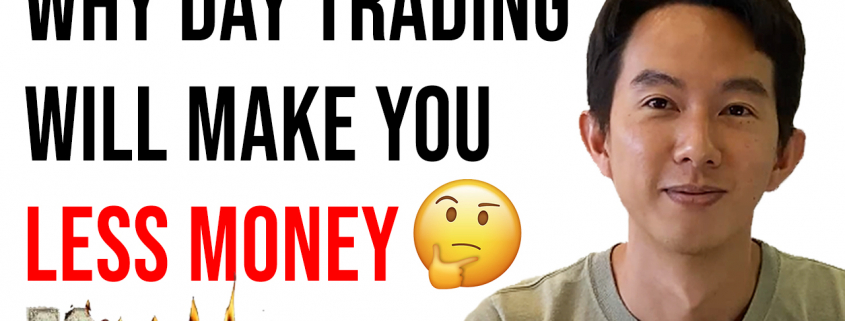
Why Day Trading Will Make You Less Money (And Bring You More Stress)

Trading Psychology
why day trading will make you less money

Most people think that in trading, the more trades you make, the money more you will end up making.

But is this really true?

Traders who adopt this philosophy will constantly be chasing the next big shiny object, reading every piece of news online, and hunting for new opportunities every day.

The danger with this approach is that you stretch yourself too thin, which leads to decision fatigue. Even when the low-hanging fruit and easy opportunities are right in front of you, you might be too busy out hunting to see and seize those trading opportunities.

The allure of excessive trading attracts new traders, who want to make as many trades as possible, and get rich quickly in a short period of time.

Thus they are attracted to day-trading, even though intraday trading is only suitable for the most experienced and advanced traders. Most new traders would be much better of doing swing trading or position trading, where they can hone their skills in a less fast-paced and risky environment.

The advantages of trading less are numerous:
– allows you to focus on the best trades and best strategies
– helps you avoid bad trades and excessive trading
– makes trading less stressful
– do not need to constantly monitor the market
– less transactions means less transaction costs

Hence, for those traders who are making too many trades, it would be good to check your past trading records, and see if trading less might actually improve your trading results.

Enjoy the video, and remember to “like” and “subscribe”!


complete guide to investing and trading psychology cover

If you would like to learn more about trading psychology, also check out: “The Complete Guide to Investing & Trading Psychology”

0 Comments/by Spencer Li
https://synapsetrading.com/wp-content/uploads/2020/03/why-day-trading-will-make-you-less-money.jpg 720 1280 Spencer Li https://synapsetrading.com/wp-content/uploads/2019/10/logo.jpg Spencer Li2020-03-04 19:36:222022-12-21 03:10:26Why Day Trading Will Make You Less Money (And Bring You More Stress)
Spencer Li

The Cheetah and the Trader – How to Go for the Kill

Trading Psychology

The cheetah, while the fastest animal on the African plain can outrun any of the prey it feasts upon, always chooses to go for the young, weak, or sick. Once identified, he attacks with laser-guided focus and effectiveness. It is only then that the kill is likely. This is the epitome of a professional trader. Be the cheetah.


The Cheetah and the Trader


Here are some common questions I get from people:
“Sometimes I can’t find good setups in the market, should I trade the less optimal setups or should I look for more different stocks to trade?”
“The setup I learnt from xxx course was working fine a few months back, but it doesn’t seem to be working now. Should I continue using it?”


So, how do we go for the kill?

As cheetah, we should always go for the easy trades. But quite often, for the newbie, the easy trades are staring them right in the face but they do not see them. This is because they are only familiar with a few simple setups (with simple rules/formula) that work best only under specific market conditions.

All these questions have a common theme. Traders who learn one or two simple setups think that they can trade successfully, but when the market changes, quite often the simple setup or system that they are using cannot adapt to the market, and becomes discarded.

Hence, a good trader cannot keep relying on the one same setup. Rather, he needs to know the basic form of a setup, so that from there, he can create a wide variety of different setups that are best suited to the current market situation. That is why we teach a variety of setups (and certain proven variations), leaving them the core skills to tweak setups to adapt to any market situation.


complete guide to investing and trading psychology cover

If you would like to learn more about trading psychology, also check out: “The Complete Guide to Investing & Trading Psychology”

0 Comments/by Spencer Li
https://synapsetrading.com/wp-content/uploads/2019/10/logo.jpg 0 0 Spencer Li https://synapsetrading.com/wp-content/uploads/2019/10/logo.jpg Spencer Li2012-09-25 04:29:022022-03-09 12:20:27The Cheetah and the Trader – How to Go for the Kill
Spencer Li

Maslow’s Hierarchy: Trading Self-Actualization

Trading Psychology
maslow hierachy of needs min

Some of you might have heard the term before, but are not really sure what it means. So what exactly does self-actualisation mean?

Maslow's Hierarchy: Trading Self-Actualization

Maslow’s Hierarchy: Trading Self-Actualization

The term originally came from Maslow’s hierarchy of needs, which represents the things people strive for as they grow and evolve. As we progress from basic needs like food and shelter to more complex ones like esteem and knowledge, what awaits at the top is self-actualization.

Simply put, it is reaching your full potential, and in the context of trading, it means being able to become the “ideal” trader which you envision.

If you’re been trading for many years, you should have acquired many different skills and experience. But are you putting these to good use? How is it possible for you to reach your full potential?

The key lies not in using everything you have learnt, but rather in knowing what is not essential. Once you learn to think in essentials, you will realise that you will have to discard most of what you have learnt, and focus on the 10-20% that works. Clinging on to old baggage will slow your progress.


Now, I want you to visualise a circle. Label this circle “Current Reality”. This circle represents what you are currently like – your habits, your style, your results, your skill level, and your attributes. Take some time to do some self-reflection, and figure out what is wrong.

Next, visualise another circle which partially overlaps the first circle. Label this circle “New Reality”. This circle represents what you want to become, and is a blueprint of the “ideal” trader which you have envisioned, and embodies all the essential attributes of such a trader.

The overlapping region is the zone of self-actualization. 


Let me give you an analogy. If you want to lose weight or get fit, the “Current Reality” could be someone who does not exercise and eats unhealthily, while the “New Reality” is picture of the gorgeous body you saw in some health magazine. The zone of self-actualization is then simply the series of steps you take to bridge the gap between dreams and reality.

Insanity is doing the same thing over and over again, and expecting different results. This means taking the time to learn from your mistakes. The bottom line is, if you want different results, something has to change.


complete guide to investing and trading psychology cover

If you would like to learn more about trading psychology, also check out: “The Complete Guide to Investing & Trading Psychology”

0 Comments/by Spencer Li
https://synapsetrading.com/wp-content/uploads/2012/08/maslow-hierachy-of-needs-min.jpg 429 776 Spencer Li https://synapsetrading.com/wp-content/uploads/2019/10/logo.jpg Spencer Li2012-08-03 02:00:142021-10-04 22:26:19Maslow’s Hierarchy: Trading Self-Actualization
Spencer Li

Trading Self-Reflection: The Art of Losing

Trading Psychology

The Art of Losing: How to Have a Good Trading Day Even When You Lose Money

Last updated: 3 July 2026 · By Spencer Li, CFTe


You can have a good trading day and still finish the day red, and learning to see it that way is one of the most important skills a trader builds. A good day is not defined by the profit and loss on the screen. It is defined by whether you traded your plan, stayed emotionally grounded, and kept your losing day small when the market did not match your style. Because trading is probabilistic (your edge only plays out over many trades, not on any single one), losing trades and even losing days are unavoidable. The skill is not just swinging for home runs on good days. It is staying calm on bad days, cutting losses early, and refusing to gamble to win the money back. I once watched a near US$1,500 drawdown turn into a loss of under US$500, simply because I stopped, took a break, and switched to a defensive style. By the numbers it was a losing day. By the only measure that compounds, it was a win.

Here is how to tell a good loss from a bad one, and why keeping your losing days small is half the game.

Why is losing part of trading?

Trading is probabilistic. You do not get to be right every time, and you should not expect to be. Depending on your style, you will have losing trades, and you will also have losing days. That is not a flaw in your method. It is the nature of the game.

A losing day usually means one thing: the market did not match your trading style that day. The setups you wait for did not show up, or they showed up and failed. That happens. It is not a signal to try harder or trade bigger. It is a signal to trade smaller, or to step back.

Personally, this reframe changed how I judge my own days. The scoreboard (the profit and loss) is the output. The process is the input. On any single day the output is partly luck. The input is the part I actually control.

What makes a good trading day if you still lost money?

A good day is a day you traded well, regardless of the result. Here is what that looked like for me on the day I wrote this from.

My setups, timing, and entries were clean. My one real mistake was conviction: a few times I lacked the conviction to hold my positions, took a small profit, and then watched the price run another three to five times the small profit I had banked. That is a process error worth noting, and I noted it.

Then the day went against me. My drawdown got very close to US$1,500, which was my hard stop for the day. I would have stopped completely once that amount was hit. Instead I managed to recalibrate before I got there: I cut the losing positions, got out, and took a break.

When I came back, I switched to a defensive trading style to adapt to the conditions, and I reduced the day’s loss to under US$500. Small loss, plan intact, mind intact. That is a good day.

Good loss vs bad loss: how to tell them apart

The same red number on the screen can come from a good day or a bad one. The difference is entirely in how you got there.

A good lossA bad loss
Why it happenedThe market did not fit your style; your edge did not show upYou abandoned your plan and forced trades
SizeKept small, well under your daily stopBlew through your stop chasing the loss back
EmotionGrounded; you stepped away and recalibratedTilted; you traded angrier and bigger
What you didCut losses, took a break, switched to defenseTook huge gambles to “make back” the loss
The edgeStill intact for tomorrowGone; you were gambling, not trading
VerdictA win in disguiseThe real loss, no matter the dollar figure

The dollar amount is not what separates these two columns. The behaviour is.

How do you stop revenge trading after a big loss?

The most dangerous moment in a trading day is right after a large loss. I have seen many traders self-destruct here. They take huge gambles to “make back” what they lost, and the moment they do, it stops being trading.

This is the line between trading and gambling. When you trade your edge, the odds are on your side over time. When you size up out of anger to recover a loss, you no longer have an edge. You are just gambling, and the house (the market) wins. If you want the full breakdown of where that line sits, read trading vs gambling: what actually separates them.

The fix is mechanical, not emotional, because emotion is the problem. Set a daily maximum drawdown before the session starts. Mine that day was US$1,500. When you approach it, do what I did: cut, get out, take a break. Stepping away is not weakness. It is the move that keeps your losing day small and your account alive for the next one.

Why does keeping losing days small matter so much?

To a trader, consistency is everything. By consistency I mean two things: consistency in your analysis ability, and consistency in your mental stability. The second one is the one most people ignore, and it is the one that breaks accounts.

A good intraday trader typically wins on four out of five trading days. That is the benchmark to aim for. But the win rate alone is not enough. Your winning days need to be a lot larger than your losing days for the math to work in your favour over a month or a year.

That is why keeping your losing days small is an essential skill, not a consolation prize. Hence the reframe at the top of this piece. A day where you lose a little while protecting your capital and your composure is a day you traded like a professional. The home runs take care of themselves once you stop letting the bad days run.

Where the human edge comes in

A system can tell you when your setup fired and where your stop goes. It will not feel the sting of a near US$1,500 drawdown, and it will not be tempted to gamble it back. The hardest part of the art of losing is not analysis. It is the psychology: staying grounded enough to cut, walk away, and come back defensive instead of vengeful. That self-command is one of the Five Edges no tool can trade for you. It is also the most learnable, because it is a habit, not a talent.

FAQ

Can you have a good trading day if you lose money?
Yes. A good trading day is defined by whether you followed your plan, stayed emotionally grounded, and kept your loss small, not by the profit and loss on the screen. Turning a near US$1,500 drawdown into a loss under US$500 by cutting early and switching to defense is a good day, even though it ends red.

Why do good traders still have losing days?
Trading is probabilistic, so even a strong edge produces losing trades and losing days. A losing day usually just means the market did not match your trading style that day. The goal is not to avoid losing days but to keep them small.

What is the difference between trading and gambling after a loss?
When you trade your edge, the odds favour you over time. When you size up out of anger to “make back” a loss, you abandon your edge and are simply gambling. The behaviour, not the instrument, is what separates the two.

How many days a week should a good day trader win?
A good intraday trader typically wins on about four out of five trading days. Win rate is not enough on its own; your winning days also need to be meaningfully larger than your losing days.

How do you stop revenge trading?
Set a daily maximum drawdown before the session. As you approach it, cut your positions, get out, and take a break. Treat it as a hard mechanical rule, because the emotion that drives revenge trading cannot be reasoned with in the moment.


So here is the question to sit with after your next red day: did you lose well, or did you lose badly? The dollar figure will not tell you. Your behaviour will.

If you want the deeper dive on the mental side, read the pillar: The Complete Guide to Investing and Trading Psychology.

Want a routine that keeps your losing days small by design? Grab the free 15-Minute Swing Trading Starter Kit. It is the exact once-a-day process I use to trade any market in 15 minutes, daily stop included.


About the author. Spencer Li is the founder of Synapse Trading and a Certified Financial Technician (CFTe) with 15 years of trading across stocks, forex, crypto, commodities, and bonds. His trade log is public, 404 trades, losses left in. He teaches low-risk swing trading in 15 minutes a day, one system for any market.

Education, not financial advice. Synapse Trading is not licensed by MAS to advise on investment products. Trading carries risk of loss; past performance is not indicative of future results.


Related

The Complete Guide to Investing and Trading Psychology (pillar) · Trading vs gambling · How to handle a losing streak · Risk management and position sizing

0 Comments/by Spencer Li
https://synapsetrading.com/wp-content/uploads/2019/10/logo.jpg 0 0 Spencer Li https://synapsetrading.com/wp-content/uploads/2019/10/logo.jpg Spencer Li2012-07-31 04:38:372026-07-06 03:04:31Trading Self-Reflection: The Art of Losing
Page 3 of 6‹12345›»

Free Trading Guides

Free Trading Guides

Blog Categories

  • Beginner's Guide
  • Blockchain & Crypto
  • Book Summaries
  • Candlestick Patterns
  • Economics & News Trading
  • Investing & Portfolio Management
  • Living Your Best Life
  • Market Analysis
  • News & Events
  • Price Chart Patterns
  • Promotions
  • Risk & Money Management
  • Stock Trading
  • Testimonials
  • Tools & Resources
  • Trading Psychology
  • Trading Strategies
  • Trading Tips
  • Travel & Lifestyle

Free Trading Guides

Free Trading Guides

Contact Us

Synapse Trading Pte Ltd
Registration No. 201316168H

Whatsapp: +65-8897-1204
Telegram: @iamrecneps
Email: info@synapsetrading.com

Links

Disclaimer
Privacy policy
Terms & Conditions
Contact us
Partnerships

© 2012-2024 Synapse Trading | All rights reserved | - powered by Enfold WordPress Theme
  • Link to Facebook
  • Link to X
  • Link to Instagram
  • Link to Youtube
  • Link to LinkedIn
  • Link to Mail
Scroll to top Scroll to top Scroll to top